I am a multimedia textile practitioner exploring colour, texture, and movement through experimental surface design. My work uses stitch, weave, 3D printing and embellishment to develop expressive and tactile textile outcomes.
‘The nostalgia of play’
At the core of the project is an interest in how games operate as both systems and experiences. Their structures are defined by rules, grids and sequences, yet their meaning is also shaped by physical engagement, movement and human presence. Their duality becomes a way of thinking about how material processes can carry ideas of play, allowing systems of chance, strategy and decision-making to be reinterpreted through making.
Initially drawing from games such as backgammon, chess, dice games and card games, this project looks at how playing games can be translated into material forms.
The work draws on textile practices and digital fabrication methods as ways of exploring these ideas. Weaving, digital embroidery and 3D printing are used not only as production techniques but as processes that can echo the logic of games.
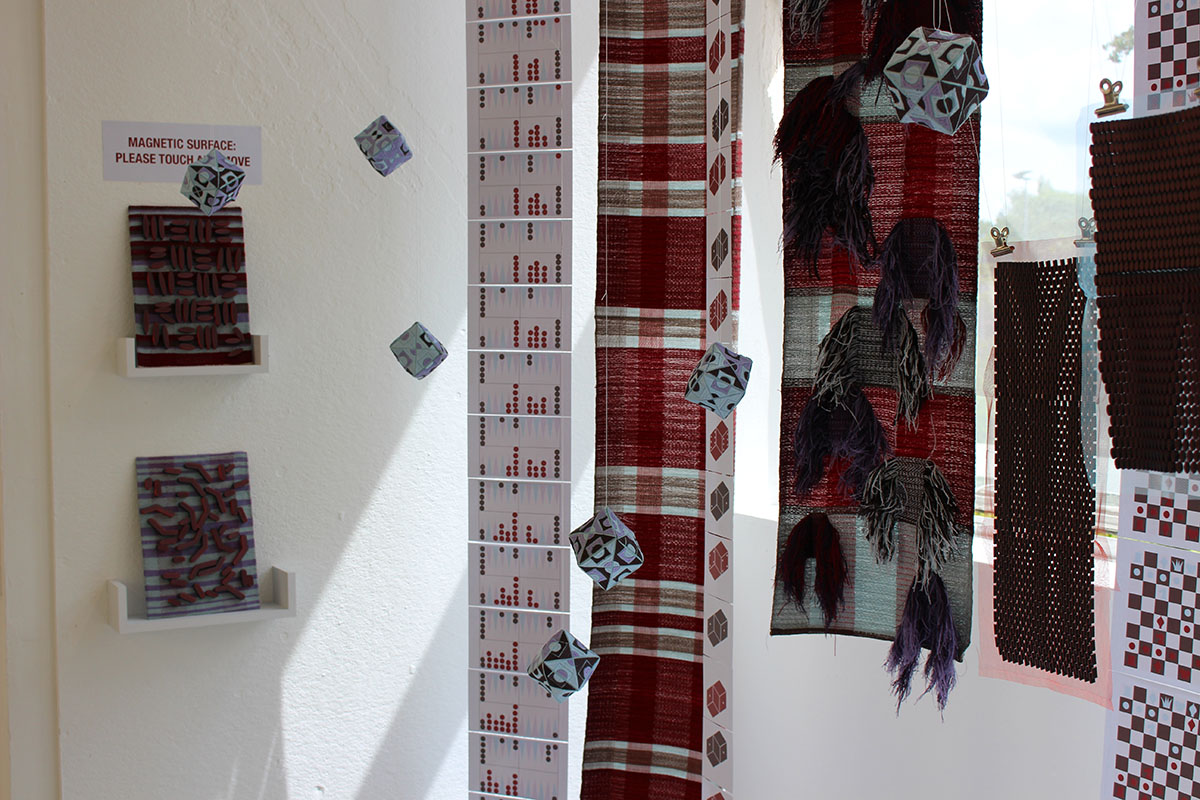
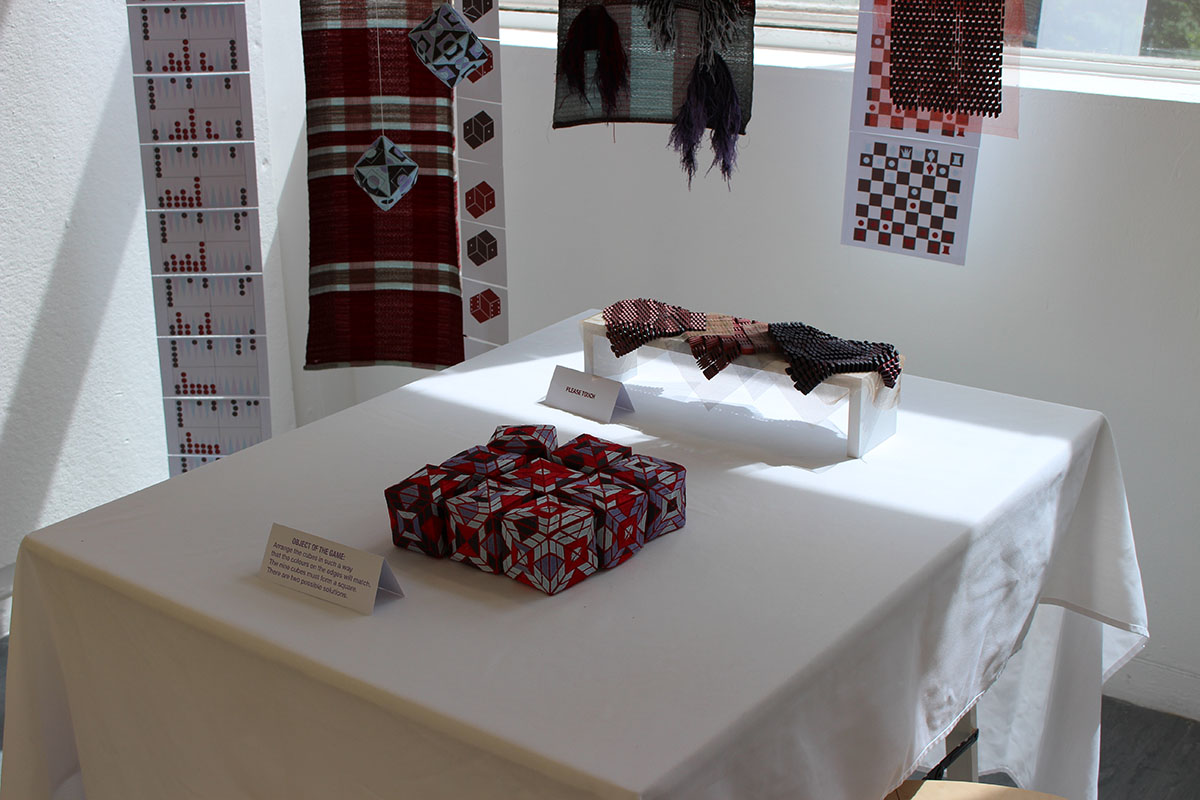
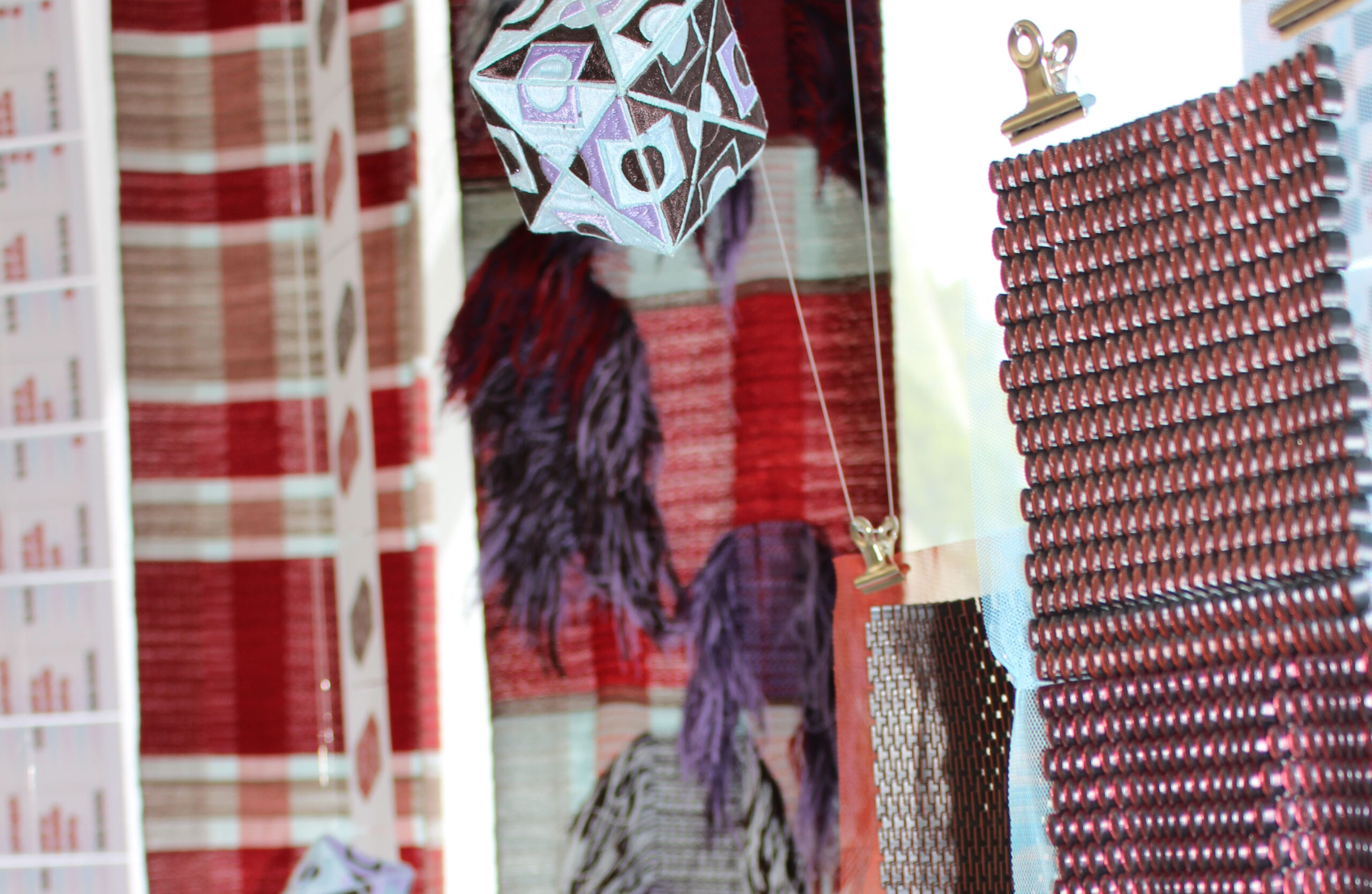
Final collection set up for the degree show
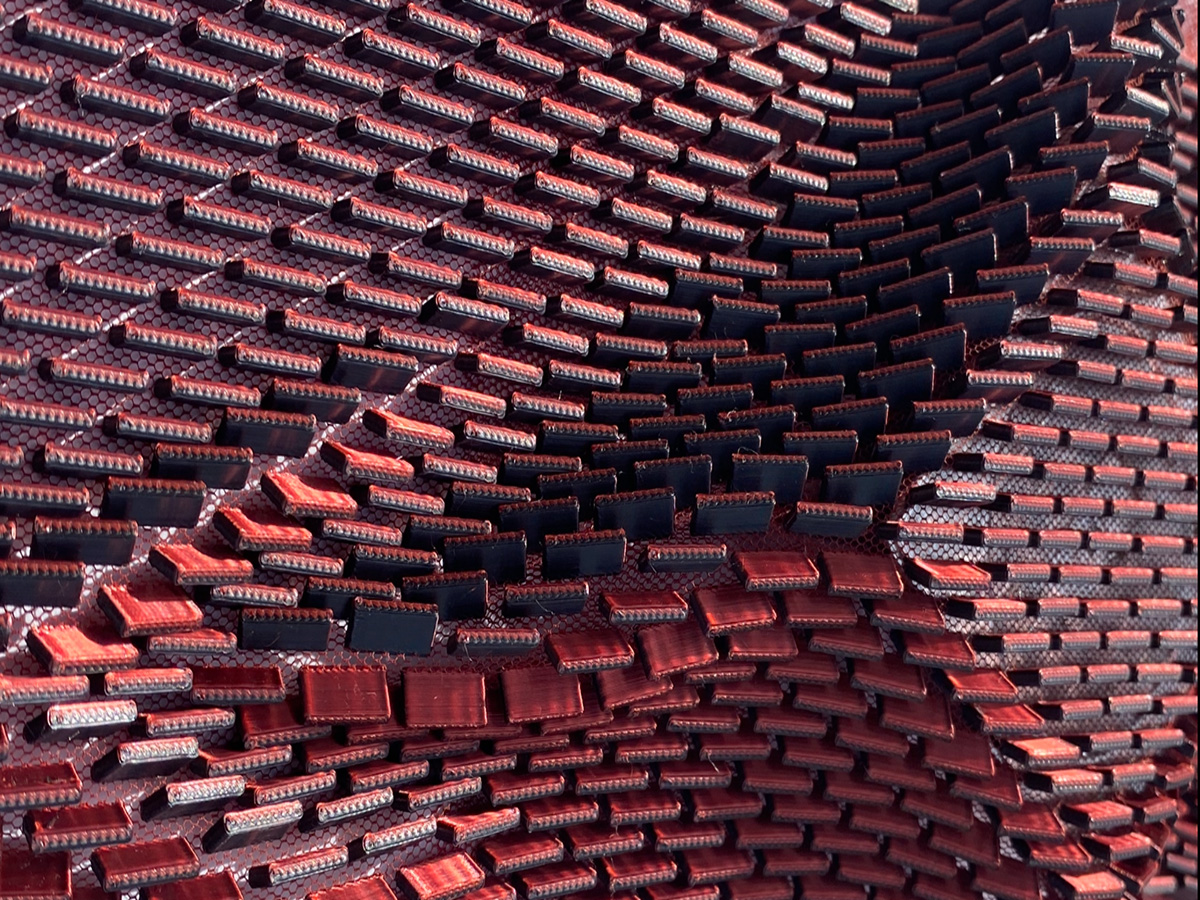
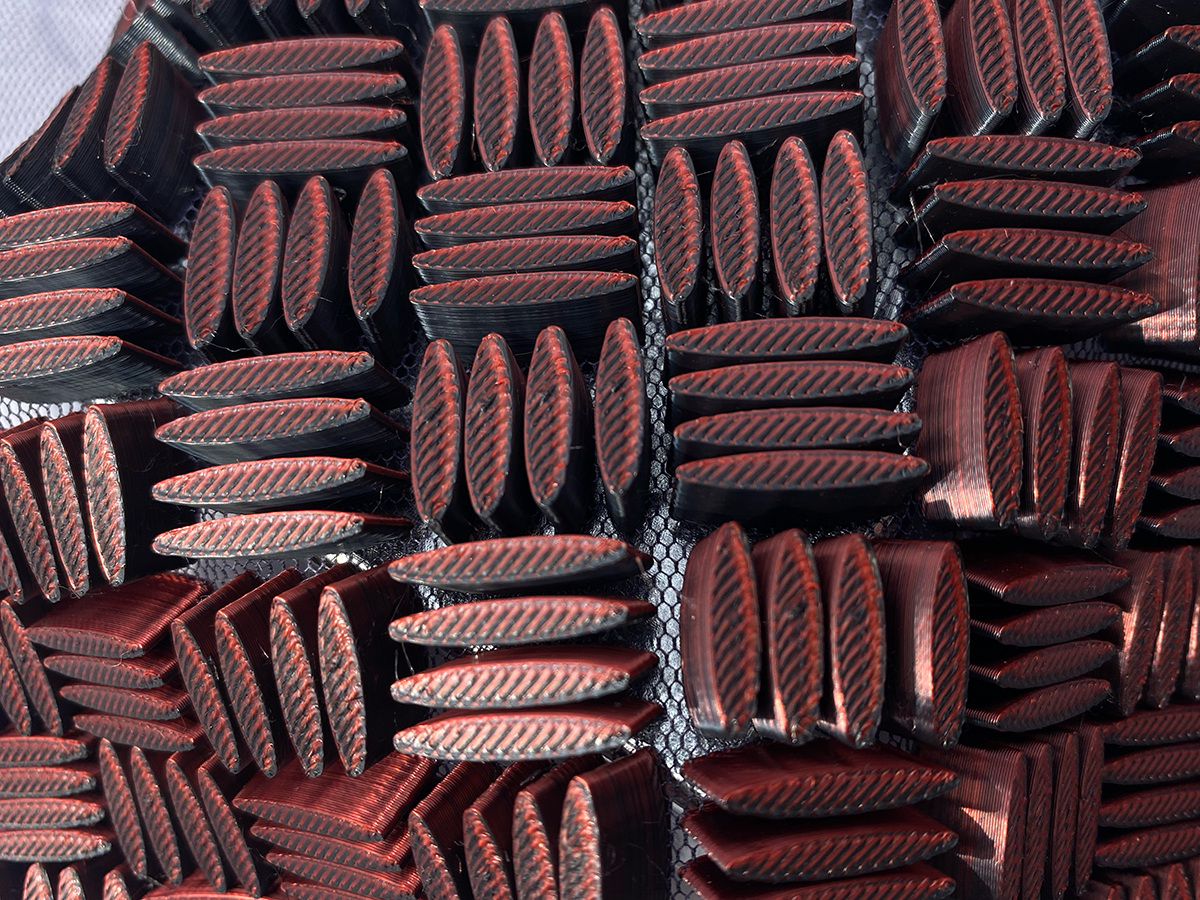
3D prints on dyed mesh
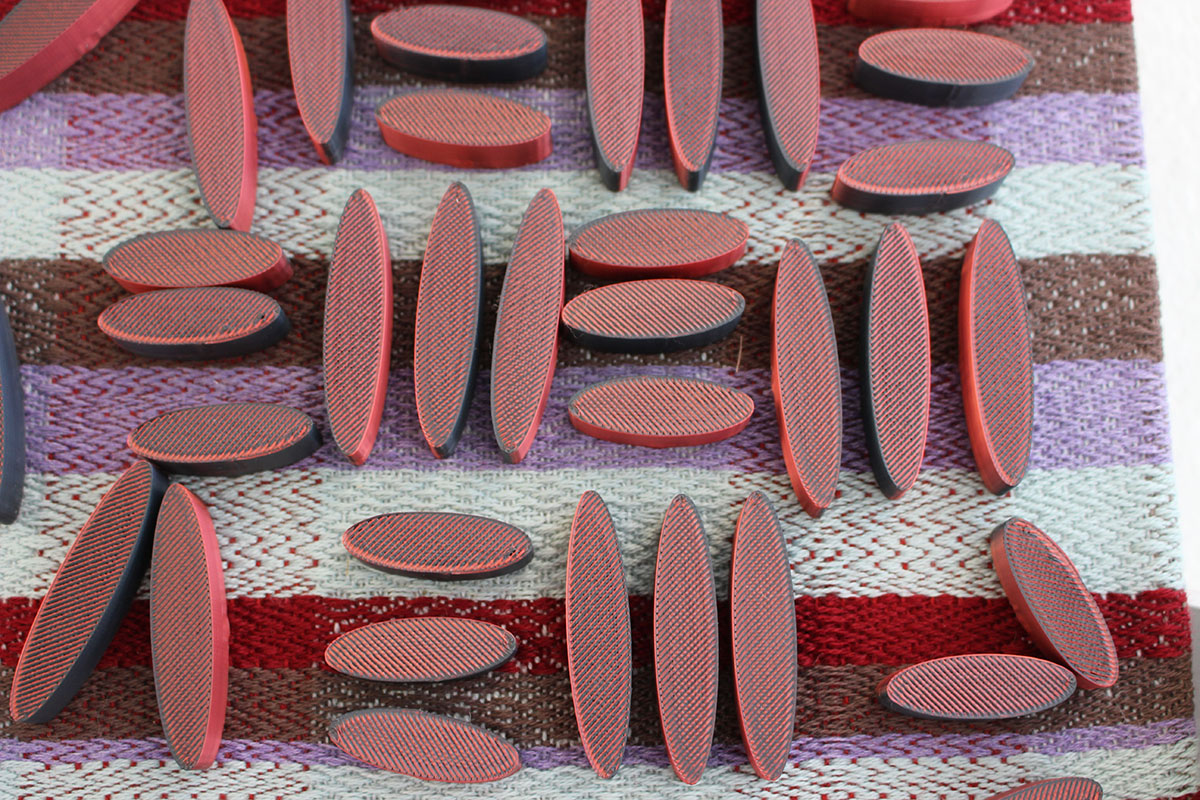
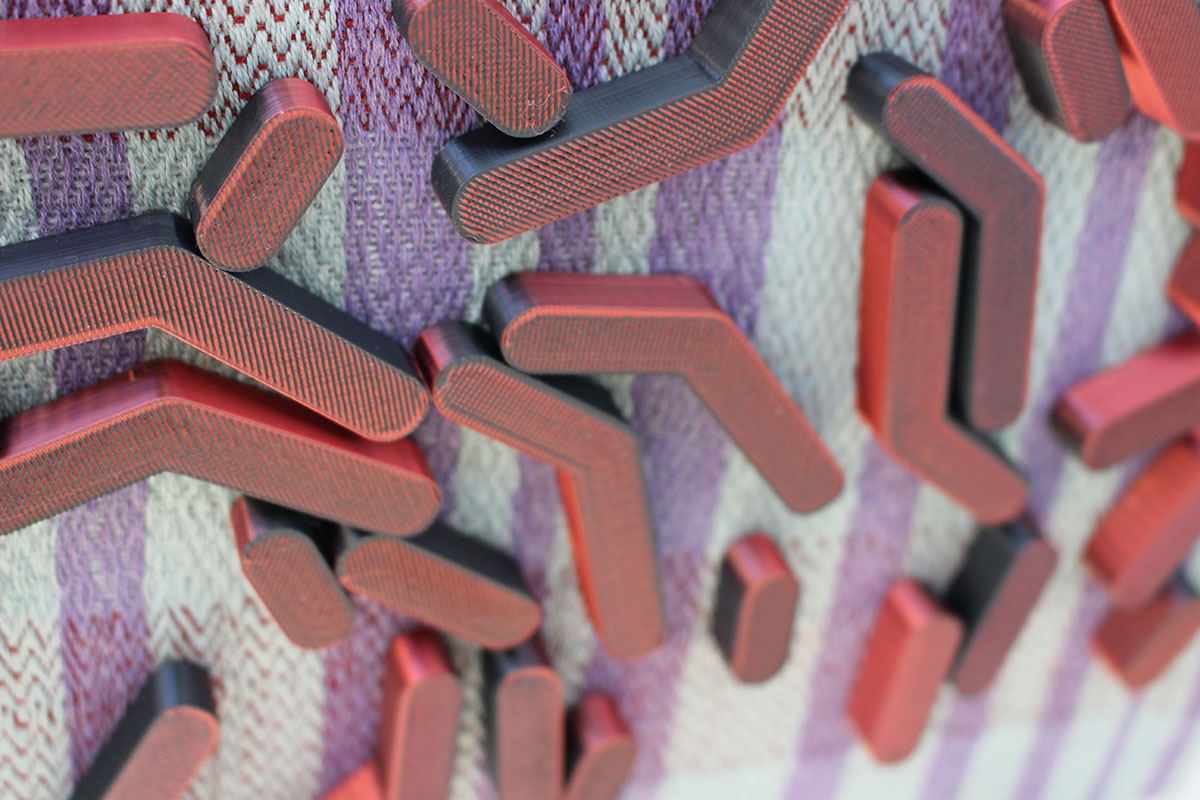
Magnetic woven board with 3D printed magnetic shapes
This project is also informed by the social nature of analogue games, where interaction takes place through shared time and physical proximity. These moments of gathering and exchange are central to understanding play as a lived experience rather than a purely conceptual system. Through this exploration the project positions games as more than structured activities, instead understanding them as material and social systems that can be reinterpreted through making. It considers how processes of craft and fabrication can reflect the logic of play and how tactile engagement can reveal the quieter embodied dimensions of interaction, memory and shared experience.
Alongside this the project draws subtle inspiration from overlooked urban details such as drains, gutters and other functional infrastructures. These elements are typically designed to go unnoticed, yet they reveal intricate patterns of use, erosion and flow when observed closely. These elements share a lot in common with traditional analogue games as they both often bear grids and recurring patterns. They both rely on strict physical or mathematical boundaries in order to dictate behaviour. They also often both use a minimalist geometric interface to hide a highly complex system.
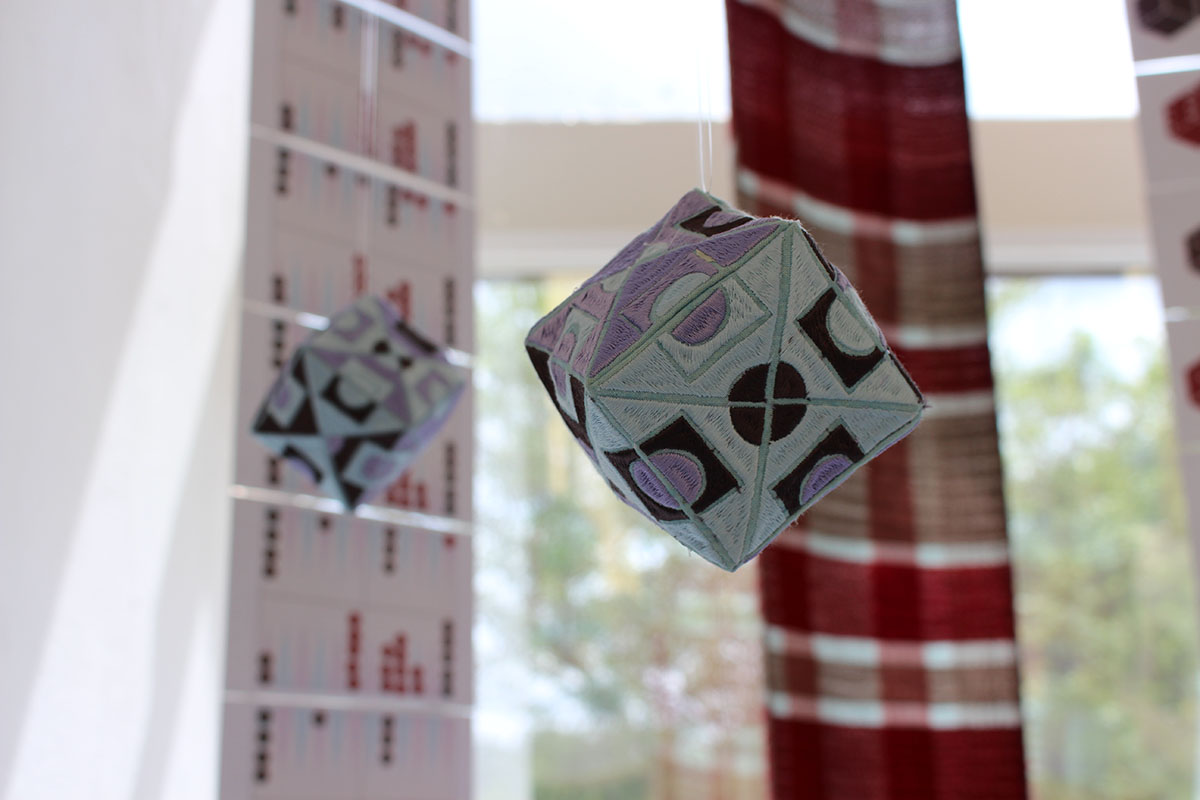
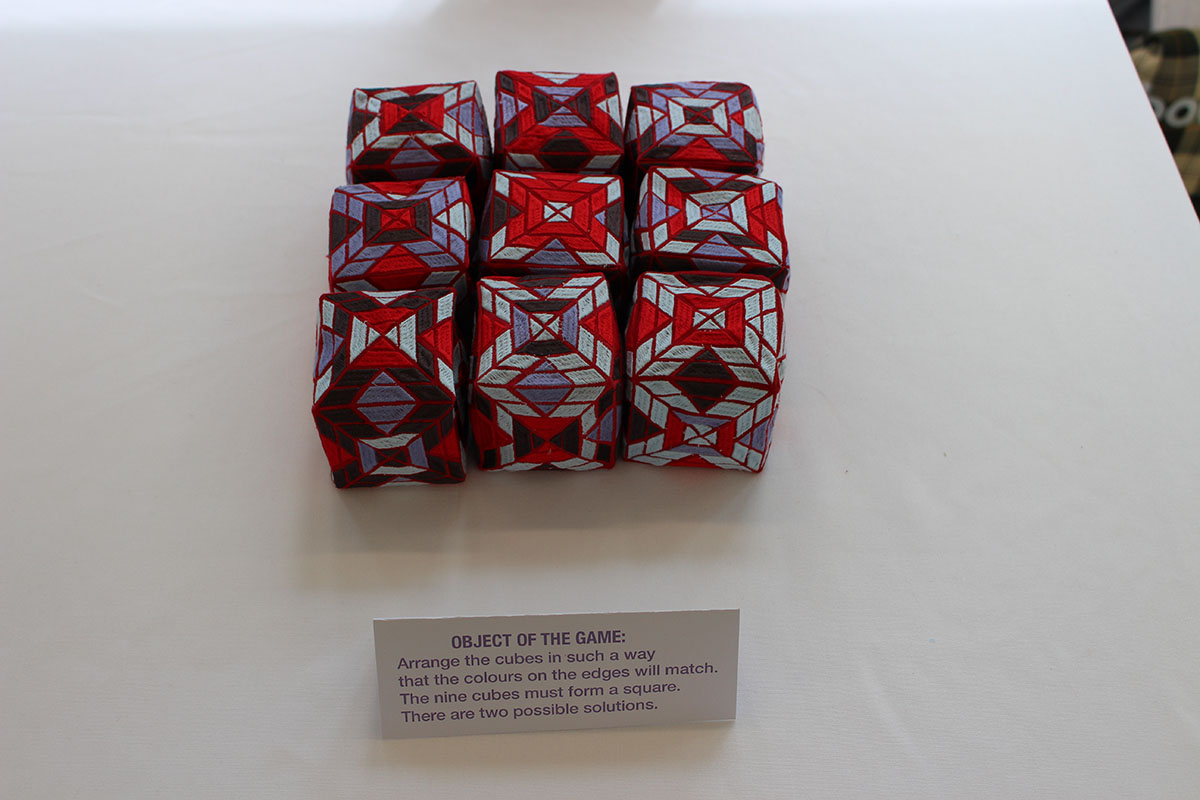
9 Blue dyed cubes with digitally embroidered geometric patterns. Each cube is different, and each side of each cube is different. All nine cubes can match up to make a ‘perfect’ square, in which all of their edges match up perfectly with the same colours.
Table in degree show, where people are able to sit and interact with pieces
9 Red cubes with digitally embroidered geometric patterns. Each cube is different and each side of each cube is different. All nine cubes can match up to make a ‘perfect’ square, in which all of their edges match up perfectly with the same colours.
3D print on mesh
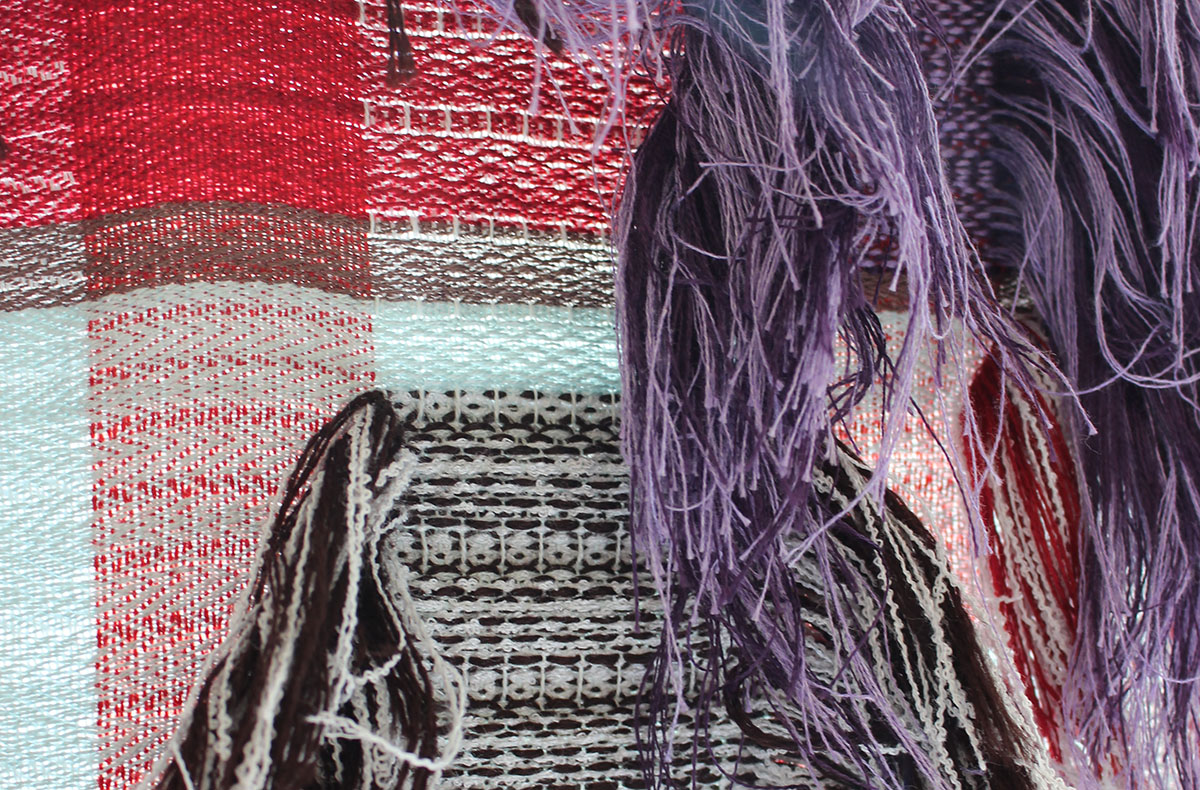
Woven fabric inspired by a game of chess
Final pieces photographed together
Magnetic woven board with 3D printed magnetic shapes