Specialising in woven textile design and embroidery, I have a passion for heritage crafts and the natural world. Using sustainable materials and dyes, I create textiles that provoke conversations around nurturing and protecting the environment.
Save Our Soil
This project explores the concept of rewilding, inspired by the Knepp Castle Estate in West Sussex. With land that had been over-farmed for generations, the Burrell family made the bold decision to let the land go wild. They reintroduced cattle, wild horses, pigs, deer and eventually beavers to regenerate the land. Within a few years rare birds, beetles, and butterflies began living, nesting, and creating a balanced, thriving habitat. The practices followed at Knepp are viewed as the gold standard for soil regeneration and rewilding.
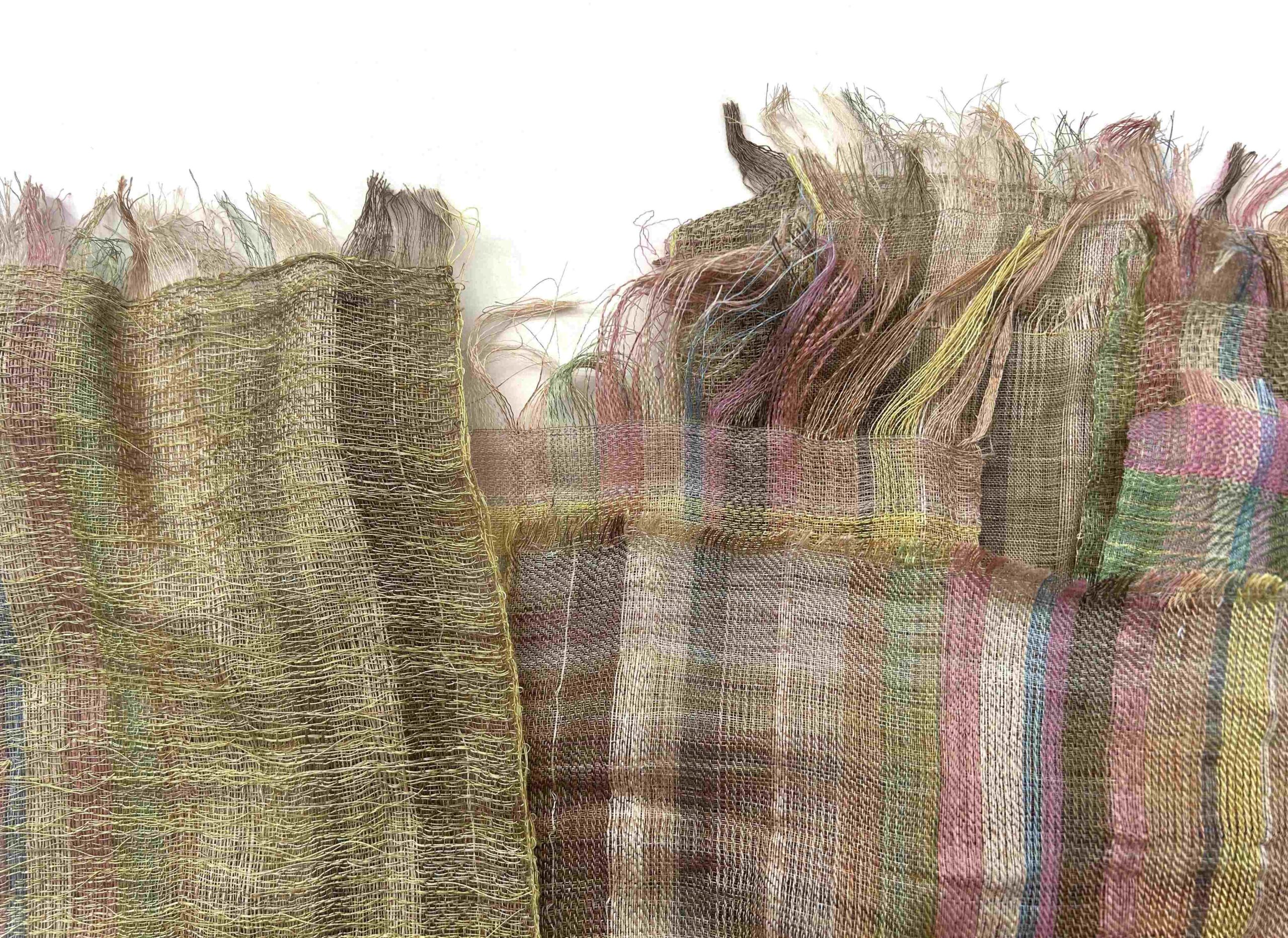
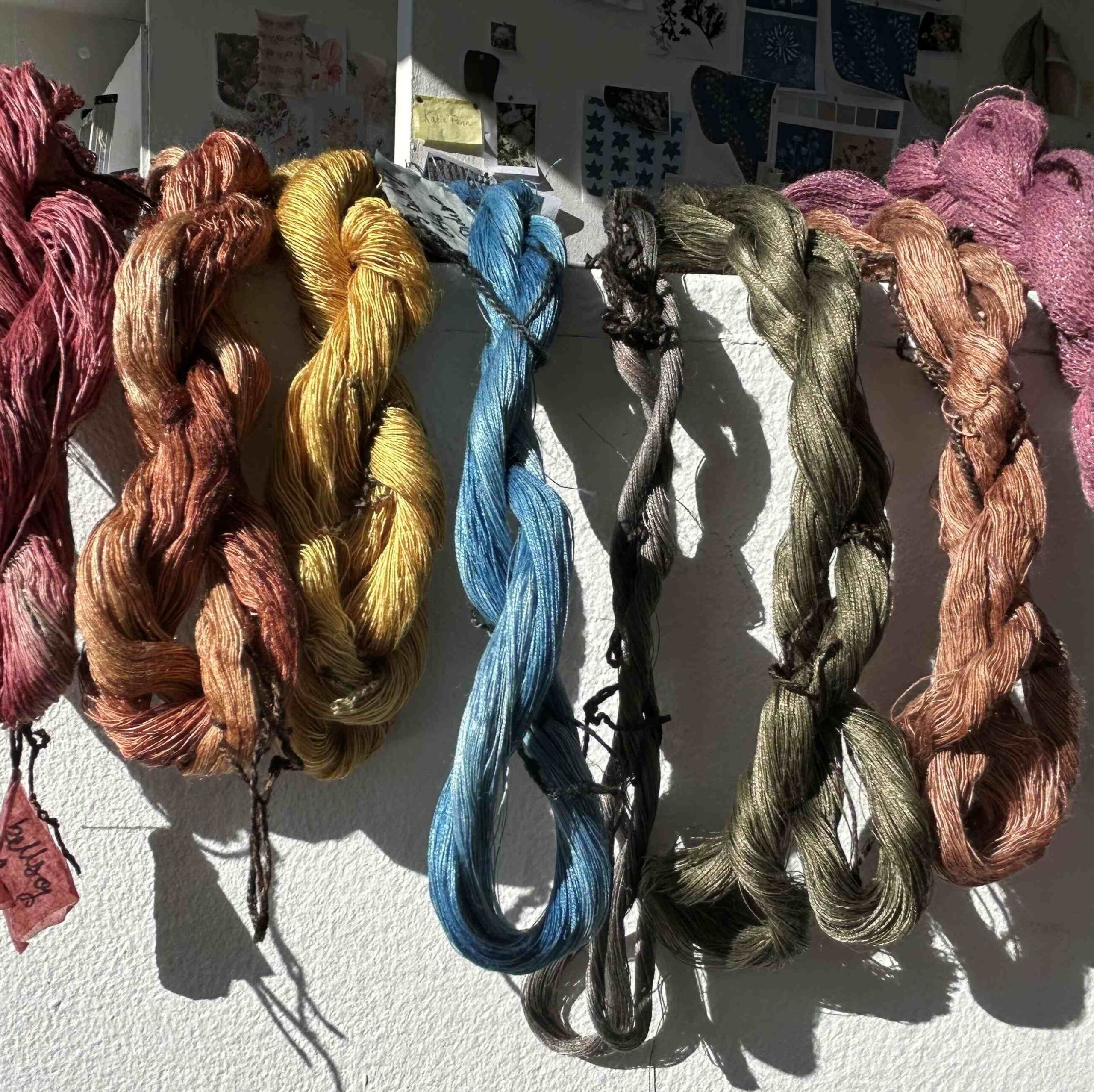
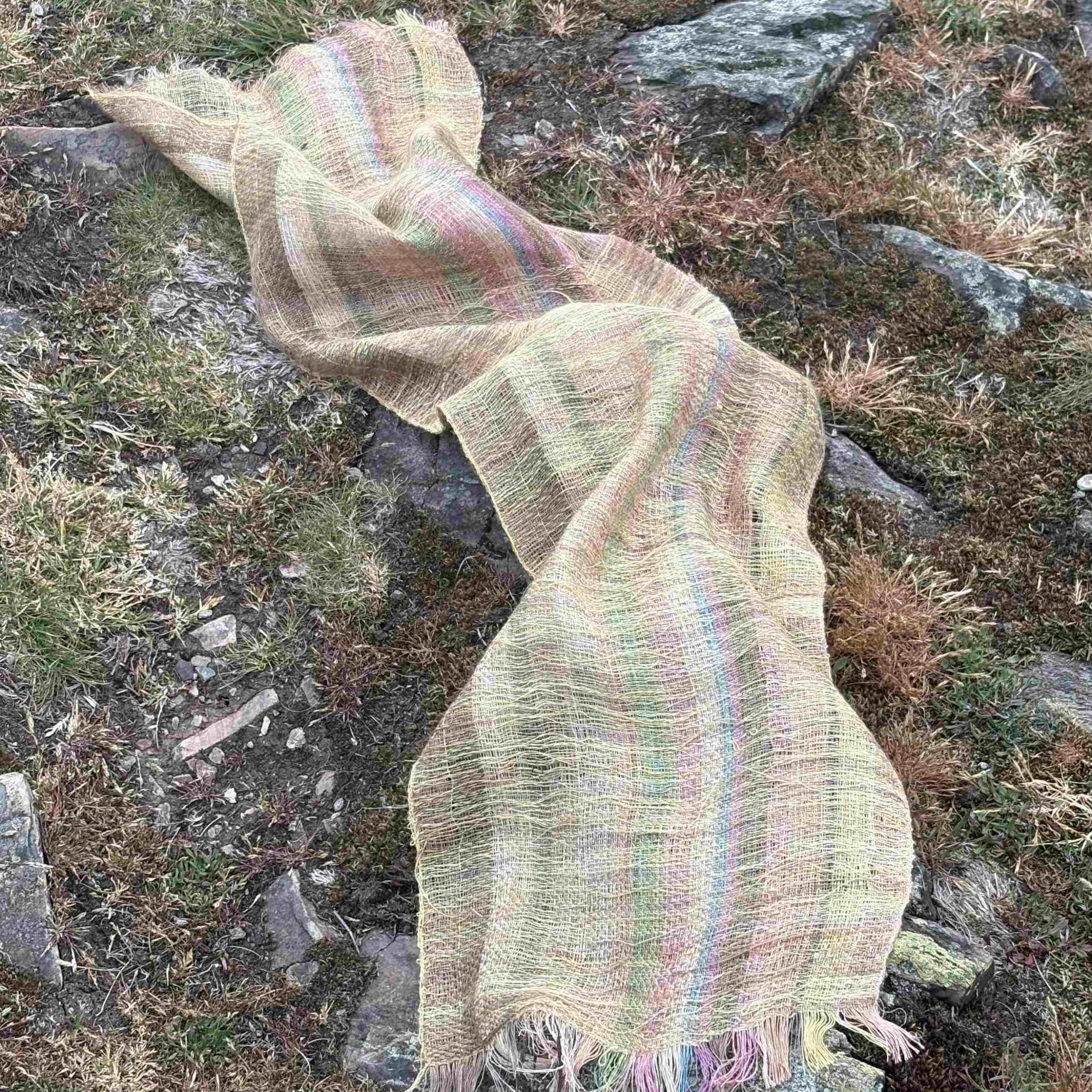
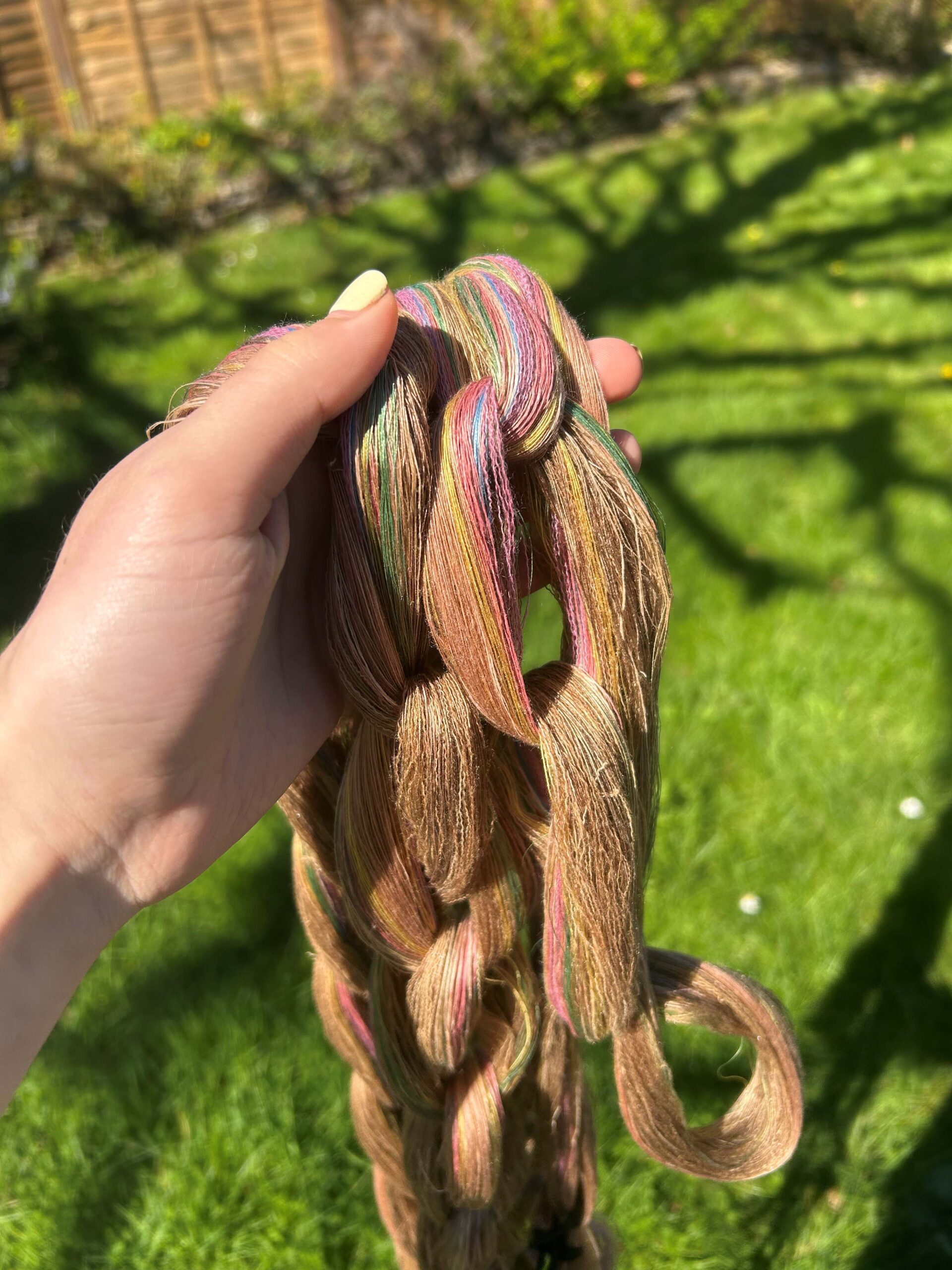
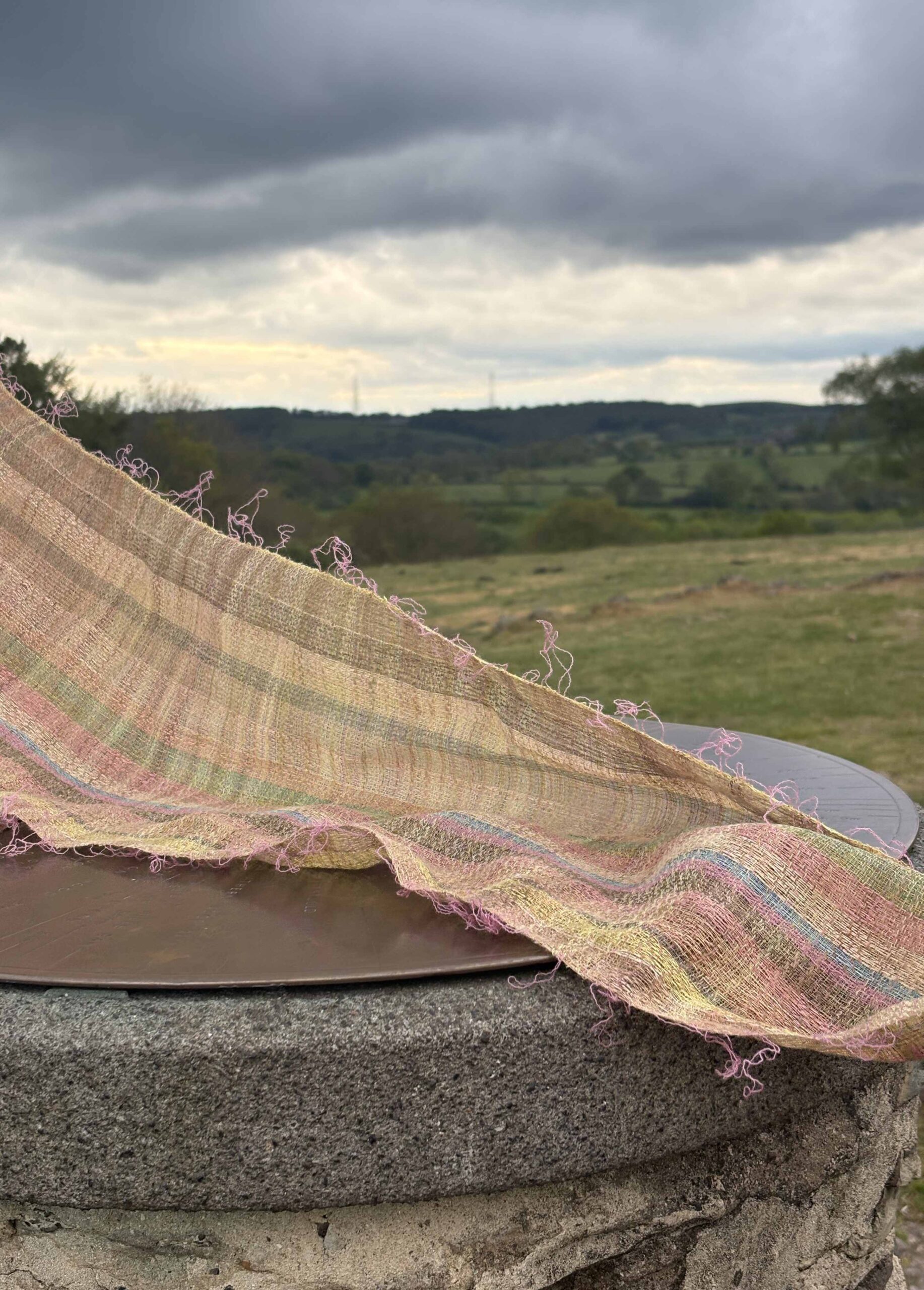
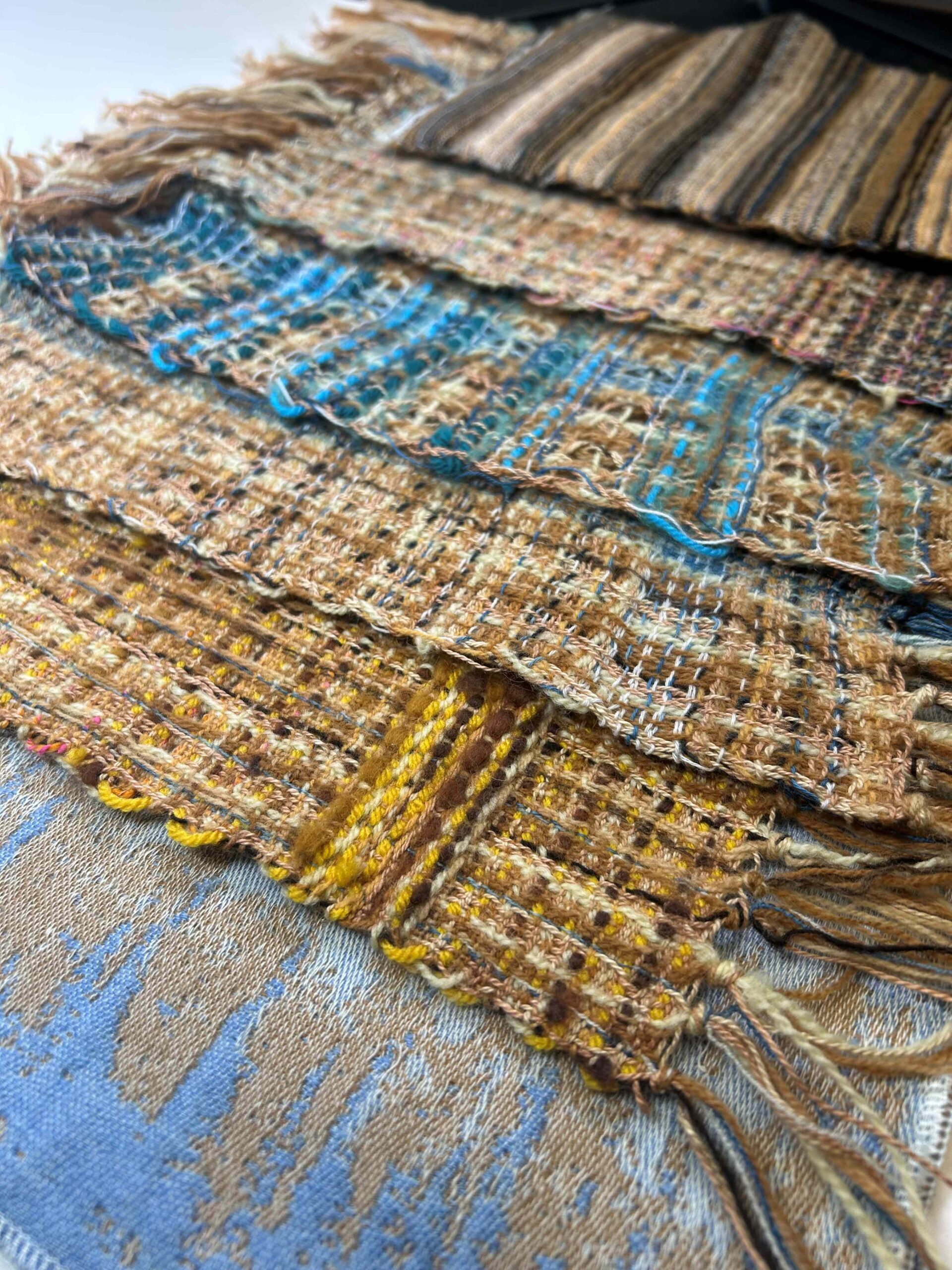
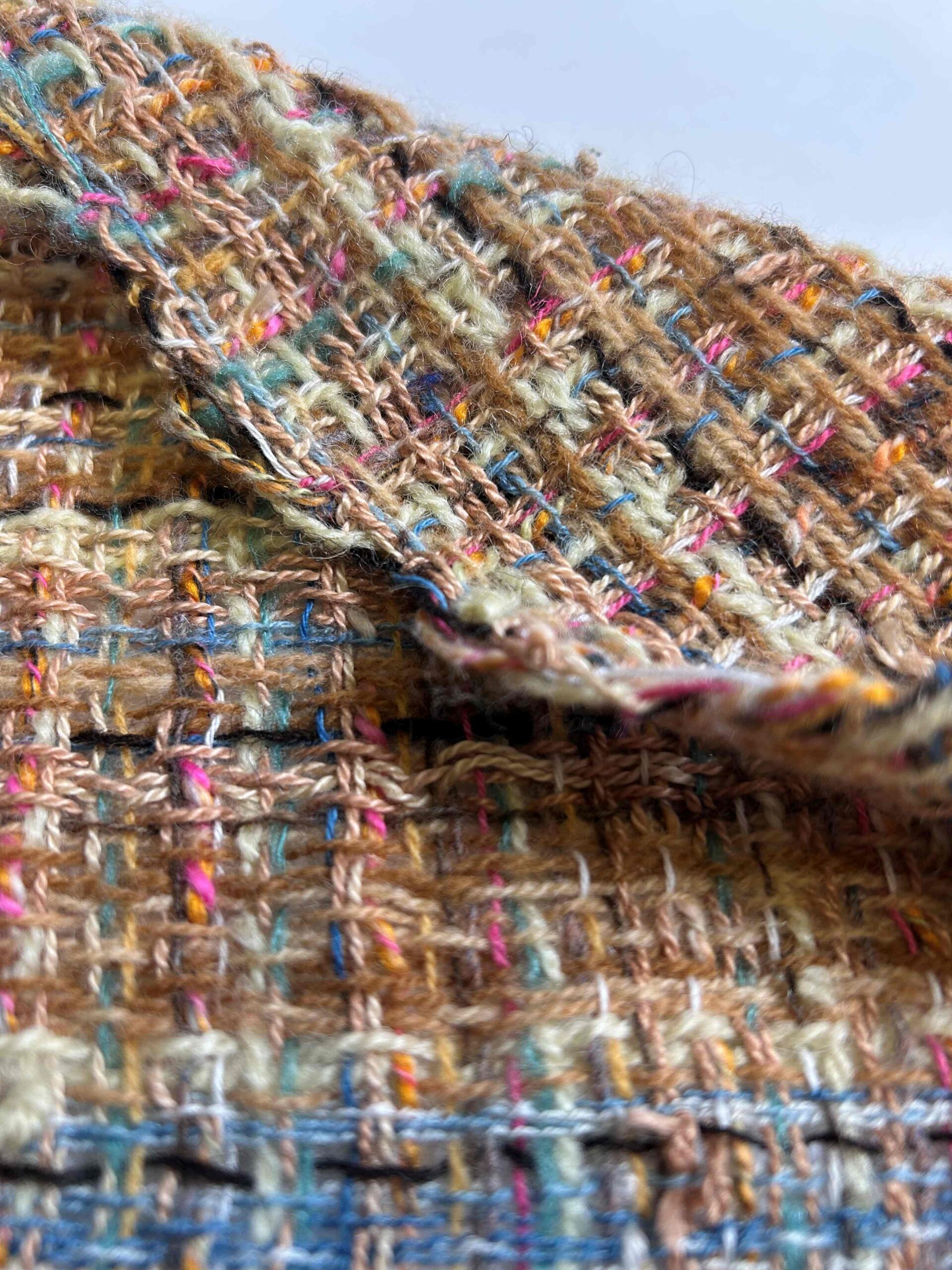
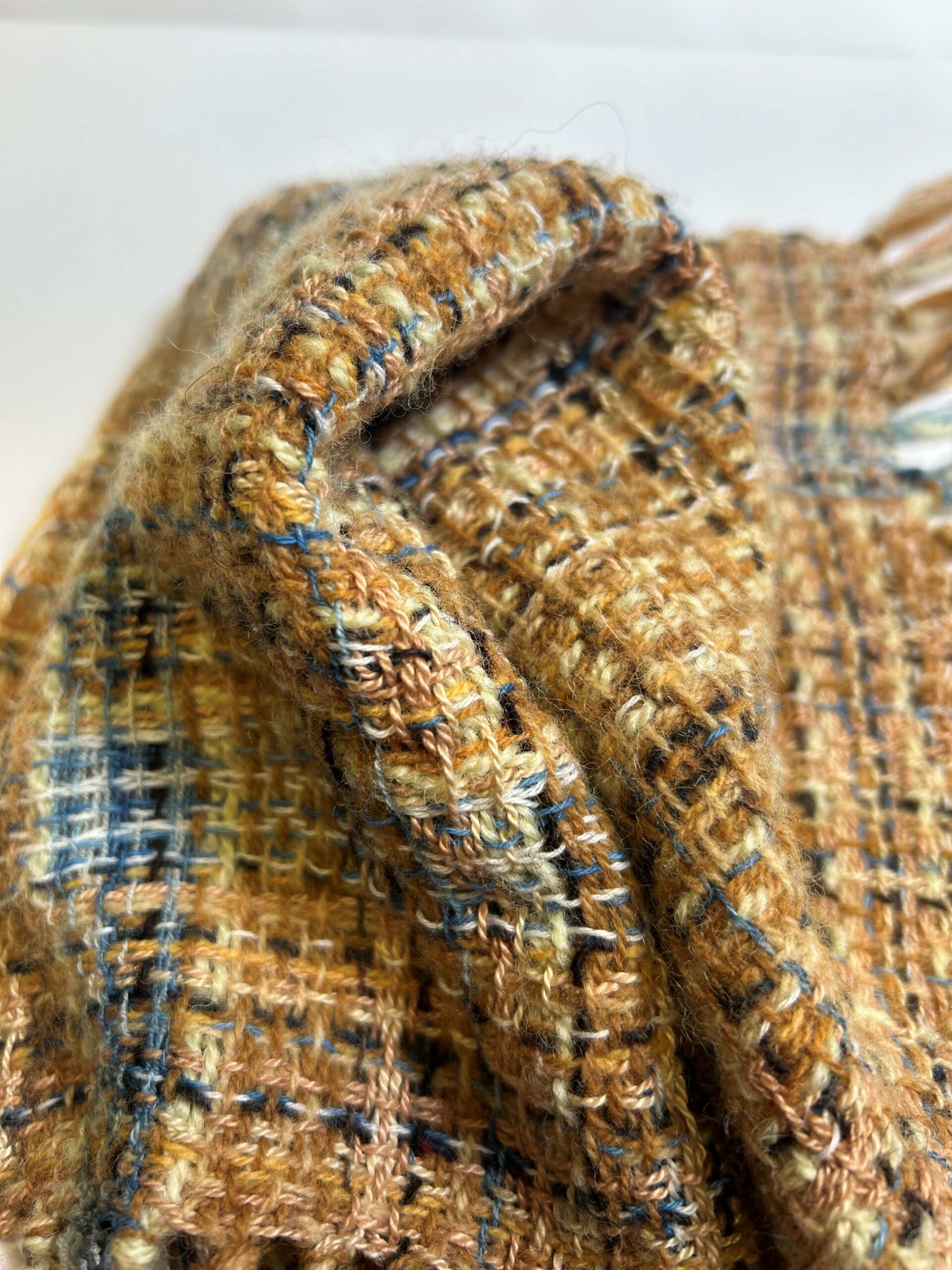
The woven outcomes were made with natural yarns, including silk, hemp, wool, and nettle. Each has its own properties and illustrates both the strength and fragility of nature. Aware of the damage synthetic dyes do to the environment, I used natural dyes to create a range of bright and deep tones, inspired by Victorian colour trends with a modern twist. Each colour represents an aspect of my research and developmental stage. For me, the most important colour is dark brown. Unhealthy dirt is light brown, dry and lacking in carbon. Healthy soil is a chocolate brown colour, carbon dense and absorbs rainwater easily. Using meticulously selected natural dyes such as lac, fustic, logwood, red onion skins, acacia, and Earl Grey tea each thread showcases the soft pinks, blues, bright greens, yellows, light browns, and most importantly, dark browns.
Hanks of freshly dyed yarn.
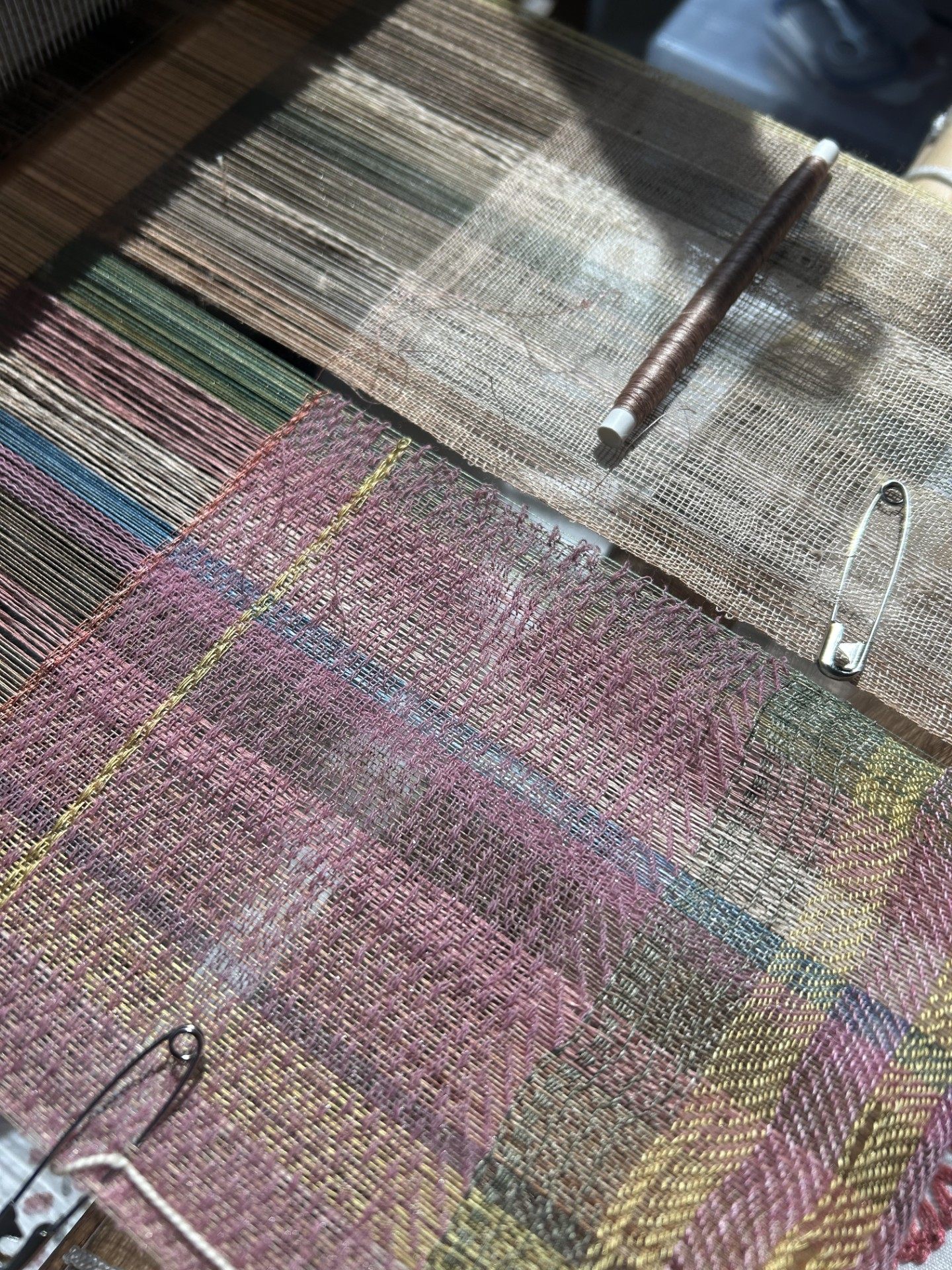
A final woven sample.
Handwoven designs draw attention to the importance of rewilding, regeneration and reintroduction to heal nature. When humans let a field go wild, all the plants and animals – from the smallest microorganisms to the oldest oak tree – work together in harmony.
The designs shine a light on what humans can do to restore nature and will be applied to the Pink Dining Room at Dumfries House, Scotland. The King’s Foundation saved the 300-year-old house and rewilded the gardens, increasing biodiversity and providing employment for the local community. In the dining room, guests eat food grown using regenerative agriculture practices, and the woven textiles aim to encourage conversations about rewilding.
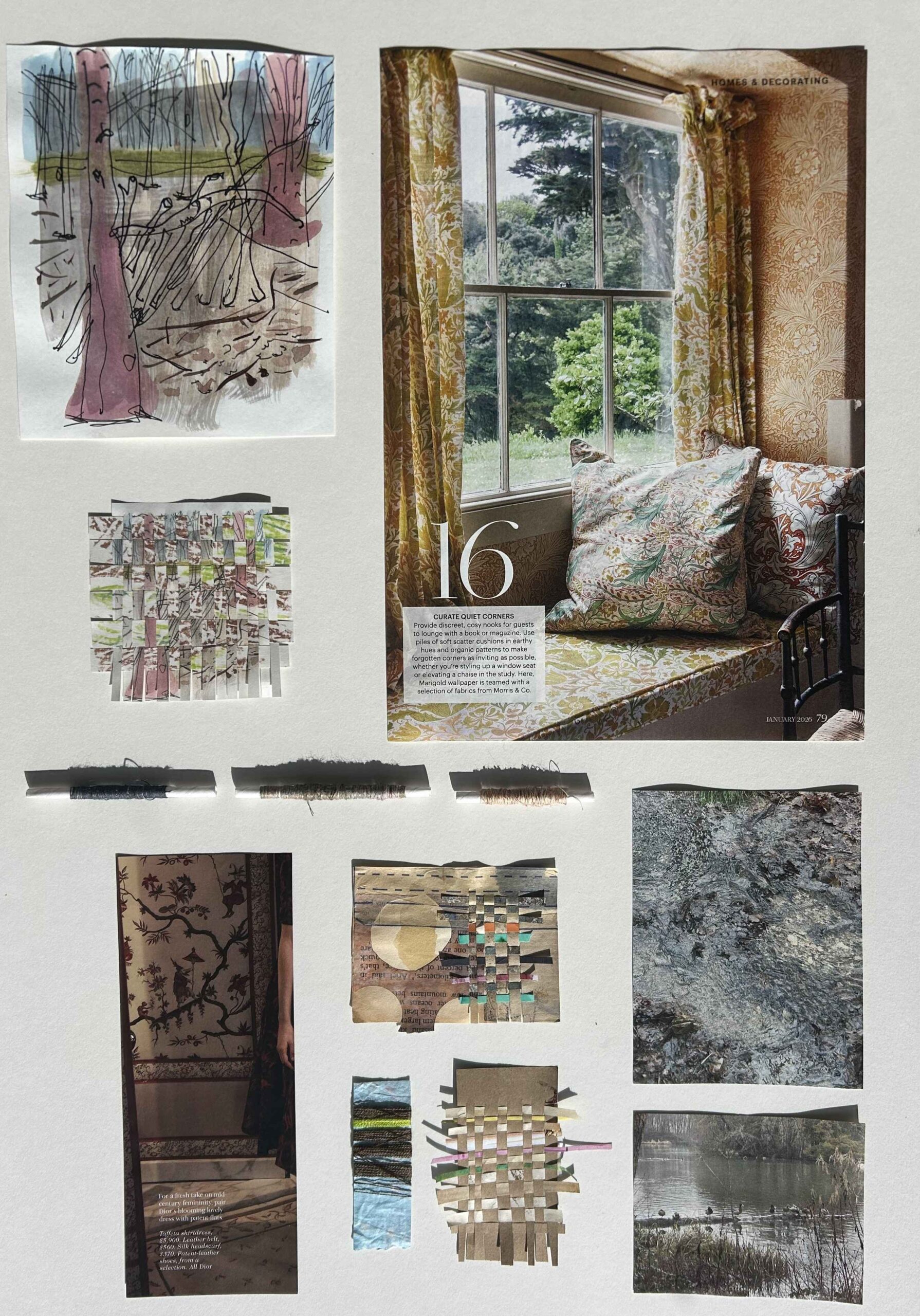
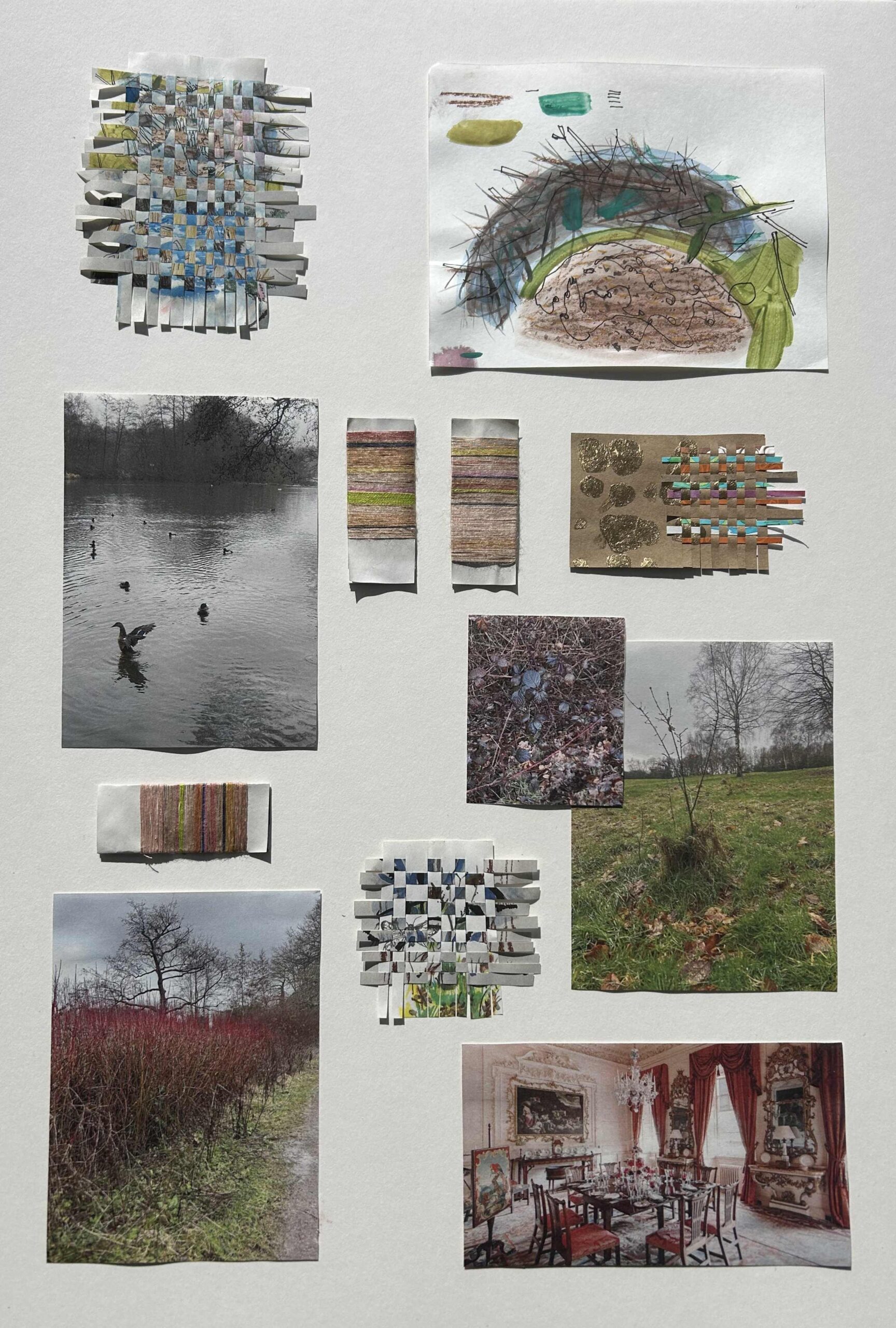
Moodboards with paper weaving, first hand photography, second hand inspiration, mix media drawings and yarn wraps.
Project Development
With a deep respect for heritage crafts and trends, the use of colour is inspired by Victorian interior design and is a celebration of the cultural leaders of the time, including Morris, Ruskin, Darwin, and the Pattle sisters and the rooms they gathered in.
For the technical practices of woven and embroidered textiles, the materials guided me. Embracing the wild and letting go became a technical and conceptual practice. In the same way that nature flourishes on interdependencies across flora and fauna, this project integrates heritage weaving techniques with contemporary digital embroidery. My woven samples play with the dichotomy of wildness and control. Using my creative intuition, I expressed the untouched natural world through drawings and colour. I used highly controlled mediums (weaving and digital embroidery) to express this concept, while letting the materials, mistakes, colours and humanity shine through.
Weaving ‘dirt’ and ‘soil’.
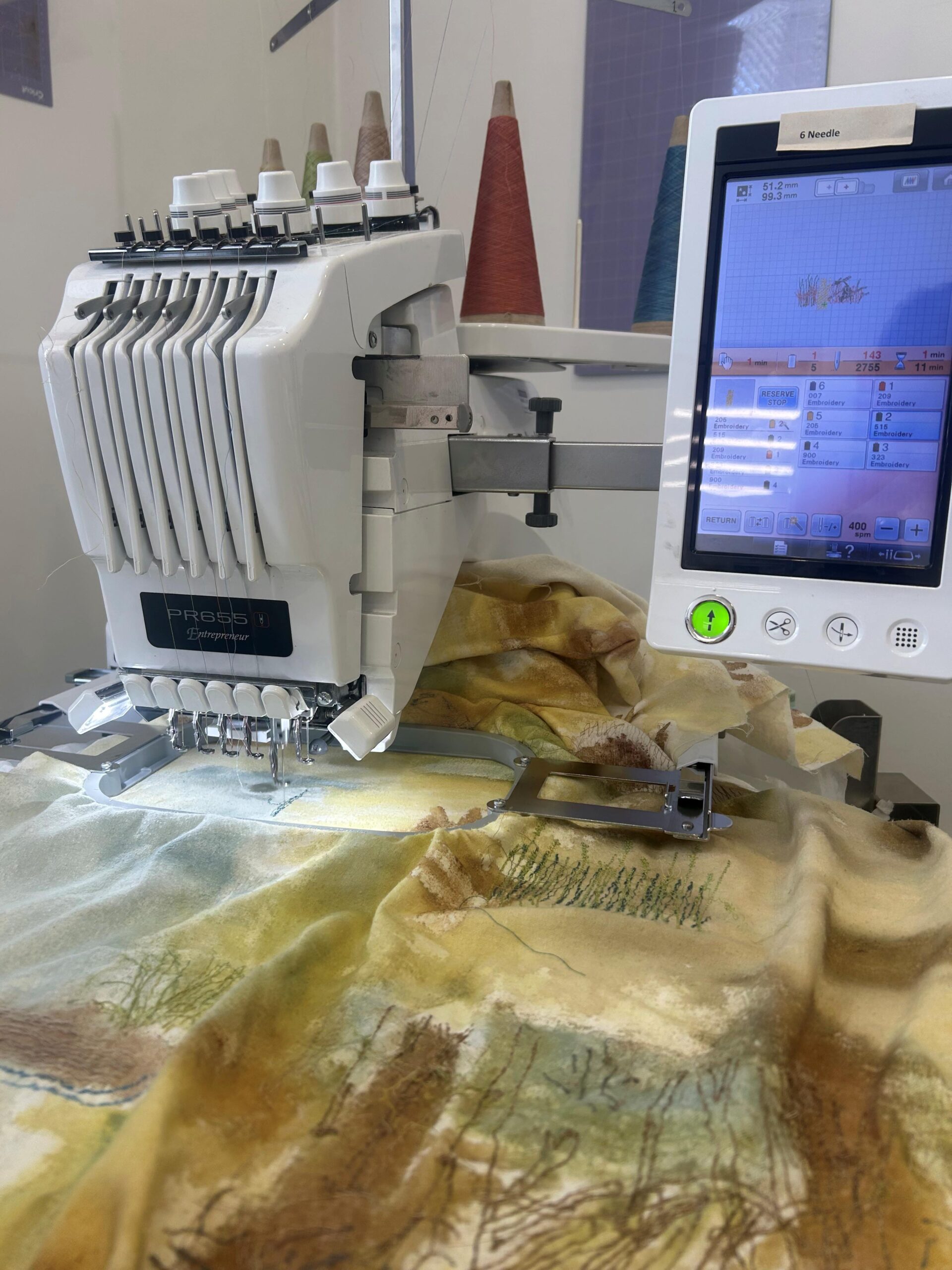
Digitial embroidery using naturally dyed yarns.
I experimented with hand-dyed hemp, silk, and nettle on the digital embroidery machine, an unusual practice for this technique, as polyester and viscose yarns are typically used. I digitised the files in Wilcom to produce the desired effect once stitched out.
The project aimed to bring hope back to the environmental conversation and awareness that we already have the tools we need to restore our environment and slow the pace of climate change.
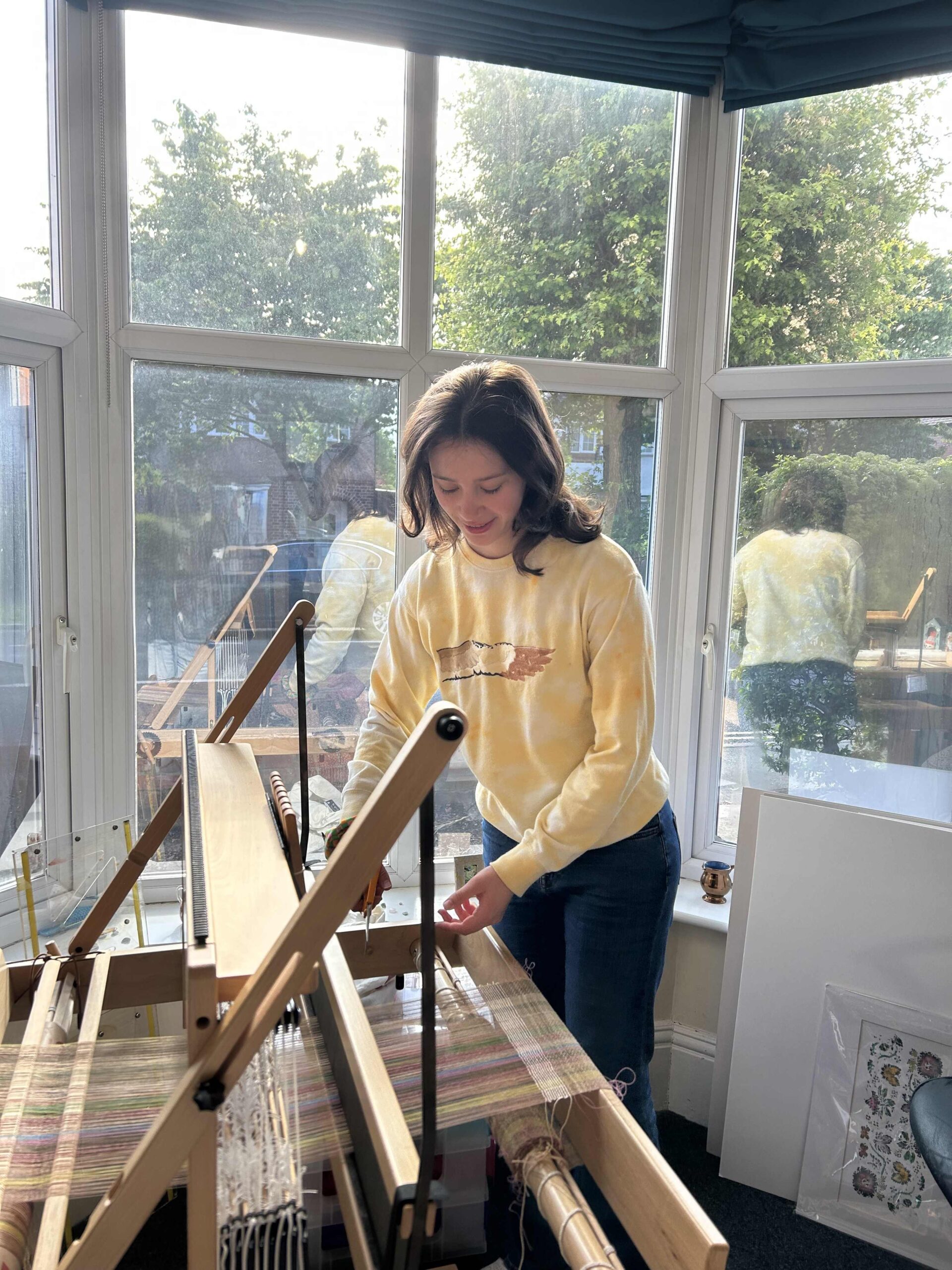
Warp colours in the sun.
Cutting off my final wovens.
A final woven sample.
Previous Project – Space to Breathe
One of the many ripple effects of COVID-19 is the intense working patterns we’ve adopted. Stressful deadlines, the hustle culture, increased illness, and lack of boundaries between work and home negatively affect people.
This project was about taking better care of ourselves. Light a candle and crack open your comfort read, perhaps? Or sit snuggled under a mountain of blankets, sipping peppermint tea. The Danish have a word for this, “hygge”, and they take rest very seriously. This project aimed to help people give themselves space to breathe and ease gently into finding rest.
A balance between rest and work is one that every animal must weigh up. I was inspired by birds, which start much like humans: dependent and demanding. However, once we fly the nest, the patterns in our behaviour diverge as humans focus on nurture and birds rely on nature to survive. There is much we can learn from instinctual living.
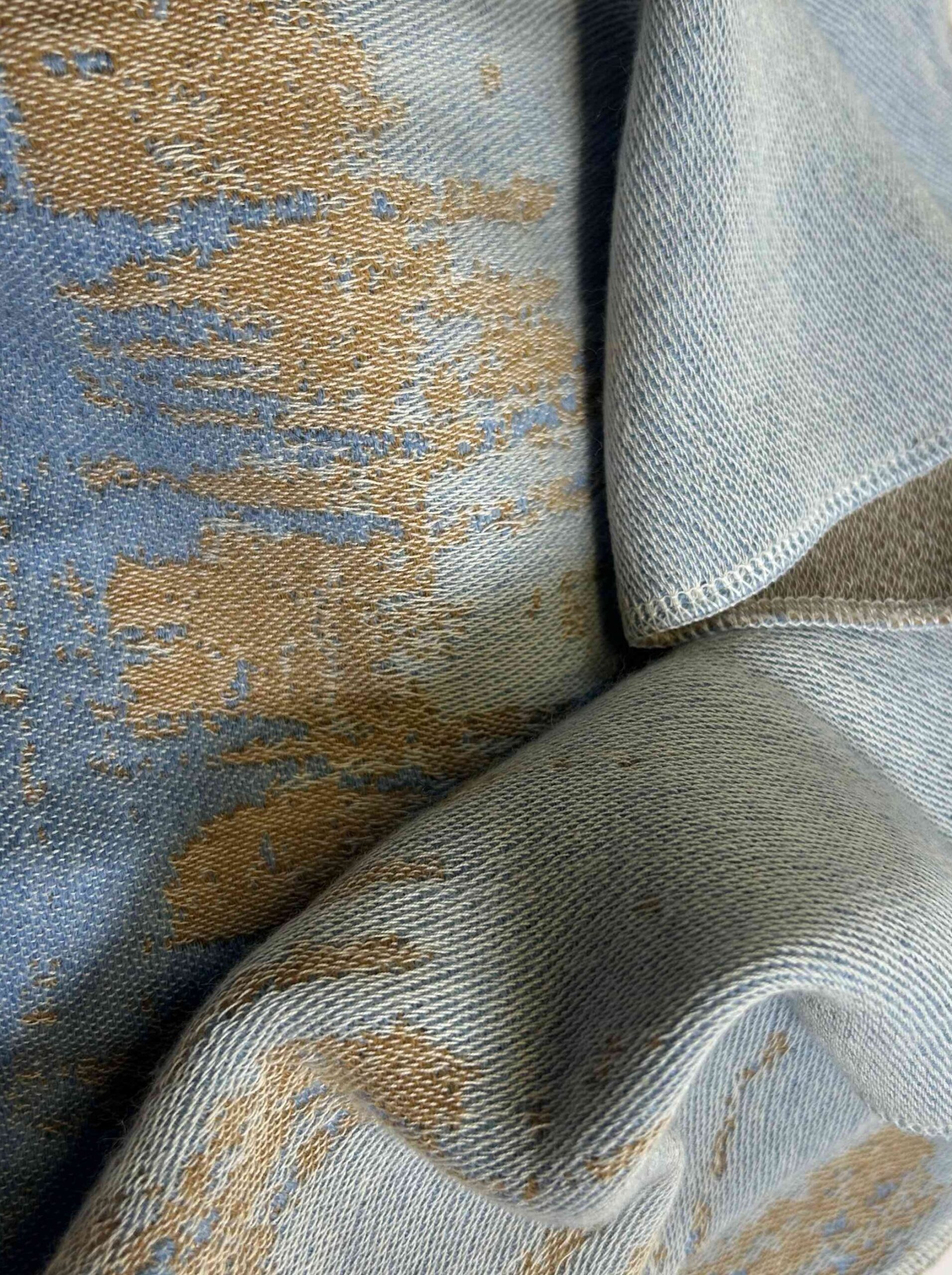
I focused on weaving on a loom to test and trial drafting and lifting plans, and experiment with different structures. On the jacquard loom I explored co-creating wovens with birds by recording their calls and translating the spectrograph image into a jacquard file in Scotweave. The materials used were chosen with circular design in mind. My use of colour was experimental as I aimed to translate bird behaviour, colour shifts and birdsong into constructed textiles.