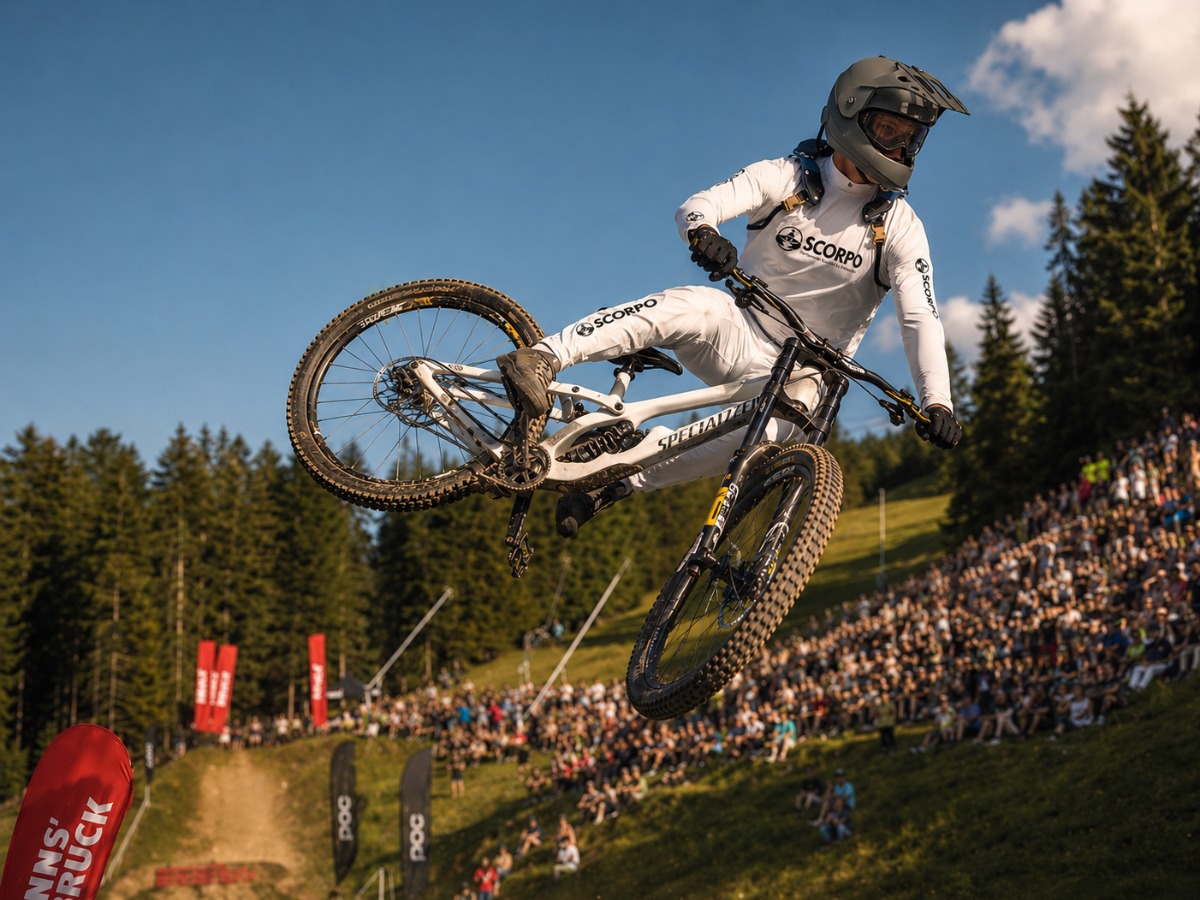
I am an outdoors-driven individual with a passion for mountain biking, bringing together a creative design background and ambitions in design engineering, supported by my experience as a cost engineer at Nissan to develop practical, performance-driven products for real-world environments.
SCORPO – A Neck Protection System for Downhill Mountain Biking
The Problem
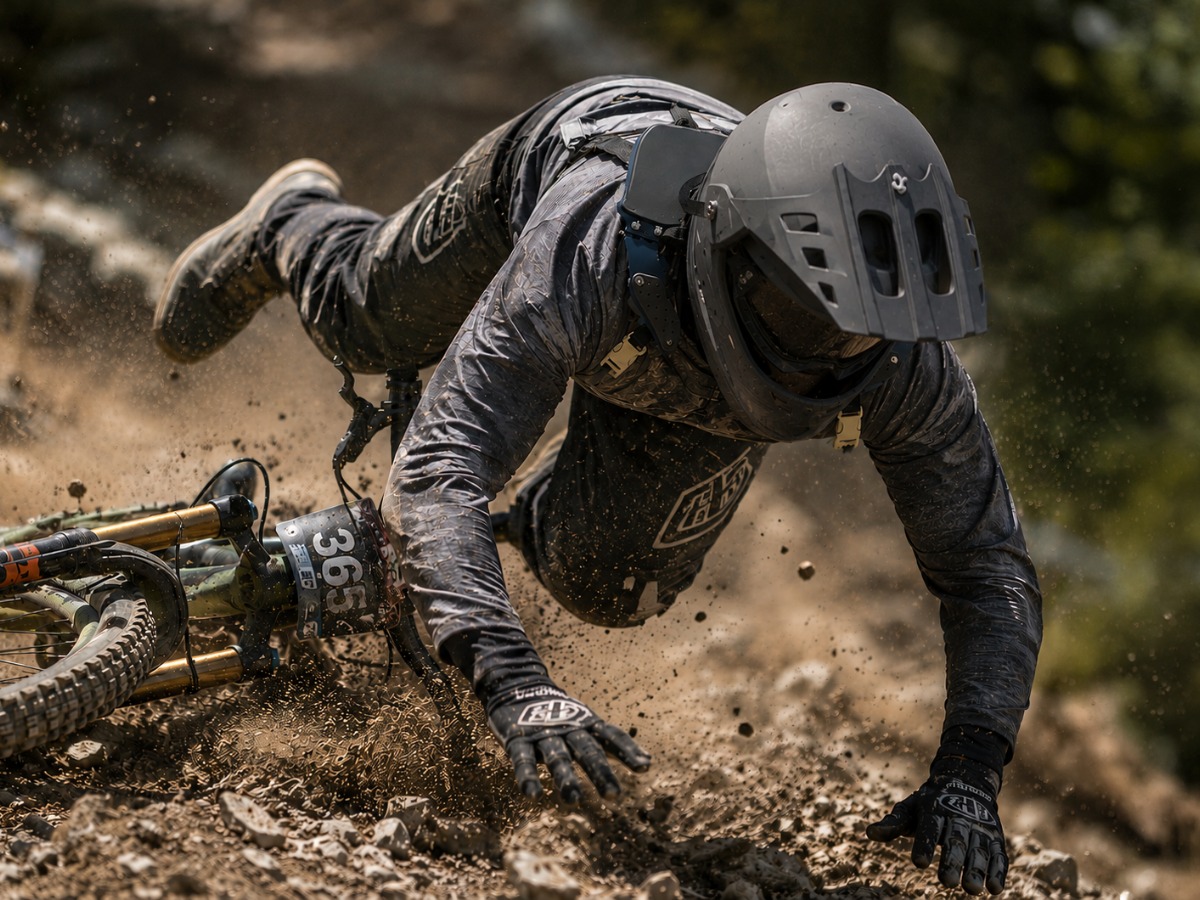
Mountain biking continues to evolve, with trails becoming more technical and riders pushing for higher speeds and faster times. This progression encourages greater risk-taking, often resulting in more frequent and severe crashes. While neck braces are available on the market, they are often perceived as bulky, uncomfortable, and restrictive, leading to low adoption rates. As a result, many riders remain unprotected, leaving the neck particularly vulnerable to injury.
The Solution
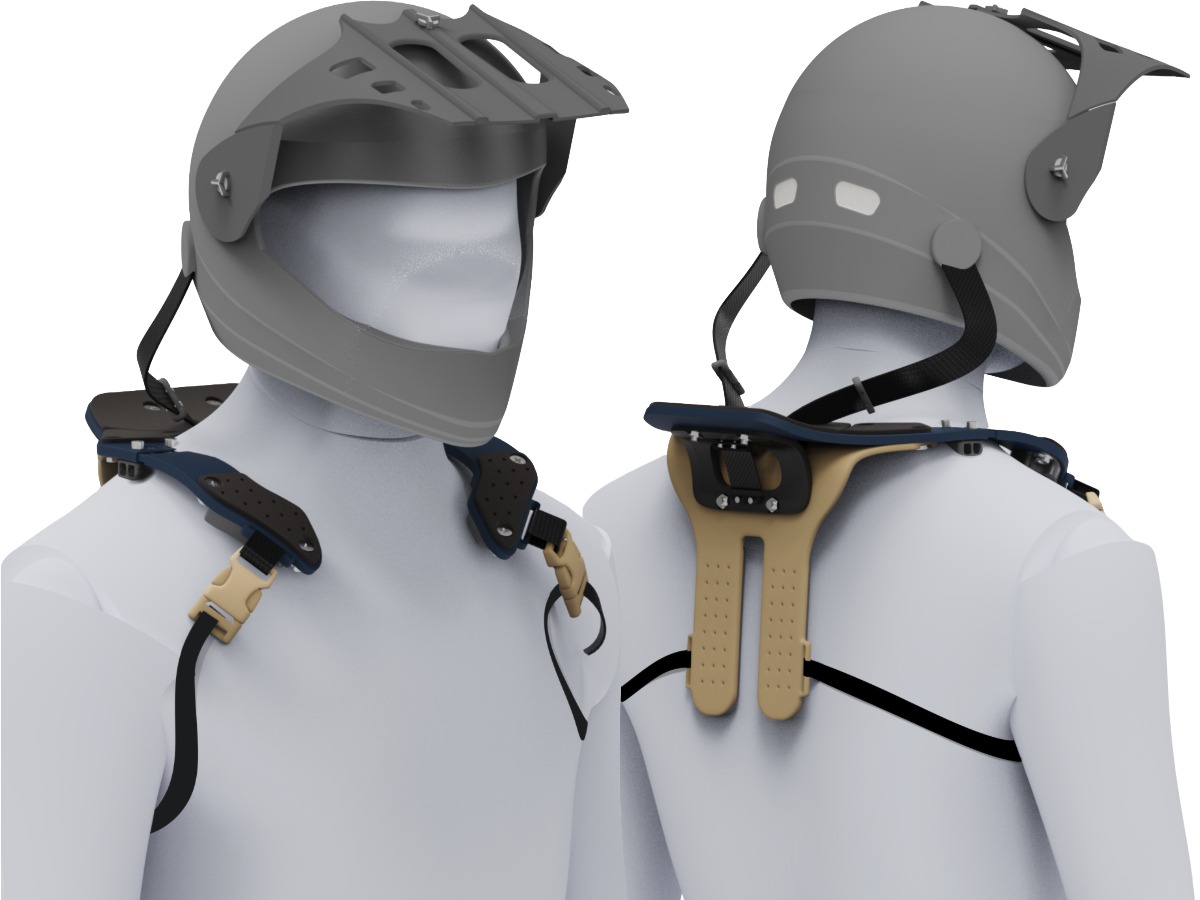
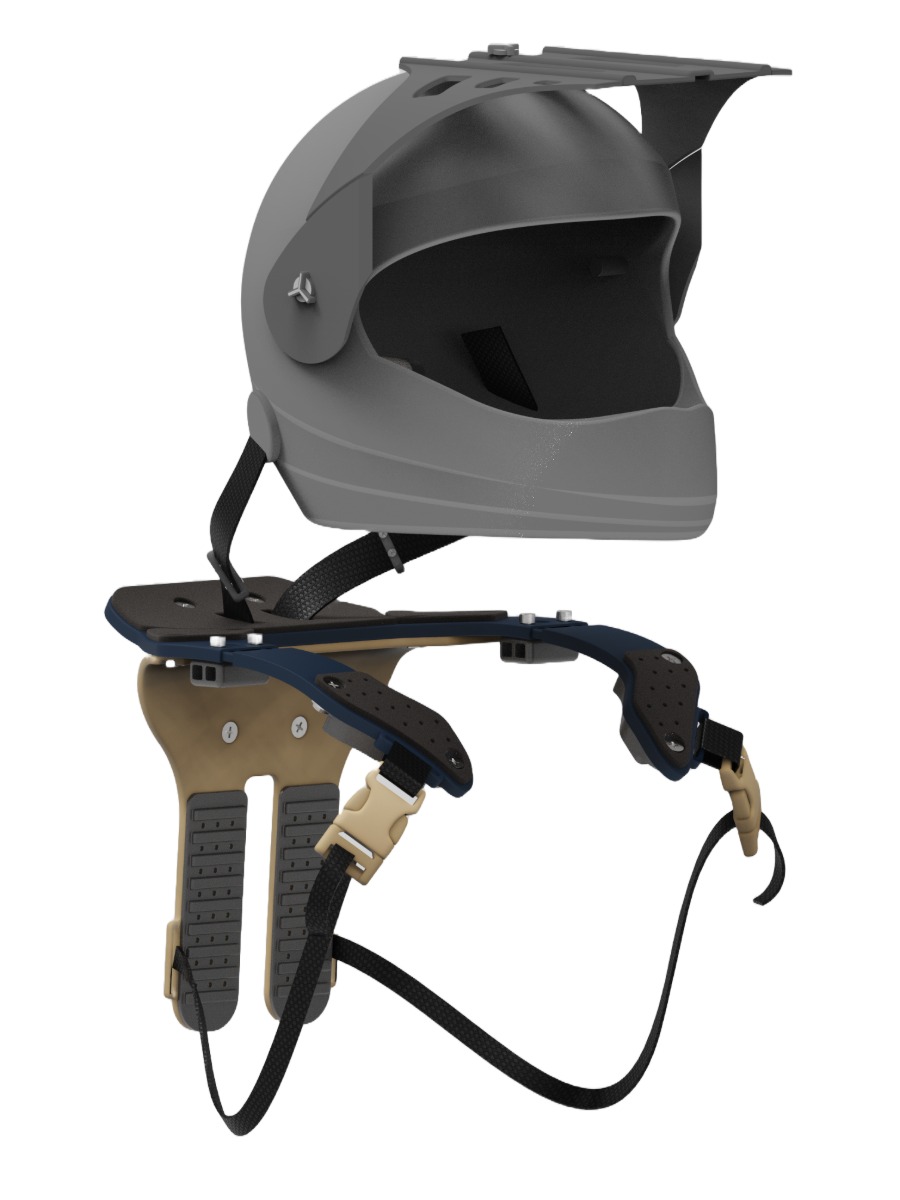
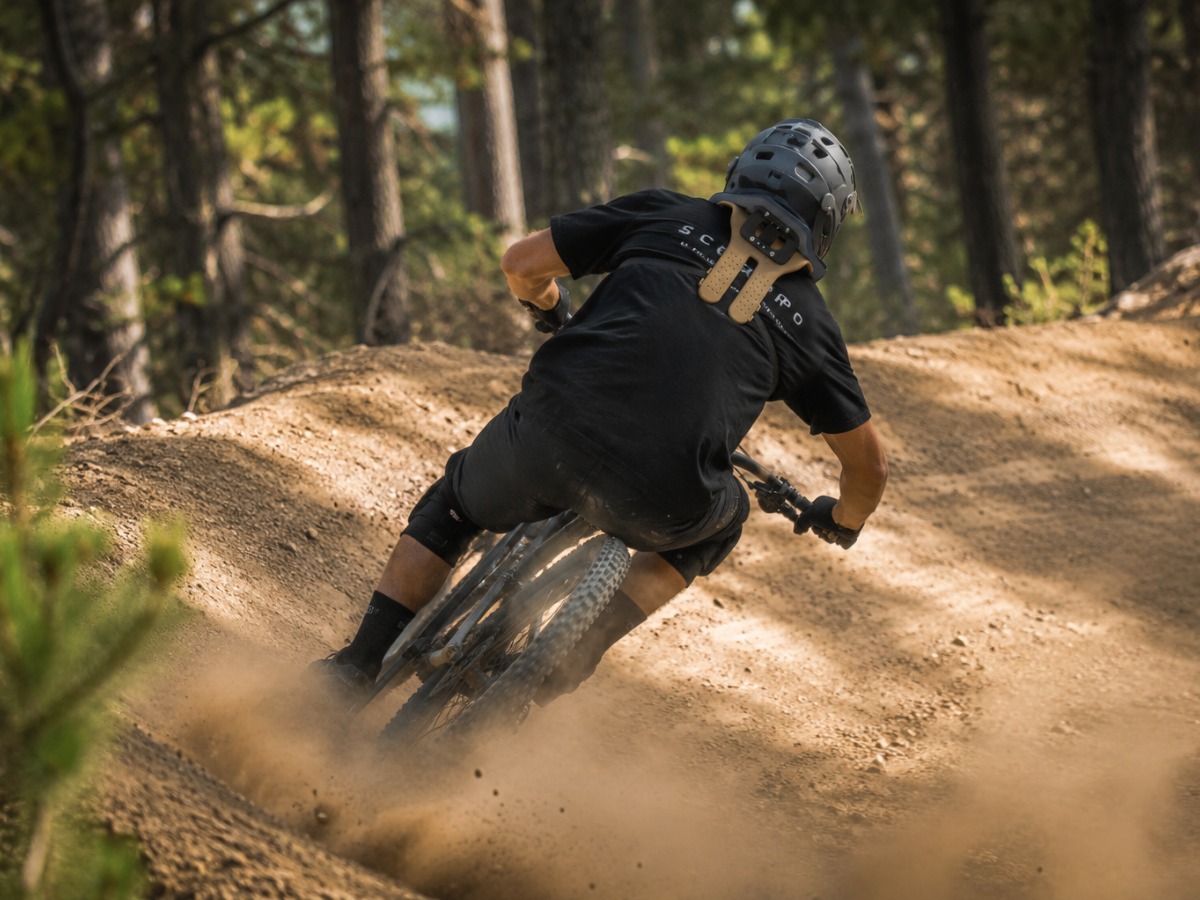
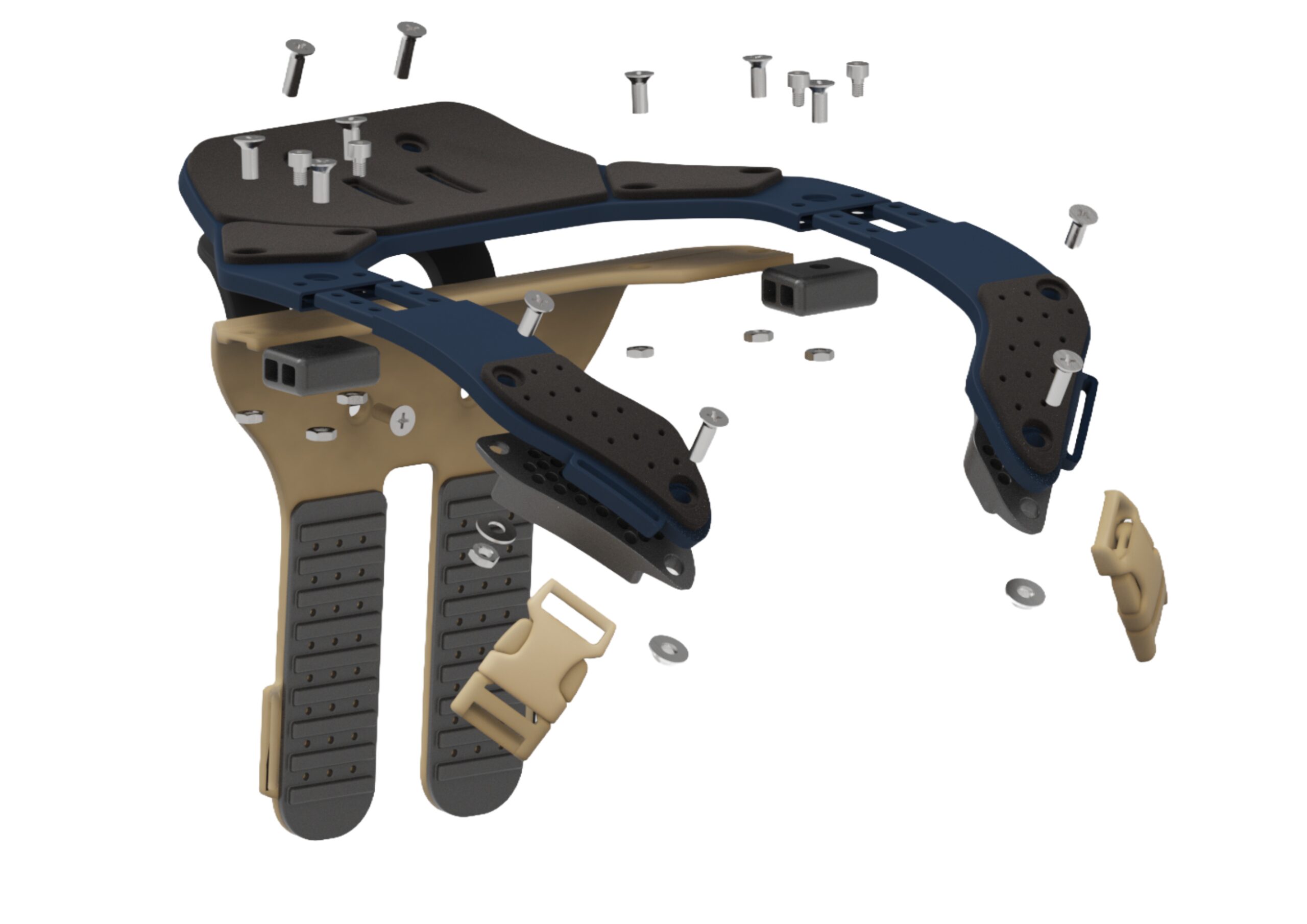
A neck brace system integrated with a full-face helmet, designed to distribute impact forces away from the neck while maintaining comfort and mobility. It features an ergonomic frame, harness, and tether system that controls head movement to enhance rider safety.
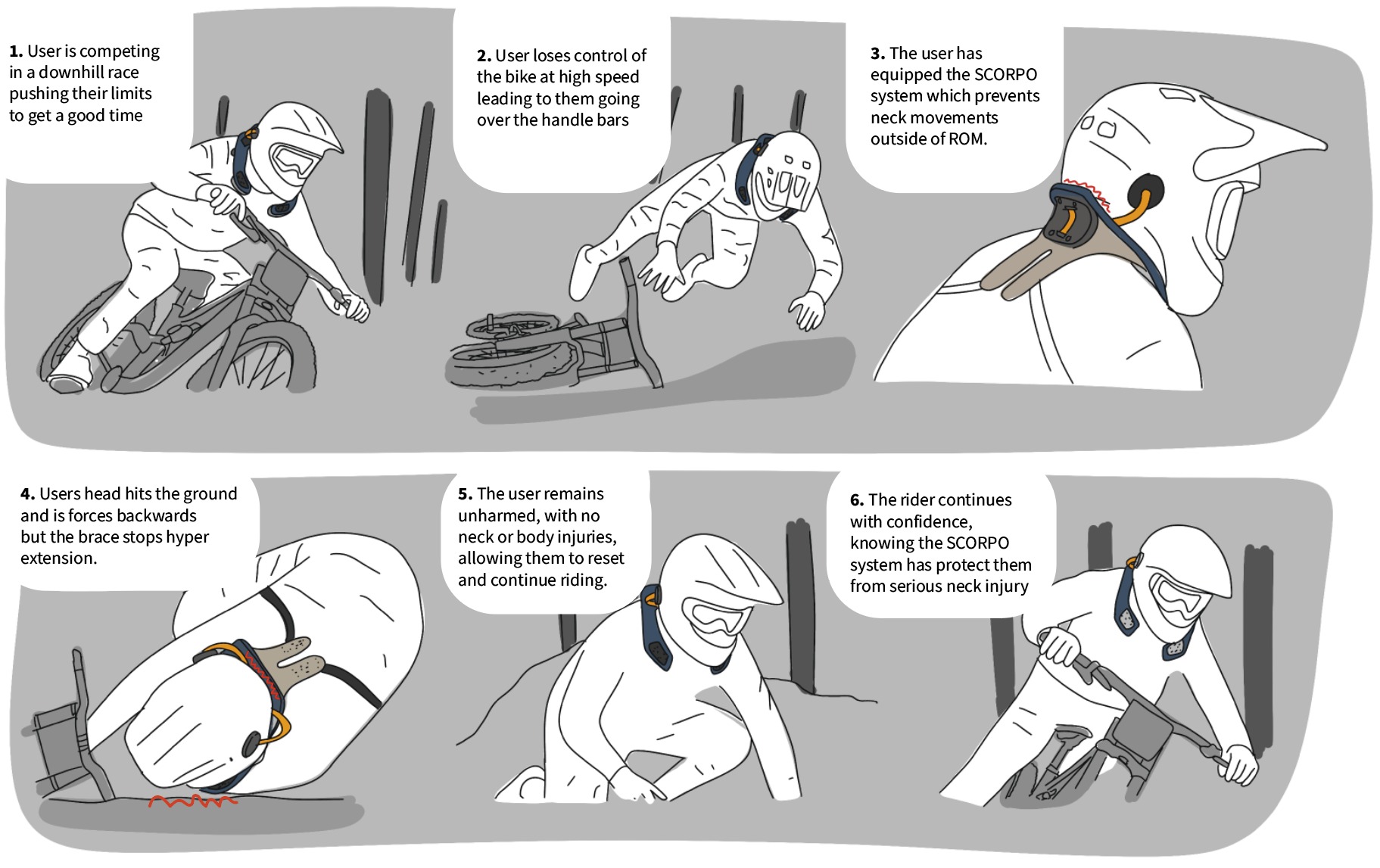
The neck brace protects the neck during crash scenarios by limiting movement beyond its natural range, reducing the risk of neck injury while enabling riders to perform with greater safety and confidence across both casual and competitive downhill environments.
Key Features
This neck brace integrates proven motorsport technologies into mountain bike protection, delivering advanced impact management while maintaining the critical balance of ergonomics, performance, and rider compliance.
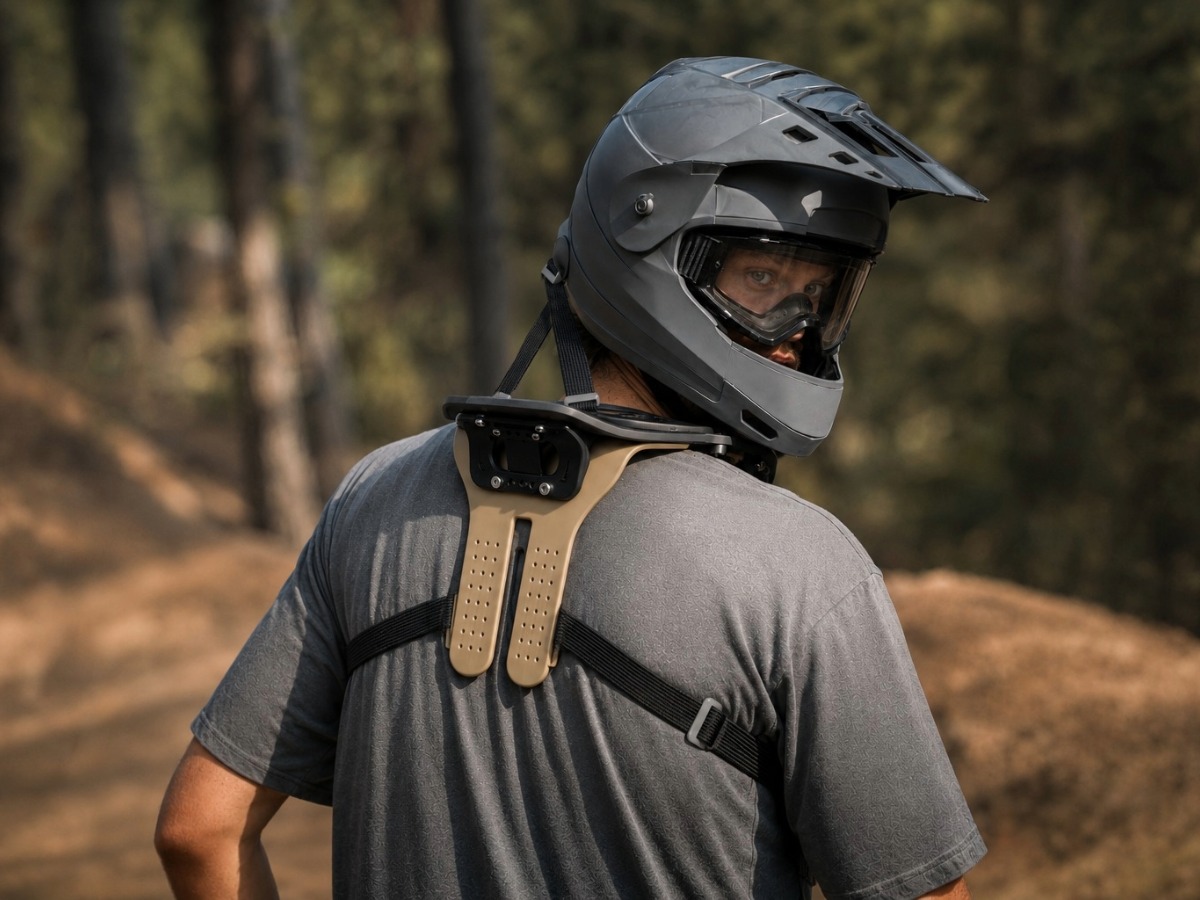
Seamlessly integrates around the neck, shoulders, and back to minimise bulk while maintaining performance, fit, and unrestricted movement on the bike.
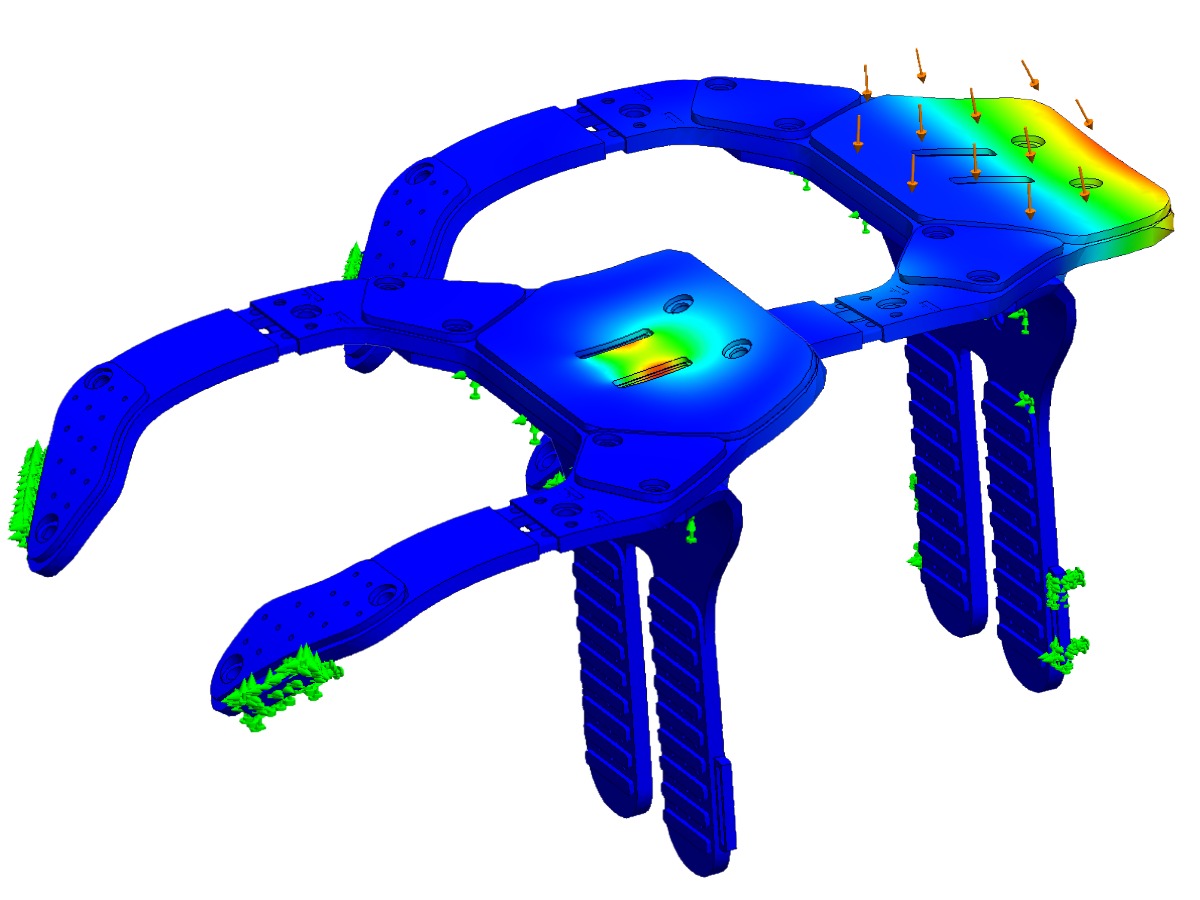
Engineered and validated through simulation to resist extreme head loads generated in high-speed, technical downhill crash conditions.
A streamlined, low-profile design with bold colourways and minimal bulk encourages use across trail types, supporting greater adoption and improved rider safety.
The product features a fully modular design, enabling efficient assembly and reduced manufacturing costs through the use of standardised fasteners. This approach also supports repairability, allowing components to be replaced by a trained engineer, extending the product’s lifecycle.
How it Works
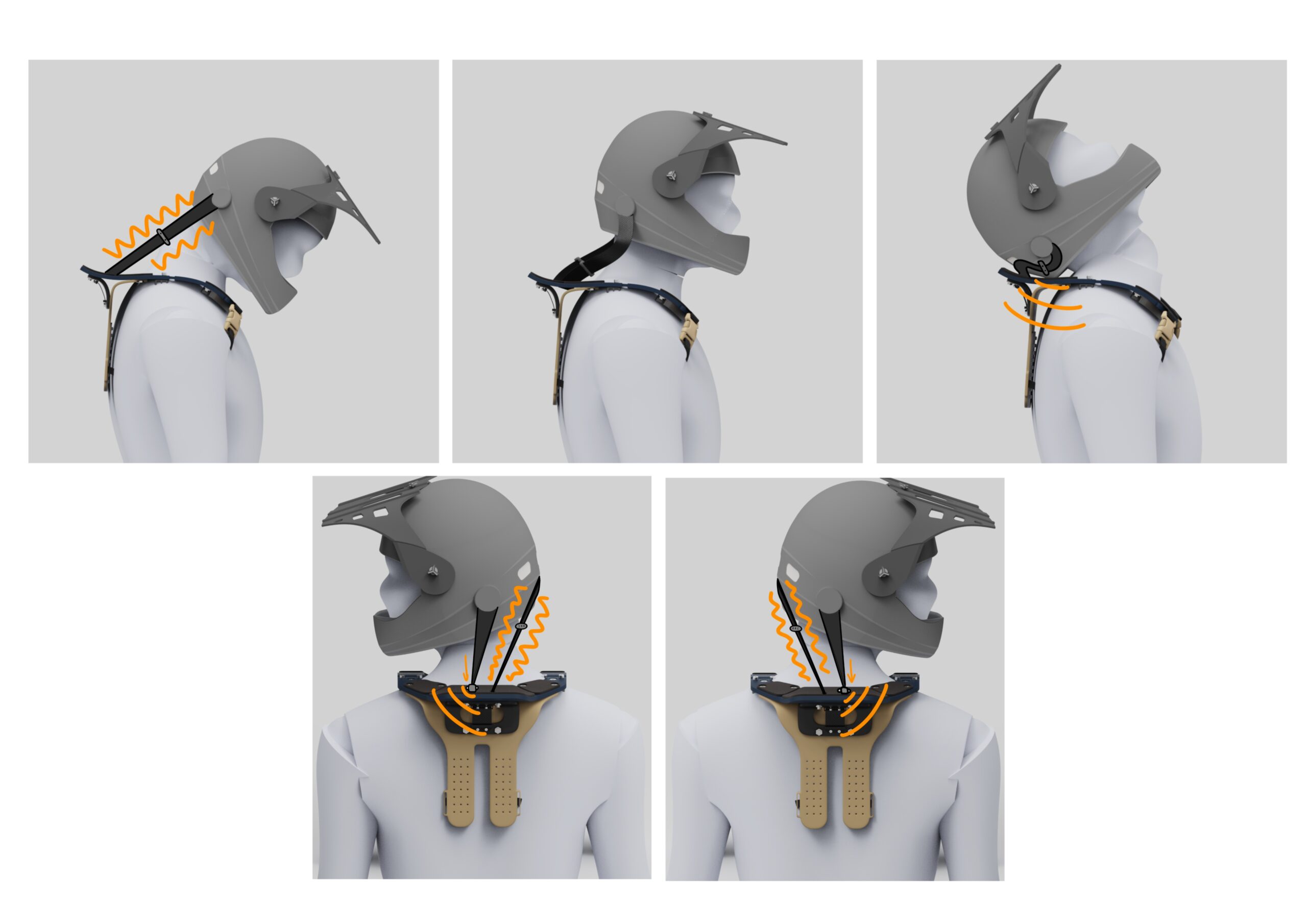
The system uses impact surfaces, tethers, and tether stoppers to restrict neck movement beyond its natural range during crash scenarios, reducing the risk of overextension (top left), overflexion (top right), and over-rotation (bottom). The wavy lines represent tension within the tethers, while the radiating lines illustrate the direction and spread of impact forces.
Product Crash Senario
Development
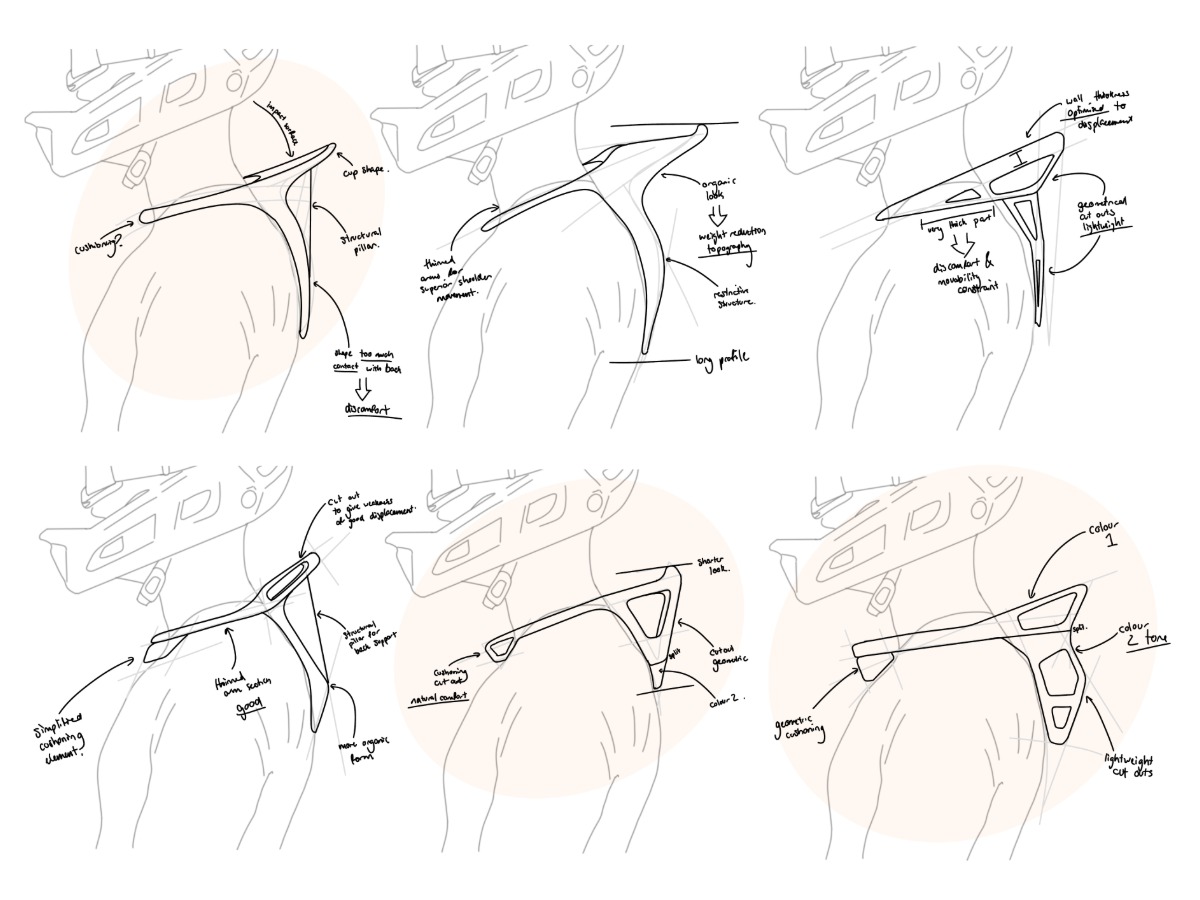
Ideation was key in exploring how the product could rest on the user ergonomically, while maintaining the intended utilitarian aesthetic.
Research into current neck brace designs was key in understanding what works well, while identifying limitations and areas for improvement.
Simulations were used to understand load paths within the product and evaluate deformation under forces exerted by the head during crash scenarios.
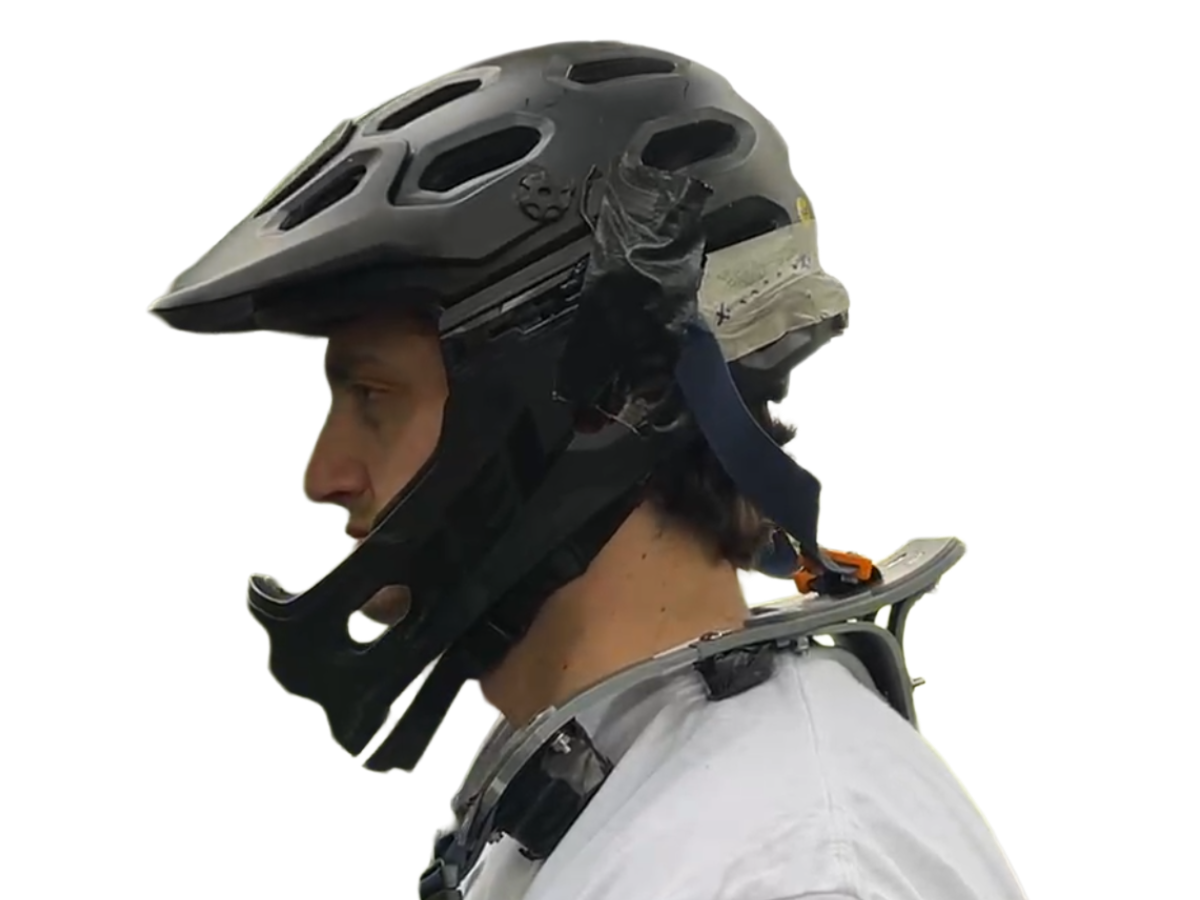
User Testing was critical in validating feedback, aligning the design with rider expectations, and guiding iterative development.