My practice explores the marginalisation of queerness and craft within institutional art spaces, quietly challenging the conventions and authority of the White Cube gallery. Through reconstructed quilted forms, I disrupt ideals of perfection and belonging, assembling fragmented queer knowledge systems.
✦ My Practice ✦
✦
My work explores the intersecting marginalisation of queerness and craft, and their situation within the institutional frameworks of academia. The opacity of ‘queer’ as an identity, descriptor and state of doing destabilises harmful classifications as simplistic. When framed in an environment such as a Fine Art gallery, its’ very existence provokes critical engagement that question beyond dominant societal attitudes on what is normal, natural, belonging.
✦
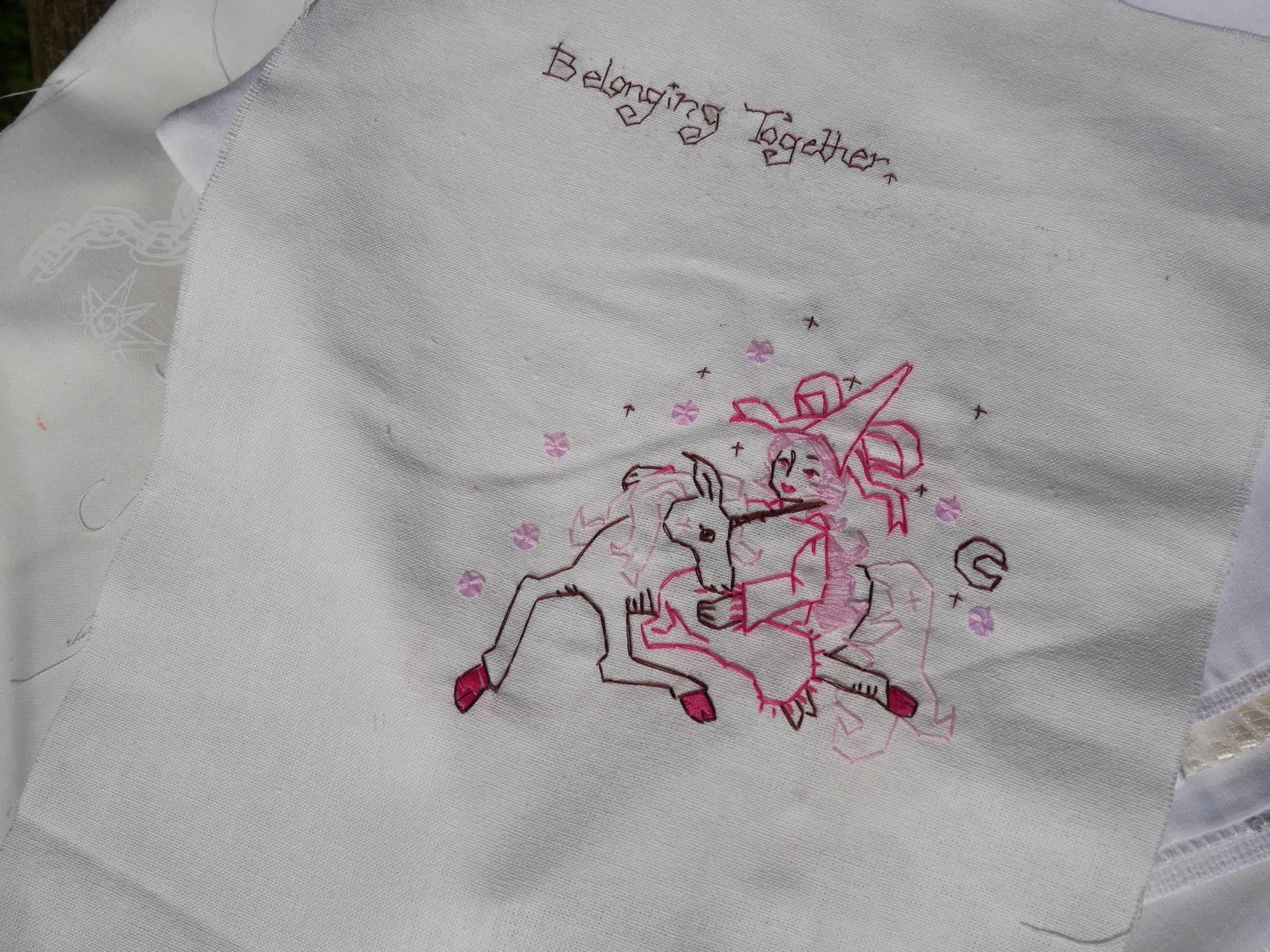
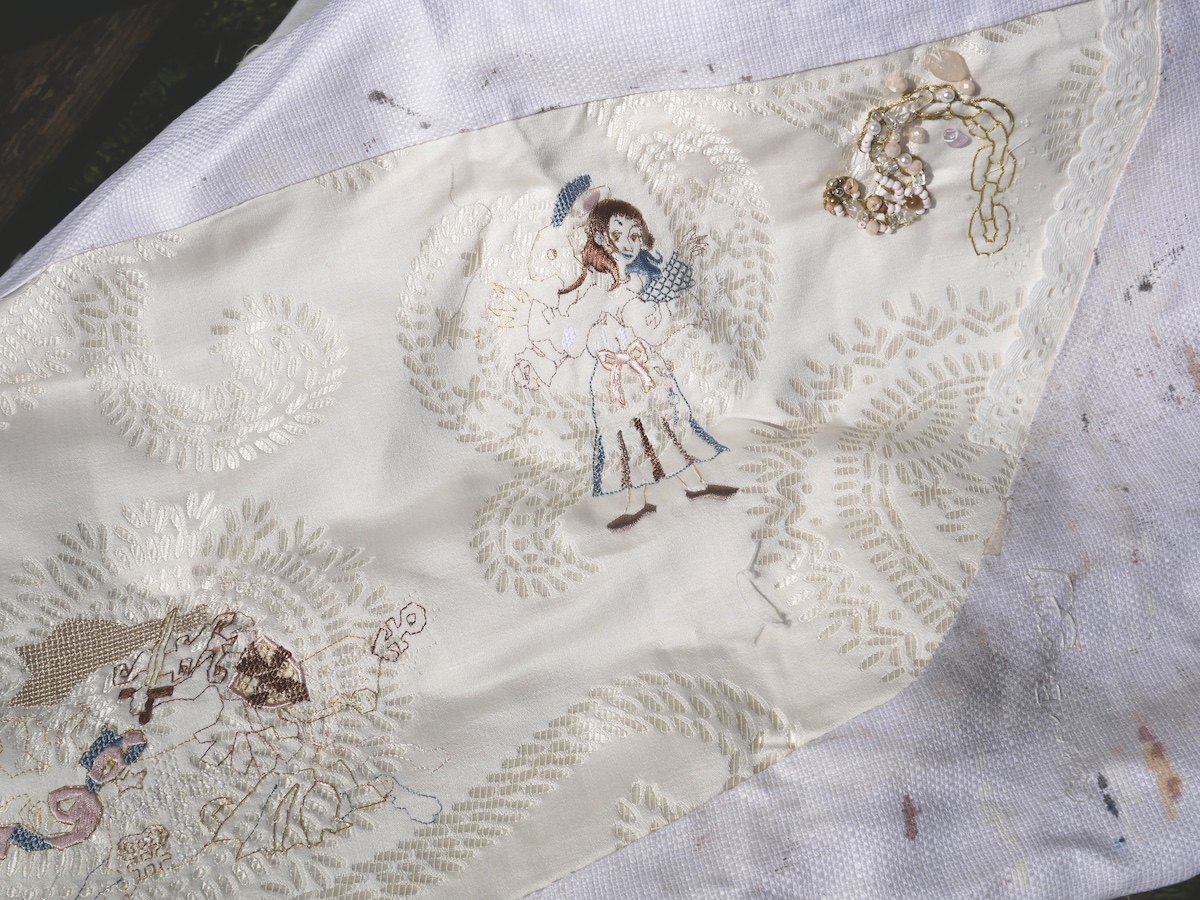
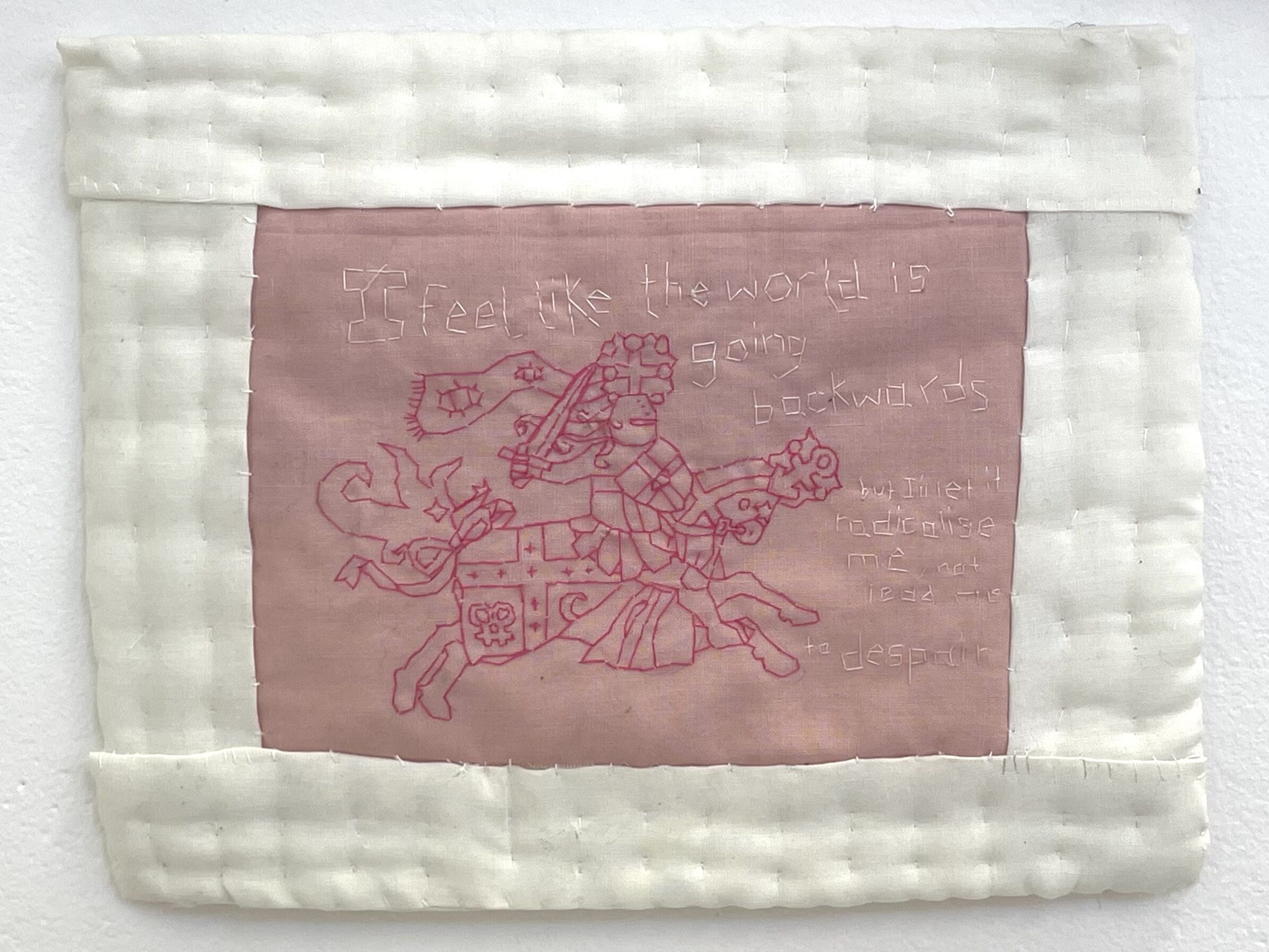
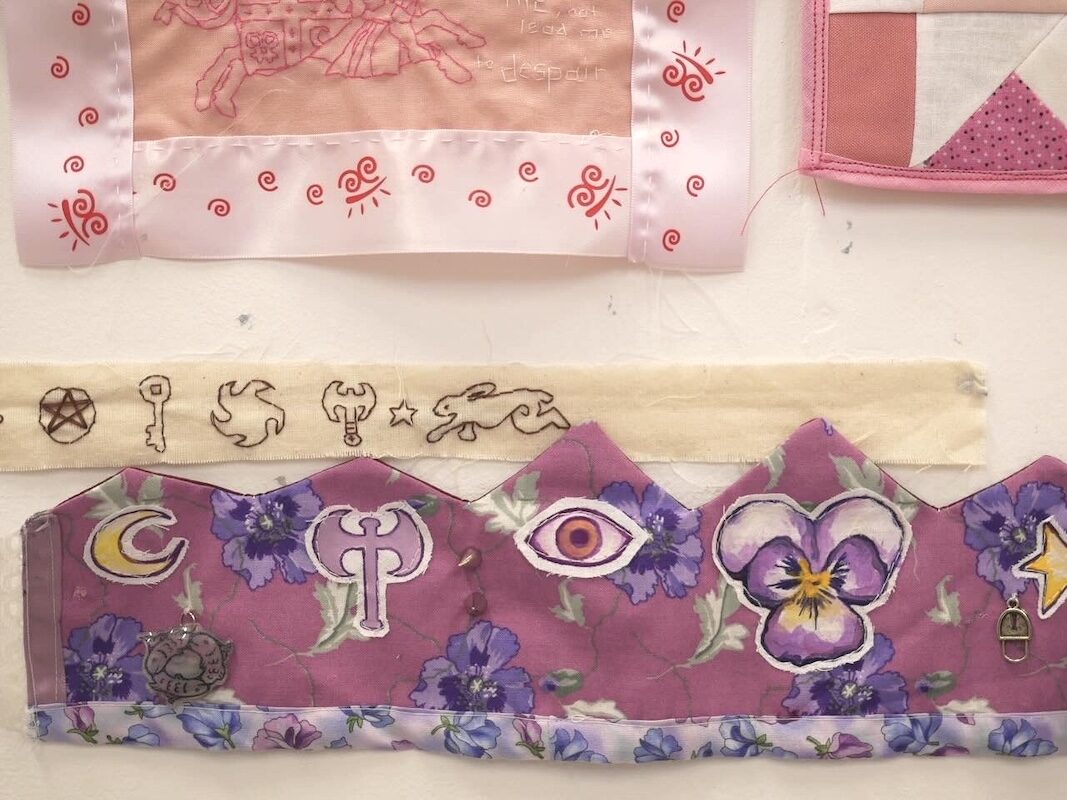
‘Belonging Together panel‘ as part of ‘Treasury‘, (2026), [digital & hand embroidery, beads and sequins on found fabric quilt-top]
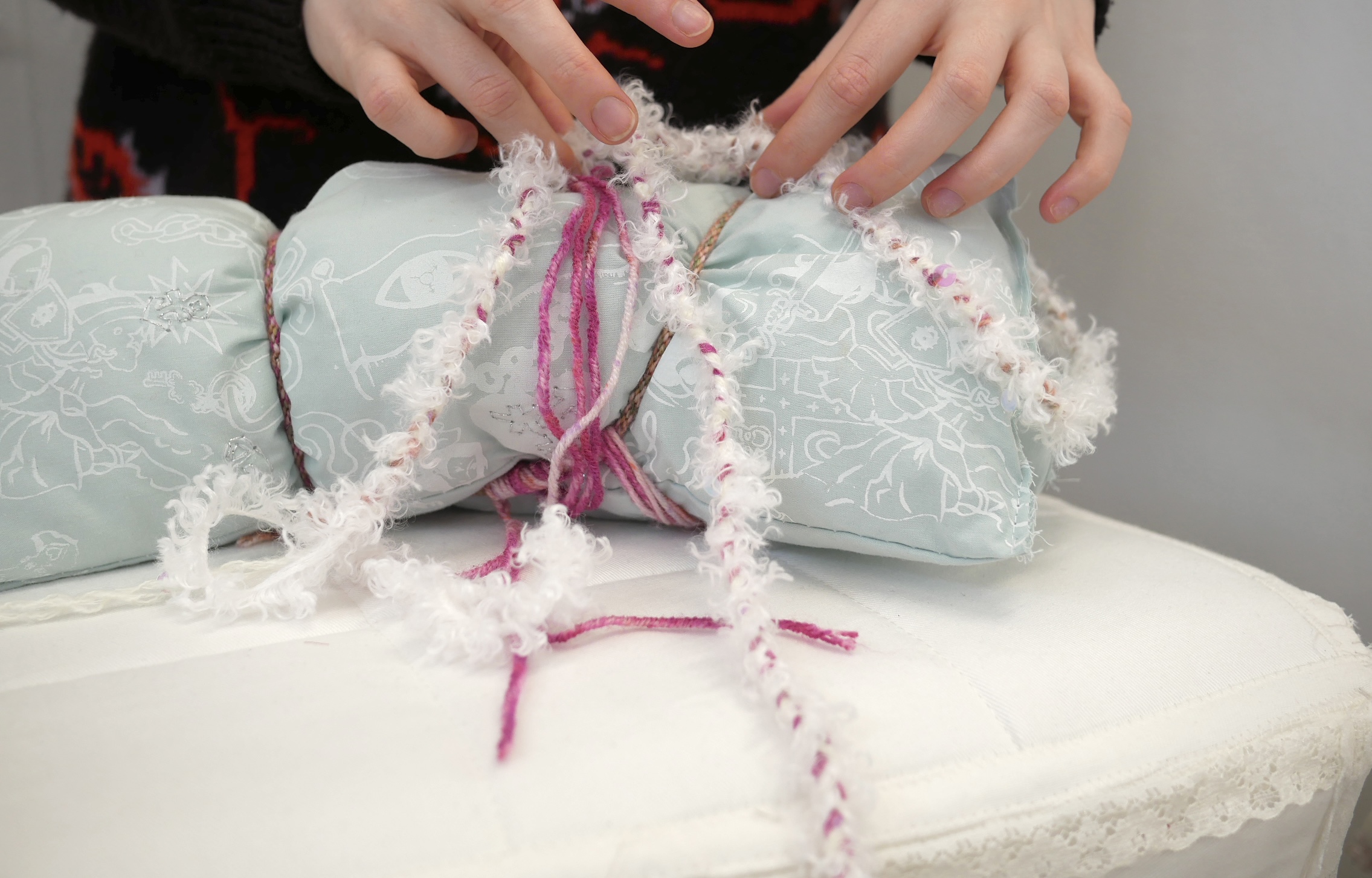
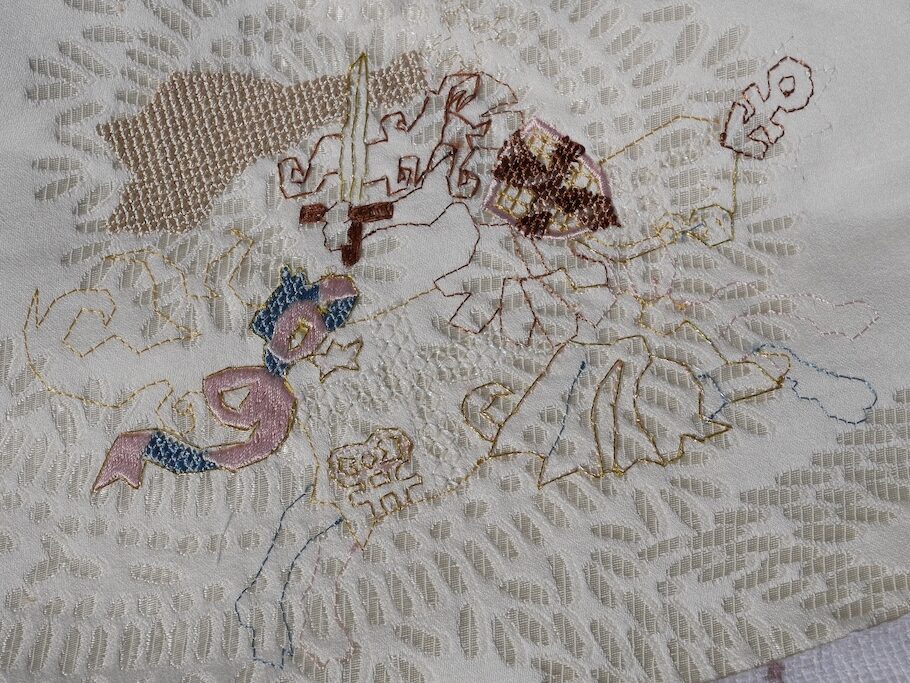
‘here lies the fantasies of a child with no reference (unbound, unquilted)‘, (2026), [digital & hand embroidery, beads and sequins on found fabric quilt-top]
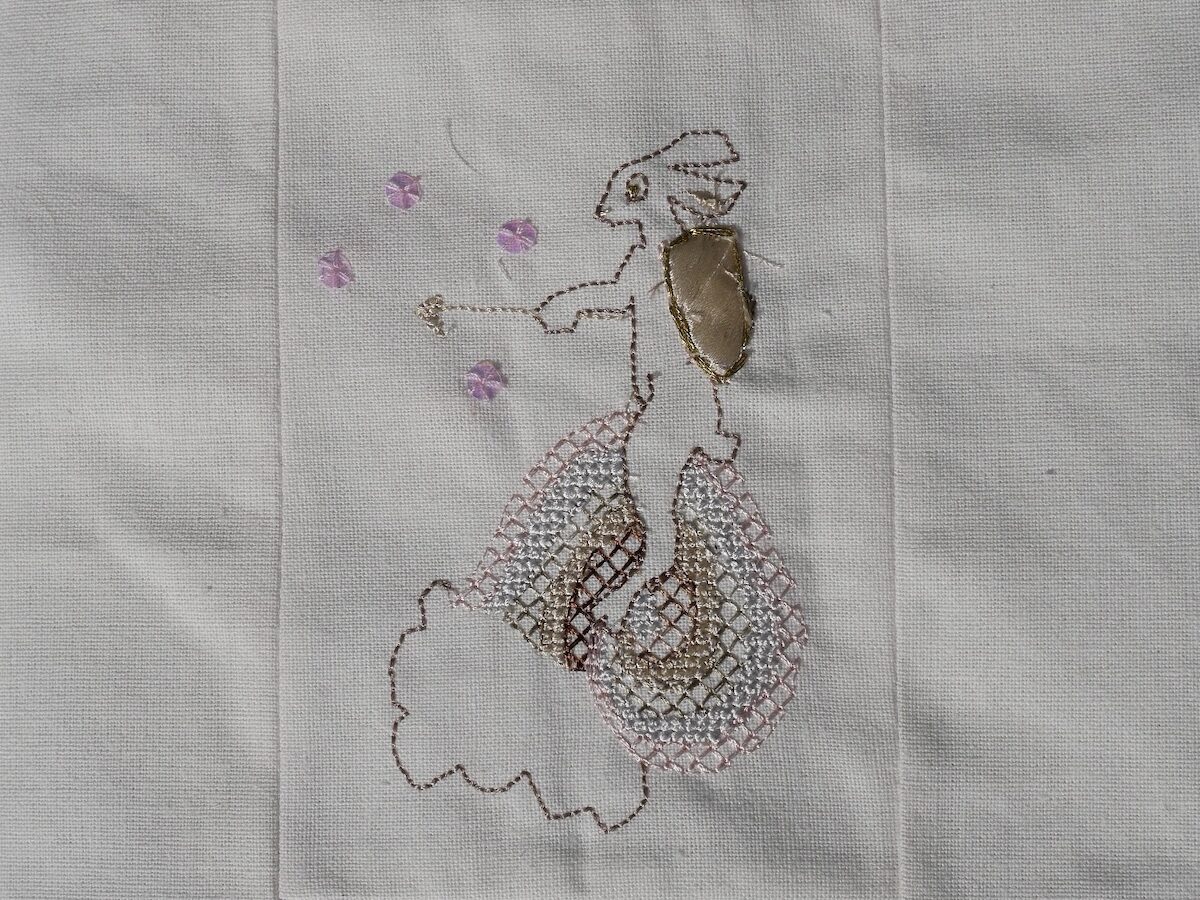
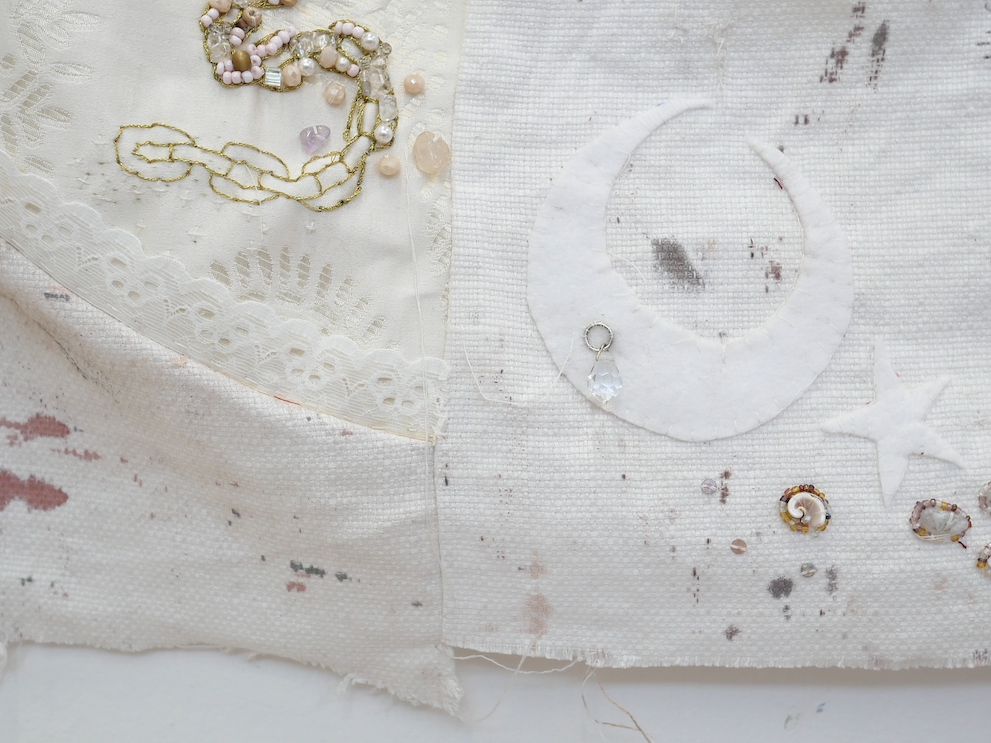
‘here lies the fantasies of a child with no reference (unbound, unquilted)‘ detail‘here lies the fantasies of a child with no reference (unbound, unquilted)‘ detail‘Treasury‘ detail, (2026)
.˳·˖✶𓆩𓁺𓆪✶˖·˳.
A quiet, unconscious attitude that reinforces normative frameworks that privilege dominant forms of making and identity over others. This subtle, creeping orientation is what I actively subvert through use of colour, positionality and material. An overwhelming palette of whites, cream and elusive hints of colour operates to infiltrate and consume the elitist White Cube gallery space, a quiet occupation. Subtle.
I flip craft stereotypes through the queering of objects: the gallery object- with reconstructed form- of traditional quilting technique, which challenges dominant ideals of craft as only valued for technical perfection. The gallery plinth, individuator chair and picture frame are parodied in quilted forms, but they are tools used to present unconventional artworks that subvert expectations. These artworks purposely utilise unconventional quilting practices – exposed threads, wonky seams and inverted faces – to present genuine, ugly truth.
Much of textile processes involves the coming-together and reconstruction of elements, which again is a similar perspective of queer knowledge systems. Author Jack Halberstam describes a queer methodology as one that assembles together scraps of knowledge which have previously been excluded from dominant heteronormative academic discourse. A scrappy, crafty, scavenging library, one assembled through queer experience, community and independent sources that disrupts normative regulations of gender, sexuality, and literacy, while also gathering information on marginalised individuals.
-ˋˏ✄┈┈┈┈
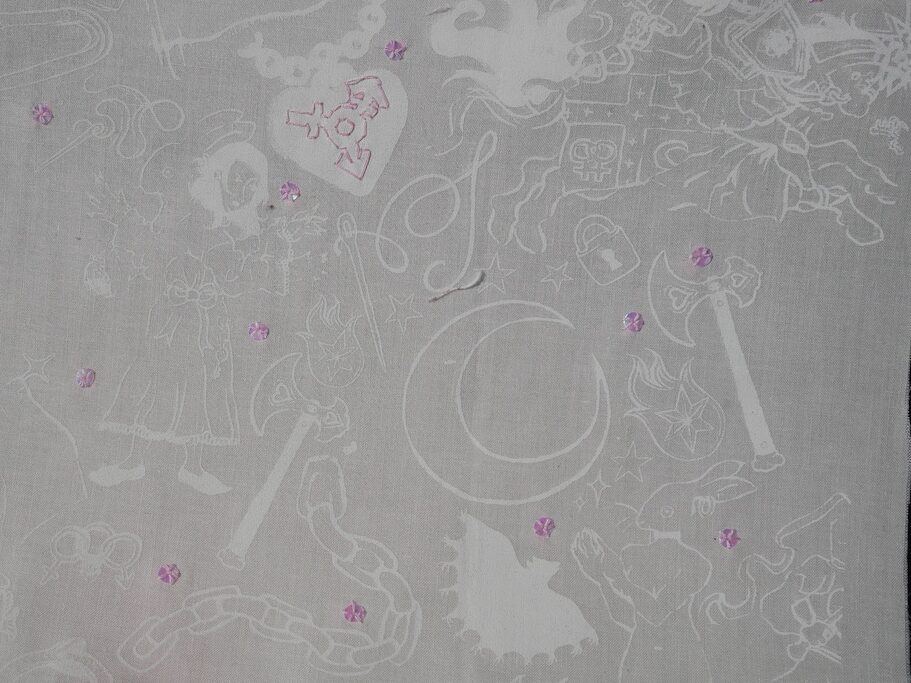
‘I feel like the world is going backwards‘, (2026)