
Bethan Davies


An inquisitive and passionate designer with an interest in branding and advertising, focusing on solving problems through creative and thoughtful outcomes.
Responser to the CensHERship & The Case for Her Brief
The Problem:
Women’s health content is routinely banned or hidden online, classing the menopause, birth and vaginal cancer as ‘adult content’.
Social media algorithms mean that censorship is silent. From shadowbanning and disappearing posts, to people feeling like they have to censor themselves to be able to post about their lives, women’s content is being disproportionately affected by algorithms and moderators who are paid on commission.
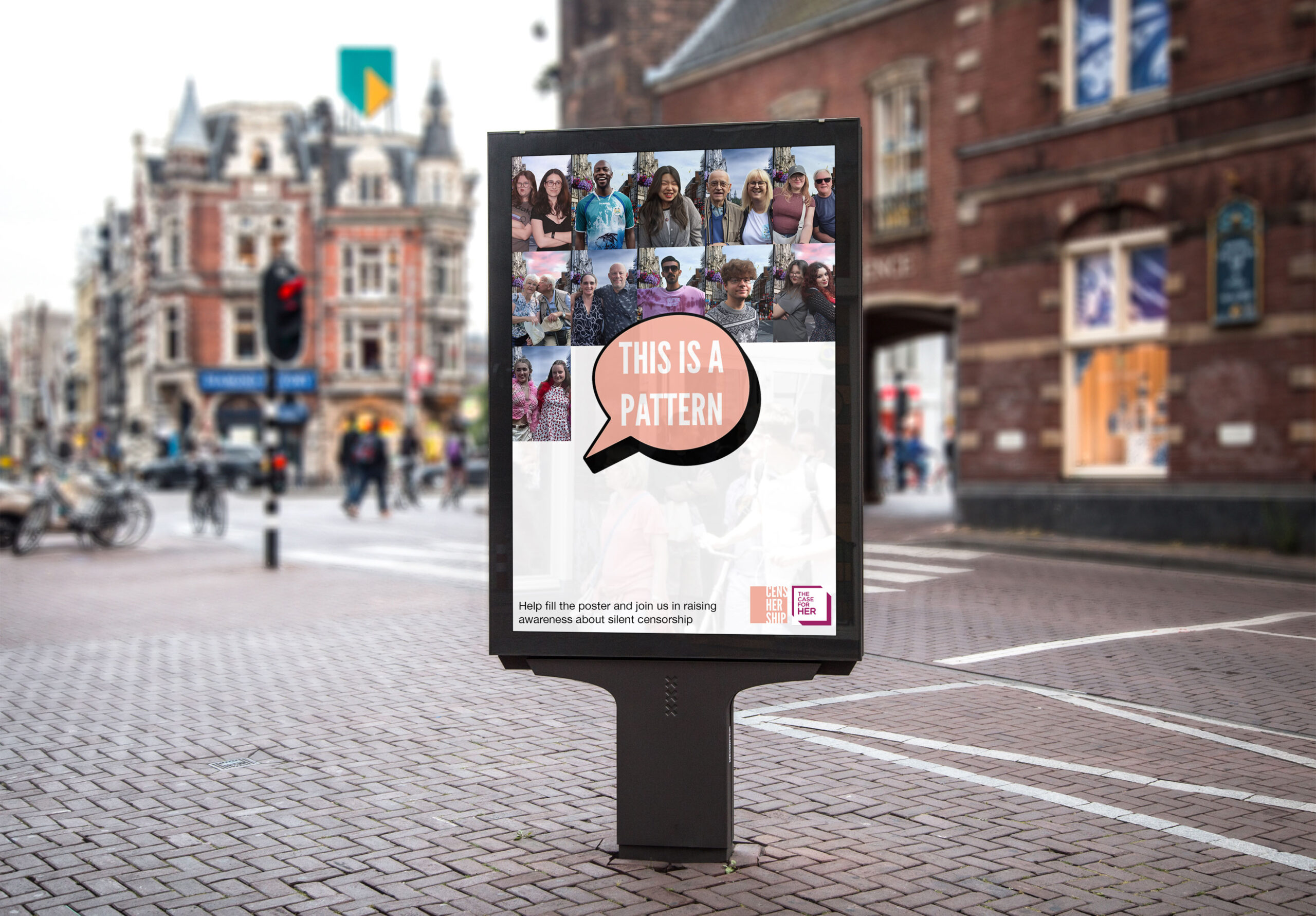
These are seen as individual cases, and are made hard to appeal. However, we know that this doesn’t just affect a small number of people. It’s a pattern, specifically targeting women.
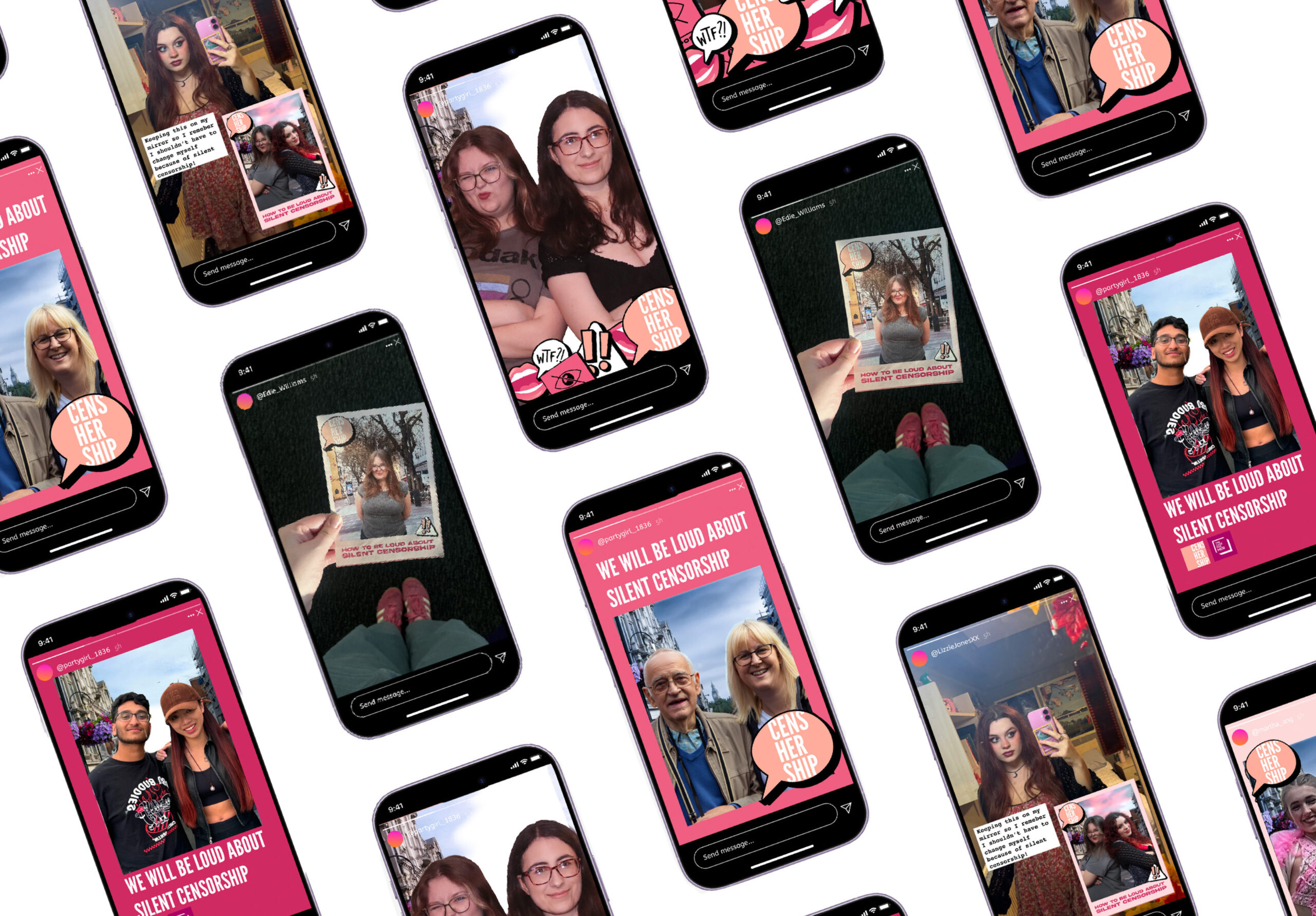
We need to come together against silent censorship, and get social media companies to change their policies.
The Solution:
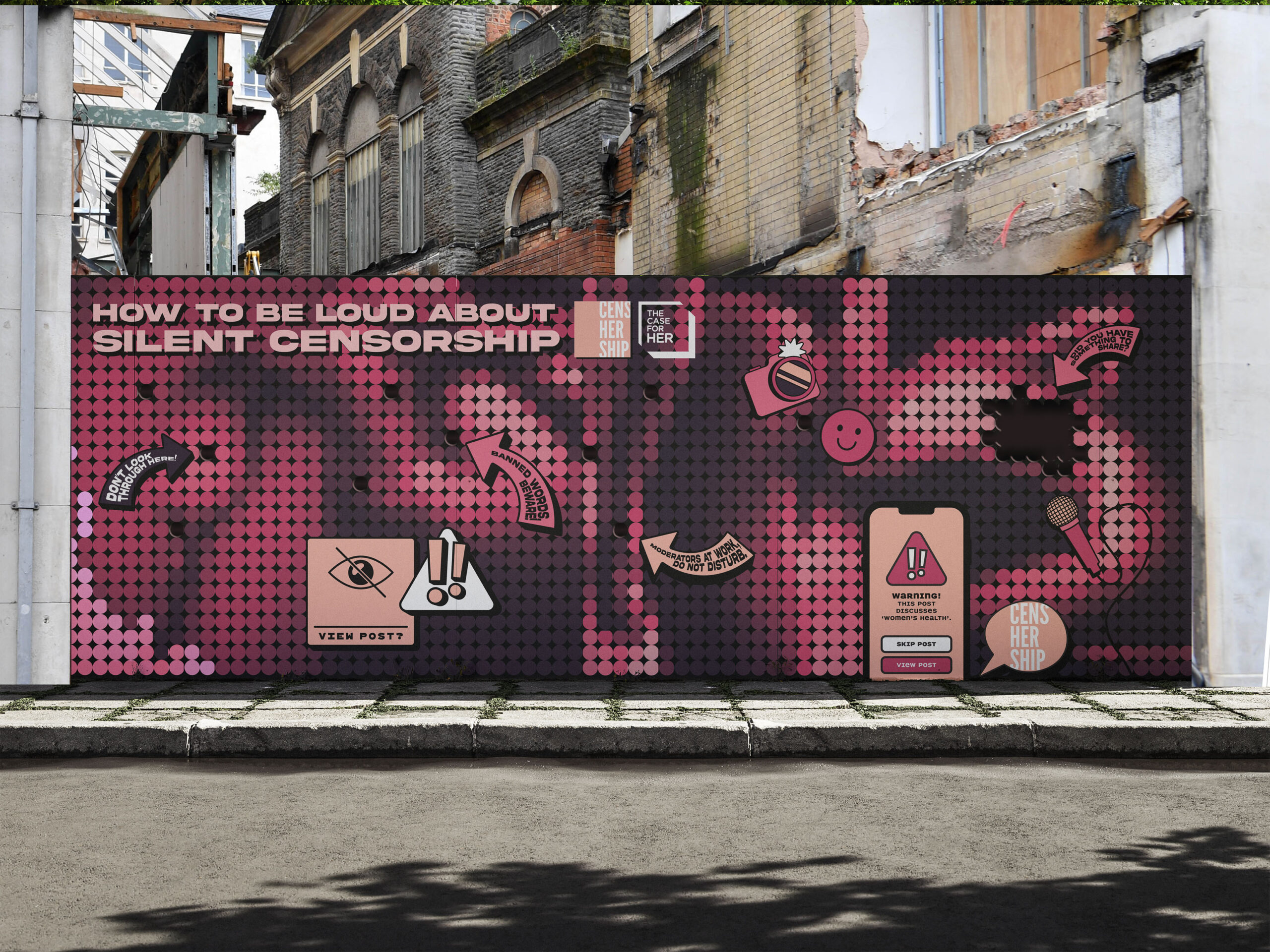
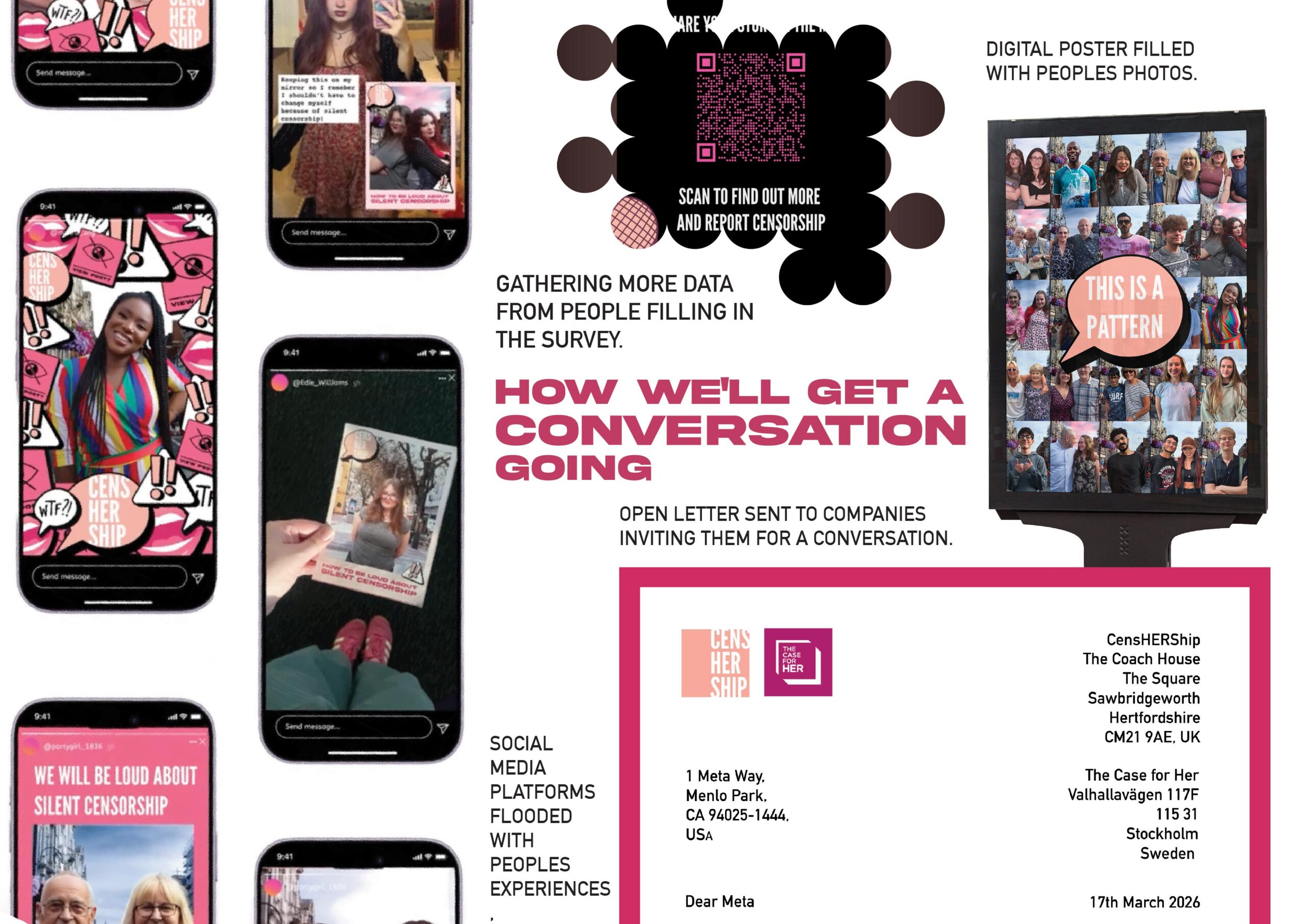
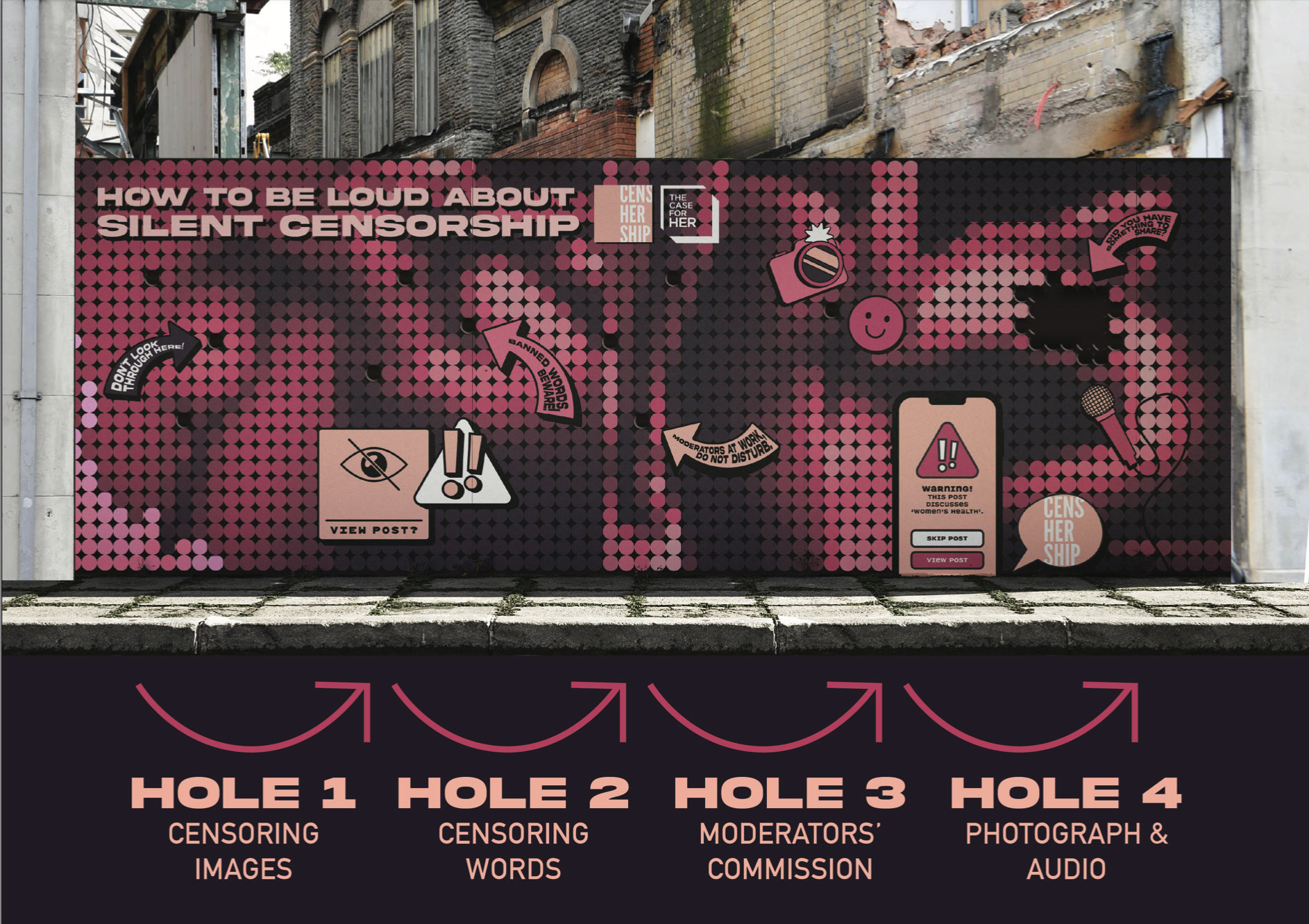
‘How to be Loud about Silent Censorship’ is an interactive experience, located in city centres around the country. It invites people to look through peepholes in a wall, reflecting how hard it is to find uncensored women’s health content online, also relating to the 5th UNSDG, Gender Equality.
Projections of animations through each hole reveal that these are not isolated incidents but a pattern that affects many women’s abilities to seek health related information online.
The final hole has the option to record your story in the mic, to be played across cities to help raise awareness of the experience and problem. It also allows you to take a photo, which is then used on a digital poster to show all the people who are standing up to silent censorship, which is then sent to social media companies to get them to change their policies.
The Problem:
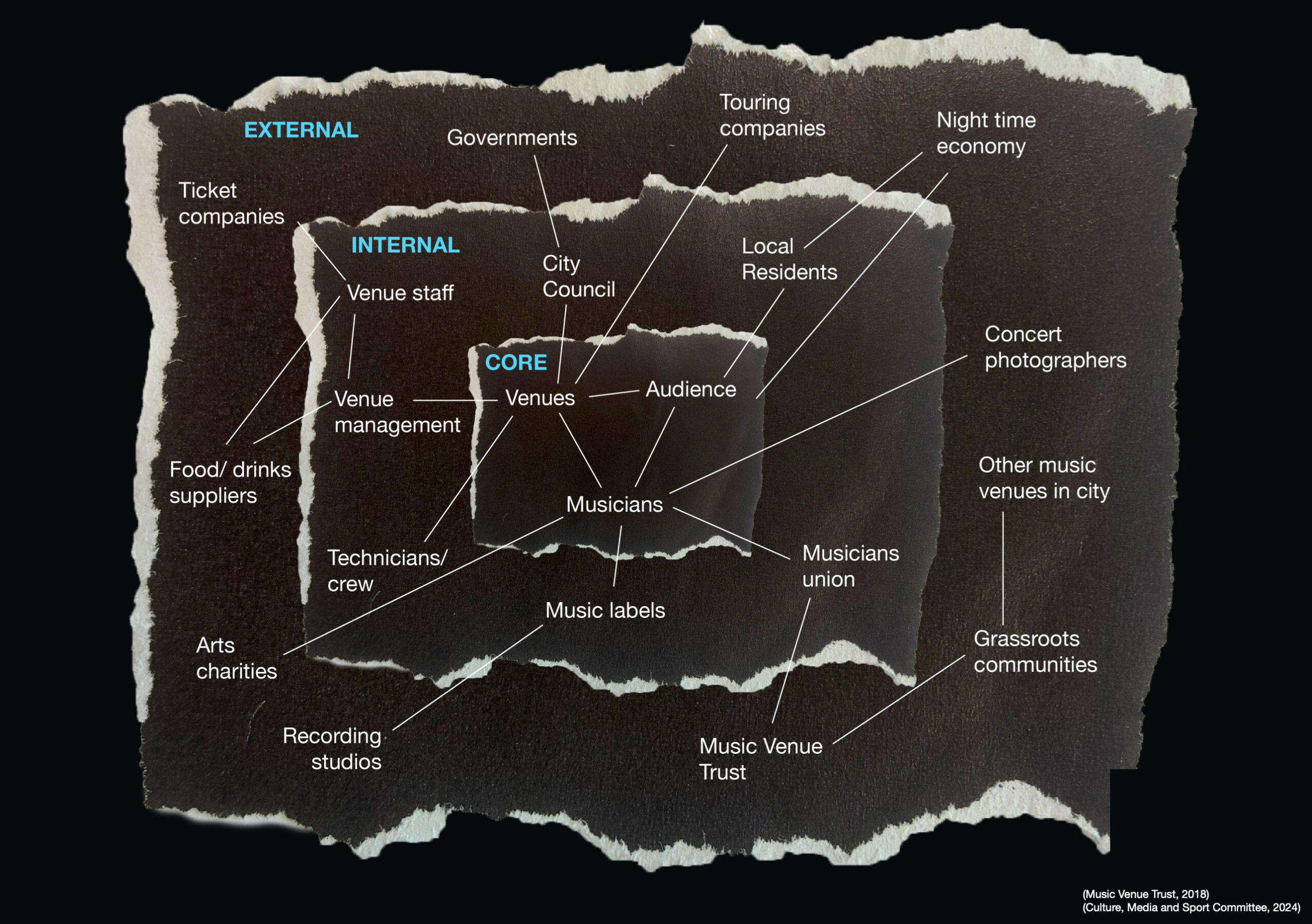
Grassroots music venues are closing down due to a lack of investment, rising costs, and changing habits. This leads to a decrease in local culture, prevents young musicians from being able to play and get their foot in the door, and disproportionately affects artists from working-class backgrounds.
With the cost of tickets rising and many artists only touring in major cities like London and Manchester, the revival of grassroots music venues could provide a solution to the changes in the music industry, showing people that there are more local ways to enjoy music, whilst also allowing musicians to get a foot in the door and helping keep local music culture alive.
The Solution:
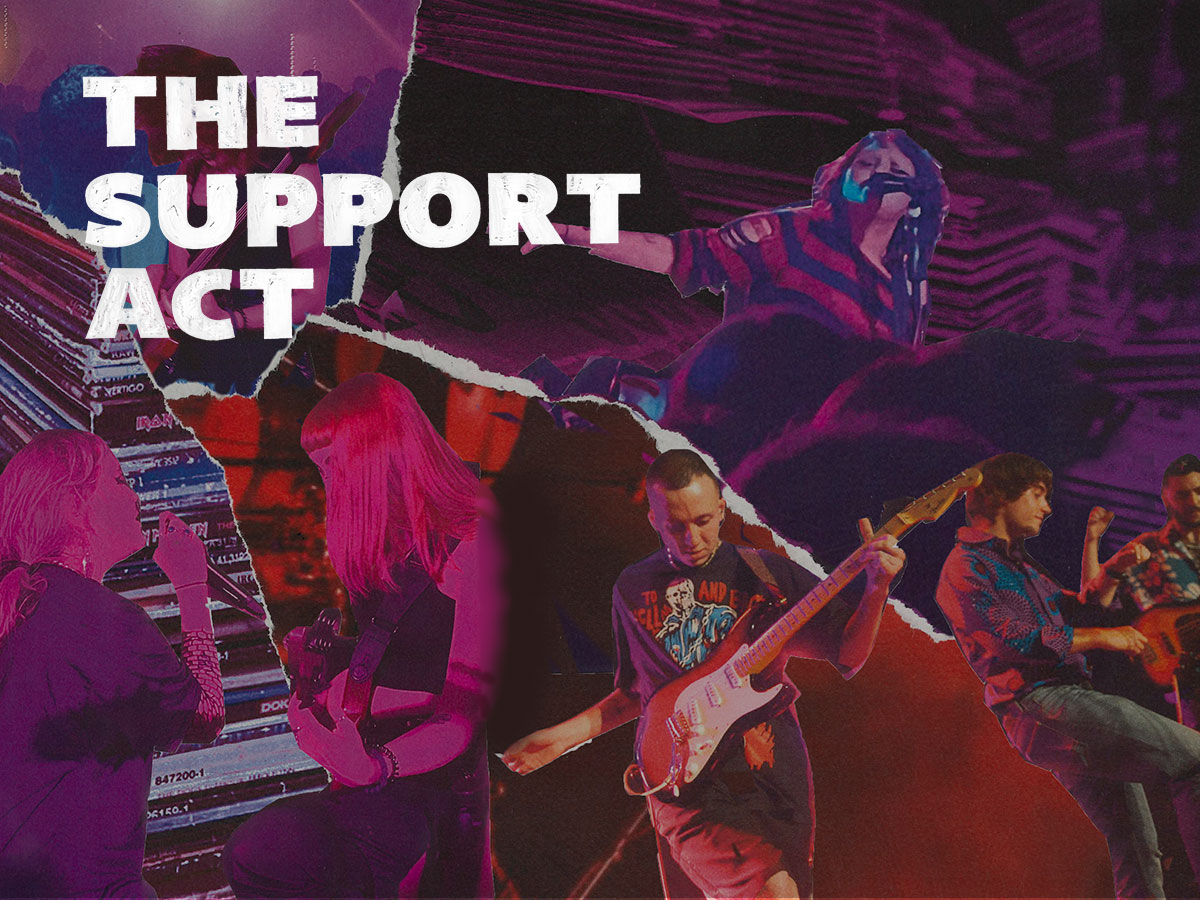
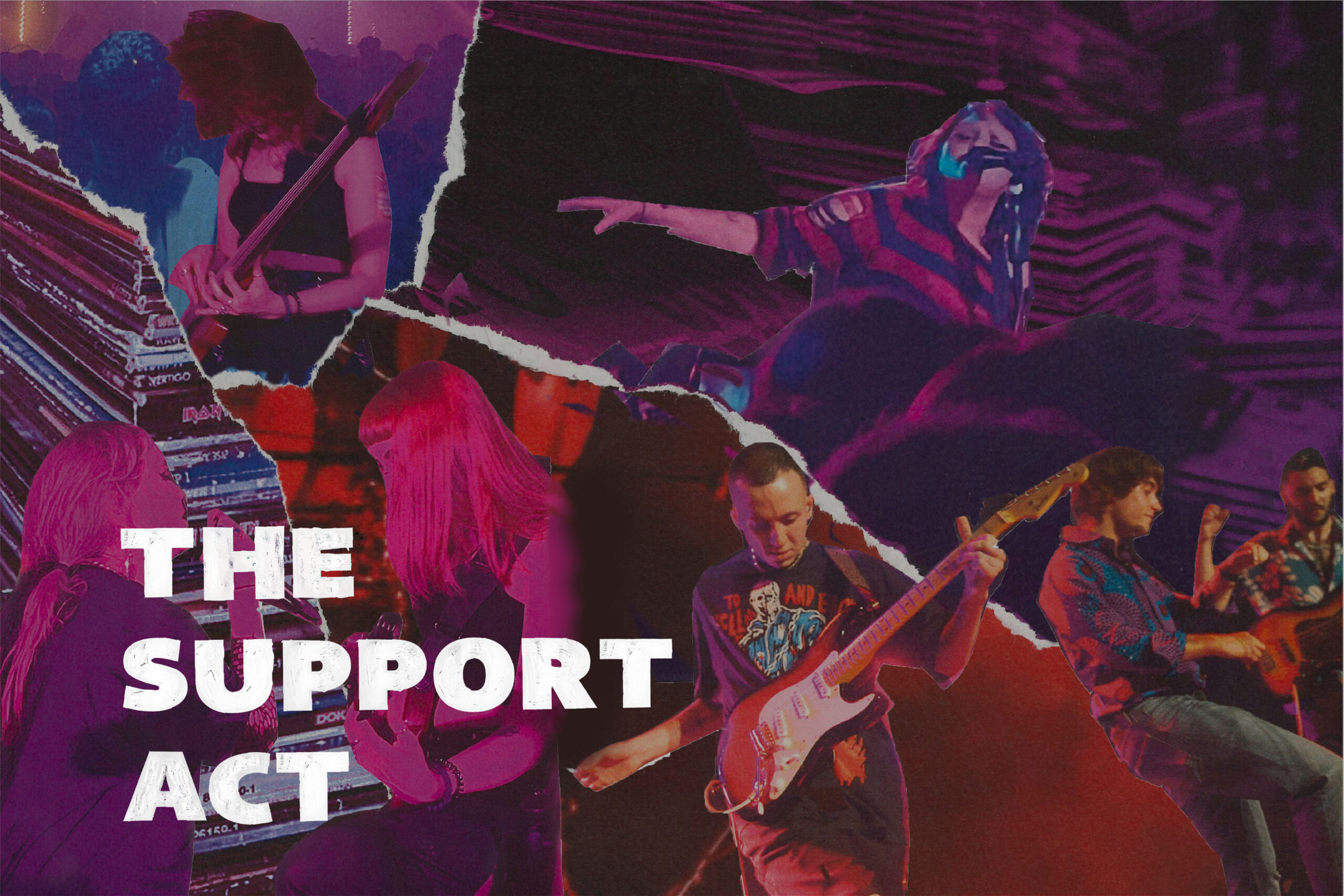
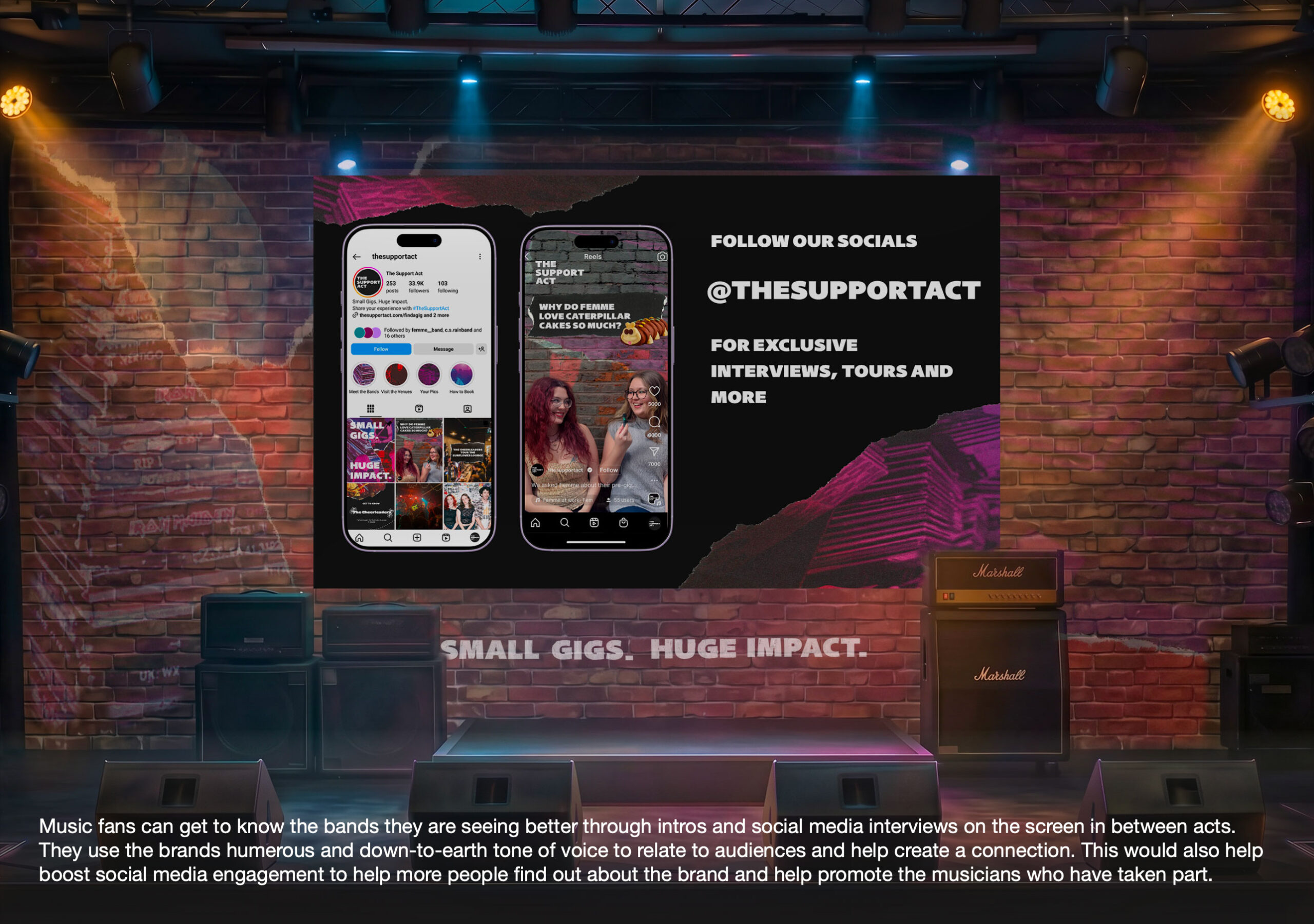
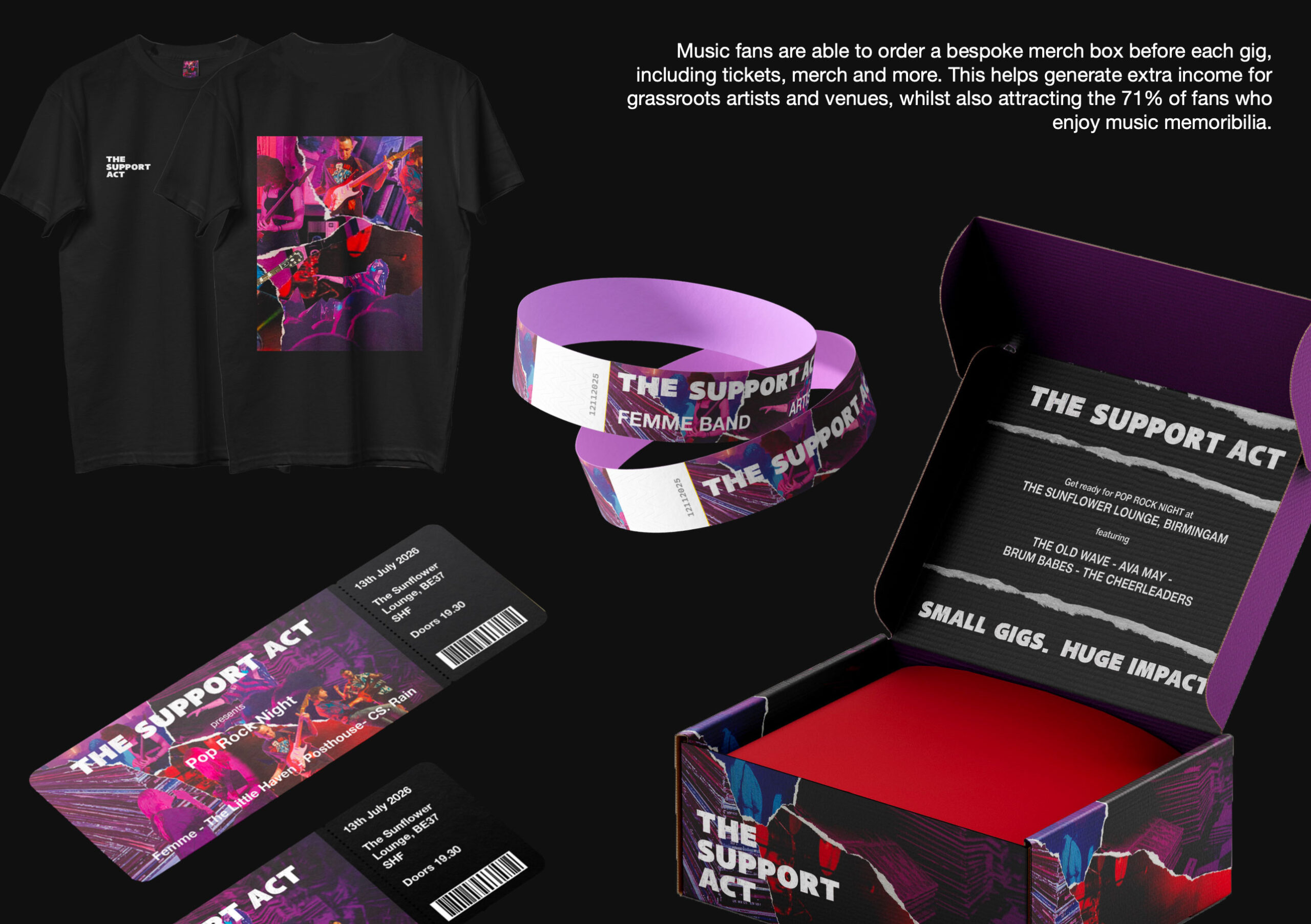
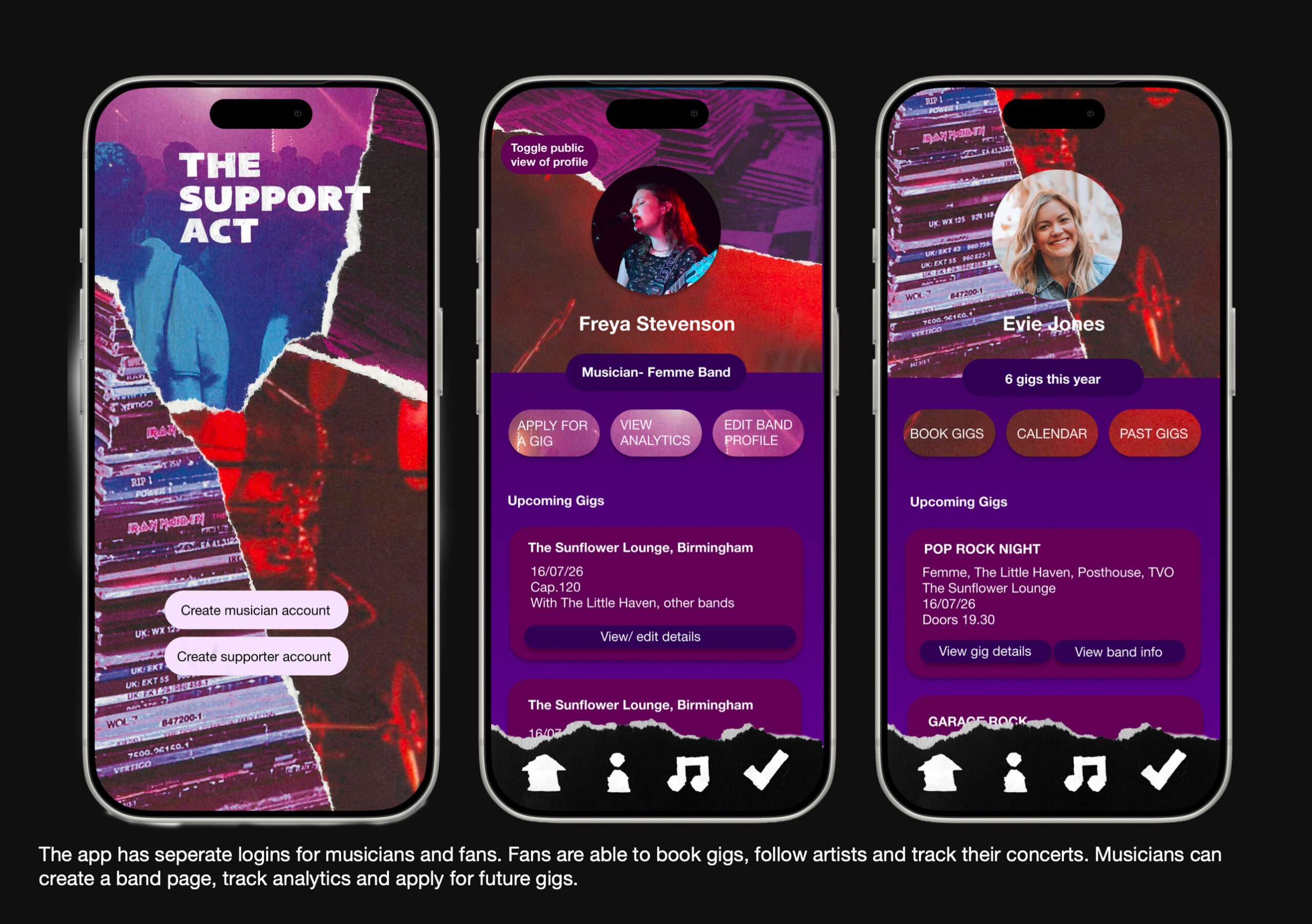
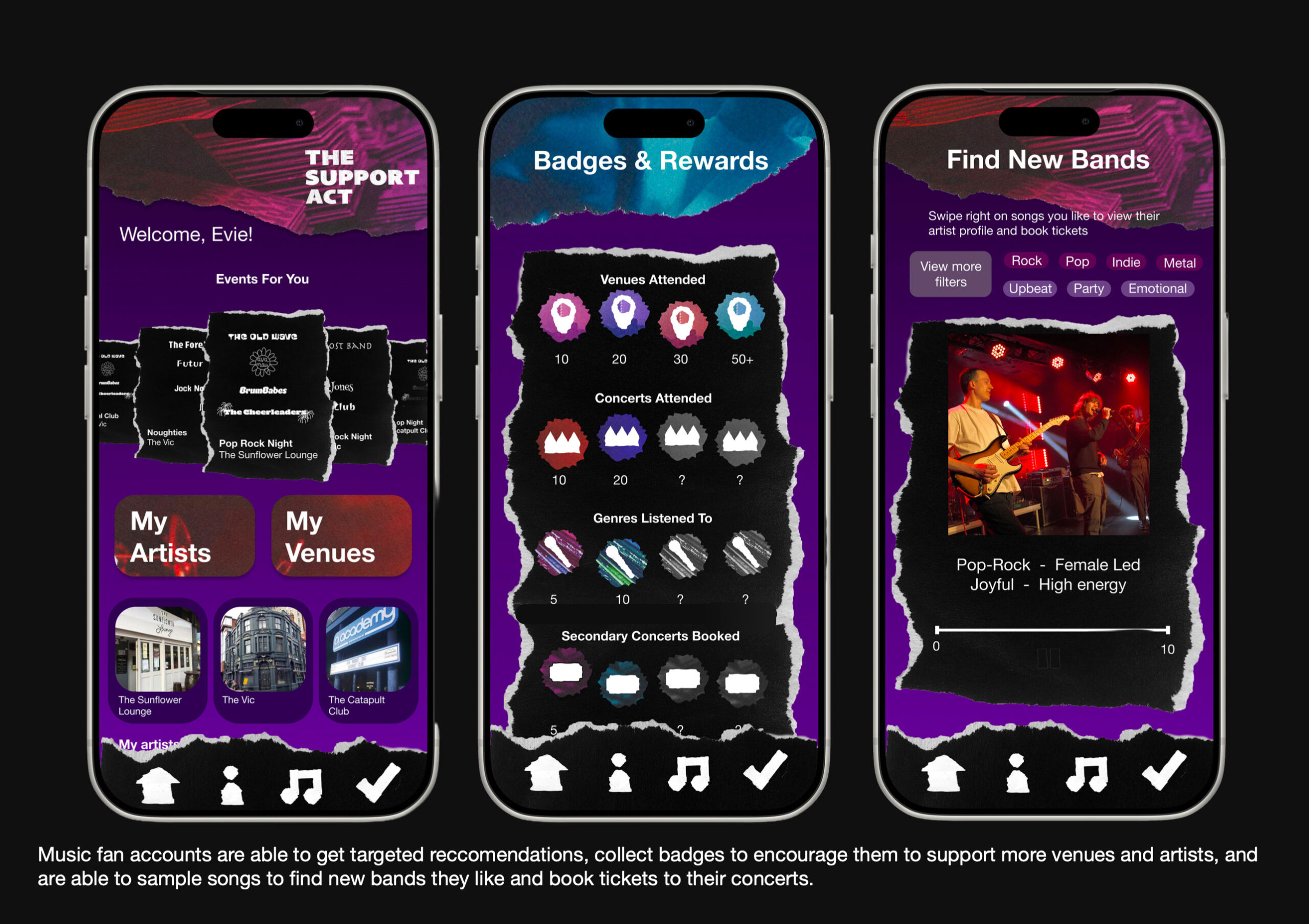
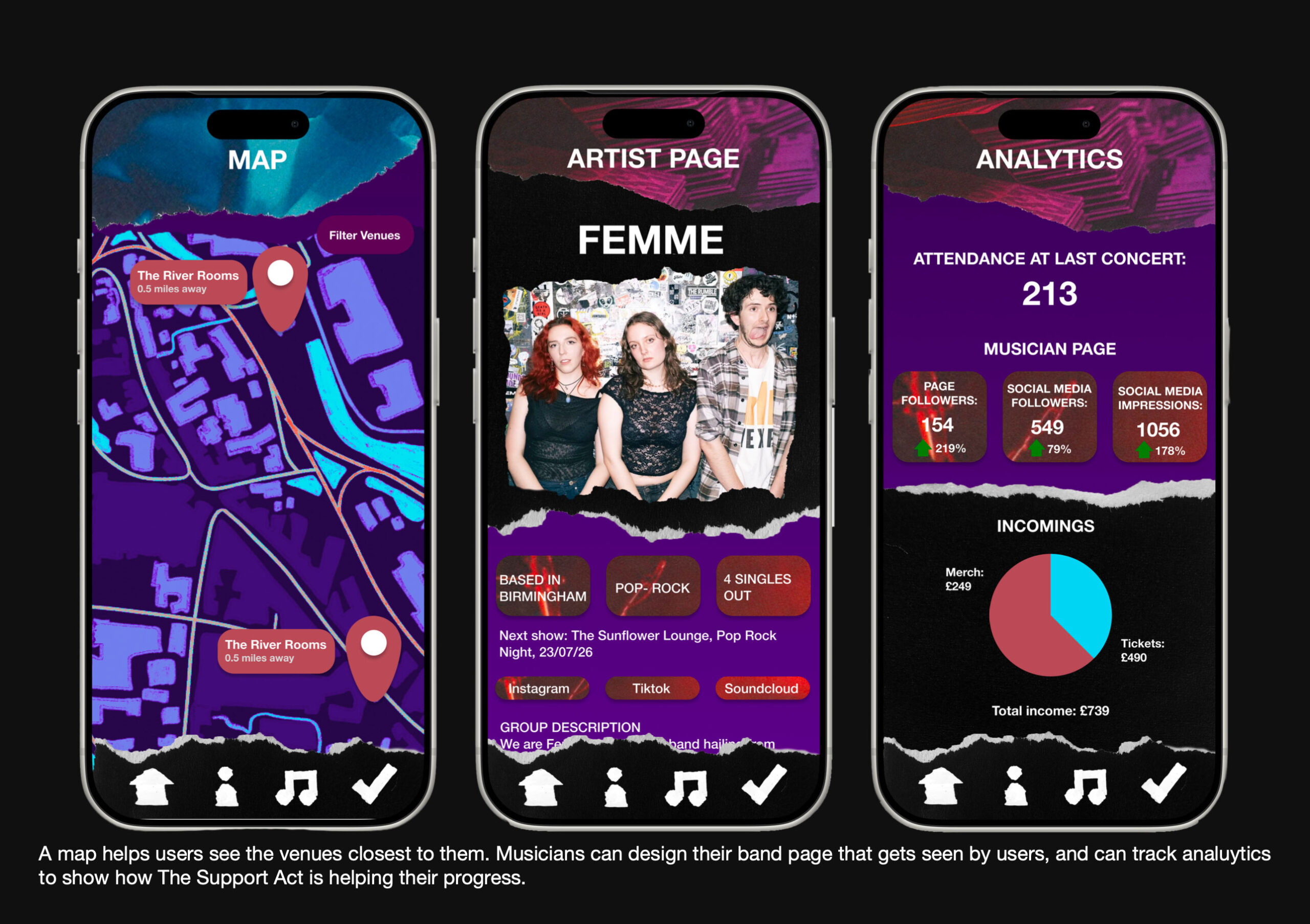
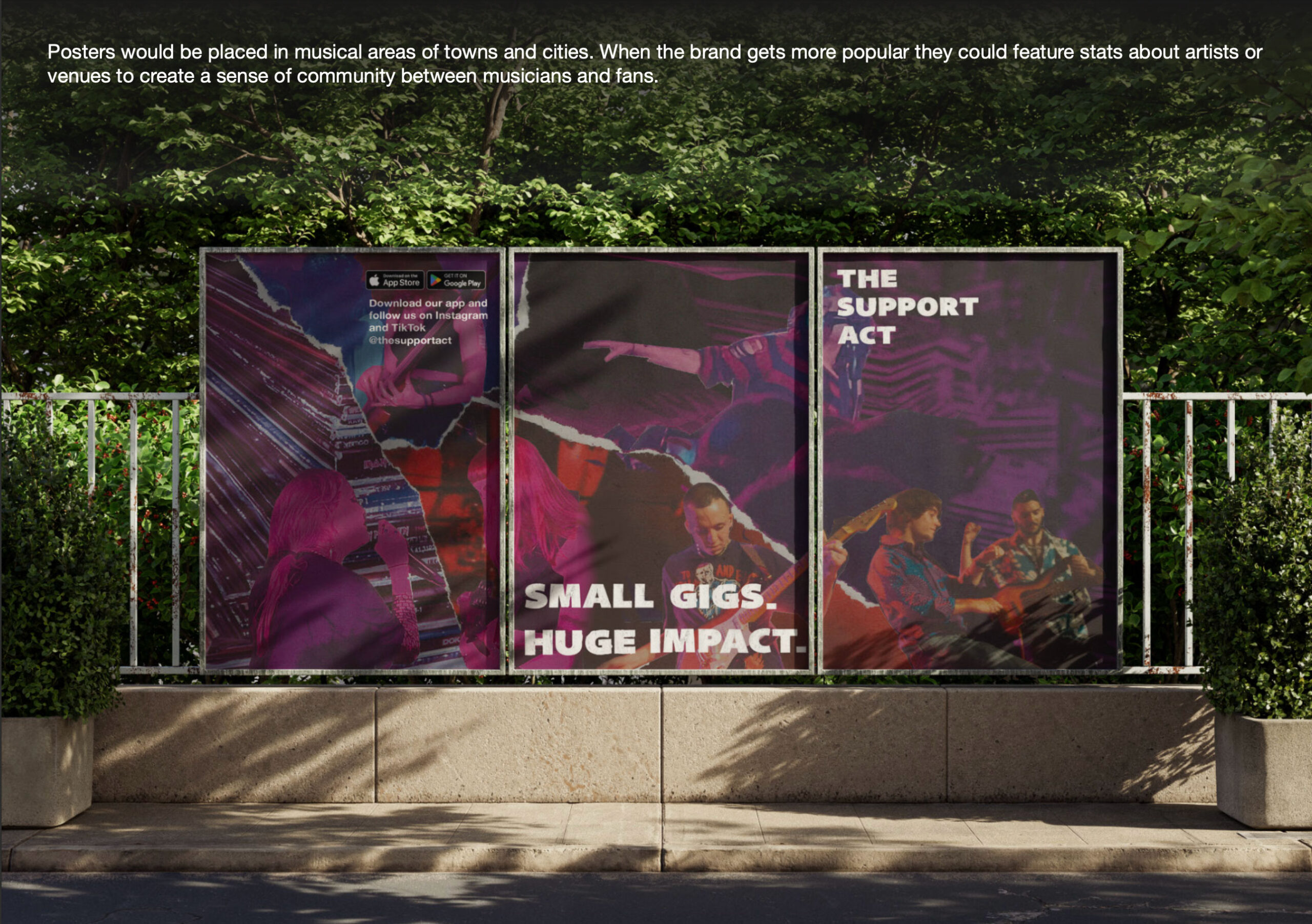
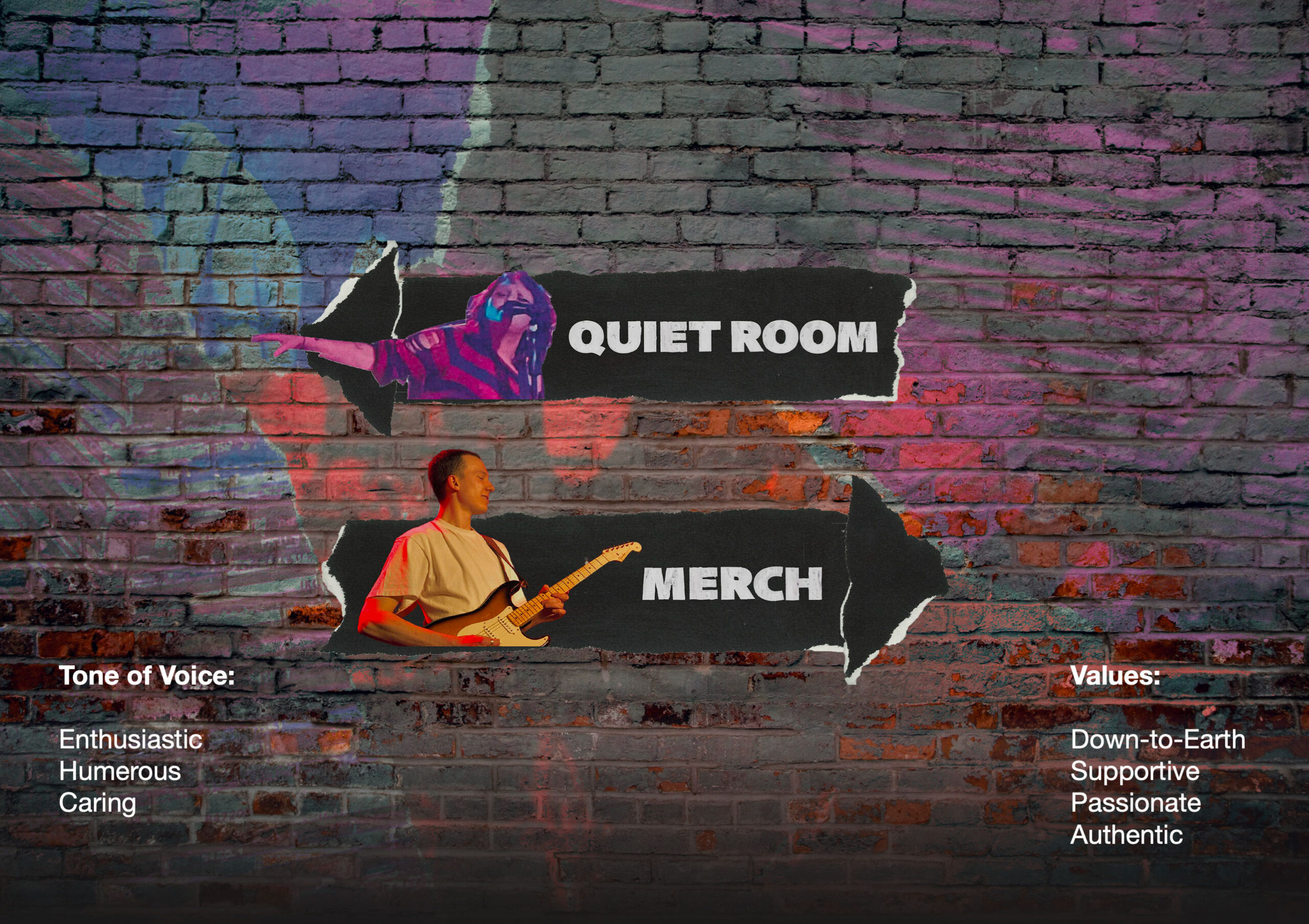
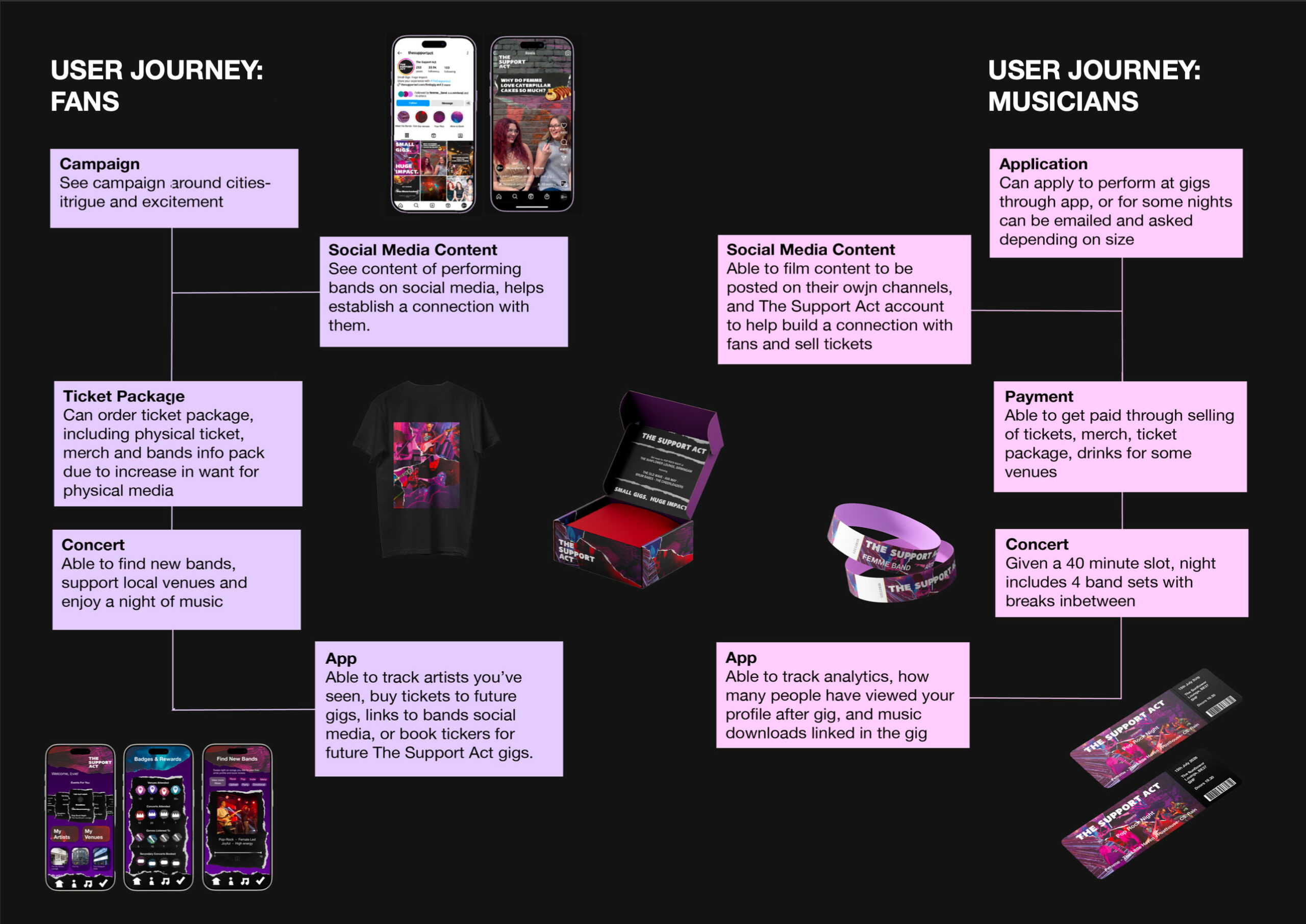
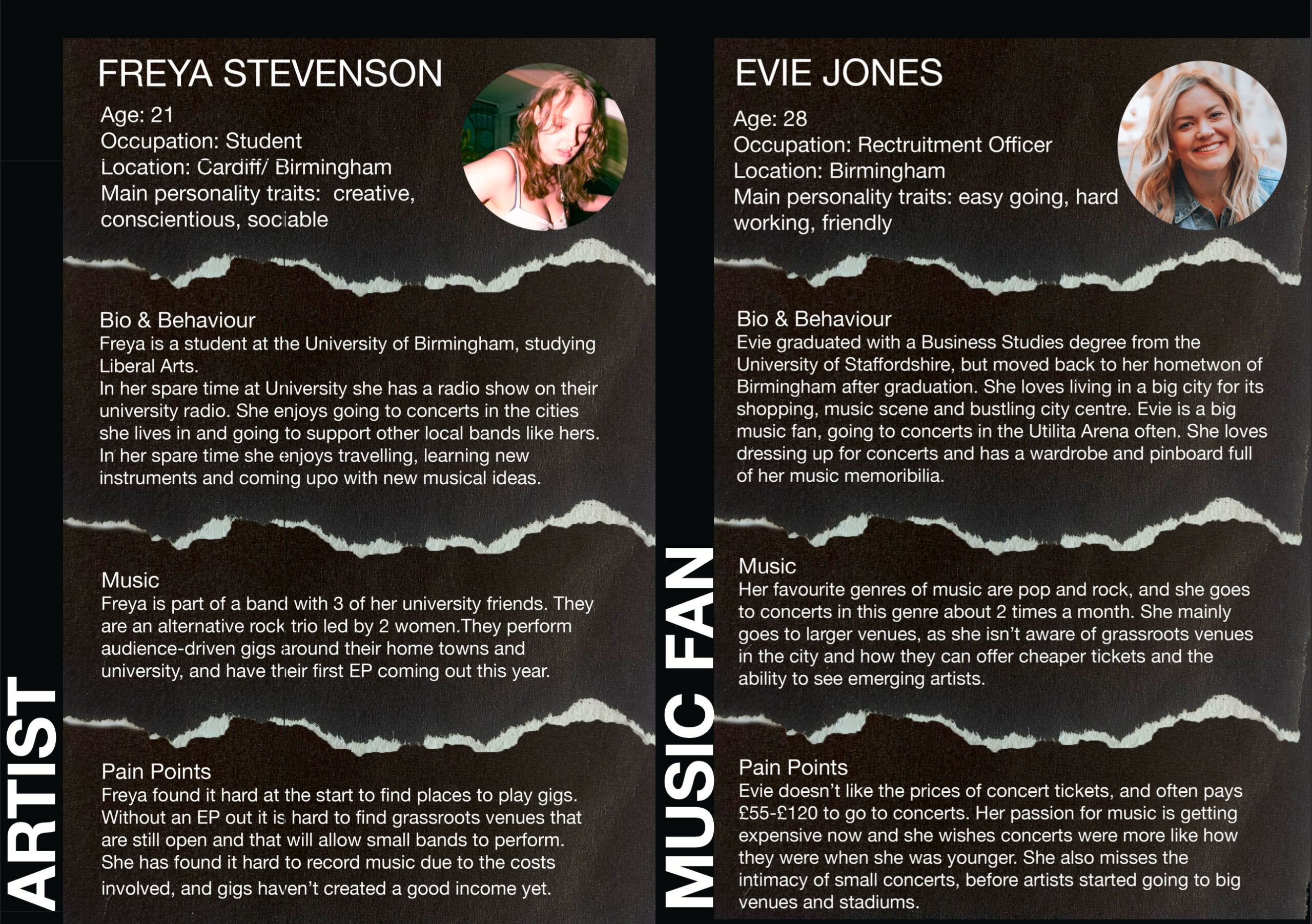
Through its hand painted typography and grungy collage based identity, The Support Act imagines music as a ‘blind date with a band’, allowing users to input a music genre and location, and get a range of gigs that each showcase 4 emerging artists.
The Support Act is for both musicians and music fans, giving developing musicians the opportunity to gain an audience and earn money, and giving music fans the opportunity to enjoy affordable concerts in local venues, as well as finding new artists to enjoy.
The Problem:
Anxiety and Hyperhidrosis affect around 10% of the world’s population. Life can be stressful enough, and conditions like these, which are often interlinked, can make it hard to live a normal life, from writing and typing to sports or being tactile.
Hyperhidrosis is a common medical condition that causes excess sweating, often found in the palm of the hand. Anxiety triggers sweat, while the fear of sweat-related embarrassment causes further anxiety. Up to 32% of people with social anxiety experience this.
We help turn anxious moments into a force for good…. through the humble pen.
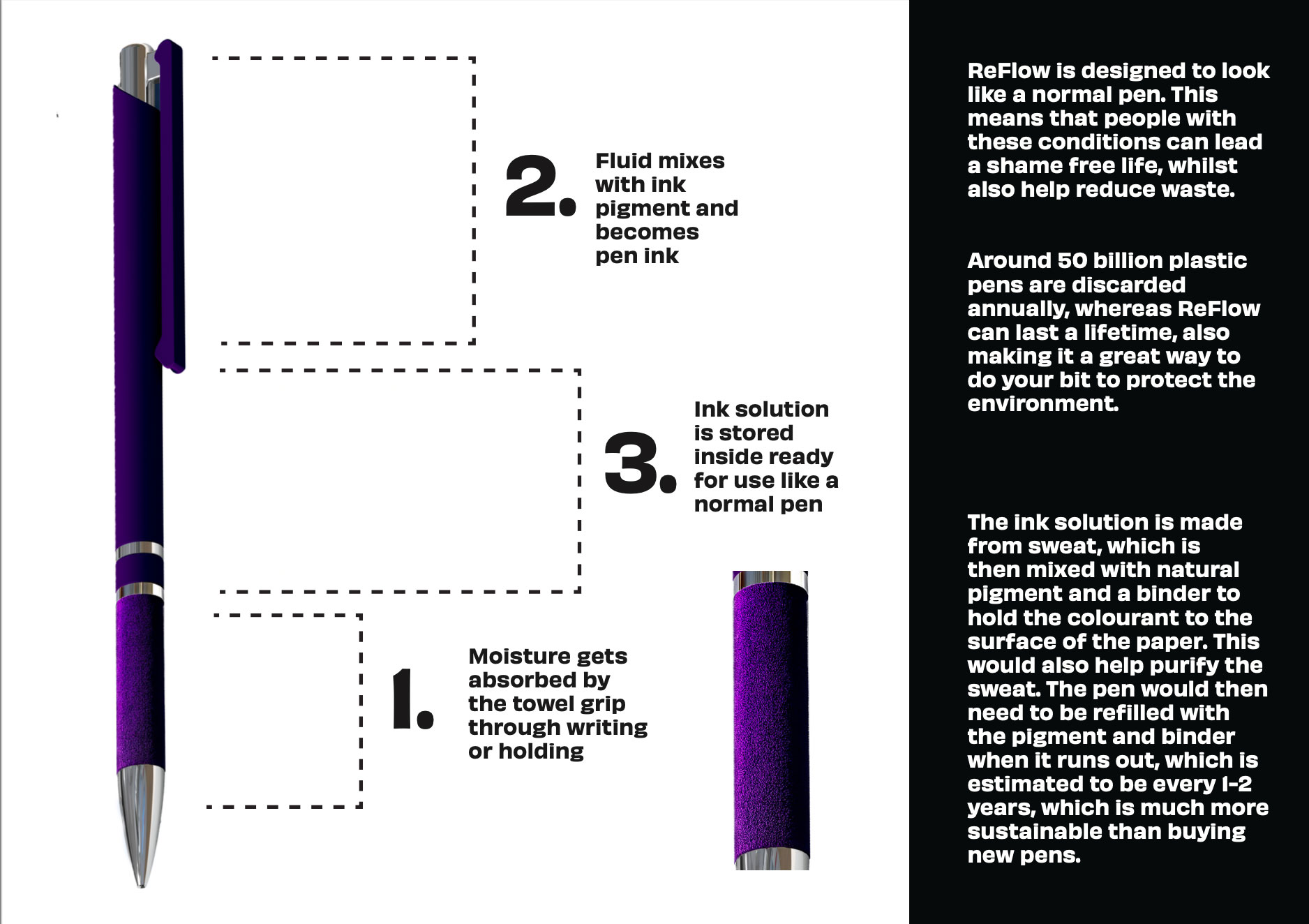
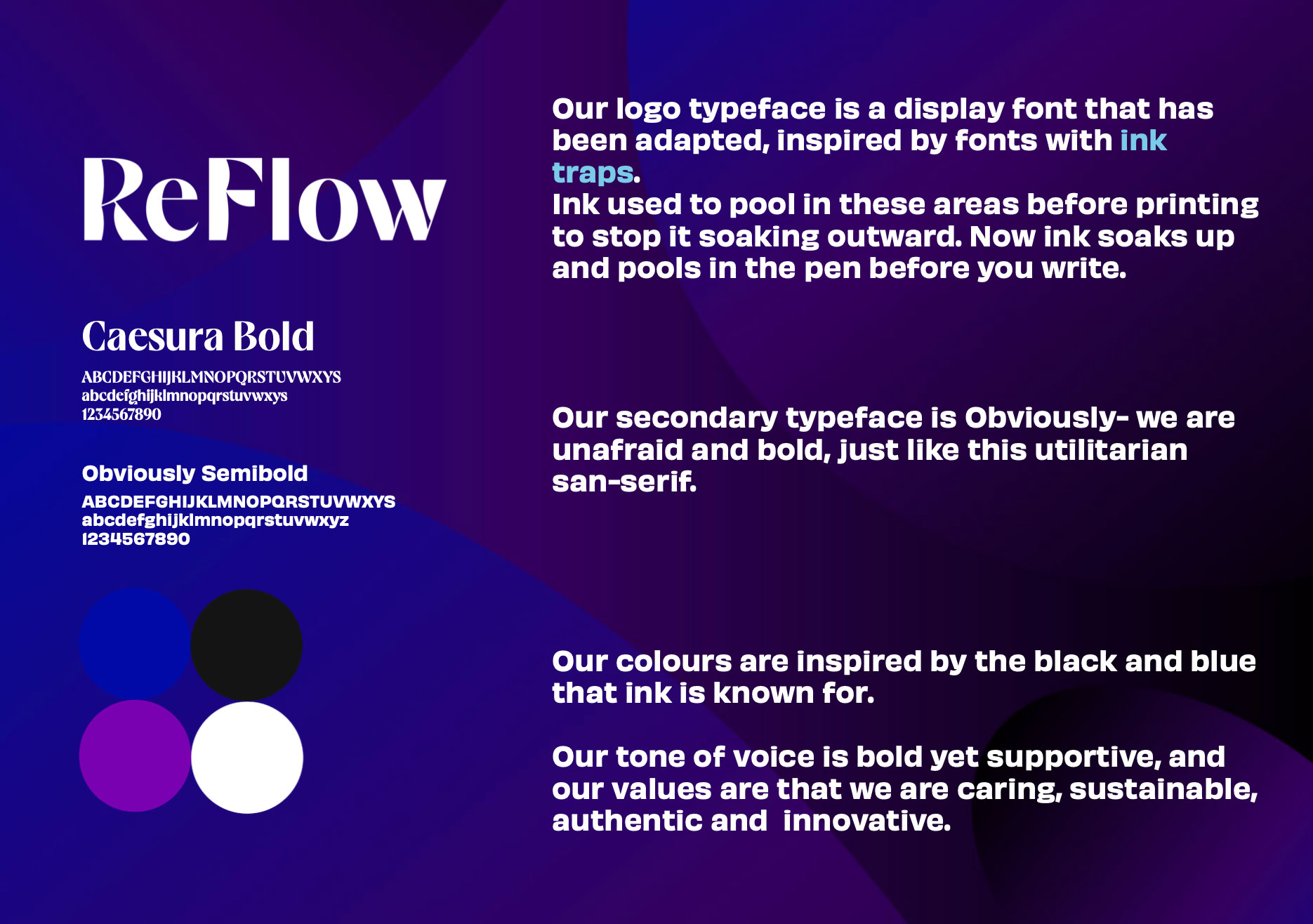
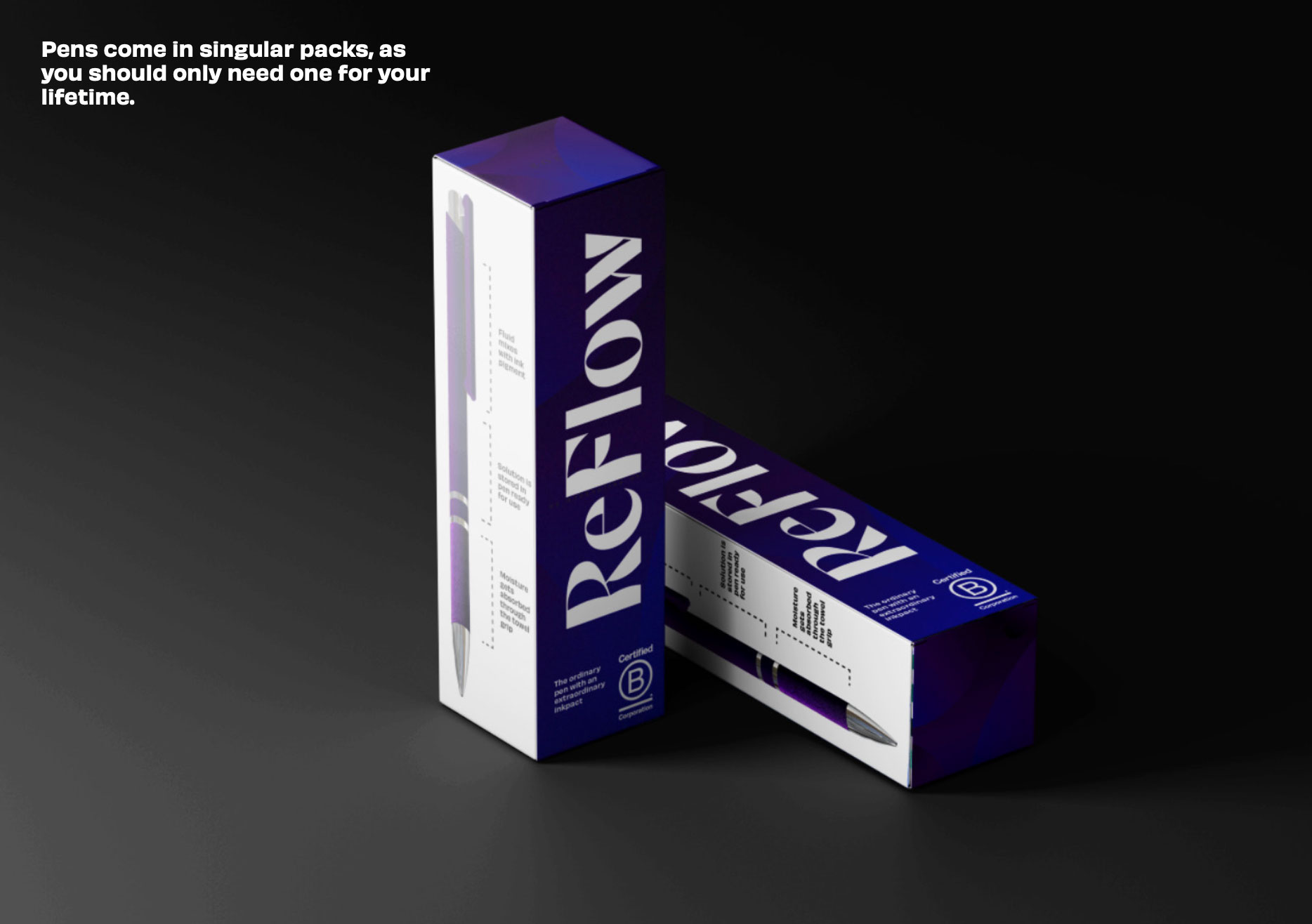
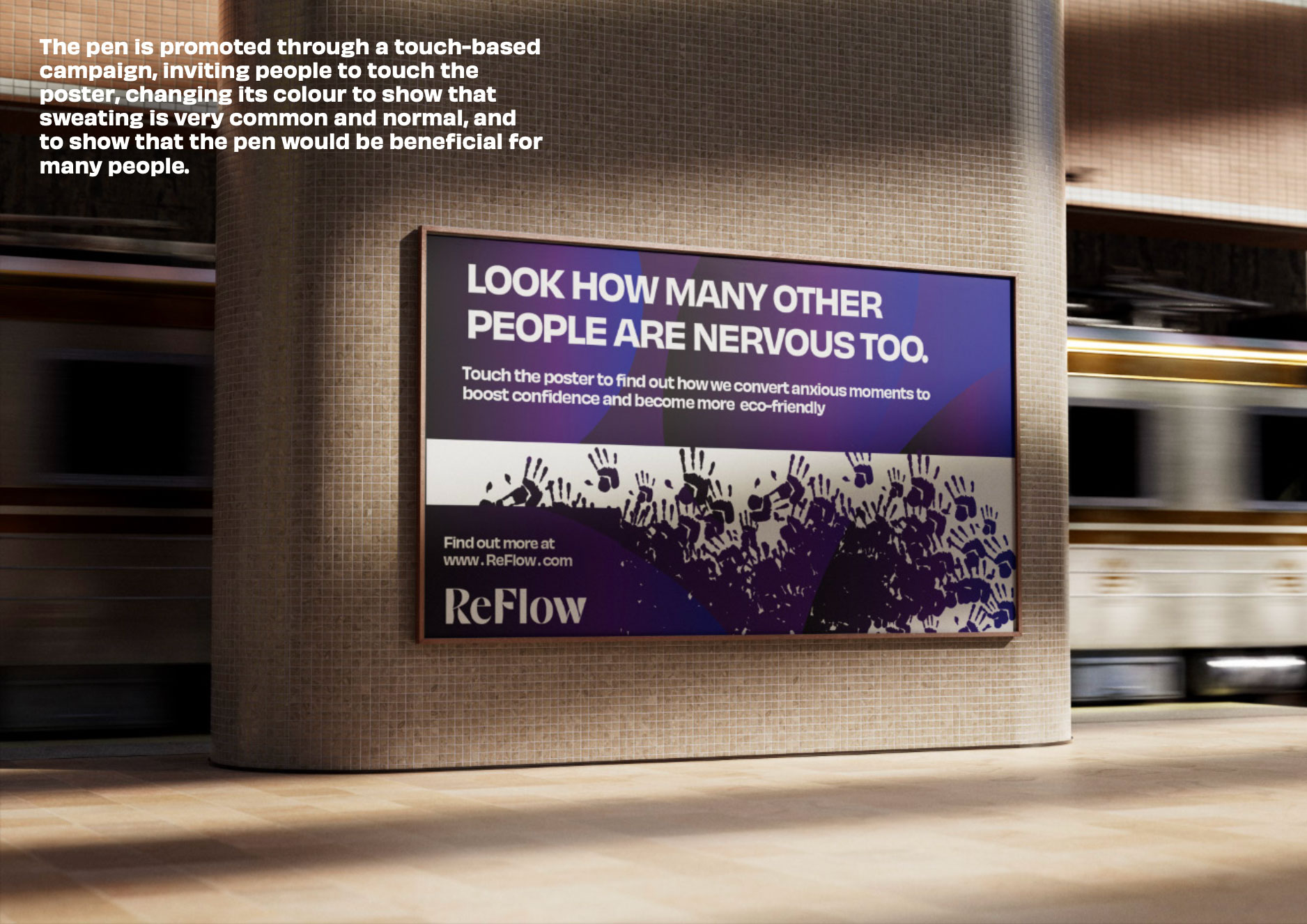
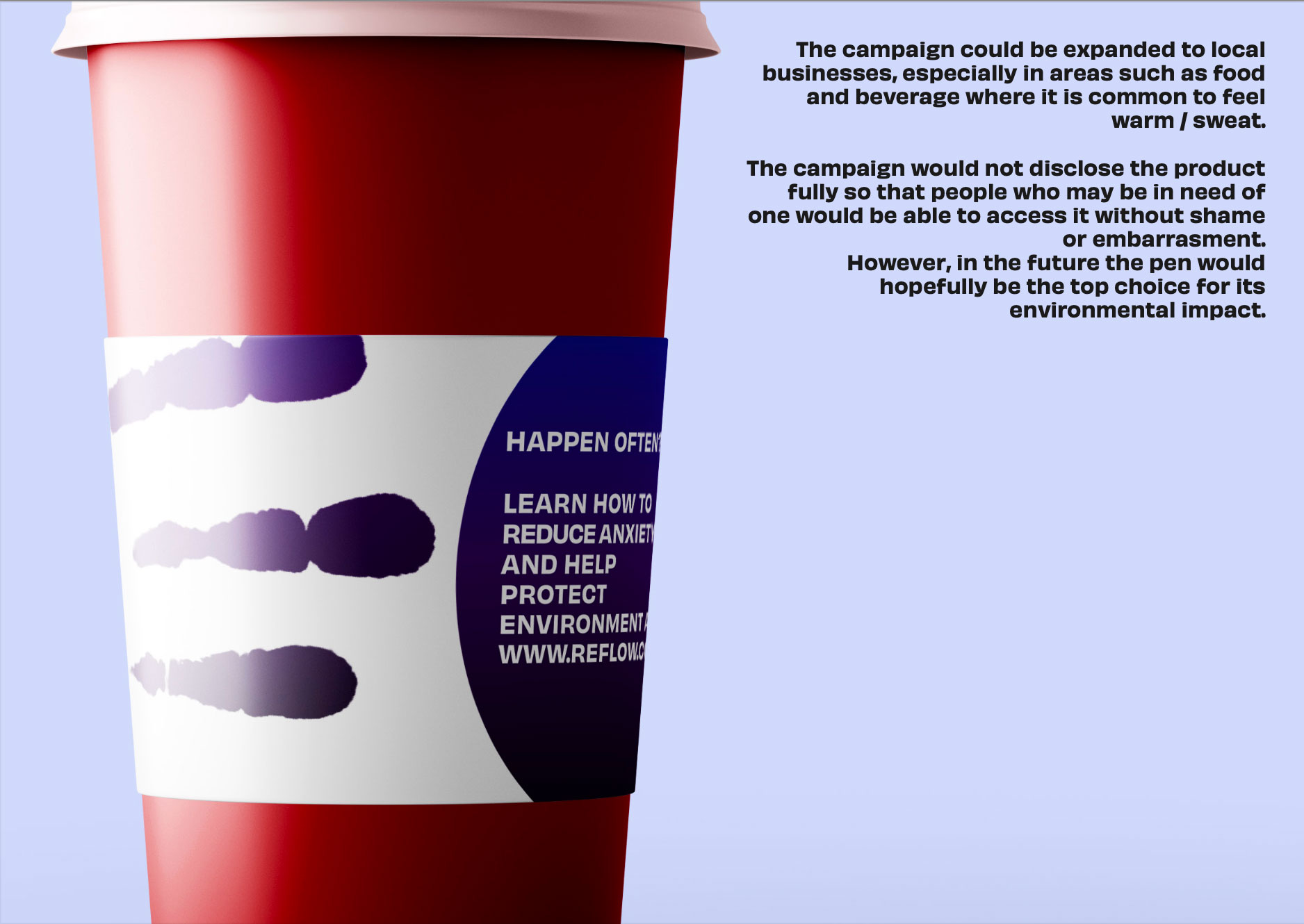
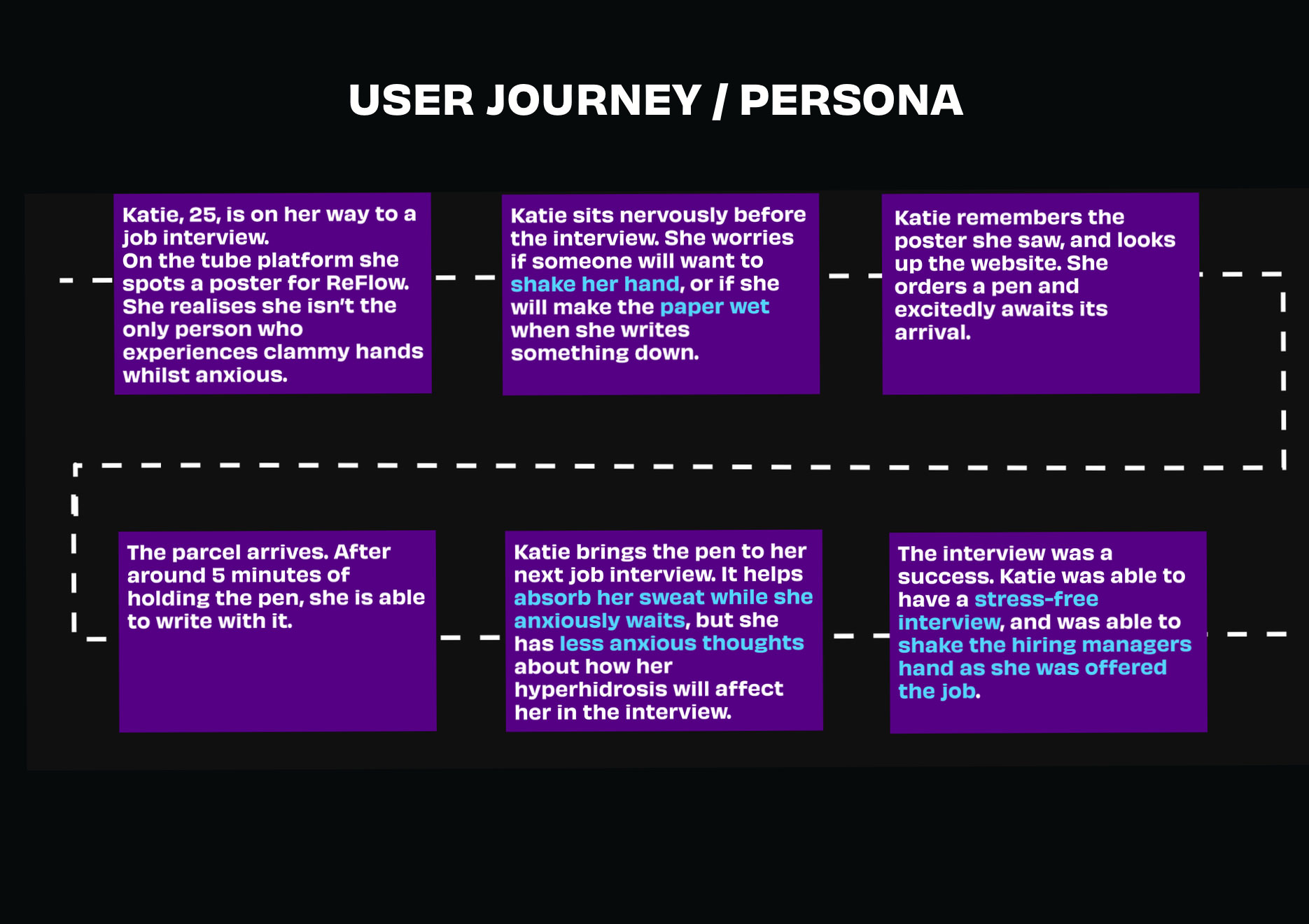
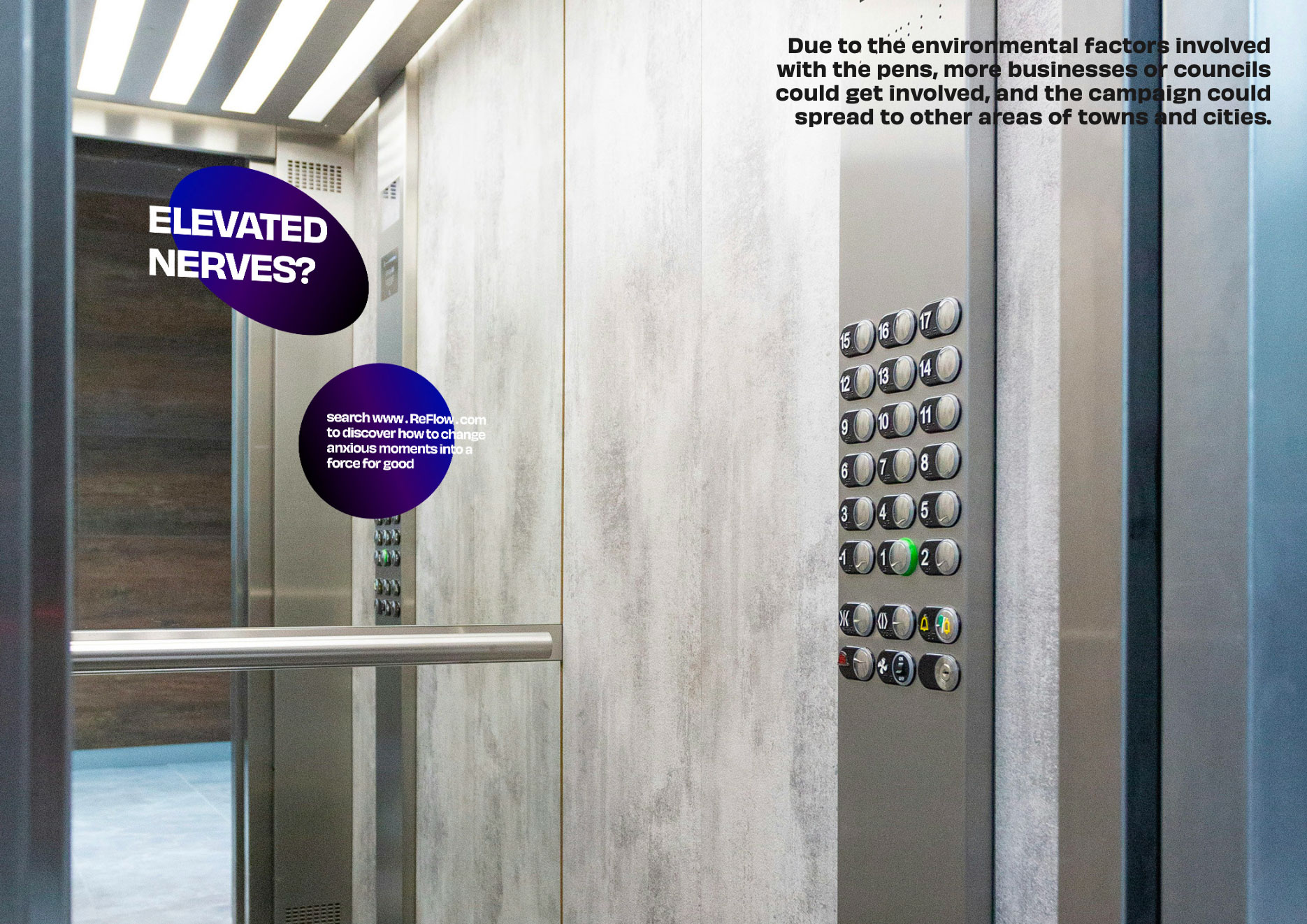
Our aim is that everyone who suffers with these conditions is able to use ReFlow as a way to discreetly manage their condition with a product that also helps reduce waste.
The Problem:
Welsh National Parks are vital for businesses, public health and culture. However, over-tourism in key areas has led to erosion, pollution and damage to important ecosystems (WLGA,n.d).
The Insight:
It is important that people continue to visit National Parks as:
– they are a vital centre for the protection of ecosystems and biodiversity,
– They are important for peoples mental and physical health
– They are an area of cultural historyThey help support local towns and businesses
However, it is important that people visit National Parks in a sustainable way, reducing over tourism and pollution (National Parks Association of NSW, 2016).
The Solution:
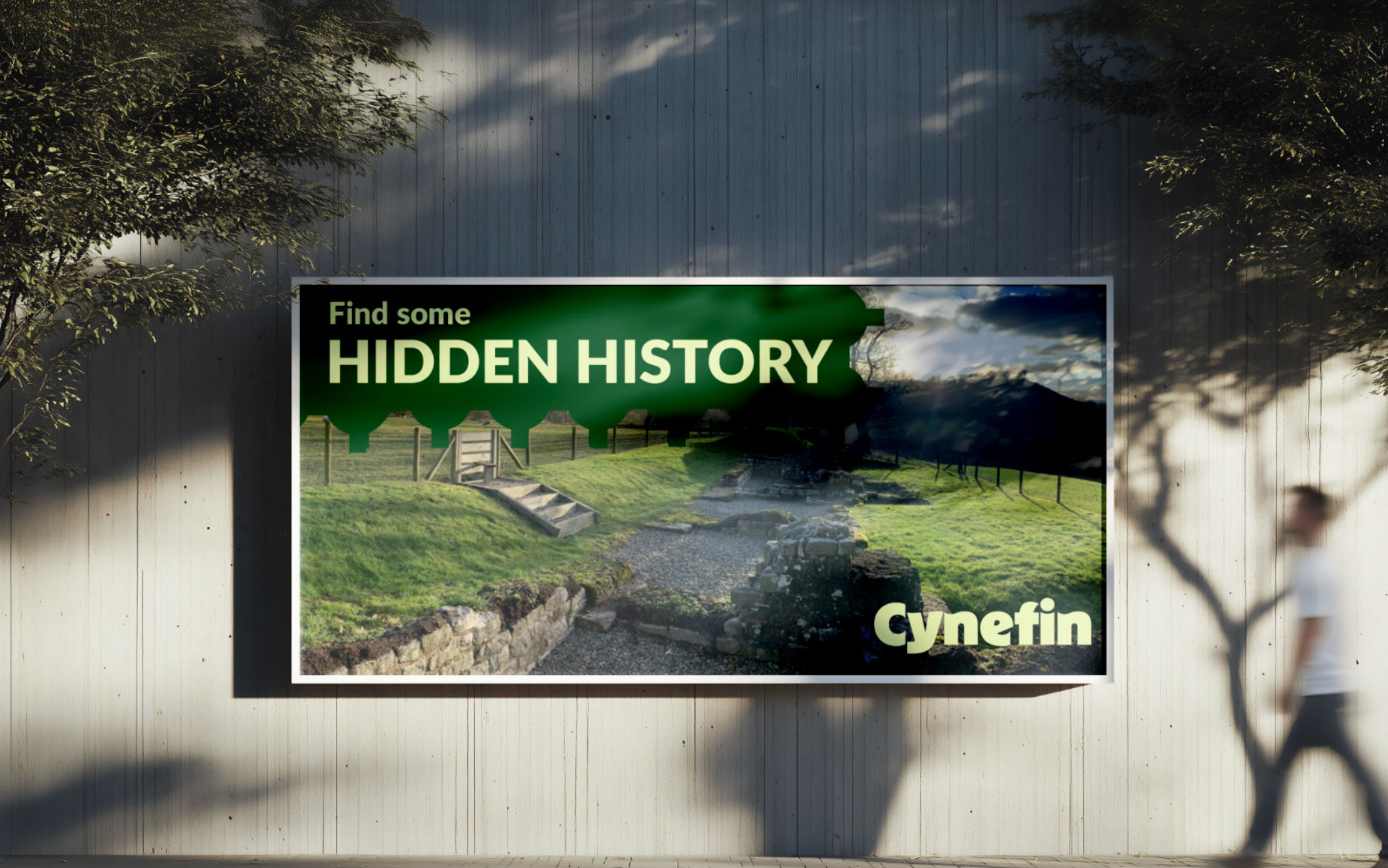
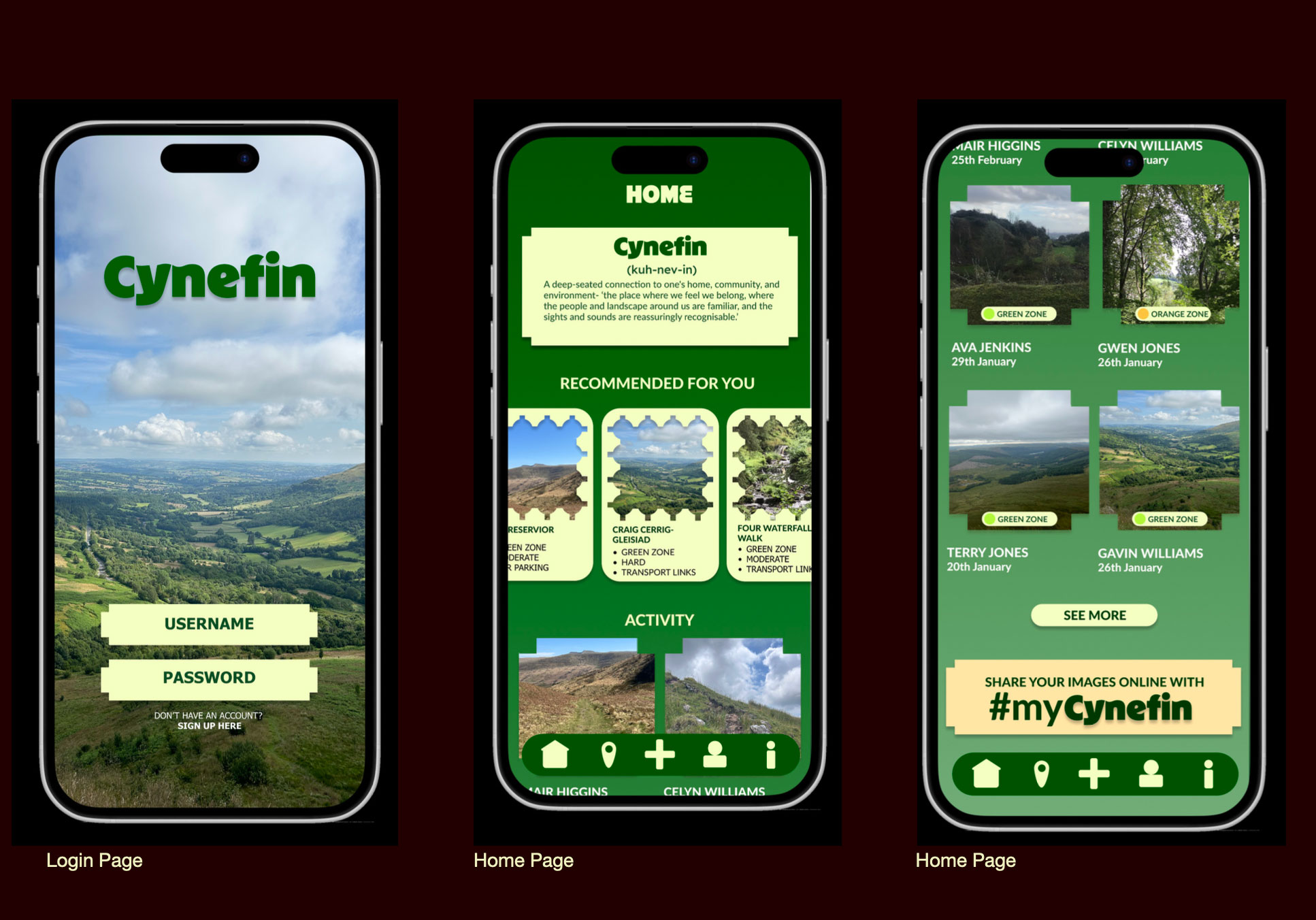
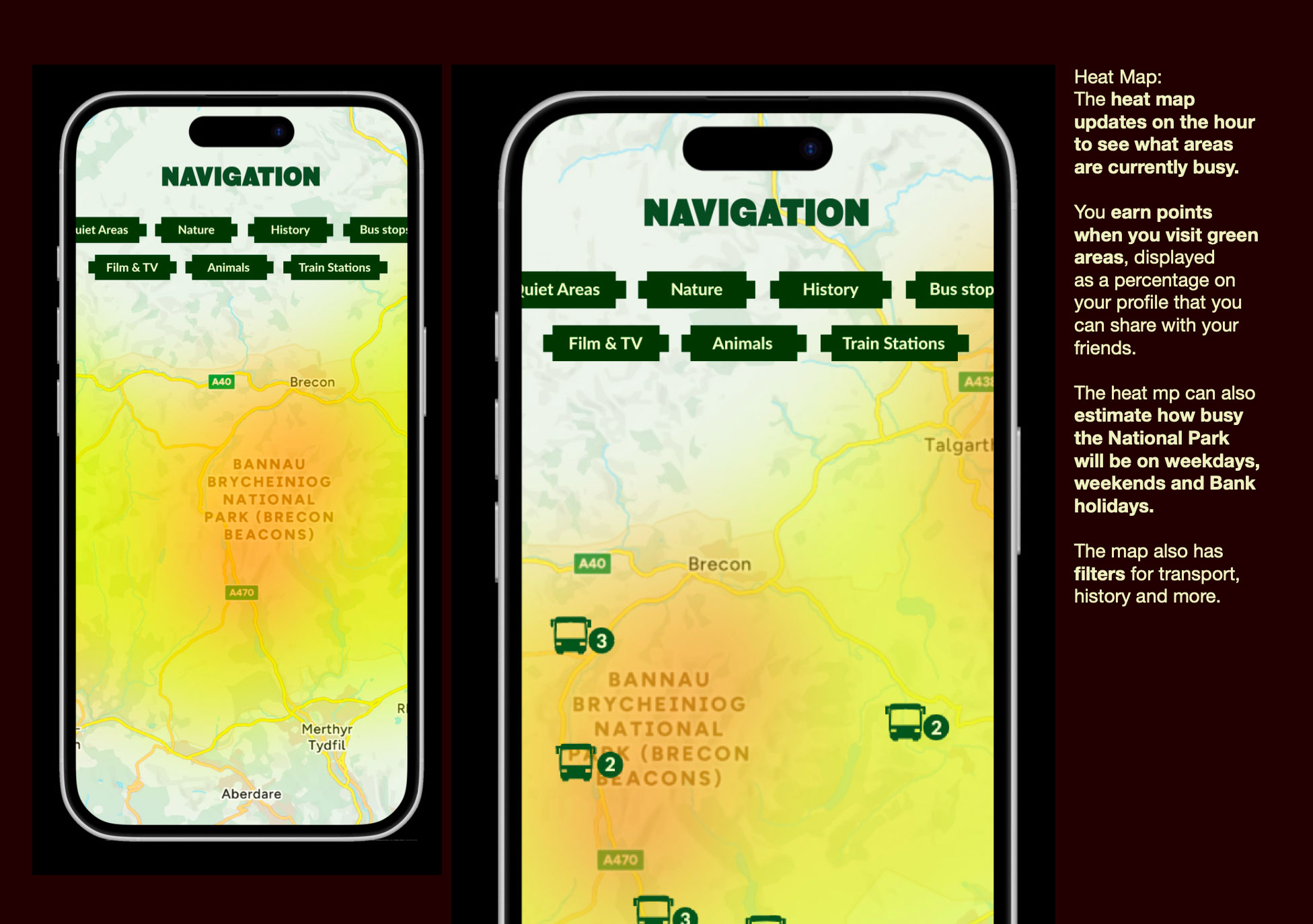
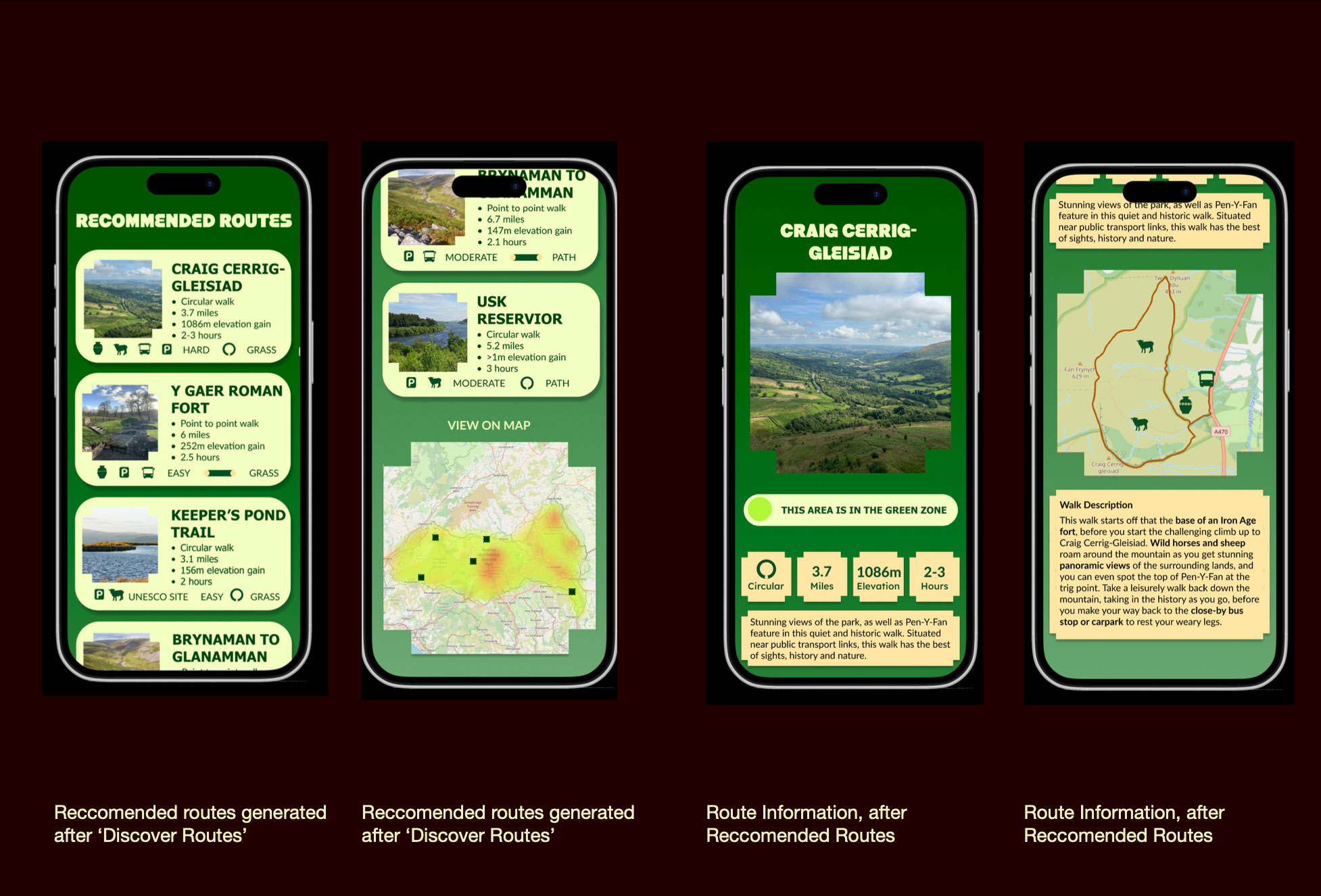
Cynefin is a walking app that allows the user to find walks in the less visited areas of the Bannau Brycheiniog National Park (formerly Brecon Beacons).
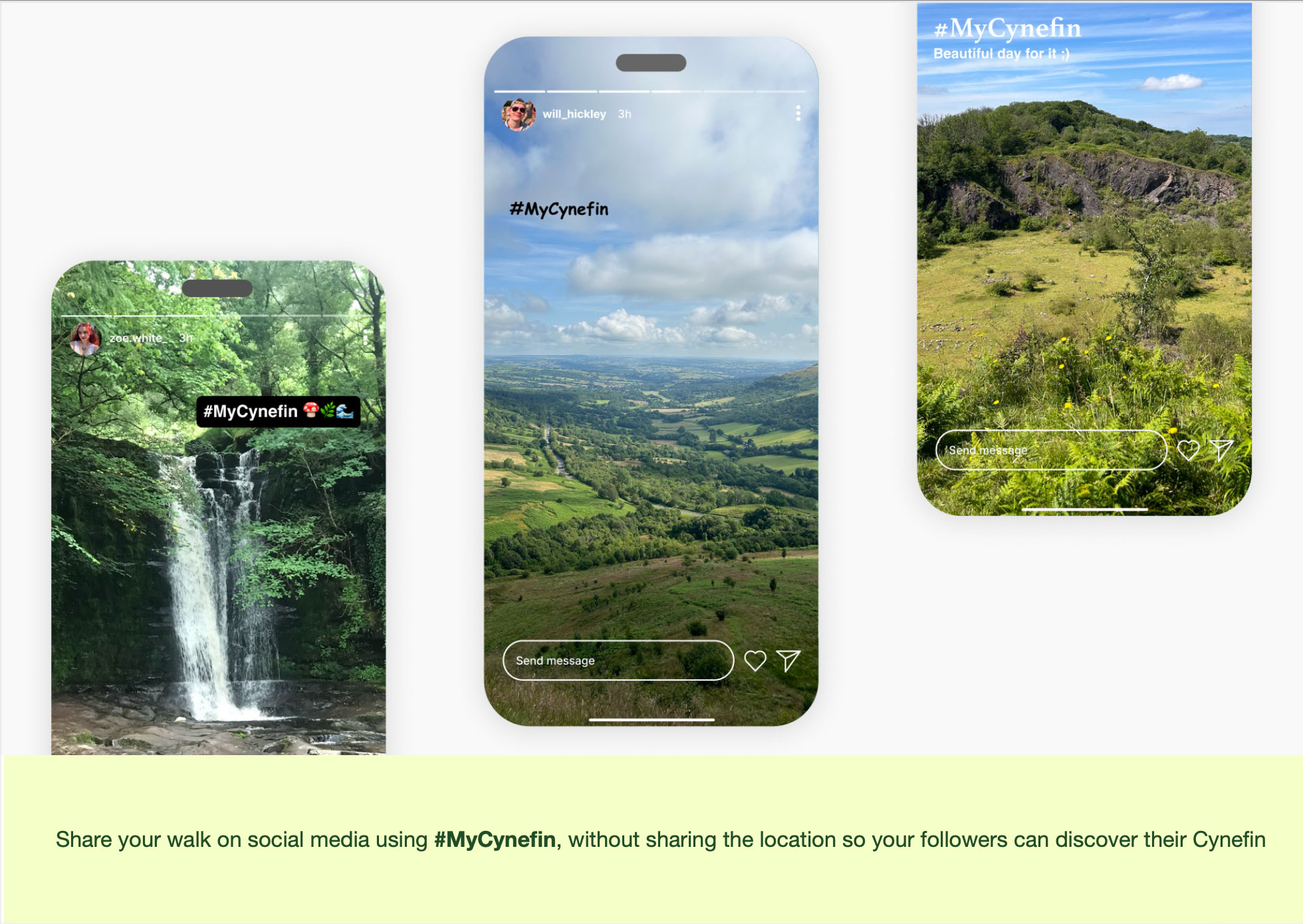
The app focuses on the hidden gems of the park, letting people explore further and find their own “Cynefin”, that they can then share online as a secret location.
Cynefin (kuh-nev-in)
Cynefin reflects the relationship and connection to our surroundings that can shape our identity and well-being. It encompasses the physical, social, cultural, spiritual and economic dimensions of a place, and how these interact with each other, creating a connection to someone’s home, community and environment where they feel they belong (Cynefin Co, n.d).
Thank you so much for viewing my page! Feel free to send me an email or connect with me on LinkedIn, I’d love to stay in touch!