

Interior textile, surface, and pattern designer.
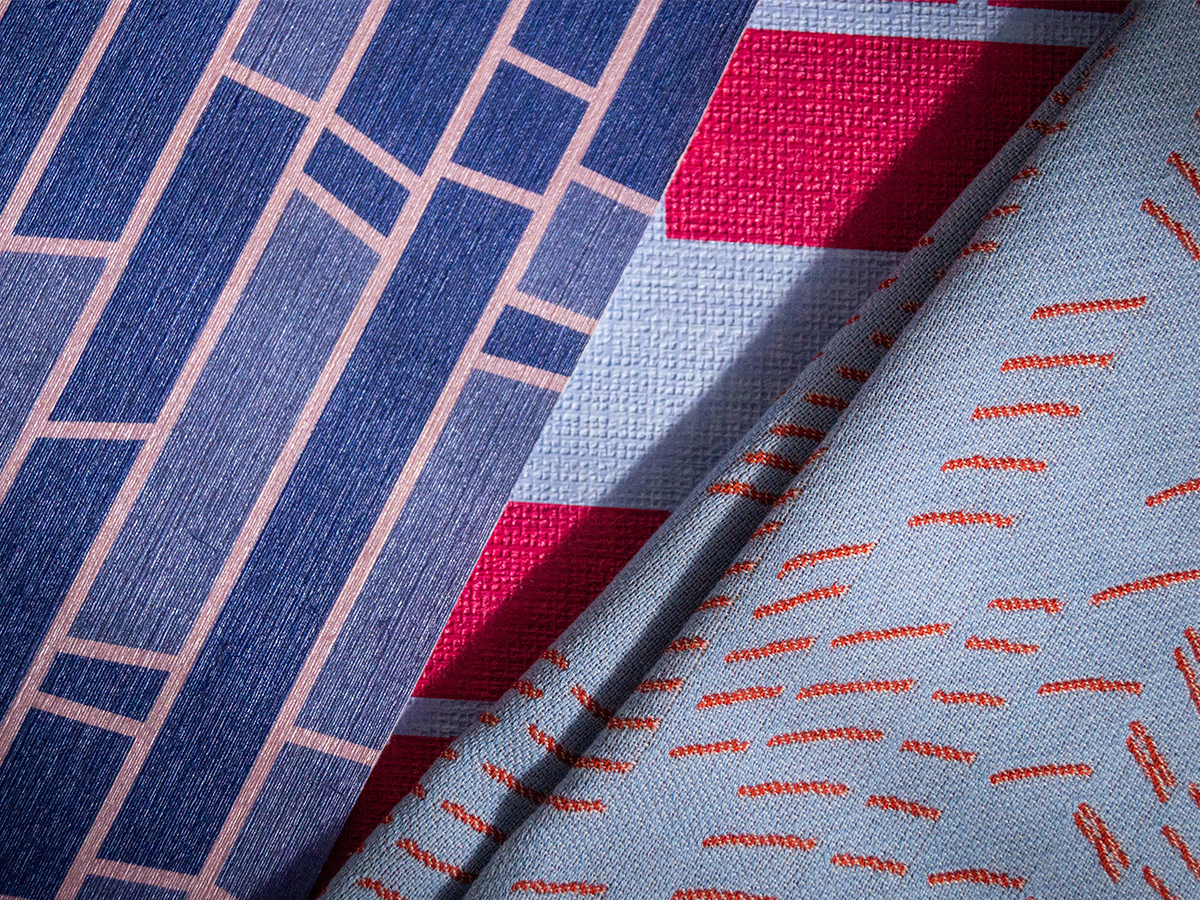
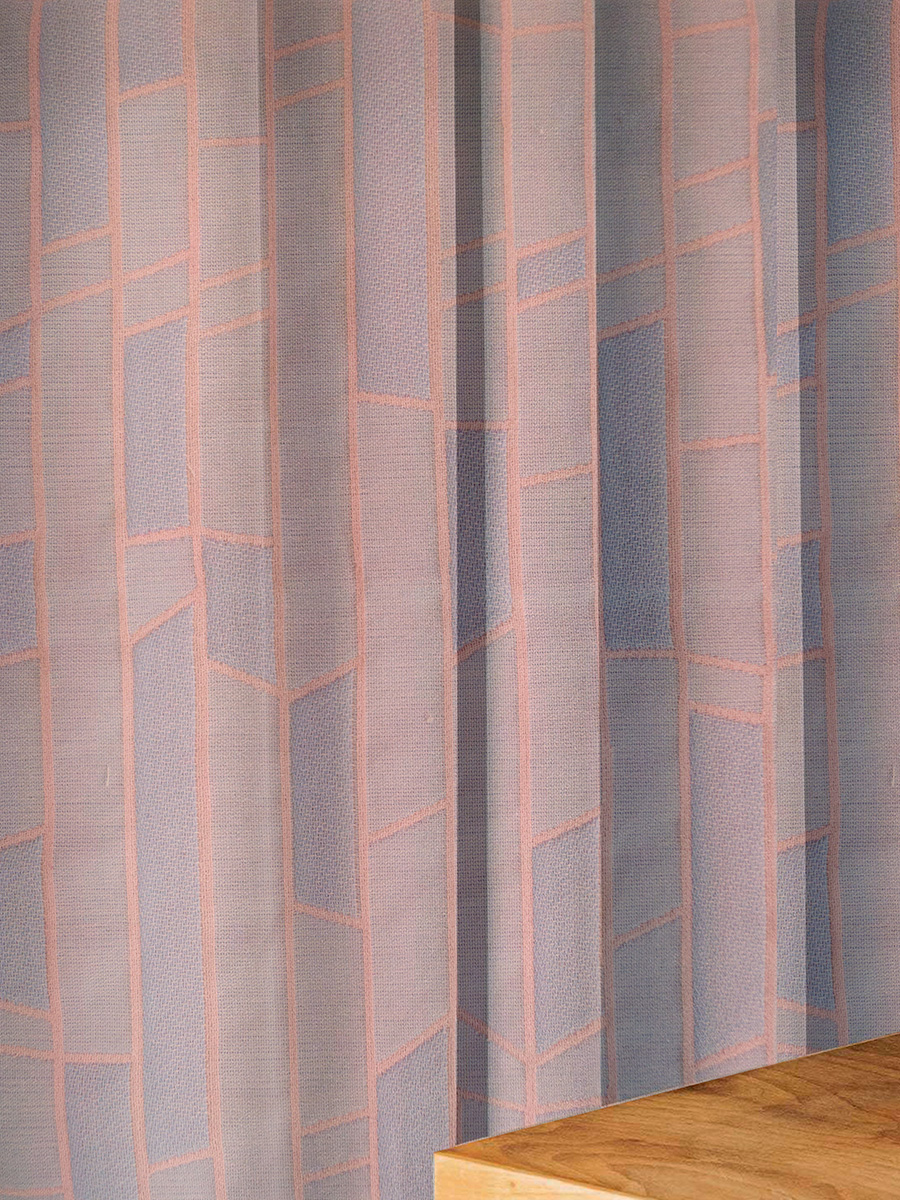
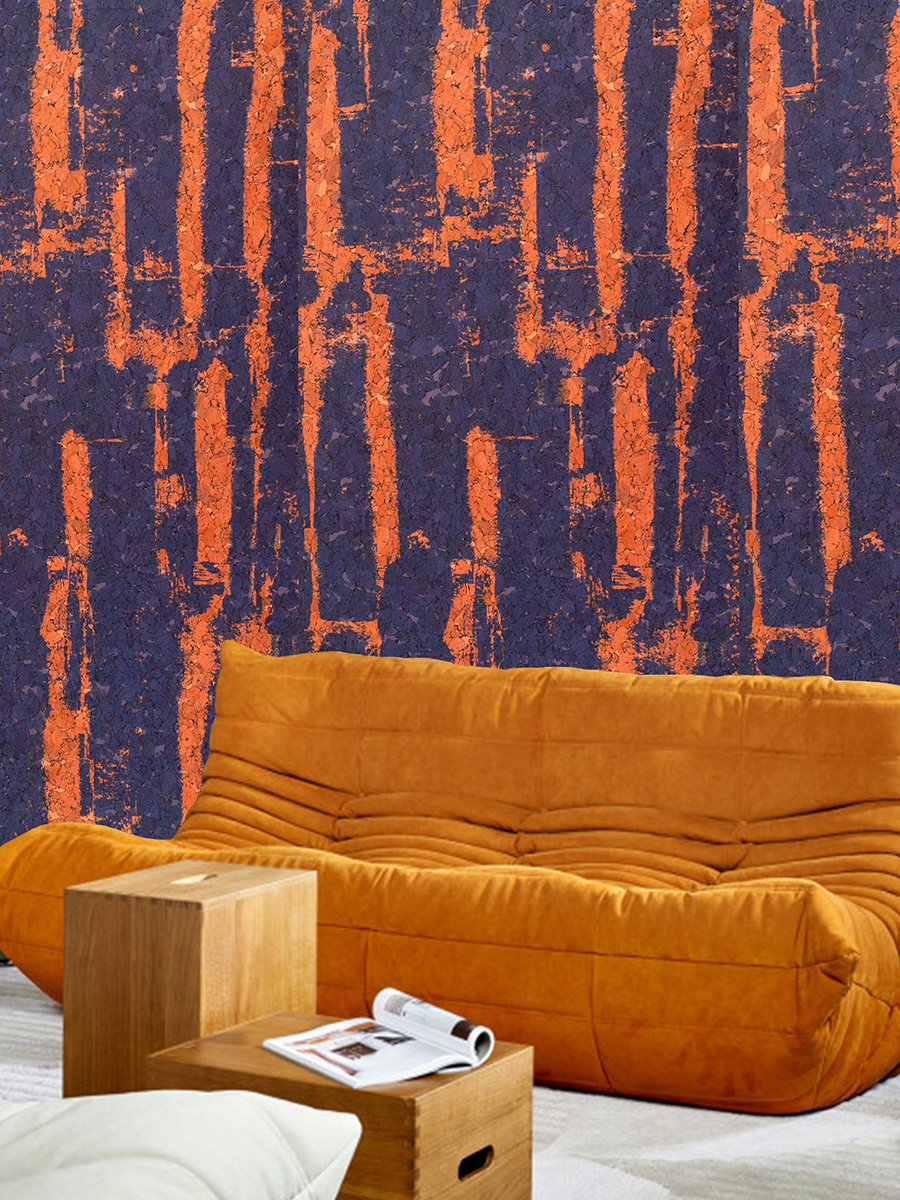
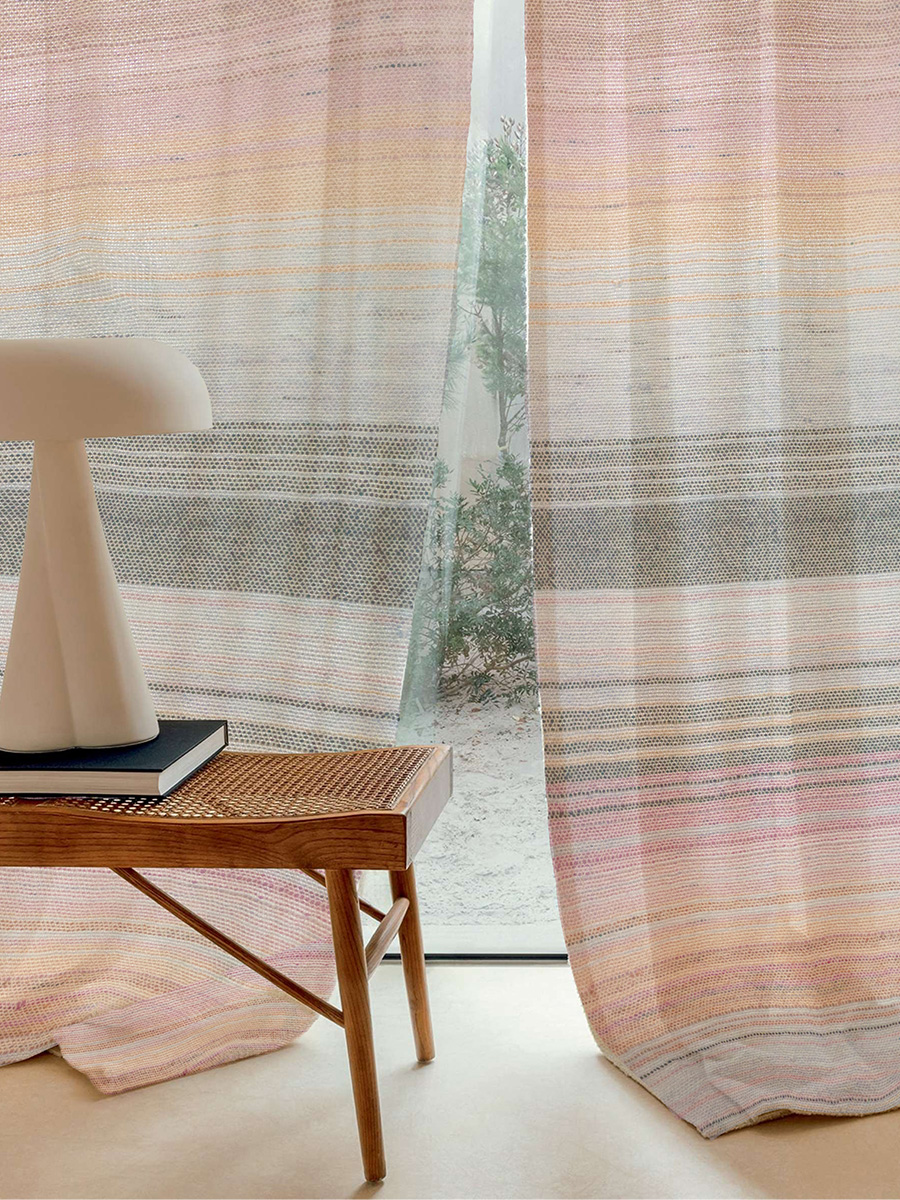
“House” is an interior design collection, inspired by the sounds of modern house music. Much of the inspiration for this project also comes from architectural forms, and how the design of spaces is often informed by the way in which sound travels through them. These themes combine to create a commercial and modern, but also functional collection of textiles designed for upholstery, drapery, wallcovering, and accessories.
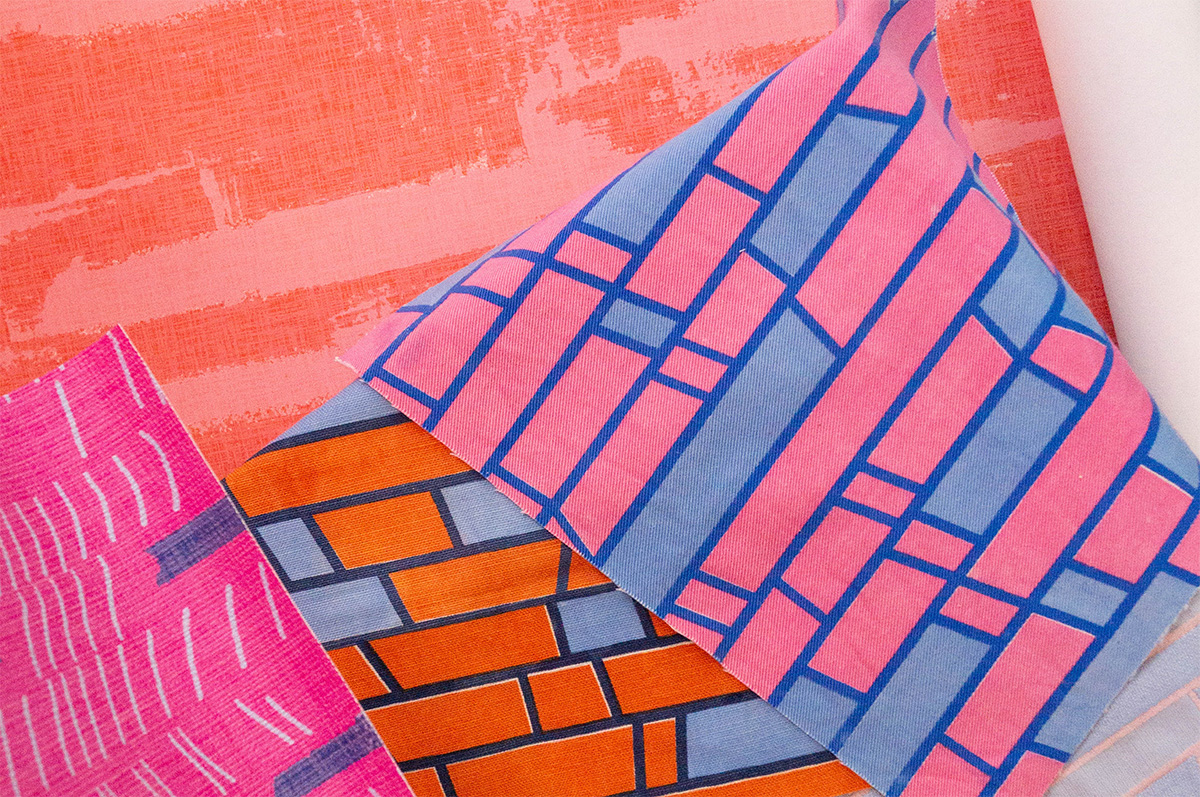
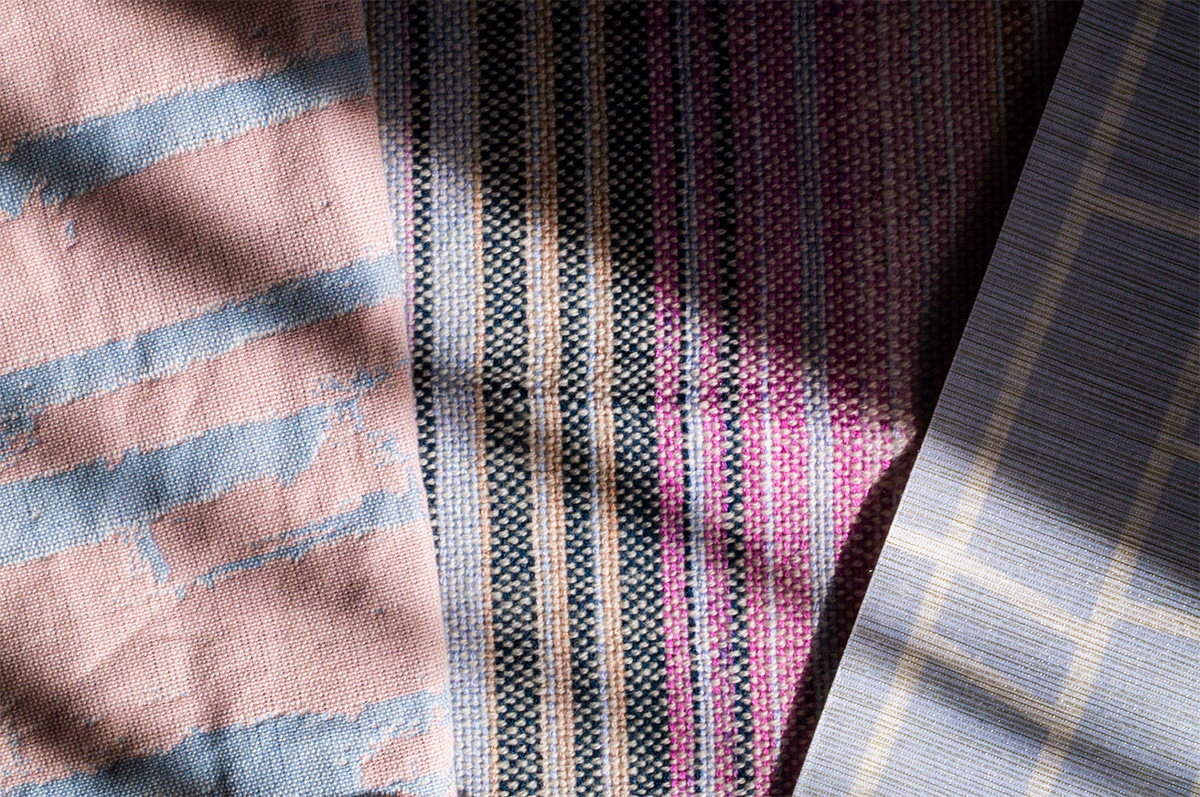
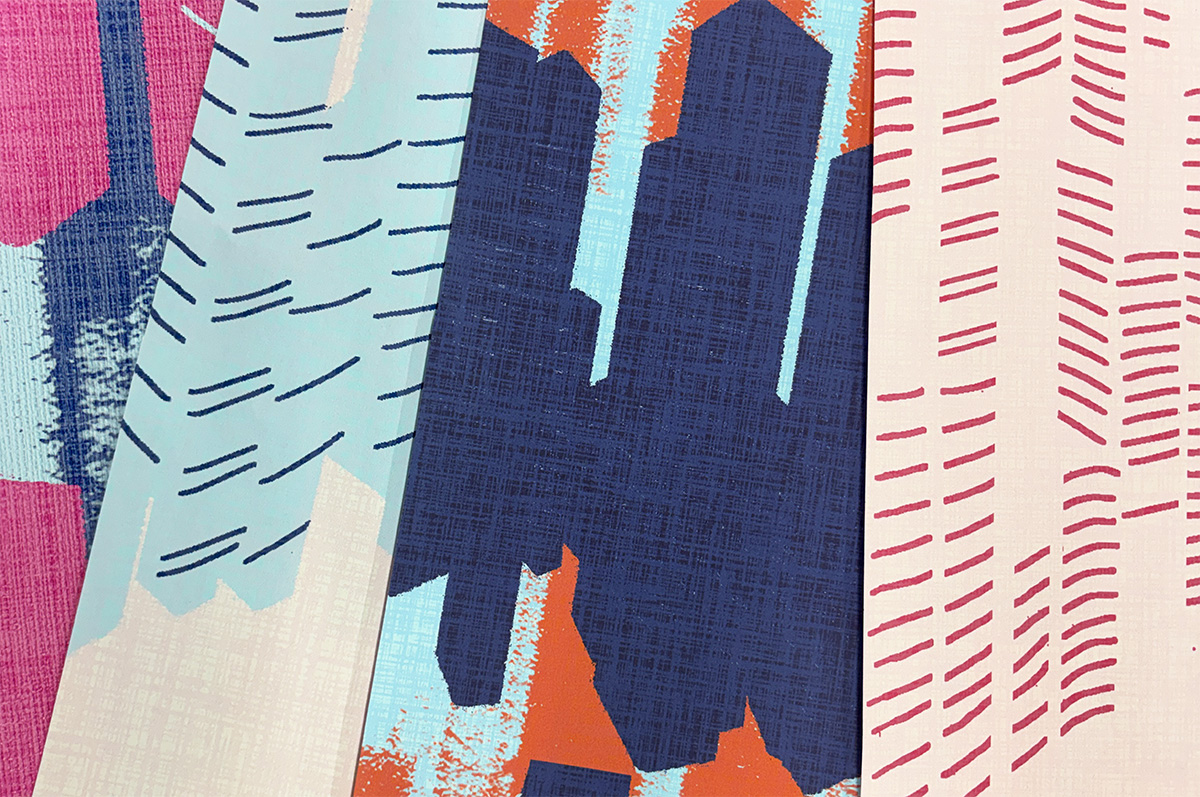
I began this project by looking at what has been a consistent factor in my textiles practice throughout my degree, and without fail I have always listened to music whilst designing and making. Therefore, I wanted to change perspectives and make this the centre of the project. I am particularly drawn to house music because of its consistent, undulating beats which feel pattern-like because of their interlocking harmonies and colourful use of sound.
Designing for a space also led me to think about using architecture as a visual reference point for pattern. However, I wanted to go beyond the aesthetic and make it functional via material science, considering how we can improve soundproofing and acoustics through textiles. This not only improves the music listening experience in these spaces but also the overall standard of living. I hoped that this project would help bridge some of the gap between the aesthetics and function of interior design.
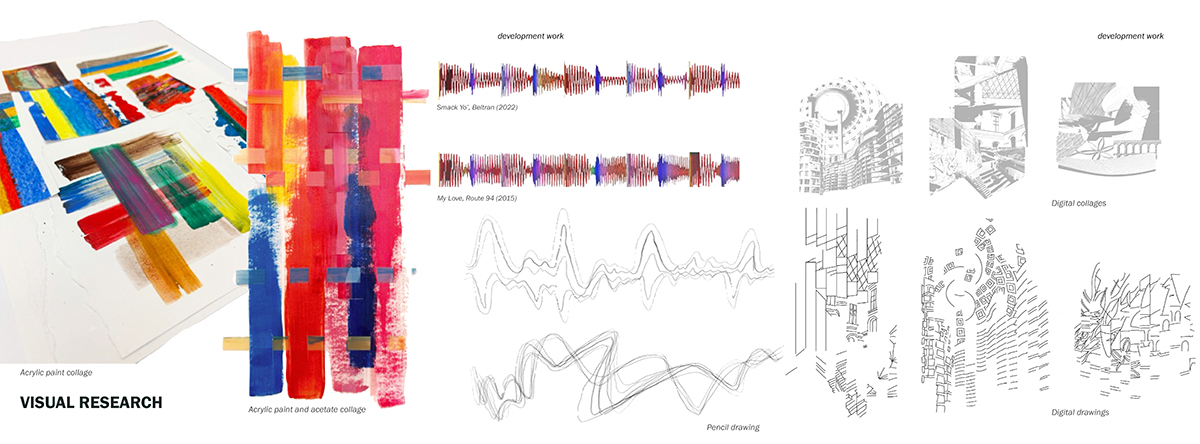
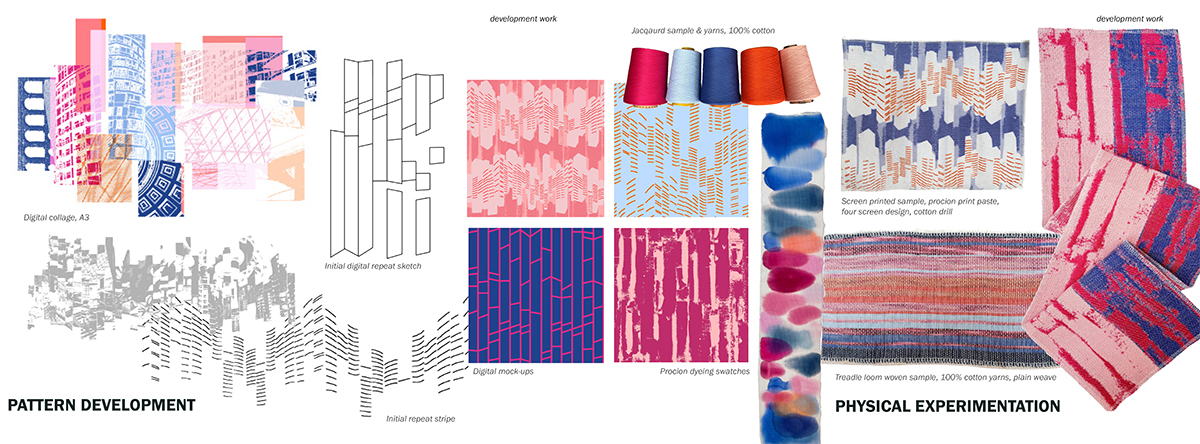
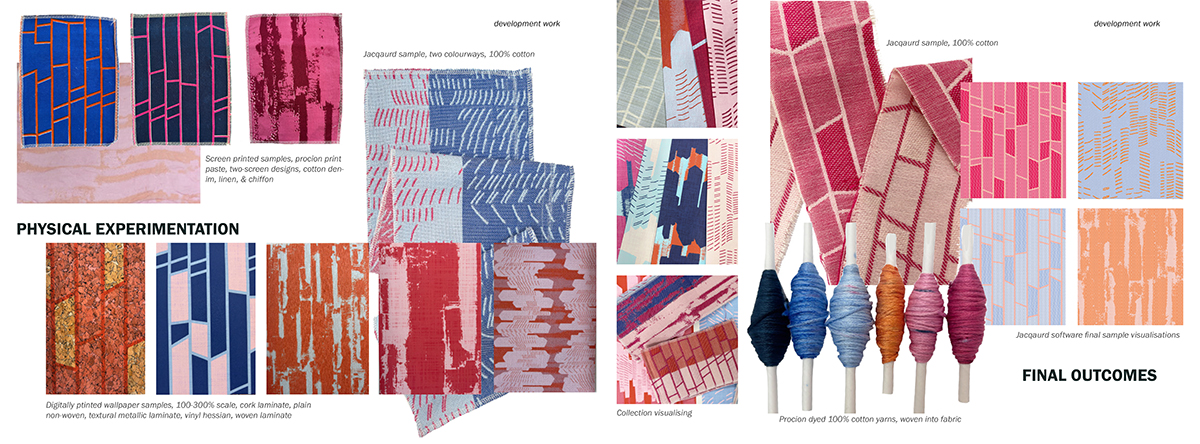
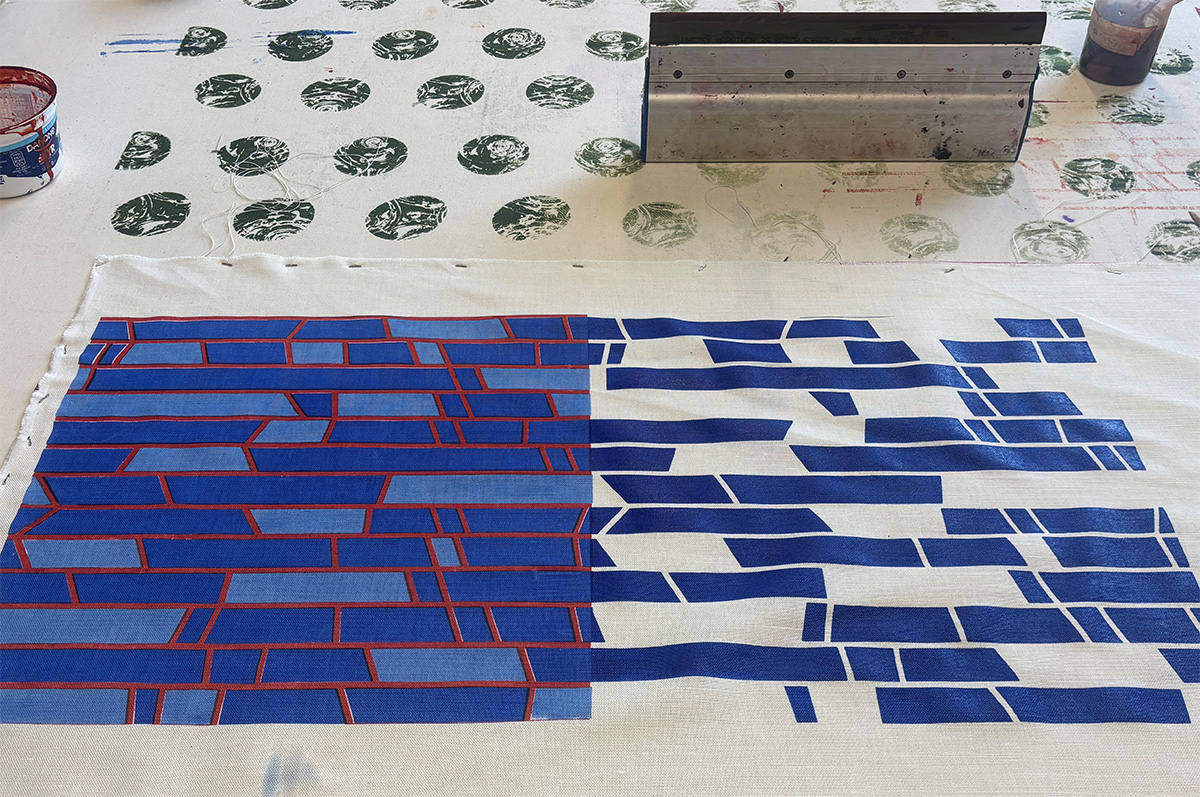
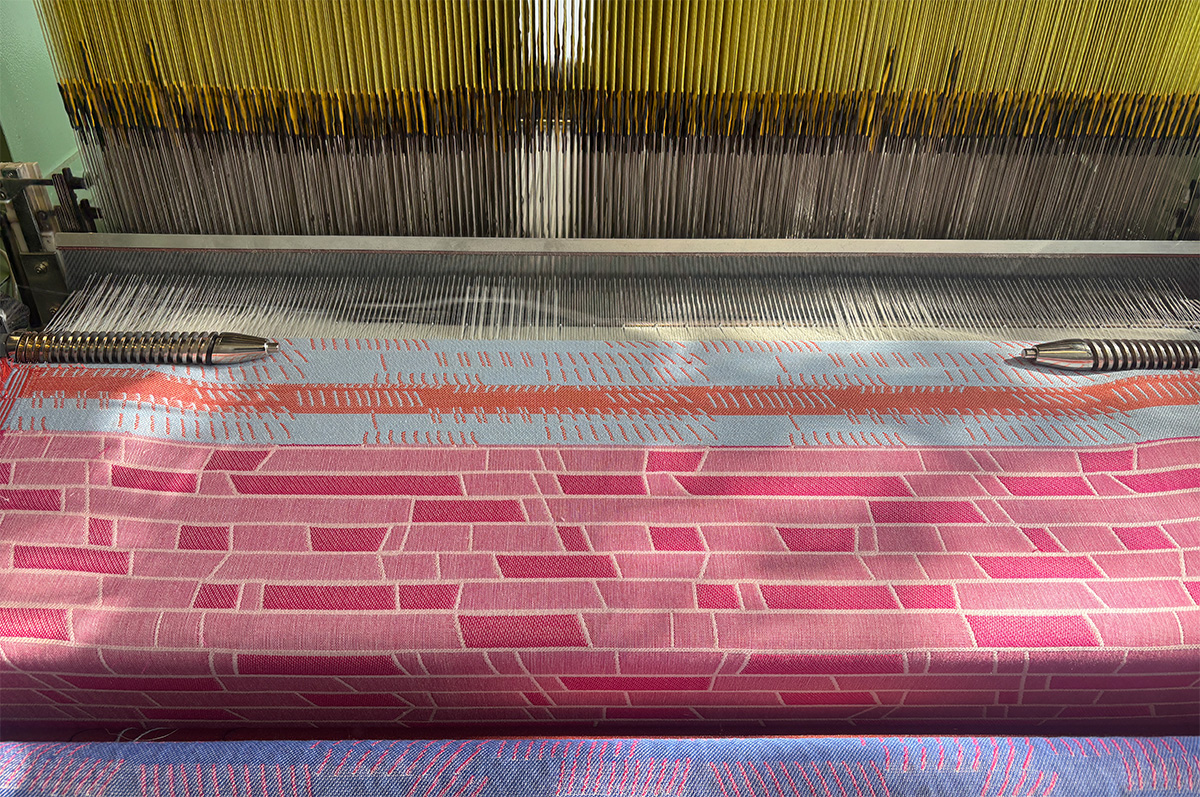
This was driven by experimentation with materials and colour – something that I felt was so important to the success of the project. I began by sketching with bold colours and then introducing geometry – using layered architectural forms. My pattern development combines the abstract representation of the ‘feeling’ of music, with more linear music notation, and structured shapes inspired by architecture.
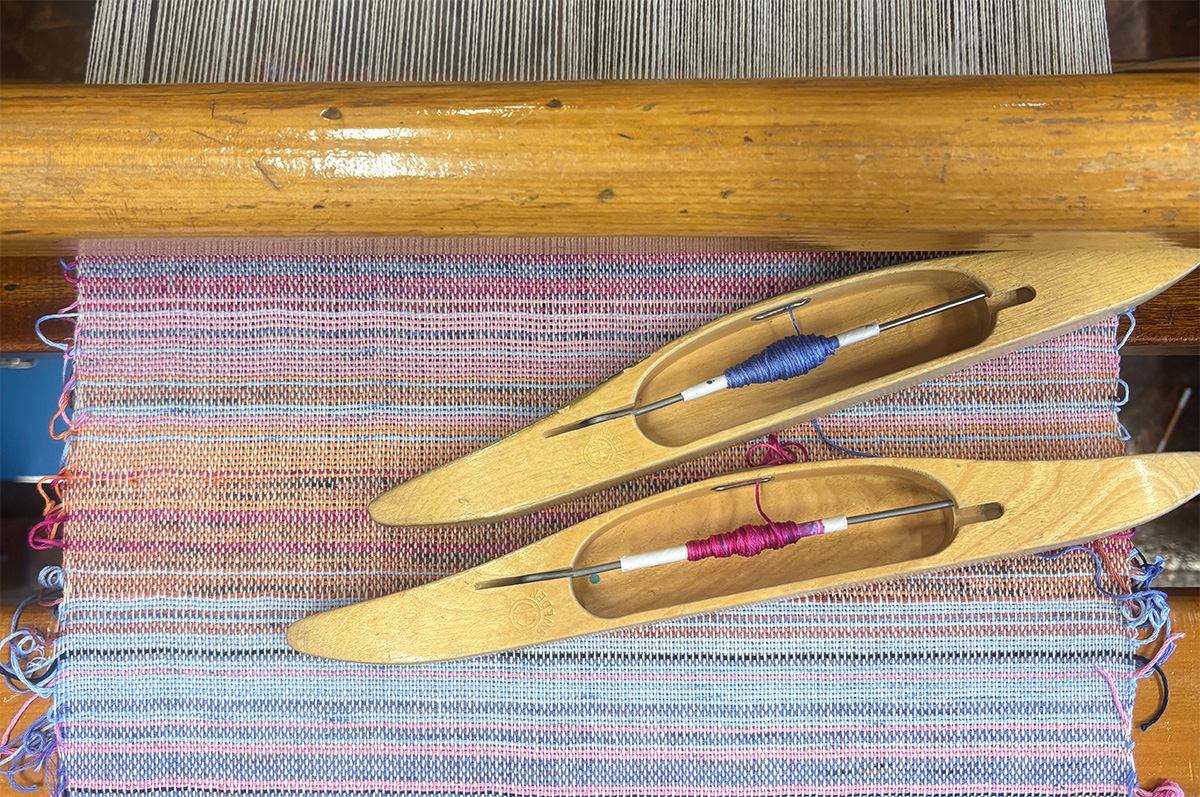
I then applied these patterns to Jacquard weaving, screen printing, and digital wallpaper printing, using techniques that are applicable in the relevant market. Creating plain, coordinate fabric designs to sit alongside the patterns was a key part of the collection. This was achieved through handweaving, considering the luxury application of the project, and using colour by itself to create pattern.
Visualisations