My practice programs heartbeats into machines. Servo motors click, chiffon palpitates, wire traces the shape of veins. Through kinetic installations I press on the boundary between the living and the mechanical until it collapses.
The Origin
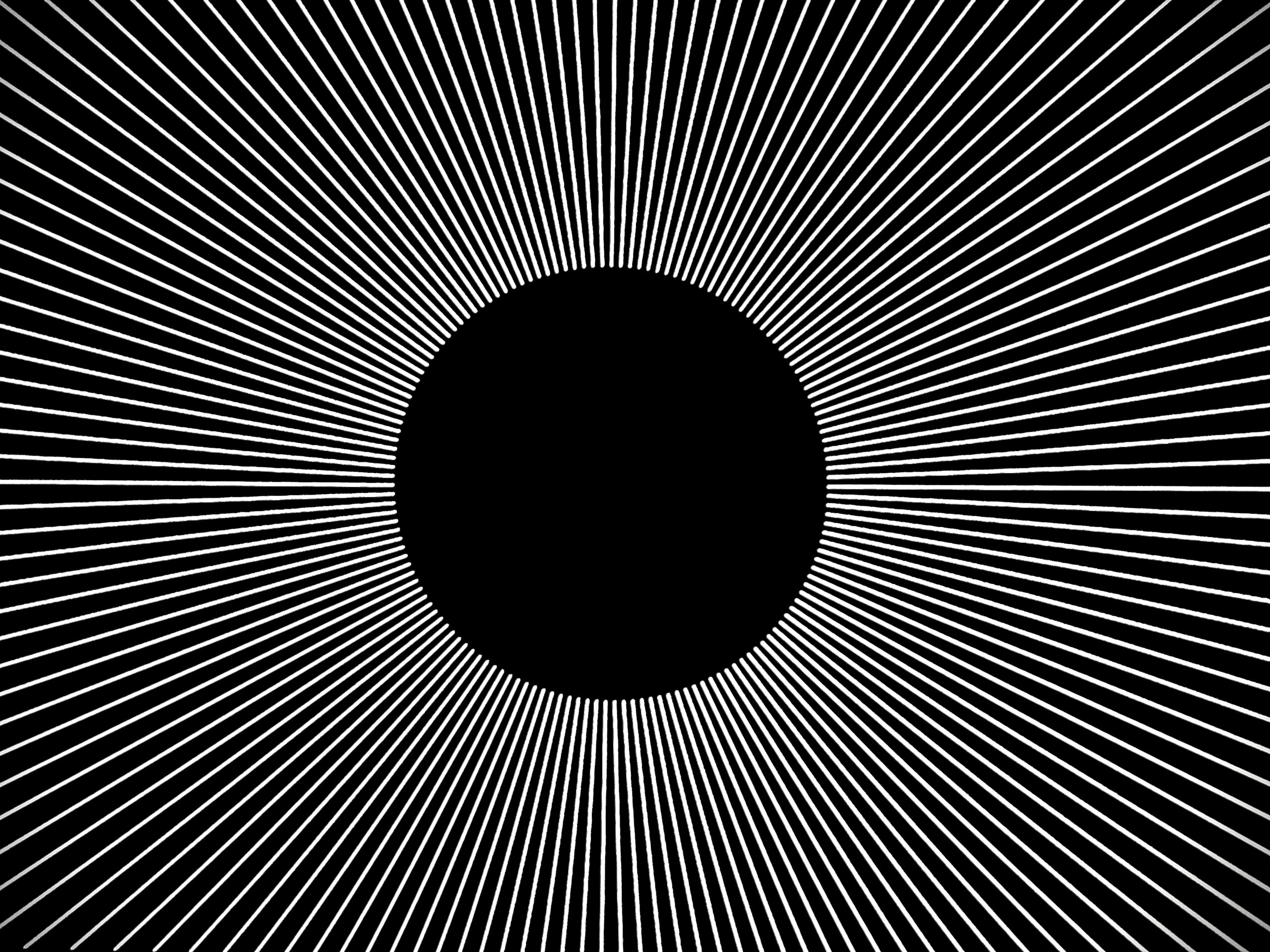
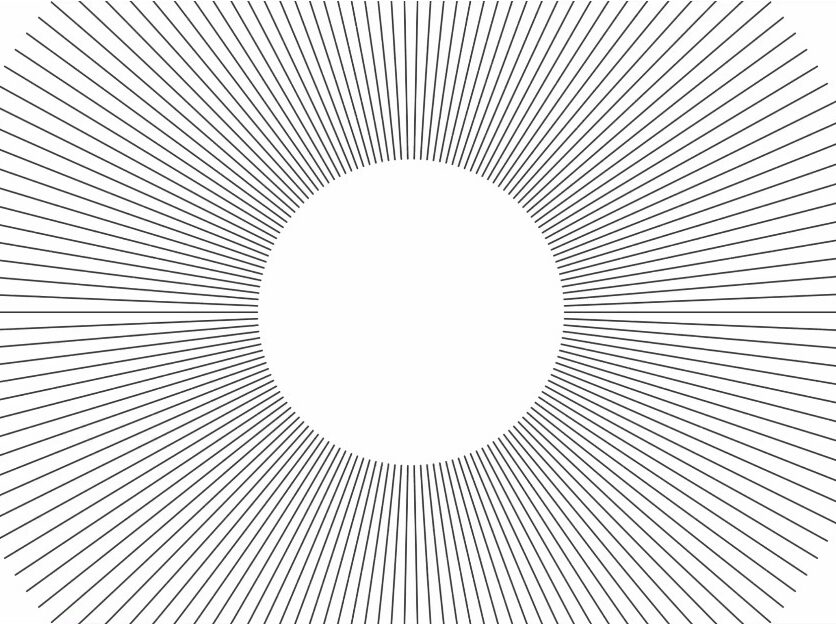
My practice began with athletes’ heartbeats — drawn to the extreme labour the heart performs at under physical pressure. I translated these rhythms into large-scale paintings. The results were visually powerful but static. They lost the thing that mattered most: rhythm, and the sense that something was alive.
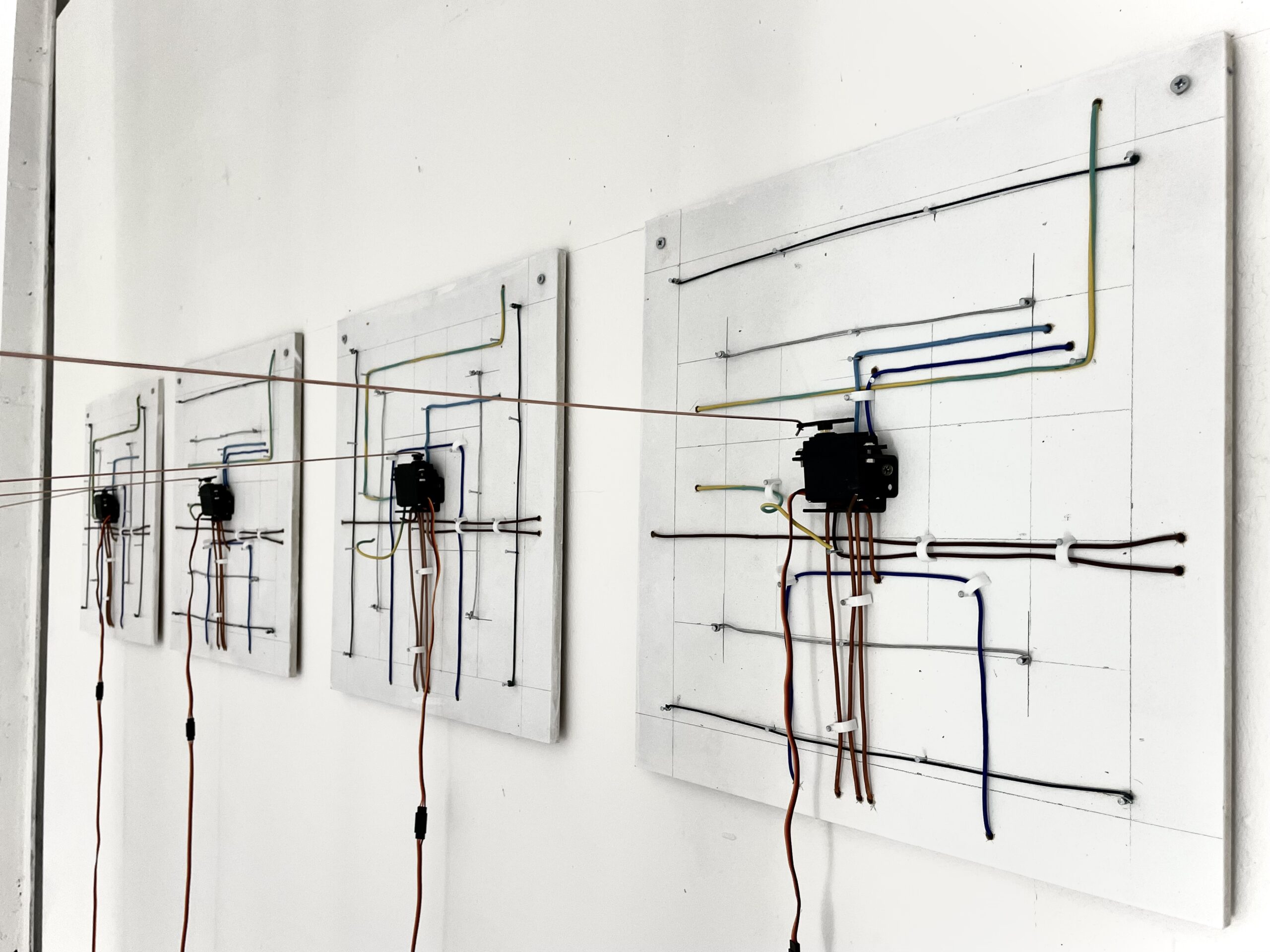
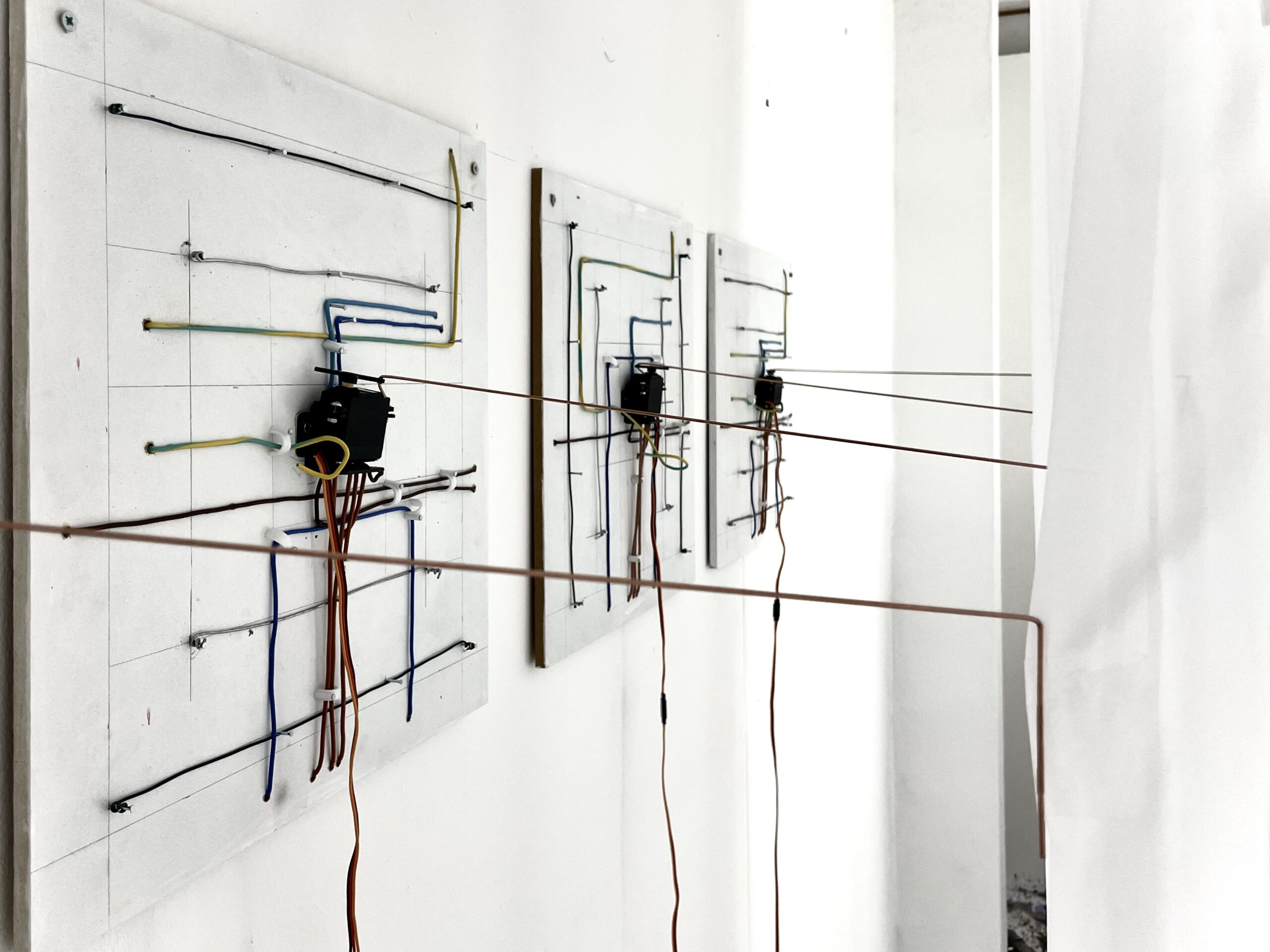
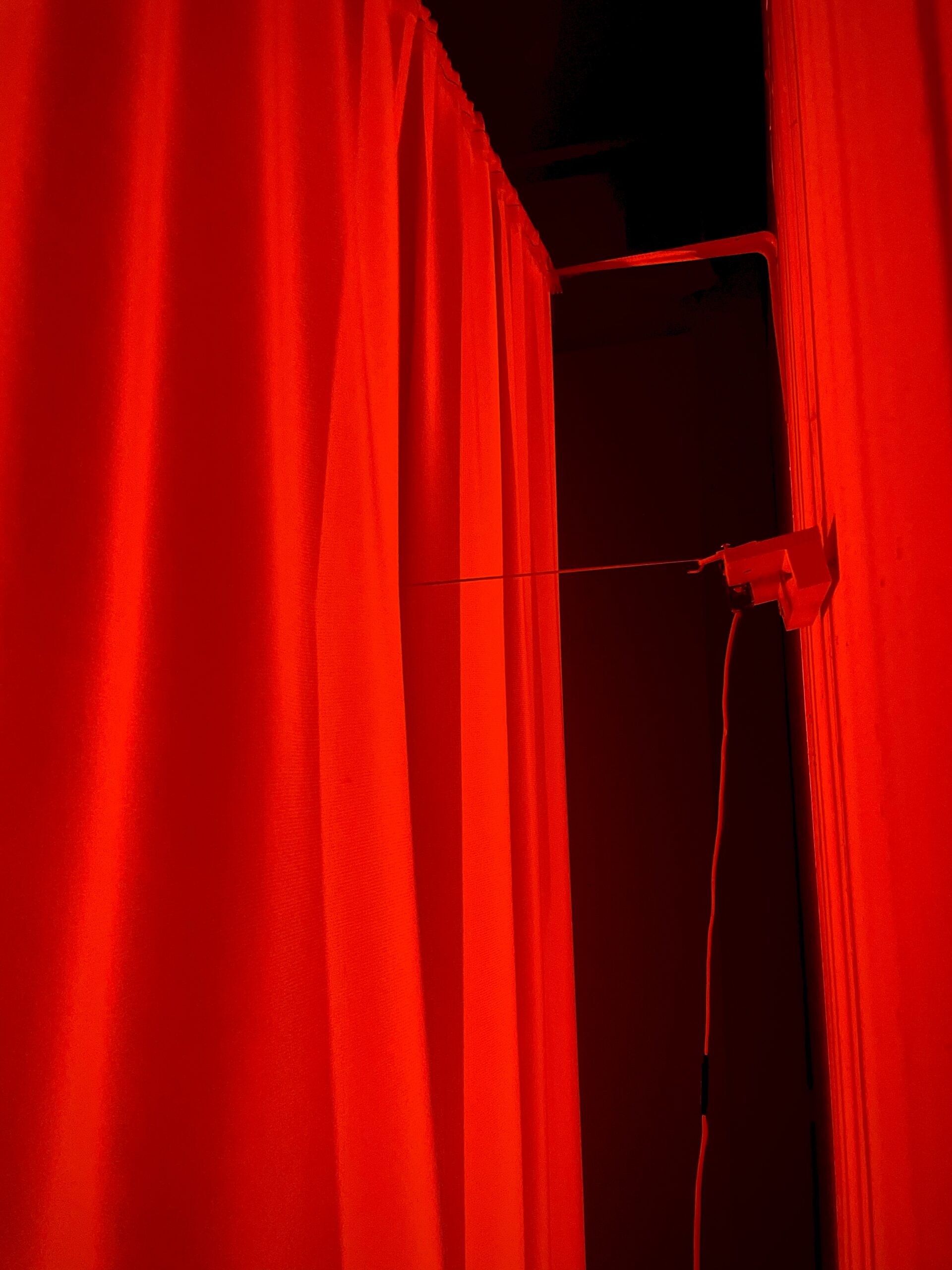
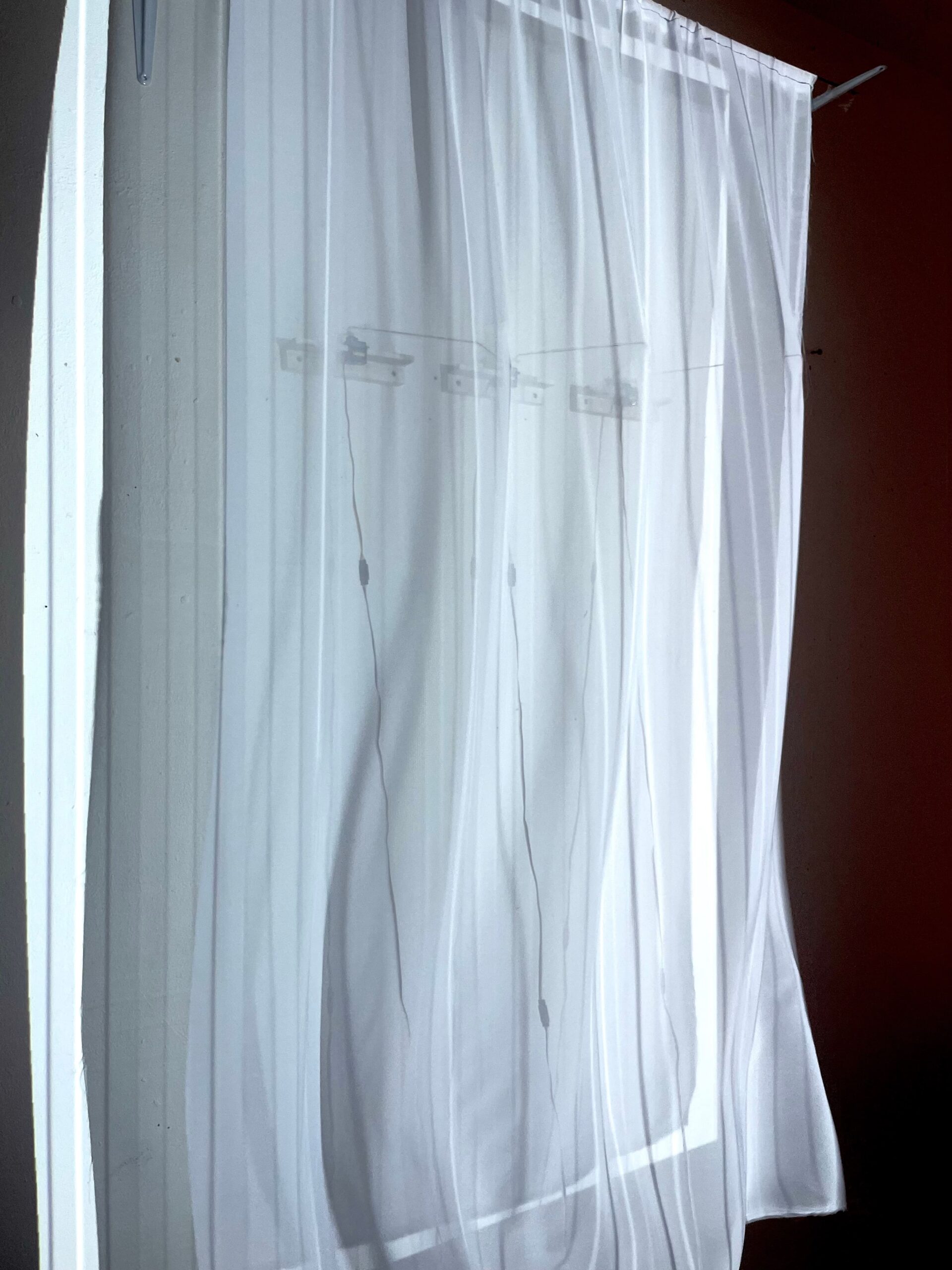
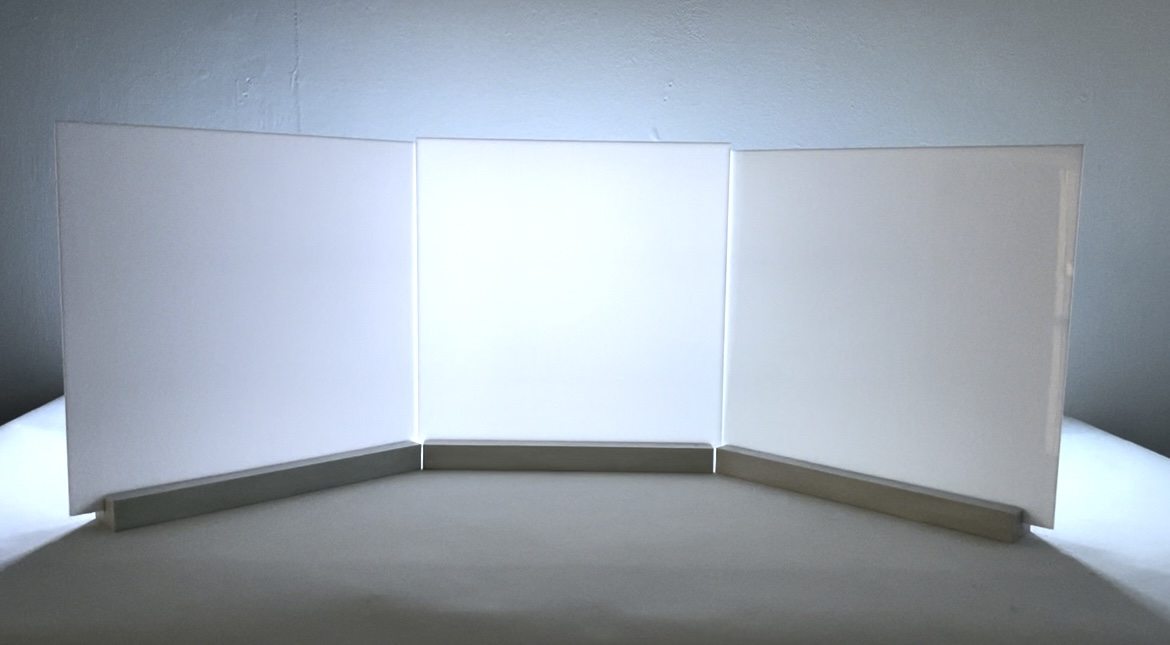
Atrium, 2026.
The Process
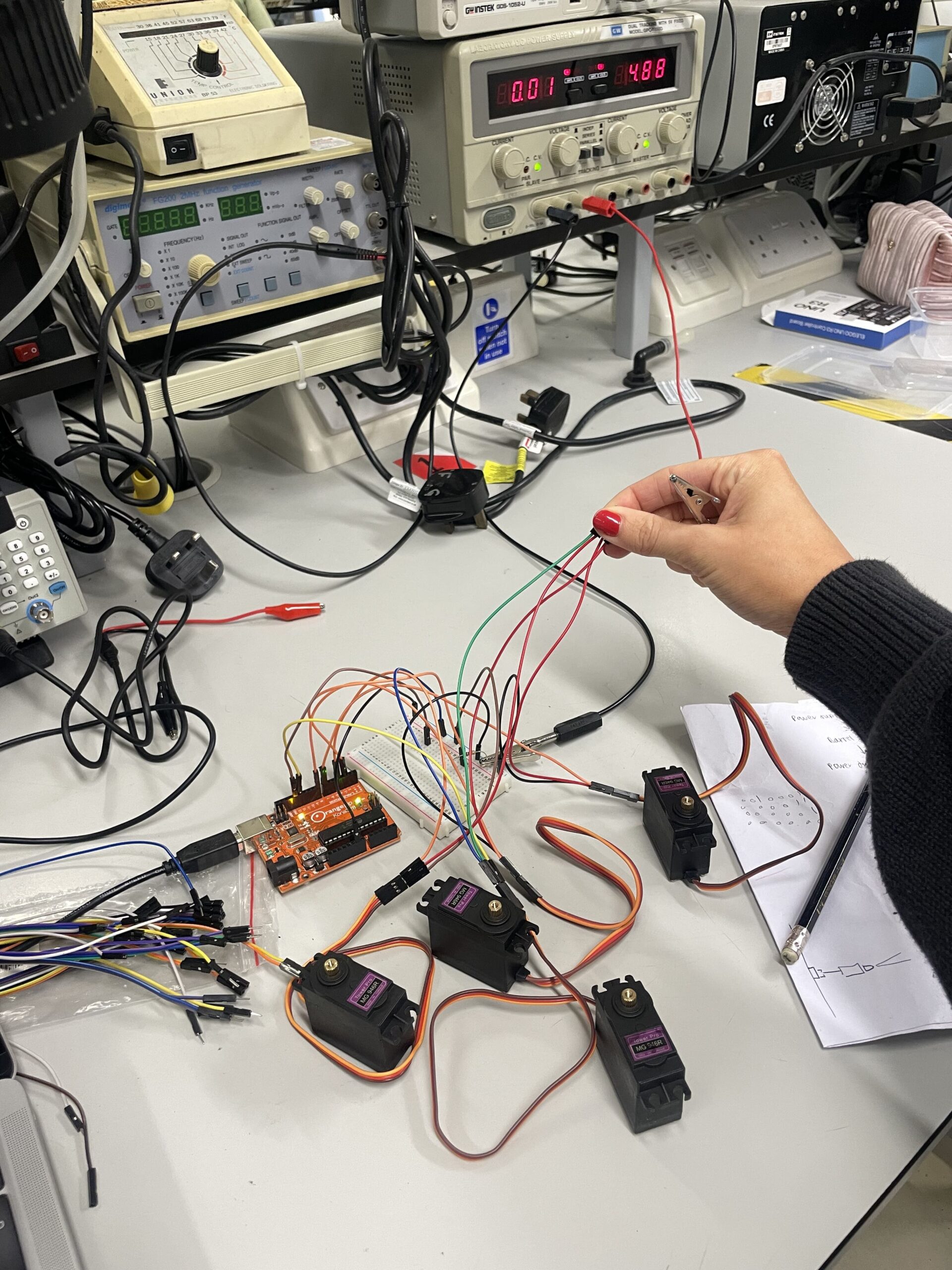
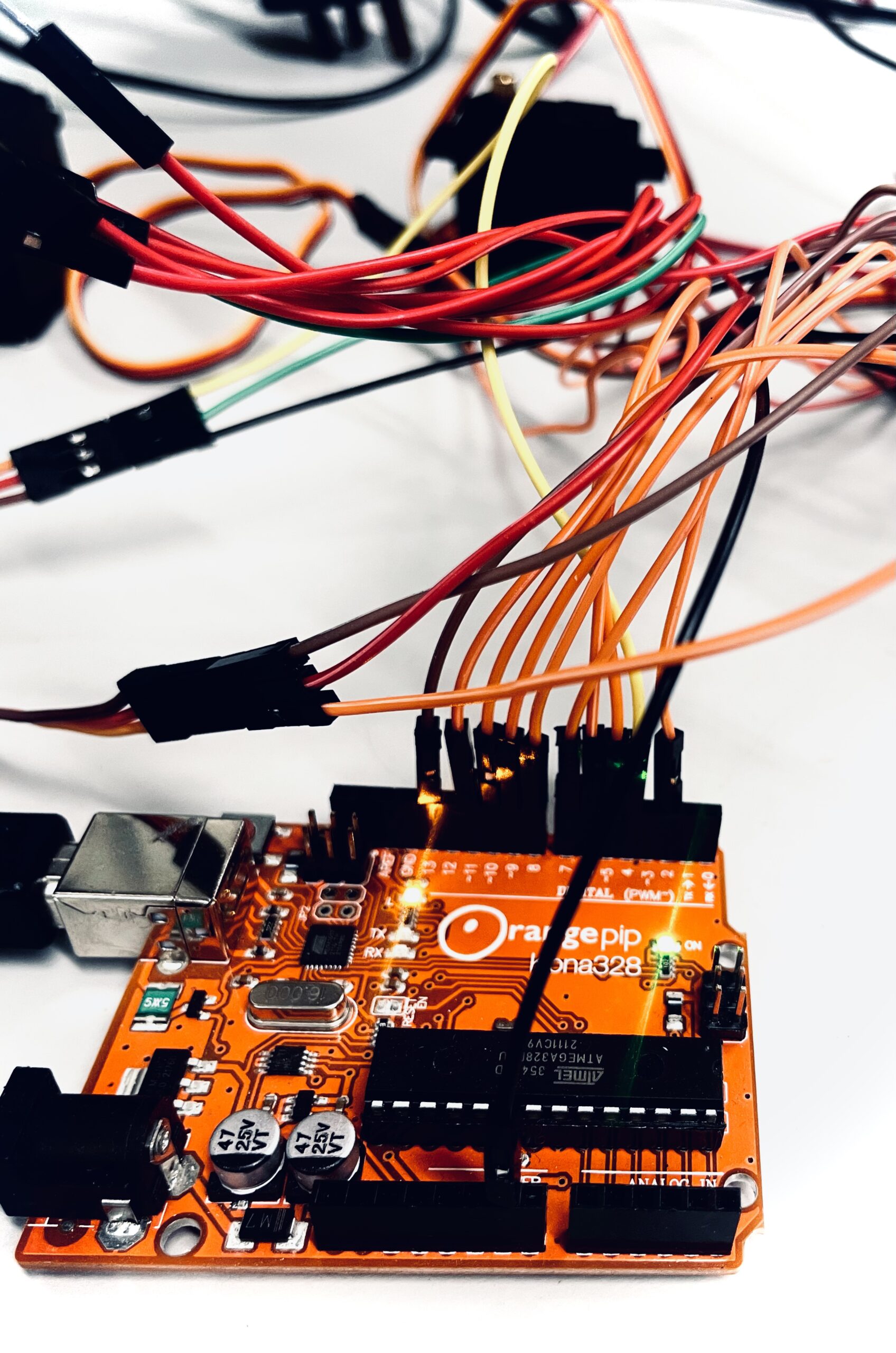
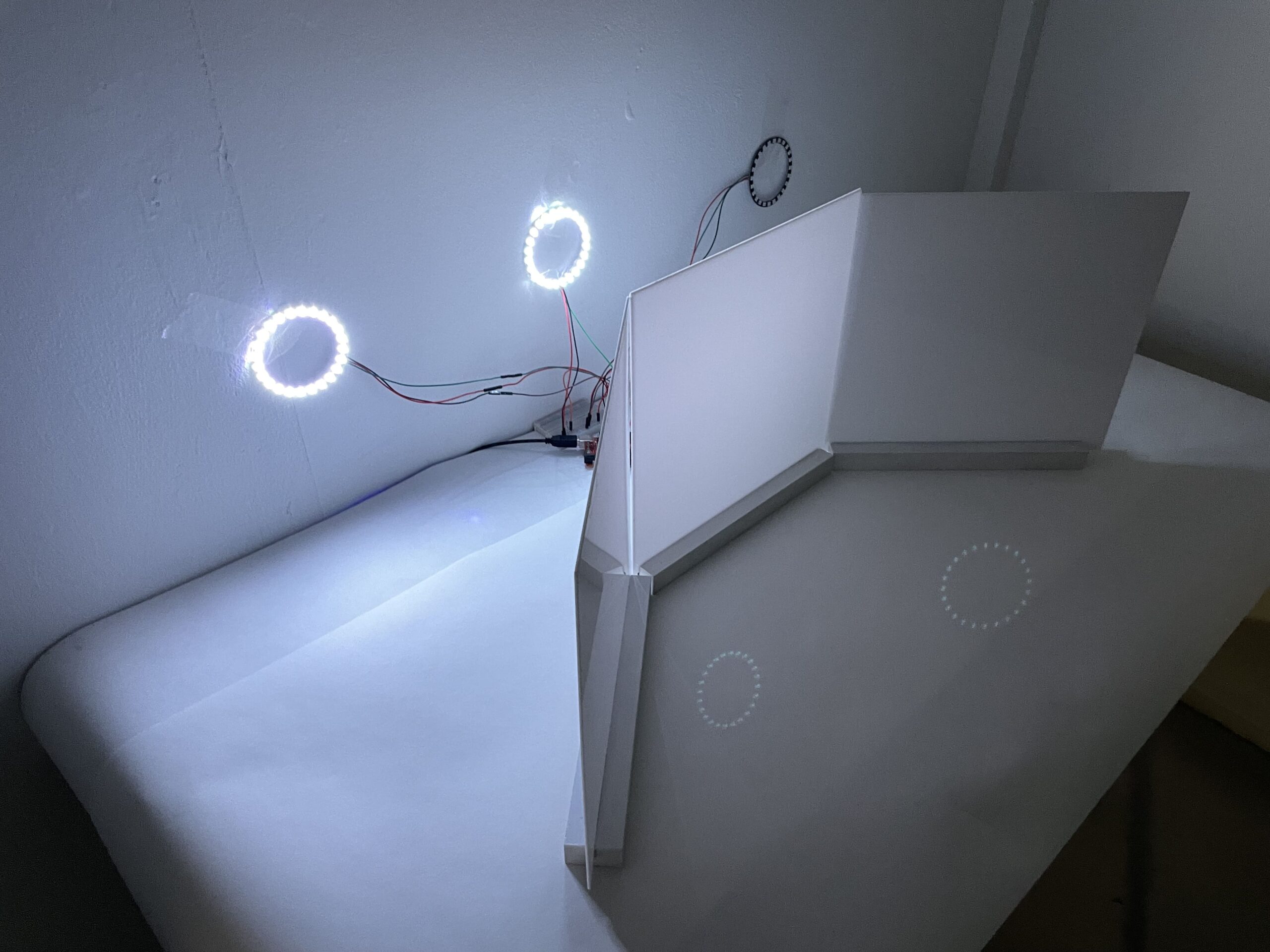
That loss pushed me towards movement. With no background in mechanics, code, or electronics, I built the process entirely from scratch — through failed circuits, faulty equipment, and many tutorials — until I produced a programmable digital heartbeat driven by a servo motor.
The Turn
When I introduced a heartbeat sensor that viewers could hold, the motors responded in real time to their pulse. Viewers dissociated from their own heartbeat entirely, insisting the machine was alive. That misrecognition became my central inquiry: not whether machines can feel, but why the body decides they do before the mind has had a chance to intervene.
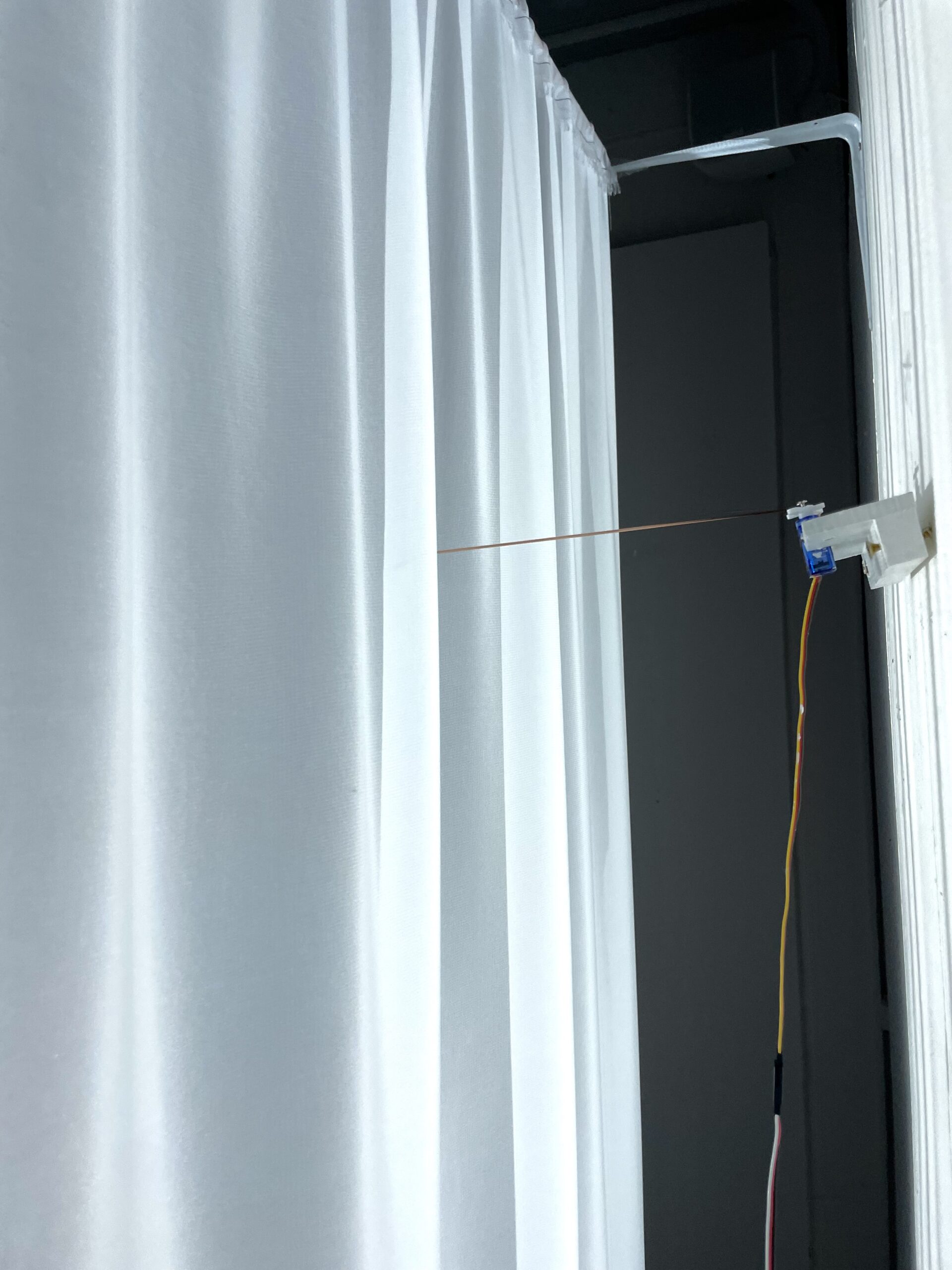
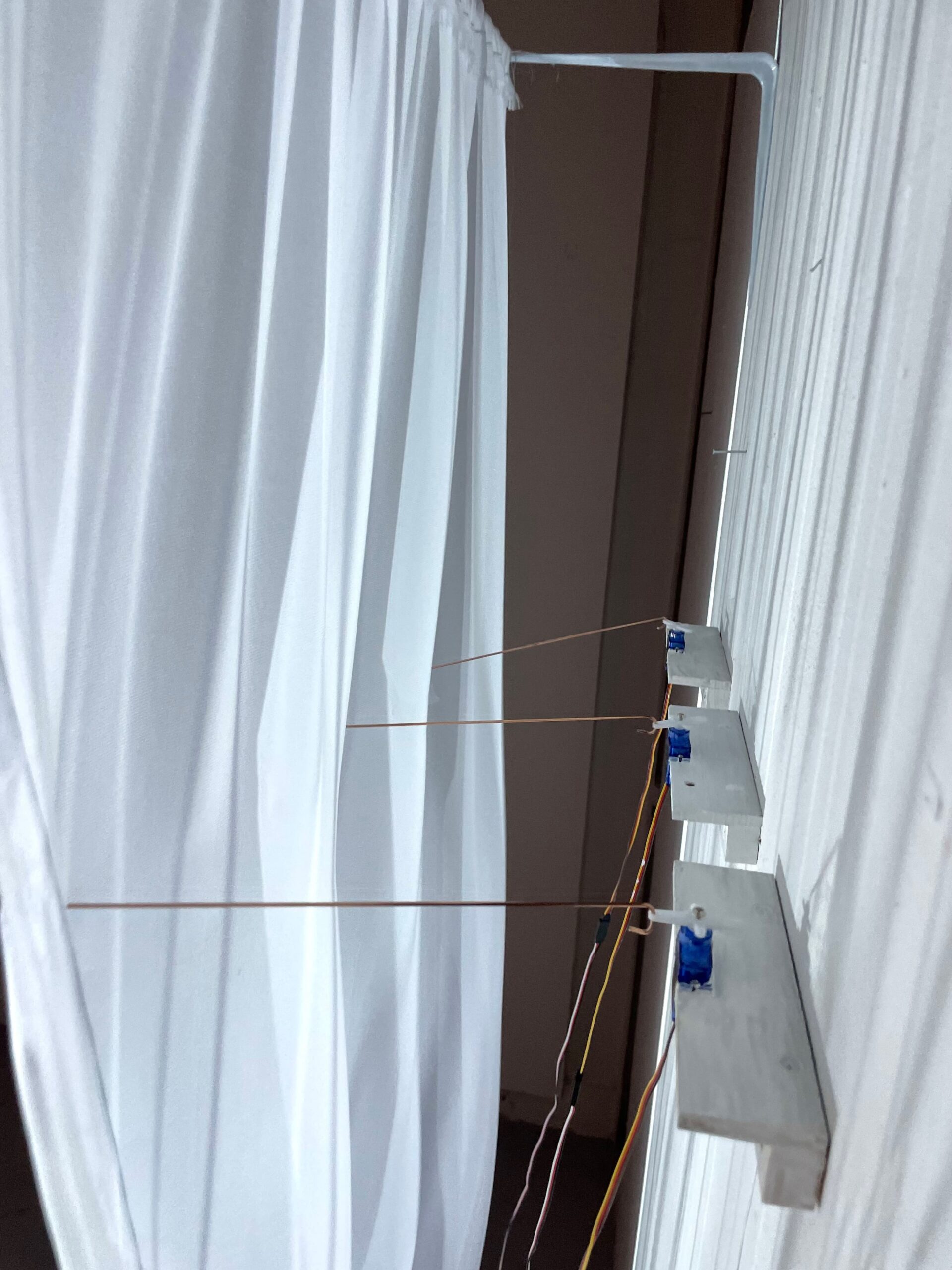
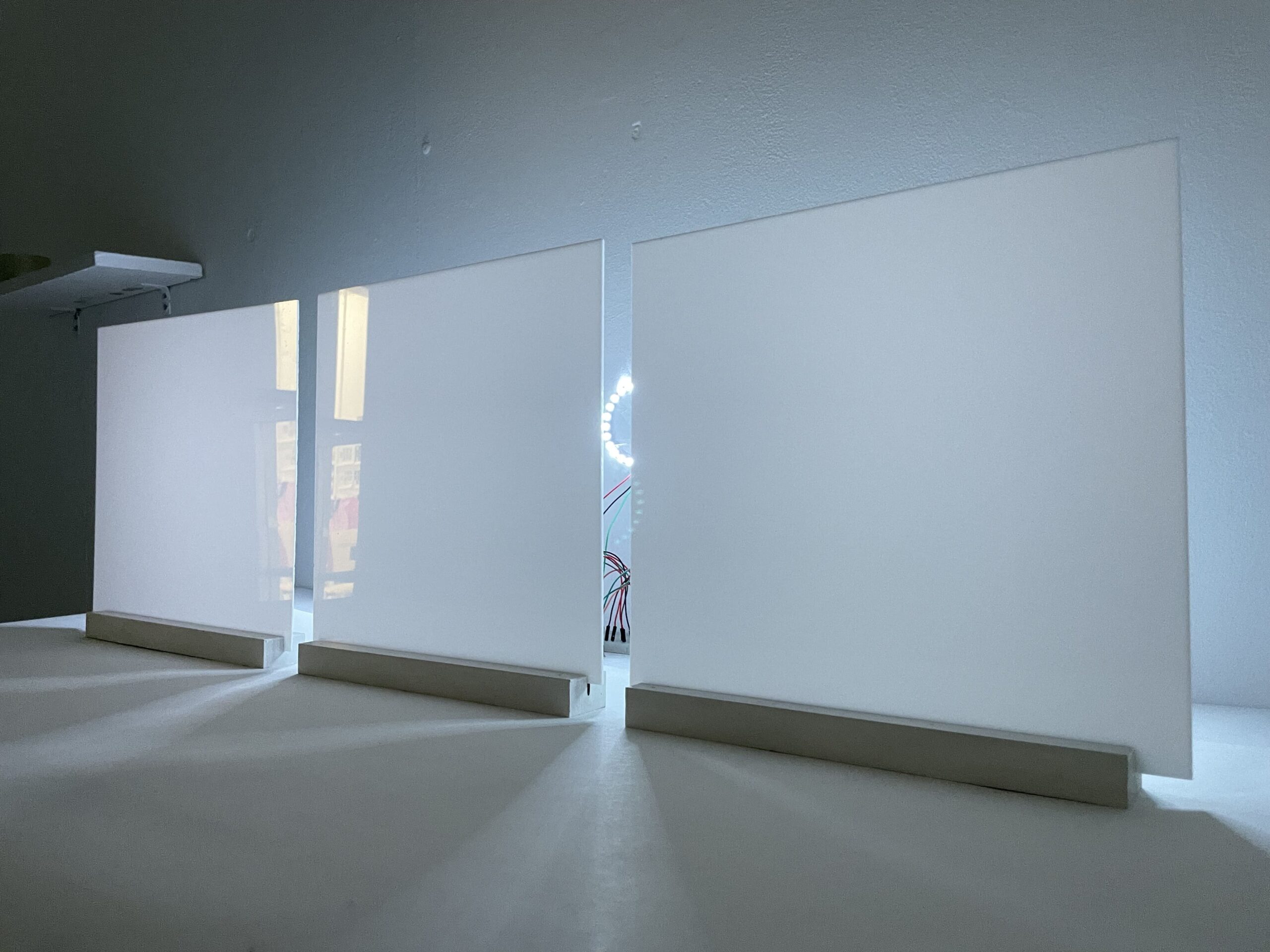
Servo No.1, 2025.
The Work
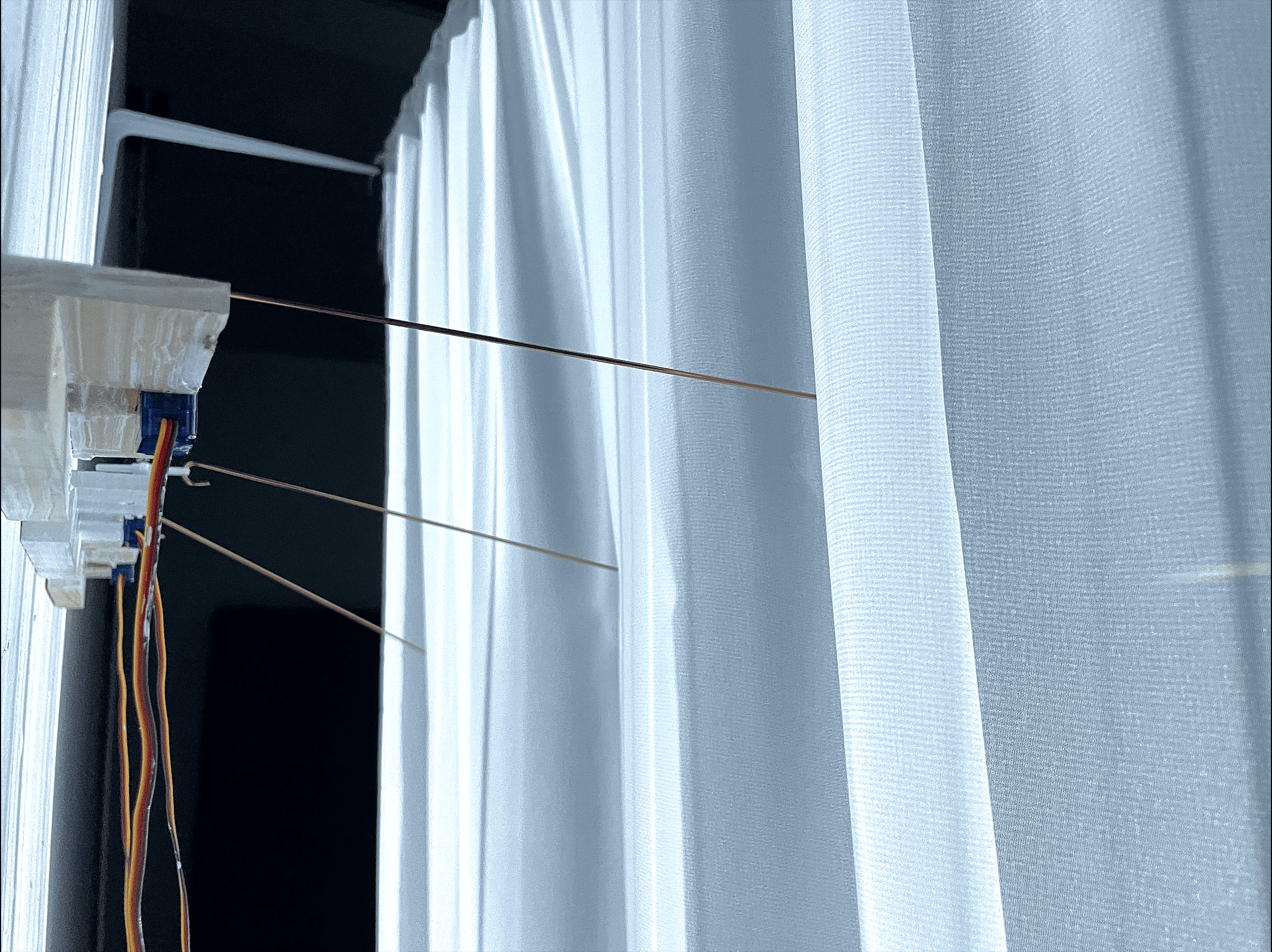
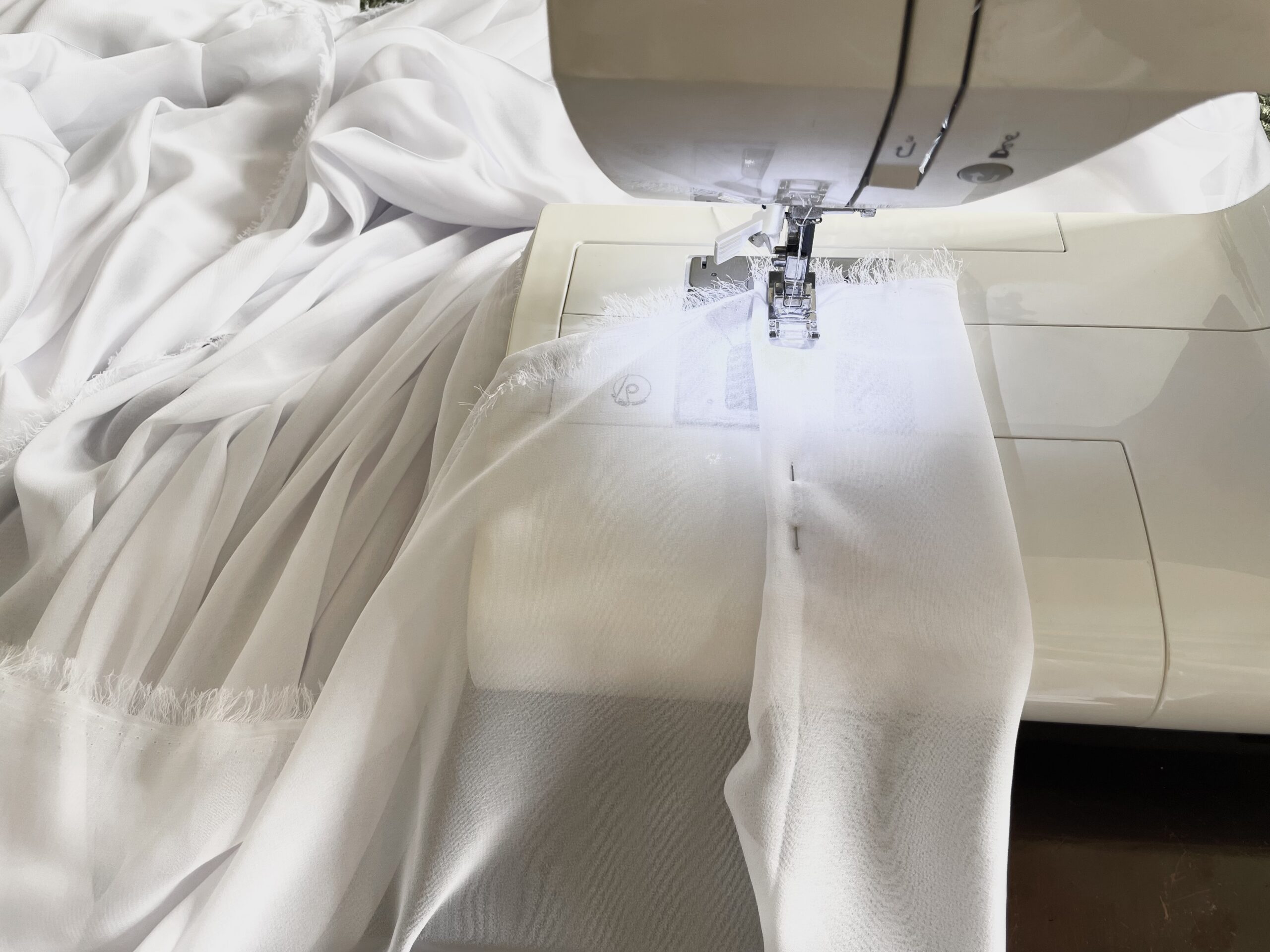
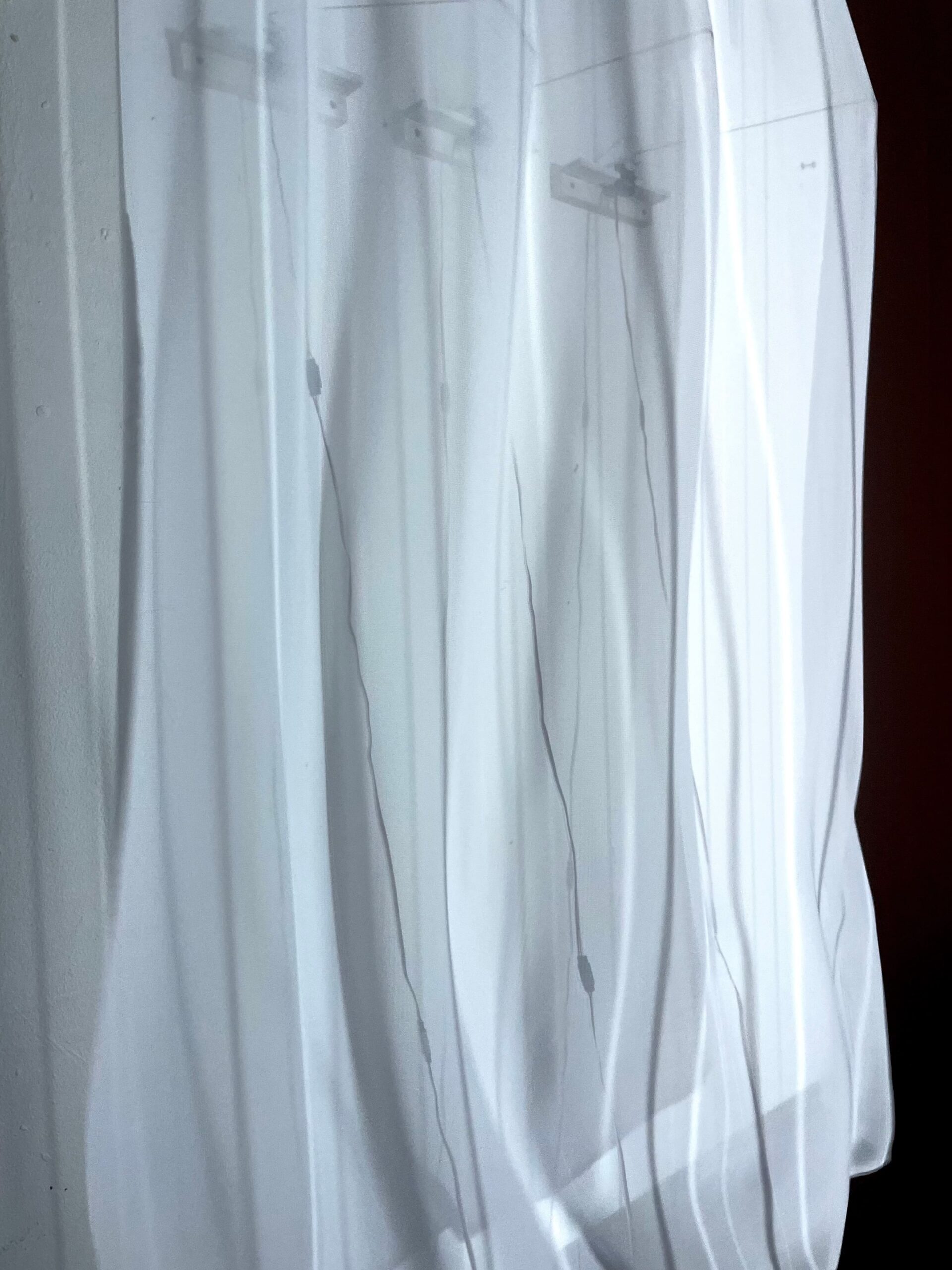
The heartbeat is no longer borrowed. It belongs to the work. The mechanics are fully exposed — servo brackets, wire, circuitry visible — refusing the illusion of seamless technology. Servo motors animate chiffon with a coded pulse. Their clicking forms an auditory rhythm, and when multiple machines move in unison, that sound bridges the internal and external, the biological and the mechanical. The chiffon palpitates, suggesting not just breath, but exhaustion.
The Question
With the accelerating blur between the biological and mechanical, I reflect on how technology renders familiar signs of life — rhythm, response, presence — unreliable. Rather than resolving this instability, I hold the viewer within it. Drawing on Massumi’s account of affect as intensity passing through the body prior to conscious recognition, and Merleau-Ponty’s understanding of embodied, pre-reflective perception, what unsettles is not the machine pretending — but the viewer’s own recognition of a rhythm that was never pretending at all.