Driven by research and hands-on experimentation, I am a designer exploring new materials and emerging technologies. With a growing interest in robotics and mechatronics, my work combines curiosity, craft, and agile technical exploration to build functional systems.
PhysiConnect
At-Home Rehabilitation System
Overview
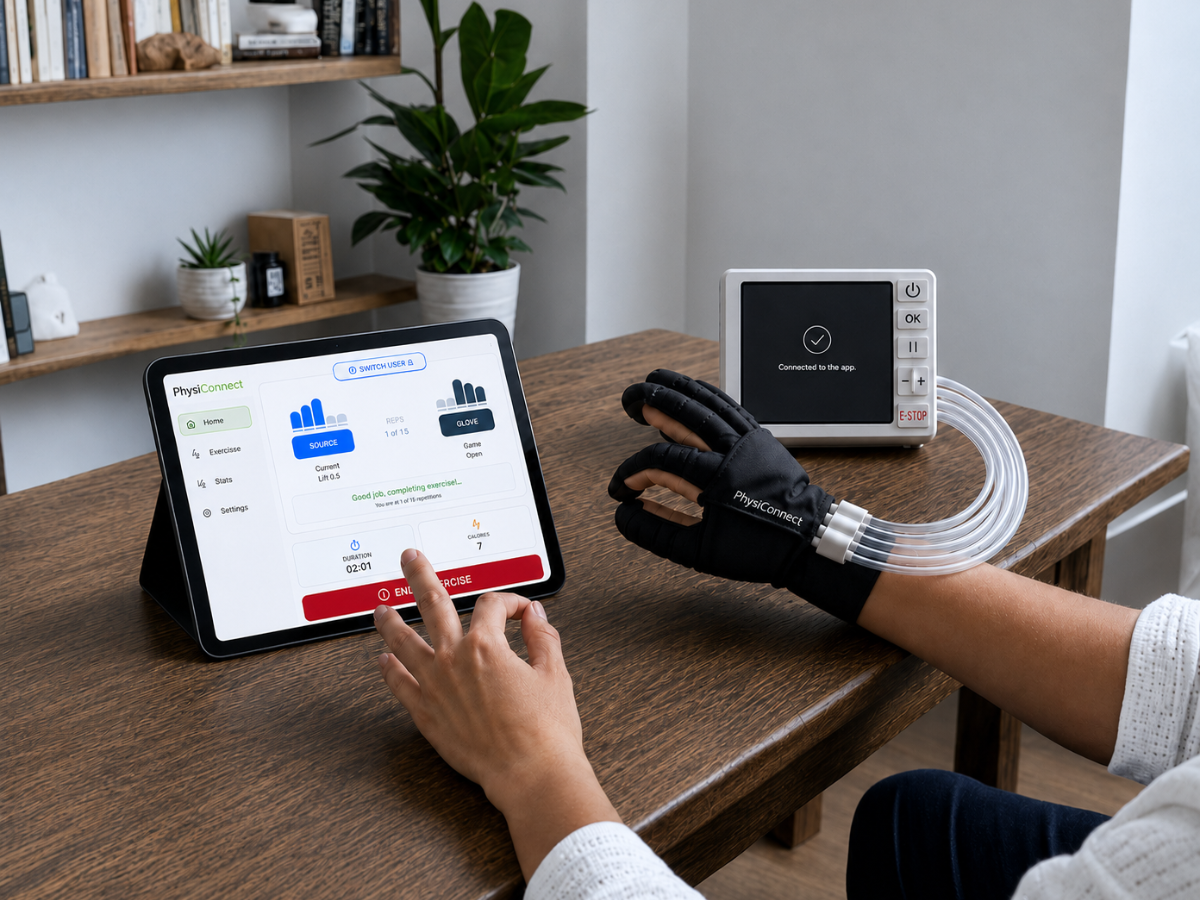
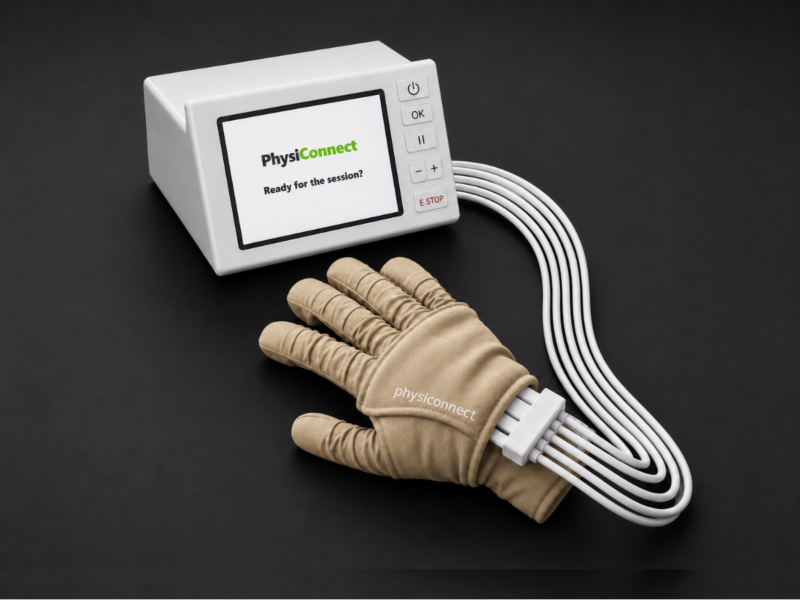
PhysiConnect is designed to make post-stroke rehabilitation more adaptive and engaging for users with low independent finger mobility while keeping them connected with clinicians throughout recovery.
The system combines wearable soft robotics with assist-as-needed support to encourage safe rehabilitation practices while continuously monitoring progress through real-time feedback and clinical data insights.
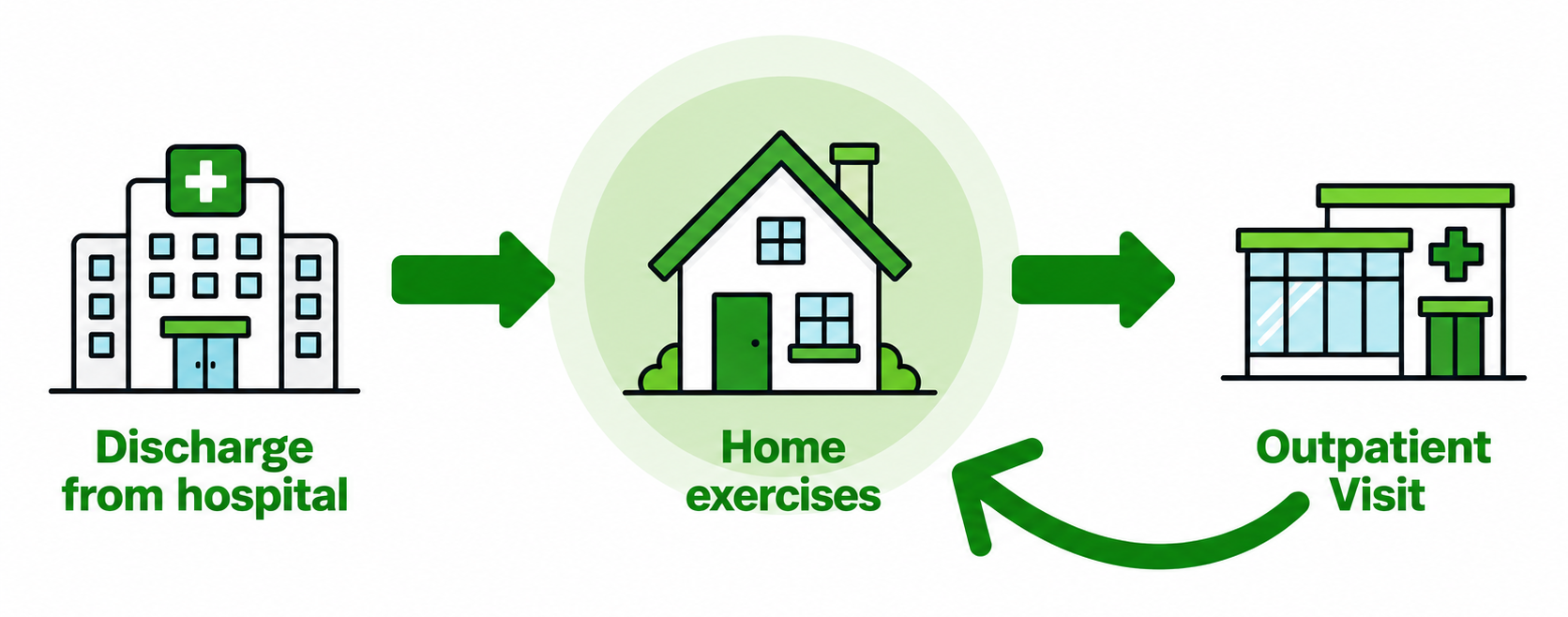
“Design for an Overlooked Phase”
This phase marks the critical transition between hospital discharge and long-term home recovery. While this window holds peak neuroplastic potential, patients face a sudden “dosage gap” due to the staff shortage, travel barriers causing exhaustion, and high costs of commuting to outpatient clinics. PhysiConnect targets this exact gap, removing the emotional and physical fatigue for treatment by empowering users to perform high-repetition finger therapy independently from the comfort of their own home.
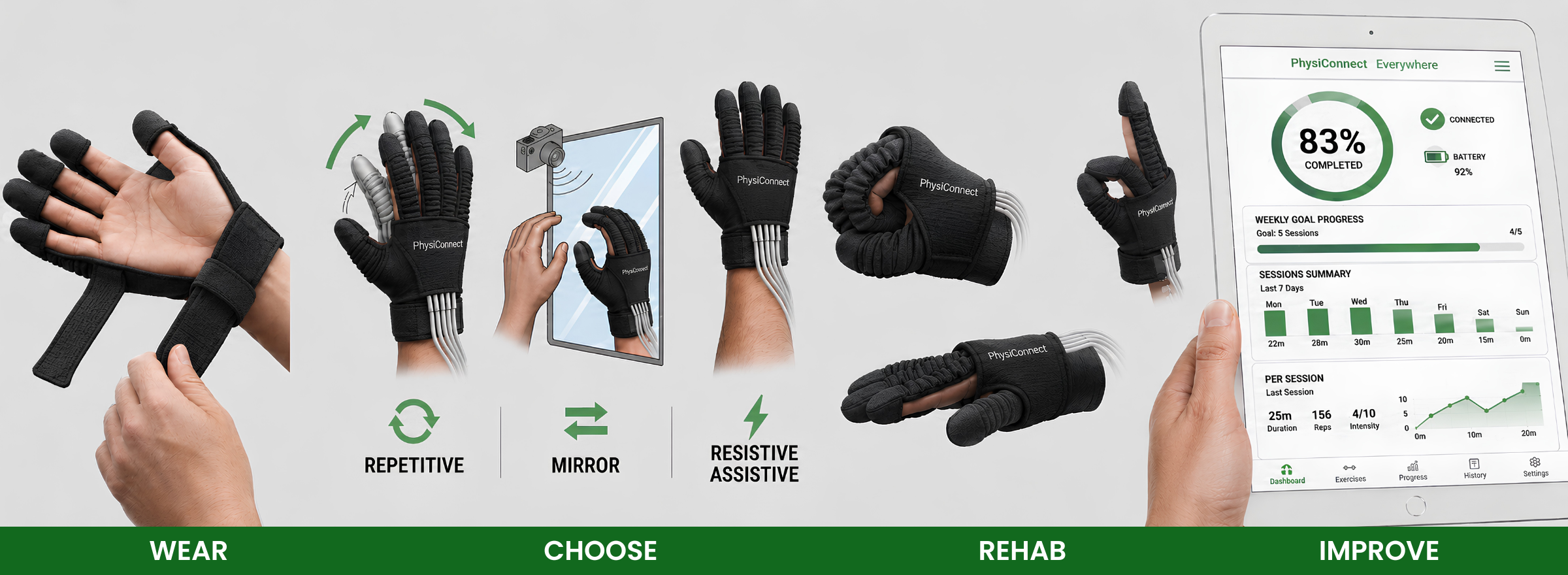
WEAR
One-Handed Donning : Designed for single-handed use, the glove eliminates complex fasteners to let users secure the device with their unaffected hand, adapting to varying sizes and swelling.
CHOOSE
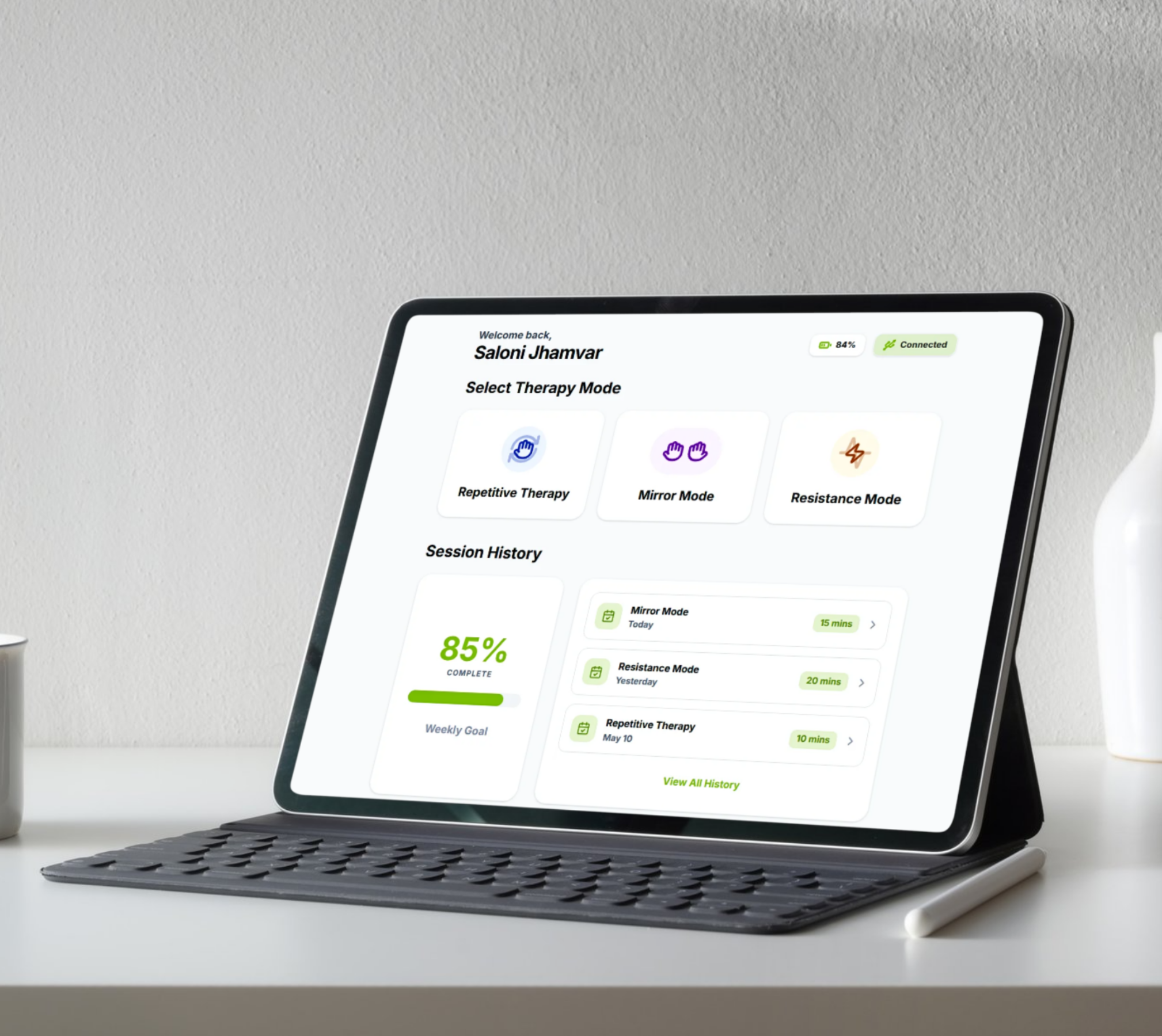
Targeted Therapy Modes : Users select from three neurorehabilitation modes—Repetitive, Mirror, or Resistive—each engineered to target specific motor-relearning goals.
REHAB
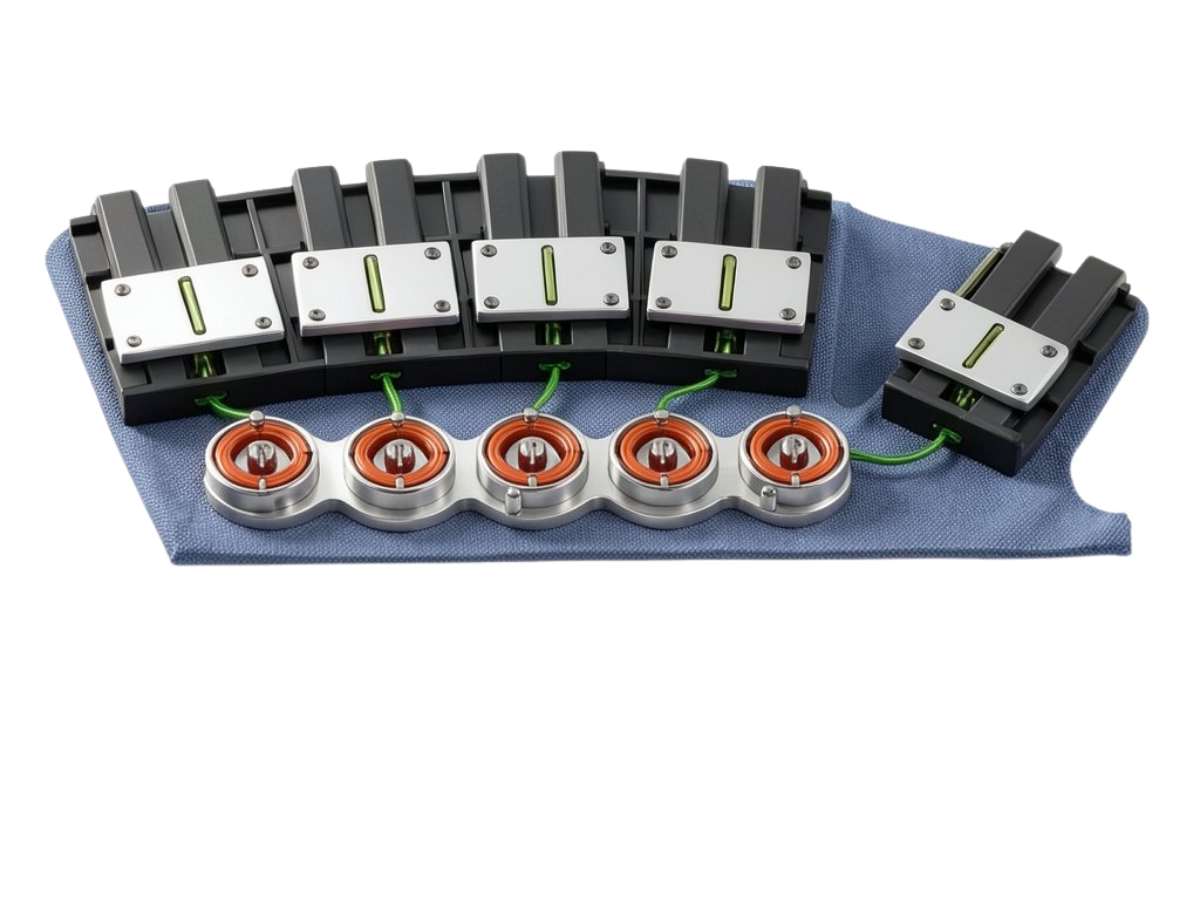
Adaptive Finger Mobilization : The system delivers precise, assist-as-needed pneumatic power to actuate individual finger movements or coordinated gestures, driving high-repetition rehabilitation.
IMPROVE
Feedback : The dashboard tracks weekly goals, mobility, and strength improvements, allowing users to review progress and seamlessly share data with remote clinicians.
The Core Mechanics
Soft Robotics
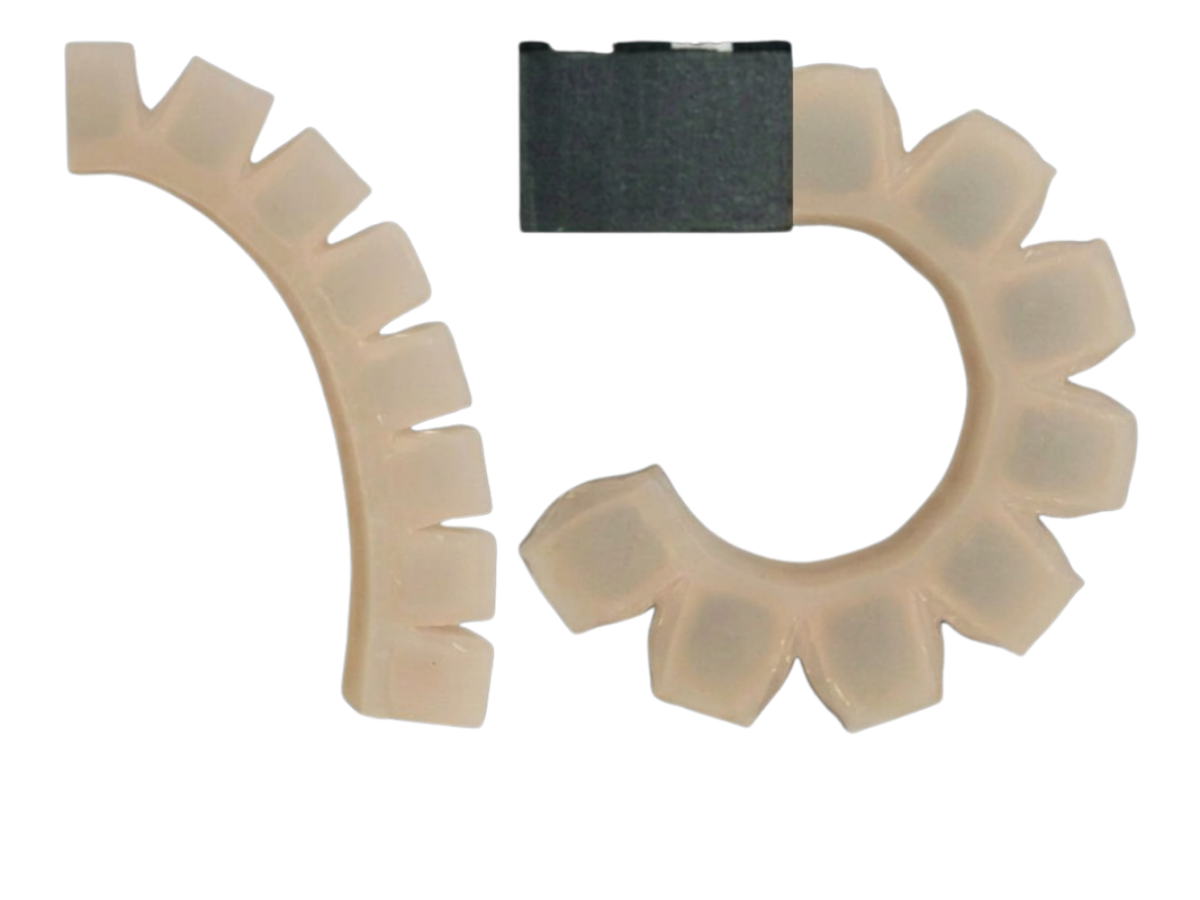
Through programmed deformation, silicone’s hyperelastic expansion is channeled to mimic natural finger curling, applying controlled pressure to drive finger movement.
Assistive Fit
A cable-assisted pull-fit system is integrated in each finger straps to overcoming the challenges of clenched, spastic finger and enable easier donning.
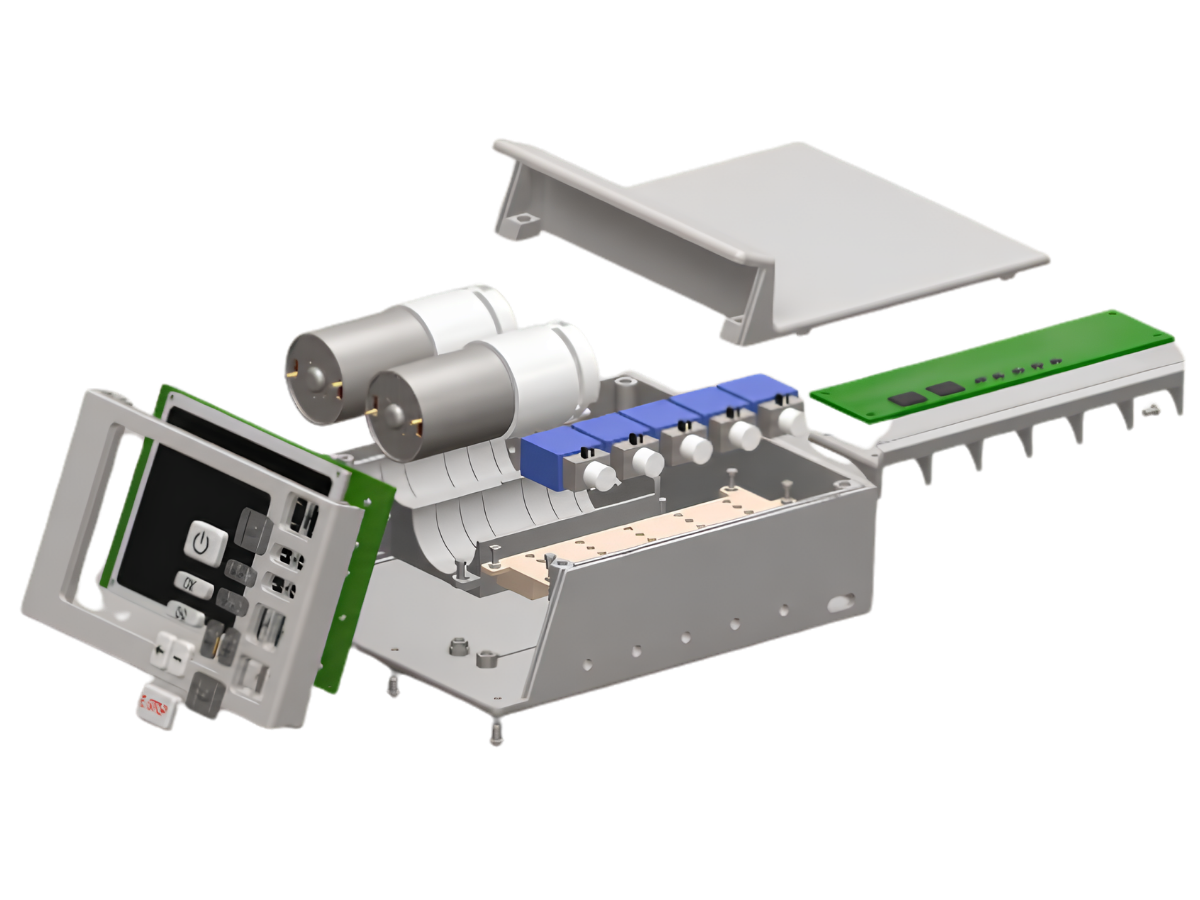
Exploded Diagram of the desk console
The desktop console houses pneumatic pumps and venting valves featuring an ergonomic viewing angle, oversized tactile controls, and a high-visibility emergency-button.
UI/UX Interface
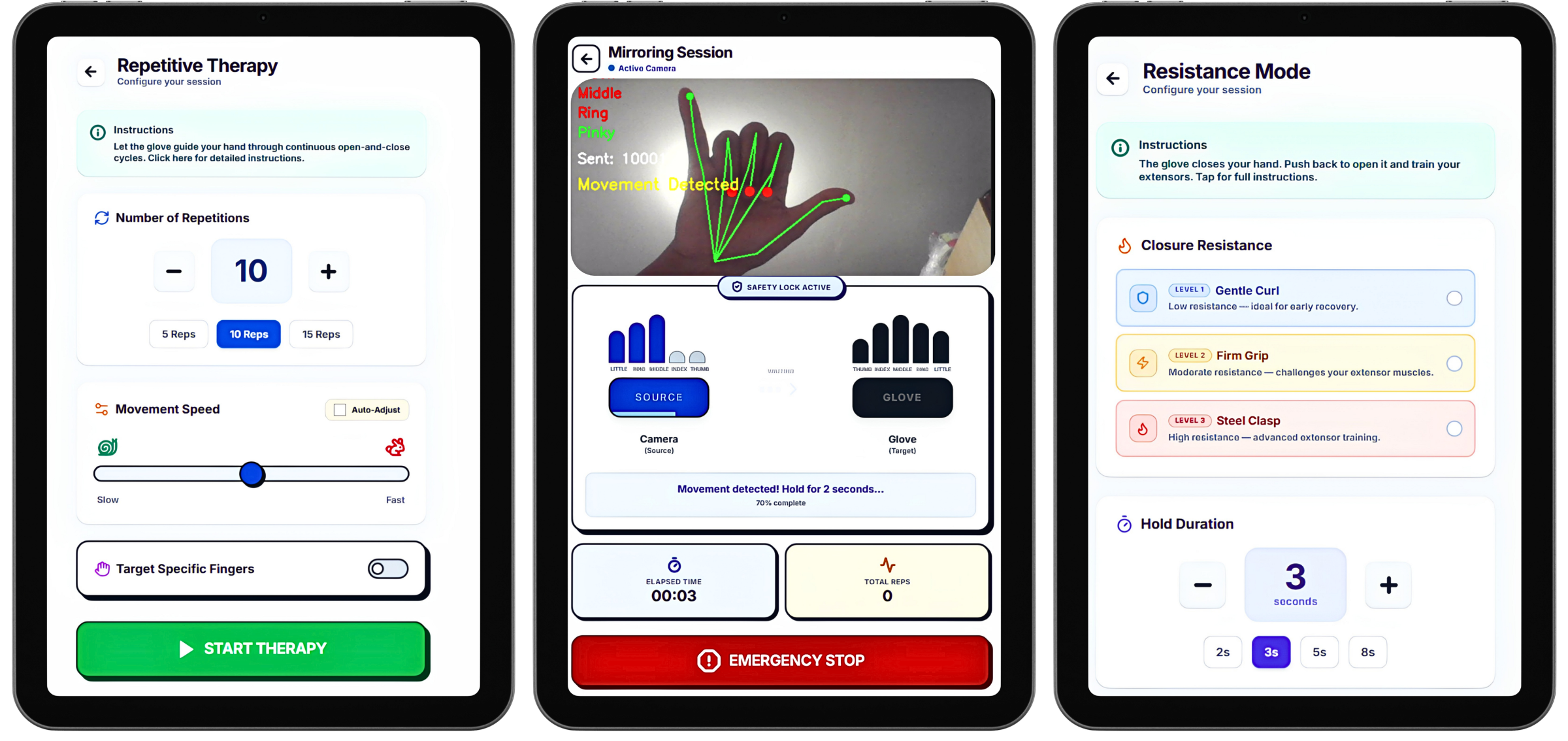
The medical-grade interface simplifies session setup through an intuitive, accessible layout. Designed for low cognitive load, users can easily configure settings, track active safety locks, or deploy real-time training protocols with minimal taps.
Stage-Integrated Neurorehabilitation
Three adaptive therapy protocols map directly to distinct phases of post-stroke motor recovery:
Repetitive Mode (Early Stage): Delivers passive, continuous movement to prevent joint stiffness and introduce early sensory stimulation when voluntary movement is absent.
Mirror Mode (Intermediate Stage): Utilizes computer vision to track the unaffected hand, translating intended gestures into synchronized assistance for the impaired fingers. This dual-action feedback builds the vital neurological connections between the brain and the muscle to accelerate motor relearning.
Resistive Mode (Advanced Stage): Provides counter-resistance to build raw muscle strength and refine precision dexterity.