

I am an Industrial Designer focused on creating human-centred products that positively impact people’s lives. My work combines empathy, usability and considered design to create experiences that feel accessible, intuitive and engaging for users.
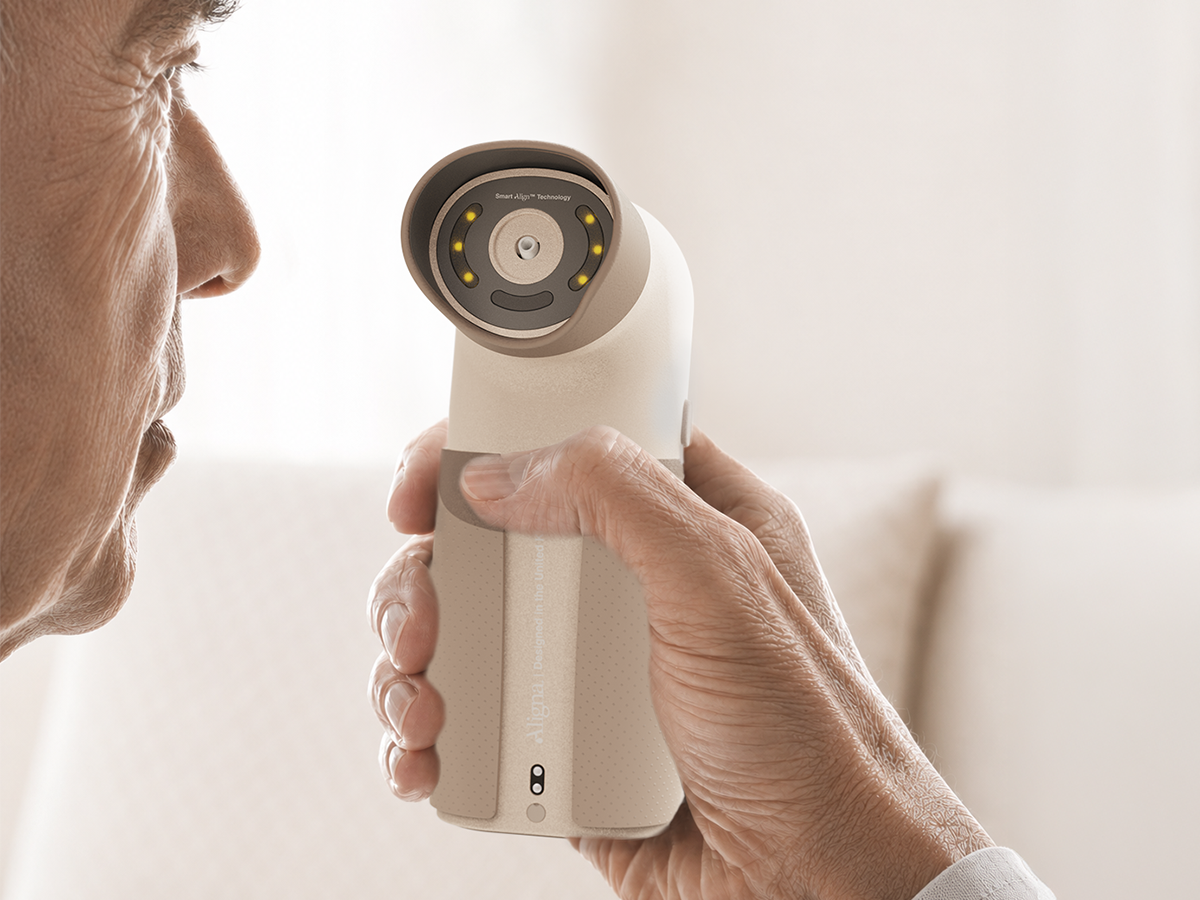
Aligna is a guided eye drop support device designed to improve confidence, accuracy and independence for people with reduced vision, limited dexterity, and those who primarily live alone when administering eye drops. The device integrates a smart alignment system to help guide drops accurately into the eye, while supporting use both at home and on the go through its travel case and modular bottle attachments.
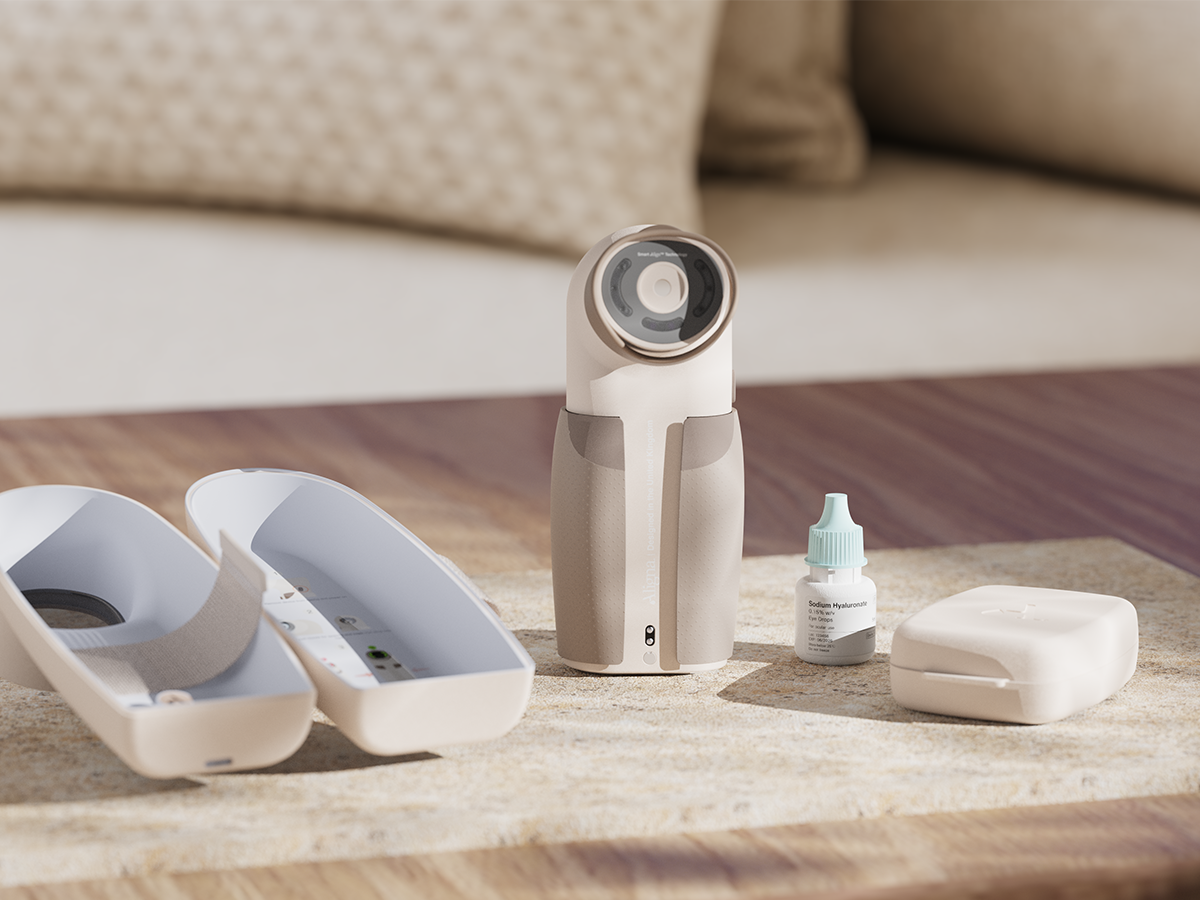
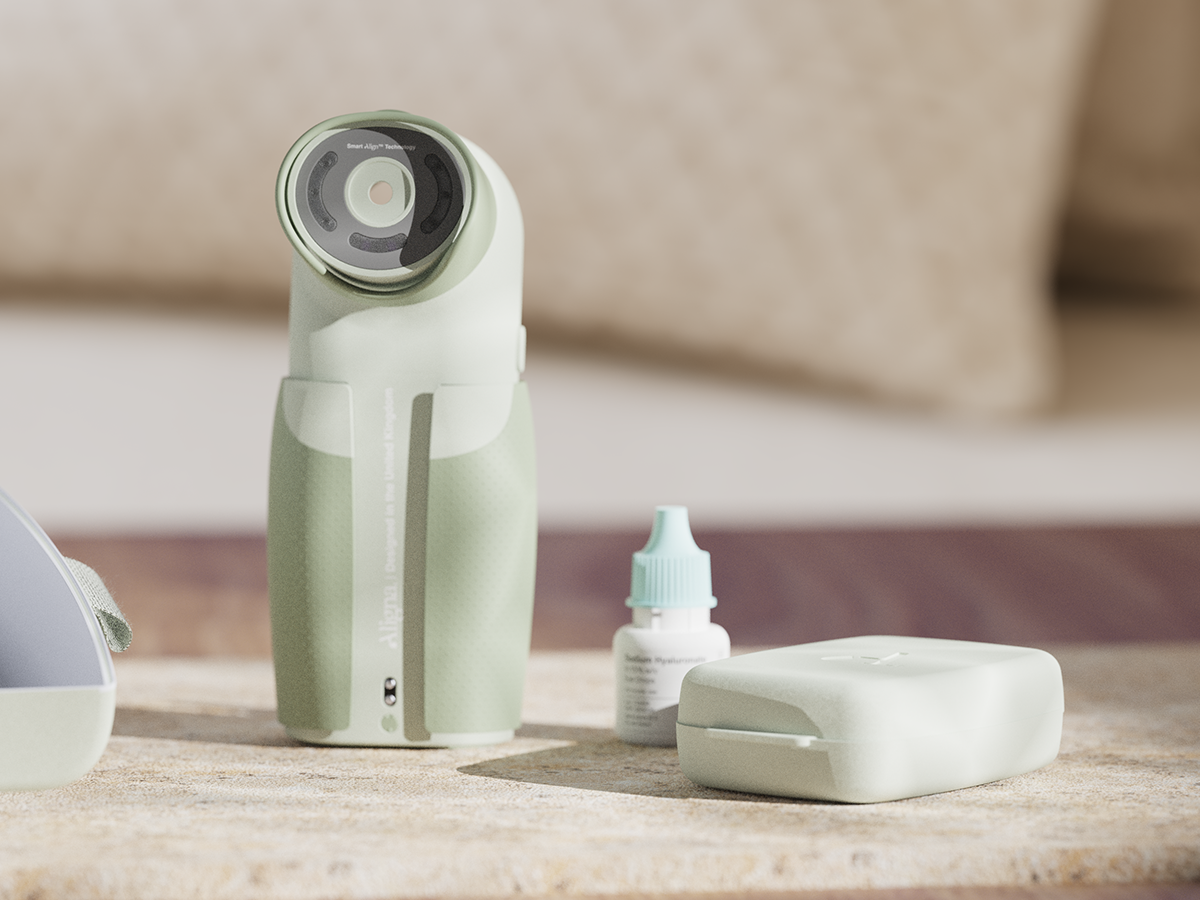
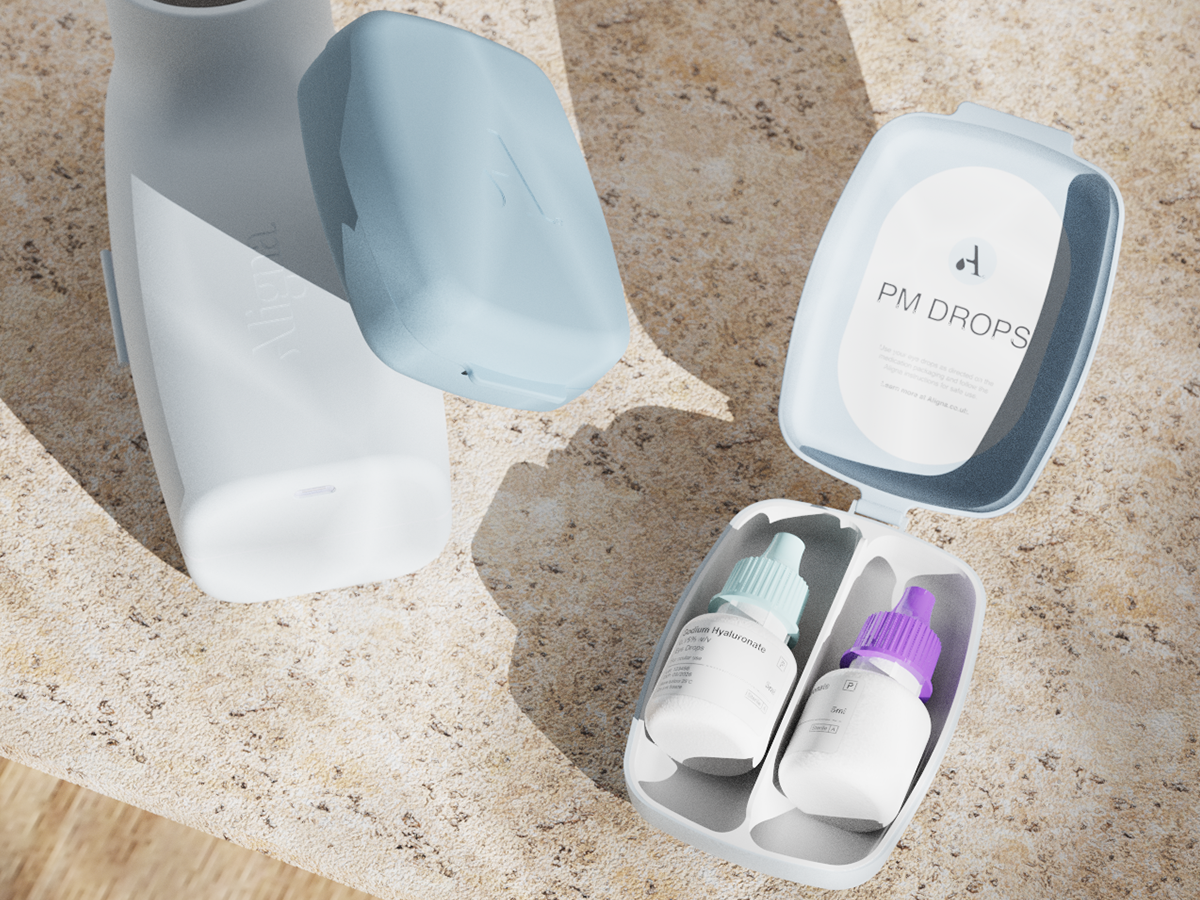
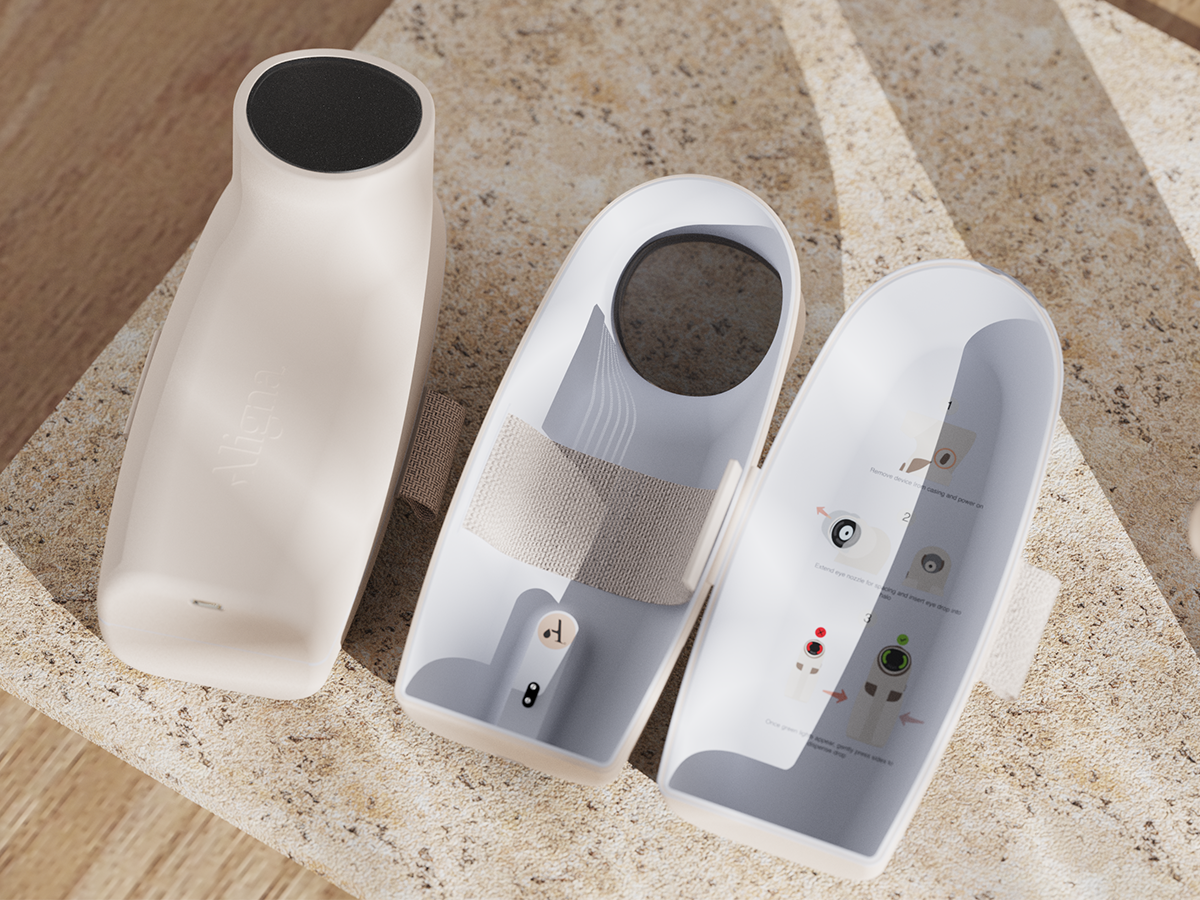

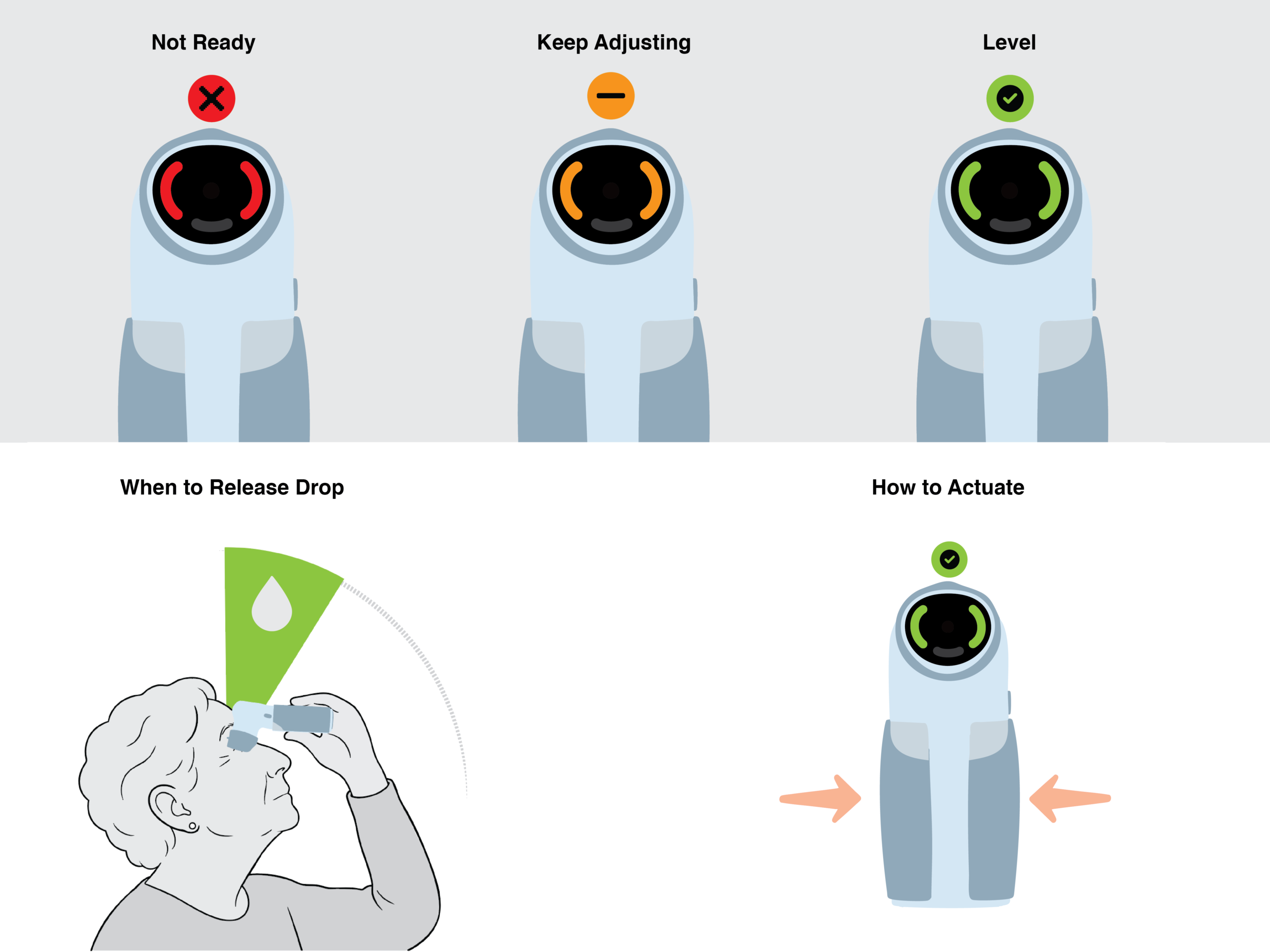
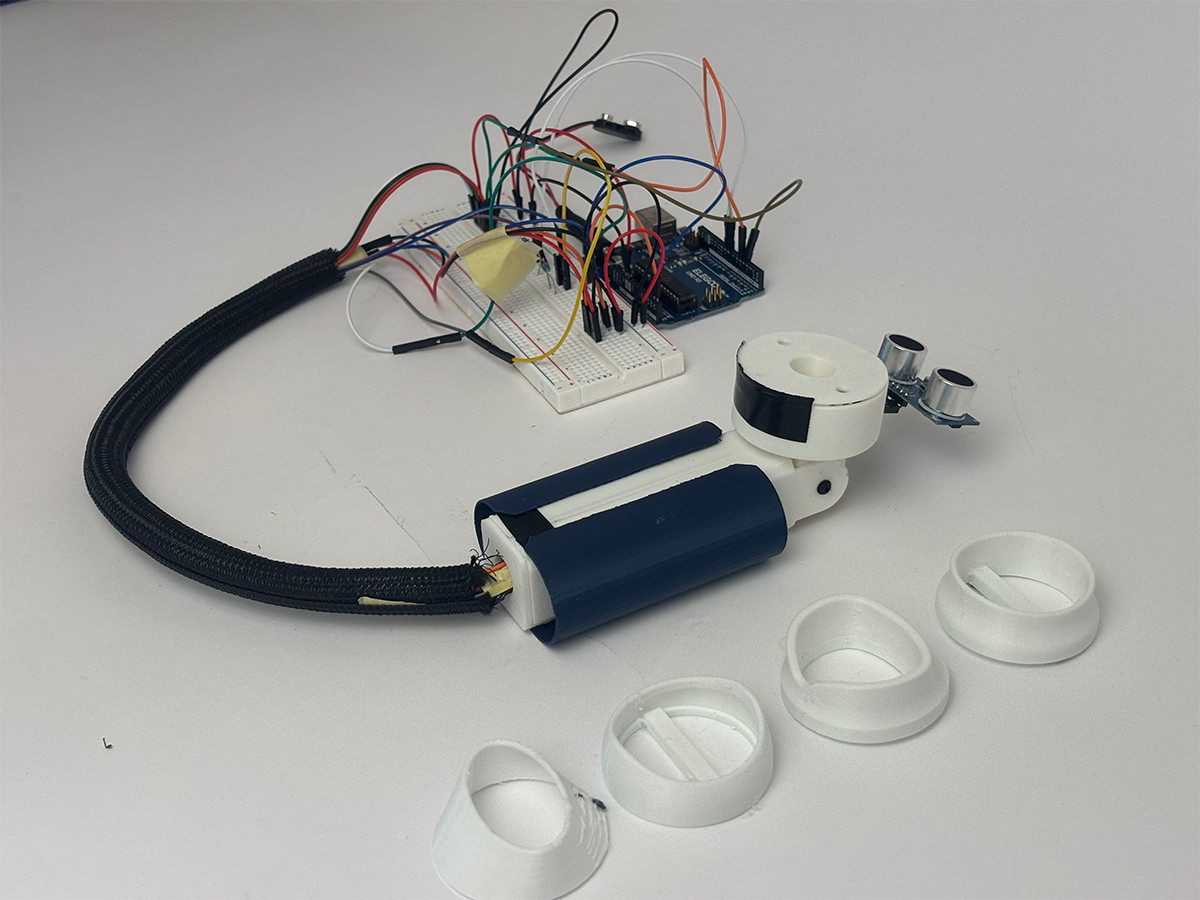
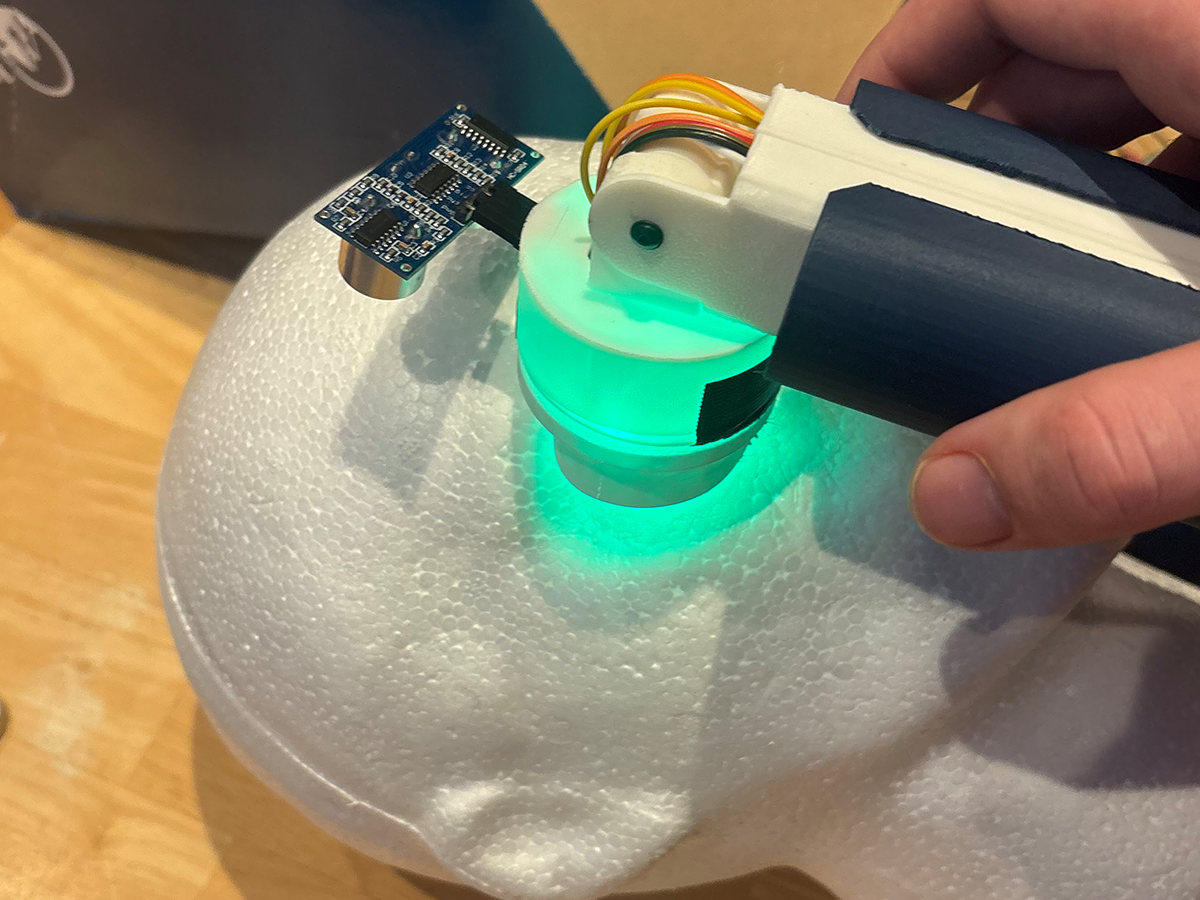
Aligna uses an LED alignment guidance system to help users position the device correctly before administering eye drops. An internal accelerometer and IR distance sensor which detects when the user’s head is level and provides visual feedback through LEDs, giving reassurance and improving confidence, accuracy and ease of use during application.
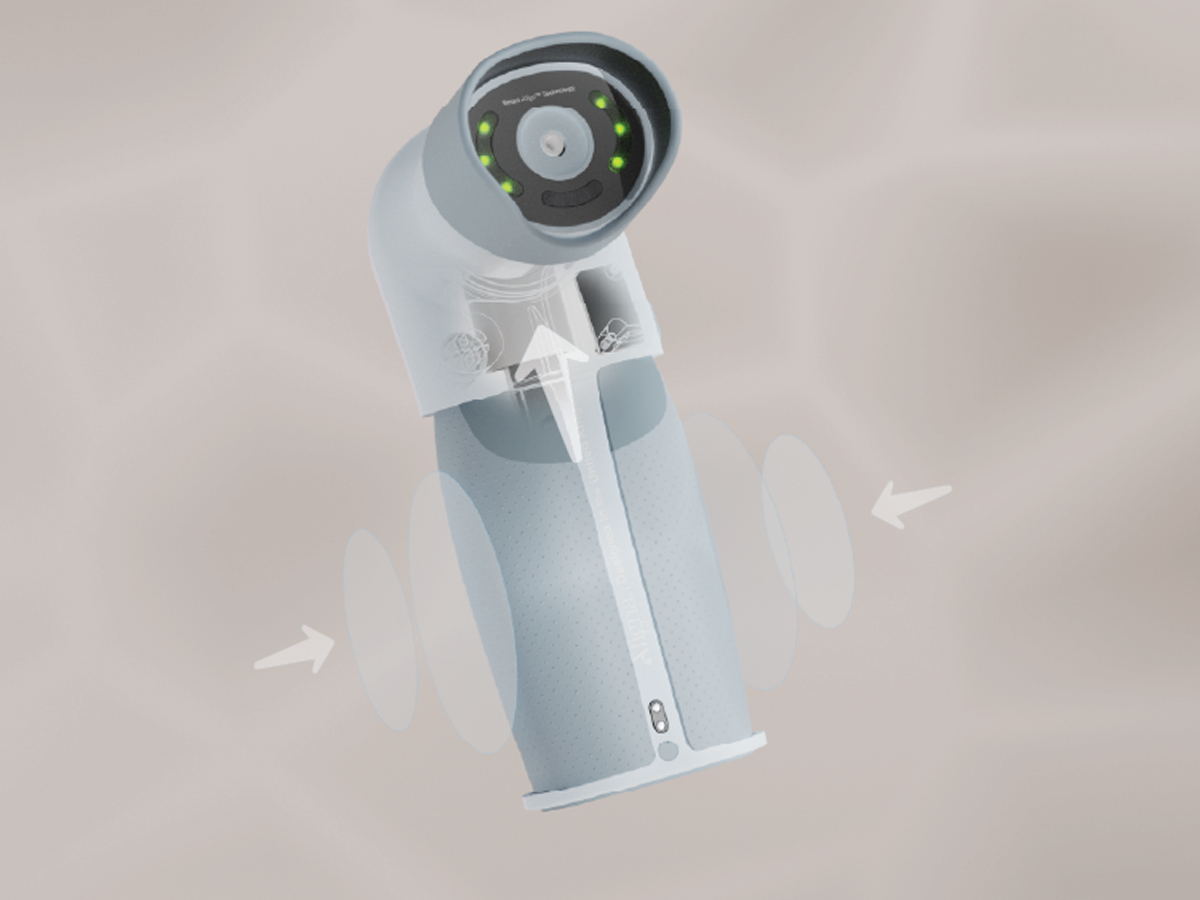
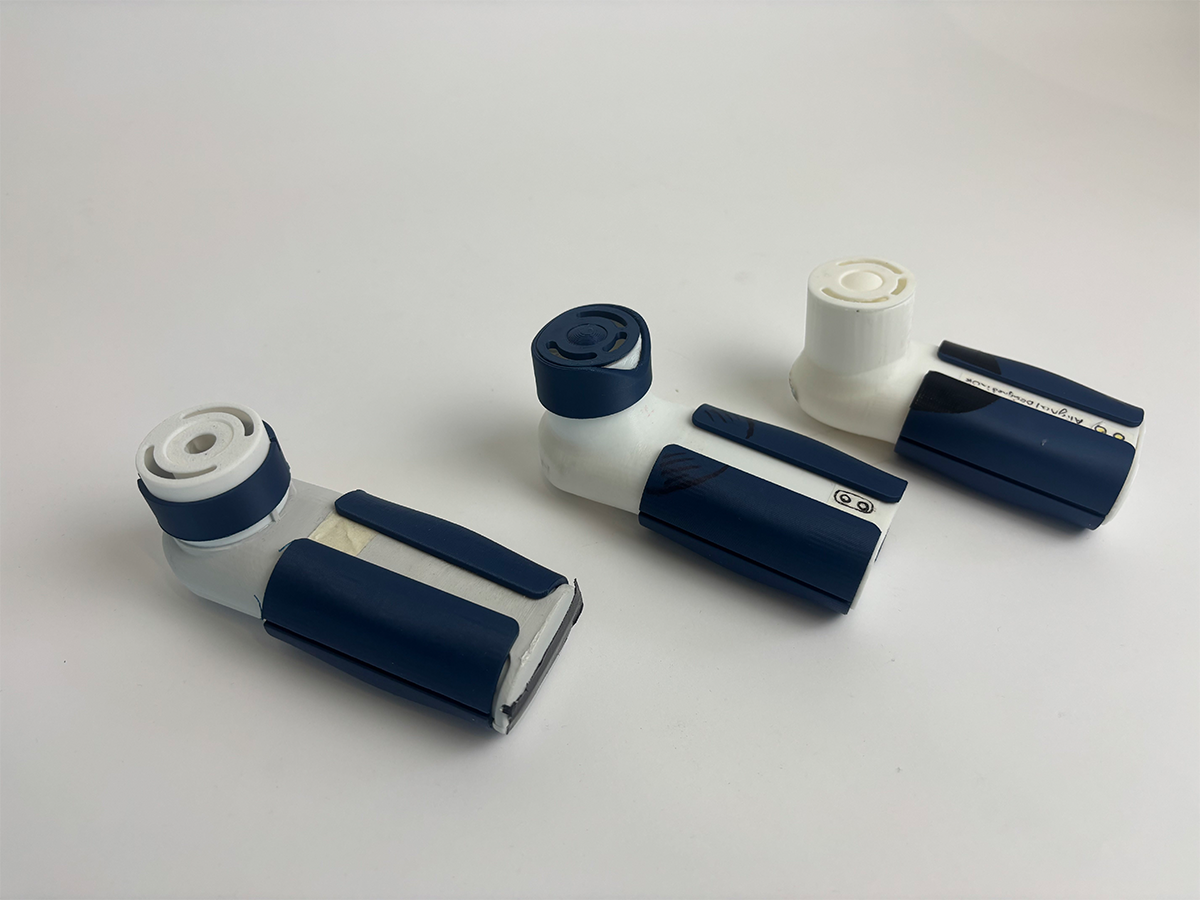
The sides adapt to different bottle sizes through lightly sprung supports, allowing compatibility with 5 ml–15 ml bottles. This makes the device more accessible for users managing changing medications, particularly prescription eye drop bottles where the bottle size could change.

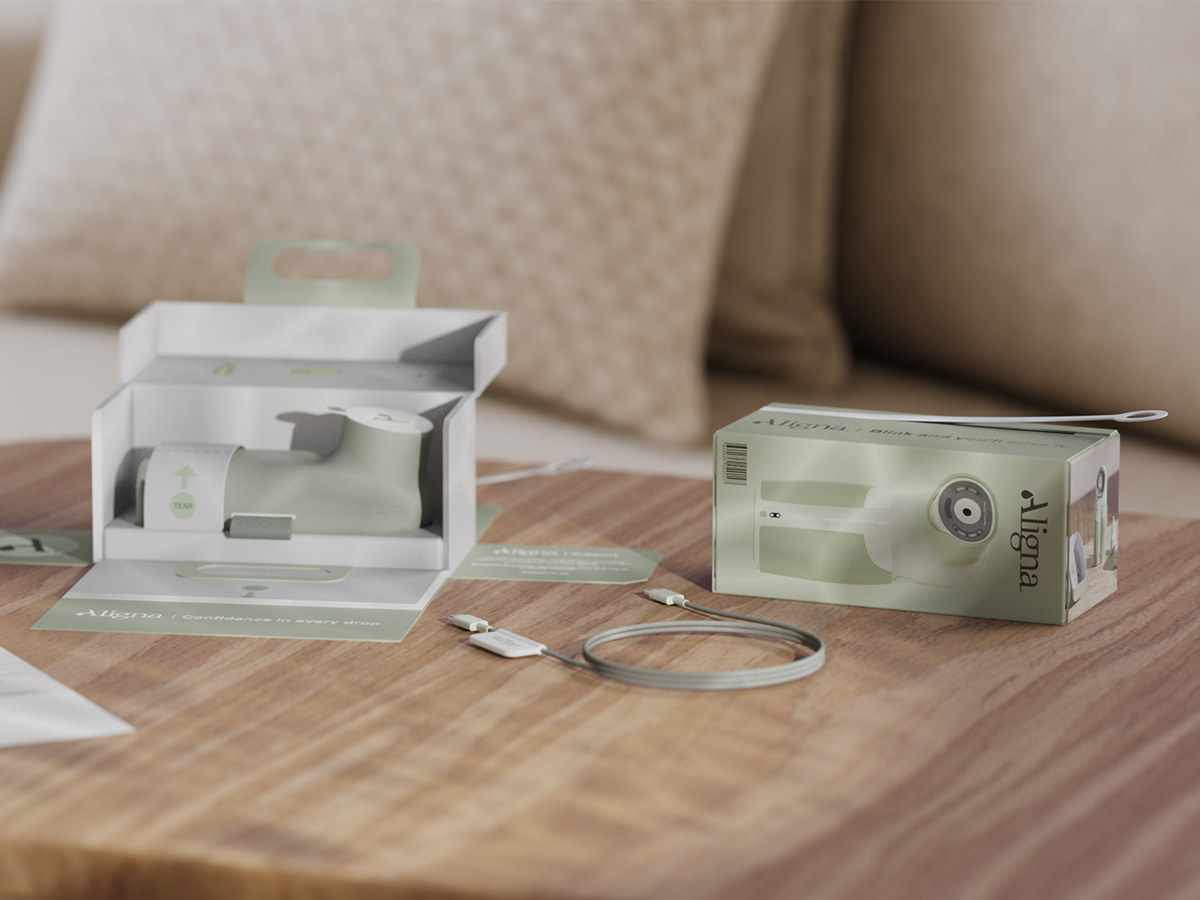
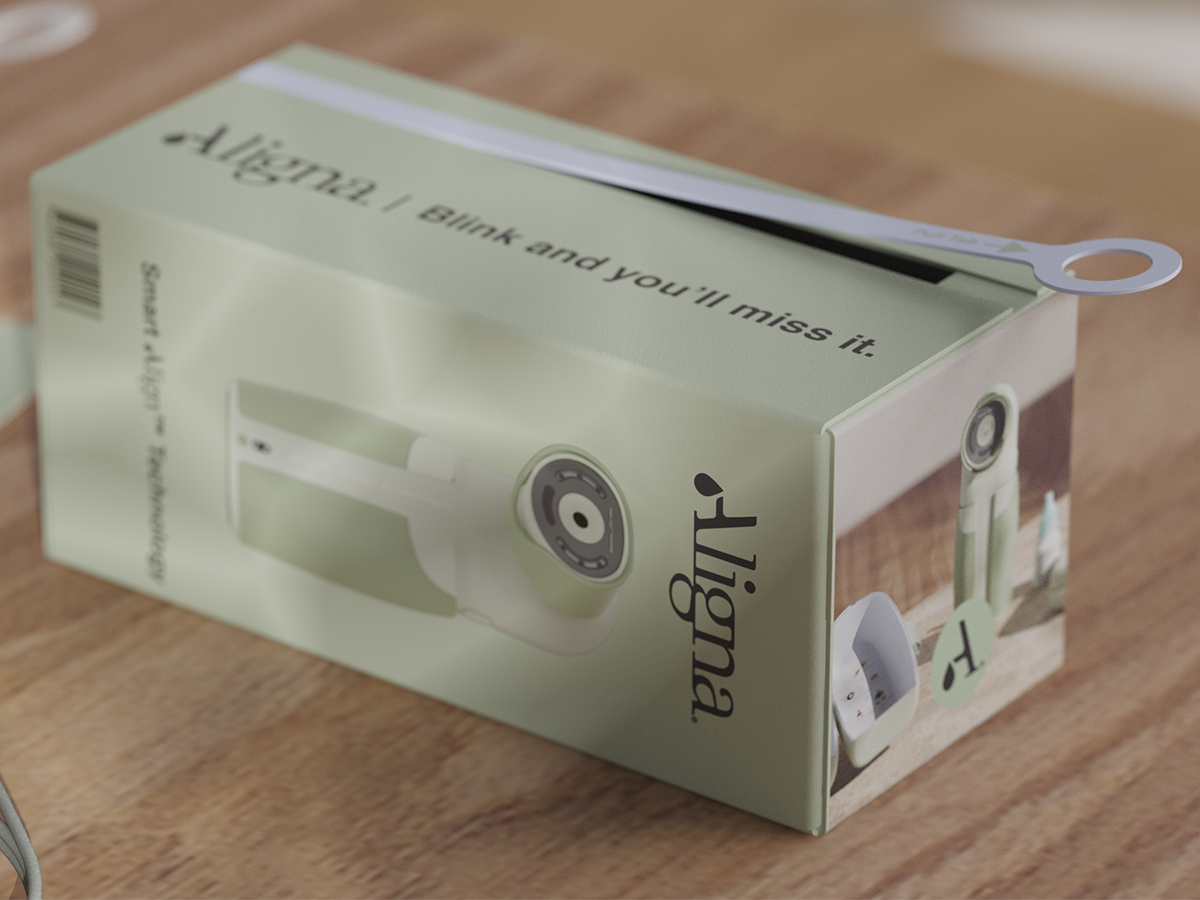
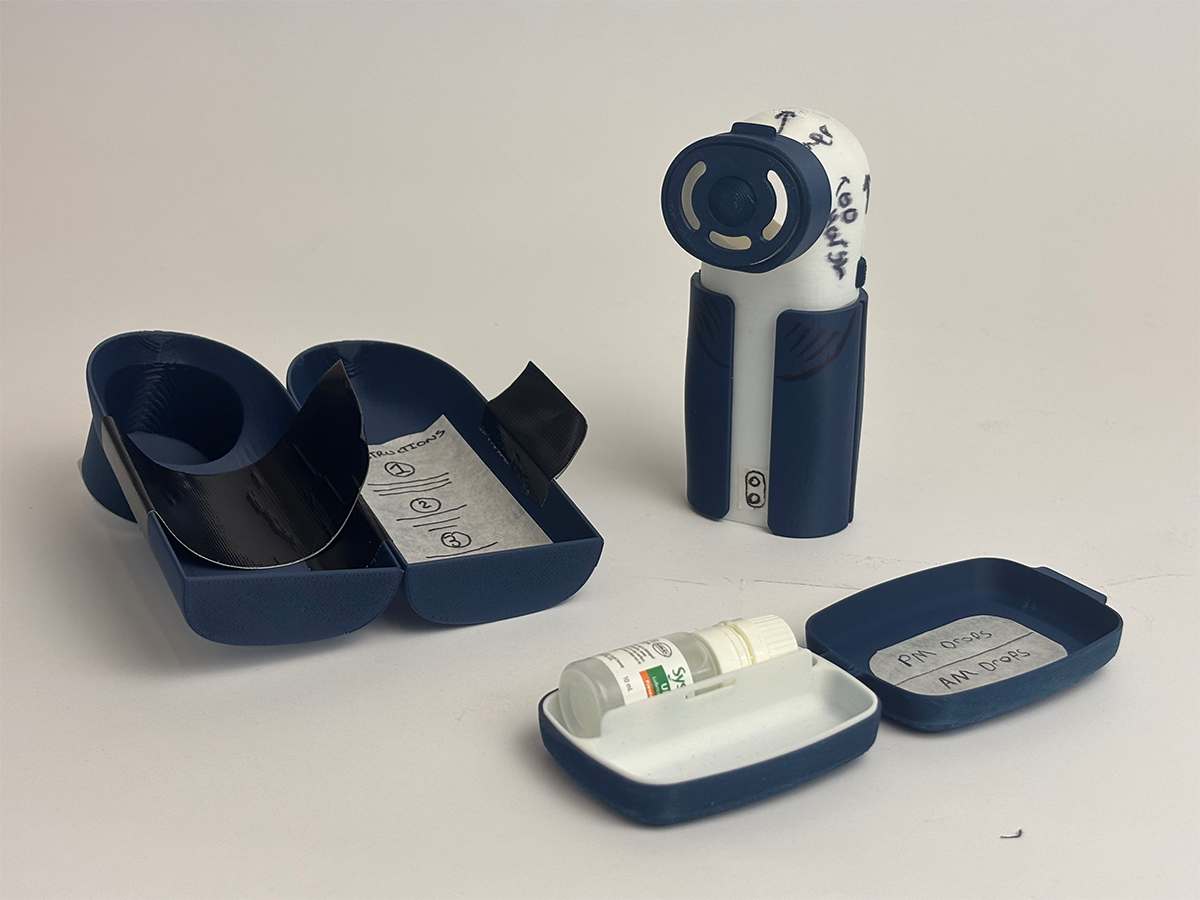
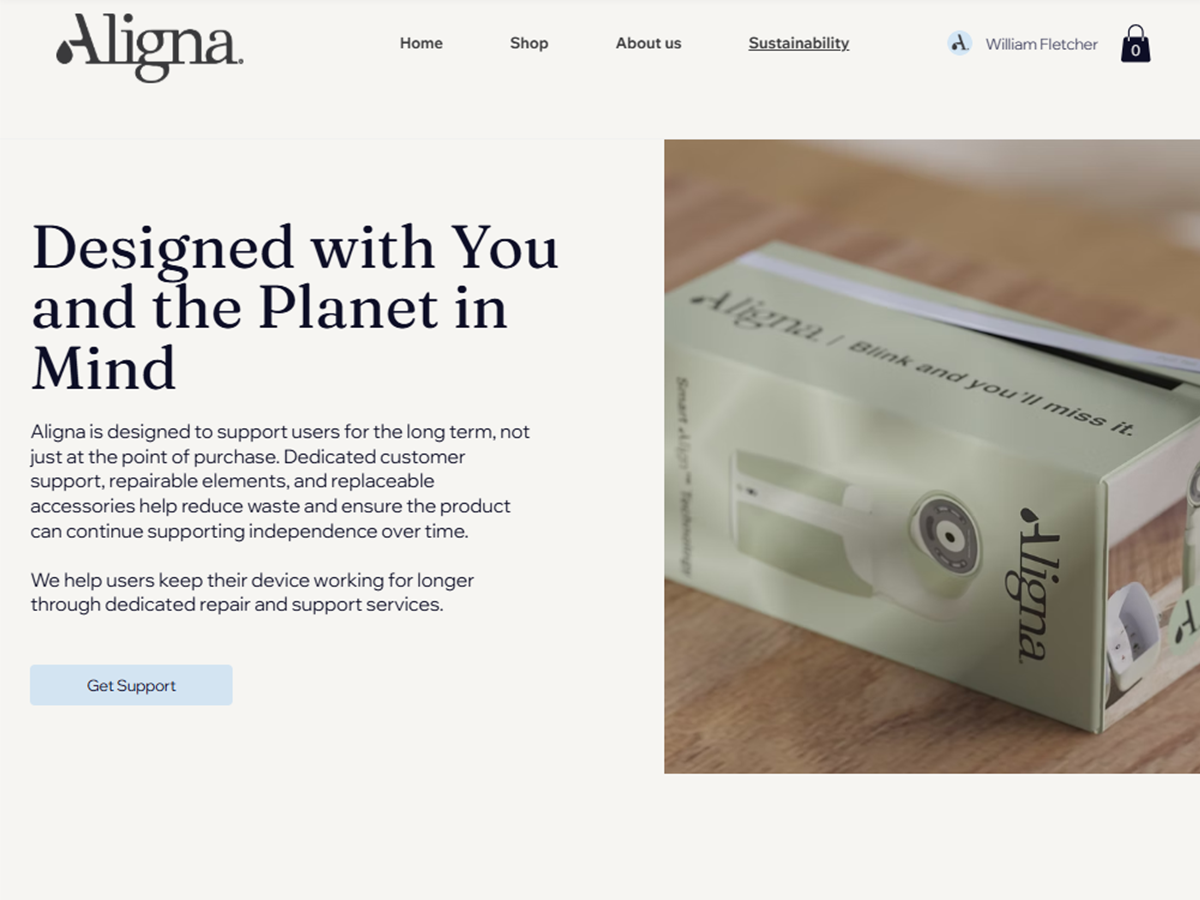
The packaging is designed to extend the Aligna brand experience beyond the product itself, creating a reassuring, premium and accessible interaction for the user. Clear visual instructions, large readable text and an intuitive unboxing experience help support users with reduced vision or dexterity through the removal handles, while the soft colour palette and refined graphics make the product feel more approachable, giftable and less clinical.
Prototyping played a key role throughout the development of Aligna, allowing rapid testing and refinement of ergonomics, alignment guidance, bottle insertion and overall usability. A wide range of functional and appearance prototypes were produced to gather feedback from users, industry designers and healthcare professionals, helping validate design decisions and improve the product through iterative development.
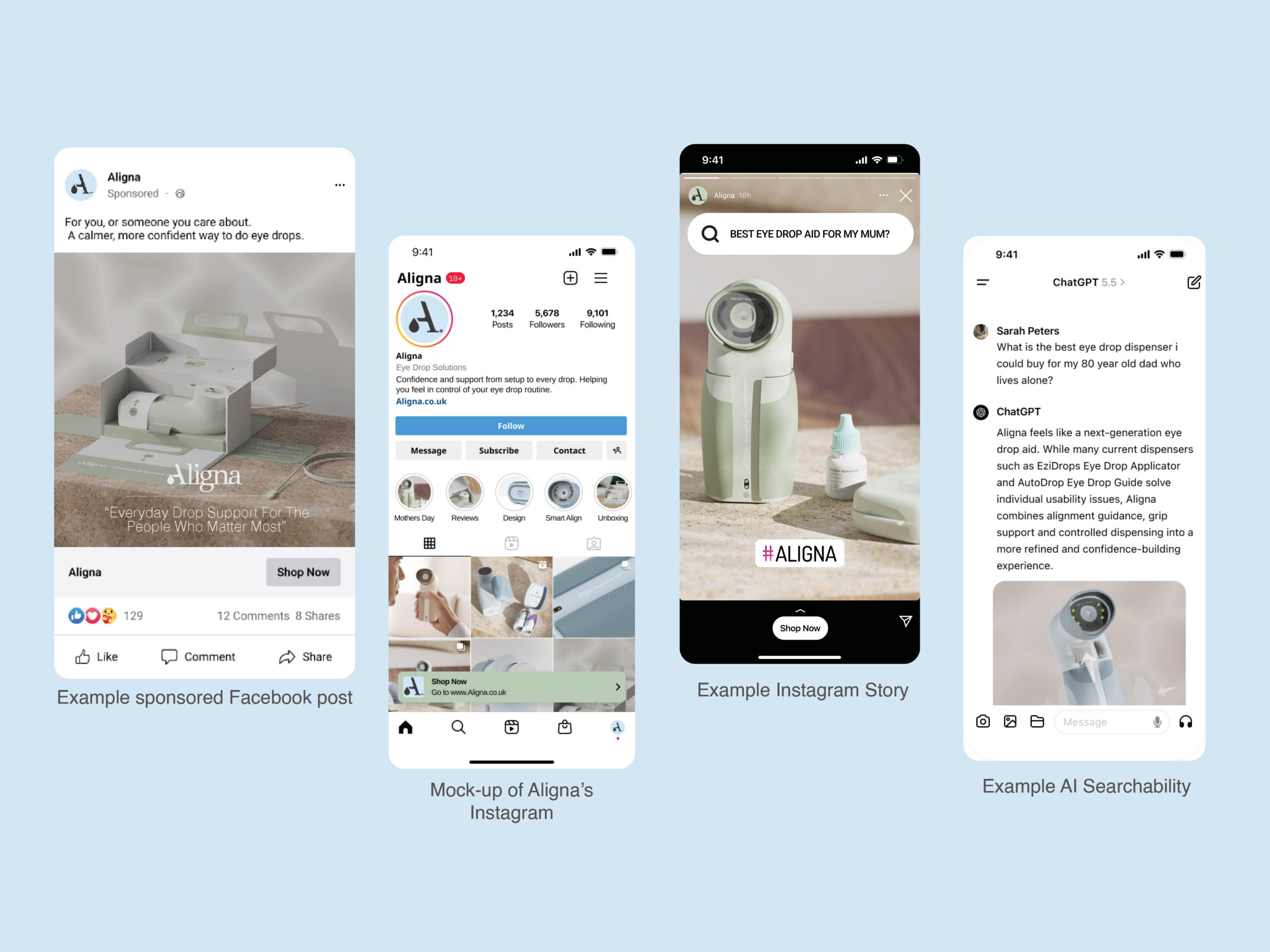
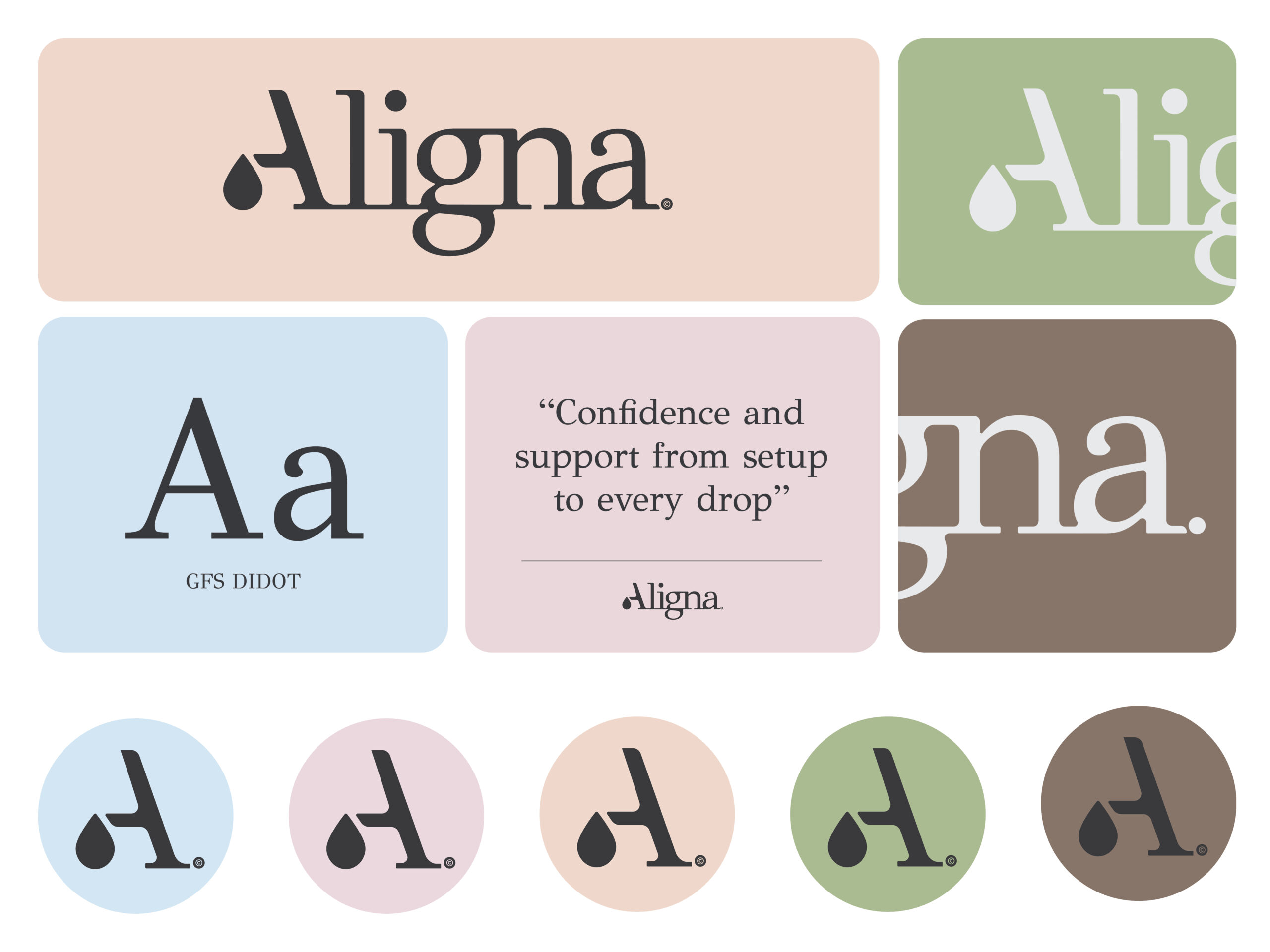
Aligna’s branding was developed to create a more reassuring, premium and lifestyle-oriented healthcare experience. Through soft colours, refined graphics and approachable visuals, the brand aims to build trust, confidence and emotional reassurance while making the product feel less clinical and more desirable for everyday use.
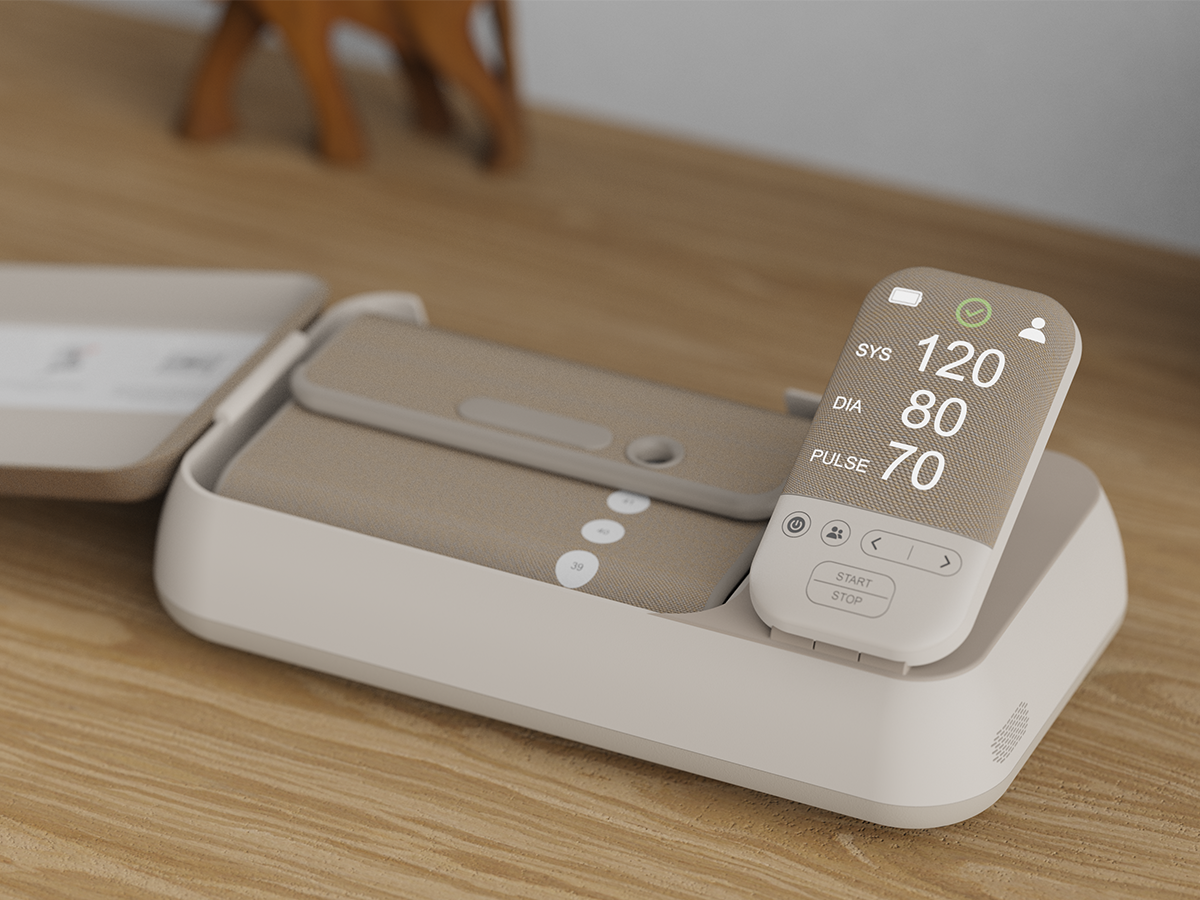
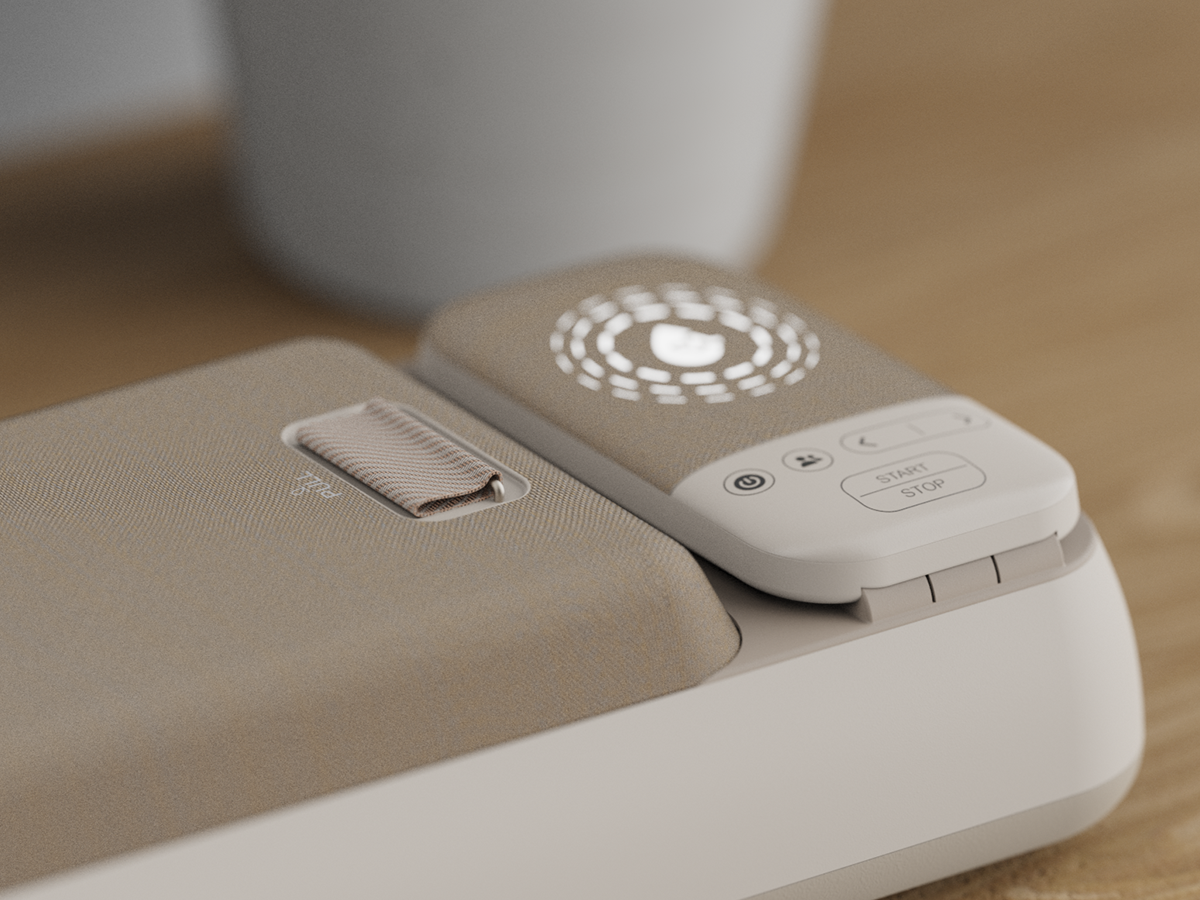
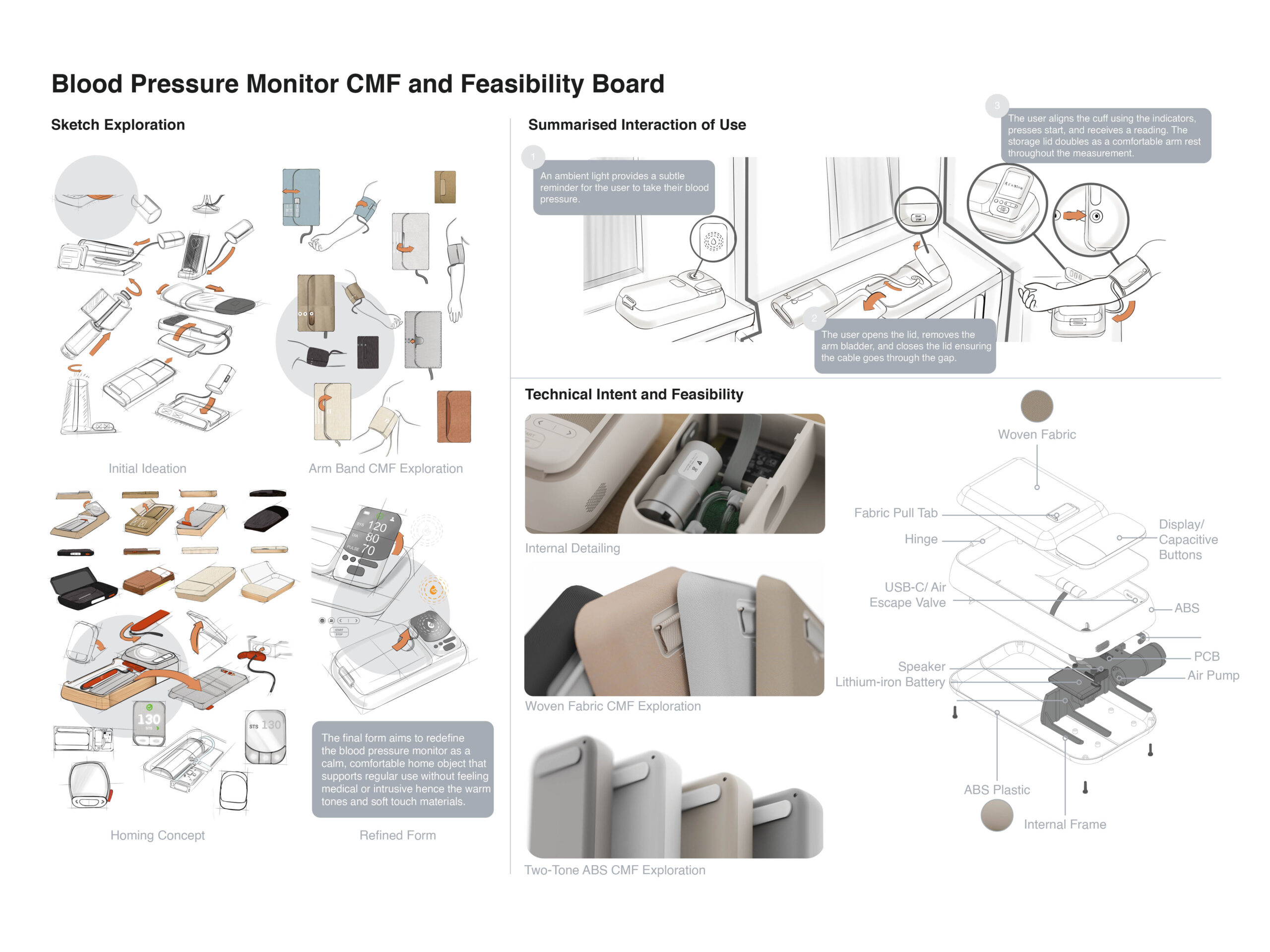
This blood pressure monitor concept was developed during FSW Design Week as a fast-paced project exploring how home healthcare devices could feel more desirable, calming and suitable for everyday living. The concept reimagined the traditional blood pressure monitor through softer forms, warmer materials and a more integrated home-friendly aesthetic, moving away from the cold and clinical appearance often associated with medical products. Features such as an integrated arm rest and subtle visual feedback aimed to create a more intuitive and reassuring daily user experience.
RescueShell was a collaborative rescue device developed with support from Friends of Horsey Seals to improve the safe capture and transport of injured seals. The project focused on reducing stress and injury for both rescuers and animals through a more intuitive, controlled and user-friendly rescue solution. Collaborators: myself, Samuel Skelcher Maxwell, Tom Russell and Theo Hallett.
12-Month Industrial Design Placement at Designworks Windsor
I completed a 12-month industrial design placement at Designworks, where I worked on a range of medical, consumer and scientific device projects within a professional consultancy environment. During the placement, I developed skills in user-centred design, CAD development, surfacing, visualisation and client communication, while collaborating closely with experienced designers and engineers. The experience strengthened my understanding of translating research and usability insights into commercially viable products, particularly within healthcare-focused design projects.
-William