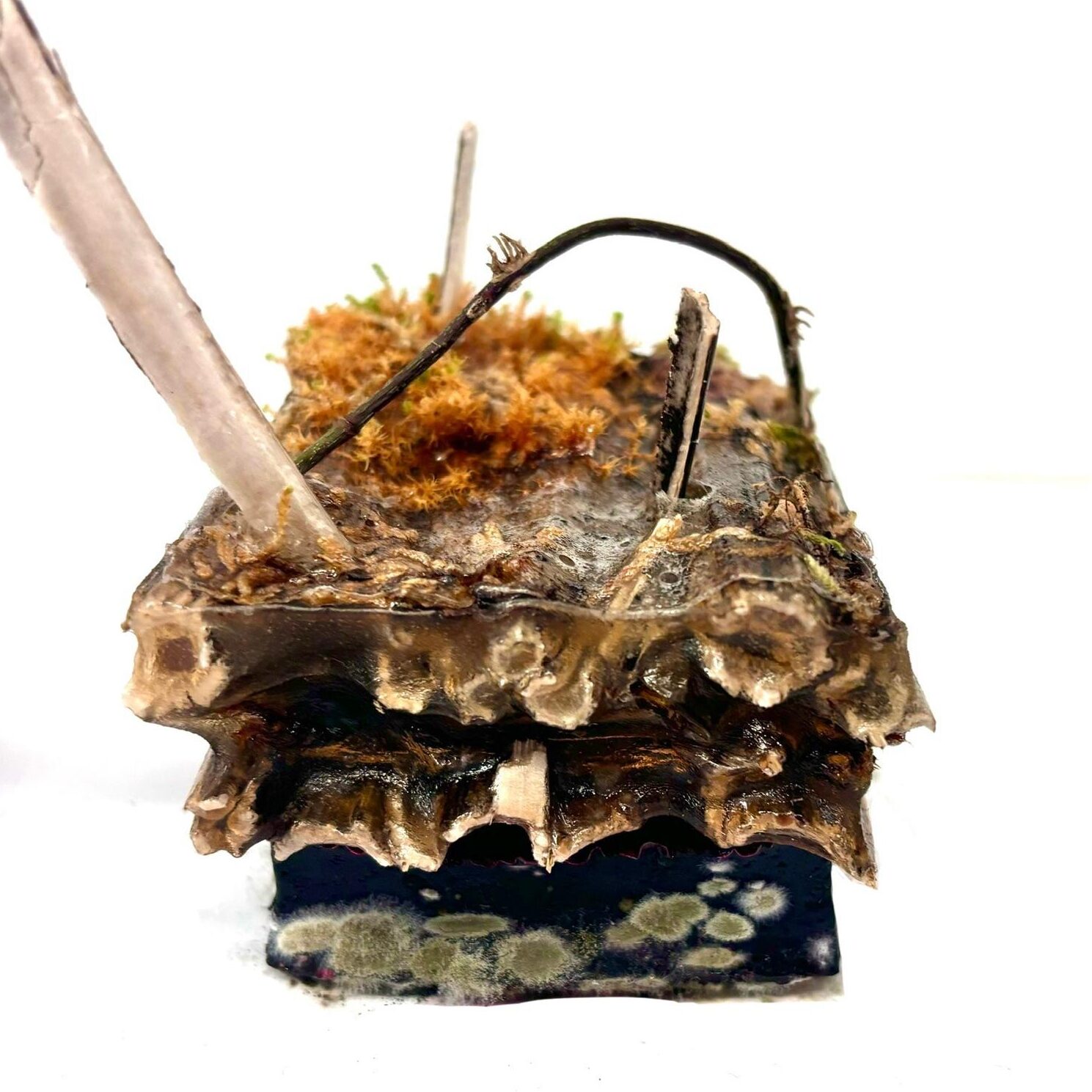
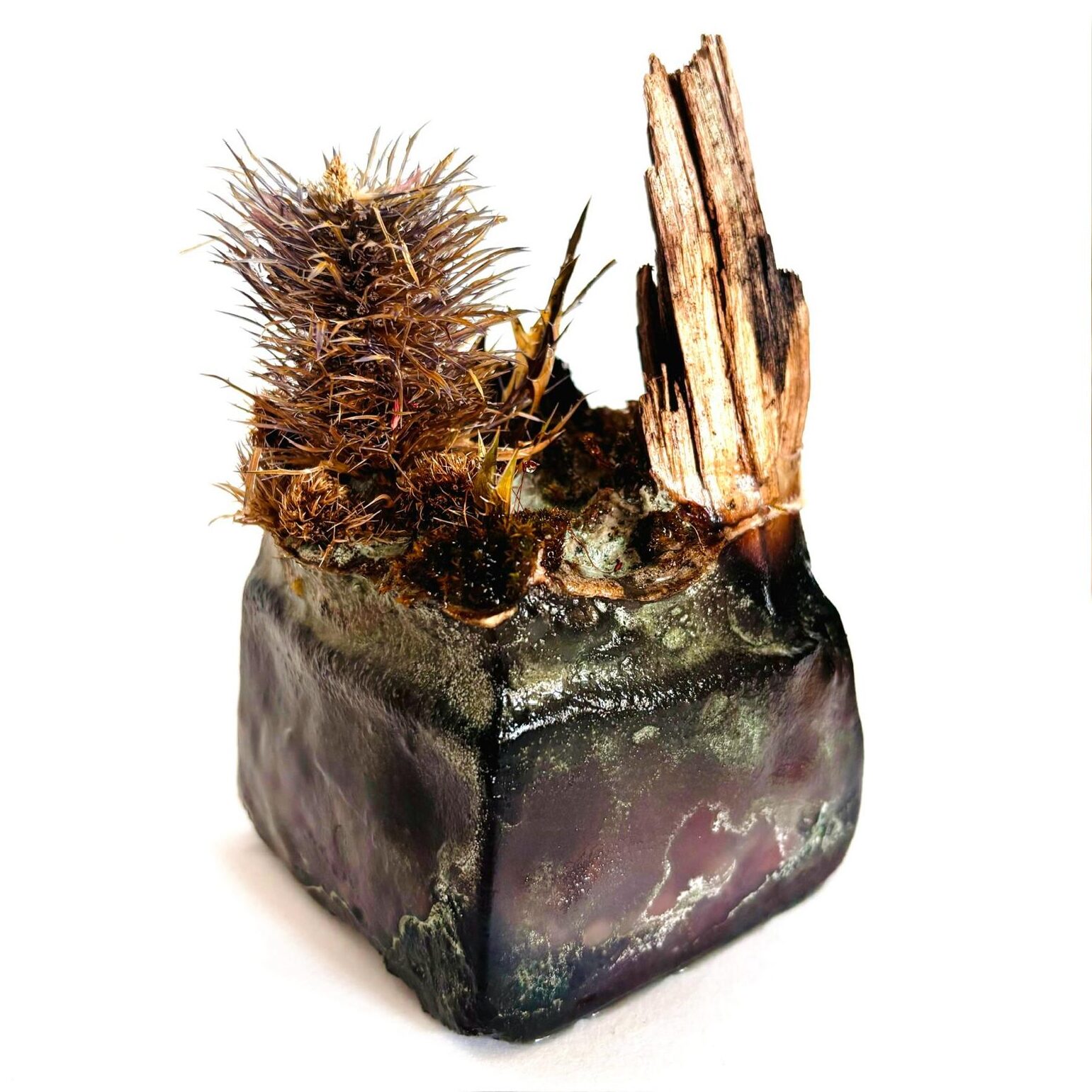
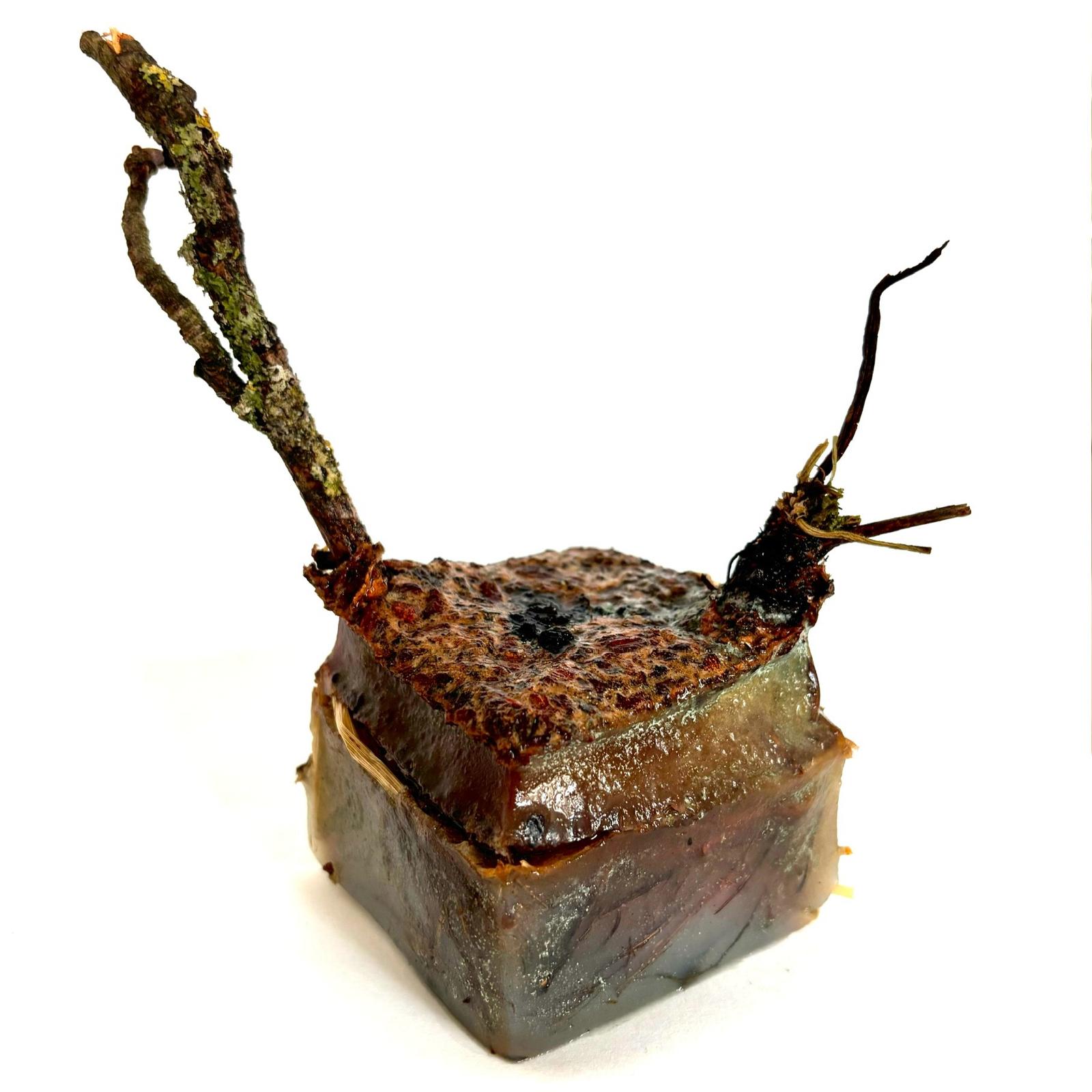
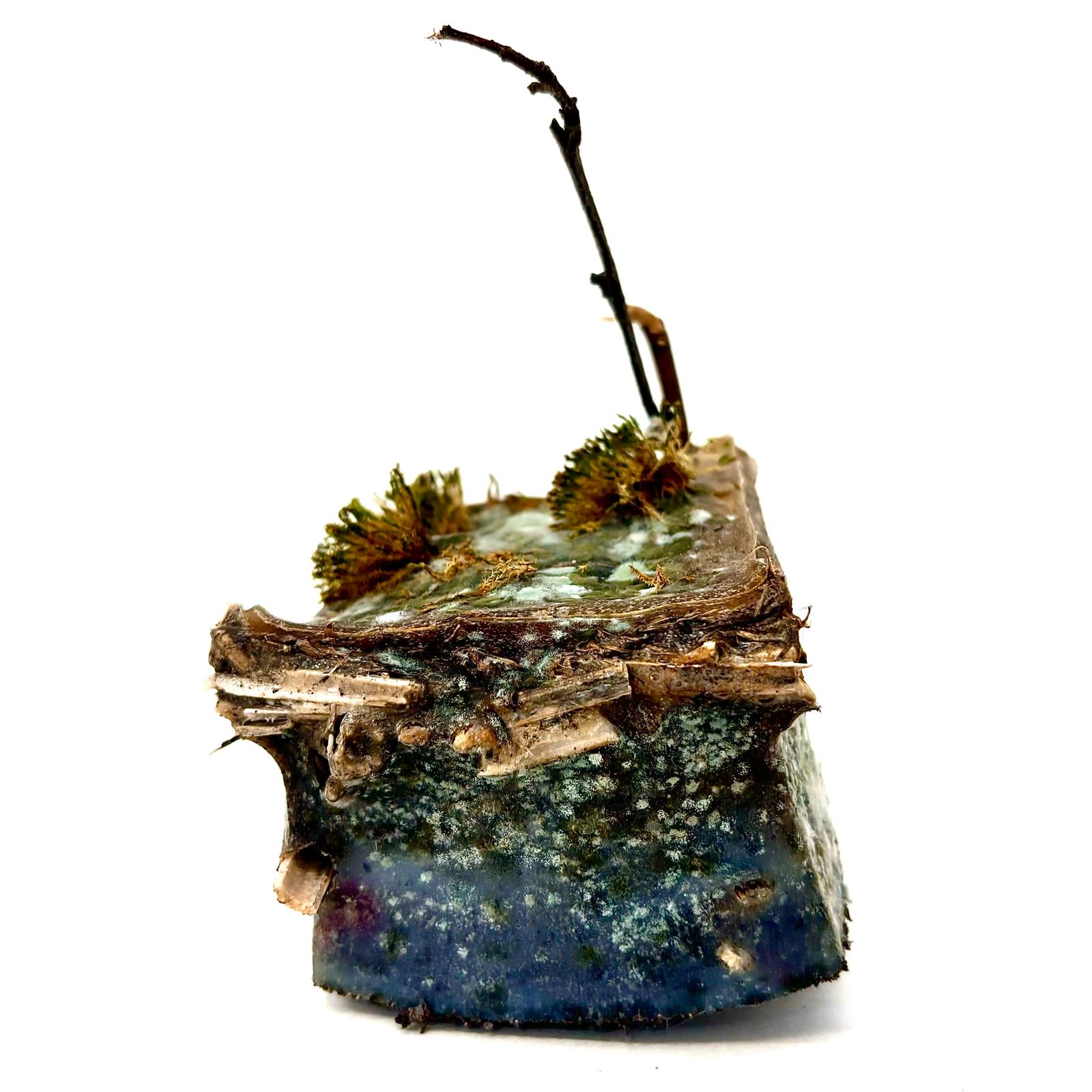
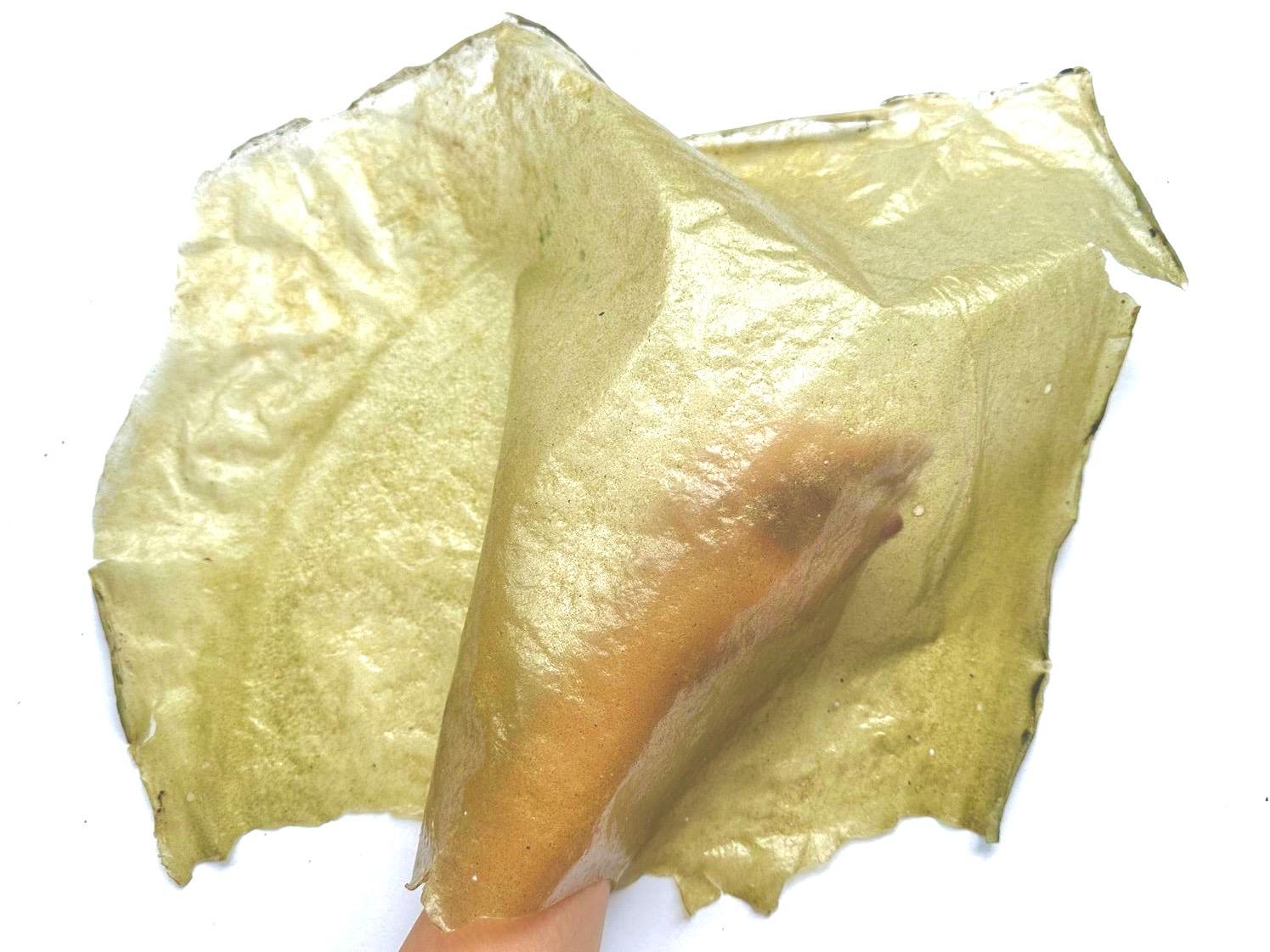
My practice explores co-artistry with natural processes to create ever-changing bioplastic sculptures. I investigate transformation and materiality by inviting chance, gravity, and environmental conditions to have agency within my works.
Bioplastic Sculpture
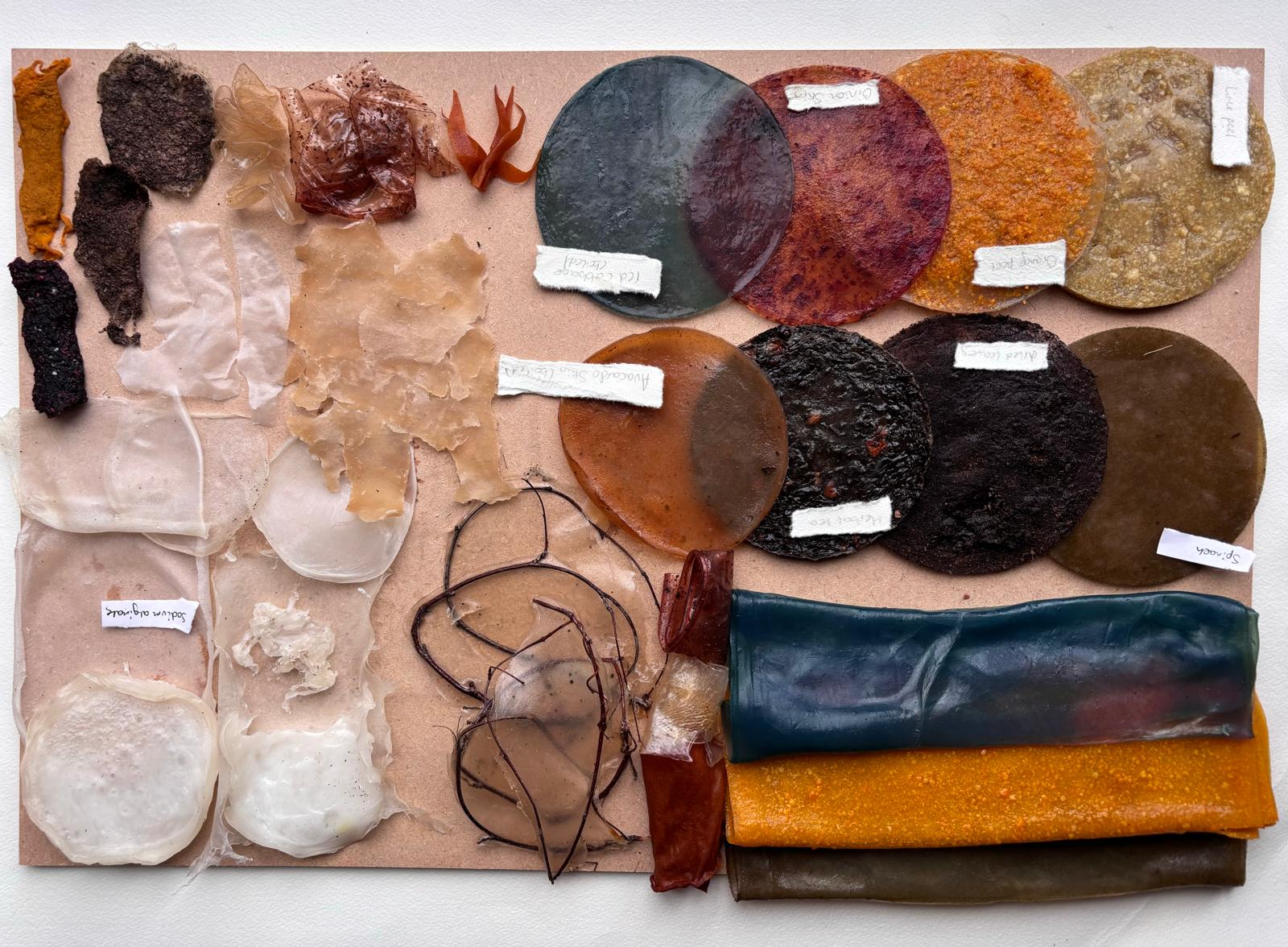
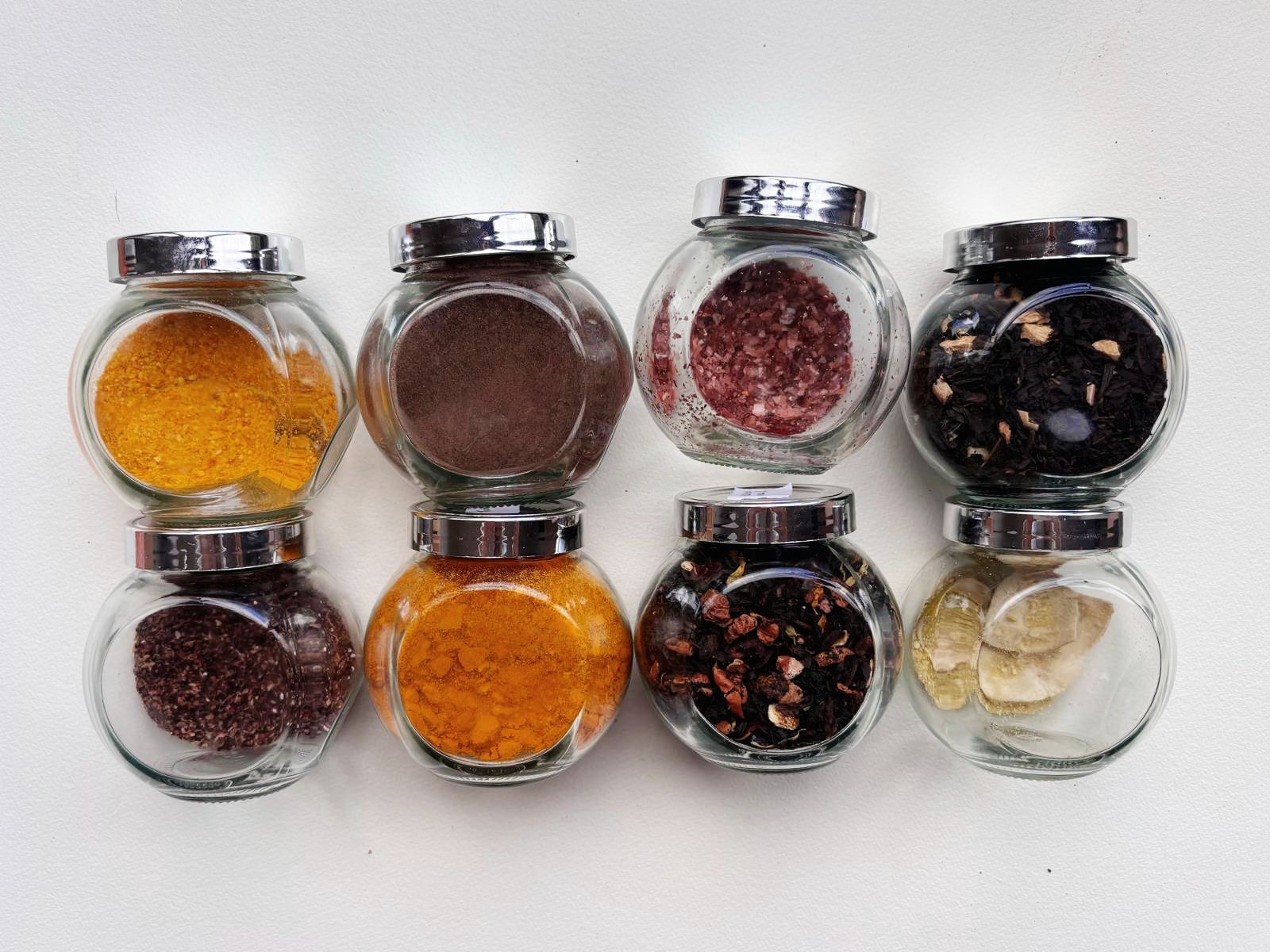
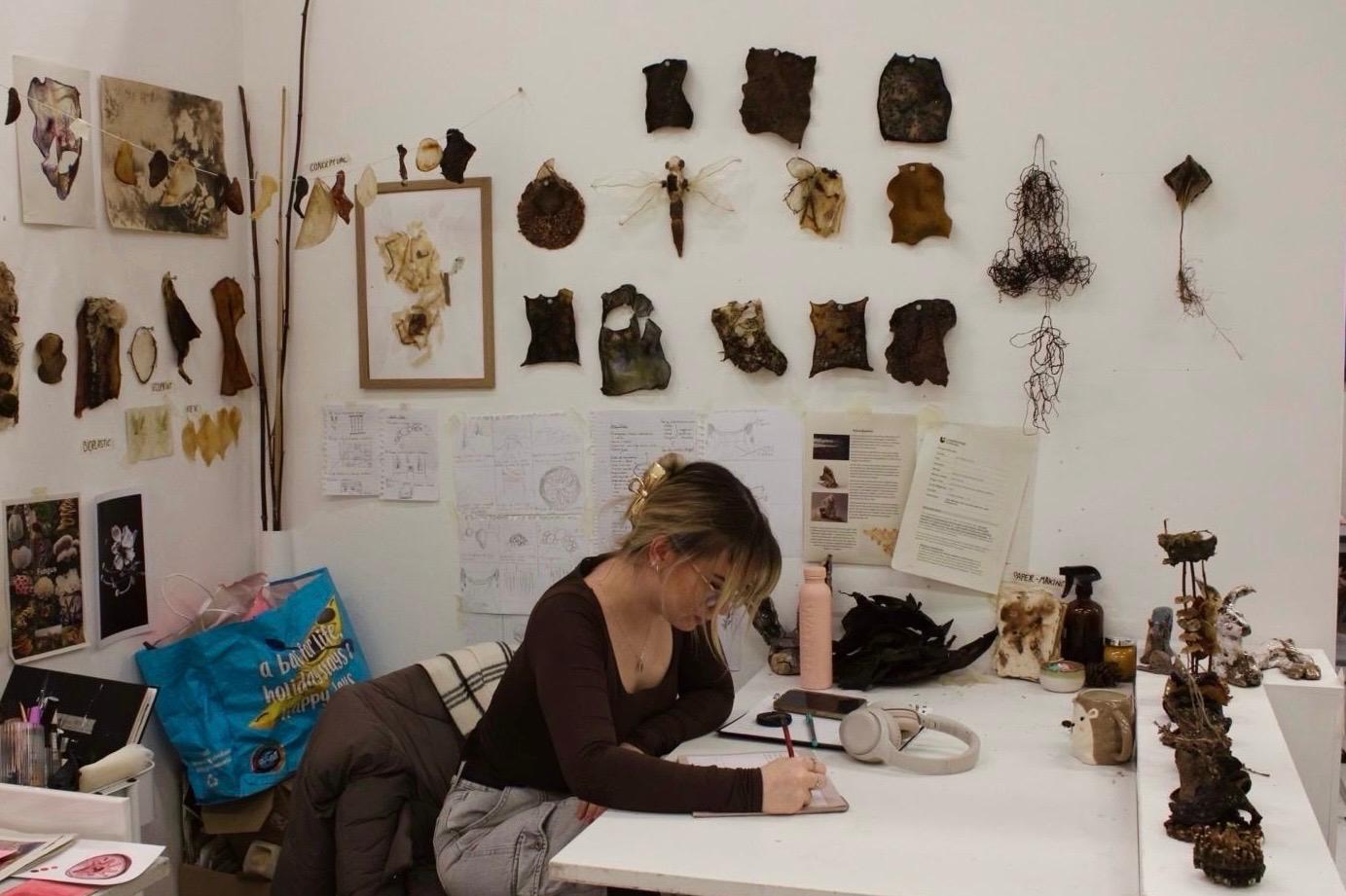
Sampling and material experimentation is constantly ongoing in my practice.
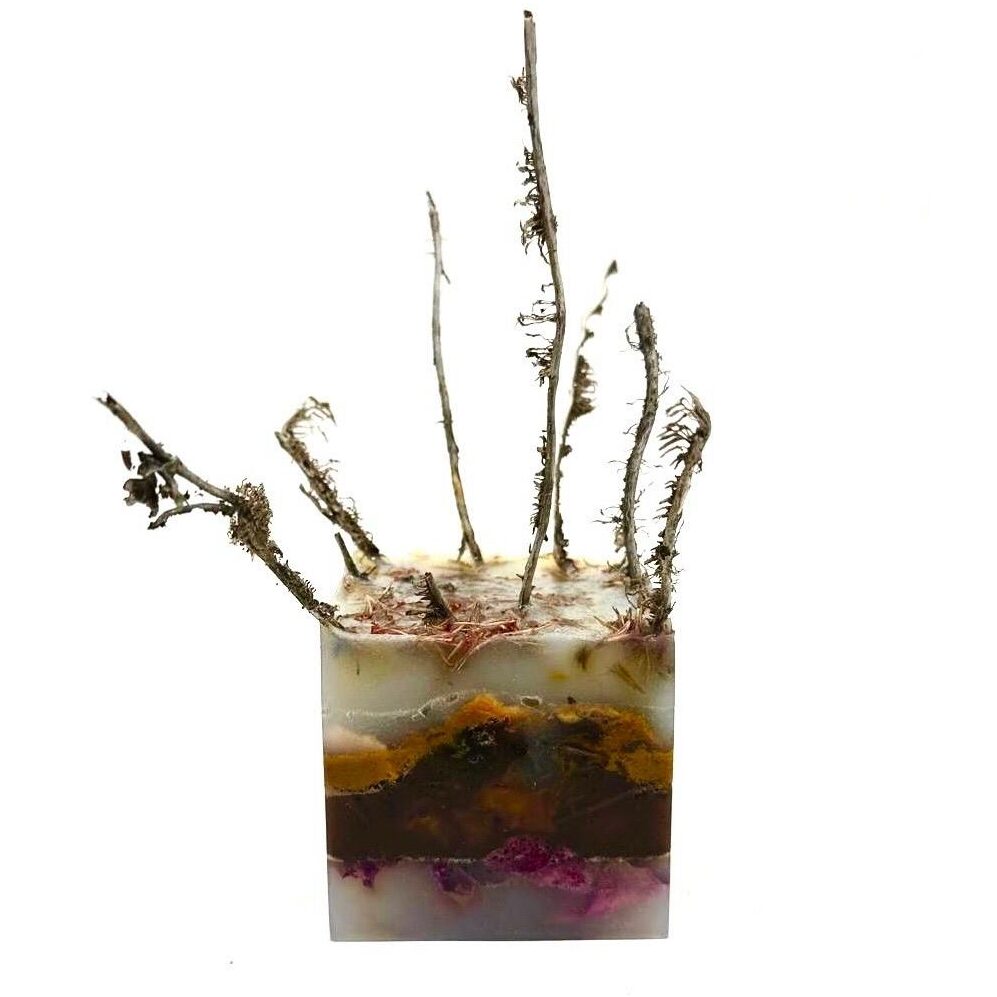
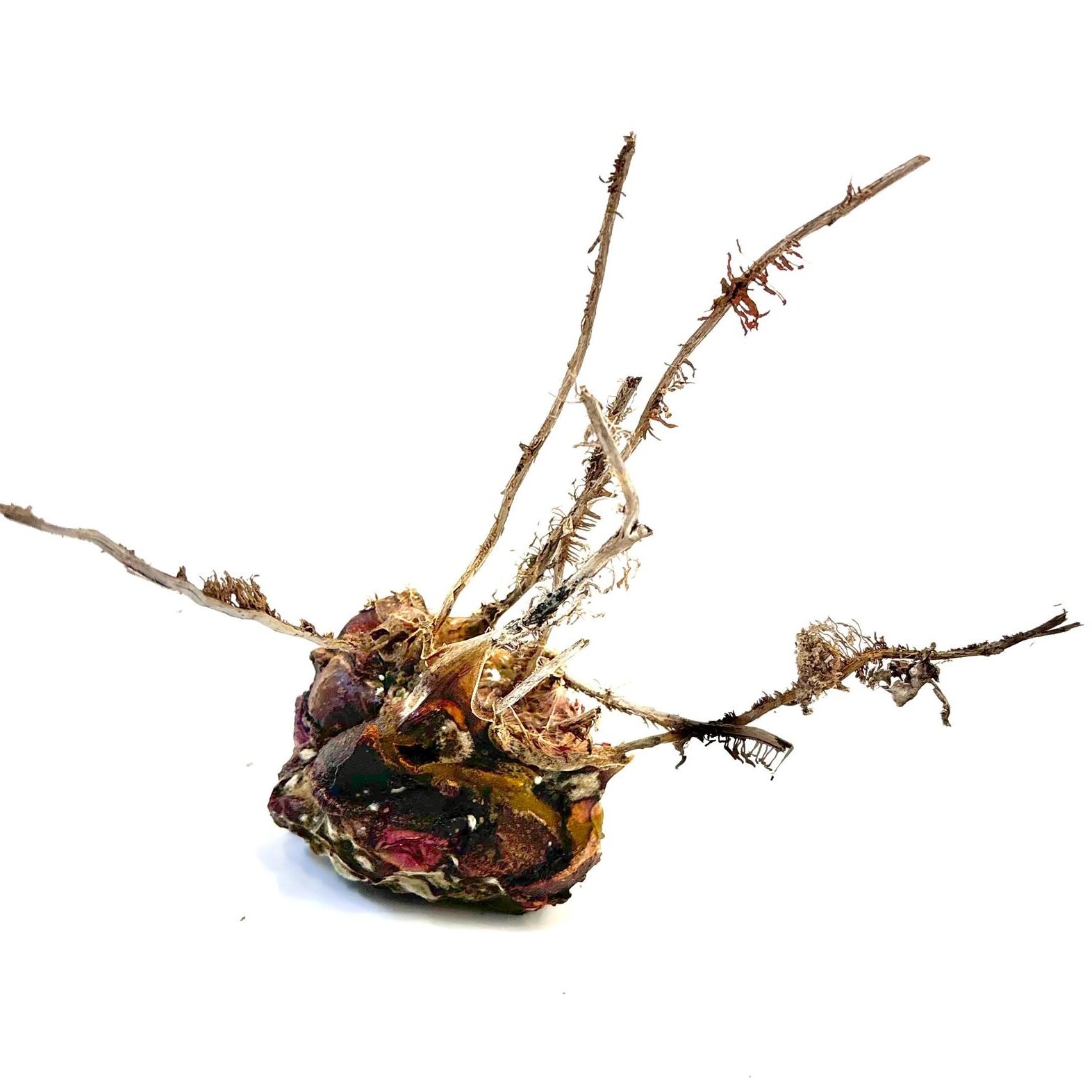
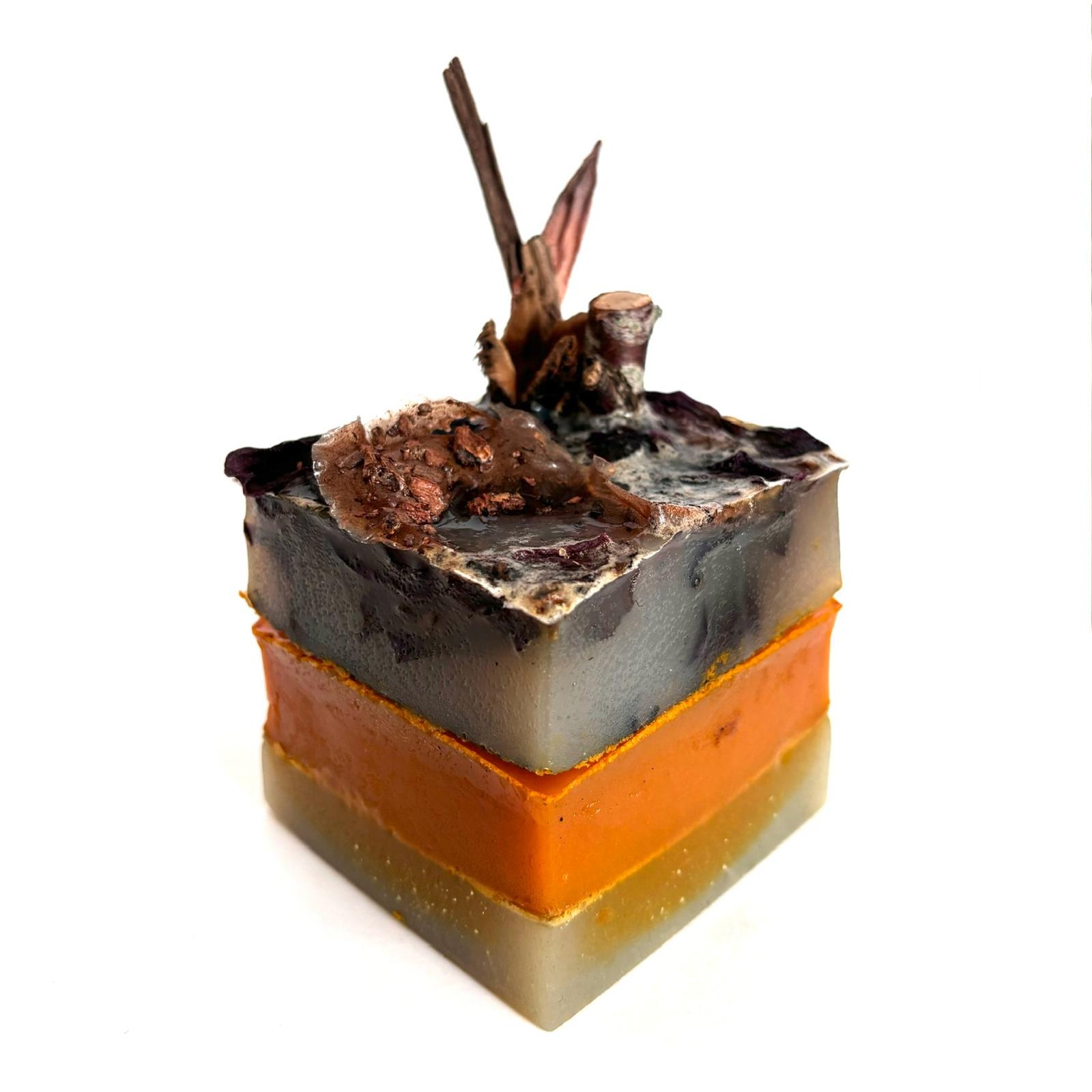
A bioplastic sculpture on day one of formation.
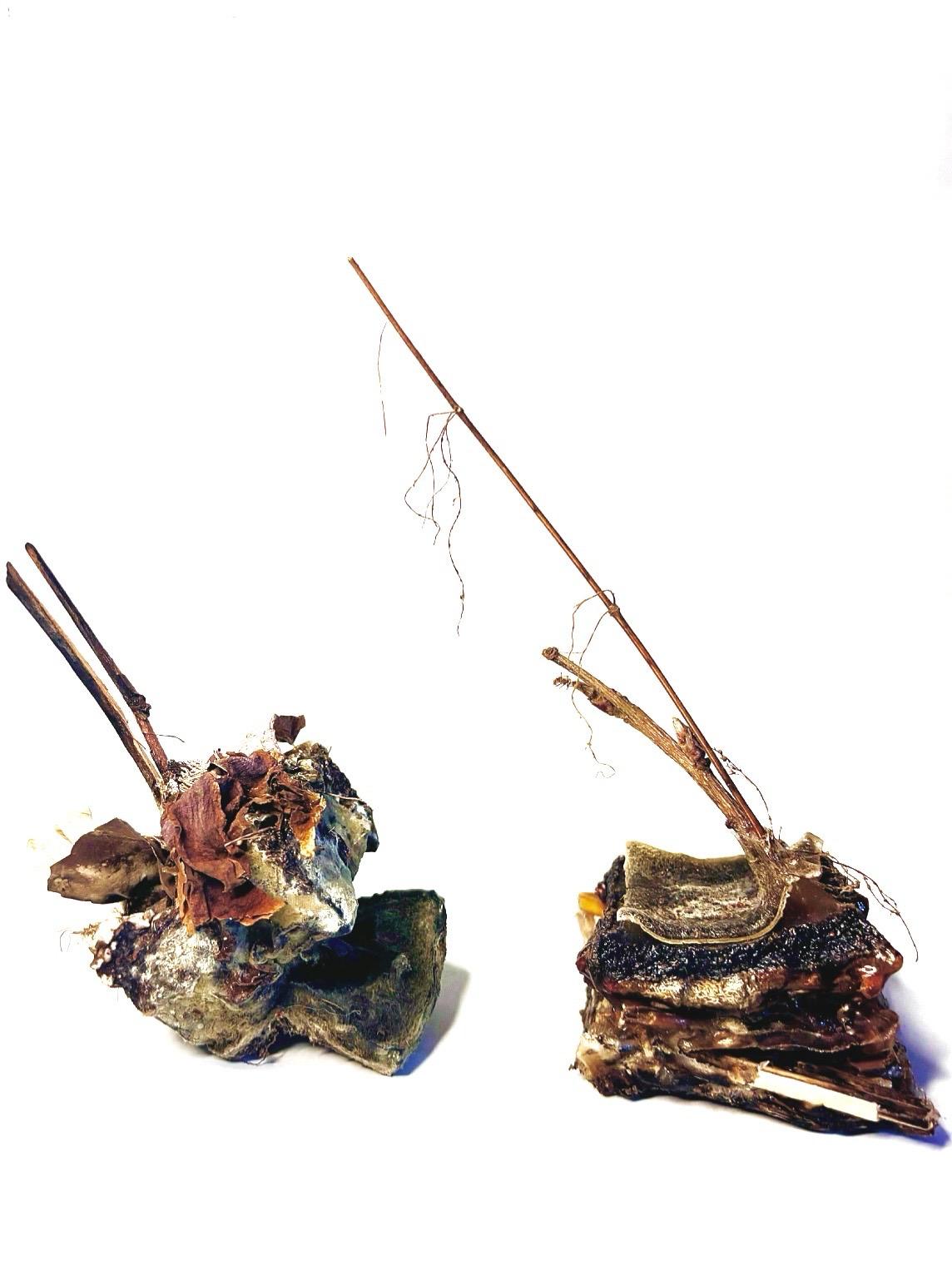
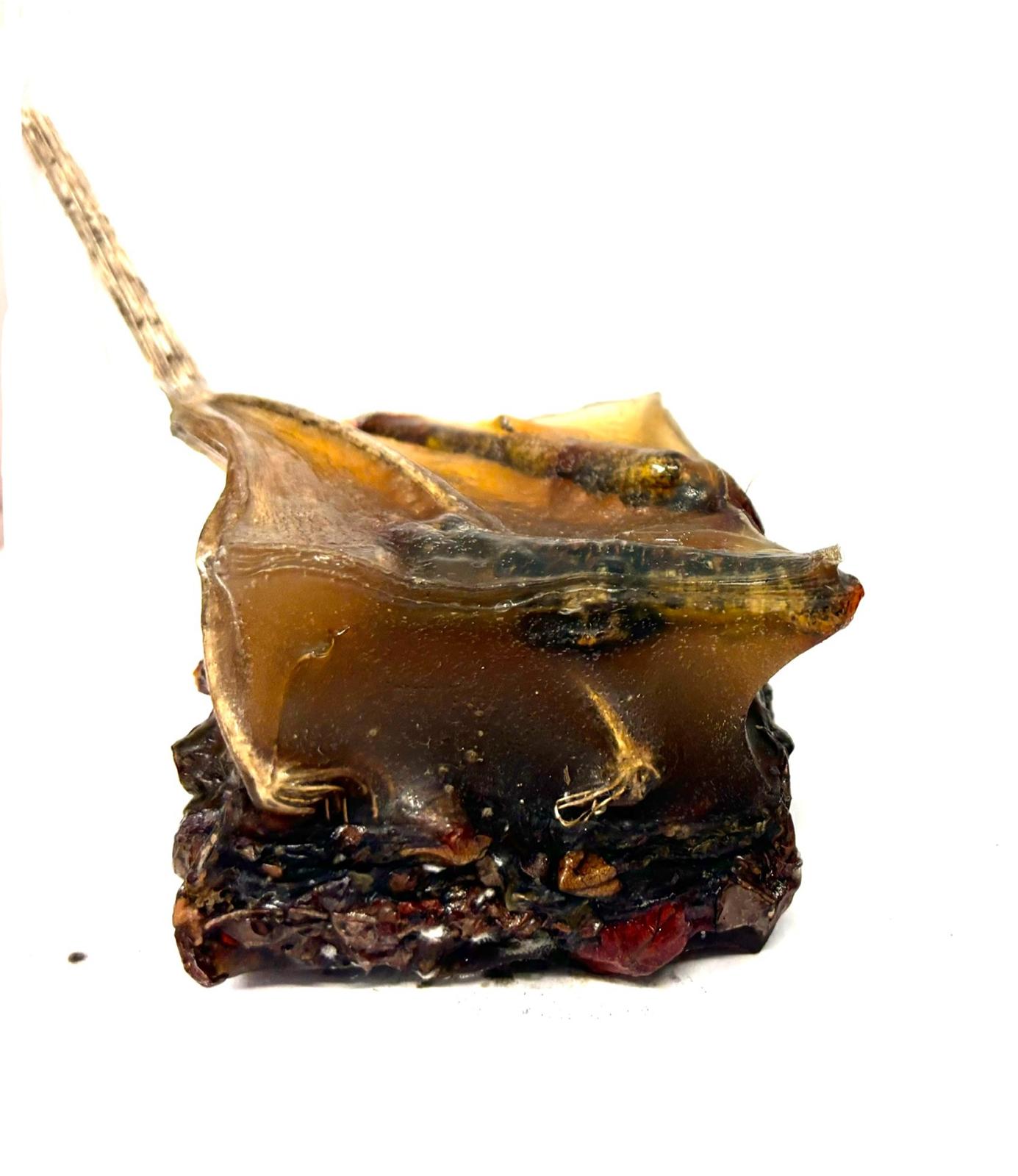
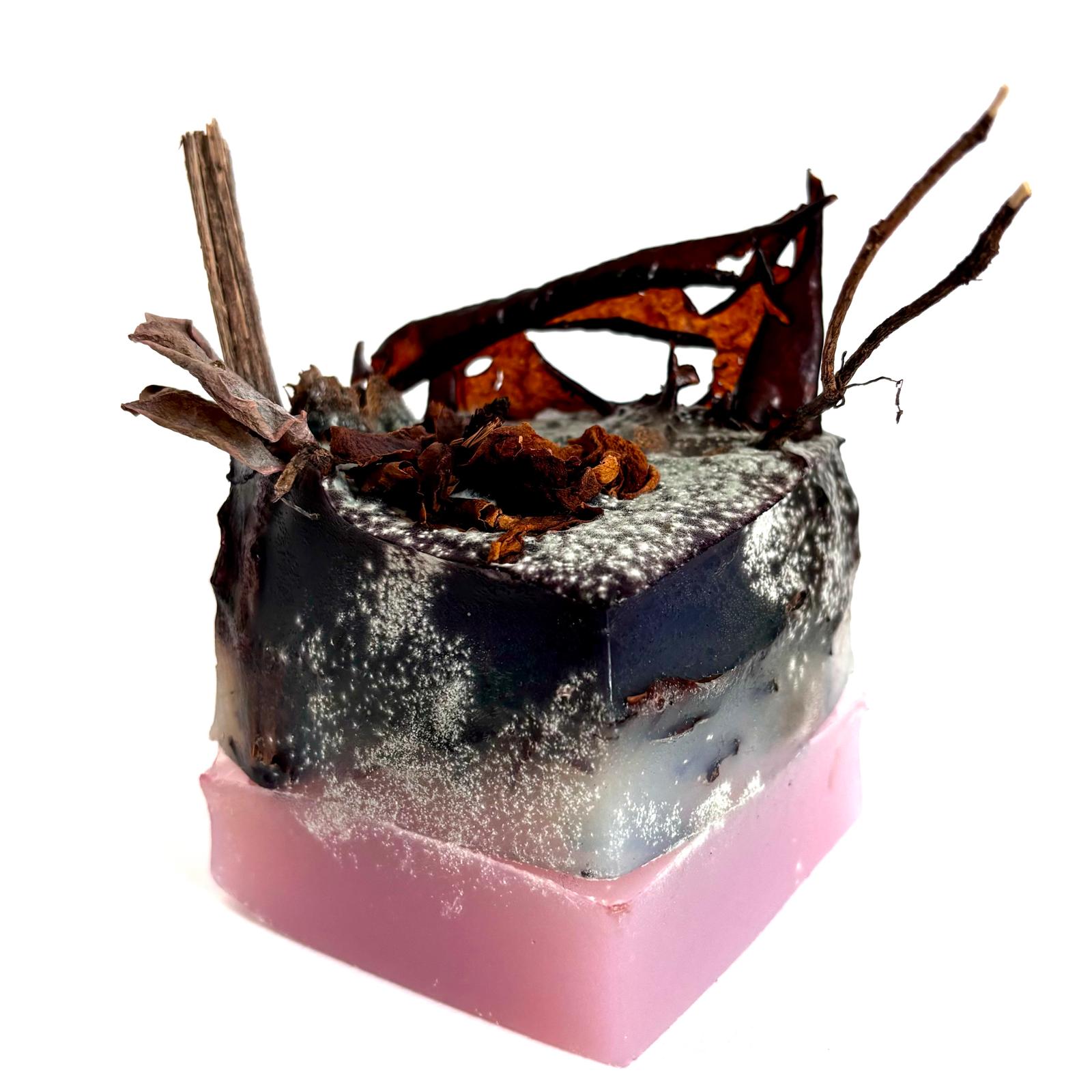
The same sculpture after three weeks, in which environmental elements have taken ‘agency’.
All my works are ‘untitled’ to add a sense of ambiguity, as well as to celebrate their ever-changing state. The works are therefore allowed to ‘speak’ for themselves without suggestion or interruption from a given title.
Positional Statement:
My practice explores the intersection of sculpture, installation, and material experimentation using bioplastics. Working with biodegradable media derived from natural sources, I investigate processes of transformation, fragility, and materiality. By heating, casting, and manipulating bioplastic mixtures, the material shifts from liquid to solid, allowing chance, gravity, and environmental conditions to influence the final form. Influenced by object-oriented ontology and agential realism, my work emerges through a process of co-agency between artist, material, and environment. This process-led approach reflects a collaborative relationship with matter, informed by Jane Bennett’s concept of material vitality, where objects possess “trajectories, propensities, or tendencies of their own” (Bennett, 2010). Through this lens, bioplastic becomes an active participant in the making process. Through exploring the qualities and behaviours of the bioplastic media, I have subsequently been able to ‘collaborate more productively with it’ (Bennett, 2010). Installed within space, the sculptures invite viewers to reflect on ecological interdependence, material agency, and the shifting boundaries between human and non-human forces.
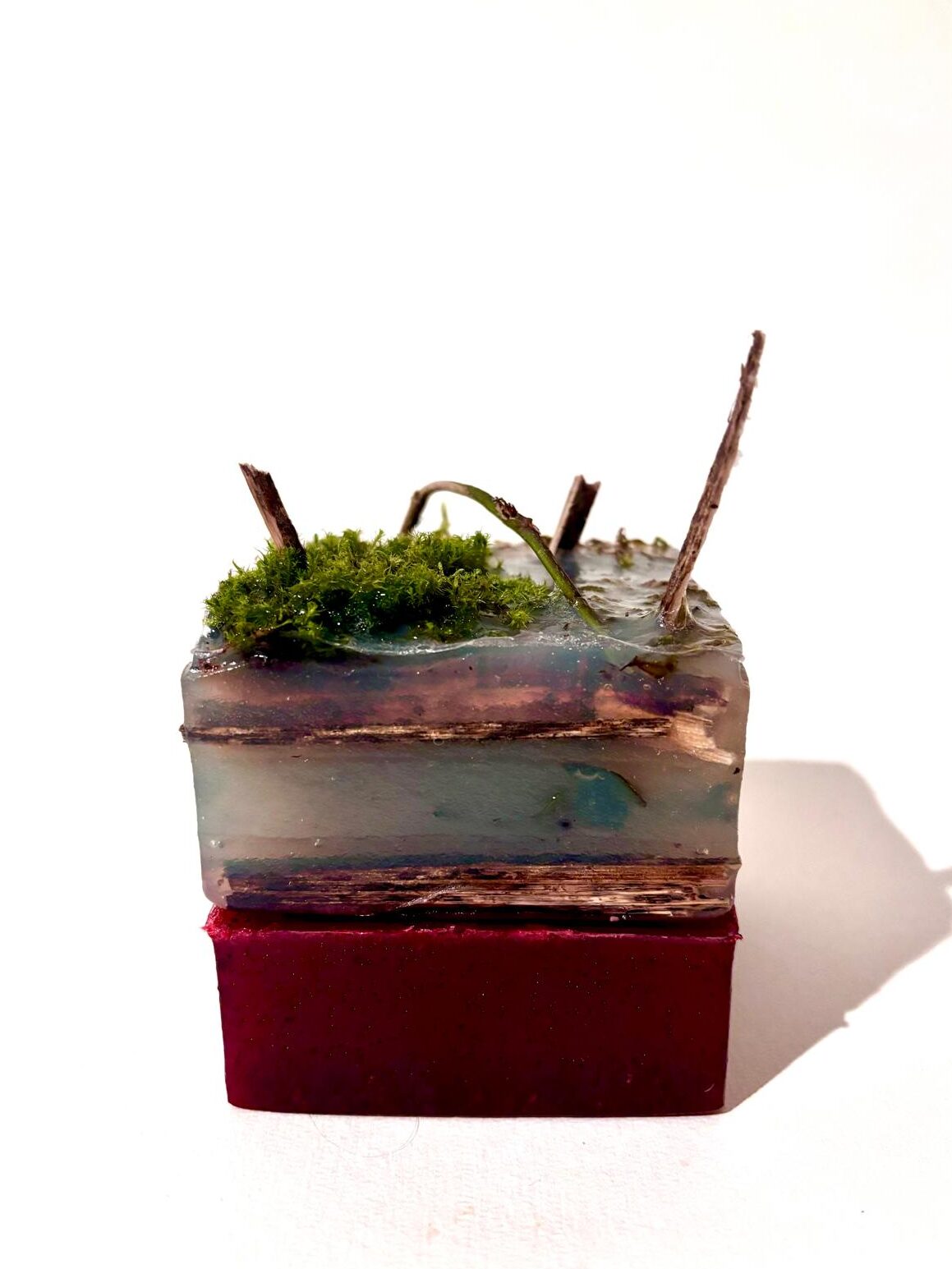
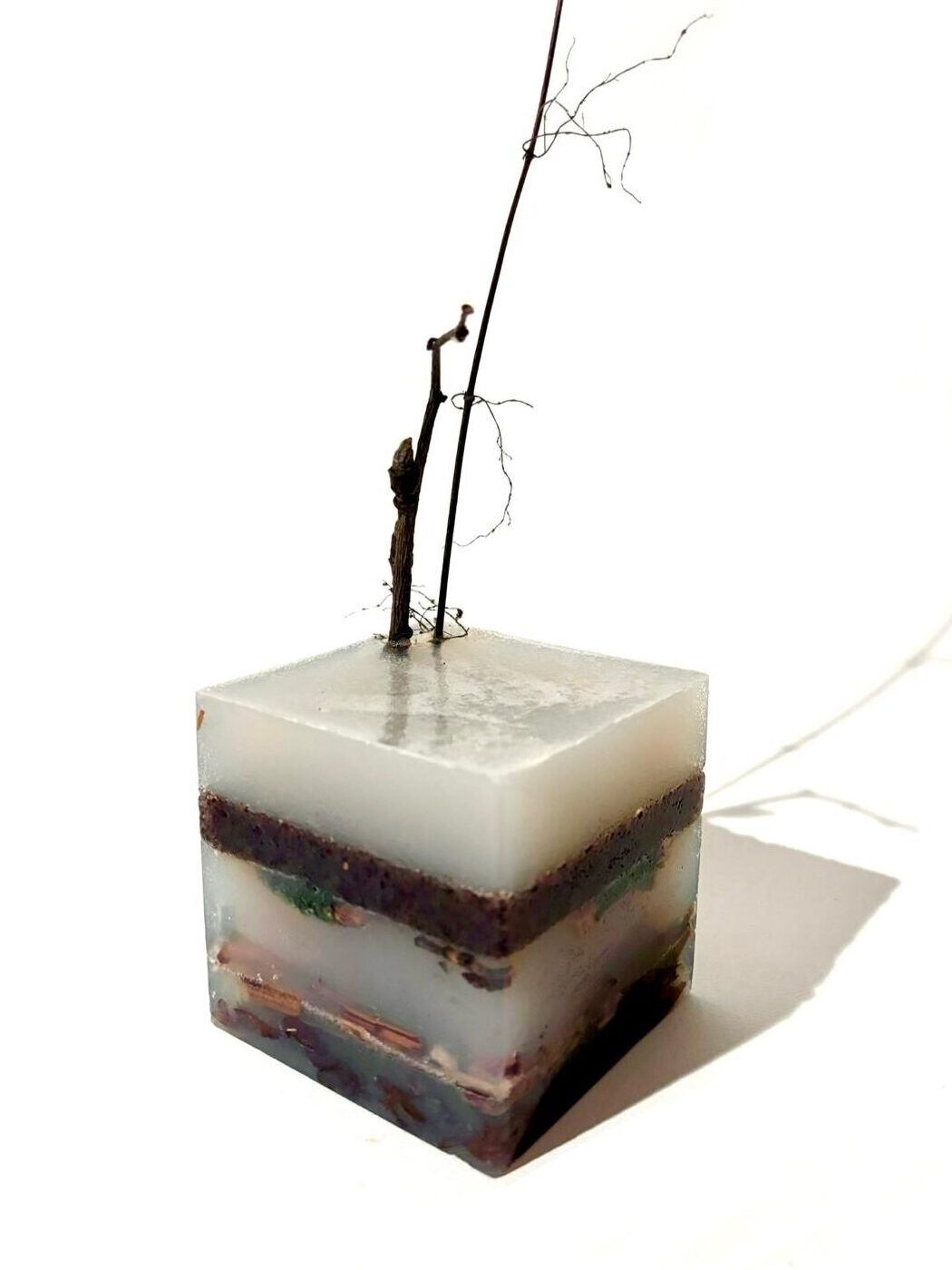
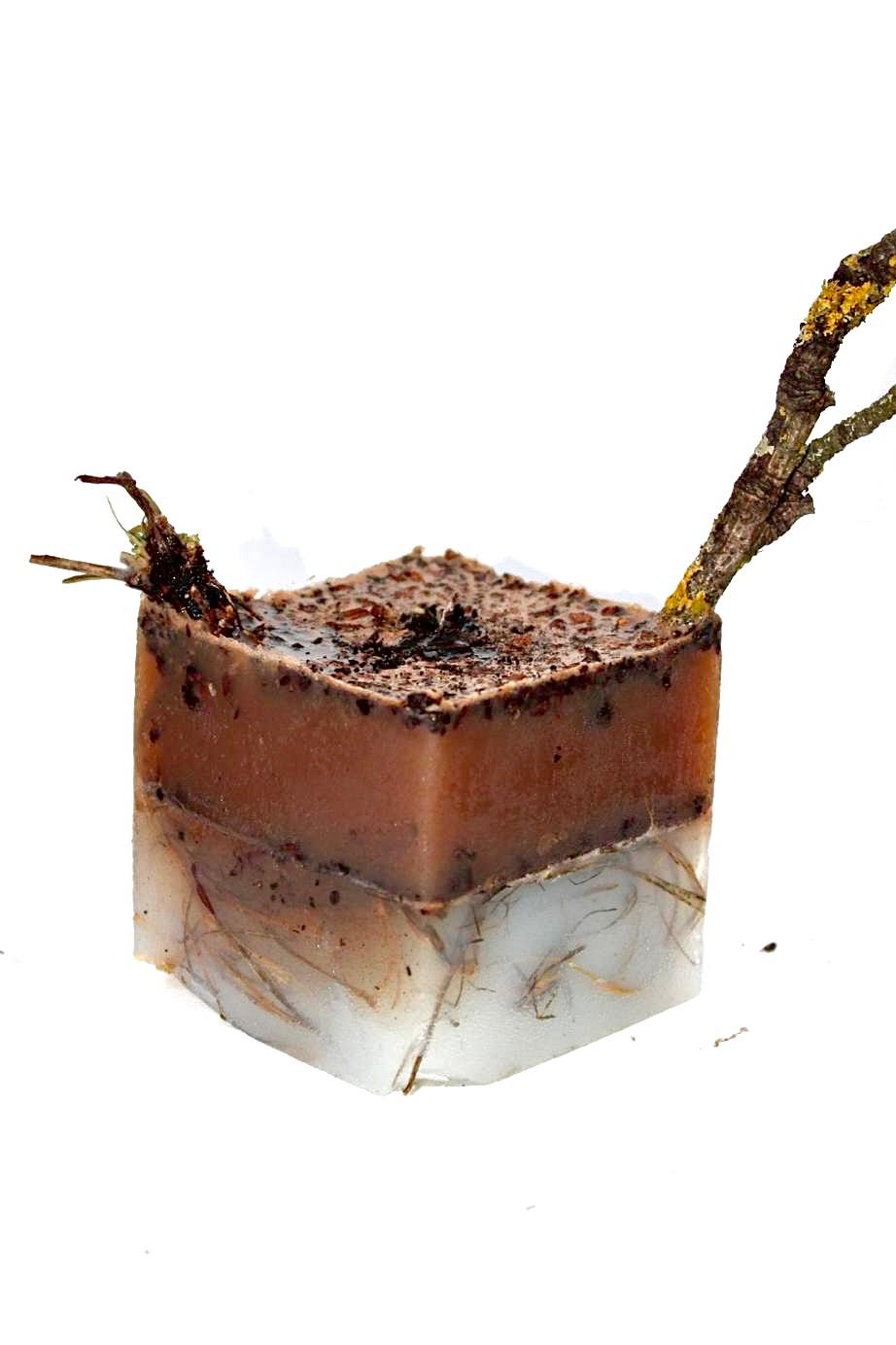
Bioplastics have both organic and synthetic qualities, blurring the boundary between the synthetic and the natural. The cubic sculptures in this exhibition emerge from observation and response to environmental contexts, translating shapes, processes, and material conditions into constructed forms. Each cube operates as both a contained structure and a site of material instability, where surface, edge, and volume shift through casting and degradation. Installed as a dispersed group, the works organise space through distance, density, and proximity, where these relationships become part of the composition. There is a tension between control, through structural decisions and geometric constraint, and the organic processes that gradually alter the form.
Creating using only biodegradable materials, I am not only conscious of my environmental impact but also intentionally create my works with the eventuality of them returning to the earth. The works are in a constant state of change, never static, and this itself reflects the connotations of emergence and becoming. Barad’s theory of ‘agential realism’ argues that matter and meaning are inseparable, emerging through “intra-actions” rather than previously existing independently. (Barad, 2007) This framework strongly informs my practice, where form is not imposed but arises through material processes such as drying, distortion, and decomposition. I use algae-based bioplastics and foraged materials to create pigments and textures within the sculptures. Being intentional with my material selection, I similarly approach my casting, creating layers or structures inspired by forms I have observed in the natural world. Additionally, using specific ratios of components, I can give my works predictable characteristics, including translucence, density, and flexibility.
My practice has emerged from extensive research and experimentation with bioplastic media, alongside the philosophy of materiality and inter-connections within ecosystems. With the emergence of new, alternate forms, my sculptures hold co-agency that ‘depends on the collaboration, cooperation, or interactive interference of many bodies and forces.’ (Bennett, 2010). Through the ‘materiality’ of form and energy, the works extend beyond what is observable, representing a vast timeline of repurposed energy and matter. There is an active suggestion of object-oriented ontology, as the sculptures possess their own agency and are not confined by limitations of human perception. This is reflected through the decision not to give the sculptures titles, as they can independently dictate how they are perceived.
Overall, my practice explores co-artistry with the environmental world, celebrating material vitality through a temporary sculptural presence.
References:
Barad, K. (2007). Meeting the universe halfway: quantum physics and the entanglement of matter and meaning. Durham, N.C. ; London: Duke University Press.
Bennett, J. (2010). Vibrant Matter: A Political Ecology of Things. Duke University Press.