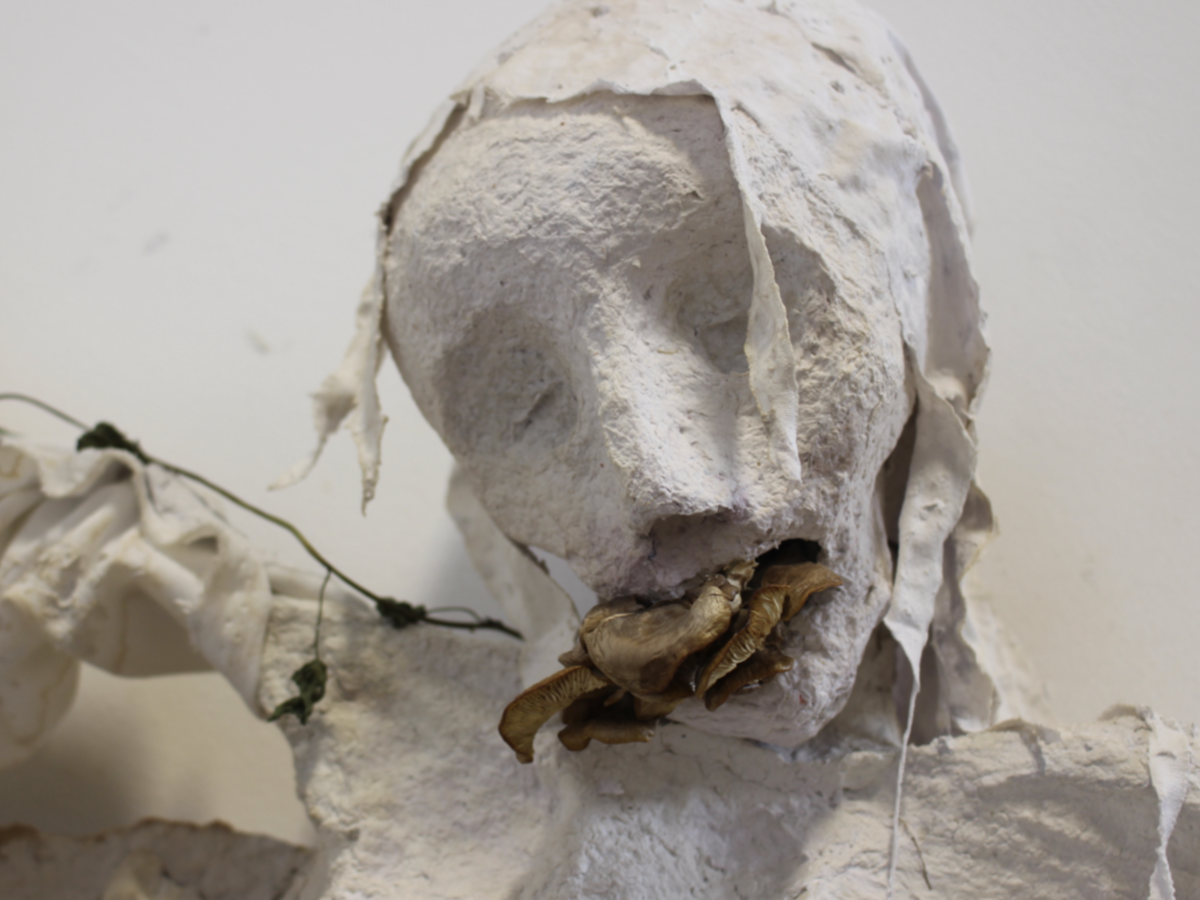
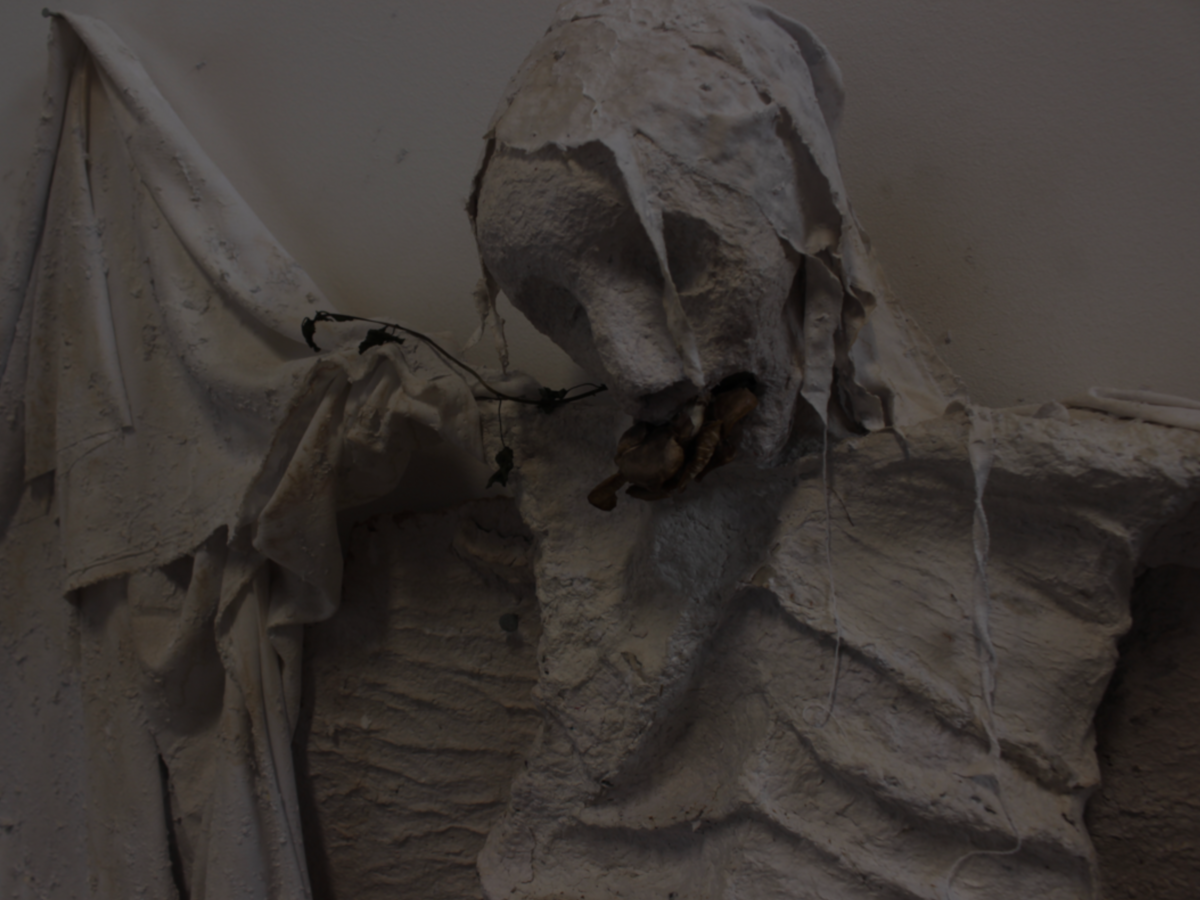
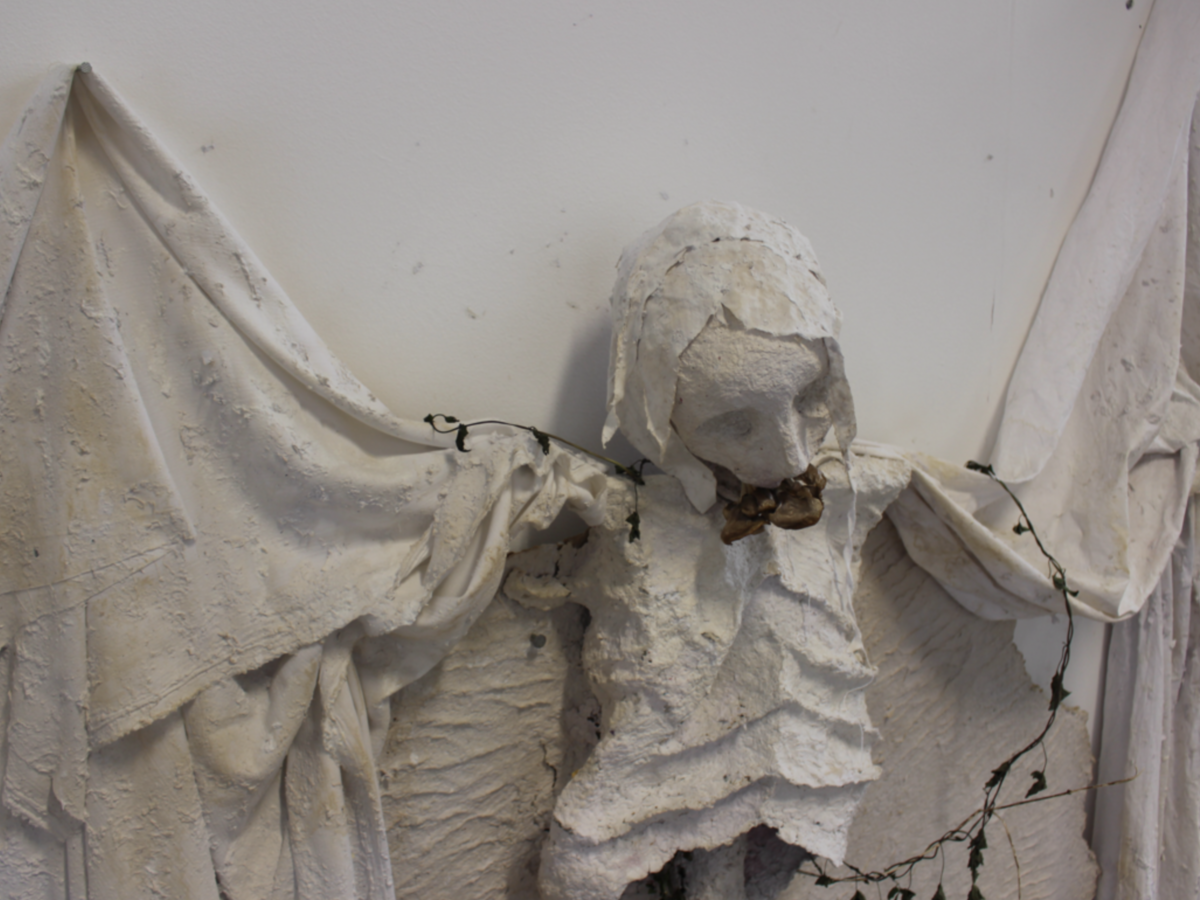
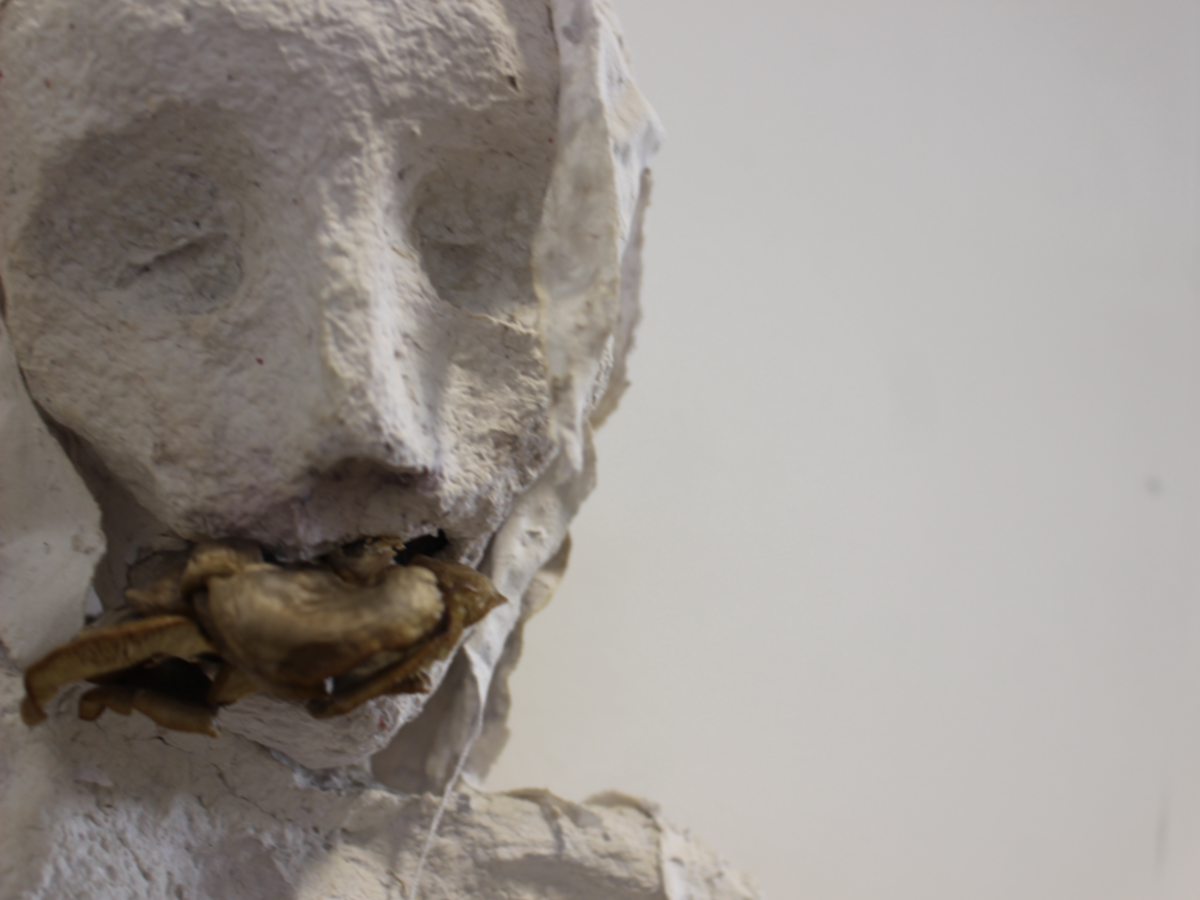
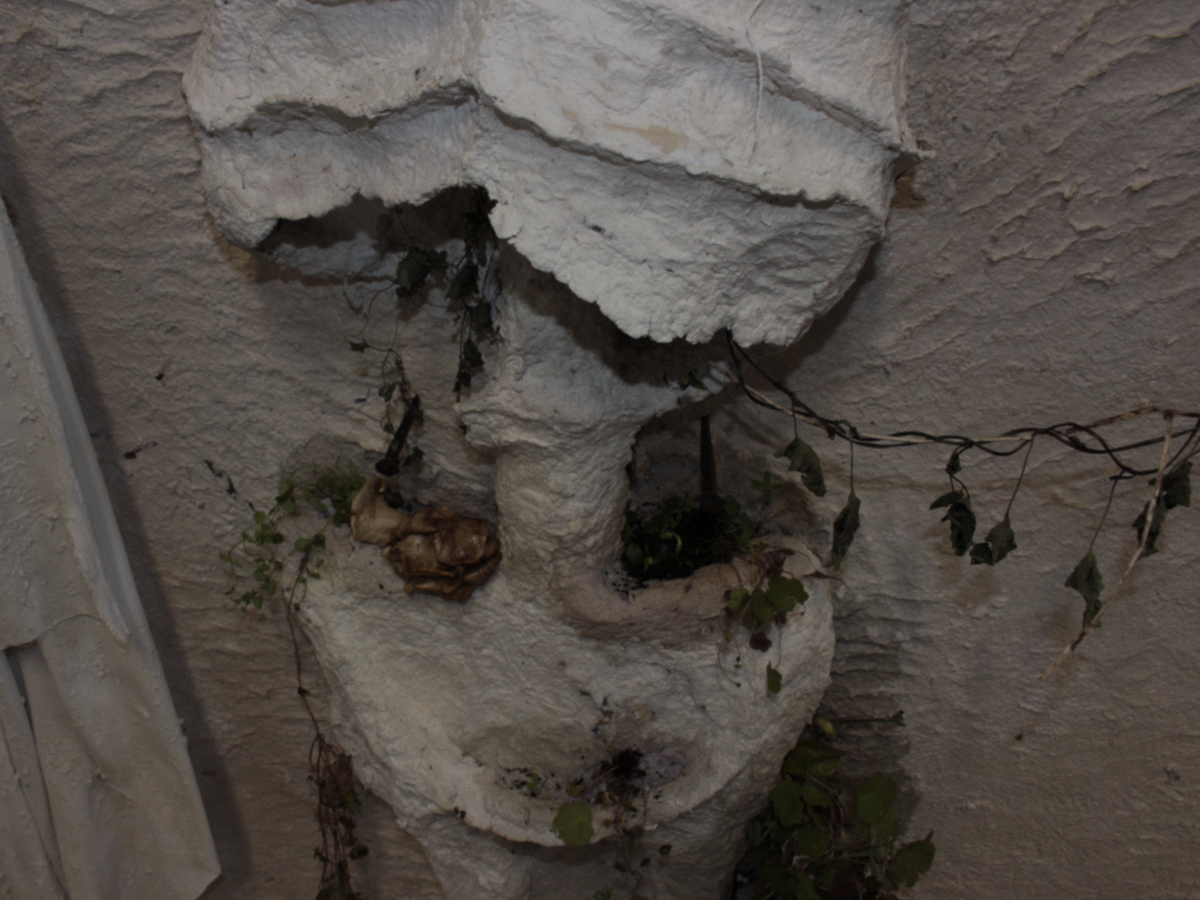
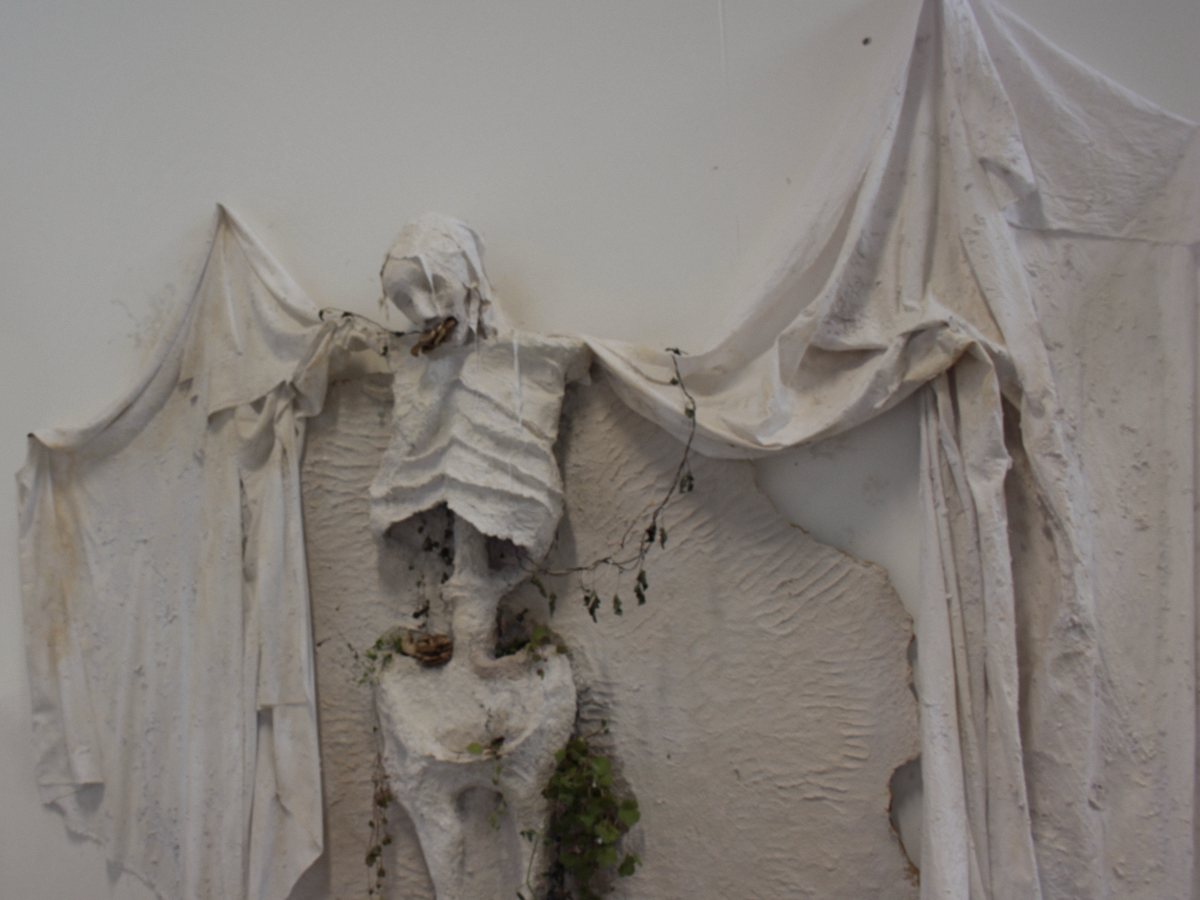
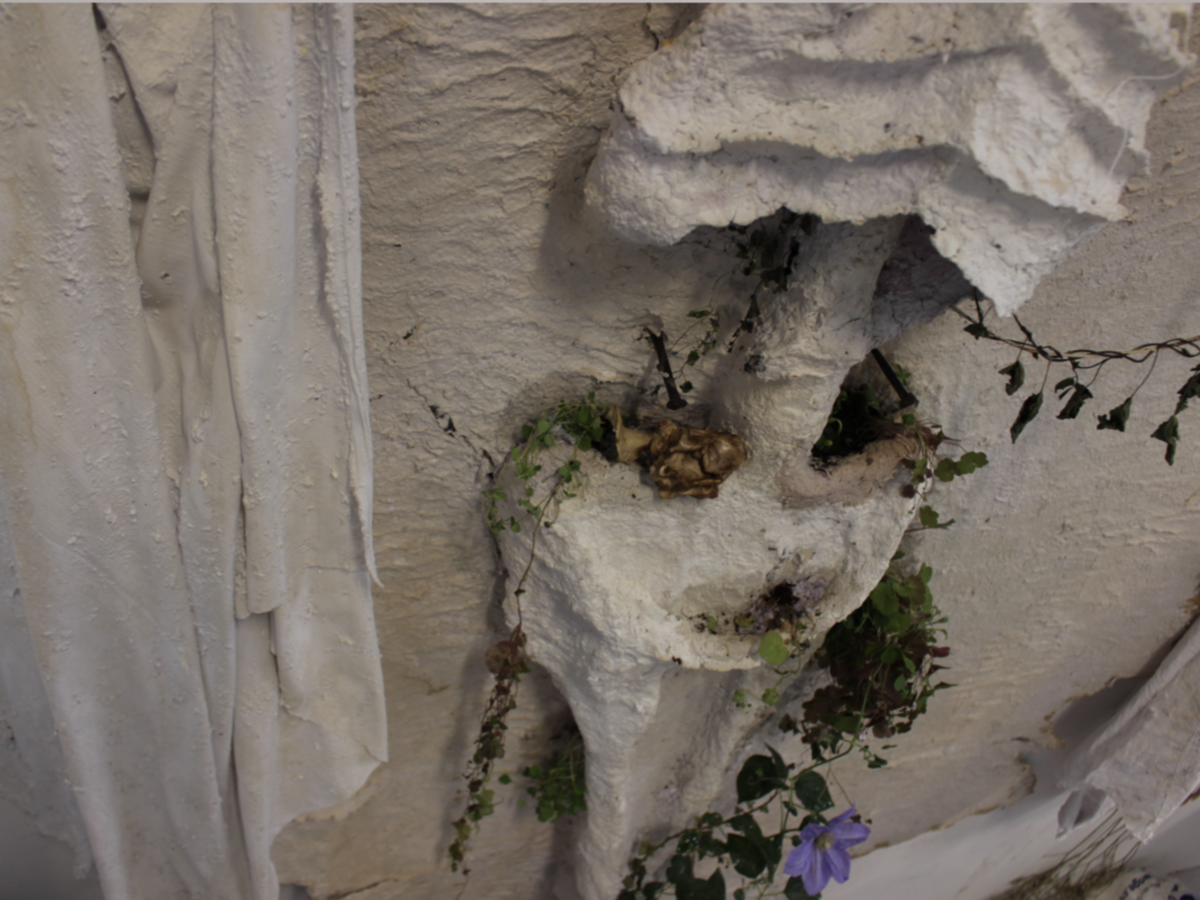
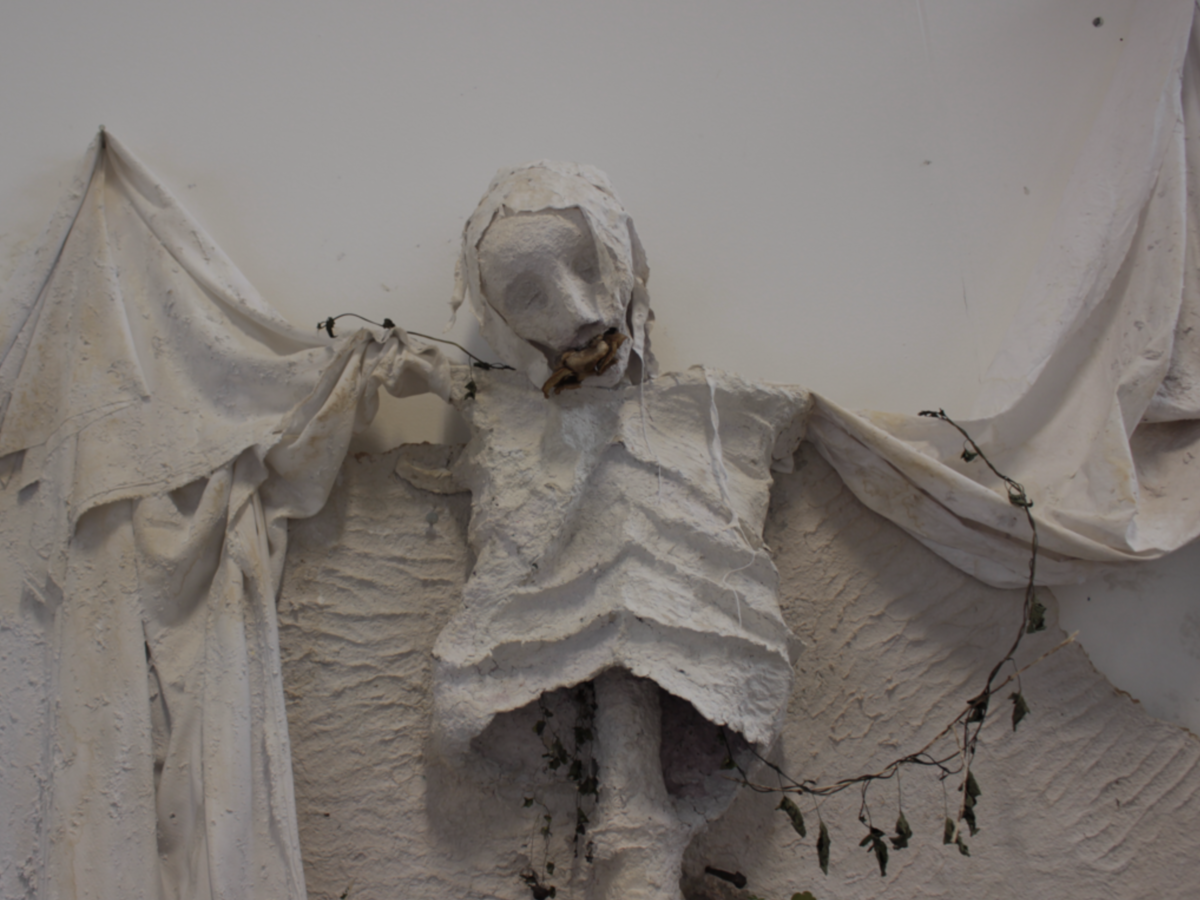
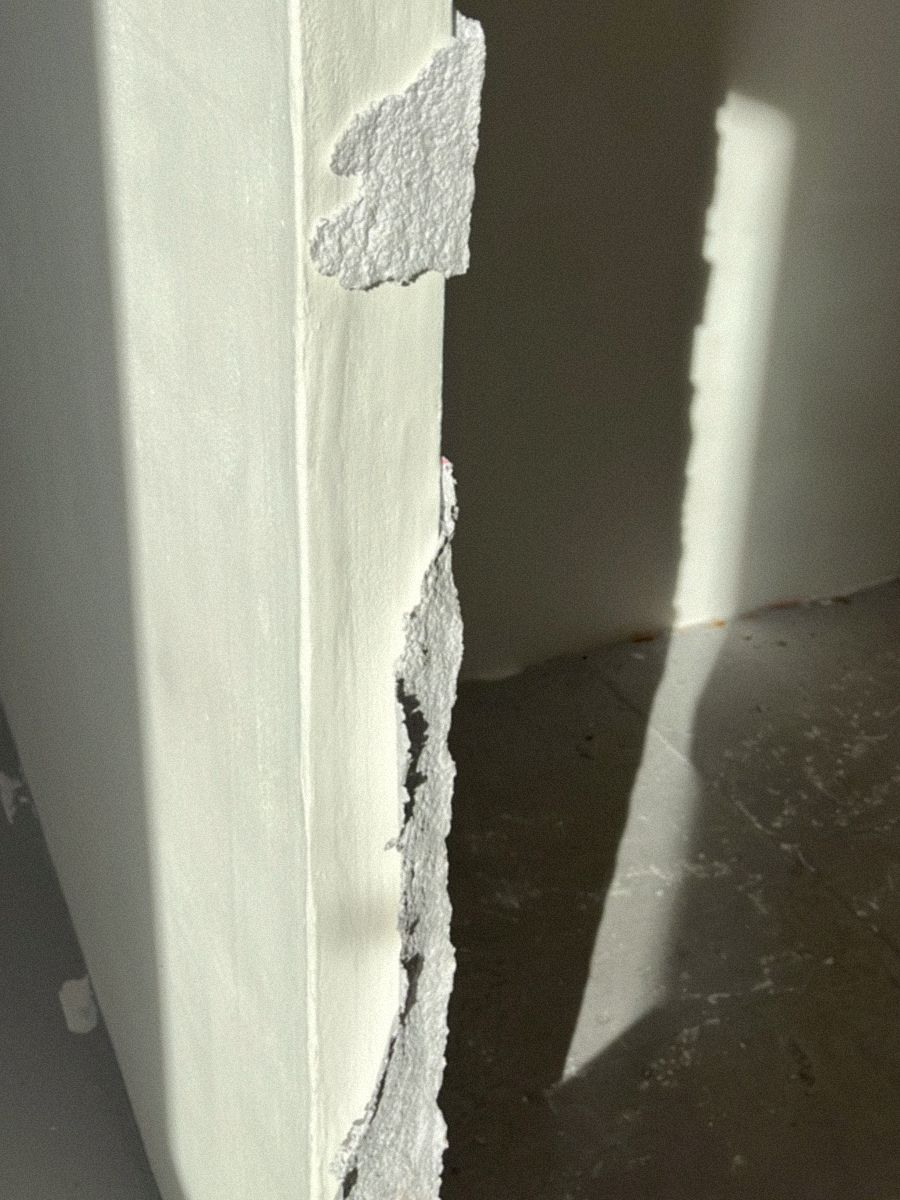
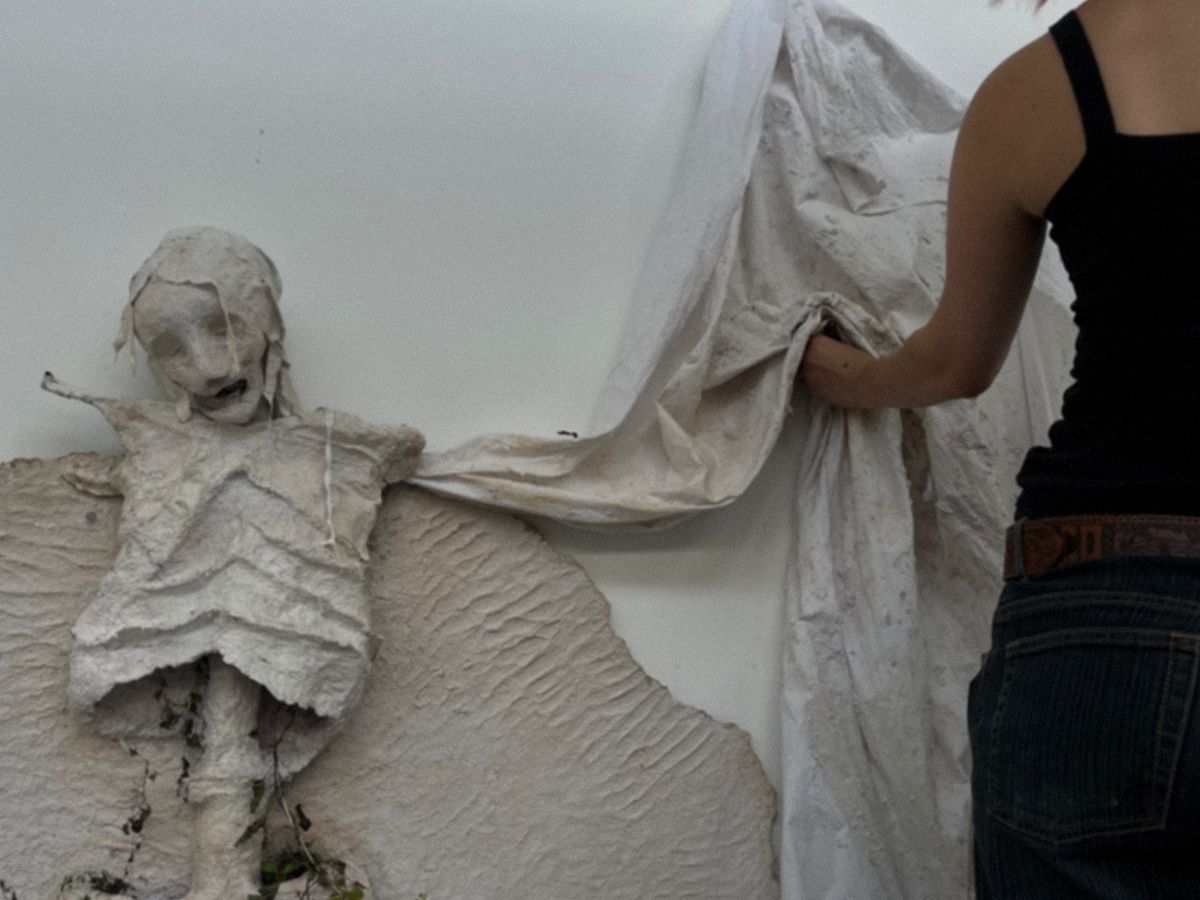
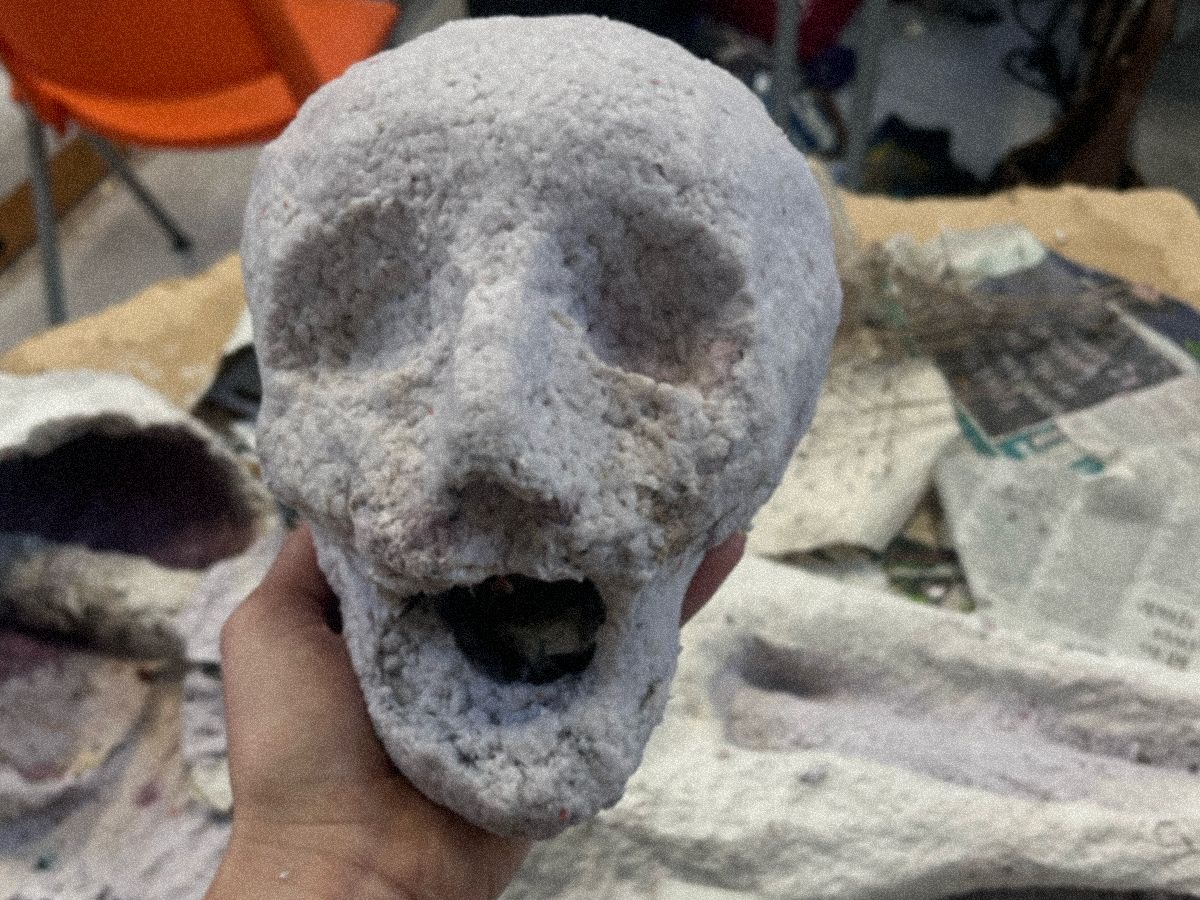
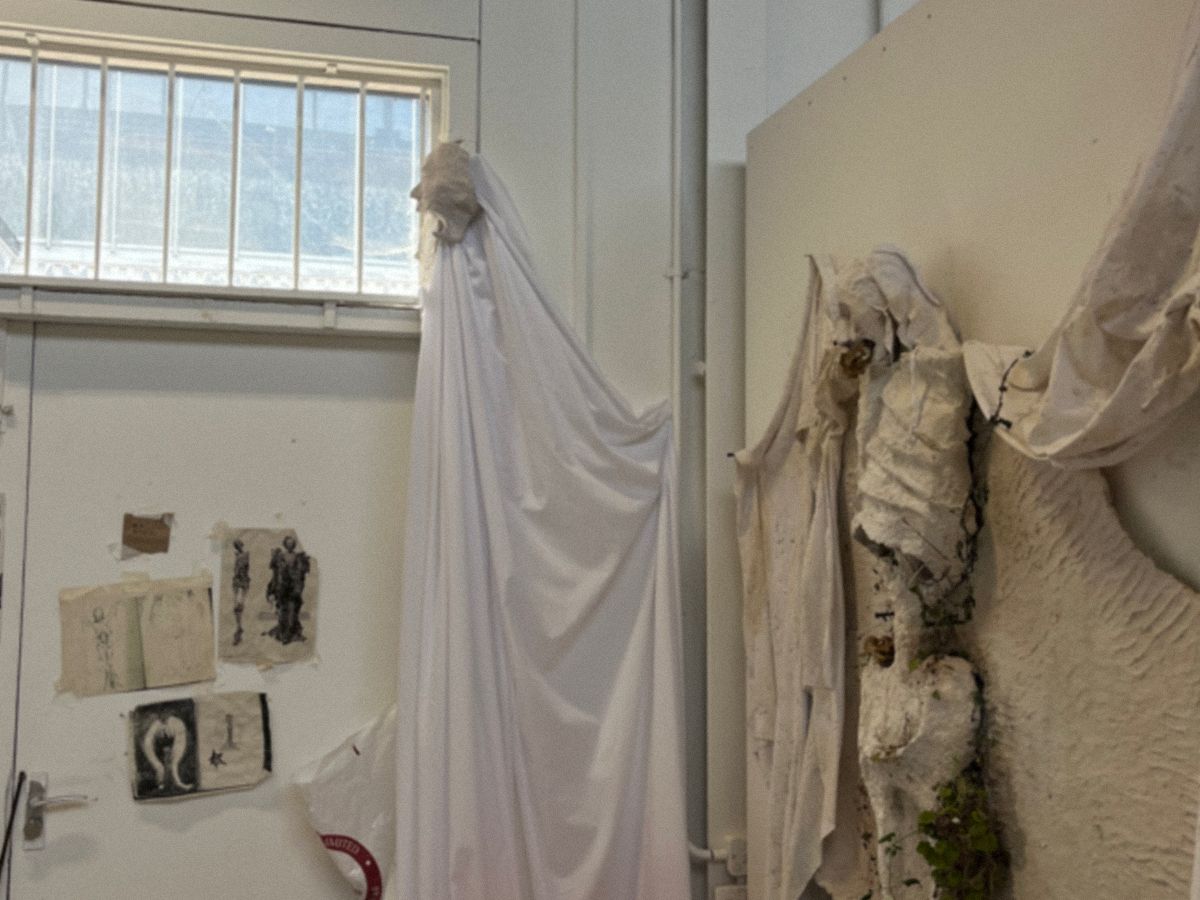
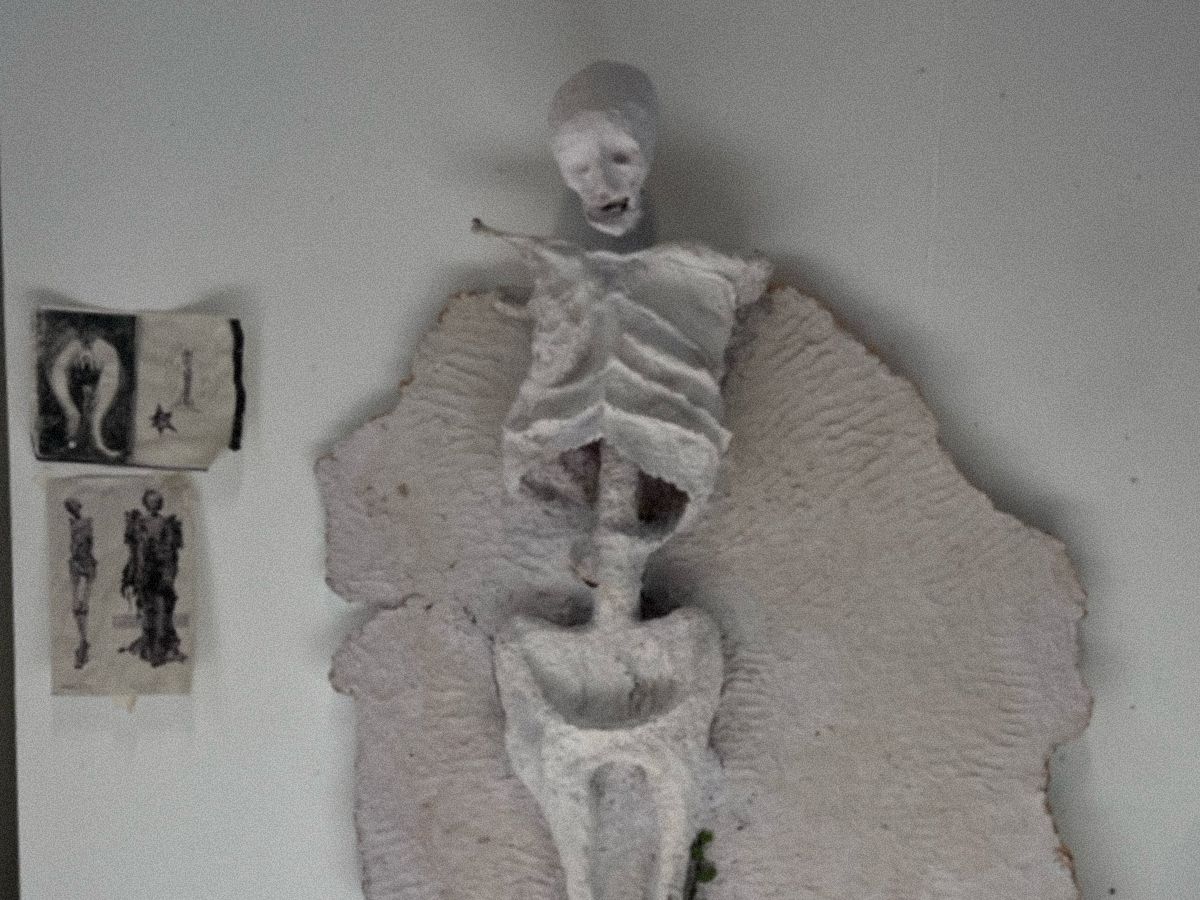
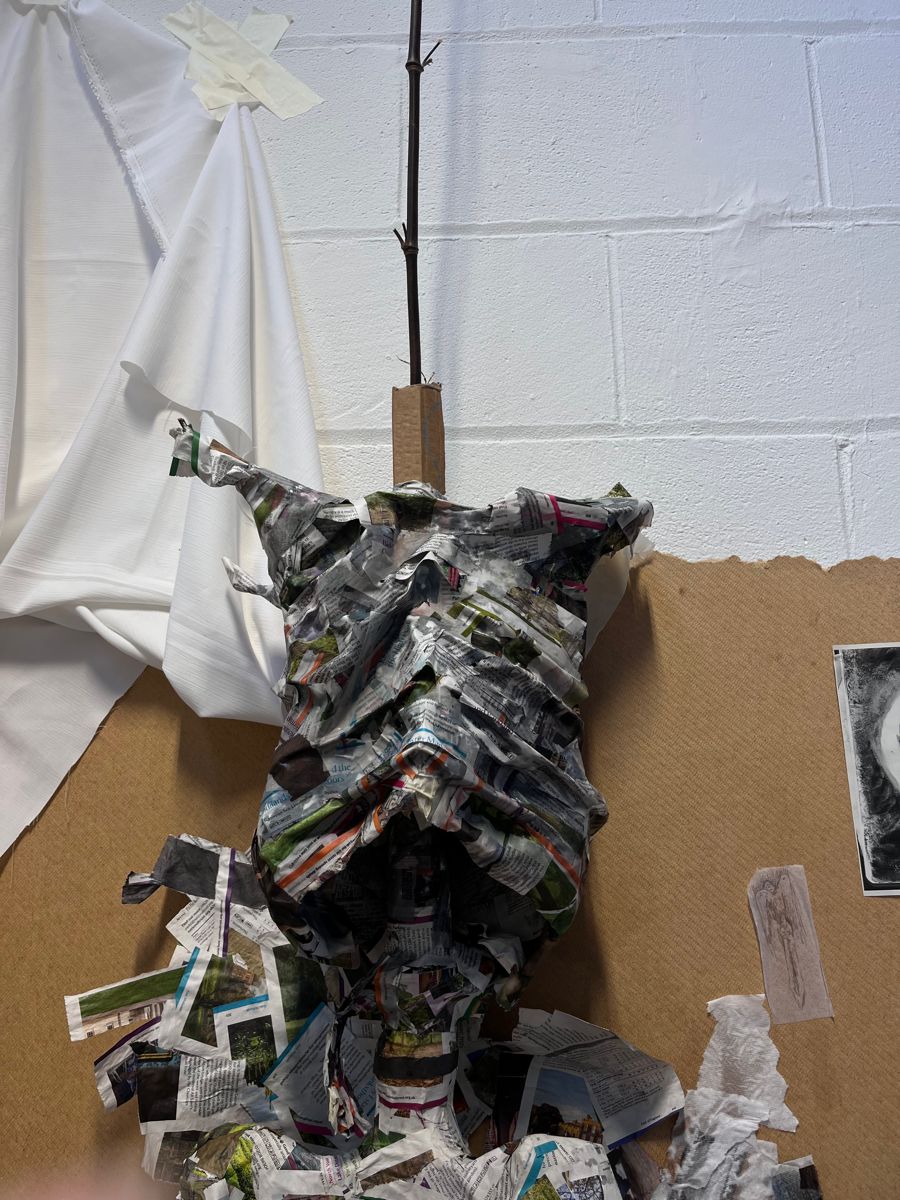
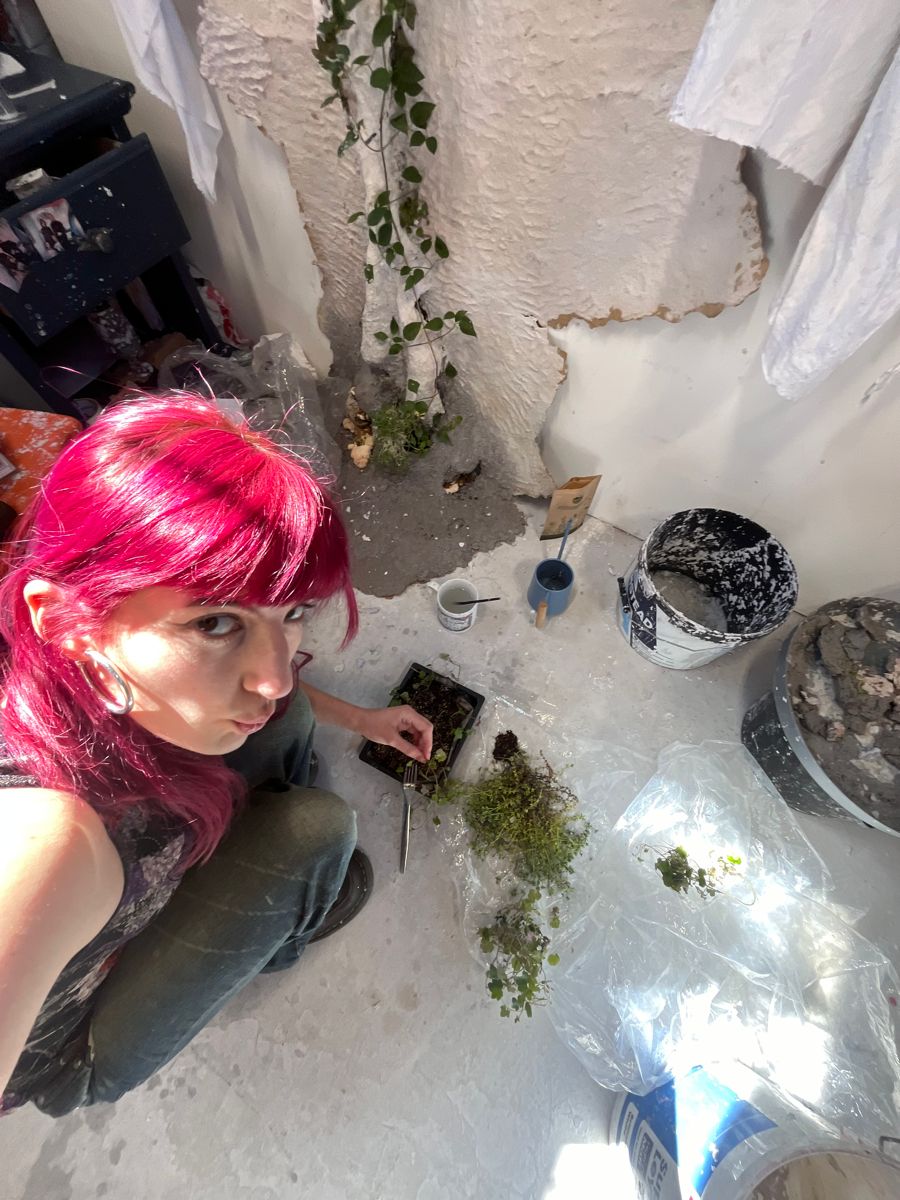
With a background in ceramics and plaster, my sculptures have moved forward into entirely recycled and biodegradable materials in consideration for the planet. My work navigates complexes of guilt and grief represented through the decaying human form.
‘The Garden of Earth For Our Delights’
How much is a life worth?
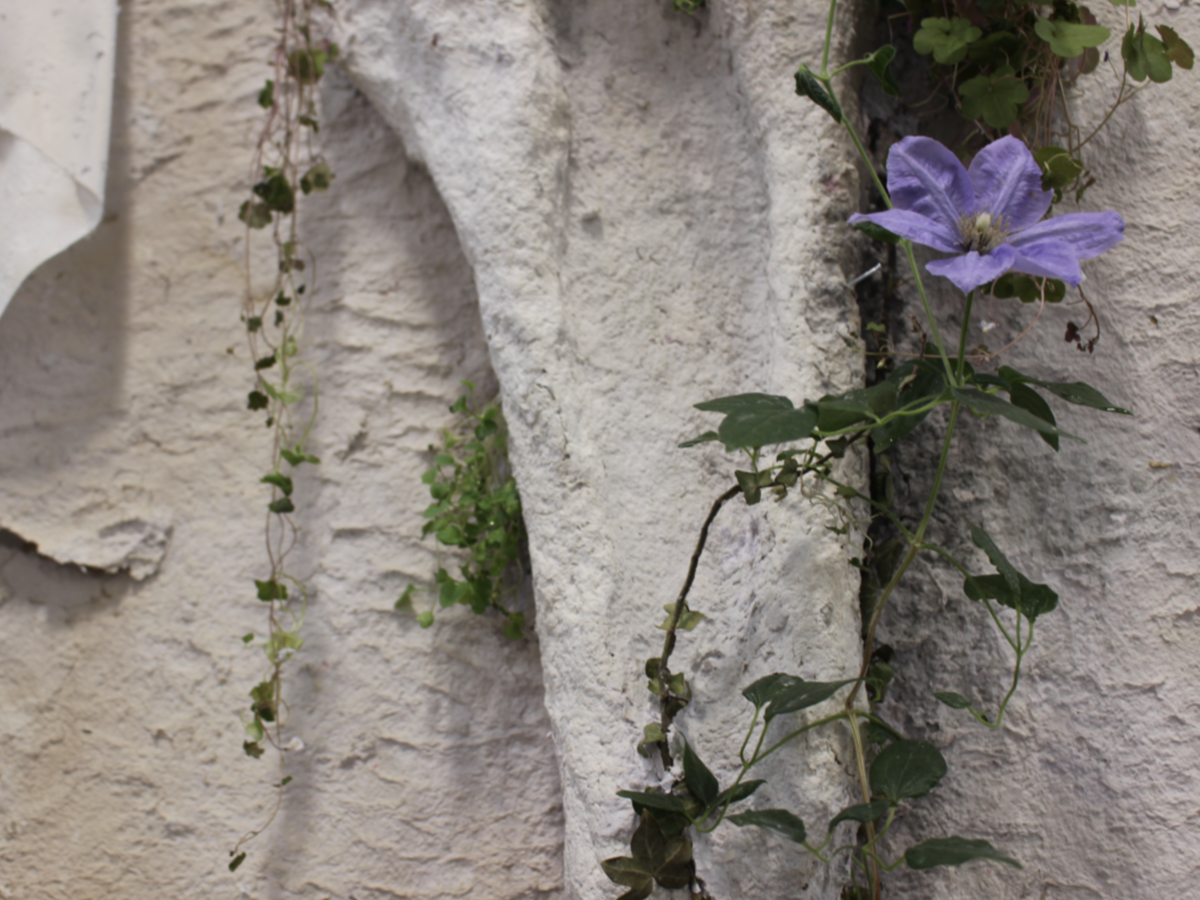
The image of decay in human form is juxtaposed by the growth of plants and mushrooms that feed on what was once living flesh. A symbol of hope for regeneration, it brings into question the perceived worth of a life, and the lessening of value assigned by humanity to other species that we share our Earth with.
Was the Earth created for us? Are human beings more deserving than any other creature?
The instinct of every species is to survive. The inhabitants of Earth are in a constant cycle of destroying each other in order to prosper themselves. Humanity are no different- but the extent to which we continue to destroy is unforgivable. Whereas other species fight for survival, humanity will wipe out whole species to aleviate an inconvenience. As individuals, we can make a difference and counter this damage. We can make small decisions every day to tread lighter on the Earth, benefitting plants, animals and humans alike. My work questions the role of art in the anthropocene, what is ‘worth’ destroying for and what is ‘worth’ protecting.
I encourage viewers to consider their cohabitation in the world. The earth is not the possession of humanity, we do not live here alone. Destruction of the self won’t prevent destruction of the planet. You can better affect the environment by learning and growing, being considerate of each other as well as yourself, and we can thrive amid the blooming flowers if we nurture all of nature.