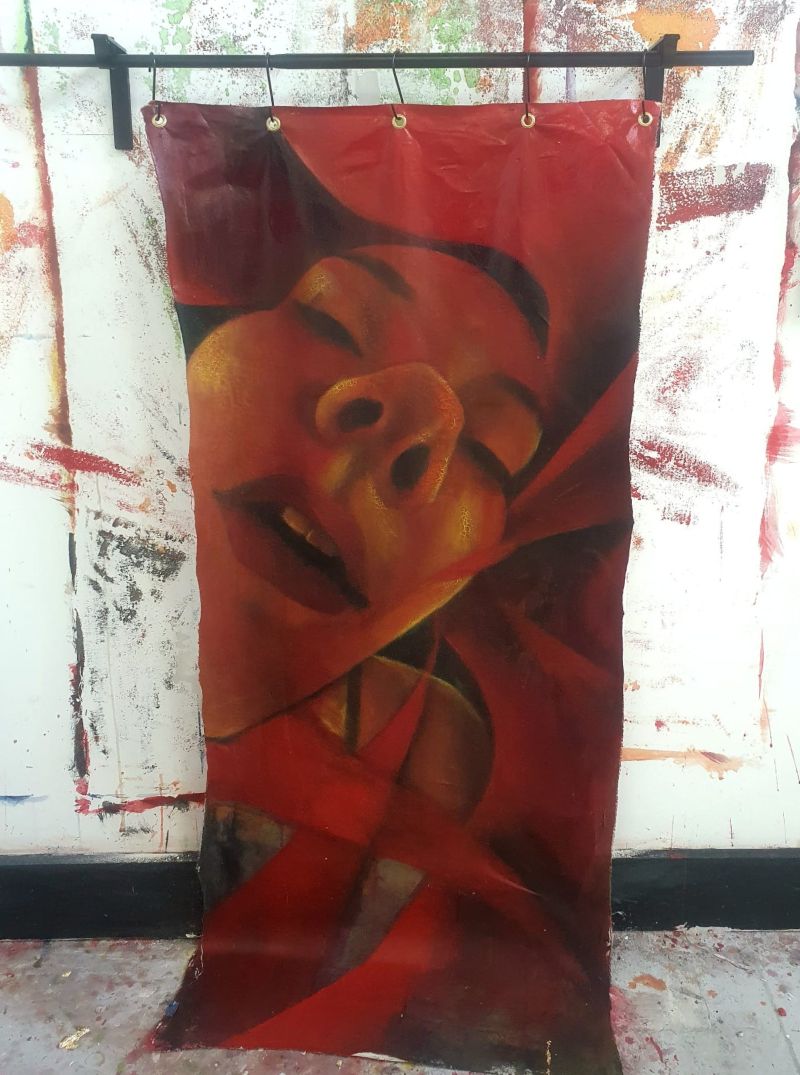


My figurative paintings attempt to reclaim the female body as a muse using traditional depictions of flesh and drapery. The muse is tightly confined into a visceral, womb structure, where she has the autonomy to choose what the viewer sees.
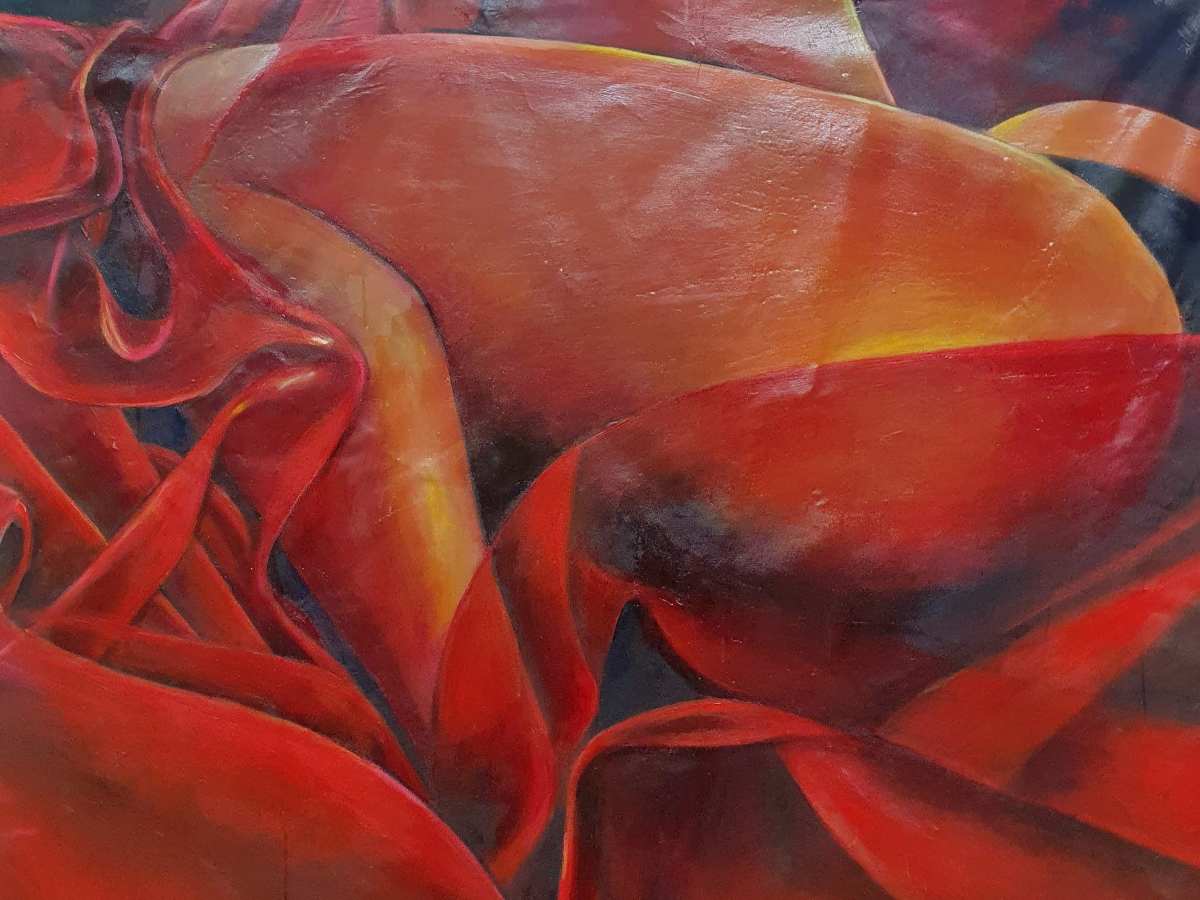
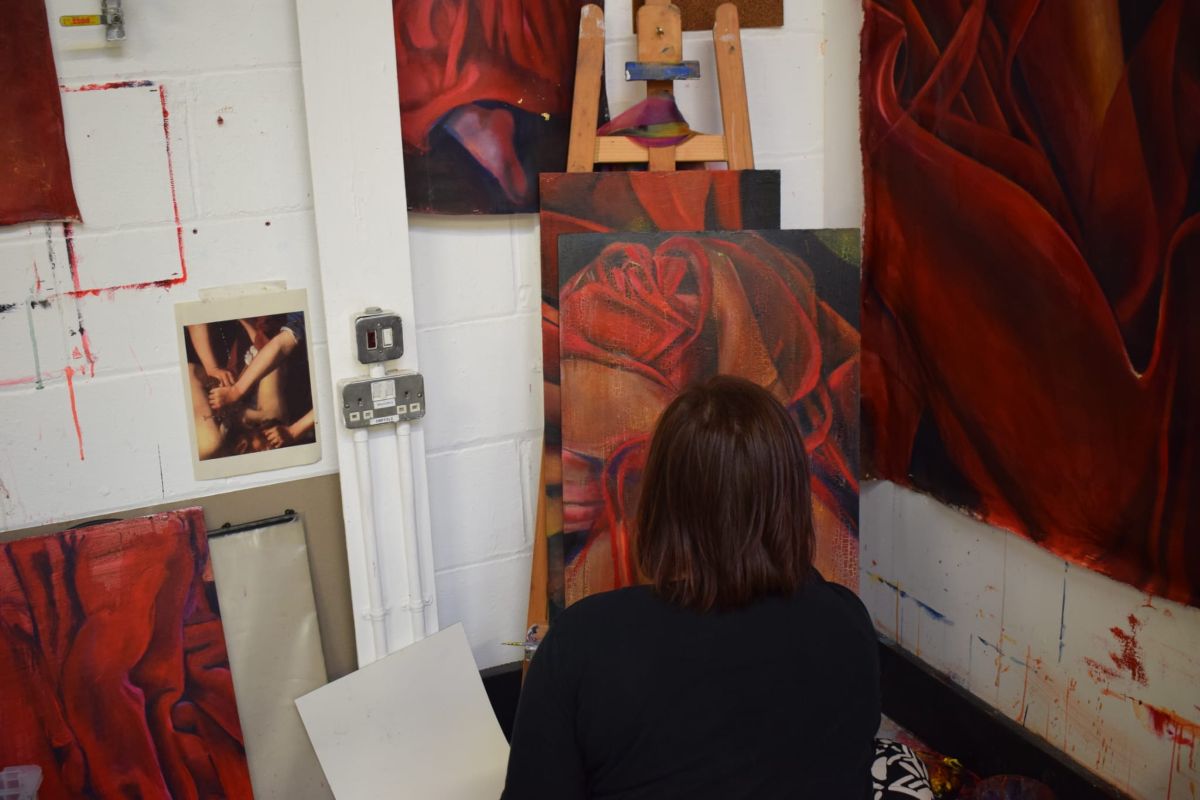
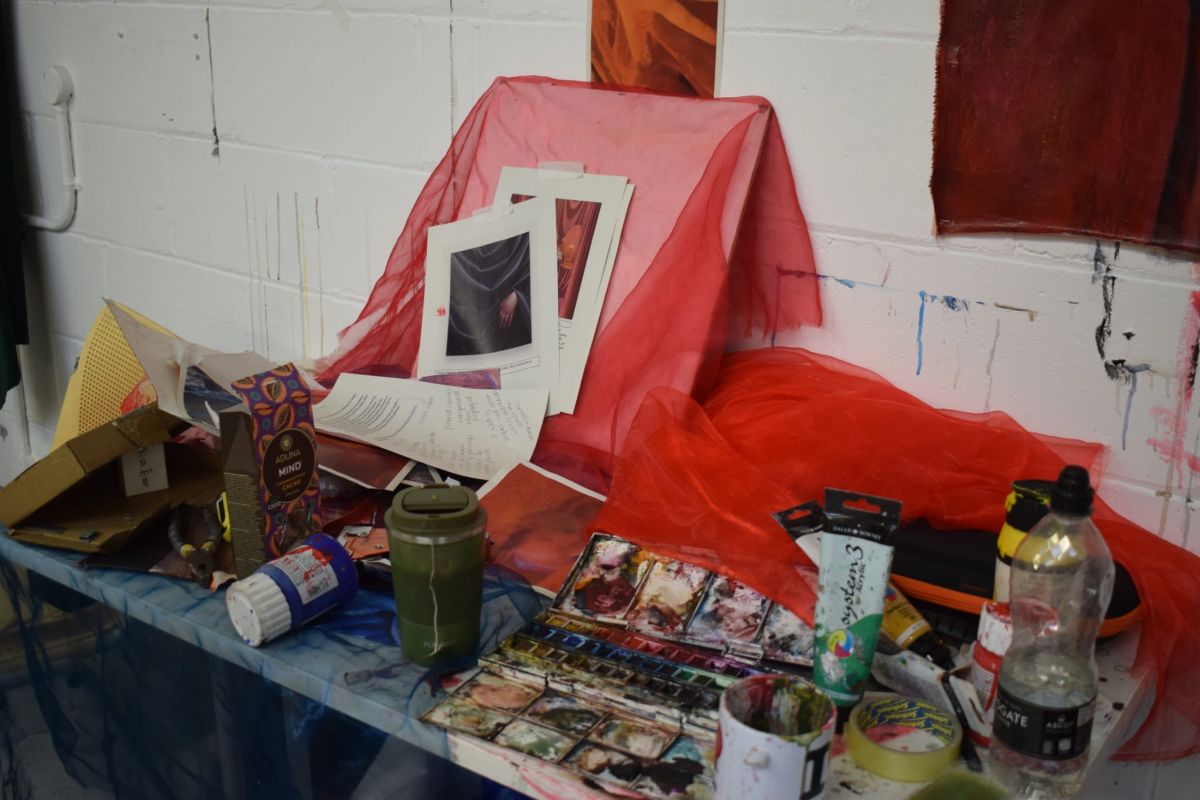

My figurative paintings attempt to reclaim the traditionally nude female muse, from a contemporary feminist artists’ perspective. For centuries, the female body has been used traditionally as a muse within the male centric art canon, often draped with fabric and painted to showcase an artist’s painterly talents. She is often an object to be looked at and studied by the viewer.
My focus within my practice is to give the female muse within my paintings a sense of autonomy and awareness. She is mindful of the viewer watching her and she chooses what we see. Although my paintings are large, they are intensely magnified, obstructing a full narrative, leaving the viewer intentionally uncomfortable.
The muse is wrapped in red, glossy drapery, confined into a tight space reminicent to a womb. It is unclear whether she is safely concealed within a cocoon or whether she is deliberately attempting to hide away.
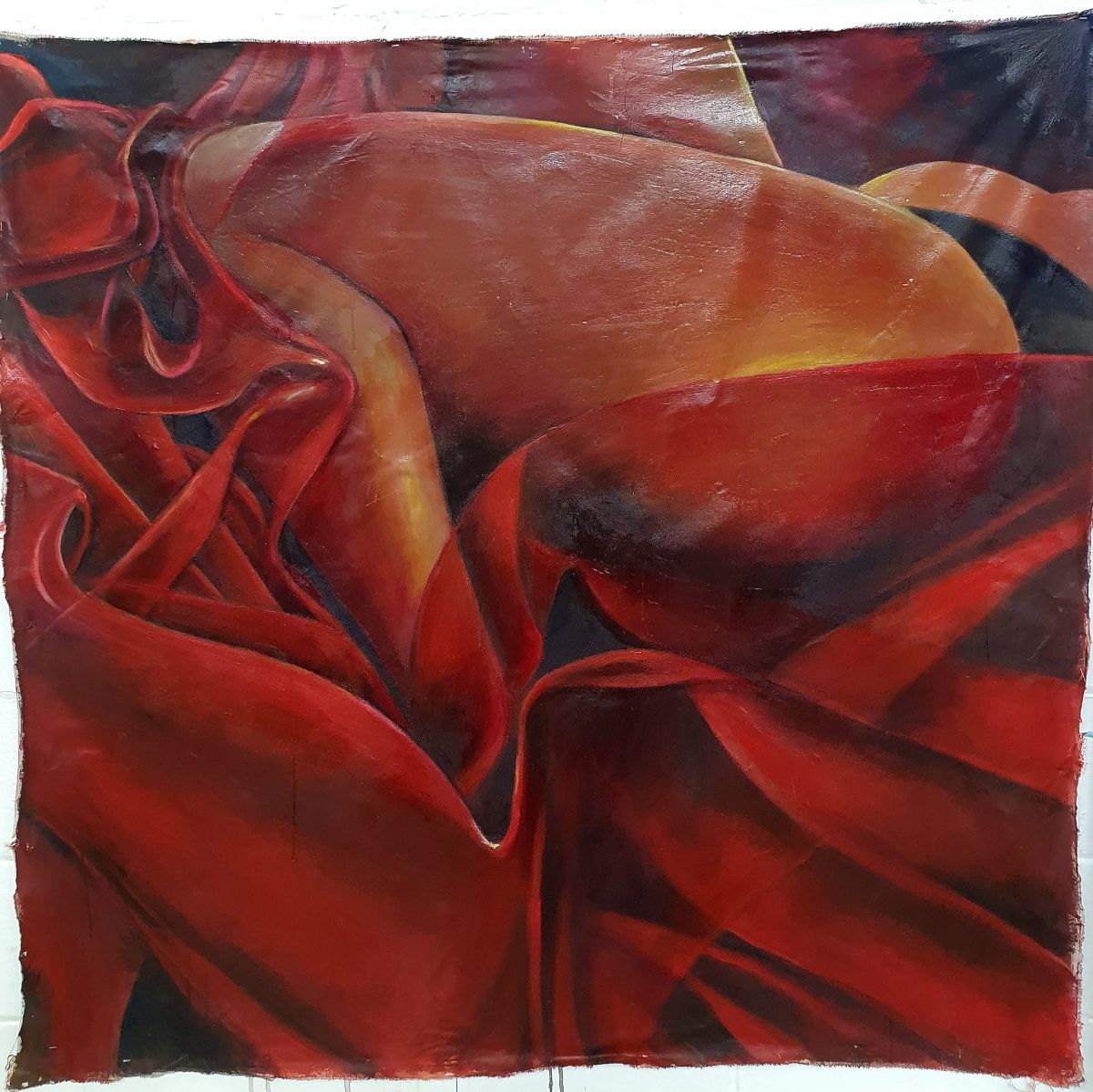
Using deep, continuous tones of red, I explore the feelings associated with red, such as anger, luxury and danger.
For my degree show pieces, I explored details of flesh and drapery to capture an element of naturalism. This is inspired by the Baroque painter, Artemisia Gentileschi, who used naturalism in a empowering manner, by cathartically producing brutal and forceful paintings, using herself as the muse for the female heroes depicted in her work. I carried this catharsis into my own work using feminine rage, building up the colours and battering the surface with my brushes to produce bruised, layered tones of colour.
To make the paintings feel more viseral and internal, I experimented with different glosses and glazes, which gave my work a more leathery, fleshy finish.
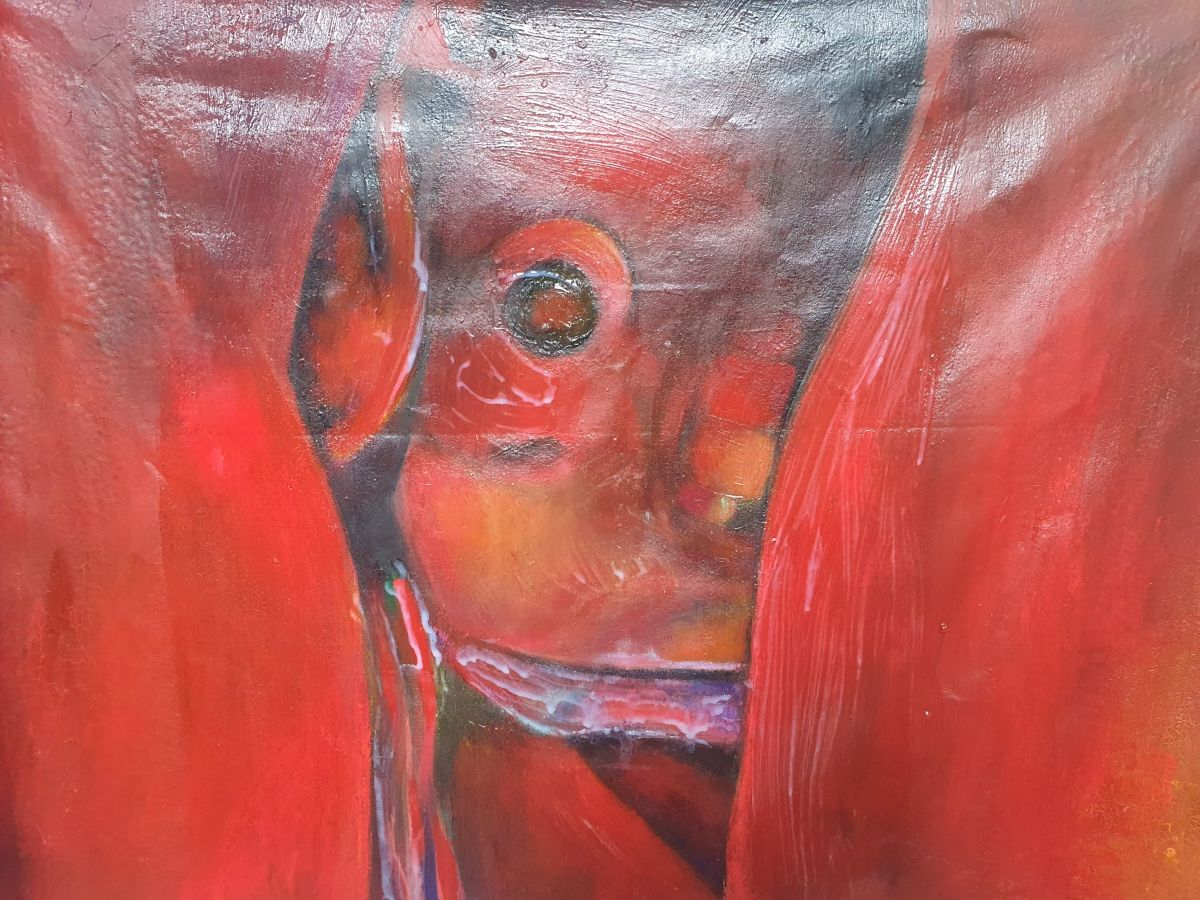
My space has a continuous theme of curtain poles, hinting to a domestic setting linked to gendered roles within the home. This concept derives from Patty Carroll’s photography series: Anonymous Women: Draped (2017), where she confronts hiding, comfort and safety, by capturing staged scenes of women disappearing into fabric and becoming a part of their surroundings, which tackles the pressures and absurdities of our domesticated society.
My work on unstretched calico is riveted, like pierced skin, to enhanced the severity of the paintings. The bruise toned paint stains through the fabric which can barely be seen from behind where it hangs.