Product designer with experience in research, CAD, prototyping, and testing, focused on practical and user-centred design solutions.
StrataKnow your skin. Layer by layer.
An intelligent skin analysis and light therapy device that reads your skin in detail, then treats it precisely at home.
Strata is an intelligent skin-analysis and light-therapy device built for the home. It brings together two things usually reserved for the clinic, precise skin analysis and targeted light treatment, inside a single modular system that comes apart and reconfigures to fit the task.
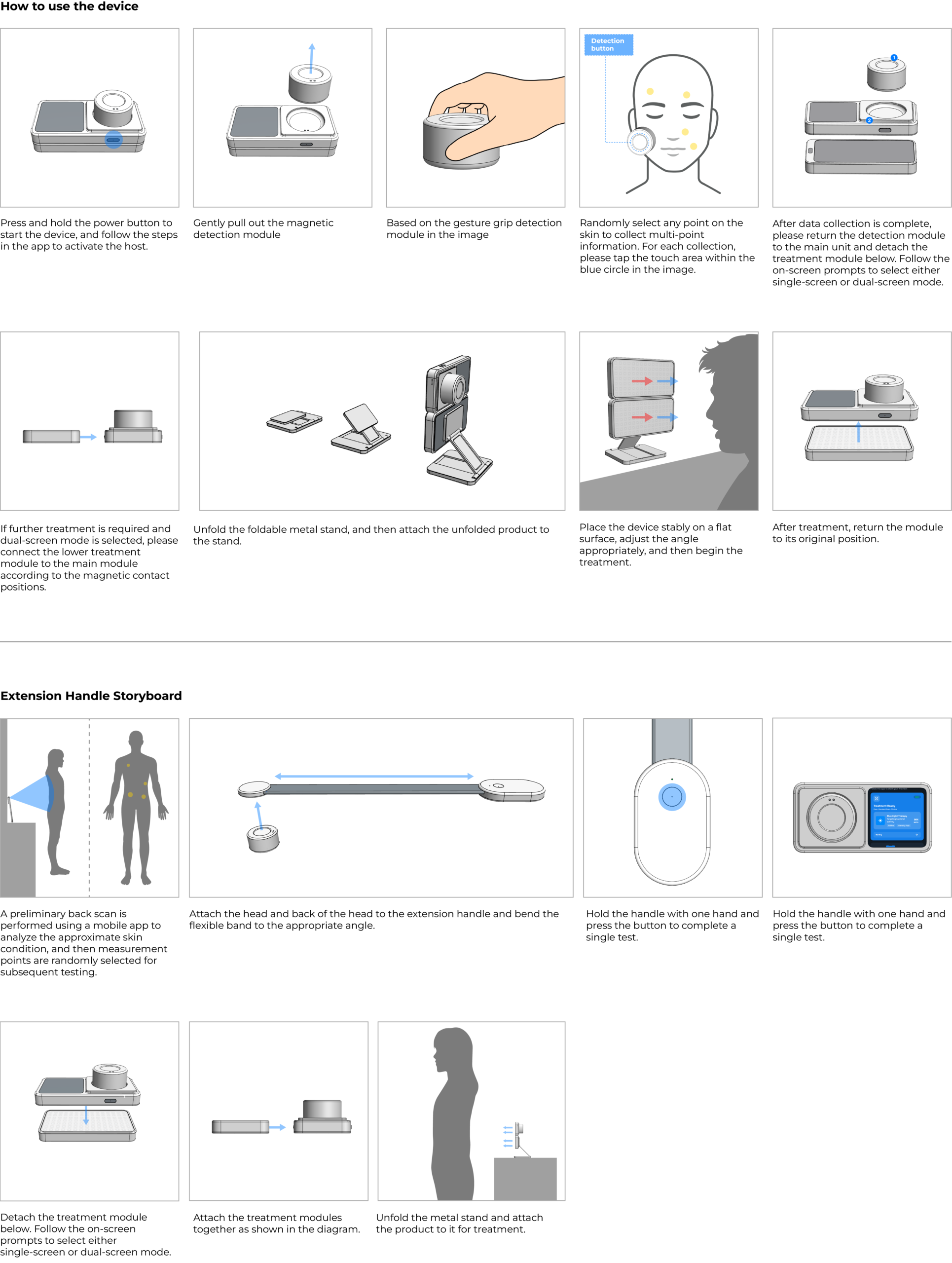
It begins with an app guided scan. The device reads your skin’s overall condition, then selects measurement points across the face or body, capturing data at each one through white, UV and polarised light. This multi spectral detection reveals oil, pigmentation and texture that the eye alone would miss. Once data collection is complete, the detection module returns to the unit and the treatment module takes over, delivering a light routine matched to the results.
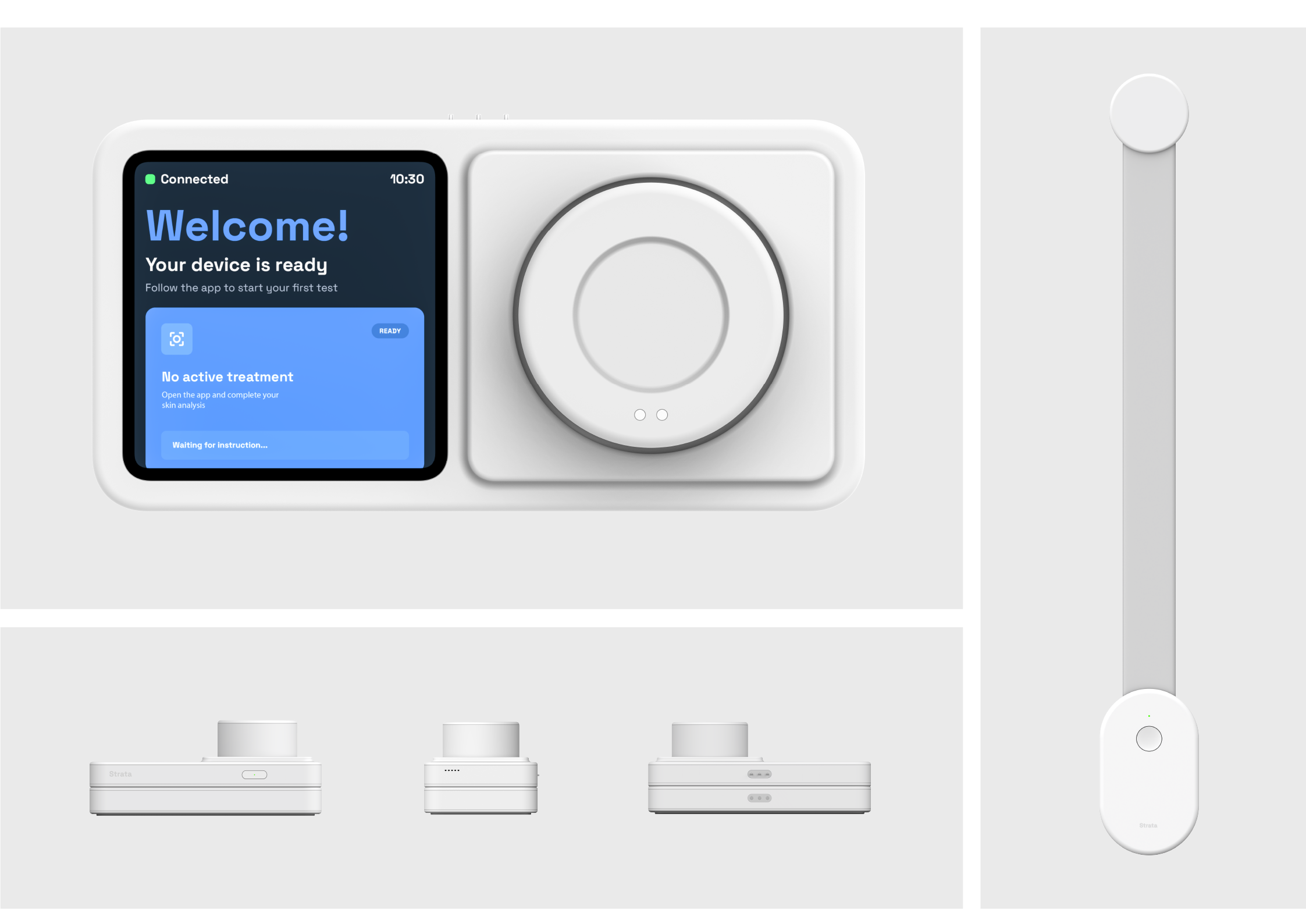
Modules connect and switch magnetically, moving freely between single and dual-screen treatment as needed. An extendable, bendable wand stretches the device’s reach to areas you’d normally never get to, like your back, while a foldable stand makes treatment fully hands-free. Set it down, adjust the angle, and let the device do the rest.
Every component is shaped around the hand and the body, its internal structure resolved through repeated 3D printed iterations that pack the camera, modules and magnetic contacts into a compact, lightweight form. Strata is built to make professional-grade skincare an easy, everyday part of life at home.
Prototype Development
A series of 3D printed internal structure tests were produced to refine the product layout, part separation and assembly logic. These prototypes helped check the position of internal ribs, locating features, module openings and layered housings before moving towards the final physical structure.
Functional Prototype Development
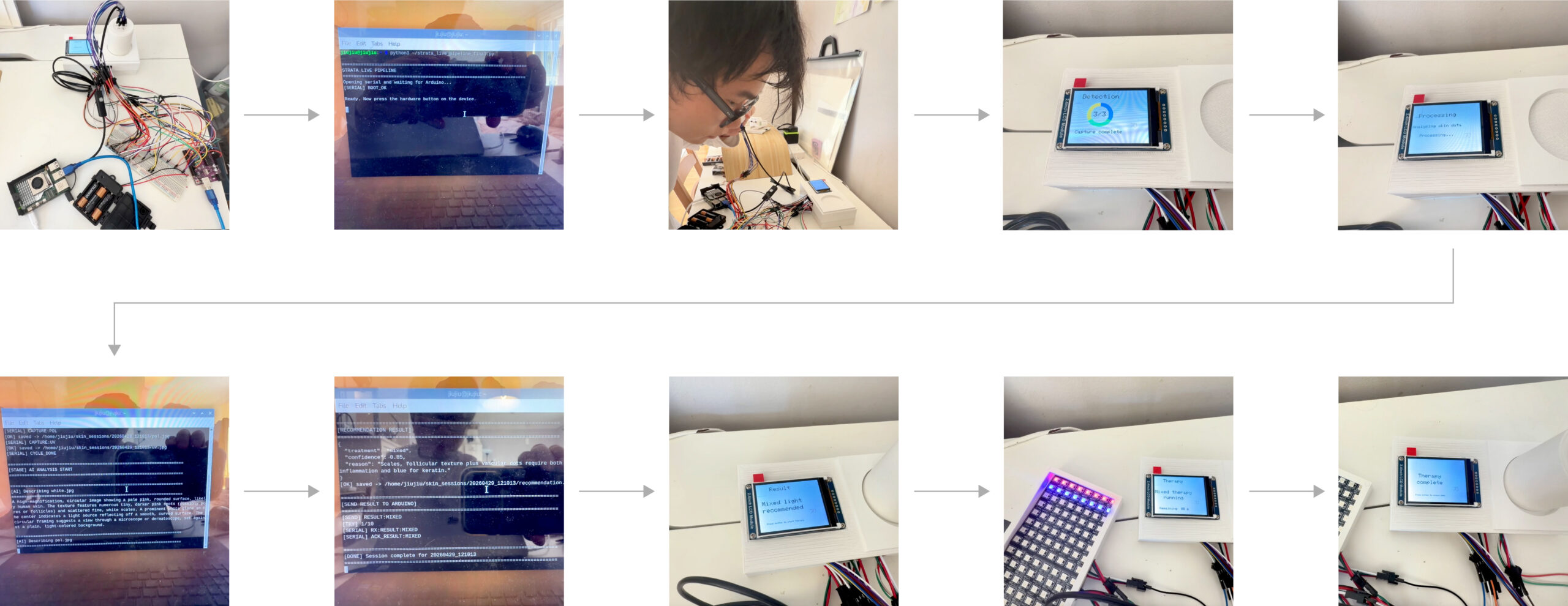
This prototype demonstrates a complete closed-loop workflow, taking it from raw image capture through AI analysis and back to the device executing the recommended treatment. The sequence below follows that flow step by step.
The system runs on two coordinated brains: an Arduino handling low-level hardware control, and a Raspberry Pi handling image processing and AI analysis. The first image shows the prototype in its bare state. This is the stage for proving the circuit logic actually works.
The Pi’s main pipeline launches and waits for the Arduino to boot, then prompts the user to press the device button to begin. The device captures three shots at one point, under white, UV and polarised light, switching the source via the LED matrix and saving each frame to a session folder.
The three images are then passed to an AI model running through OpenClaw, which reads the skin features and outputs a structured recommendation, here mixed light therapy at 0.85 confidence, with its reasoning attached. That result is sent back to the Arduino, which confirms receipt and lights the matrix accordingly, mixing red and blue while the screen counts down to Therapy complete.
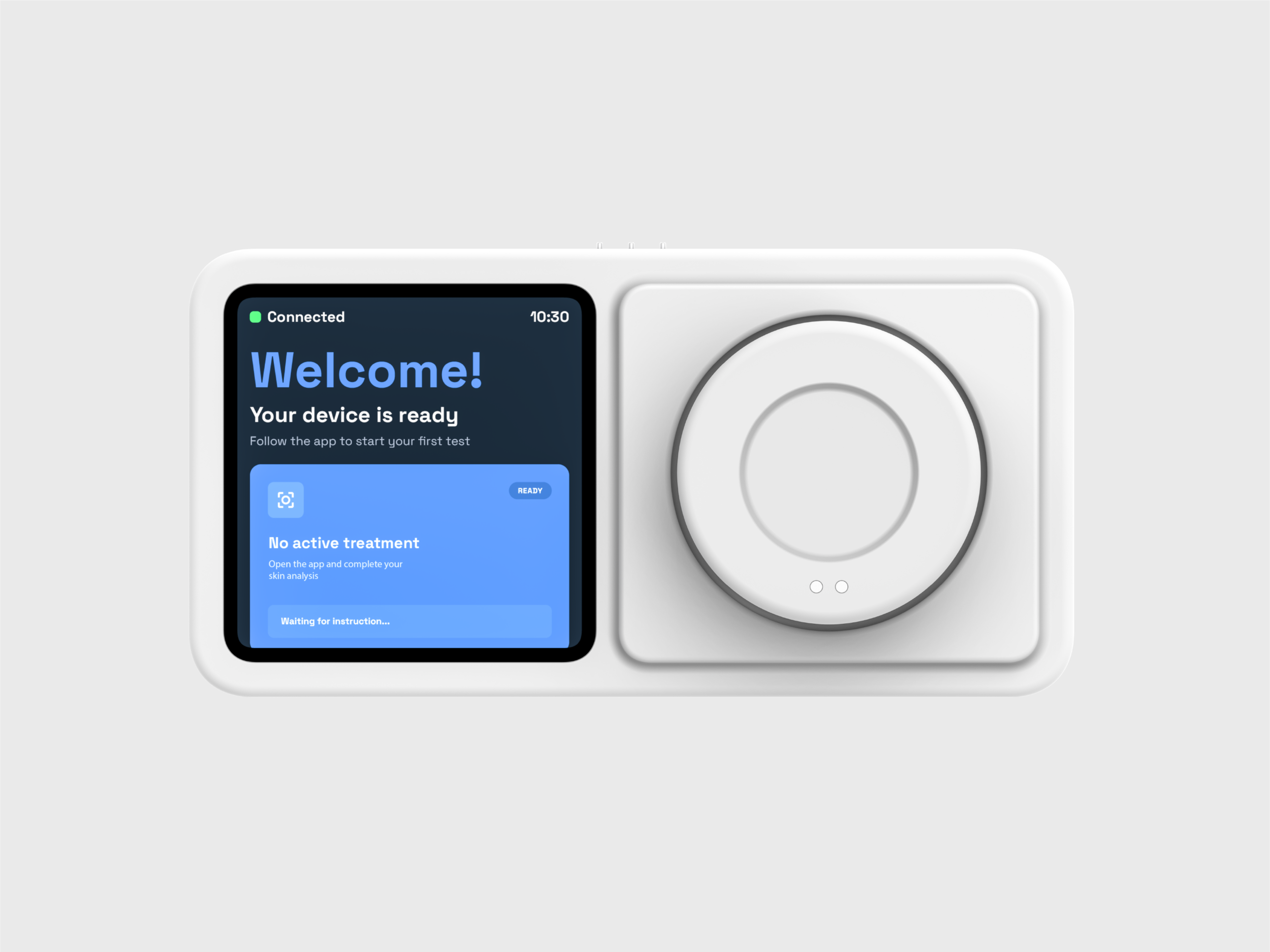
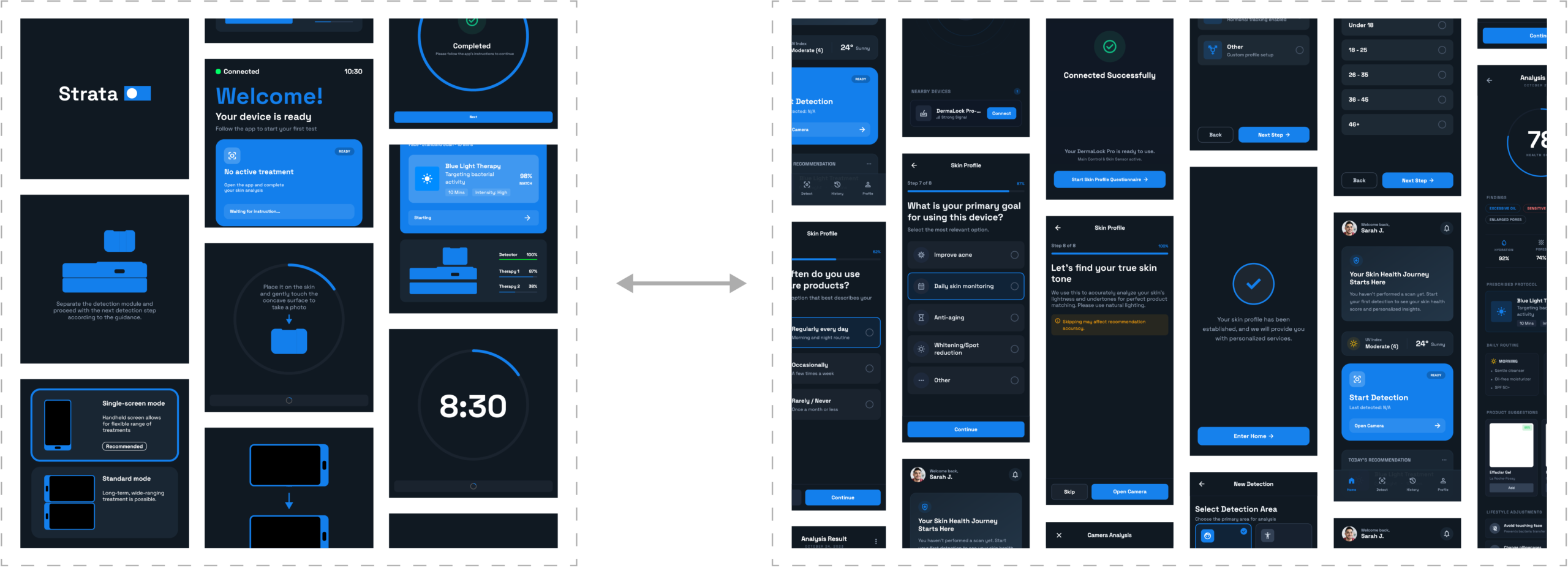
Left · Device UI The on-device interface keeps the user focused on the task at hand. It covers the immediate moments of use, connecting, confirming the device is ready, guiding placement, and showing therapy progress and timing in real time. What it displays is driven by the app, a scan started on the phone flows straight through to the device, and the screen stays minimal so each step feels clear and unintimidating.
Right · App UI The companion app handles everything around the treatment itself. It onboards the user through a skin-profile questionnaire, runs the guided detection flow, and turns each scan into readings, recommendations and a longer-term view of skin health. It stays in sync with the device throughout, every treatment the device runs feeds back into the app’s records, so where the device manages the moment, the app manages the journey.