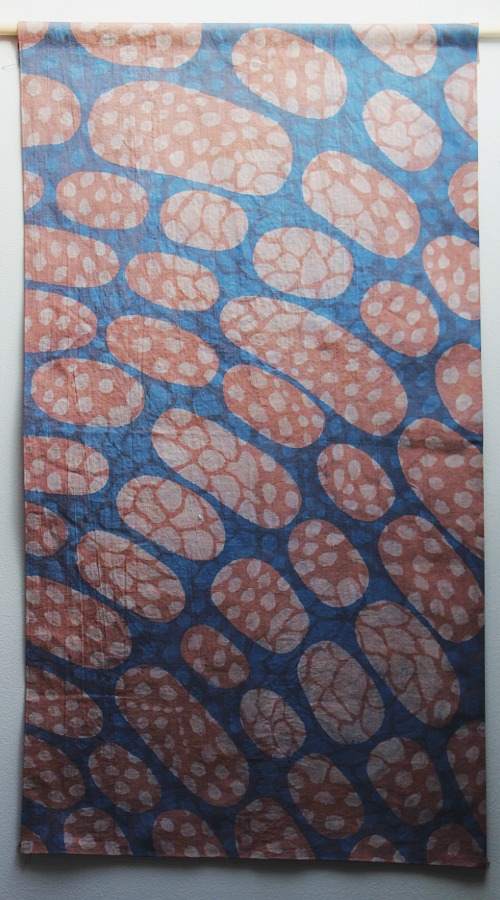
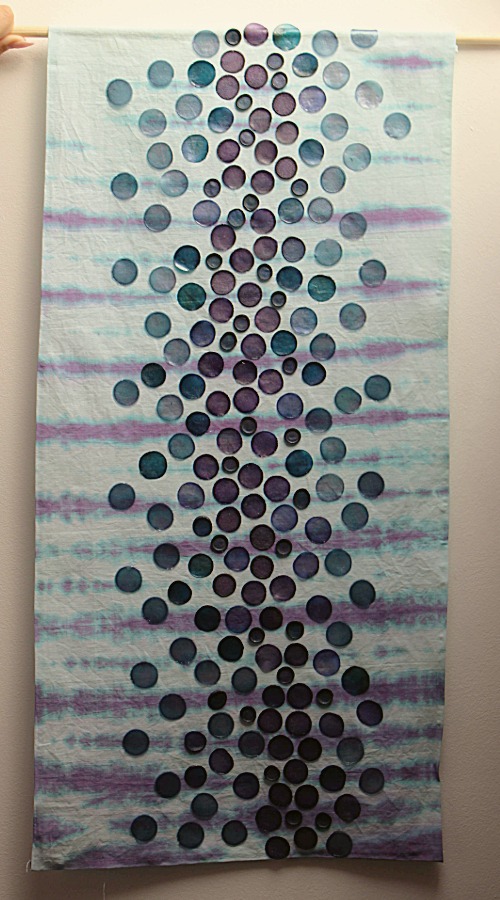
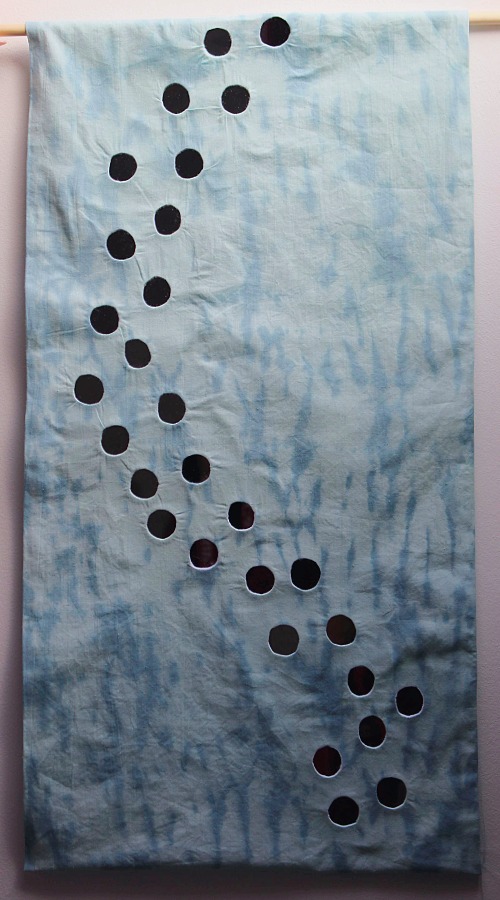
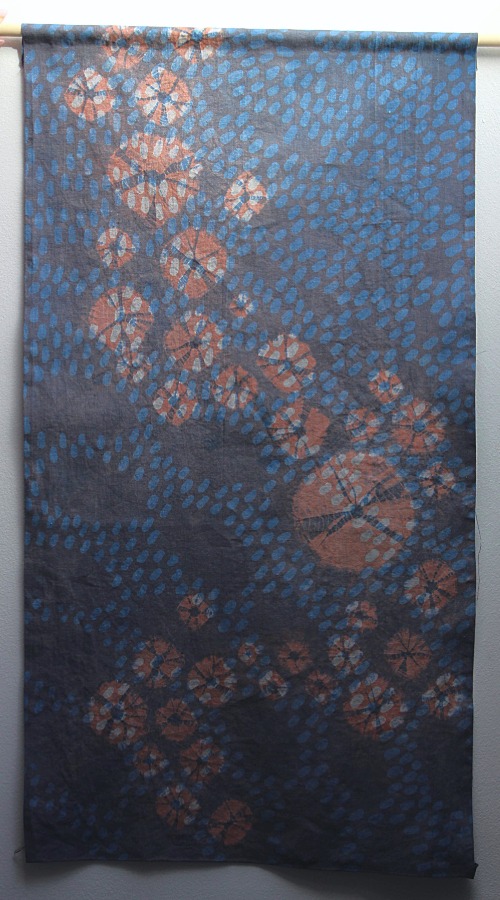
As a textile designer, I focused on combining layers of resist techniques and dying processes to create dynamic designs. Inspired by the complexities of cephalopods, mimicking their highly emotive skin changes and movements to create a series of interior designs.
Cephalopod Sanctuaries
Local Ecological Knowledge
To honour my Pakistani Heritage- I focused my research and application within the coastal port city of Gwadar, located in southwestern Pakistan. Gwadar once made up the backbone of Pakistan’s marine fishing industry. Upon the construction of the China-Pakistan Corridor (CPEC) many local fishing communities have suffered from the impacts this has brought.
Fascinated with the fishing communities’ ability to extract knowledge and strategies from the behaviour of the surrounding flora and fauna, I began to study the changes within cephalopods appearance in relation to their behaviour and surroundings- reminiscent to the local fishing communities. An emotive colour pallet and array of shapes allow for me to display the scientific technicalities of the cephalopods ability to change colours in a visual story.
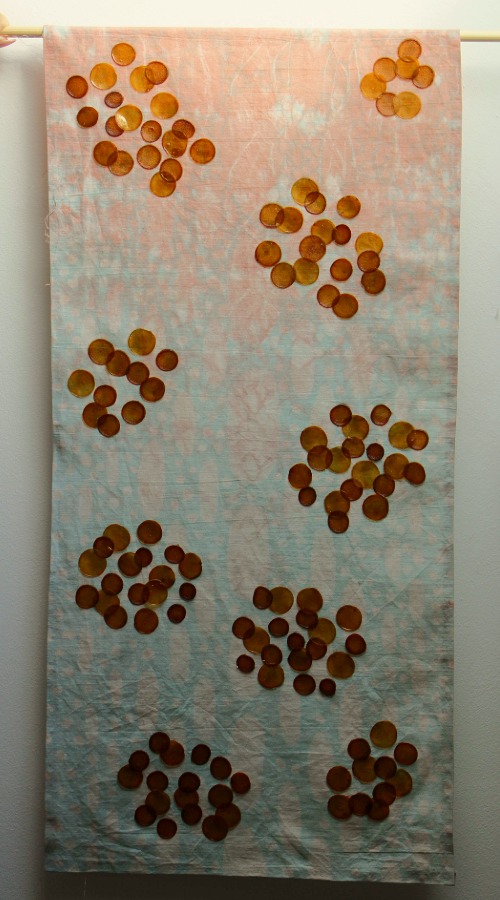
The passing down of this historical knowledge within communities keeps it alive, sacred. I wanted to honour this tradition by slowing down my practice, opting for stitched, wound and hand painted bentonite clay resists over sublimation prints.
My Process- ‘A Layered Cell System’
My design process was mainly inspired by the tri-layered system of cells operating under the cephalopods dermis that work together to create the pulsing changes of colour. These layers contain the cells Chromatophores, Iridophores and Leucophores.
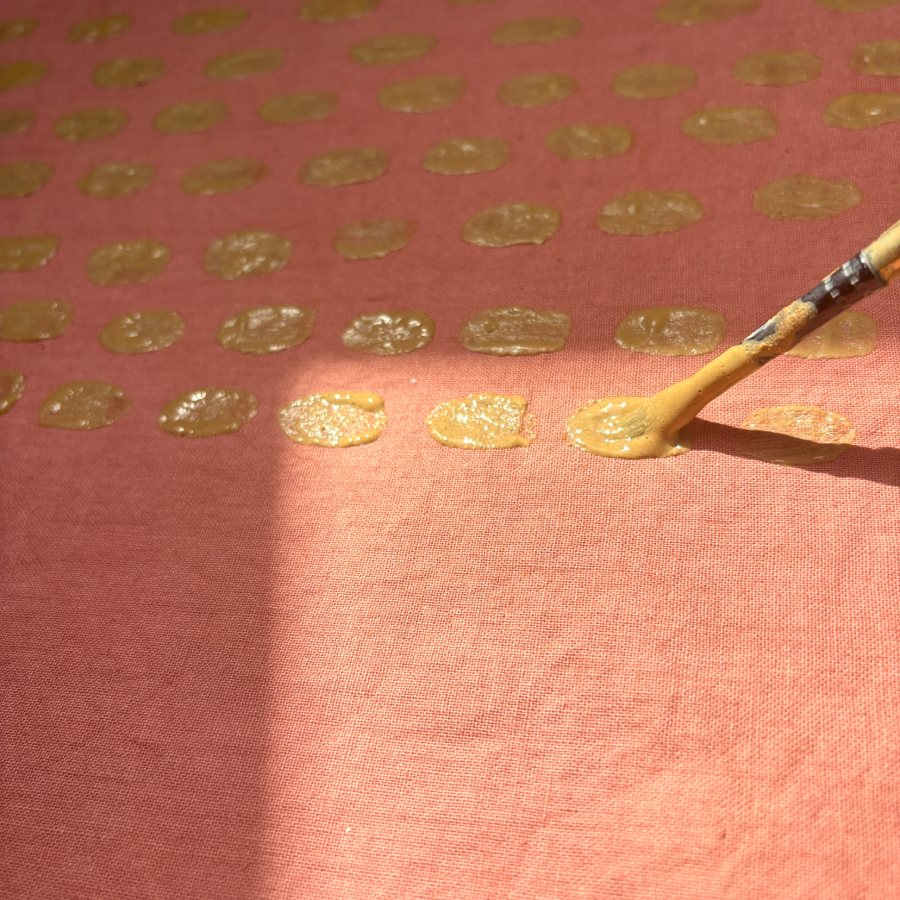
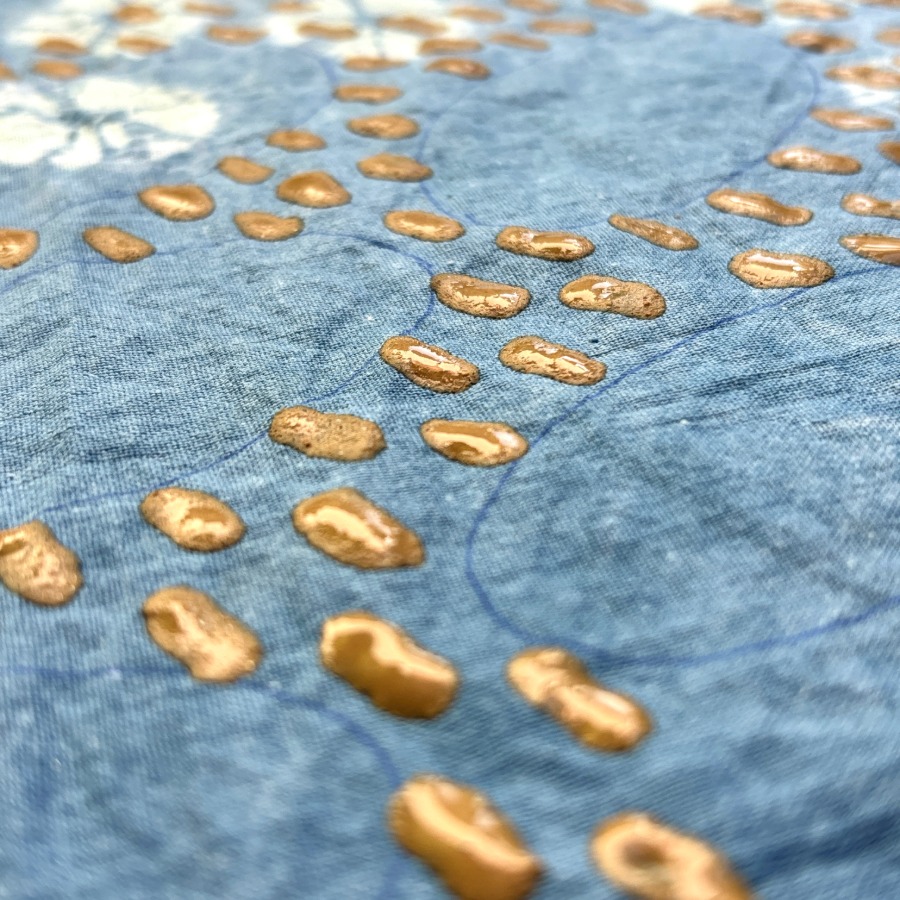
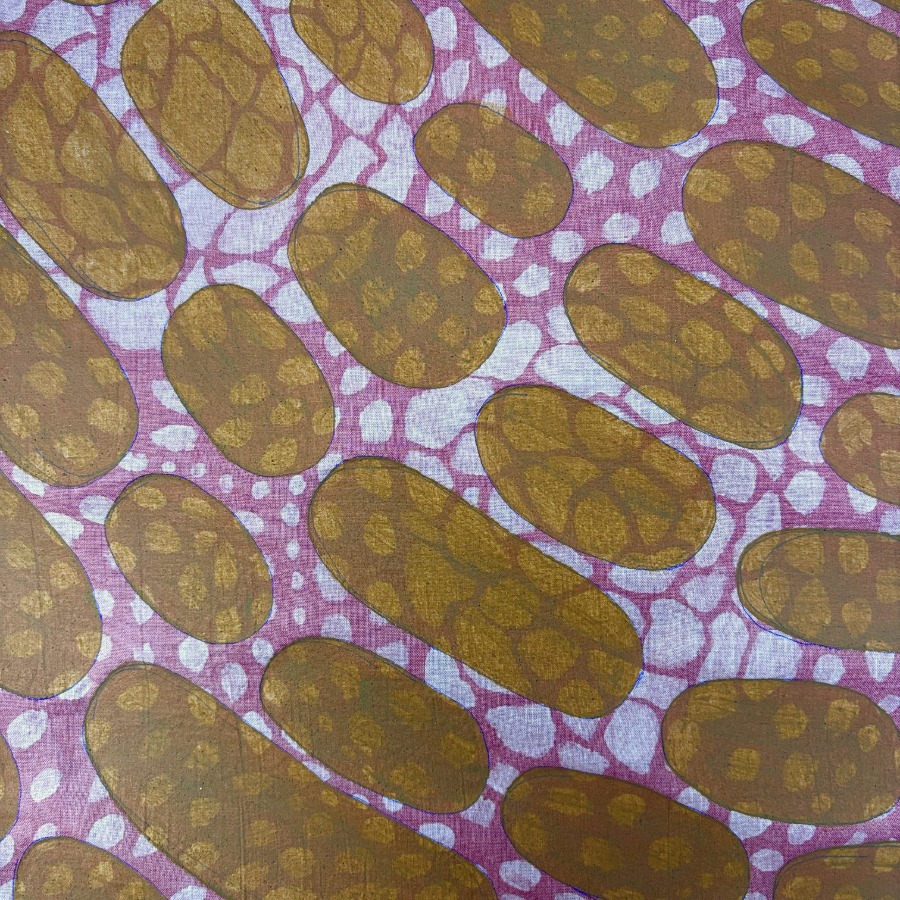
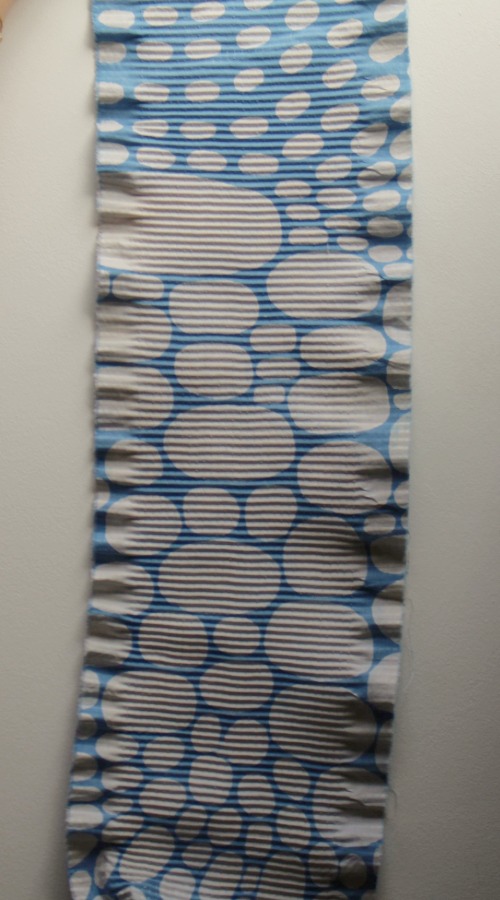
Many of my dyed outcomes involved up to three intentional cycles of layering. These layers featured a variety of resist techniques, from hand painting with a homemade bentonite-clay resist paste, to the practice of shibori- binding and stitching sections of the material with thread.
The initial layer of bentonite-clay resist being applied to a dyed background
A secondary resist process being applied over an initial composition of Shibori in the Karamatsu technique
Another secondary clay resist layer being applied, this time over a previous clay resist layer
Celebration of Pakistani Textile Processes
My designs are made to serve two purposes- sanctuary and protest.
The designs will adorn the walls of the housing that provides a sanctuary for the local fishermen communities, who were displaced due to the effects trawling has brought to locals. The need and creation of this housing in-itself is a form of protest, further enforced by the design’s depictions of cephalopod anatomy- a marine community that is grossly exploited along the coastlines of Pakistan.
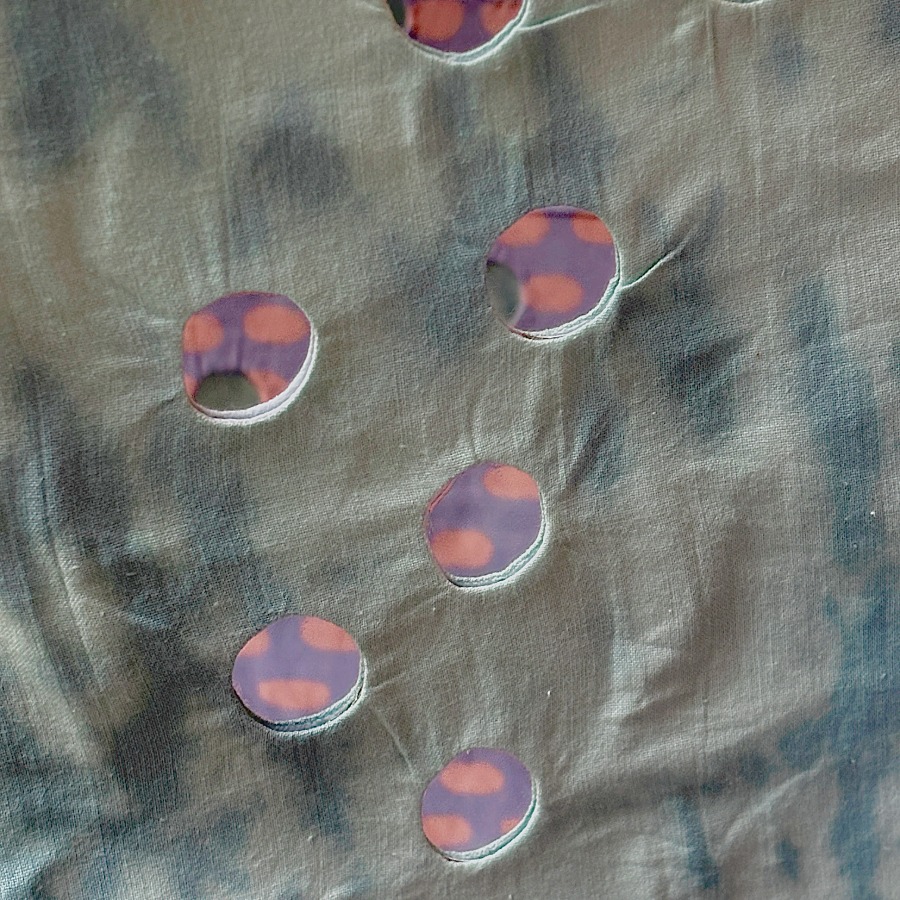
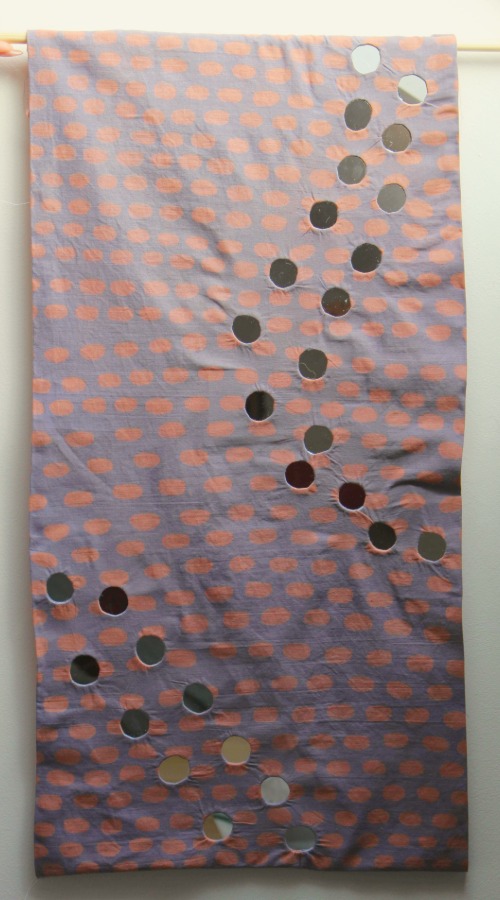
To further integrate celebration of age-old traditions within Pakistani culture into these designs mirrored elements were stitched within the fabric. This process is referred to as shisha.
Shisha within a resist-paste manipulated piece
Both Shisha pieces reflecting eachother, this is the intended application
Sustainable Practice
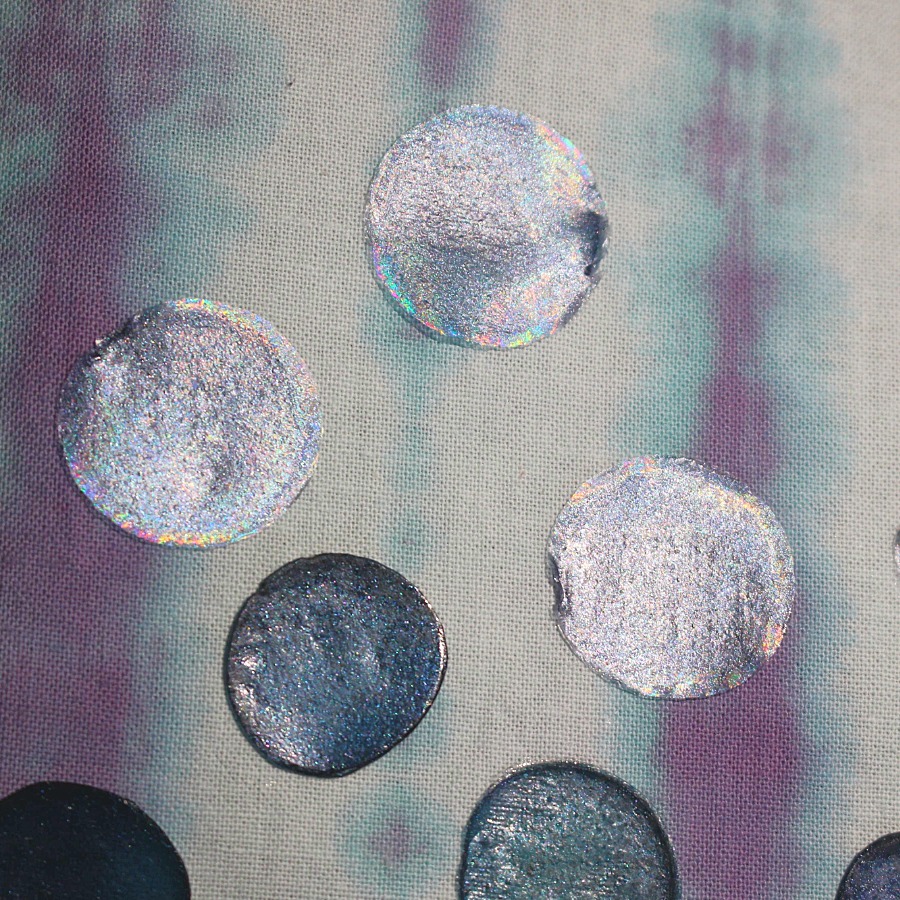
Extending from mirrored embellishments I began developing my bio-sequin recipes to create sustainable embellishments. Integrating aspects of iridescence and reflectivity to depict the complex, shimmering details within cephalopod skins.
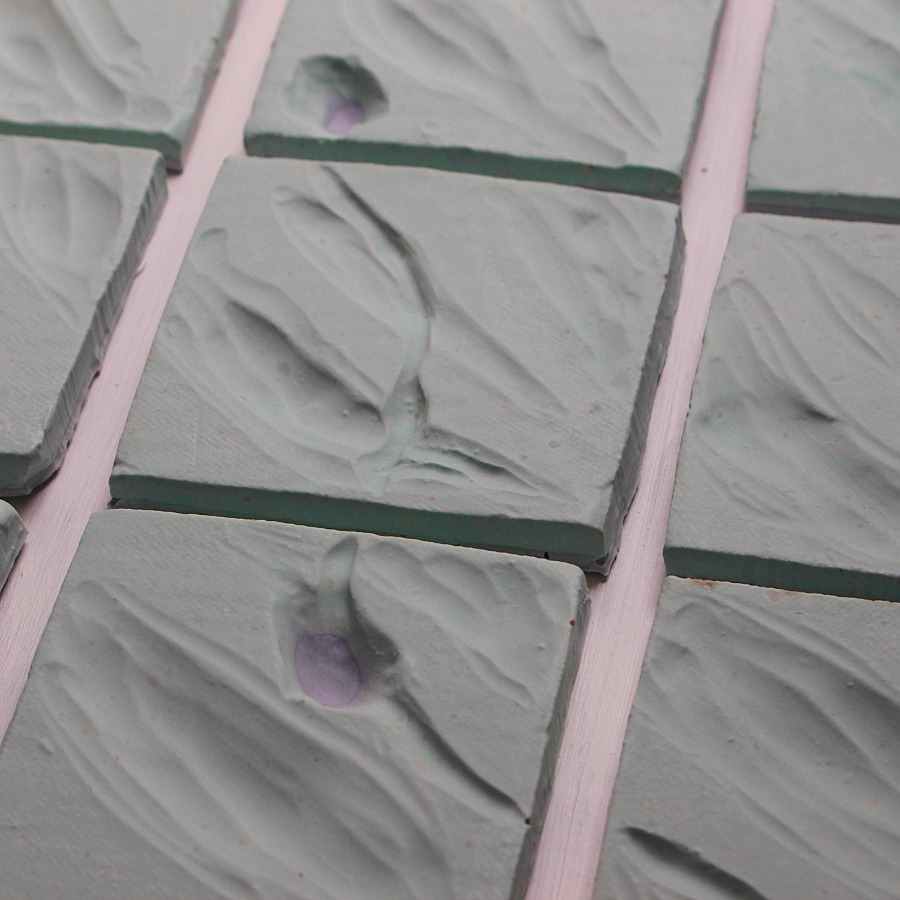
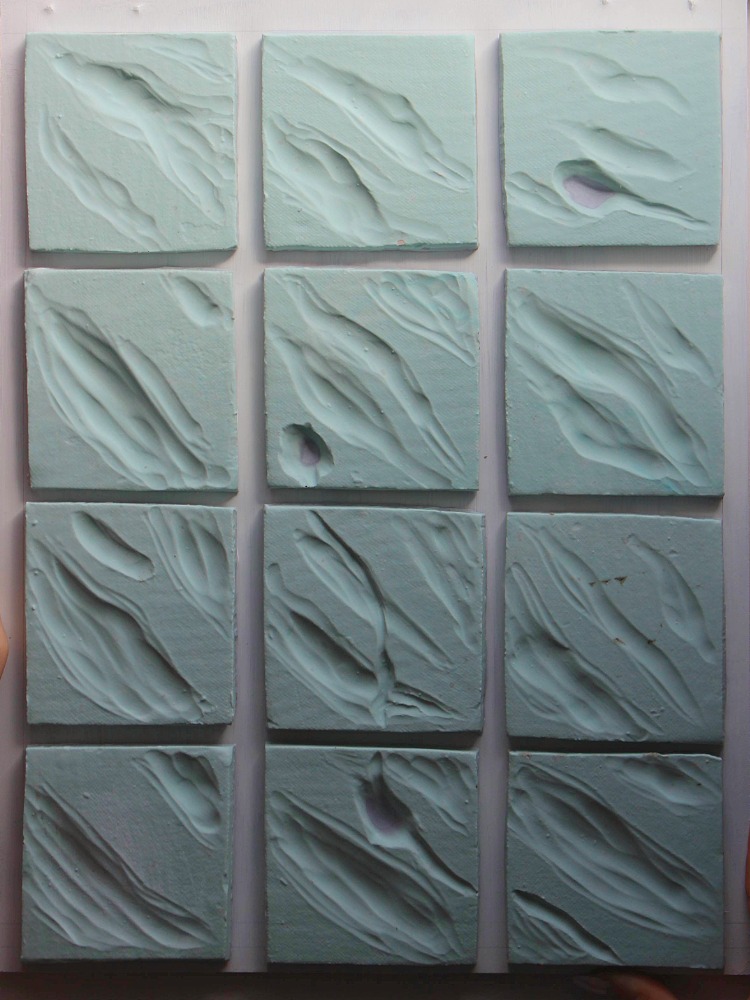
When creating a series of tiles to accompany the complex dyed pieces, I first embodied the dragging and digging of a cephalopods body and tentacles into the sea floor in ceramics. Vac-forming the resulting set of clay tiles resulted in moulds in which I poured layers of coloured Jesmonite into. Through my use of Jesmonite I was able to have stronger control over colour and finish, producing a set of tiles that still possessed a handmade look- but were still suitable for production on a larger scale.
Close-up of bio-sequin piece, showcasing the rainbow-reflective quality of some of the sequins
Jesmonite tile collection, displaying a rich surface texture and layered colours
Preparing For Exhibition
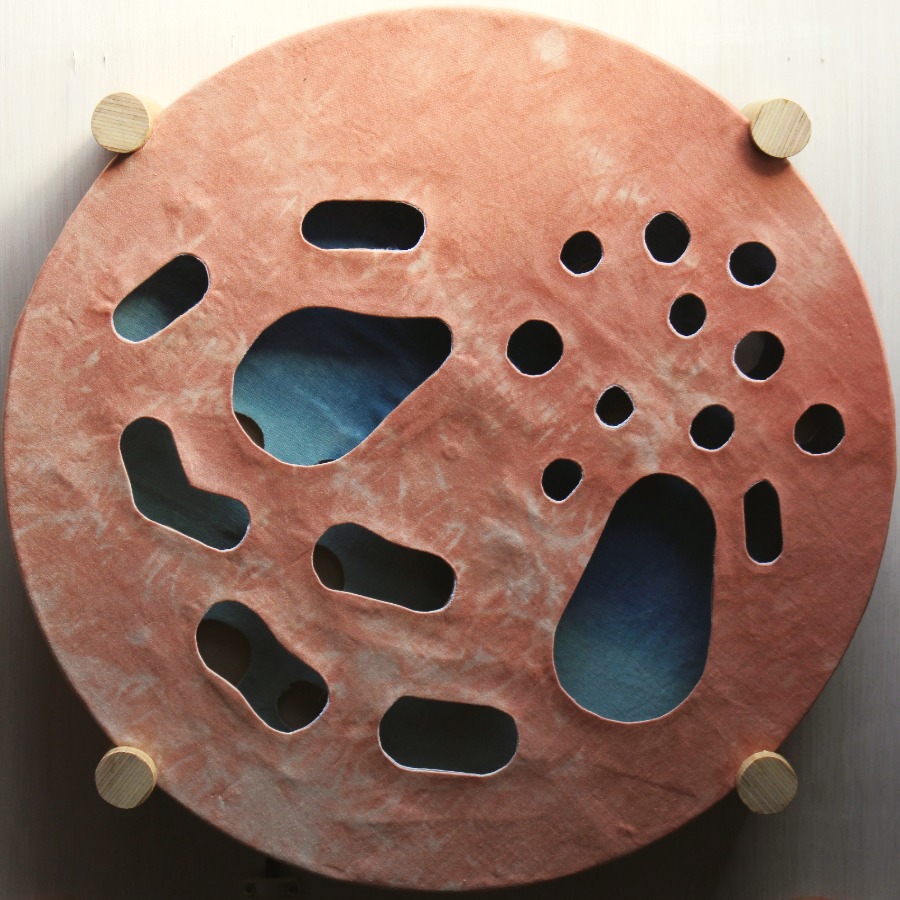
I was inspired by many artists that displayed their artwork kinetically within an exhibition, I wanted to integrate a statement piece that has a rotating layer that depicts the complex colour changing of a cephalopod through a physical installation.
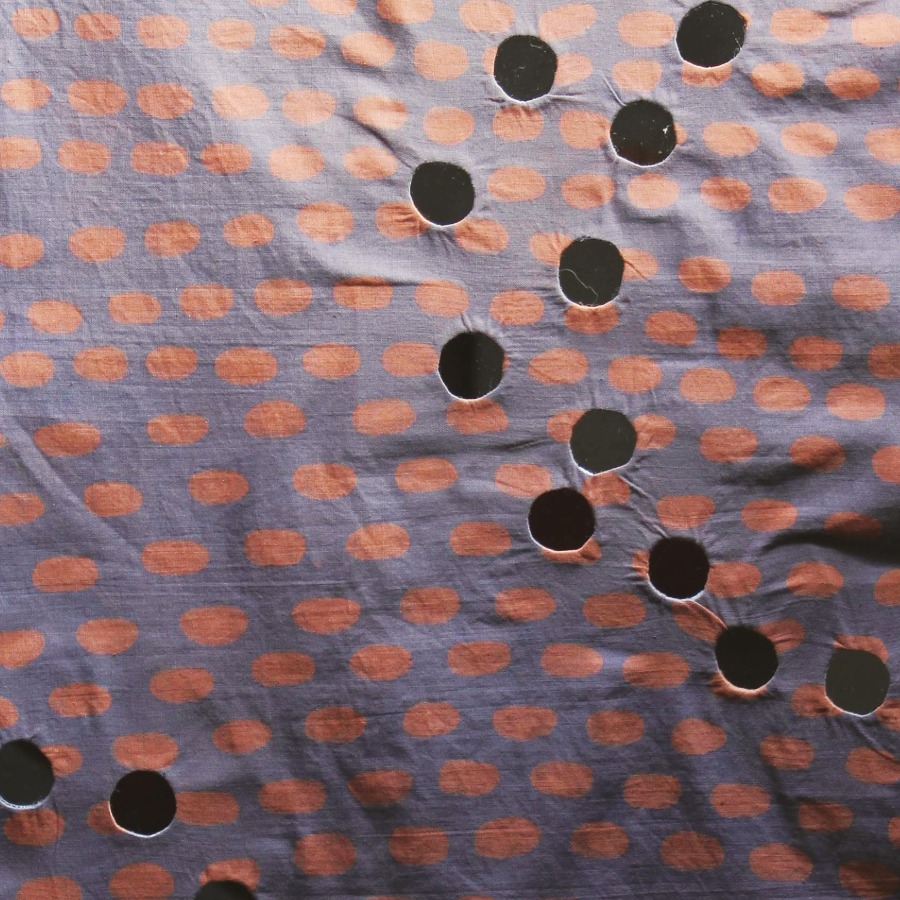
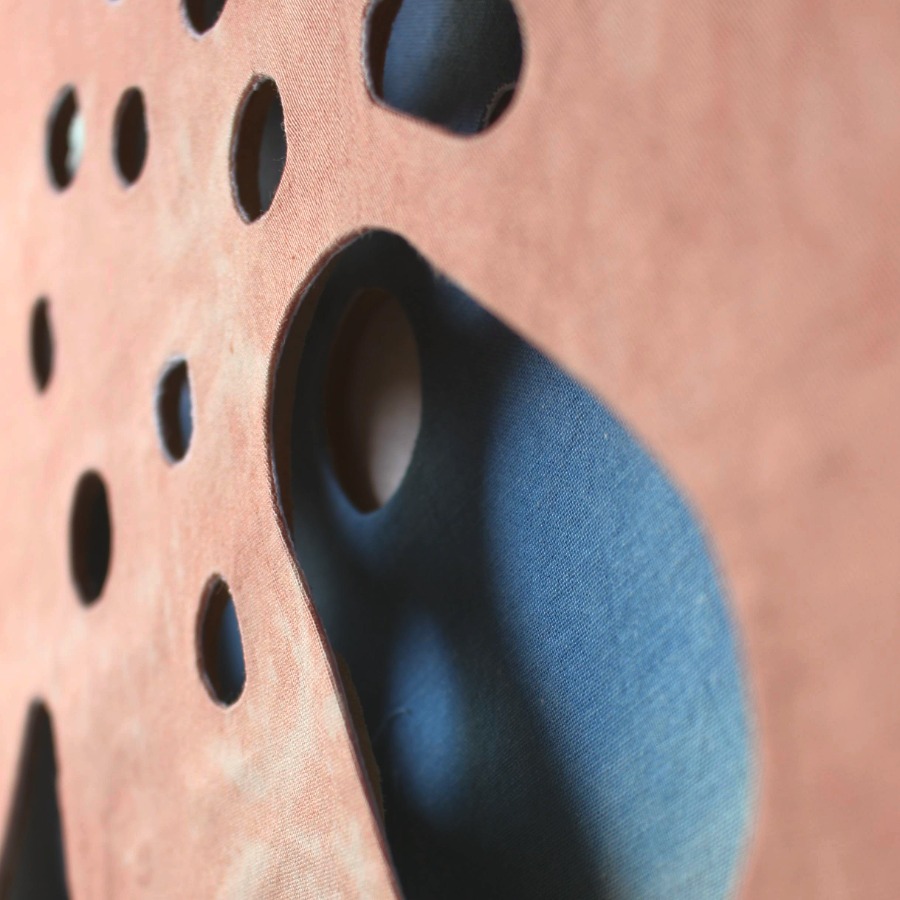
To prepare my spinning cell piece I cut holes into two circular pieces of MDF using hole-saw drill-bits. Secondly, I dyed the fabric to mount onto the MDF, featuring techniques such as creating a gradient and honeycomb Shibori. When constructing my spinning cell piece, I integrated a 6V motor into the middle layer of MDF, connecting this to mains power via a USB connector- allowing it to spin.
Final spinning piece, close up from above
Close up, side view of the layers
For my fabric pieces I wanted to keep their display simple within my exhibition space by attaching them to wooden dowels. For my solid pieces I mounted them onto painted MDF.