I am an industrial & footwear designer who integrates interdisciplinary knowledge into my creative practice. With a great knowledge of product development, my design approach values experimentation and bold exploration, while being grounded
in rigorous analytical thinking.
The Communication Gap
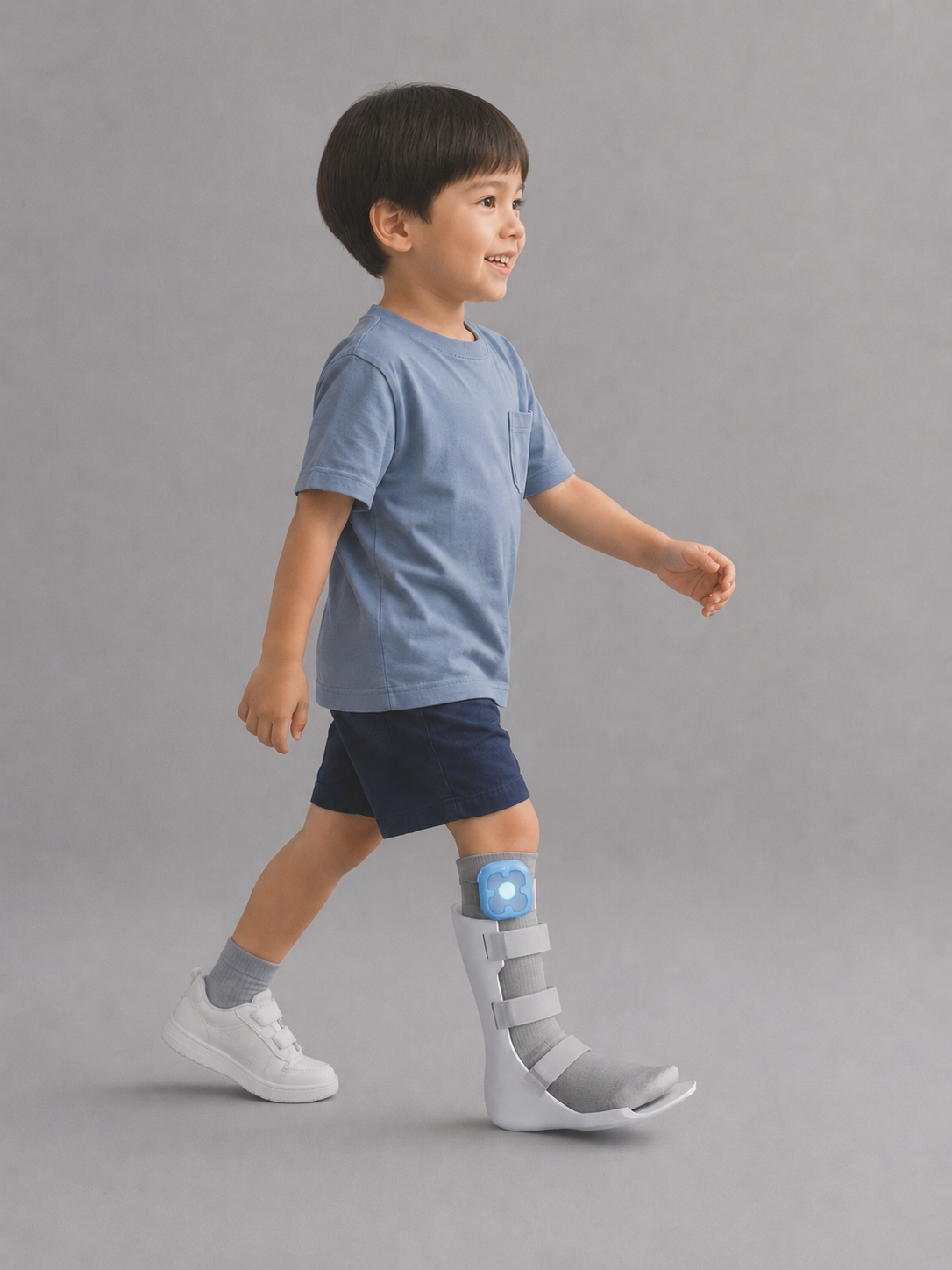
During paediatric AFO(ankle-foot orthosis) follow up appointments, young children often struggle to accurately communicate the location of pain caused by friction and pressure due to their underdeveloped language abilities. As a result, orthotists frequently rely on past experience and observation when adjusting the AFO, which can lead to communication gaps and continued discomfort during wear.
The Solution
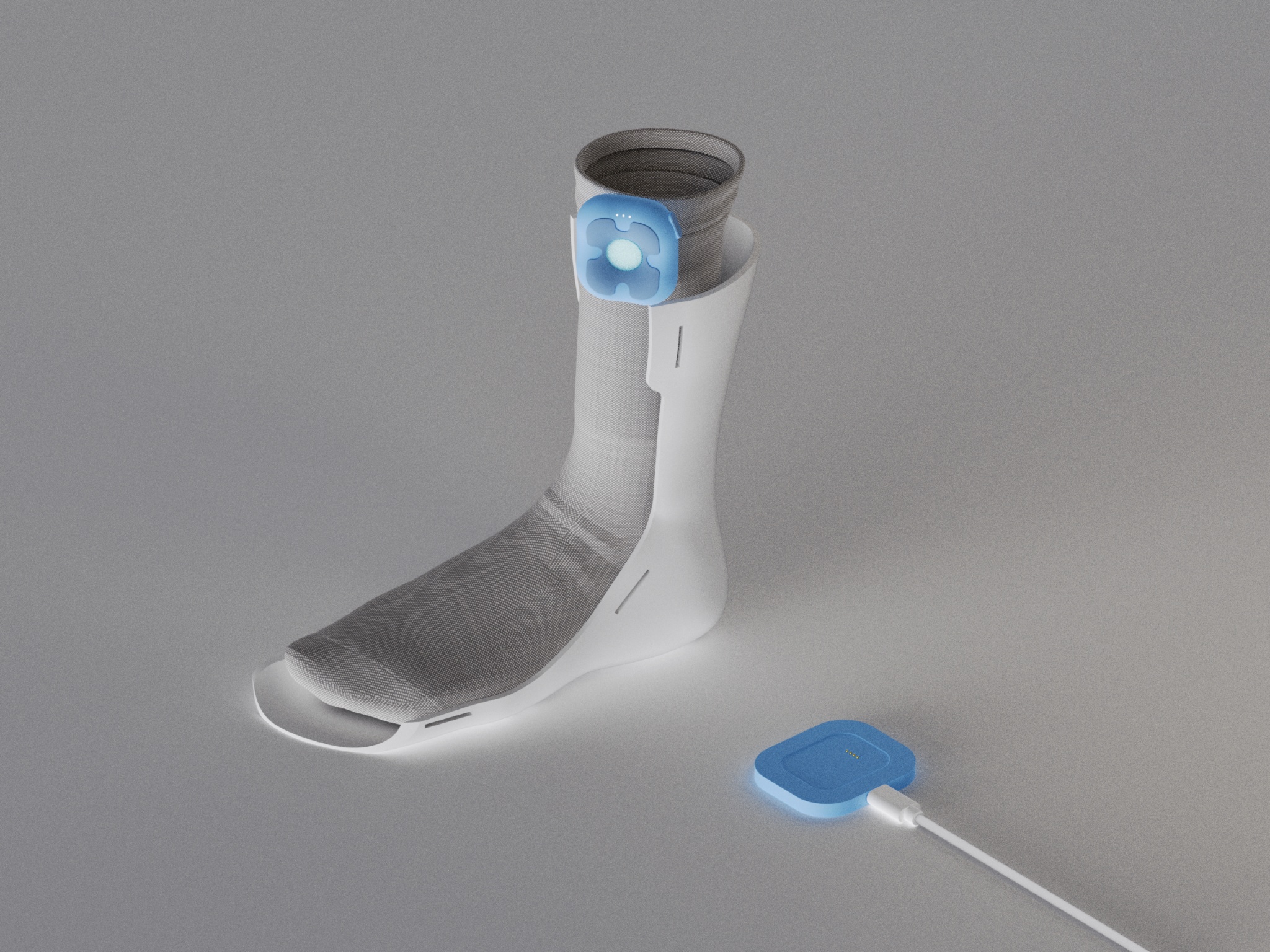
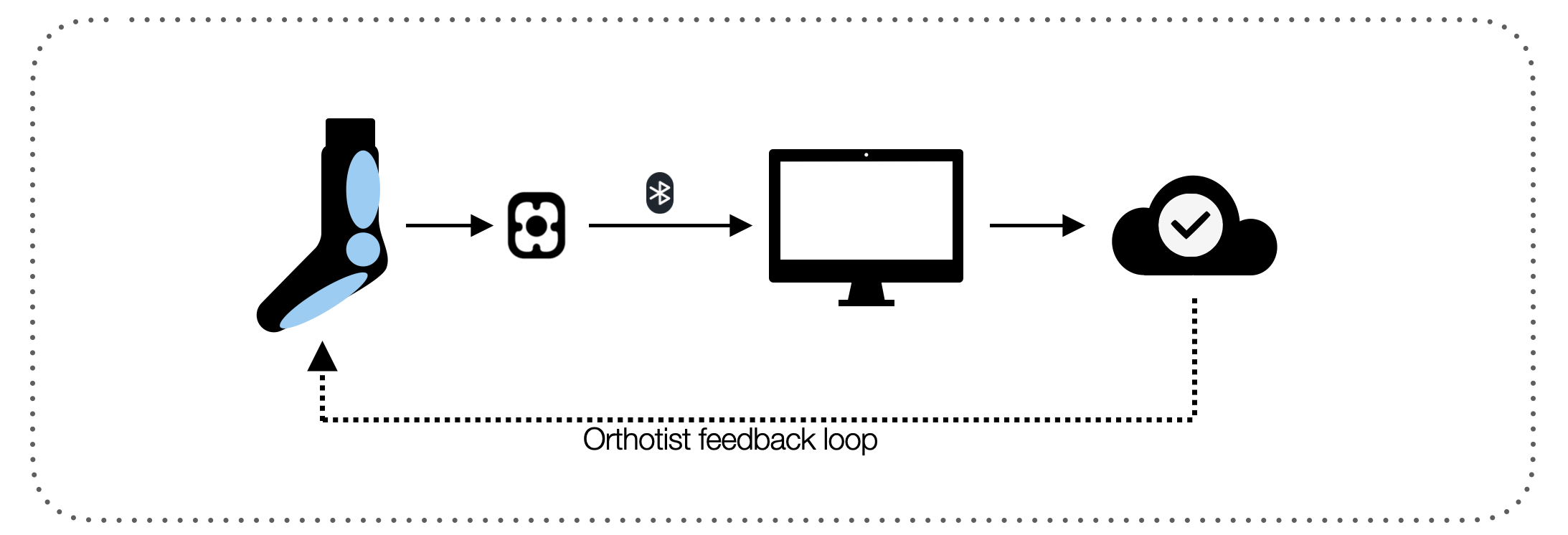
Orthonote is a smart monitoring system designed for paediatric AFO (Ankle-Foot Orthosis) follow up appointments, consisting of a sensing sock, a detachable reading hub, and a data visualisation interface. By monitoring pressure and friction during wear, the system helps orthotists identify areas of discomfort that young children may struggle to communicate due to their still developing language abilities, supporting more informed AFO adjustments and clinical decision making. The project also aims to create a more approachable and less intimidating monitoring experience for children through a softer and more child friendly interaction design.
The Reading Hub (Data Transmission)
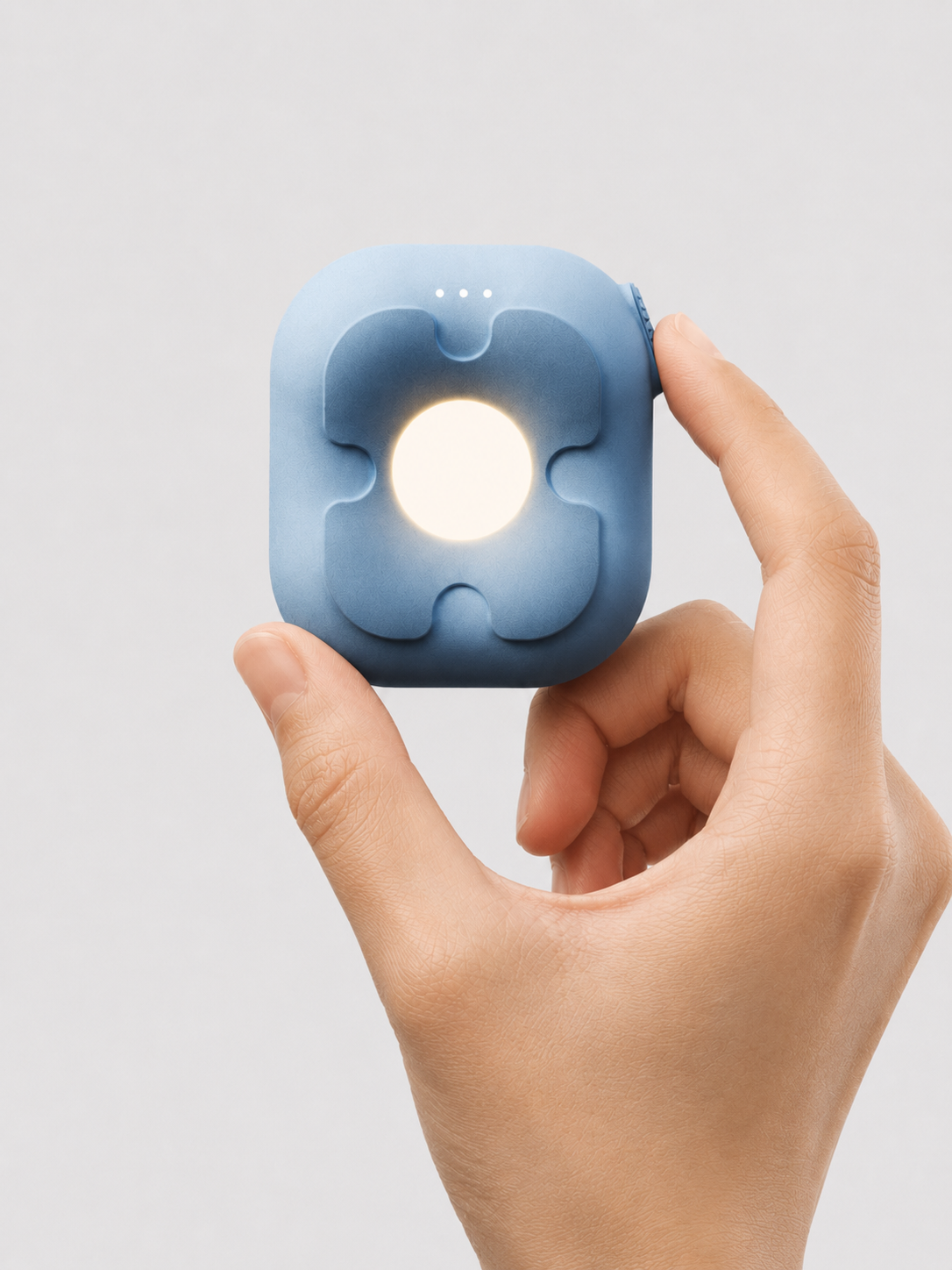
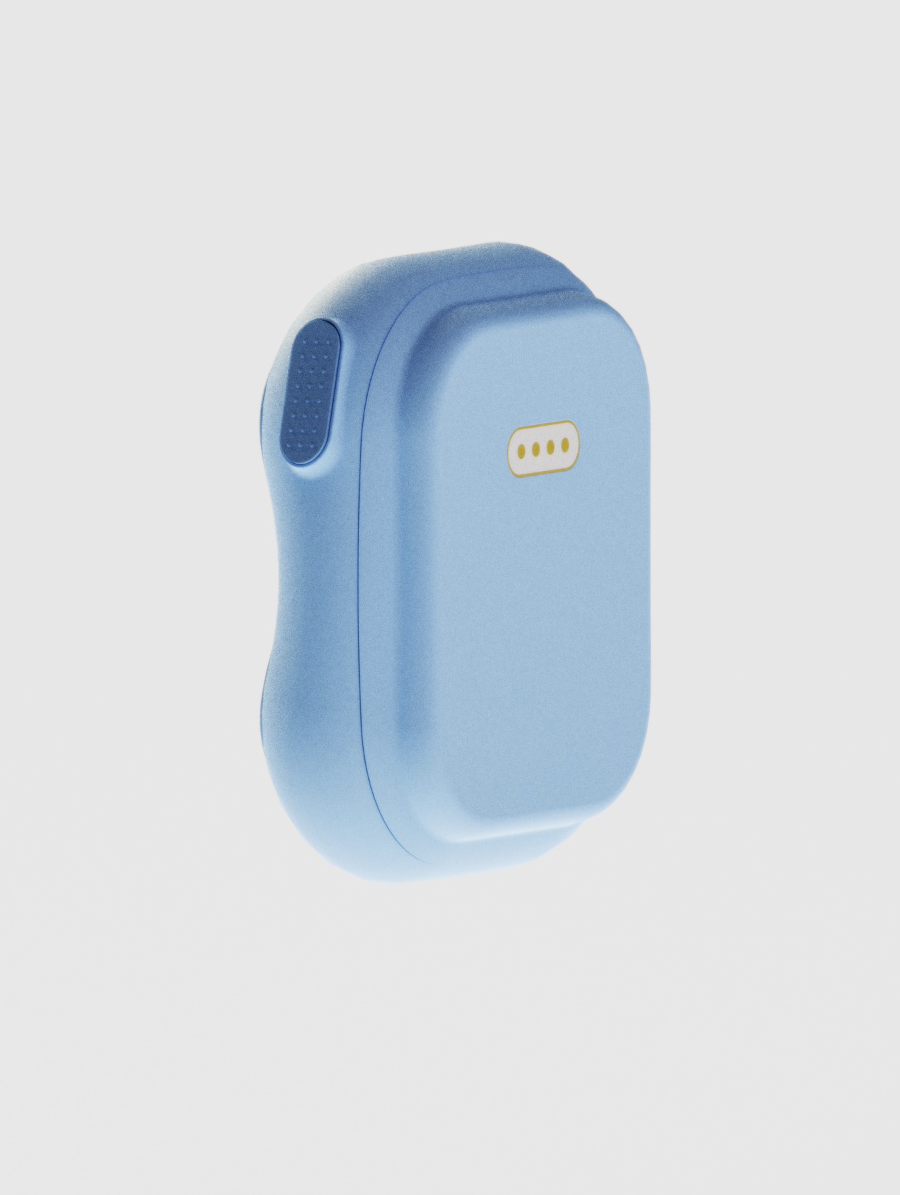
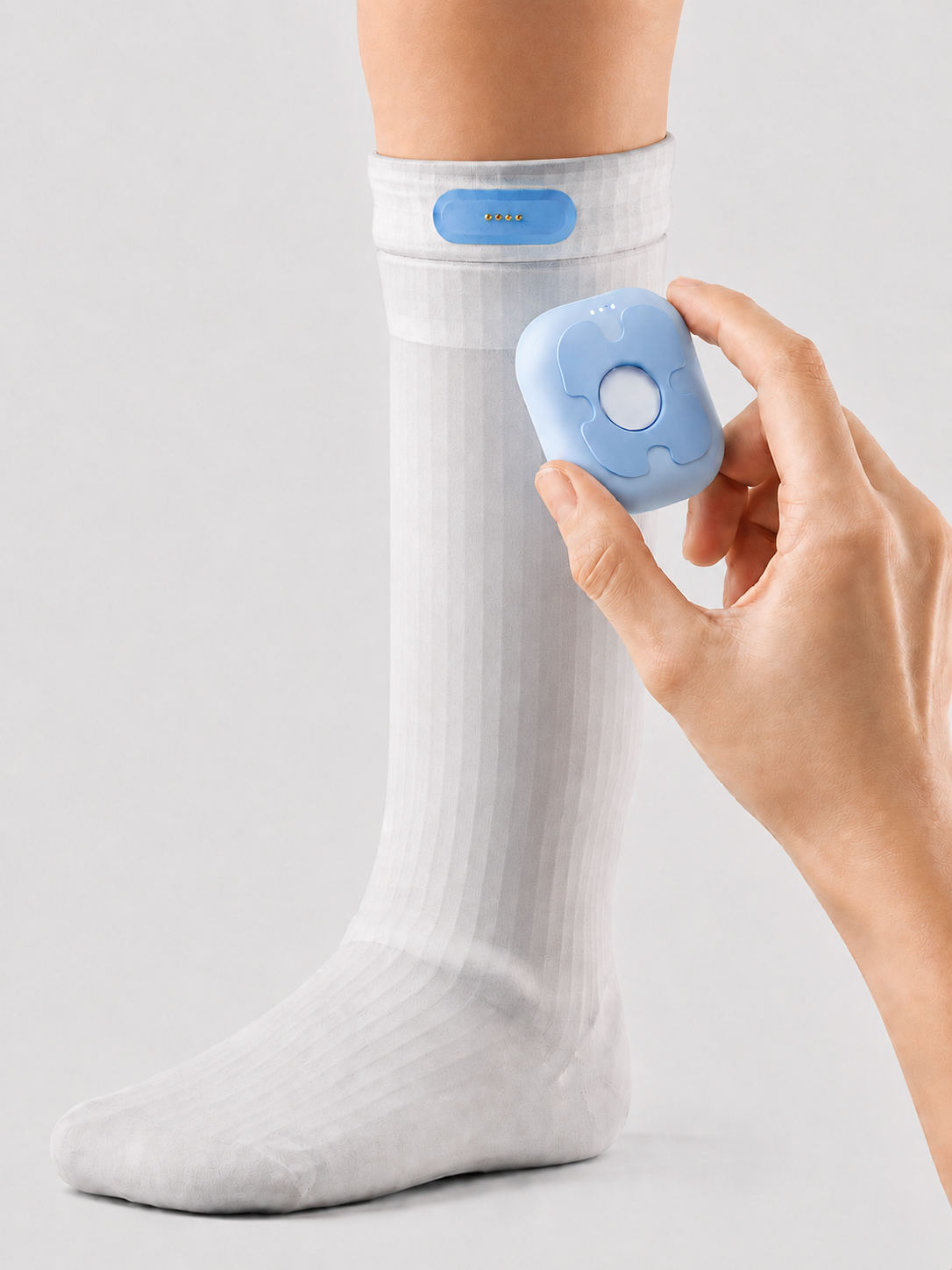
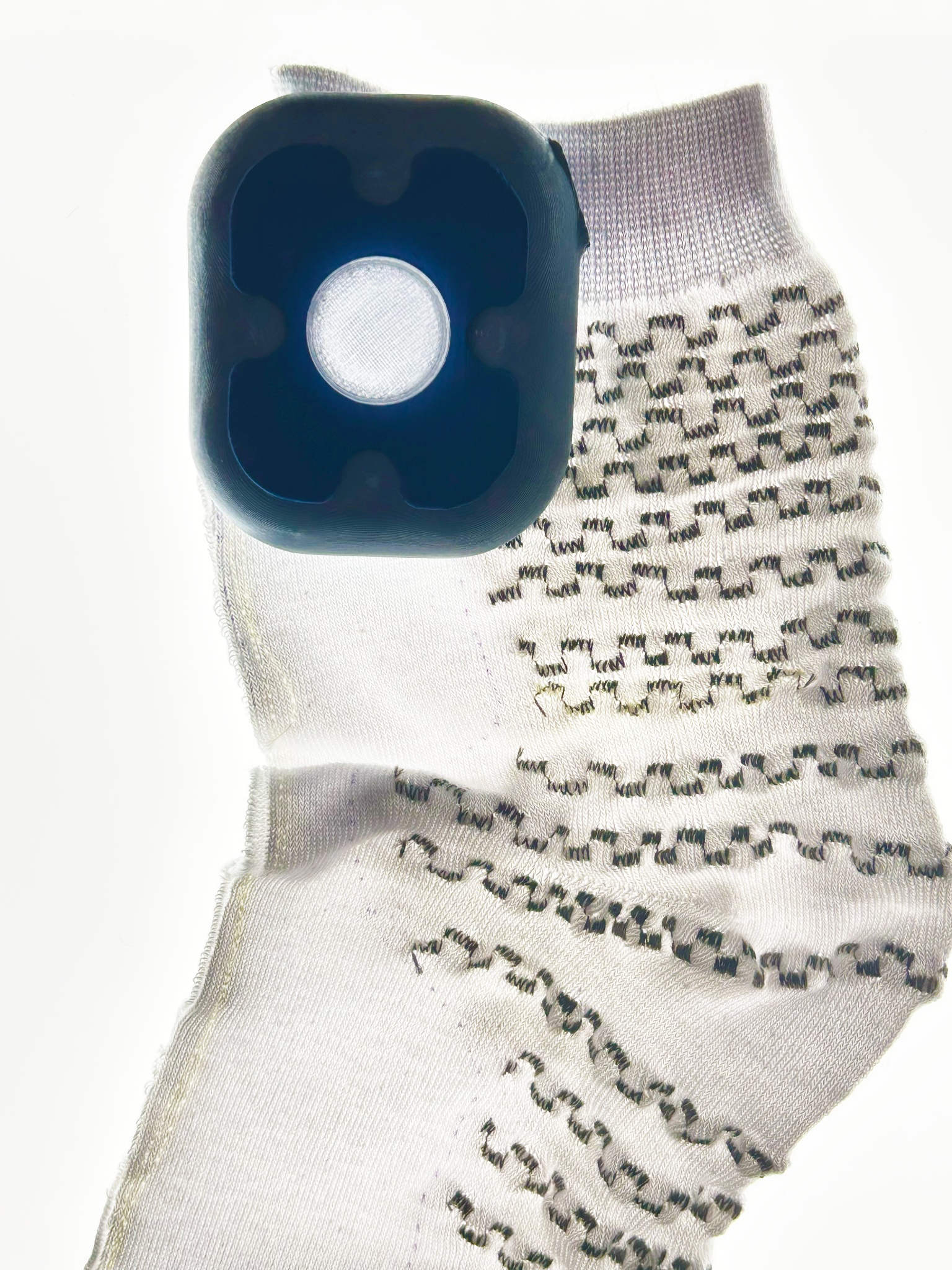
The reading hub was designed with a carefully considered size and form to provide a comfortable and intuitive interaction experience. Its raised button supports multiple natural hand gestures, allowing orthotists to operate the device easily with one hand. The placement of the button, together with the overall geometry of the hub, naturally and intuitively guides users towards the correct installation orientation, ensuring the magnetic connection aligns properly during attachment.
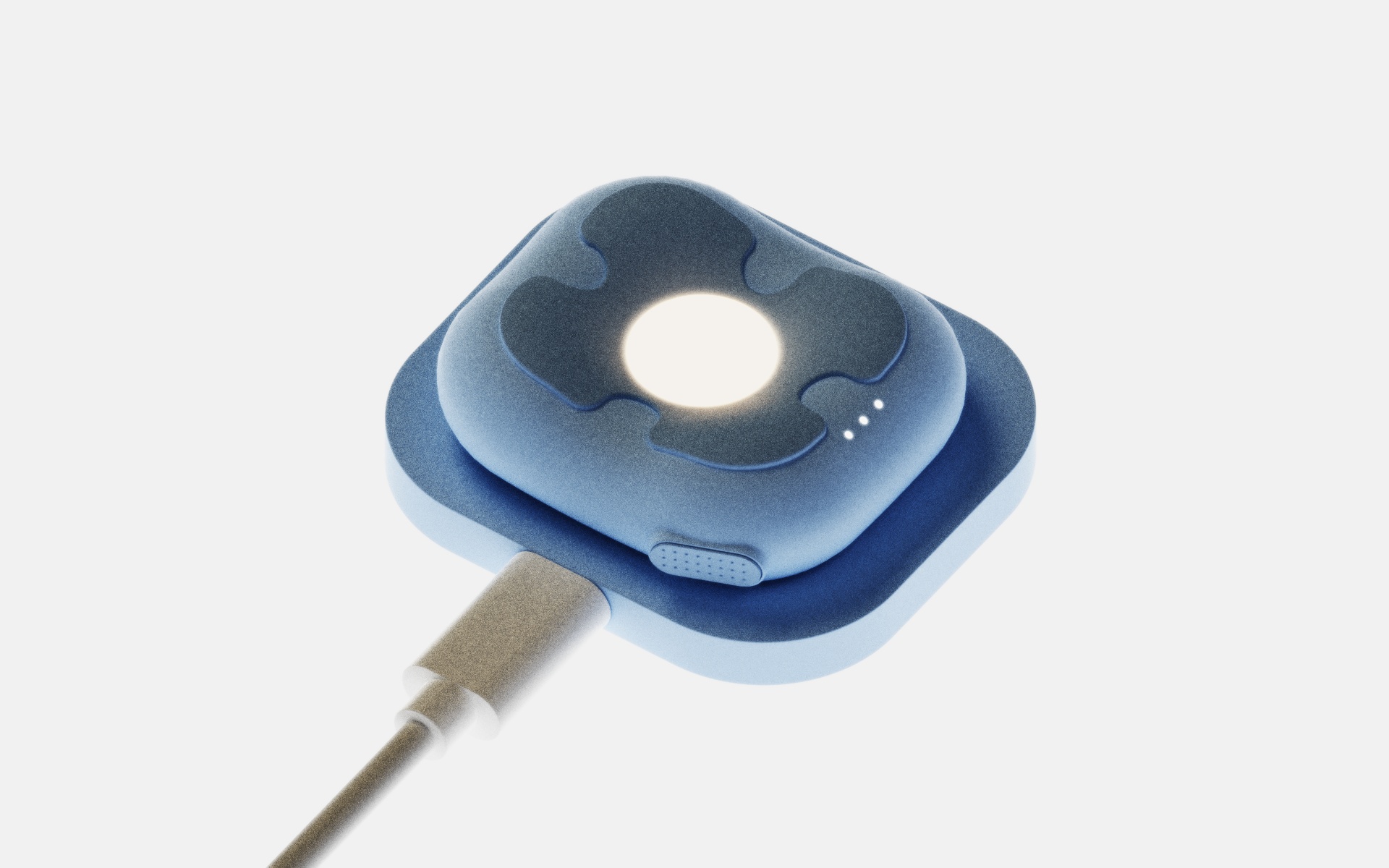
Once attached to the AFO system, Bluetooth pairing can be activated by simply double pressing the upper right button. The central ambient LED then provides a clear visual indication of the Bluetooth connection status, offering an approachable and easy-to-understand interaction experience within the clinical environment.
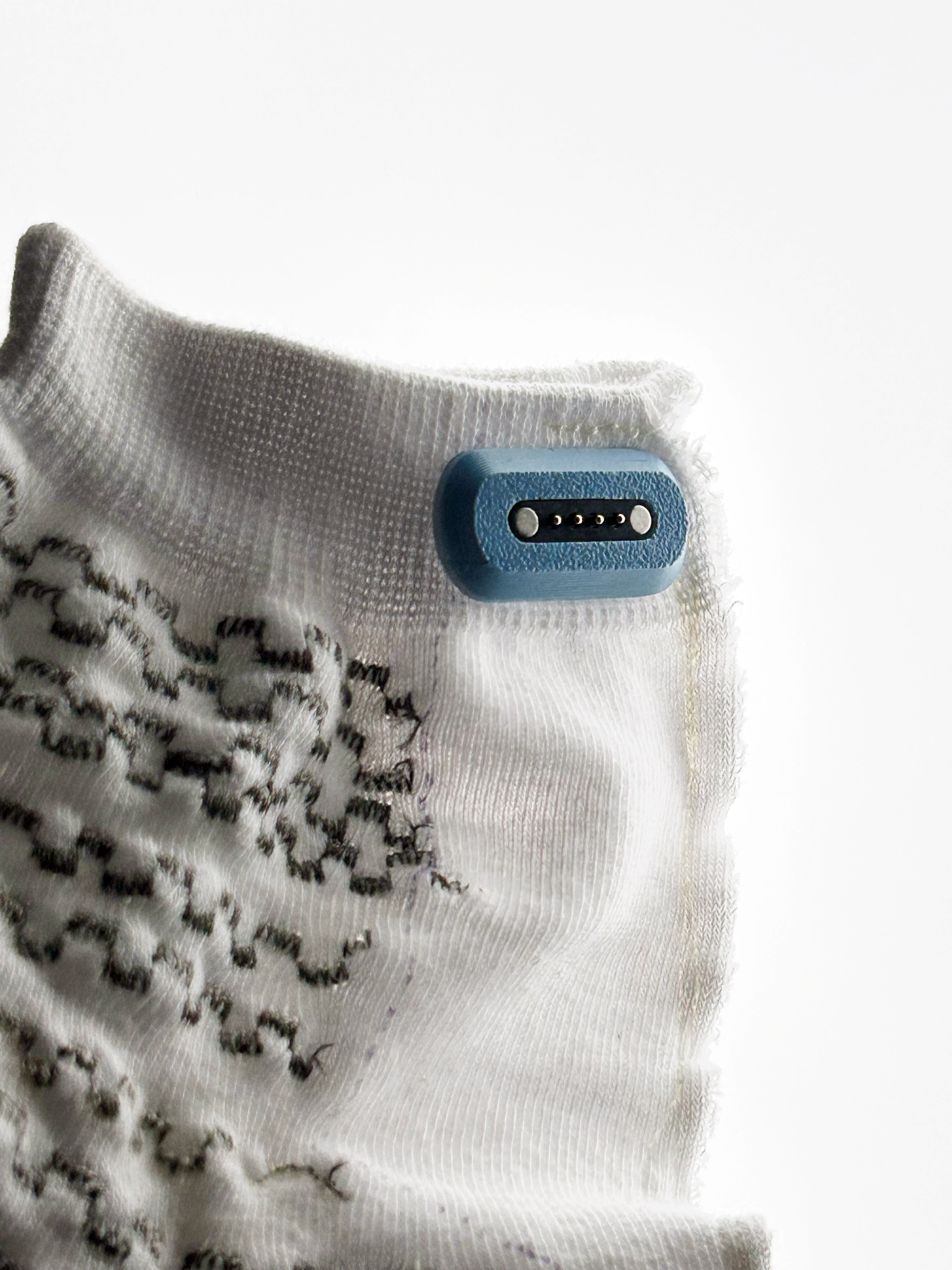
The reading hub uses a magnetic charging dock to provide a simple, intuitive charging experience suited to the clinical environment. After monitoring, the hub can be quickly detached from the sock cuff and naturally aligned into the correct charging position through the magnetic connection. The charging interaction was designed to feel effortless and easy to understand, allowing orthotists to efficiently prepare and recharge the device between appointments.
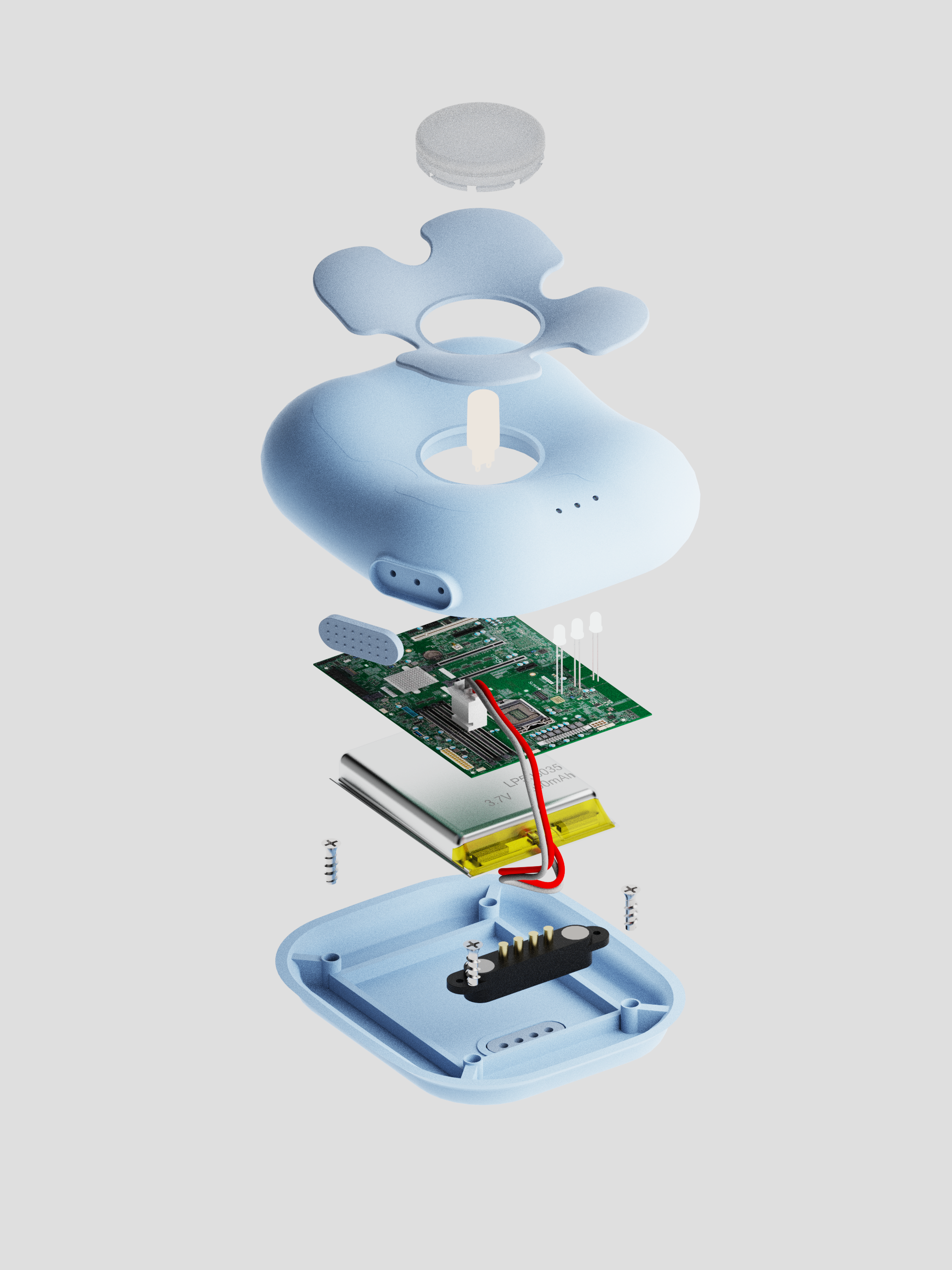
Exploded view(right) showcasing the interior components, including:
LED diffuser cover
Bluetooth Status LED
Battery Level Indicator
Custom PCB
3.7V Li-po Battery
Pogo-Pin Magnetic Connector
The Sensing Sock(s)
The sensing sock plays a key role within the orthonote system, supporting paediatric AFO follow up appointments by helping orthotists more accurately identify areas of pressure and friction during gait analysis. Integrated conductive yarn structures within the sock create a capacitive sensing system that continuously collects wear data during use, which is then transmitted to the detachable reading hub for wireless monitoring and later visualisation.
Underlying Sensing Technology
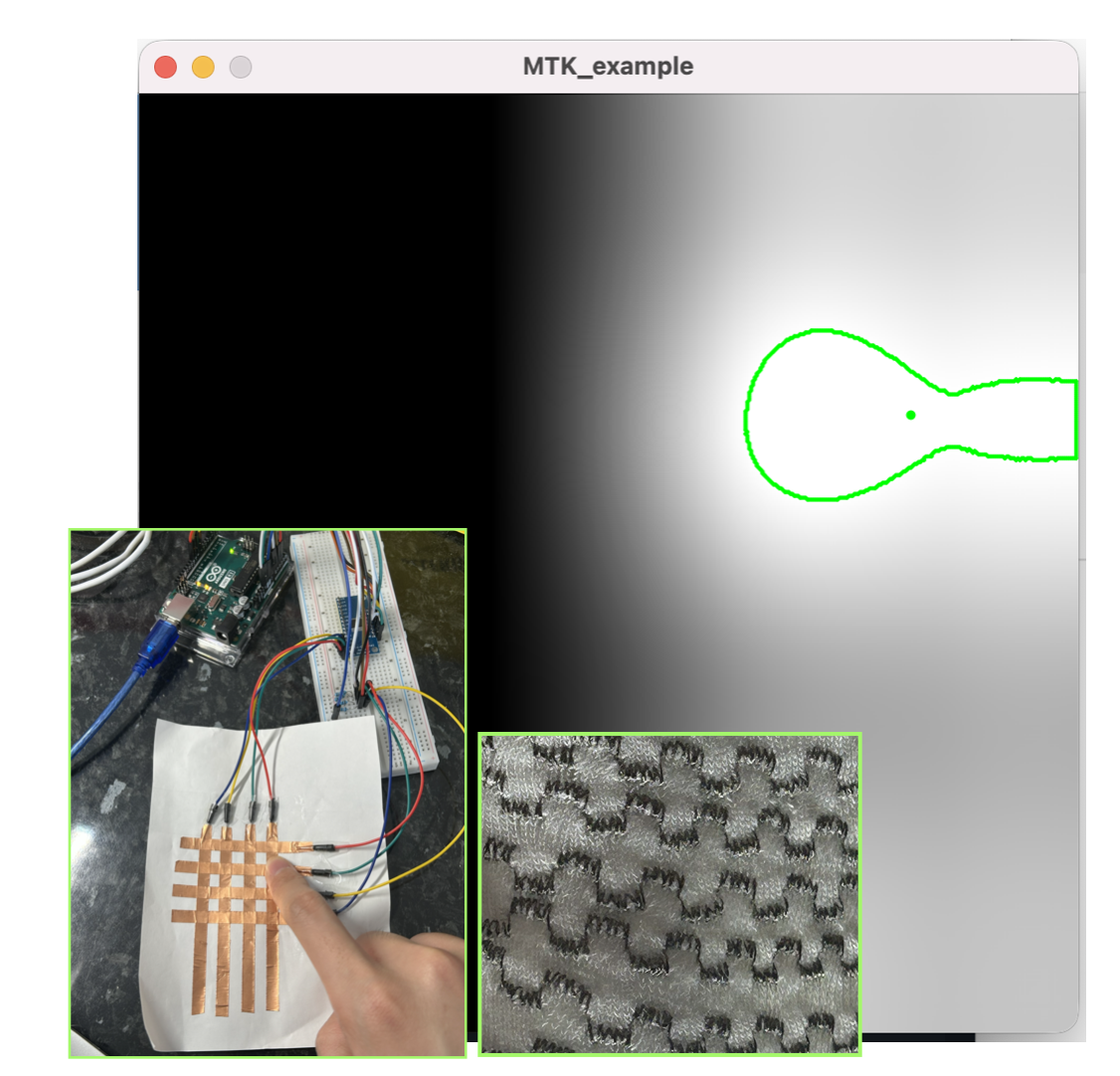
The conductive yarns within the sock create a flexible capacitive sensing structure. When the foot comes into contact with the AFO and experiences pressure or friction, small changes occur in the distance between the conductive yarns, their contact state, and the surrounding electric field, resulting in changes in capacitance. The system continuously reads these changes and translates them into visualised data to help identify areas experiencing higher levels of pressure and friction.
Due to the soft, flexible, and textile compatible nature of conductive yarns, the sensing system can be naturally integrated into the sock without significantly affecting everyday wear comfort. Compared to traditional rigid electronic sensors, conductive yarns are also more suitable for repeated washing and long term wear, making them better suited for medical textile applications that require both comfort and maintainability.
Capacitive Sensing Matrix made from Copper Foil Tape(bottom left corner), Multi-Touch Sensor constructed using Stainless Conductive Yarn, and visualised collected data(using Arduino and processing)
Real Time Pressure & Friction Mapping (Clinical Data Visualisation)
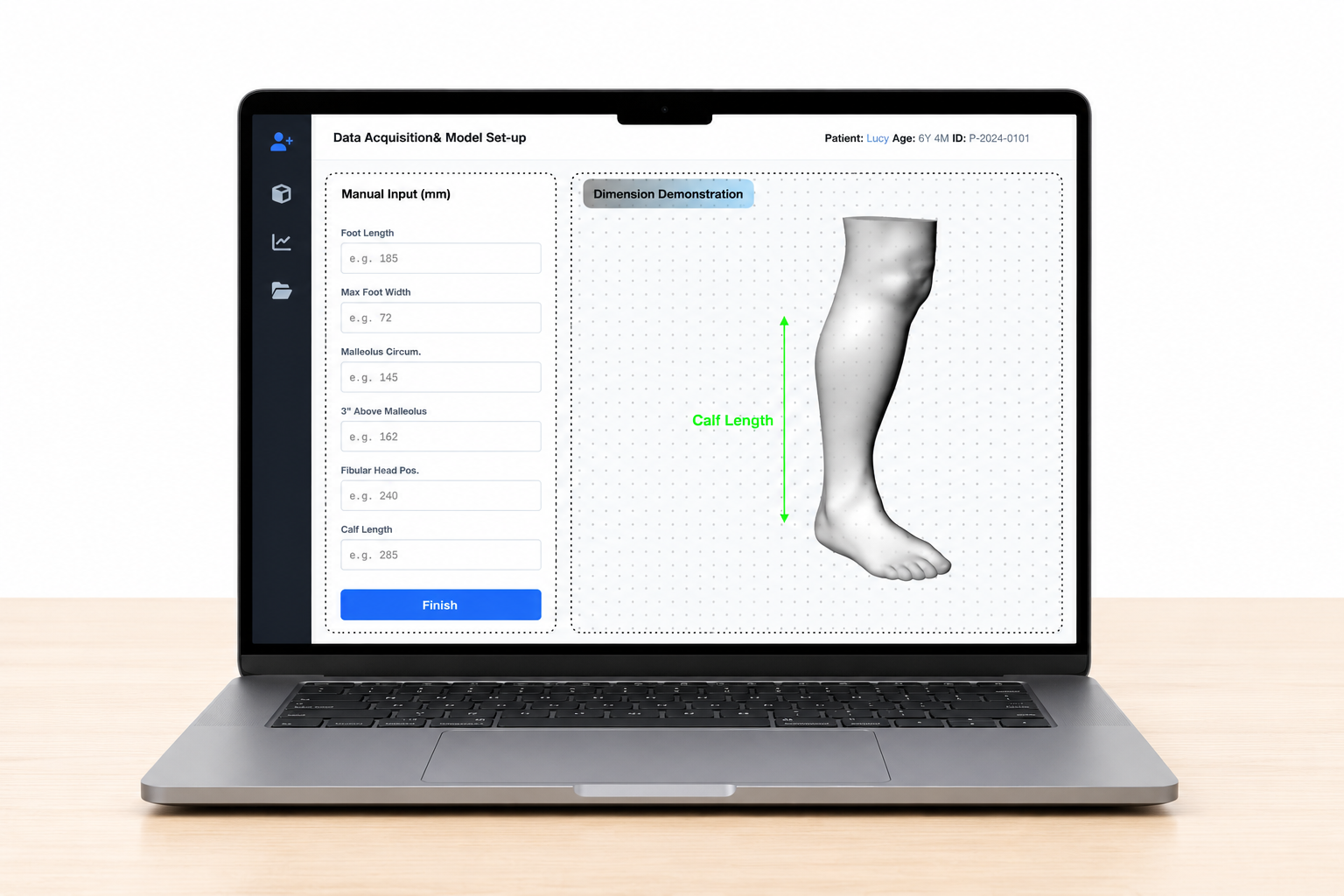
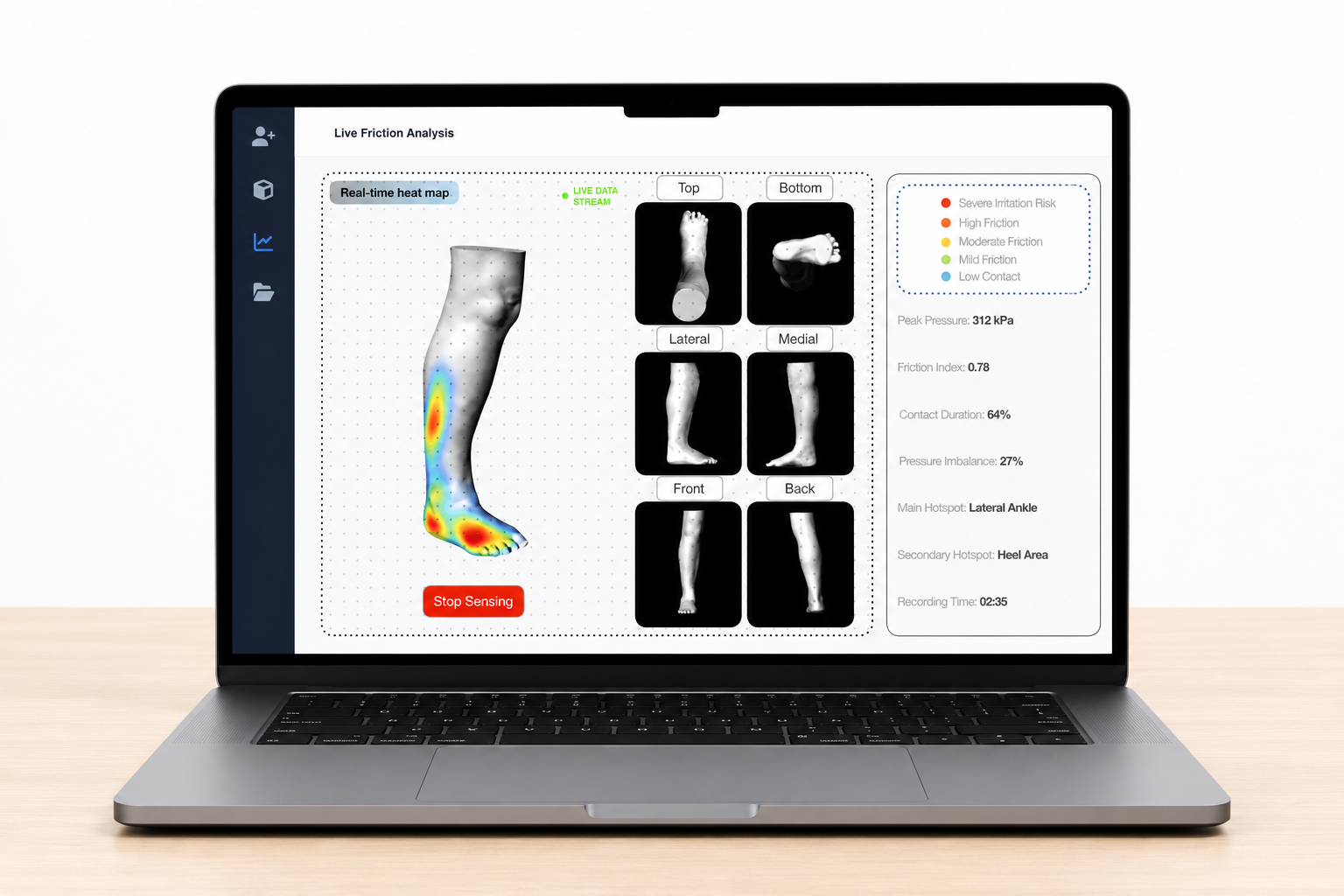
Through real time heatmap visualisation, a 3D lower leg model, and orthographic views, the system translates discomfort areas that are often difficult for young patient to describe into clearer and more accessible data feedback, supporting more accurate AFO adjustments and clinical decision making.
Footwear Design work during Placement Year (untitlab & The Footsoldiers)
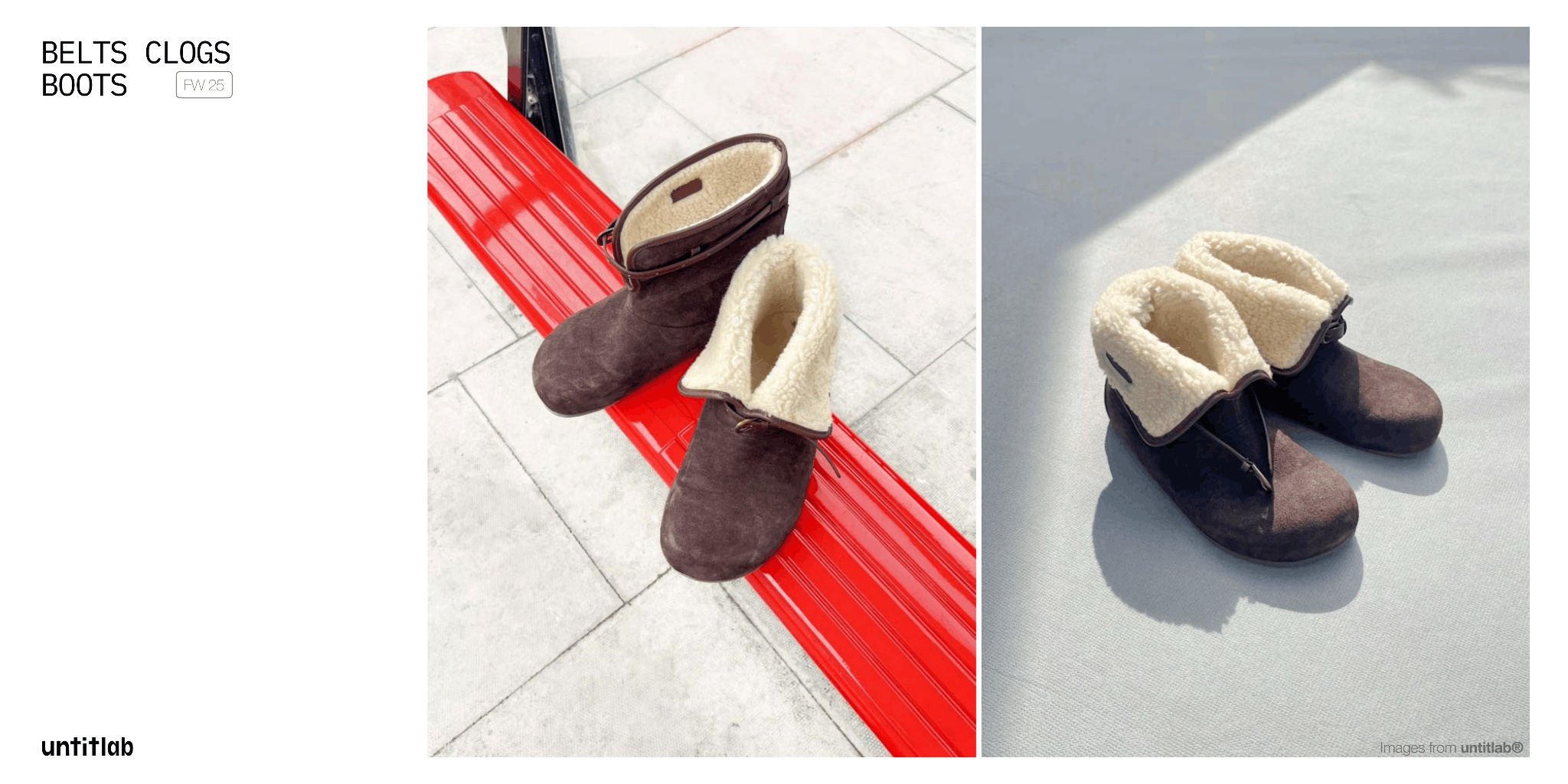
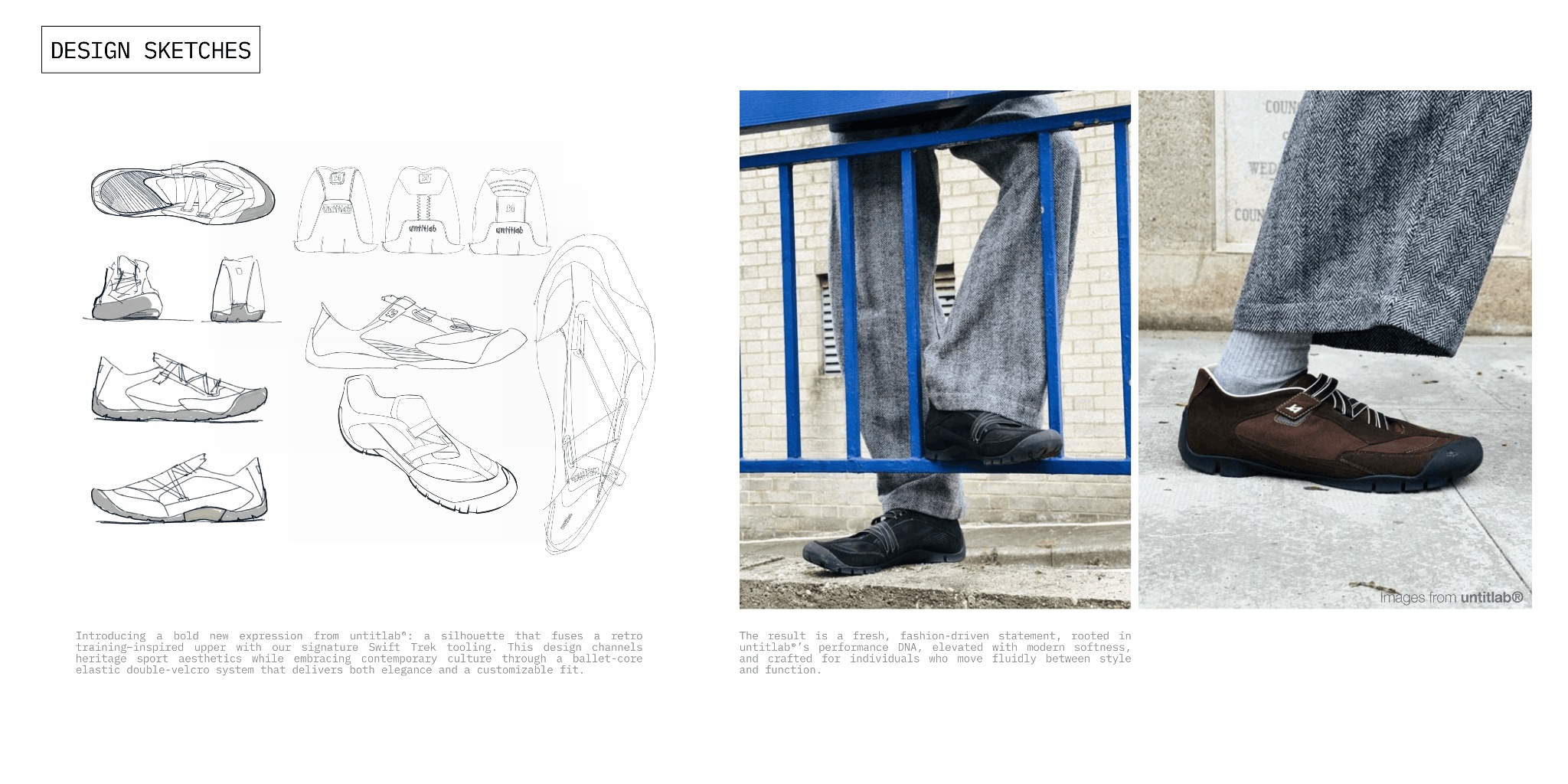
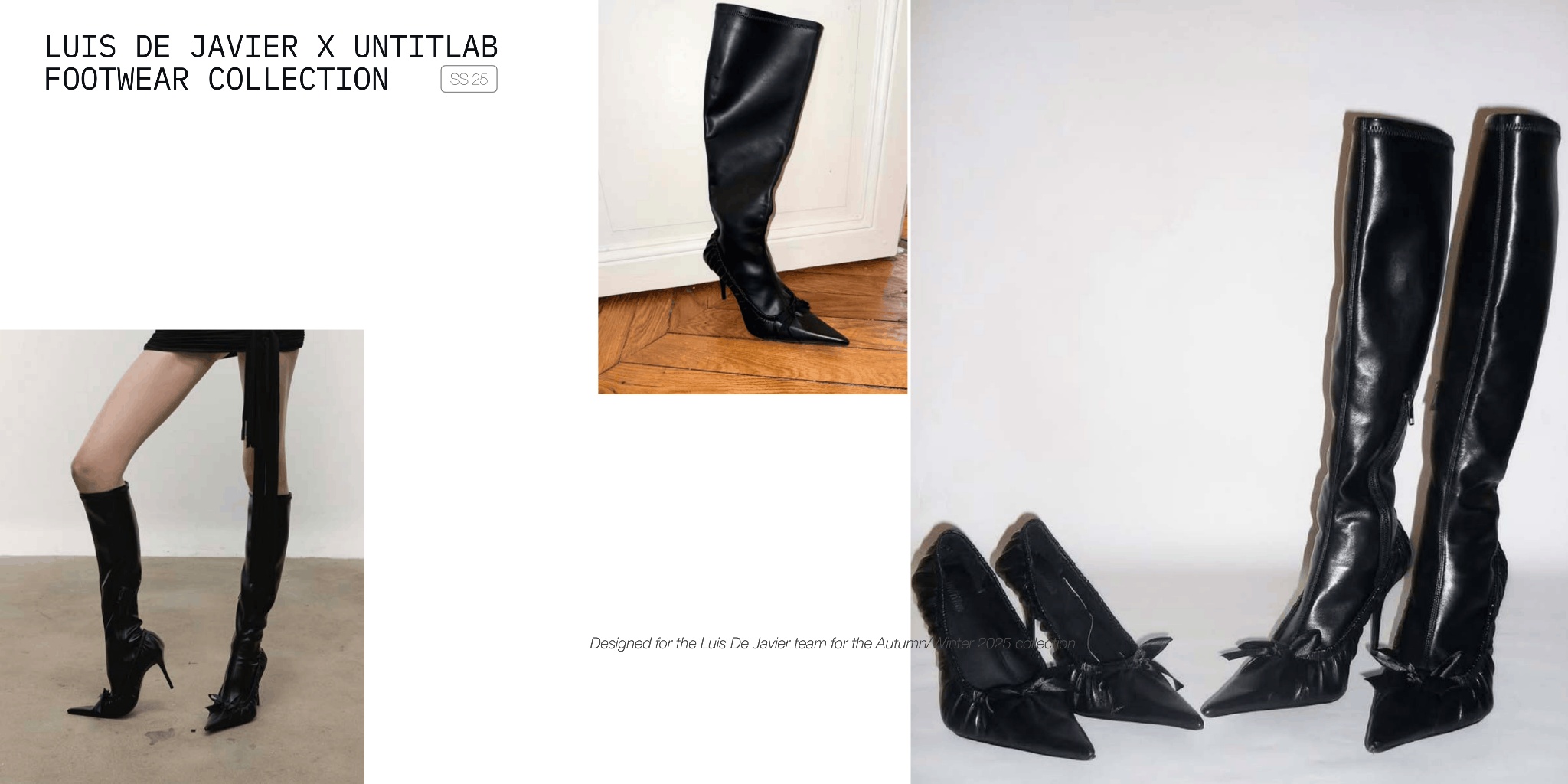
Footwear design work completed during the 2024-2025 placement year at untitlab®, London.