Multidisciplinary designer passionate about inclusive design and manufacturing, creating human-centred solutions to ambitious problems. My final-year project focused on tackling NHS waiting times for children’s speech therapy and providing support for parents during this period.
Sparks
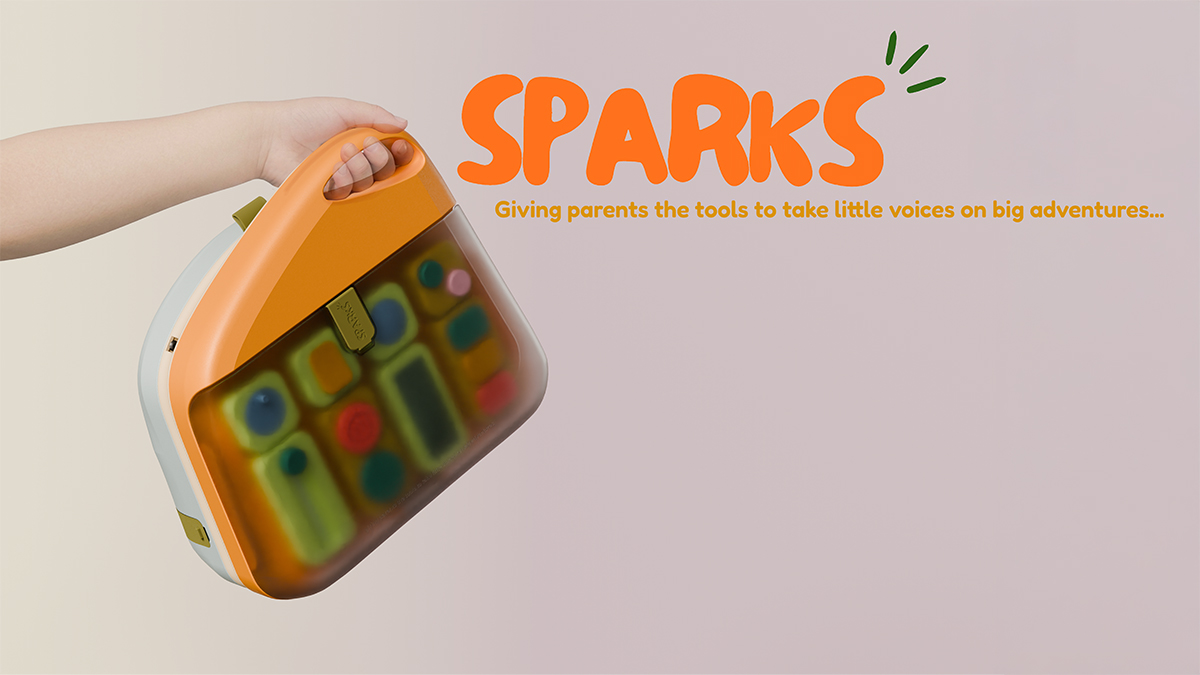
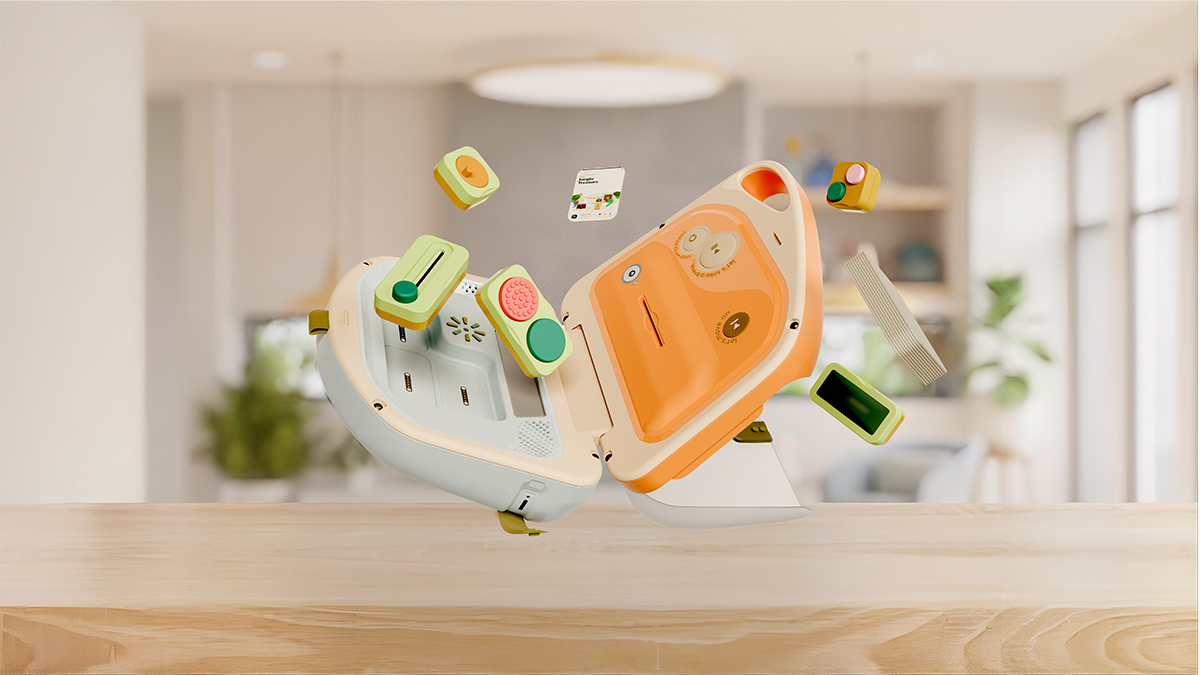
An at-home speech therapy toolkit designed to develop speech during long waiting times. Sparks is designed to be rented to parents of children aged 4–6, where they can insert story cards with tailored speech therapy practices to help guide at-home intervention.
Currently, parents must follow infographics and attempt home intervention with minimal guidance. Children lose interest and parents become anxious.
The Adventure
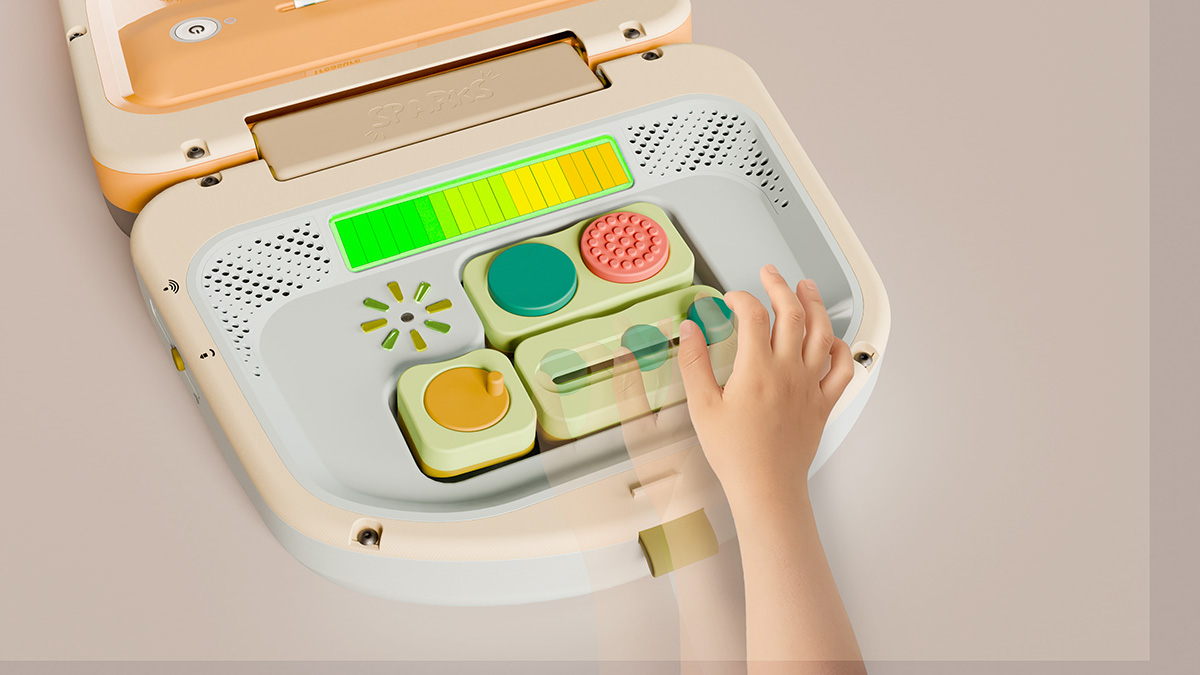
Once the tools are in place and the story card is inserted, Sparks can begin the adventure, taking your little voice on a big adventure. An example challenge may include using the slide technique, common in fluency speech therapy, where the user is instructed to drag the slider while stretching the first letter of a word: “Let’s stretch the word fire… fffff-ire”.
Users can tap along, speak on beat, drag out touch sounds, and identify whether they thought their speech was smooth or bumpy, encouraging self-awareness.
Face-to-face
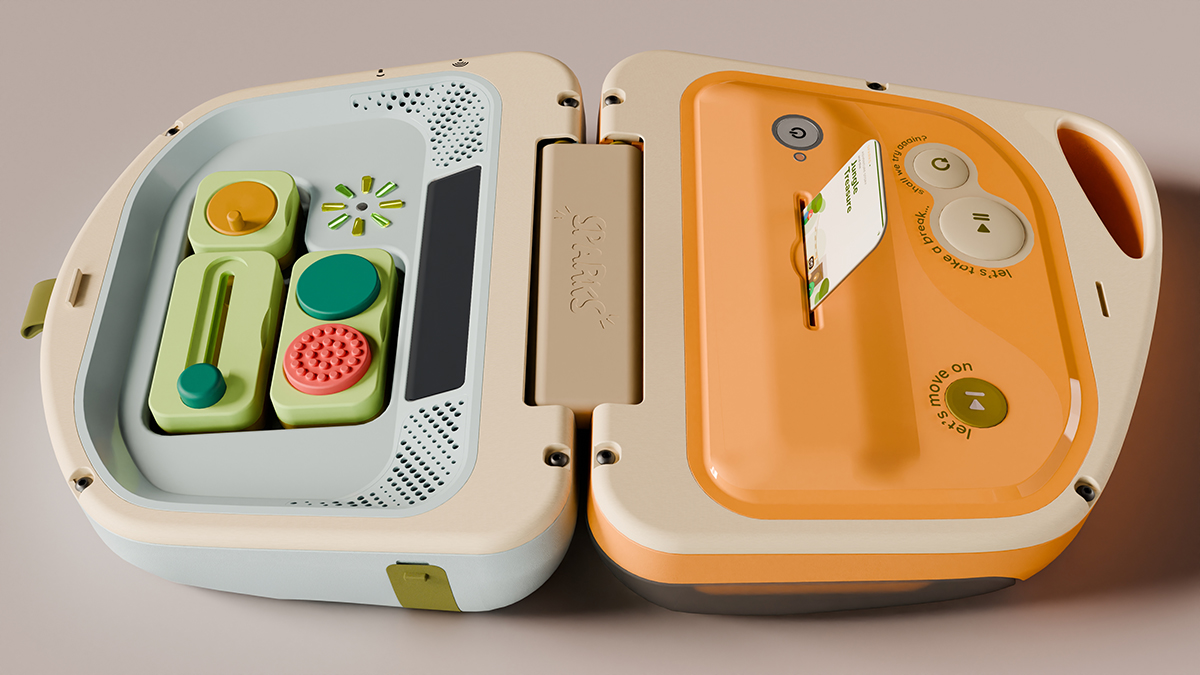
Split into two sides – the parent’s side and the child’s side – designed to be face-to-face, mirroring traditional speech therapy to help develop social skills such as eye contact and gesturing.
Designed to tell stories for those who need help telling their own
Designed with parents, children, and speech specialists
User Testing
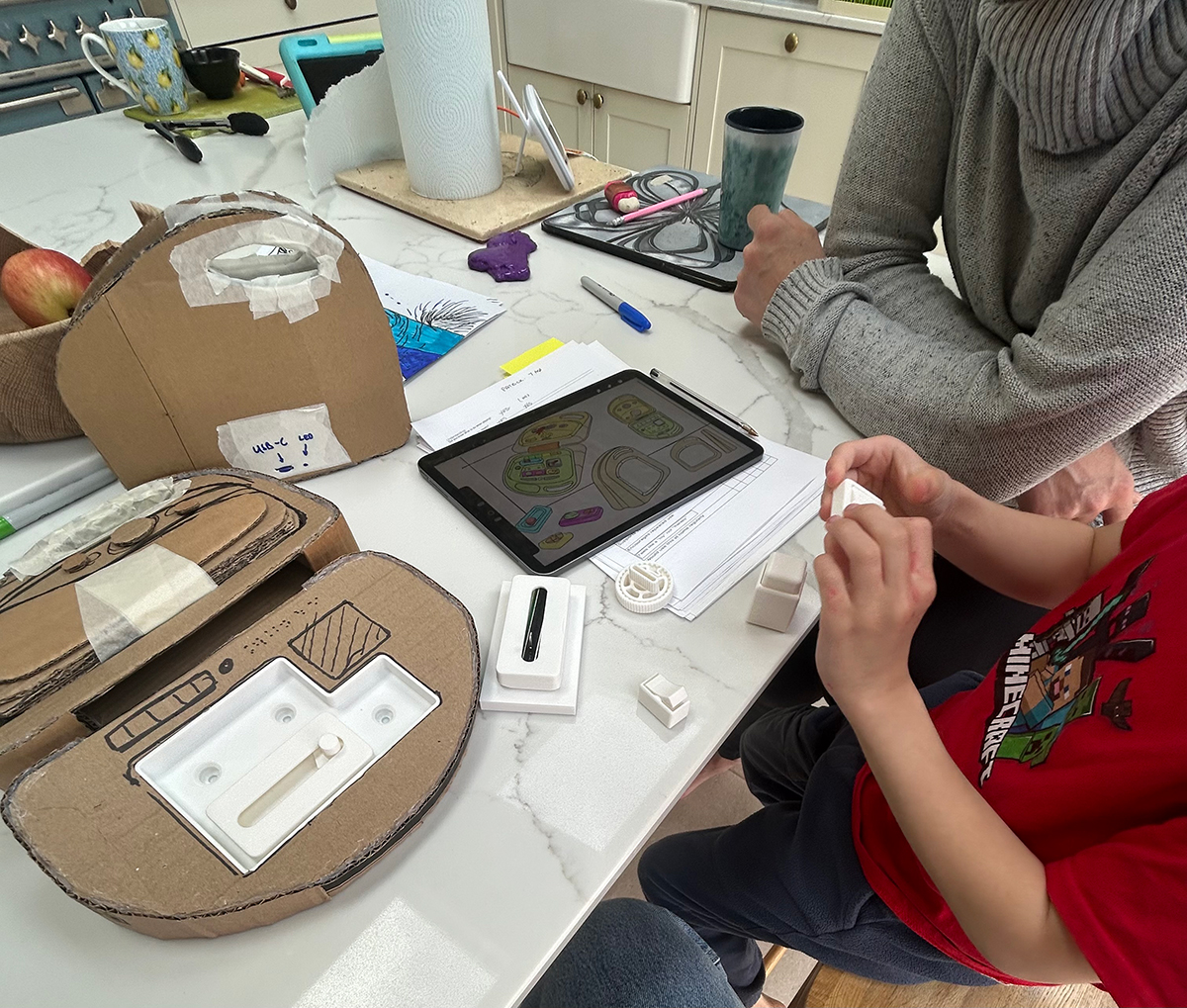
Tested on 5 children and 3 parents over the span of 2 weeks. I used figma prototypes to create a digital alternative to a physical working model. the parents were then tasked with reading a script filled with fun interactions and challenges. The goal here was to prompt speech attempts from the children. I tested two figma prototypes one trialing an image that changed at every stage and one showing flashing colours and a constant animation.
Both worked to engage users, but the users enjoyed the screen version more, while parents agreed they were more engaged with the light-up version. Both insights were taken forward to help develop the dot matrix design, suiting the low-tech approach.
The parents roll
During testing, I had the parents read a script similar to what would be played through the product. Naturally, the parents paused to help and guide the children when they got stuck. This was always the main idea, but I never had to explain it.
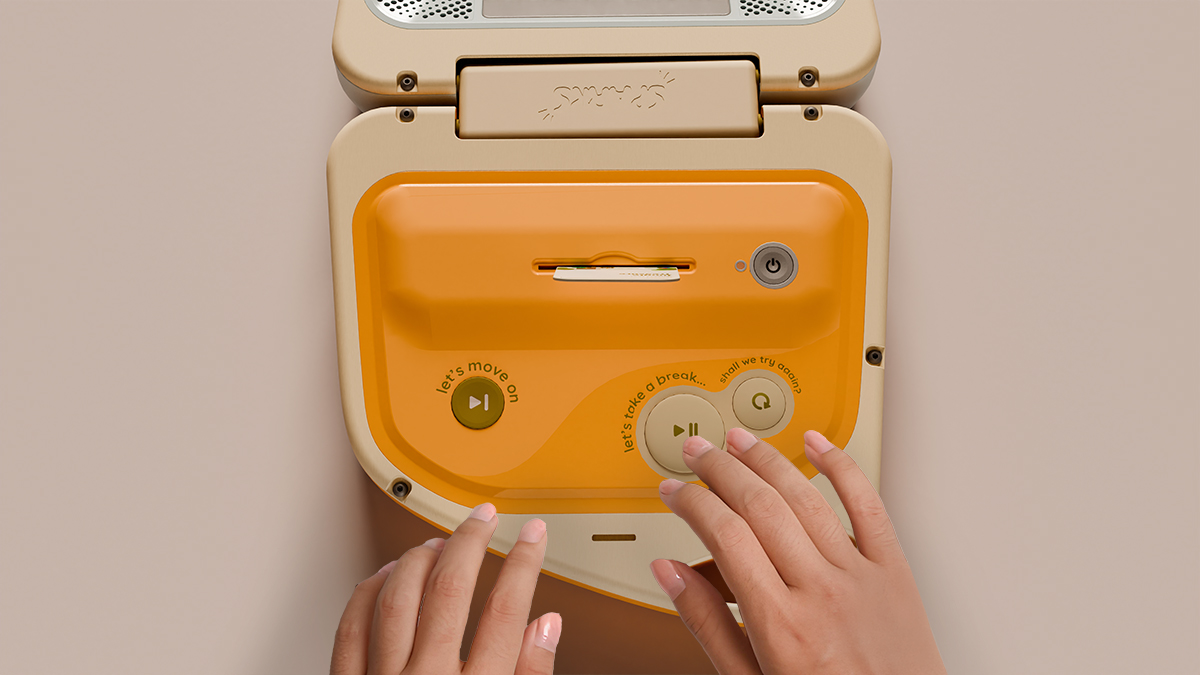
Taking this forward, I further developed the parent’s side with pause, retry, and skip buttons, as well as encouraging message details.
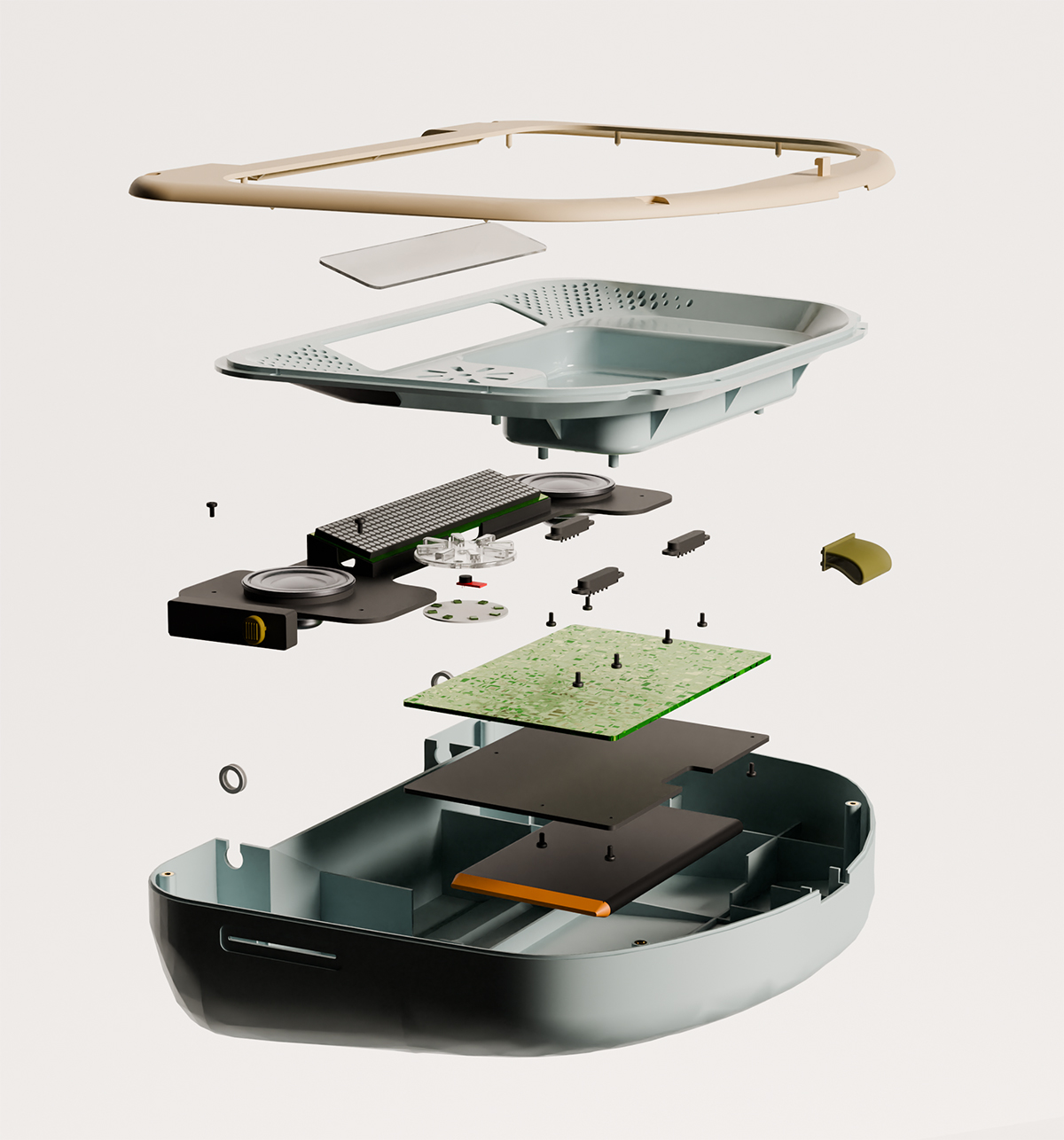
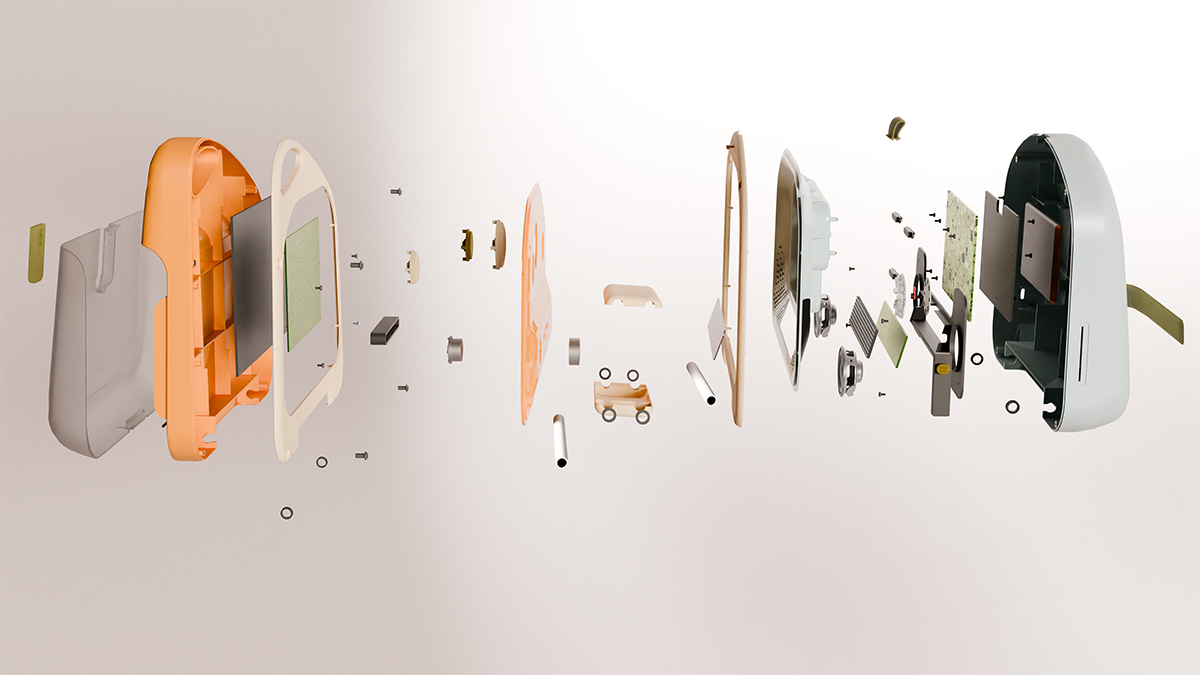
Designed to be loaned, repaired and reused
In many cases, a speech impairment may last a few months, while others may last a lifetime. Parents do not want to invest in a tool they may only need for a short period of time. To better suit this, I positioned Sparks to be loaned through speech therapists as a subscription service, where parents can receive updated cards monthly. Once the child has progressed and Sparks is no longer needed, it can be returned and repaired if needed, ready for the next user.