Strategic and research-driven designer focused on turning complex problems into realistic, user-centred systems. Combines technical prototyping, business awareness and critical thinking to create products that balance functionality, usability, emotional value, and practical constraints rather than chasing unrealistic perfection.
ReFuel
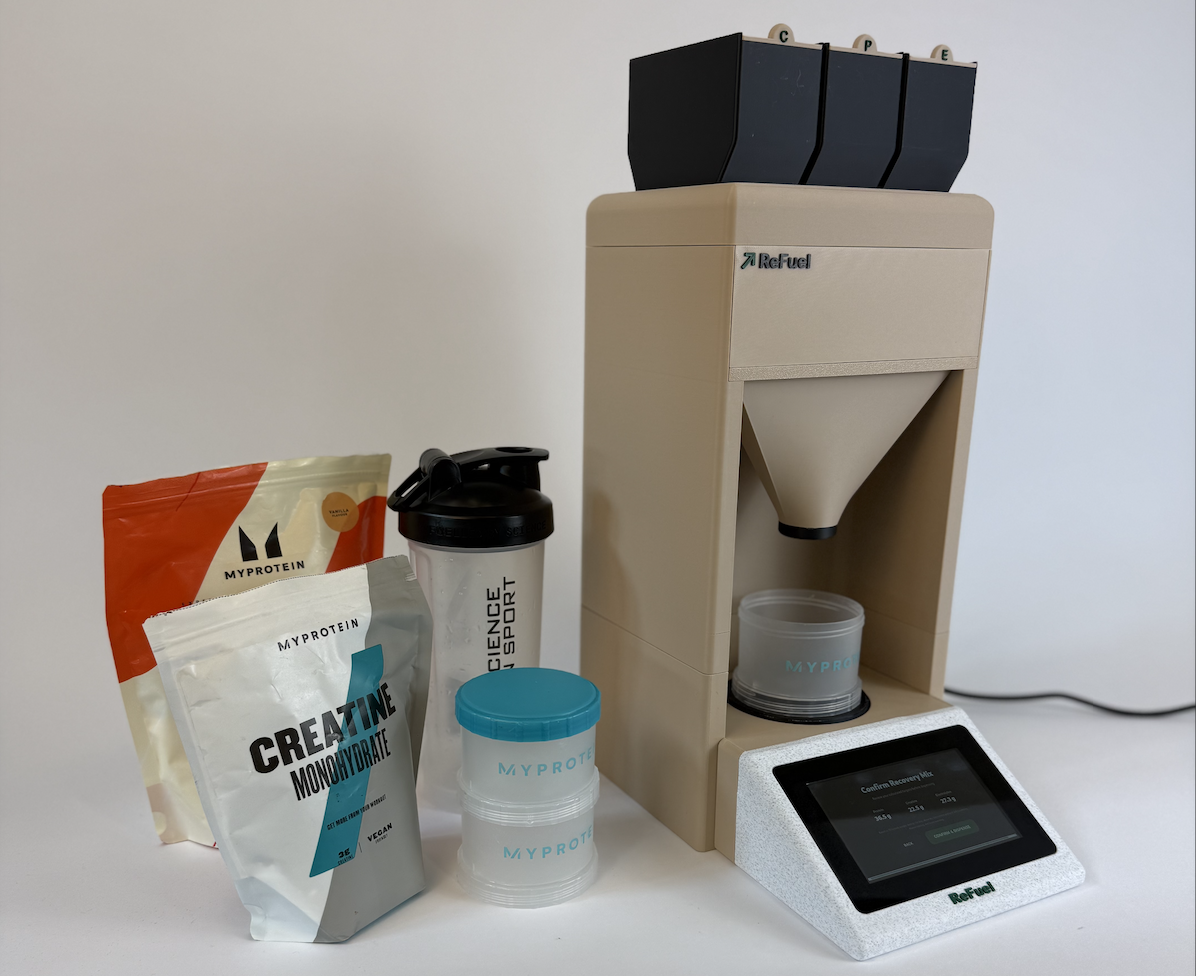
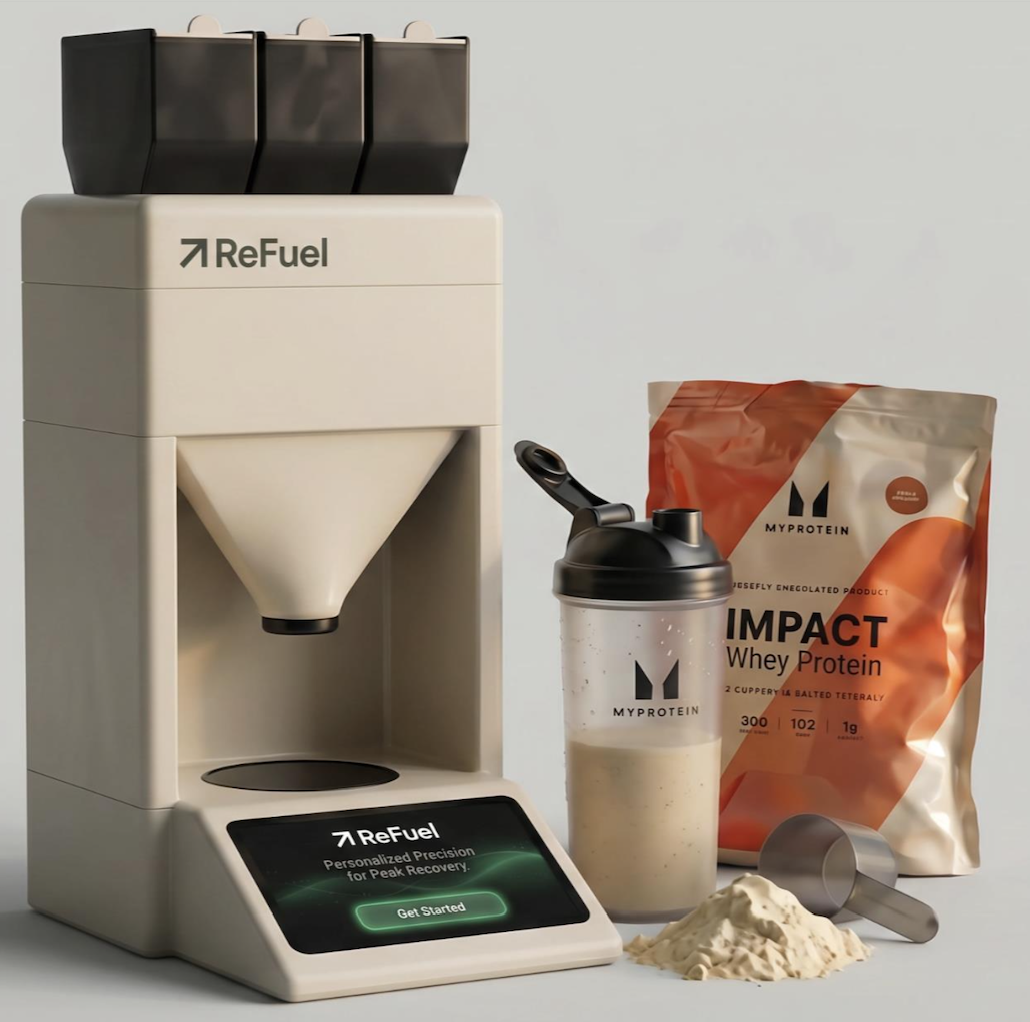
ReFuel is a personalised recovery preparation system developed to help users prepare recovery supplement mixes that better match their individual exercise demands and recovery needs. Through a touchscreen interface, the user provides key information such as body weight, exercise duration, and recovery goals, allowing the system to calculate suitable quantities of protein, creatine and electrolytes using evidence-based nutritional guidance.
The product combines digital interaction, automated dispensing and integrated weighing technology to create a practical and user-friendly recovery experience. The aim is to make post-exercise recovery simpler, more consistent and more accessible for amateur athletes and active users.
Refilling Compartments
The supplement compartments are externally accessible containers designed to store the protein, creatine and electrolyte powders. Embossed lettering identifies each supplement clearly, improving usability and reducing refill errors, while the external positioning simplifies access and limits contamination risks within the internal mechanical system.
Internal Auger Dispensing
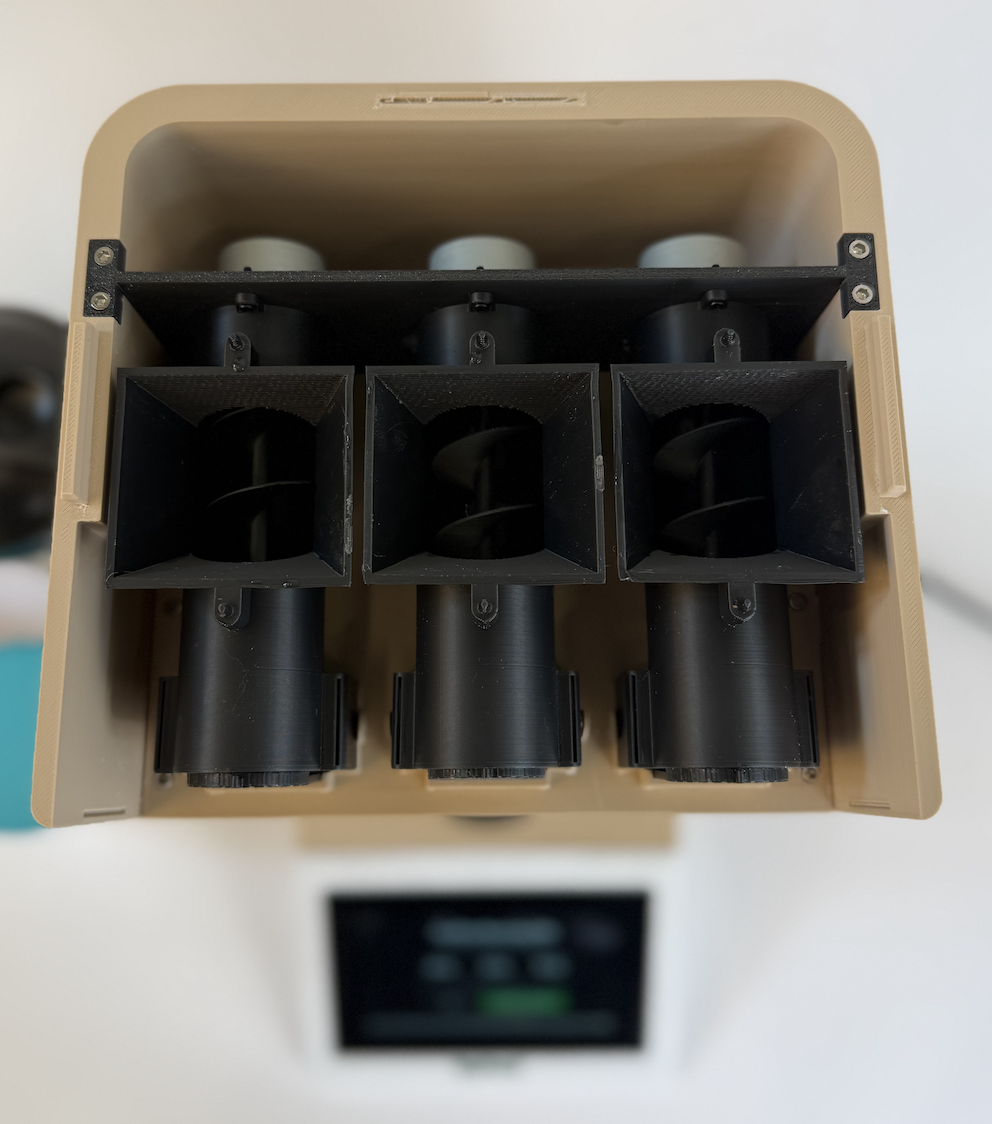
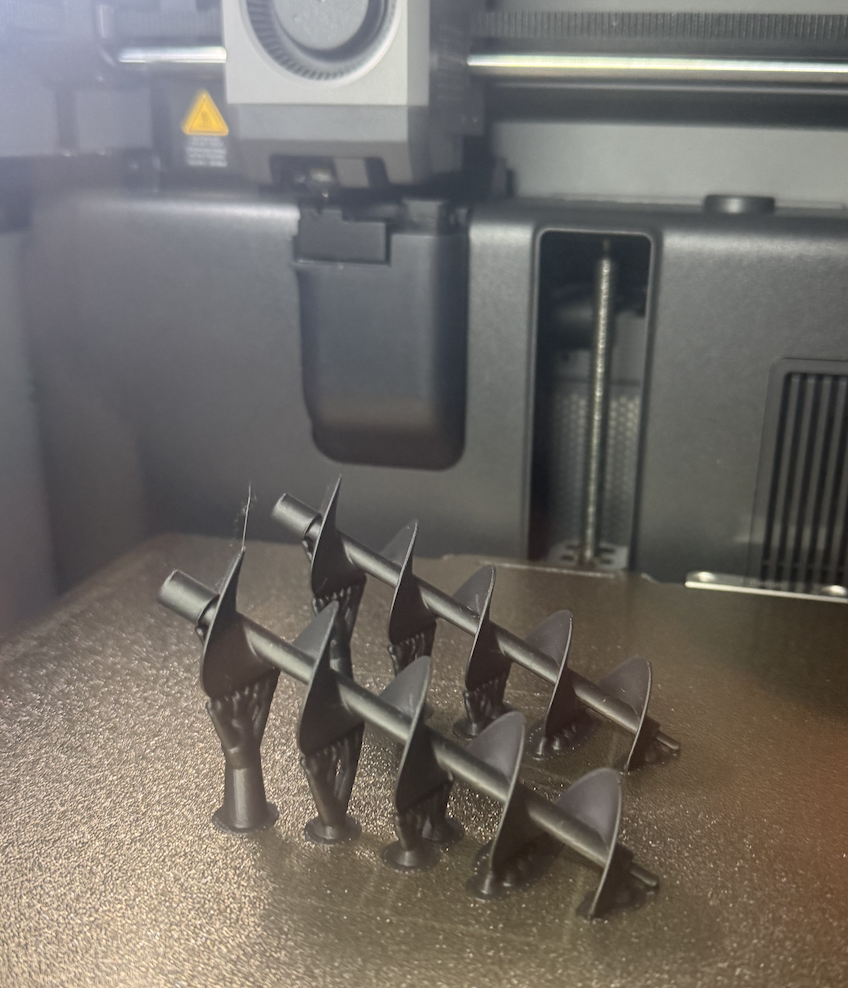
The dispensing system uses three separate auger mechanisms, each independently powered and dedicated to a single supplement powder: protein, creatine, or electrolytes. Each auger is driven by its own stepper motor, rotating a helical screw inside enclosed tubing to push powder from the storage compartment towards the output funnel in controlled quantities.
Electronics & Manufacturing The Prototype
The development of ReFuel required the integration of electronic systems and manufacturing processes to create a functional and realistic prototype. This section explores the electronic architecture powering the product alongside the manufacturing methods, material choices and assembly considerations used throughout the prototyping process.
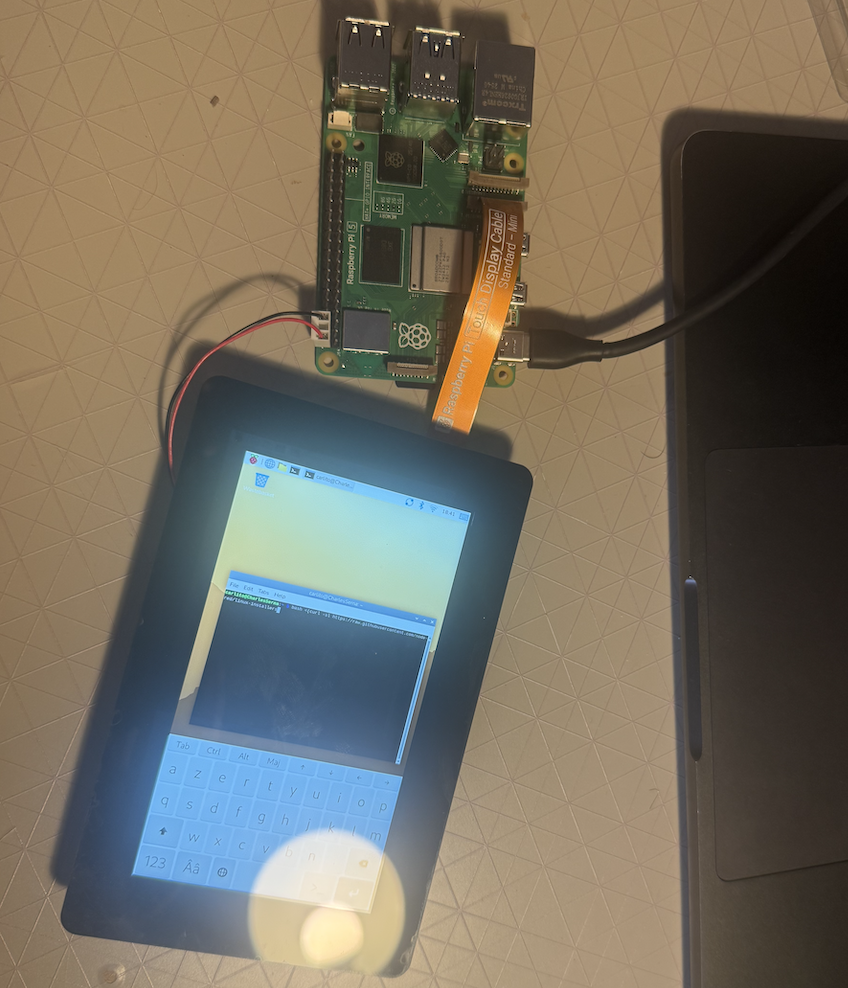
Using the combination of a Pi 5 and a touchscreen display. UI made through Figma.
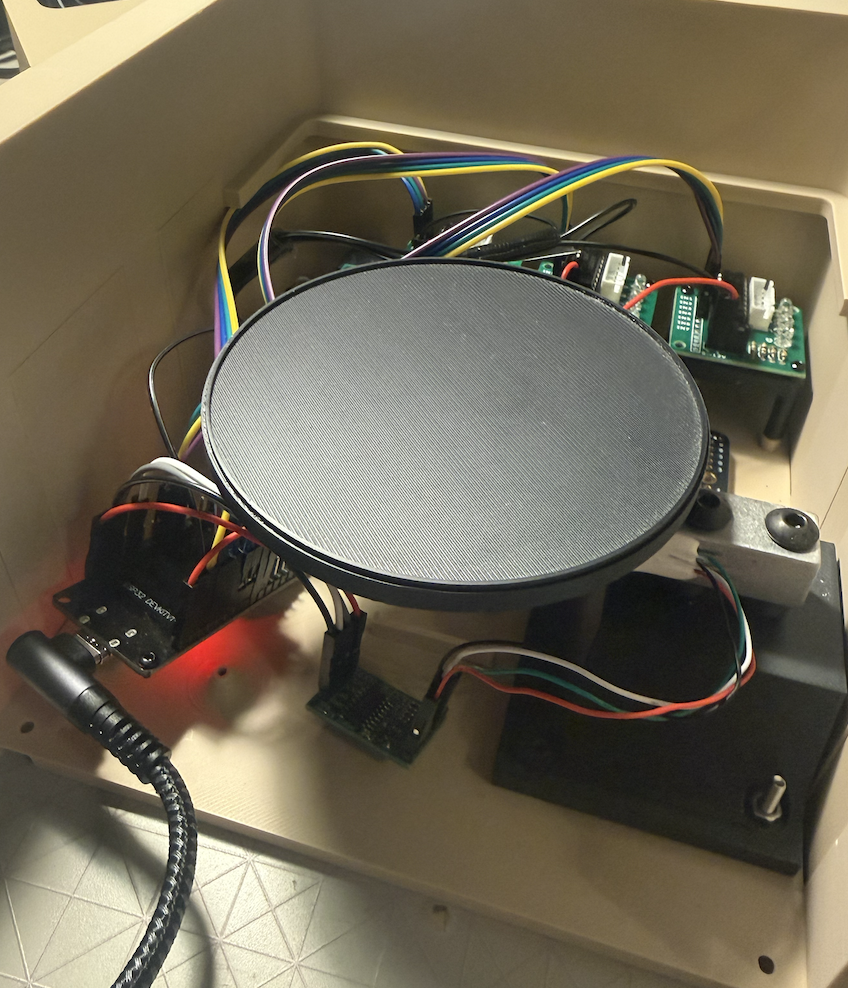
The system uses various components to perform its function. Including: 3 motors & drivers, 5kg load cell and its sensor, ESP32 for communication,
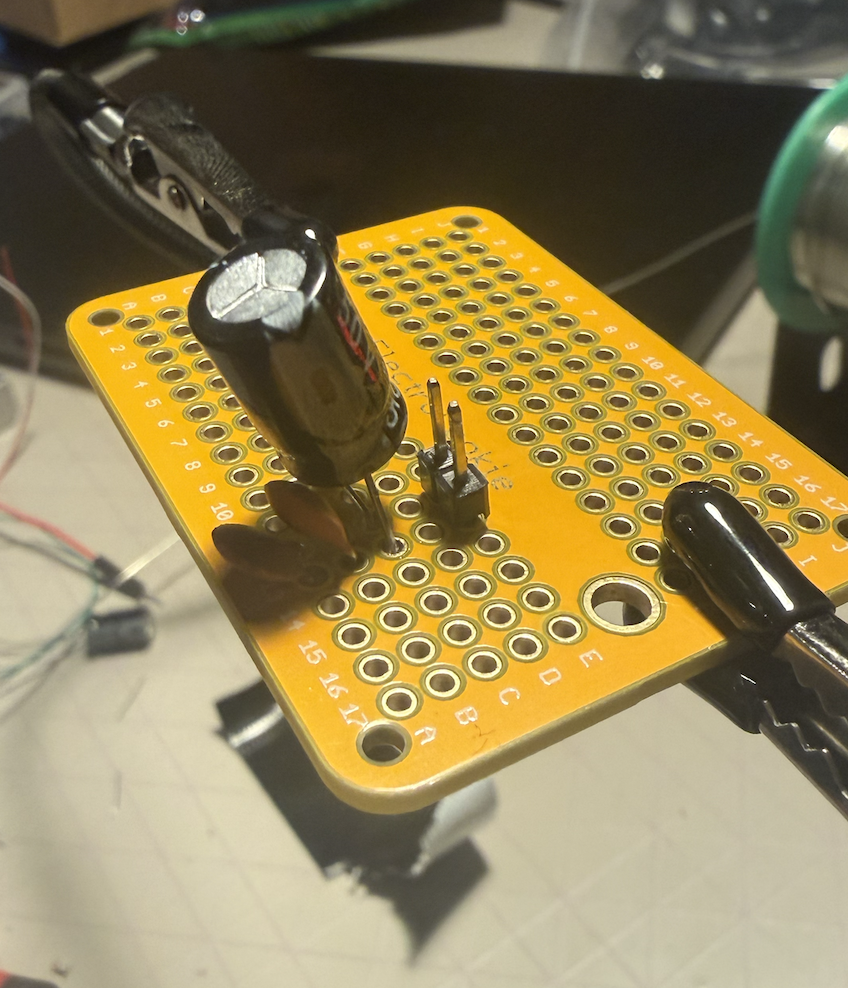
Soldering was performed to create a voltage stabiliser. Made from 3 capacitors in order to prevent noise from disrupting load cell readings.
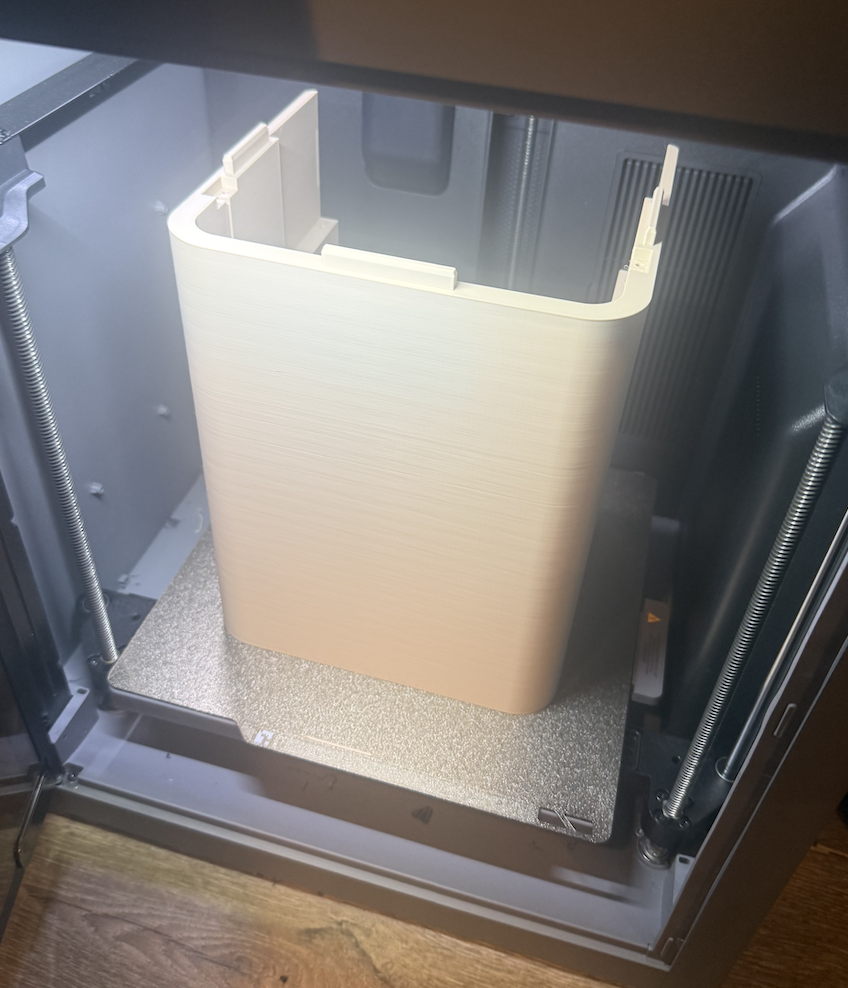
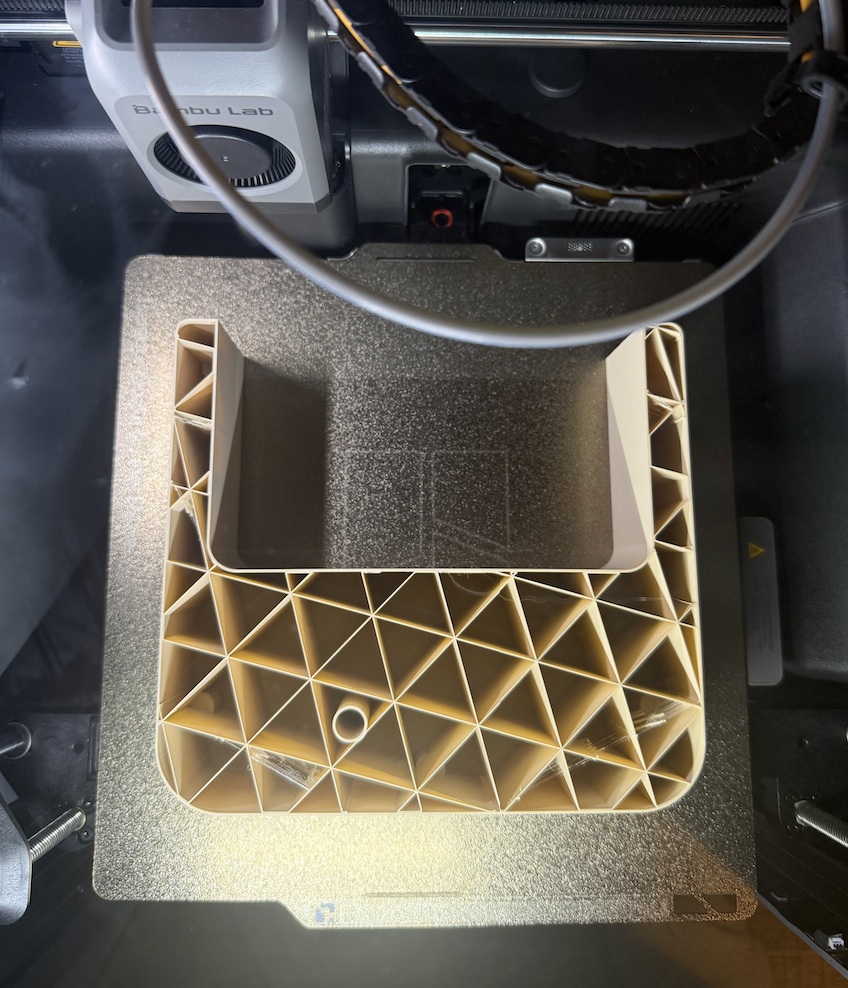
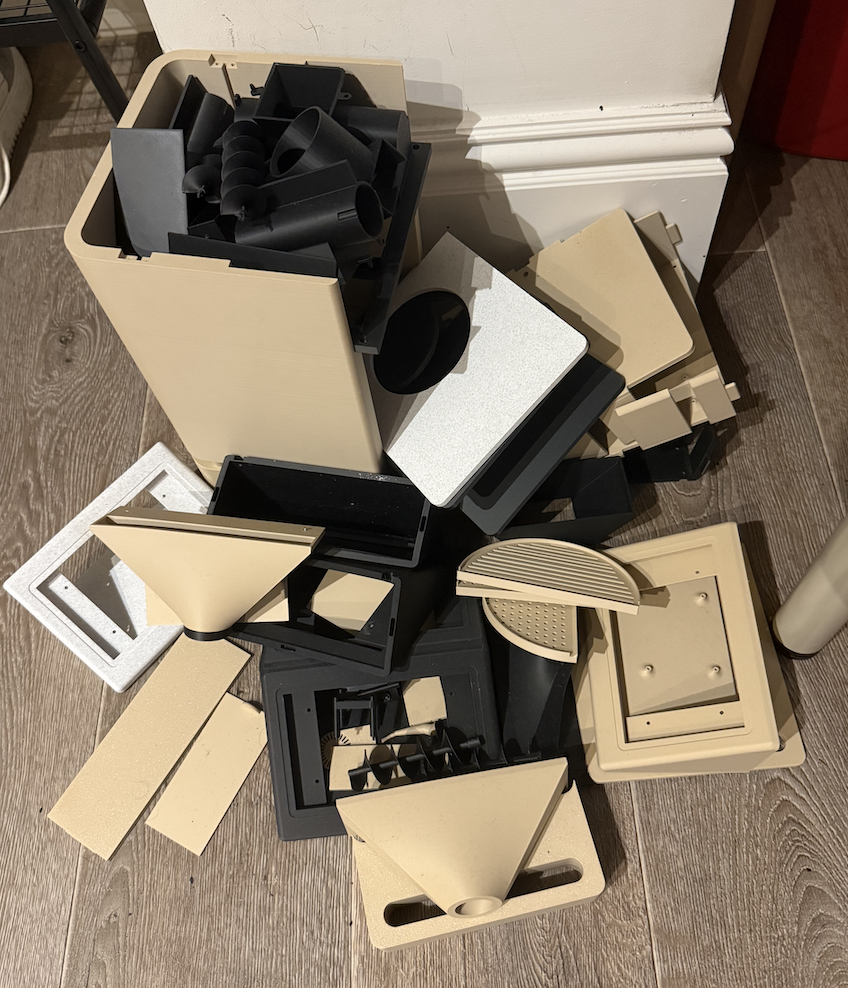
The prototyping stage involved extensive iterative development, with numerous prints and physical tests carried out before reaching the final solution. Each prototype was used to evaluate and refine different aspects of the product, including dispensing performance, assembly, ergonomics, usability and manufacturability, allowing continuous improvements to be implemented throughout the development process.
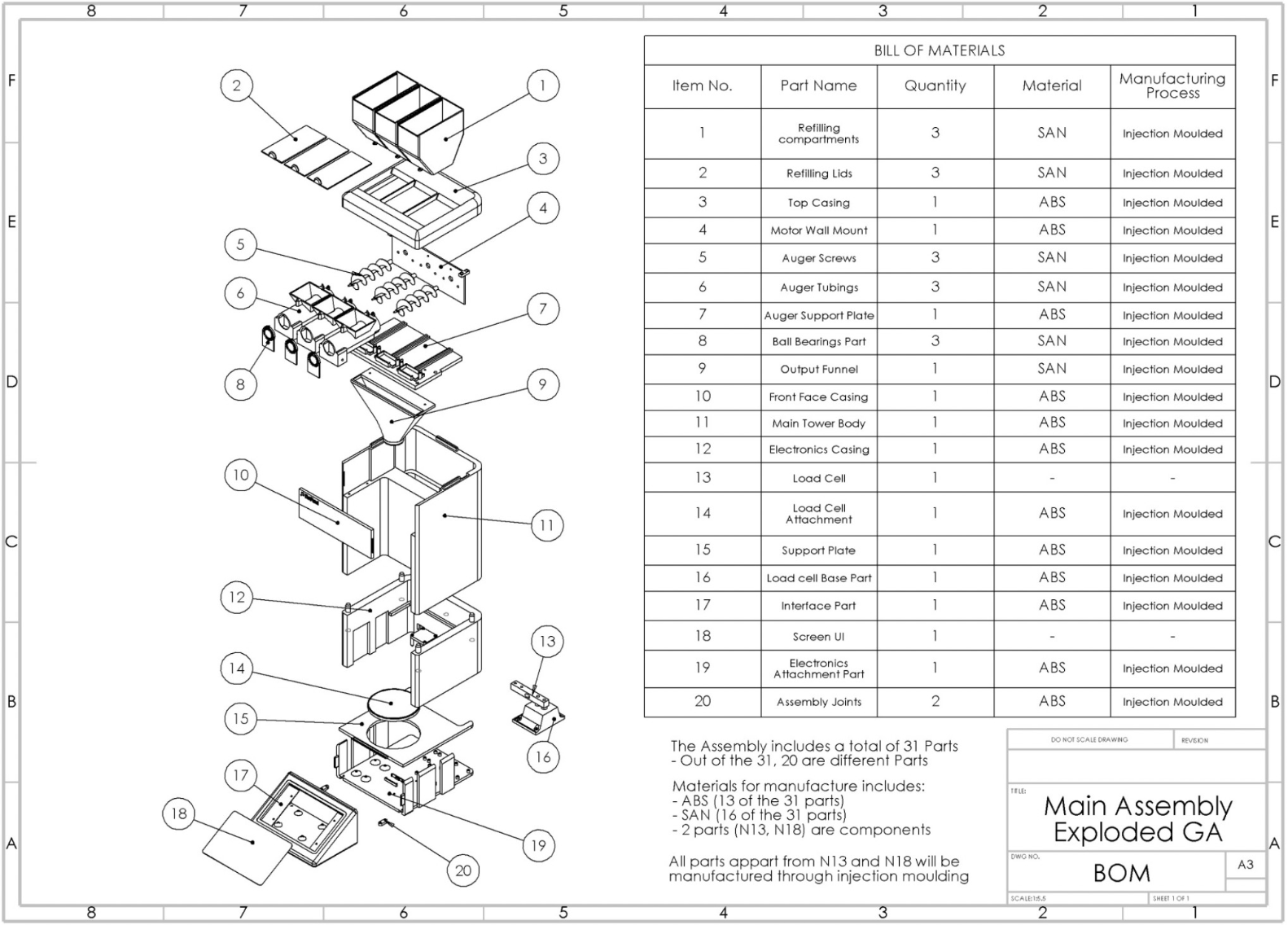
DFM – Assembly Exploded View
The final assembly was developed with ‘Design for manufacture principles’ in mind, using a reduced number of repeatable components and manufacturing processes to simplify large-scale production. The majority of parts were designed for injection moulding using ABS and SAN plastics, allowing improved production efficiency, part consistency, and assembly practicality while maintaining suitable structural and aesthetic properties for the product.