I am a human-centred product designer passionate about functional, innovative and accessible design. I enjoy problem-solving, collaboration and inclusive thinking to improve real user experiences, creating thoughtful and impactful products that respond to genuine needs and everyday challenges.
SIVO.GO
SEE. FEEL. KNOW.
Problem
Over 1.5 billion people globally live with hearing loss, projected to rise to 2.5 billion by 2050, creating growing demand for accessible safety products. Yet many public safety systems still rely on sound-only alerts, making people with hearing loss 1.3 to 1.4 times more likely to experience injury during emergencies.
For Deaf and hard-of-hearing travellers, the risk is higher in unfamiliar hotels or short-stay accommodation where emergency alarms, doorbells and room signals are not always visual, tactile or accessible. This becomes especially dangerous when hearing aids or cochlear implants are removed for sleeping or showering, creating “off-device” gaps where key alerts may be missed. Existing solutions are often bulky, single-purpose or dependent on hotel infrastructure, making them expensive and difficult to trust, pack and use consistently.
Solution
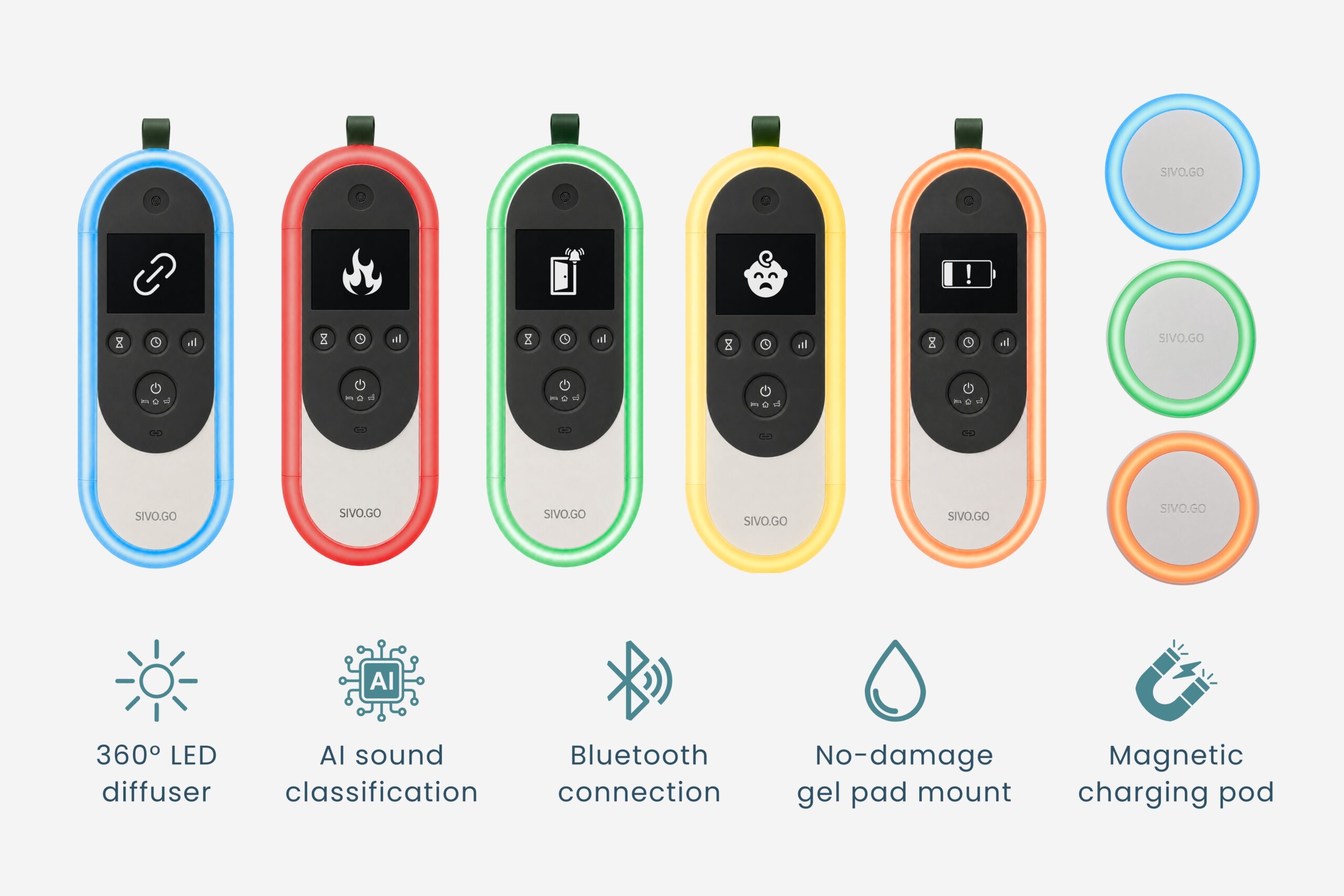
SIVO.GO is a compact, portable sensory safety system designed for Deaf and hard-of-hearing travellers. It converts room sounds and door events into visual, vibration and screen-based alerts, helping users stay aware across sleeping, bathing and general room use.
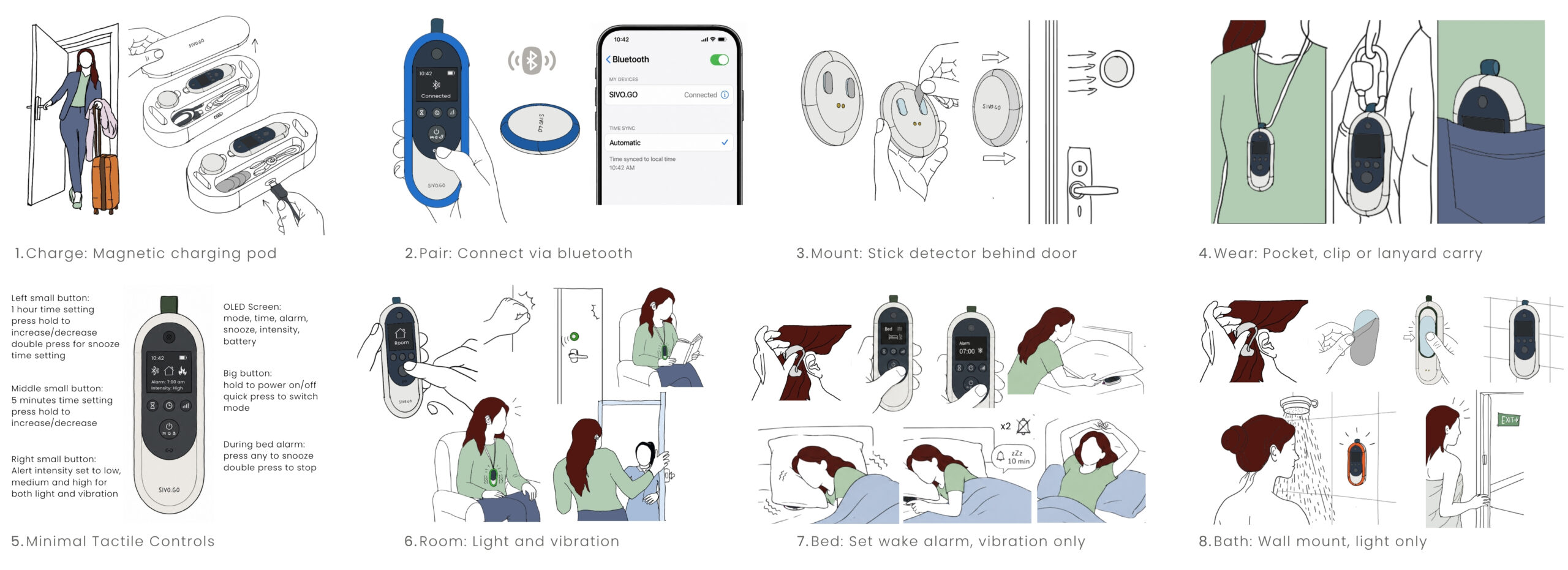
The system includes a handheld alert device, a reusable door-vibration detector to mount behind the door, and a compact magnetic charging pod for travel. User research highlighted the need for one discreet, user-controlled system that works independently off Wi-Fi or hotel infrastructure. With AI sound classification, Room, Bed and Bath modes, and multi-sensory alerts, SIVO.GO gives travellers a reliable, accessible and independent way to feel safer wherever they stay.
Design for Manufacture
SIVO.GO uses a modular, tool-free assembly approach with snap fits, interference fits and clearly separated internal components. The alert device and charging pod are designed for efficient manufacture, easy assembly and reliable everyday use. Draft angles, rounded edges, consistent wall thicknesses and silicone membranes support injection moulding, durability and splash resistance.
Scenario of Use
Iterative Development and Testing
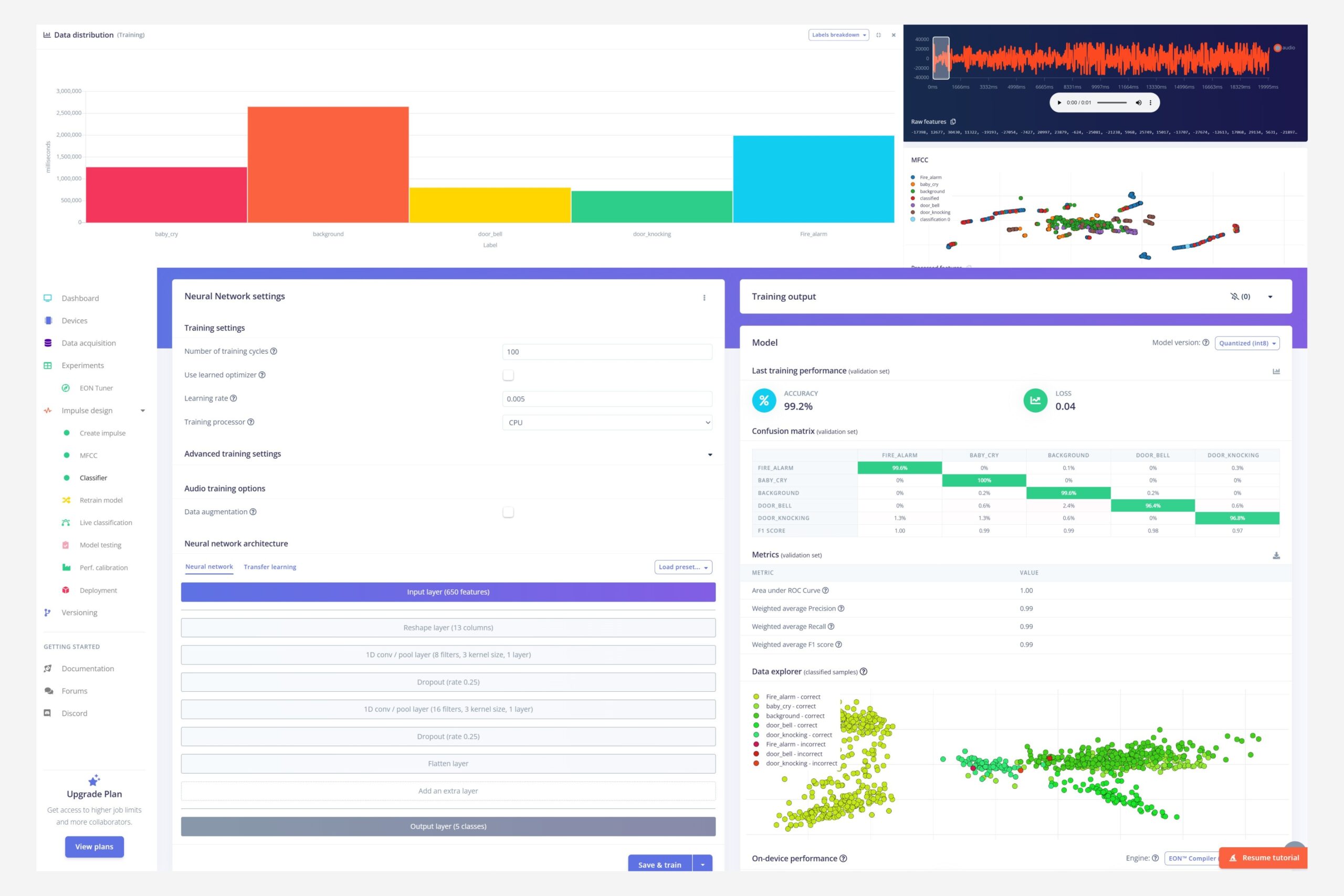
Machine learning development using Edge Impulse to train and test AI sound classification samples for key room alerts.
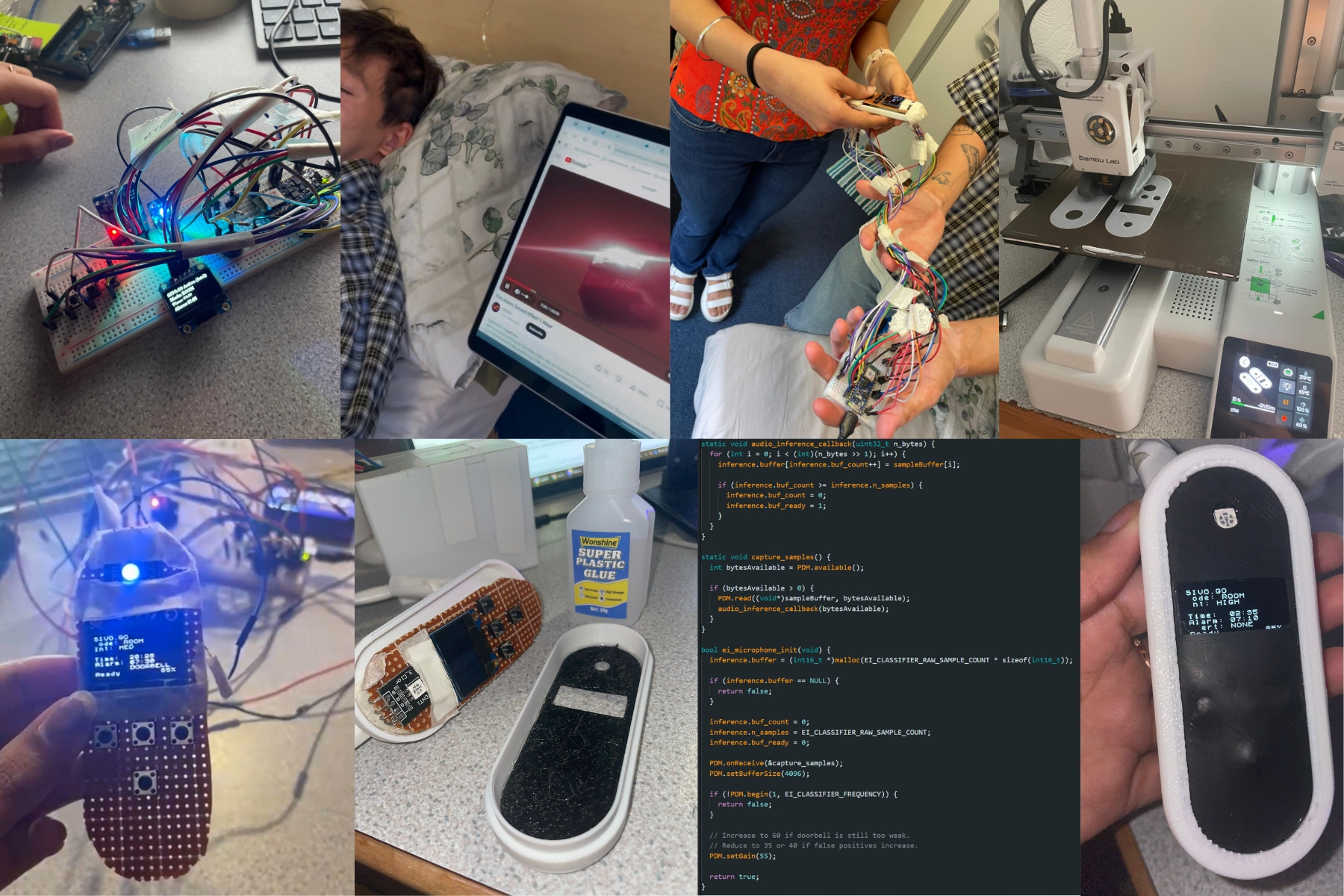
Iterative prototyping, electronics development, 3D printing and user testing informed the refinement of form, interface, alert behaviour and real-world usability.
Early Prototype Demonstration
Warning: This video contains flashing lights, vibration demonstrations and loud alarm/audio simulation, which may be sensitive or triggering for some viewers, including individuals with photosensitive epilepsy, sensory sensitivities, anxiety, trauma related to alarms, or sound sensitivity. Viewer discretion is advised.