As a designer with a focus on environmental design, I aim to connect the dots between people and the world around them. I’m passionate about creating meaningful products that make environmental issues more visible, understandable and accessible in everyday life.
Airloom
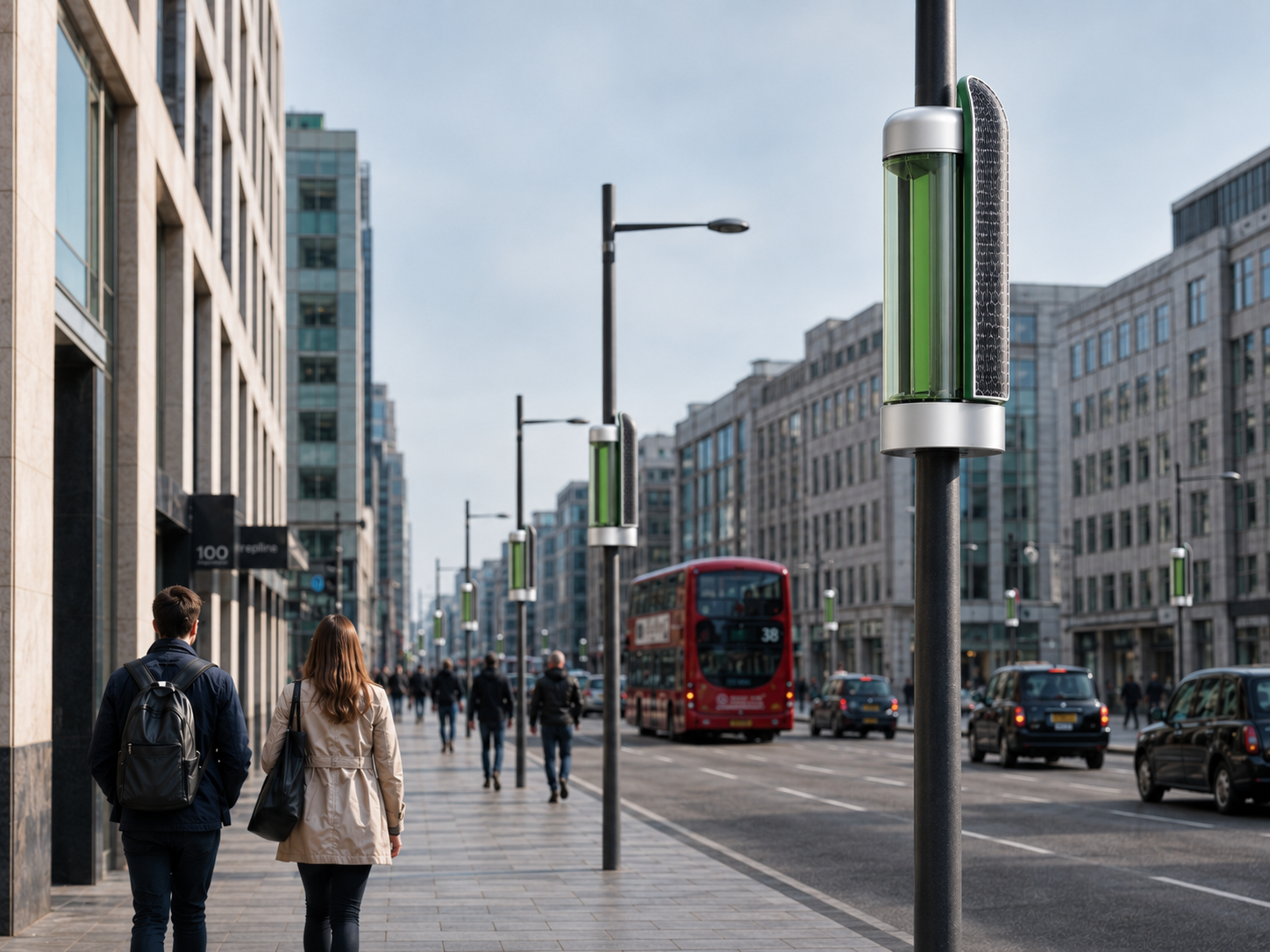
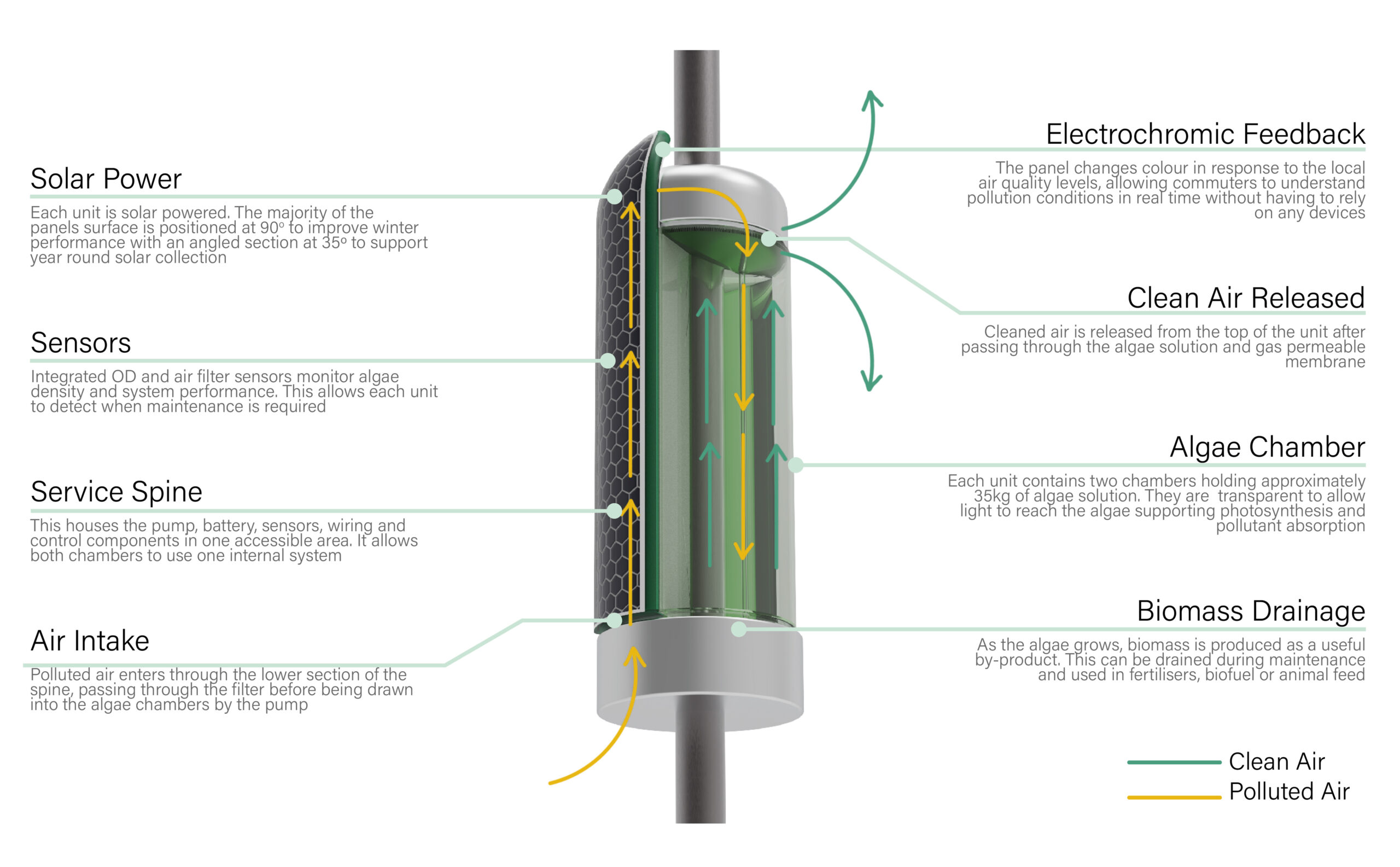
Airloom is a post mounted algae bioreactor that reduces commuter exposure to air pollution while making the problem of air quality visible through real time colour feedback.
It is built around the idea that clean air should be visible, understood and protected. The brand connects people, nature and city infrastructure by turning invisible pollution into a clear public message.
The Invisible Problem
Air pollution is one of the most serious environmental health issues in cities, but it often goes unnoticed because people cannot see what they are breathing. The World Health Organization states that 99% of the global population breathes air that exceeds its air quality limits, while the State of Global Air 2024 report found that air pollution contributed to 8.1 million deaths in 2021, making it the second leading risk factor for death globally. Despite this, many commuters move through polluted streets every day without understanding how much air quality can change between different roads, traffic levels and urban spaces. This invisibility means the problem can feel distant or less urgent, even though it directly affects long-term respiratory and cardiovascular health.
Air pollution is difficult for the public to engage with because it is invisible compared to littering, flooding or traffic congestion, poor air quality is not always immediately noticeable. This results in people underestimating the risk and their individual contribution to the air quality.
How Airloom Works
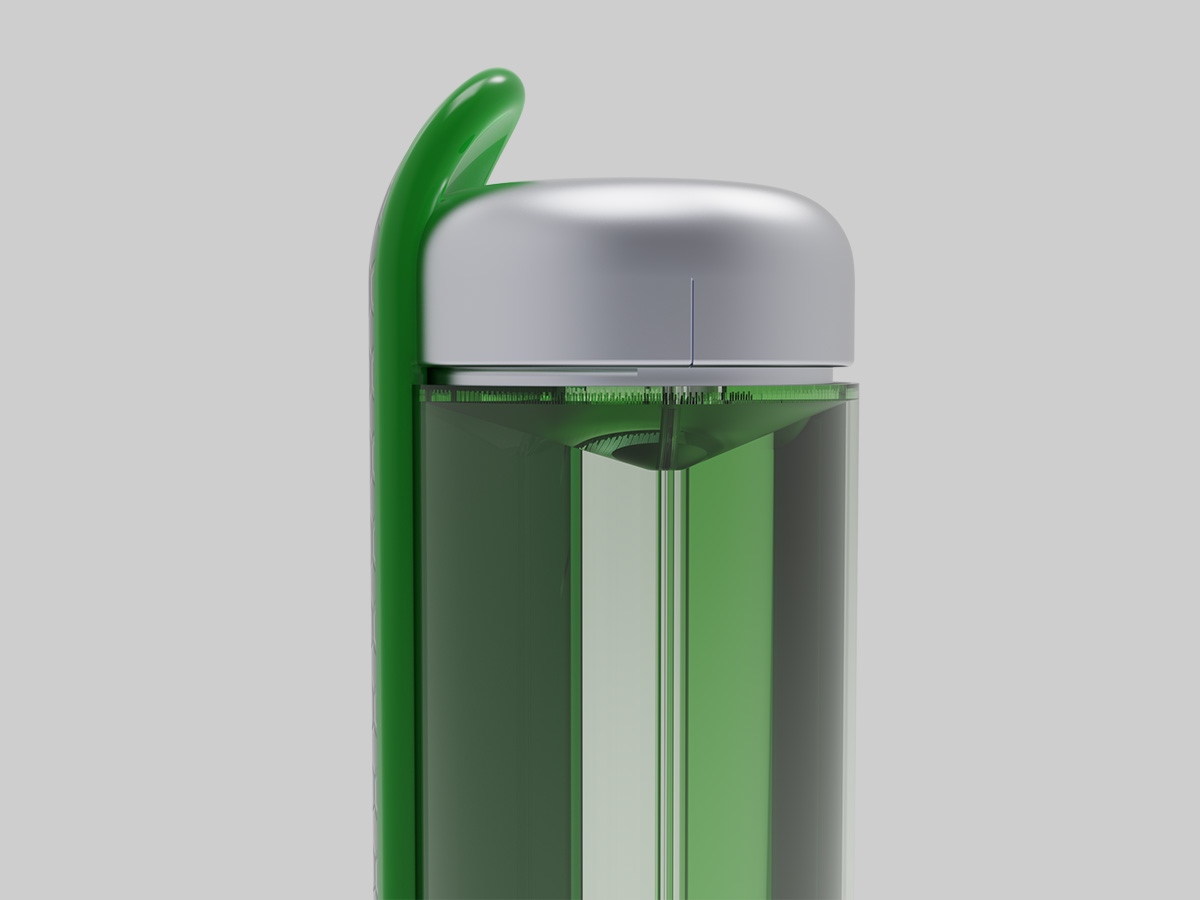
Good Air Quality
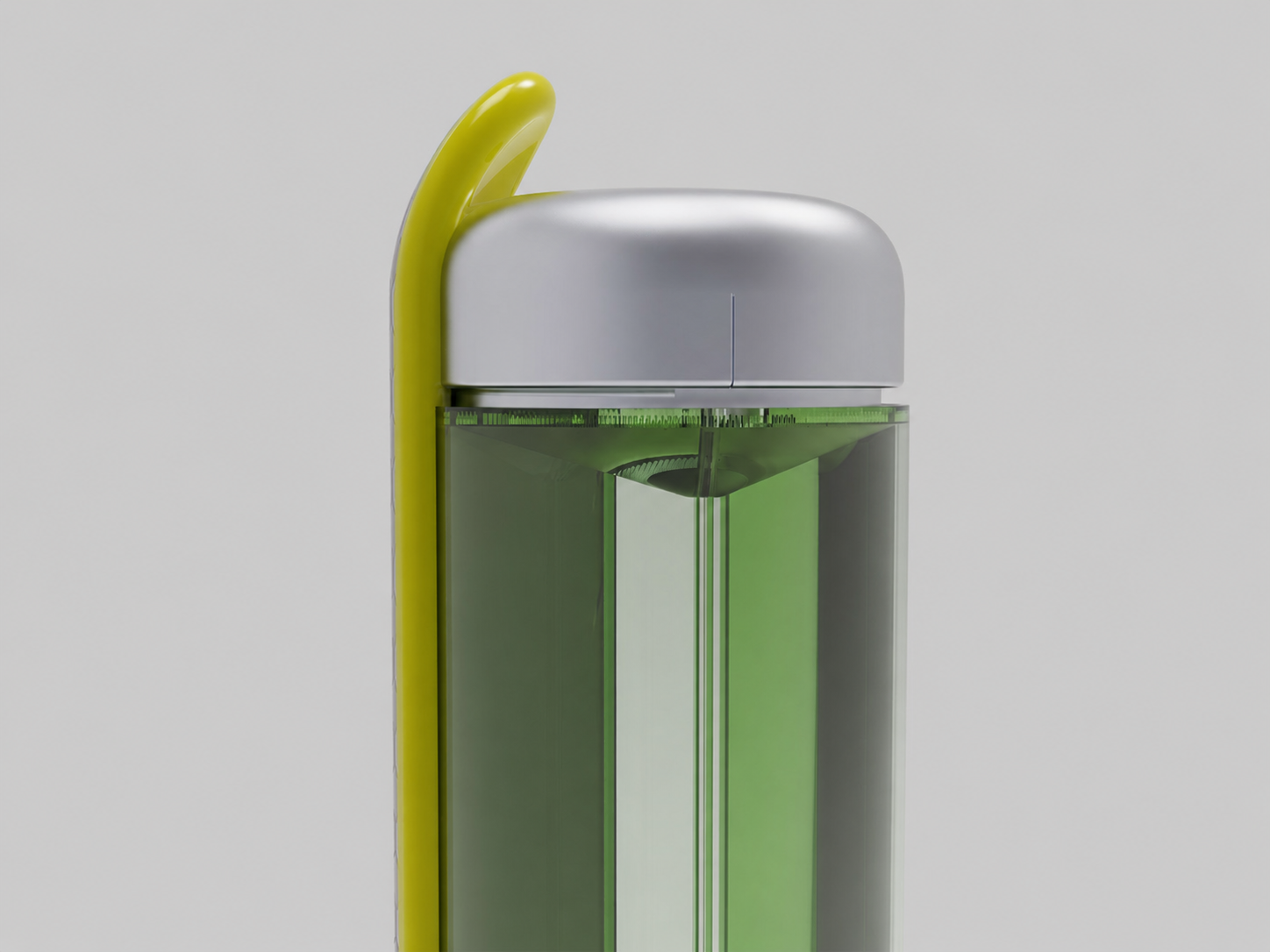
Poor Air Quality
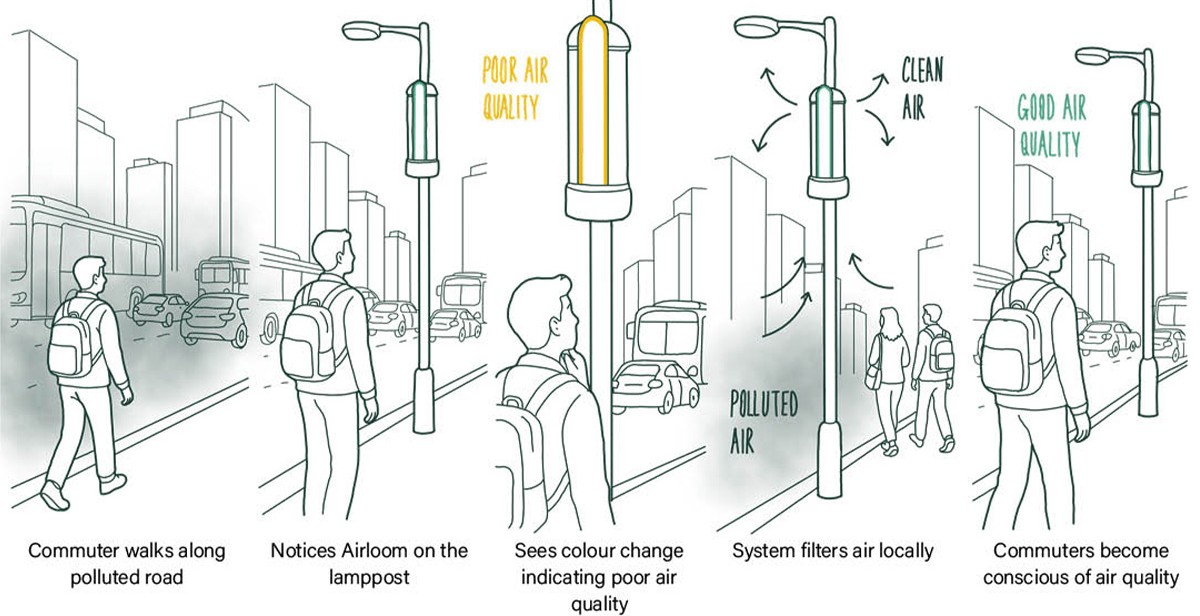
User Scenario
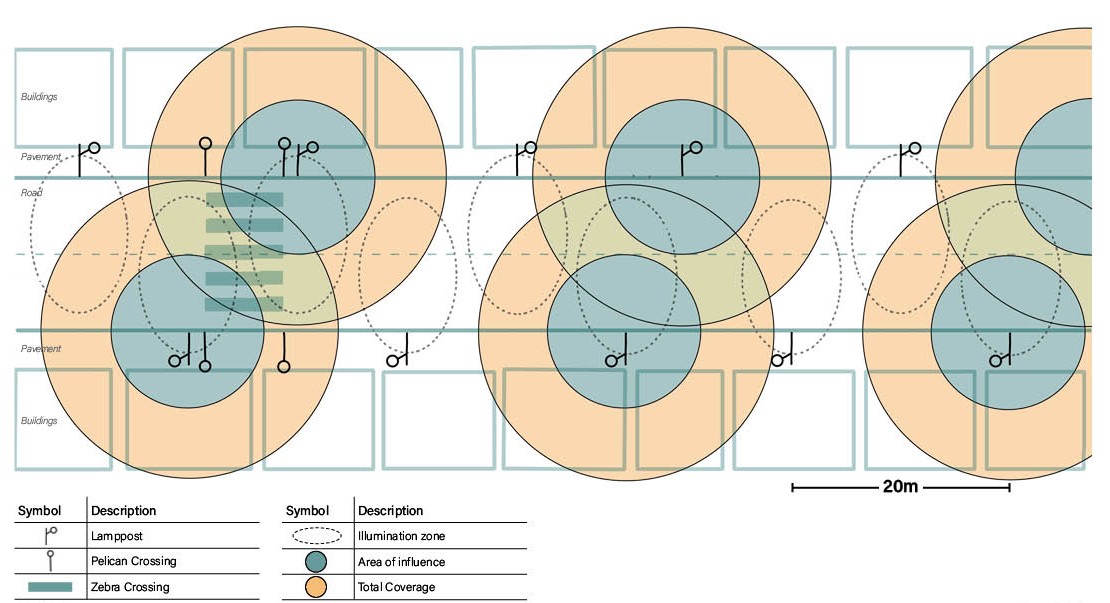
Area of Influence
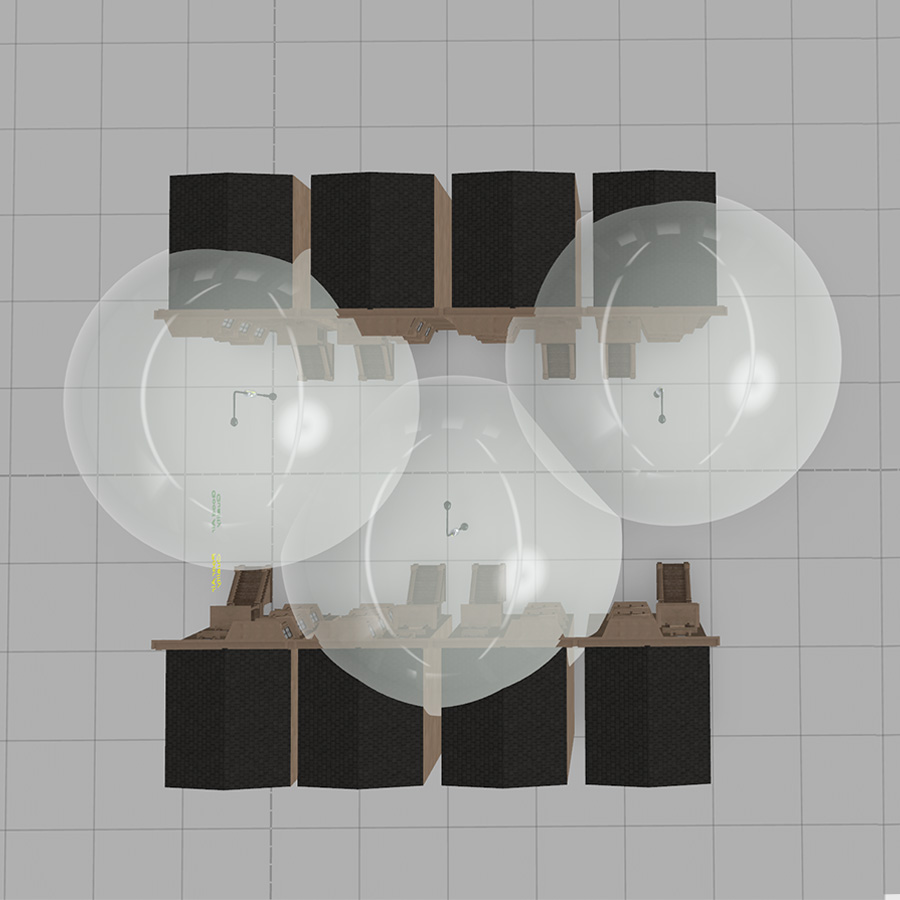
Using the previous calculations, I created an influence map to show the projected effect of Airloom along a single street. This visual demonstrates how each unit can contribute to a cleaner pedestrian route, while also showing how multiple units can work together as a wider network. It is important to note that the exact area of influence and total coverage will vary depending on wind speed, wind direction and surrounding urban conditions. This represents the minimum spacing I would recommend for the system to remain effective.
Branding
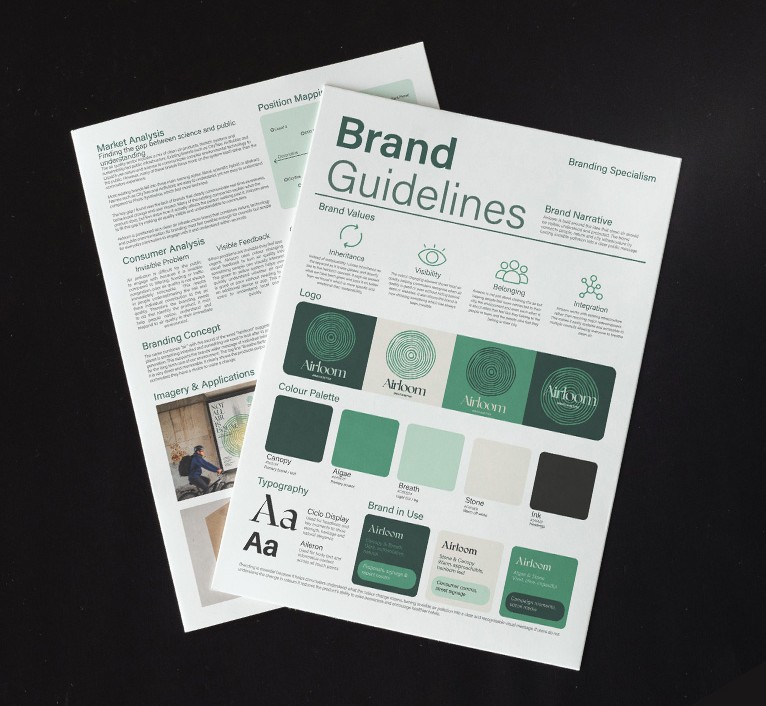
Branding is essential because it helps commuters understand what the colour change means, turning invisible air pollution into a clear and recognisable visual message. If users do not understand the change in colours, it reduces the product’s ability to raise awareness and encourage healthier habits.
It is built around the idea that clean air should be visible, understood and protected. The brand connects people, nature and city infrastructure by turning invisible pollution into a clear public message.
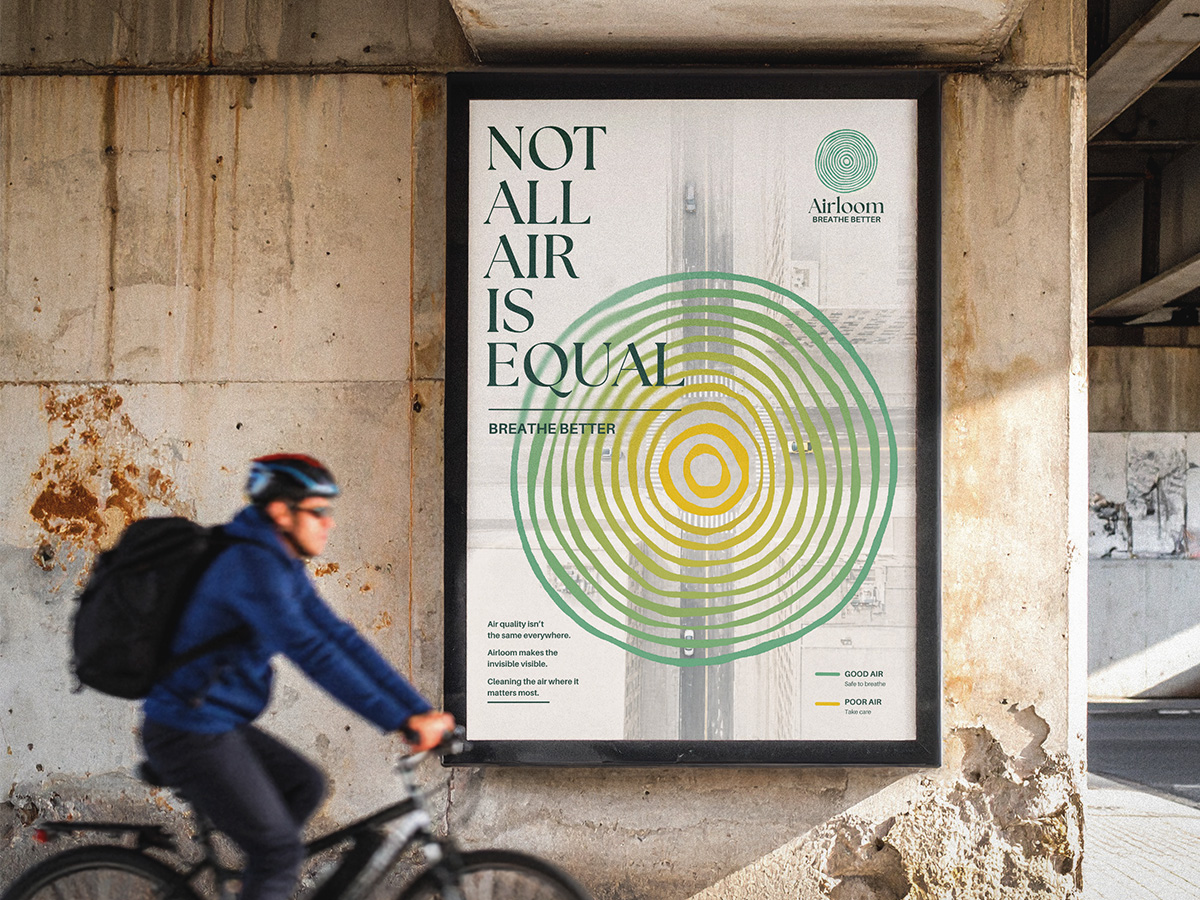
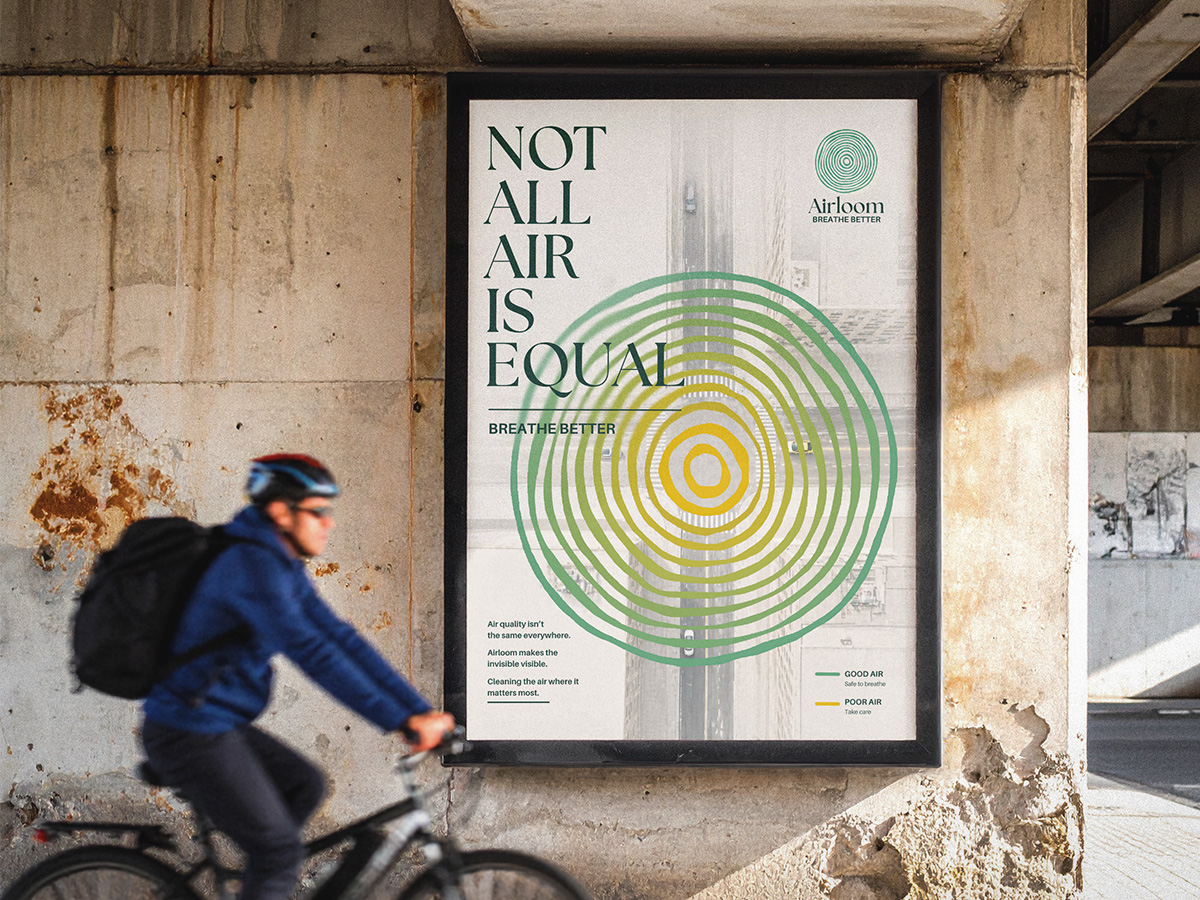
This poster is to show the problem. I chose this very polarising and attention grabbing statement “Not all air is equal“ because it brings awareness and also encourages people to make a change within there lifestyles.
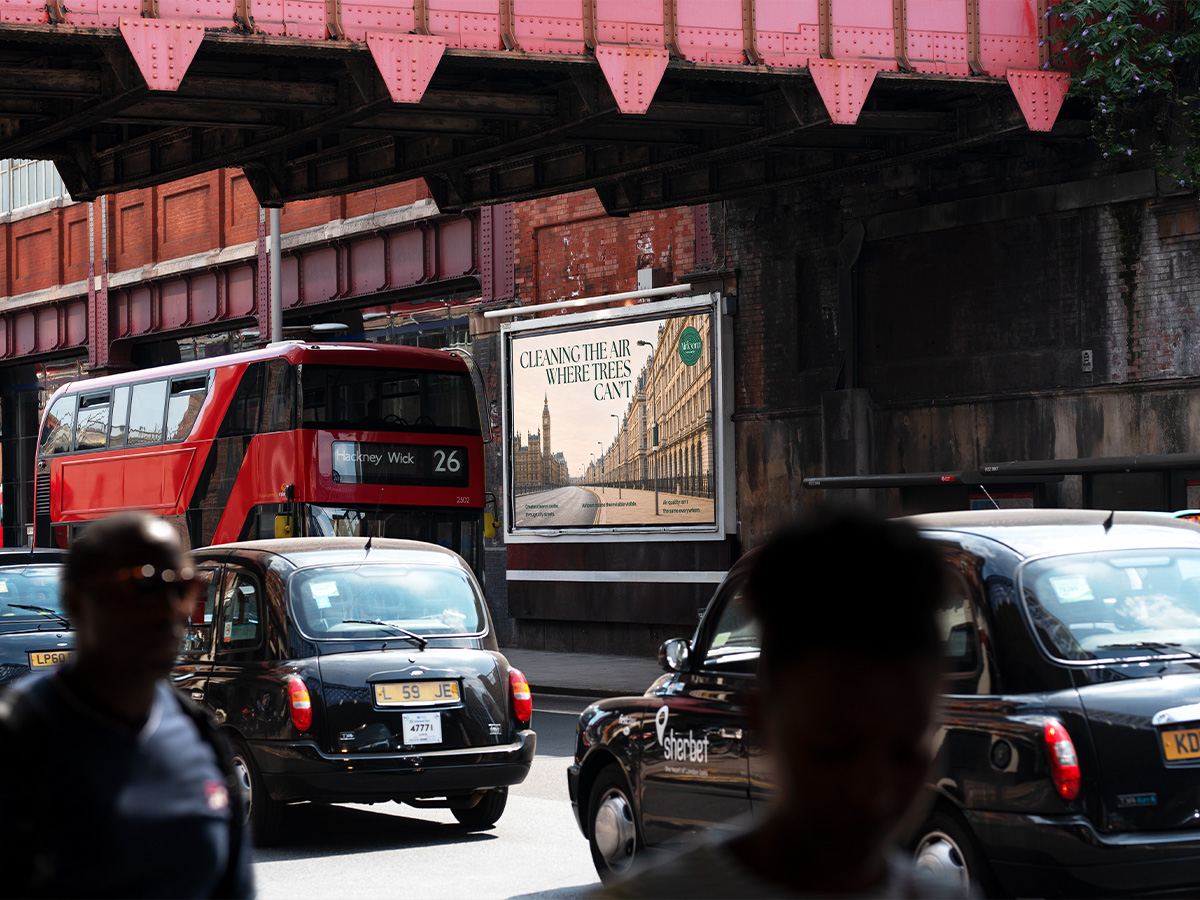
This poster is to show the clean air pathways. It subtlety informs people of one of the functions of the product while also showing that air is different everywhere.
This poster shows explicitly what the product is and how it works. It contrasts with the other two posters, which are intentionally a bit ambiguous to draw users in; this clearly states the purpose of the product.
The name combines “air” with the sound of the word “heirloom,” suggesting that the planet is something inherited and something we need to look after to pass on to future generations. This supports the brand’s wider message of individuals taking responsibility for the long term care of our environment. The tag line “Breathe Better” is used because it is very direct and memorable. It clearly shows the product’s purpose while showing commuters they have a choice to make a change
The logo is inspired by water ripples, fingerprints and tree rings because they are all circular forms, which link back to the name Airloom suggesting something continuous that can be passed down through generations, while still showing growth with each additional ring. The water ripple represents the algae solution, the tree rings symbolise time and growth, while acknowledging that trees are one of the best natural solutions but that they cannot always be used. The fingerprint connects human behaviour to the environment, showing that our actions have consequences
Prototypes
I did not try to make one perfect prototype. Instead, I created separate models to test specific areas of the design, including airflow, maintenance, scale and users interaction with the product. This allowed each prototype to answer a clear question and helped me make more informed design decisions throughout the development process.
Maintenance and Airflow
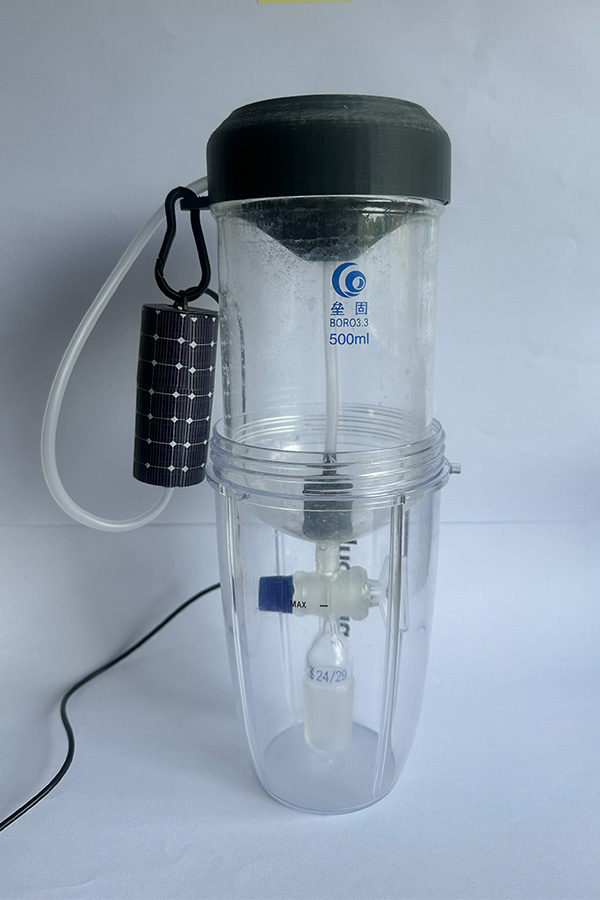
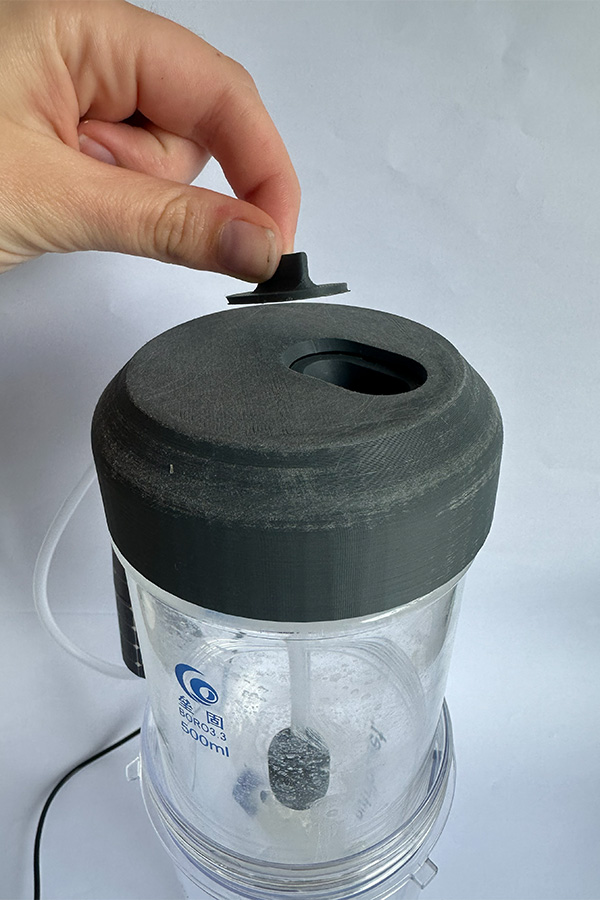
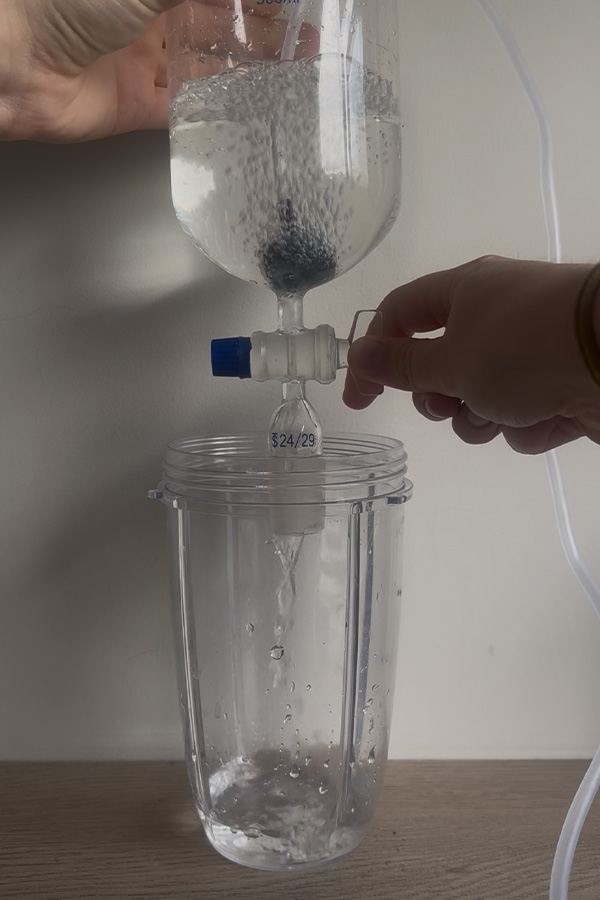
This model addressed two key areas of the design airflow and maintenance. It was used to test how air could be pumped into the algae chambers, how the flow could be slowed using an aeration stone and how the algae solution could be safely drained and refilled during maintenance. Testing highlighted the importance of keeping the pump above the solution level, adding a controlled drainage tap and using a removable funnel to reduce spills during maintenance.
Scaled Aesthetic
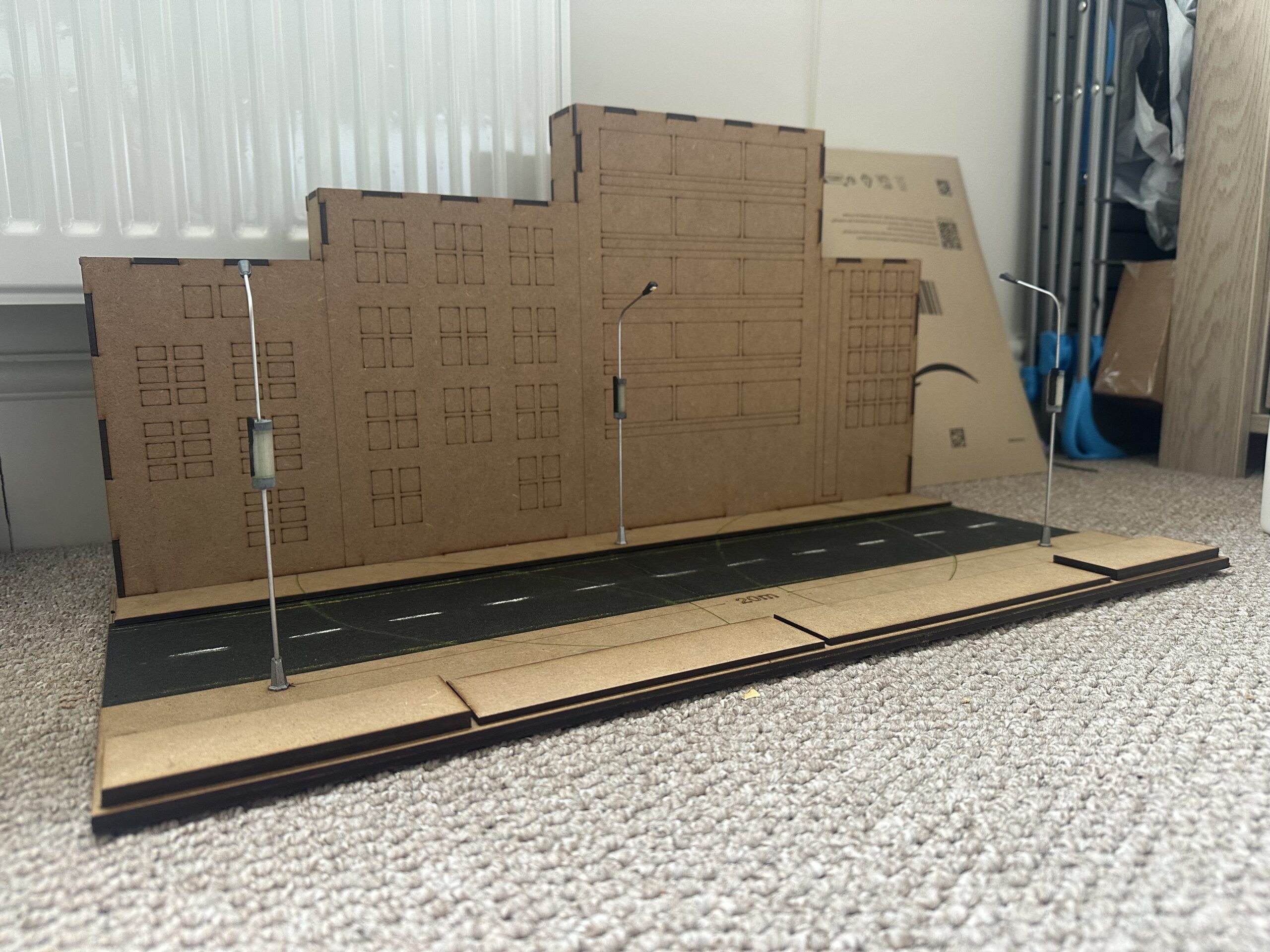
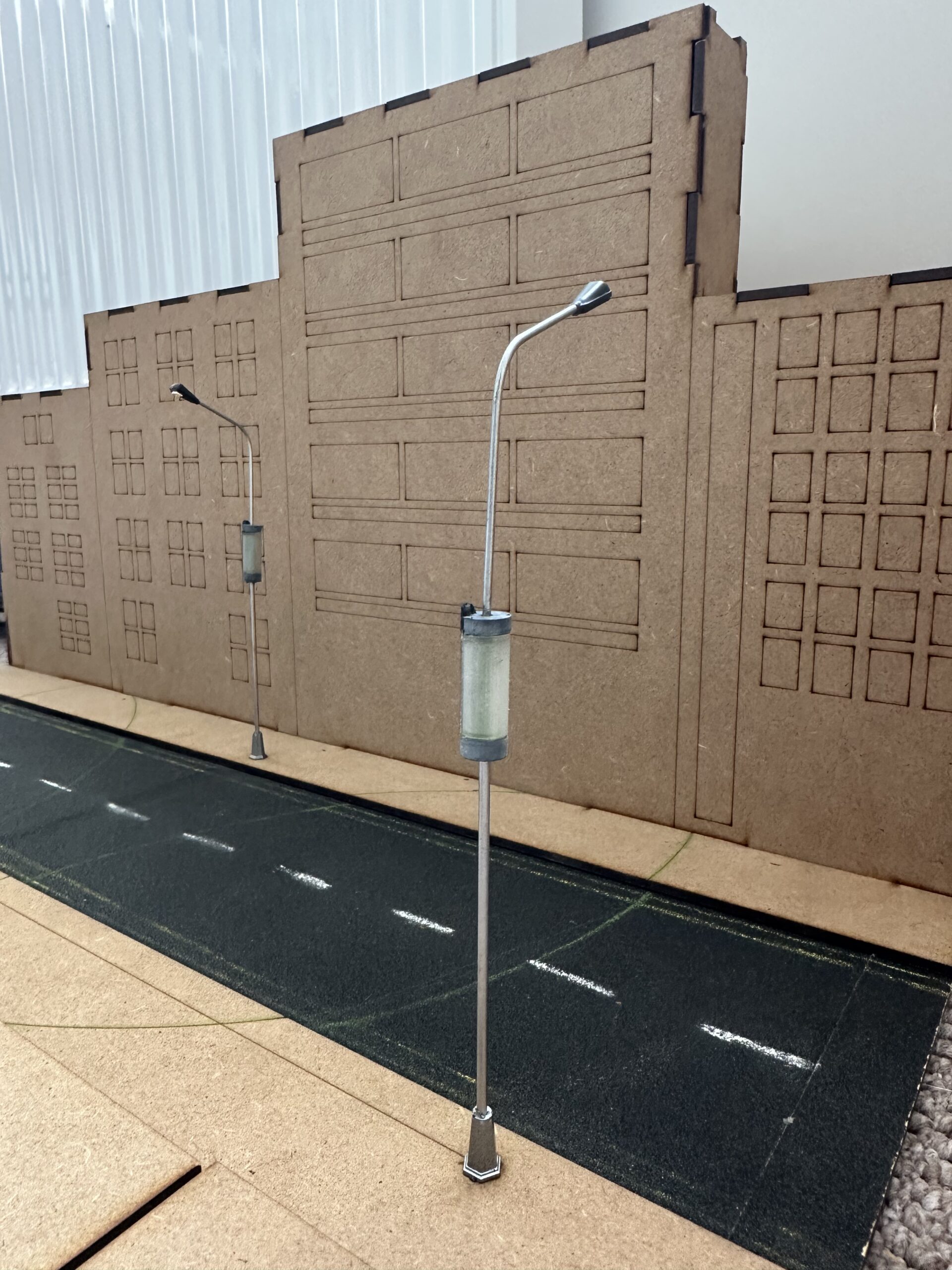
This scale model of a typical street to show the influence my product will have and how it will interact with each unit. Each unit can influence 20-30 meters of pedestrian walkway and, in a year, will remove 65.7 kg of carbon. It is important to note that the area of influence and total coverage are likely to change depending on the wind direction and speed. The lampposts are 20m apart and staggered, which is the most common for suburban routes, dual carriageways and wide residential streets.
Augmented Reality
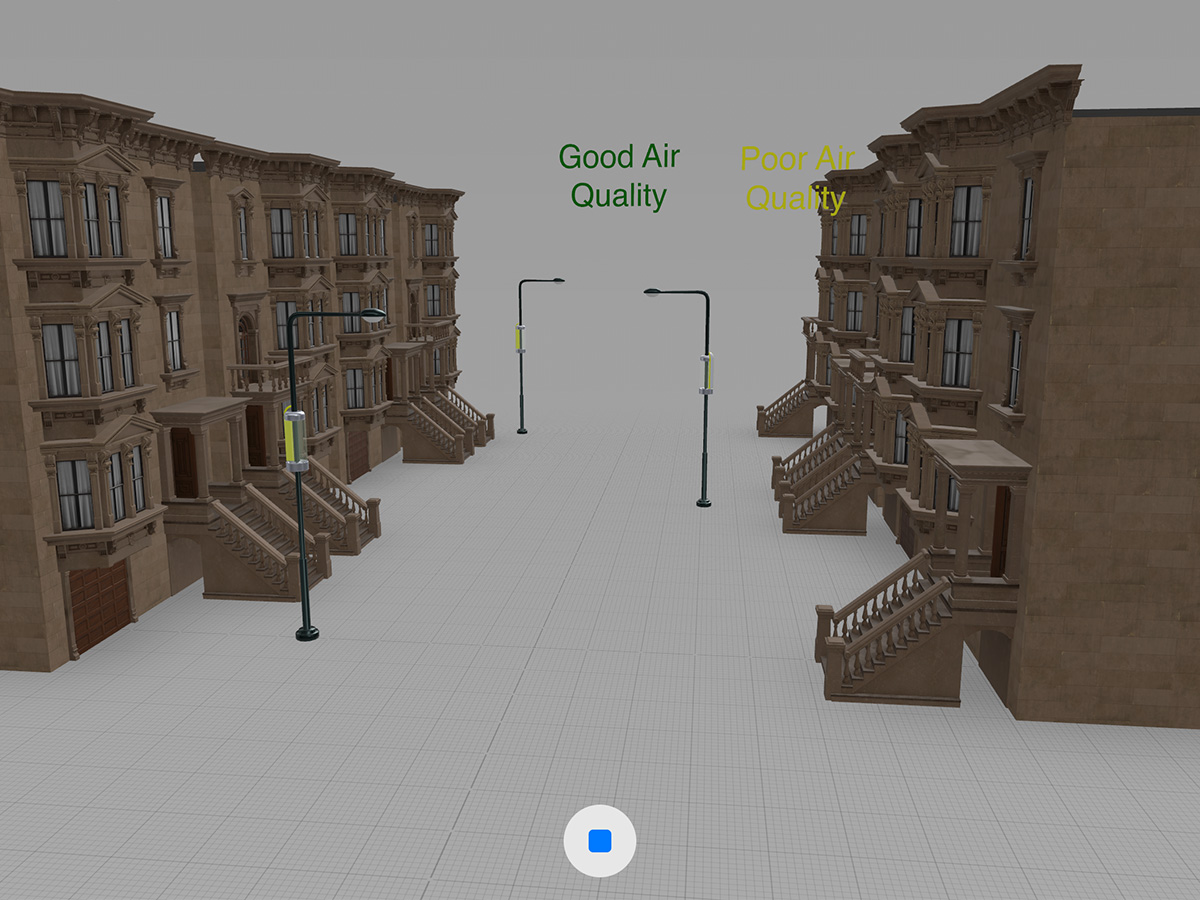
I created this augmented reality model to test whether the product looks appropriate as urban infrastructure and to see if people would actually notice the colour change. It works by clicking on the good or poor air quality test, which changes the units. I tested it on 16 users, both on a street and standalone. I did try to create the model to work on a real street however, I was not able to get this feature to work, which is why I used the model within Reality Composer. Users correctly noticed the different 91% of the time. Also, with Reality Composer, I created bubbles to show the areas of influence that each unit would have in 3D to show the vertical effect it would have, as well as the horizontal effect.