Hi, I'm Sarah, an industrial designer.
My work is underpinned by the belief that the best products come from understanding people; bridging design and actual use. My process is grounded in research and prototyping, from concepts to considered, manufacturable solutions.
Cadence: Independent residual limb care for lower-limb amputees. Built into routine.
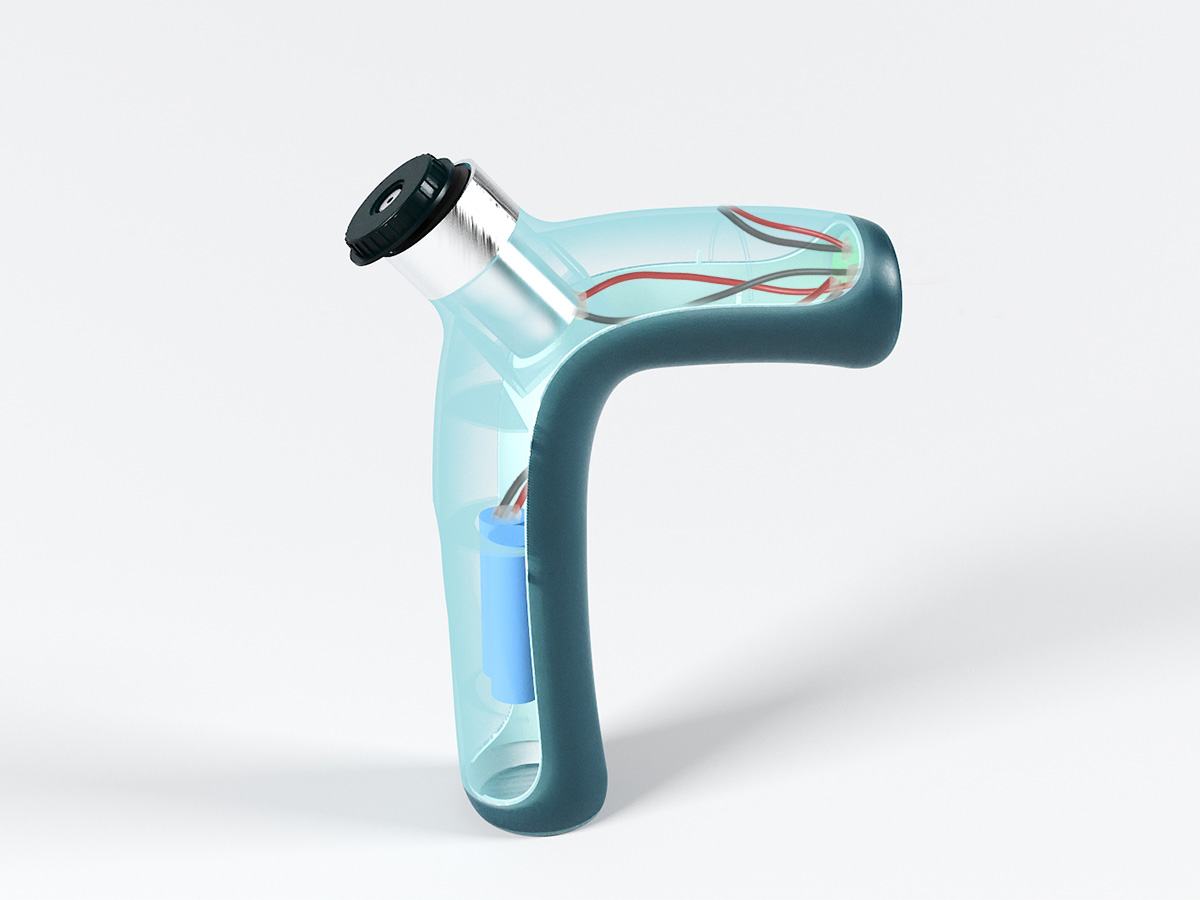
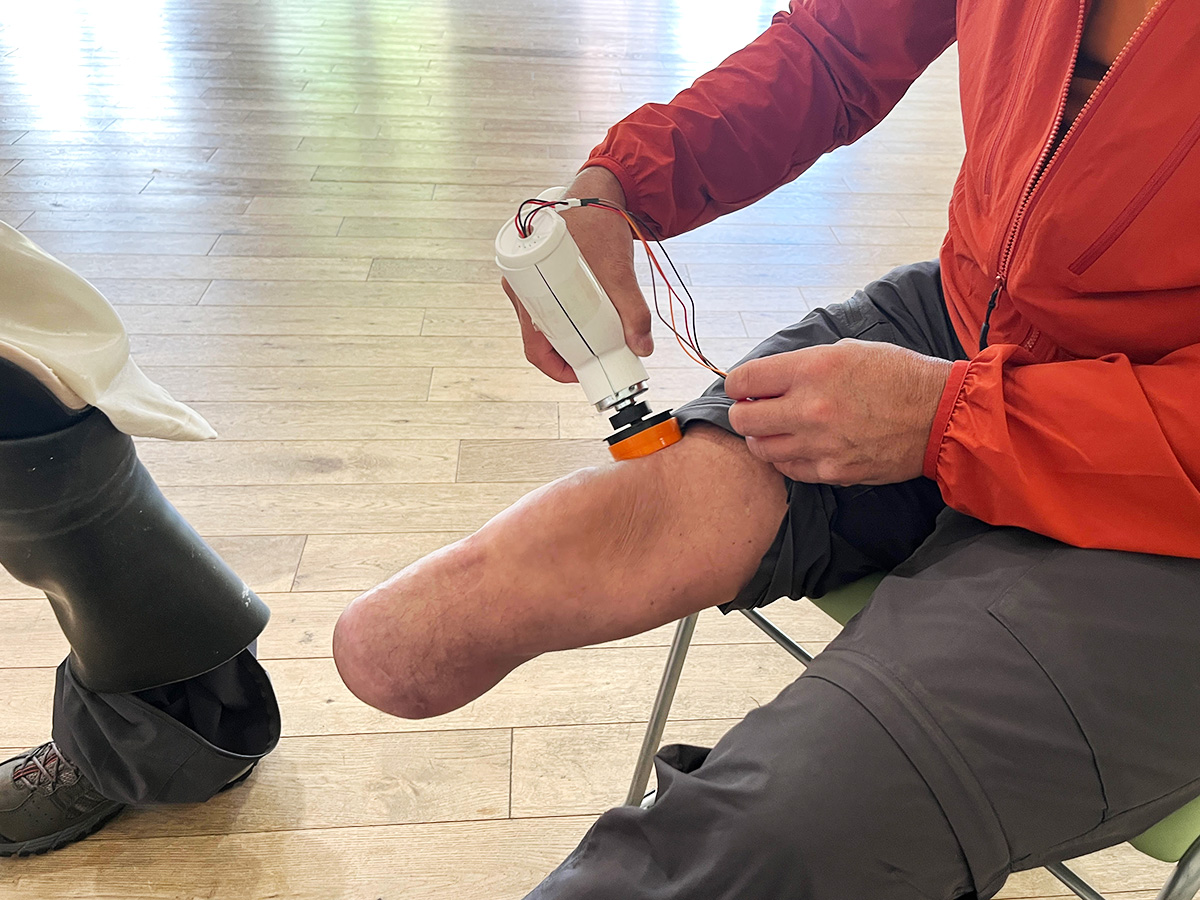
Cadence makes residual limb care easier to sustain as part of an everyday routine. The gentle, handheld device guides users through effective massage of the limb. This helps to reduce discomfort and stay prosthetic-ready.
Understanding the Problem
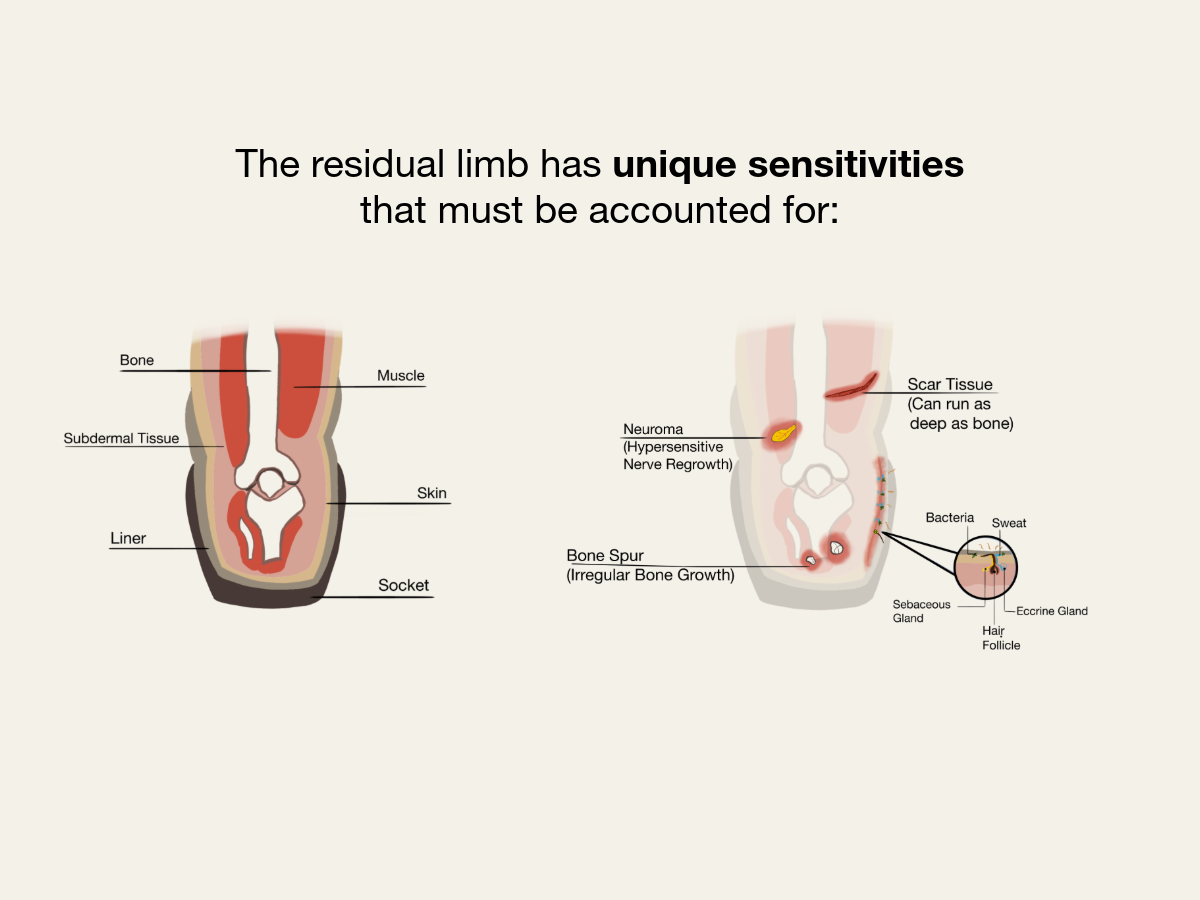
Working-age lower limb amputees want to work, stay active and support family life. This freedom hinges on keeping the residual limb (the tissue left behind after amputation) healthy enough for prosthetic wear.
With up to 18 months between clinical follow-ups, this daily responsibility falls to them at home or on-the-go where daily inspection and massage are essential for tissue mobility and swelling management. However, fatigue, sensitivity and cognitive burden make this hard to sustain.
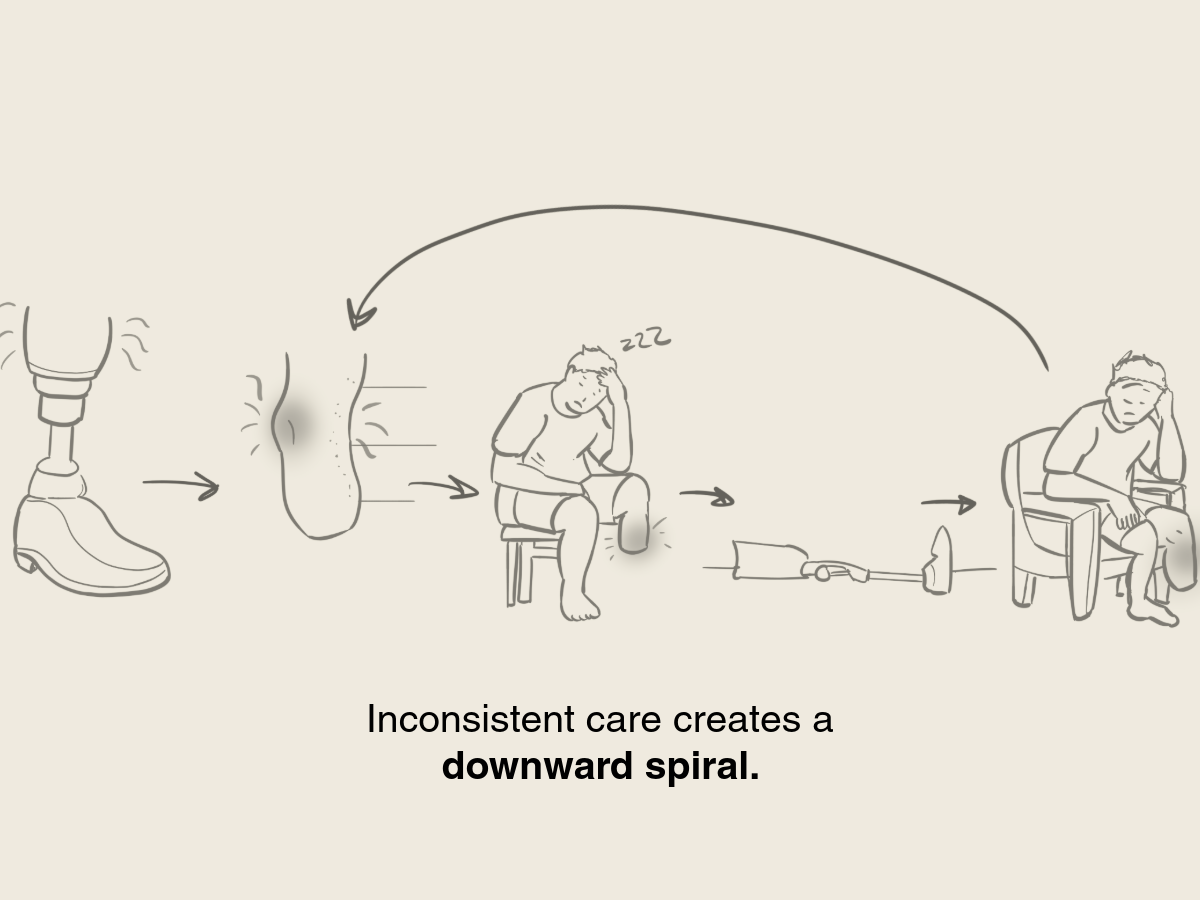
Spiral of Inactivity
Residual limb discomfort discourages care due to fatigue and cognitive burden. Avoided care leads to reduced prosthetic wear which in time results in swelling and tissue deterioration that makes the prosthesis harder to fit. Inability to wear the prosthesis then limits mobility entirely, worsening issues. What begins as manageable discomfort can easily spiral without the right tools.
Residual Limb Specific Features
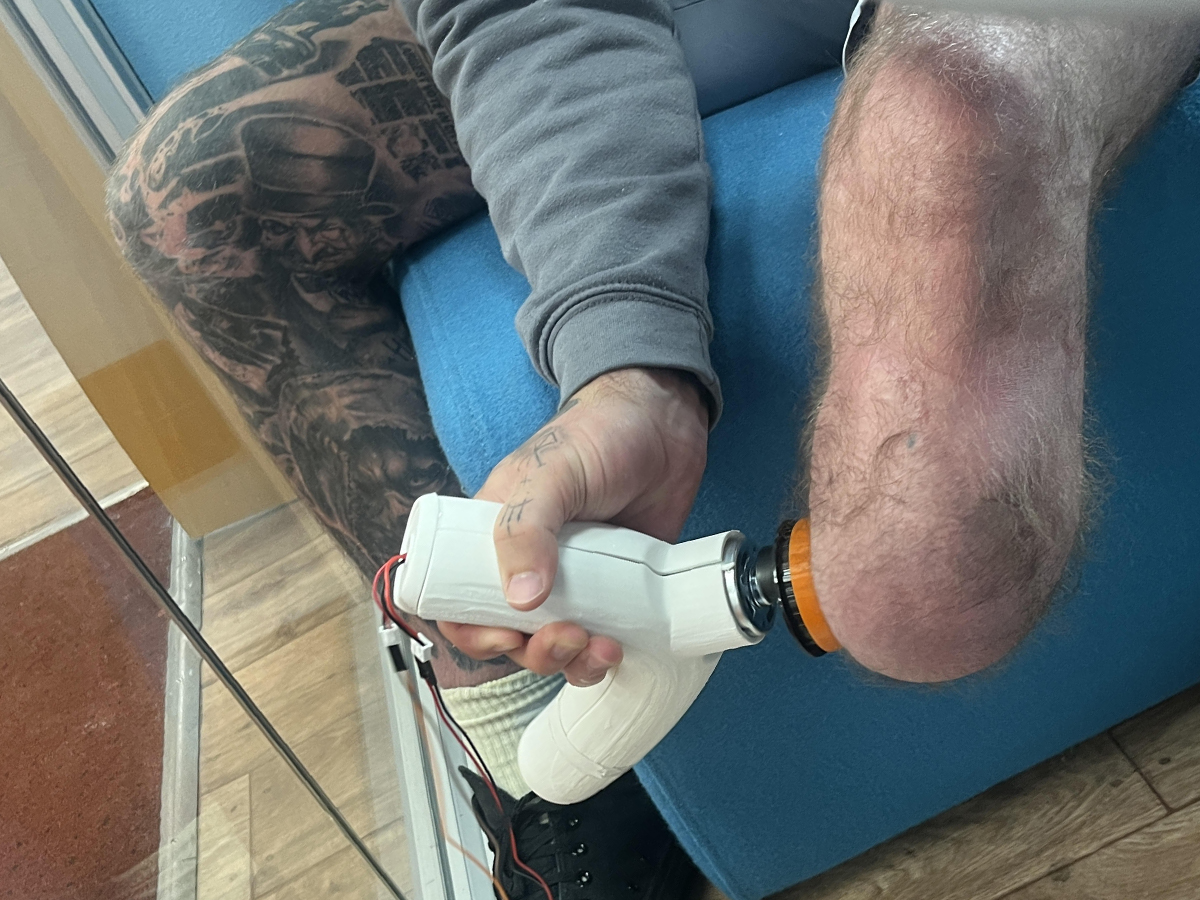
Cadence stands out from other massage guns on the market as it is designed specifically for residual limb tissue, using gentle rotational movement instead of aggressive, conventional percussive force intended for deep tissue massage.
An approachable, lifestyle driven design that doesn’t feel clinical.
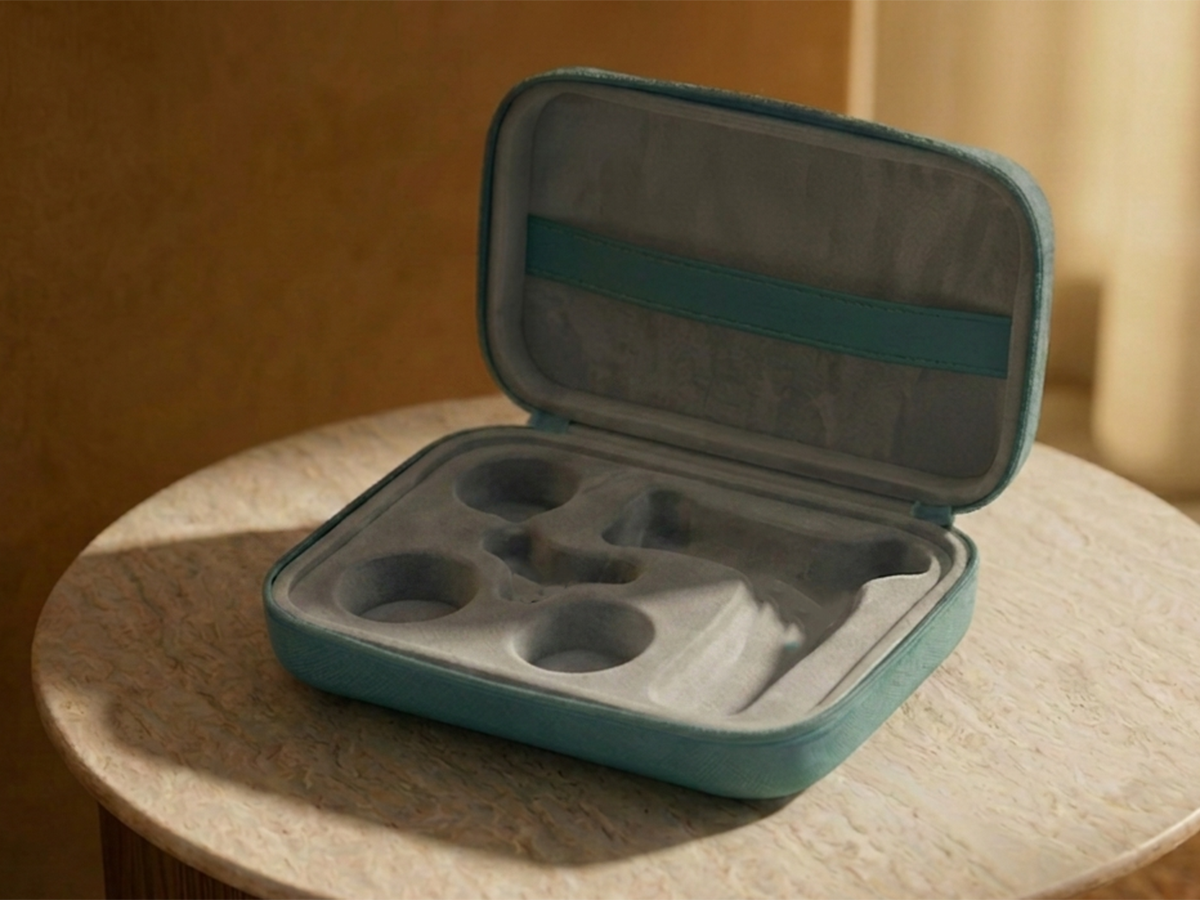
Charging carry case supports routine and on-the-go use.
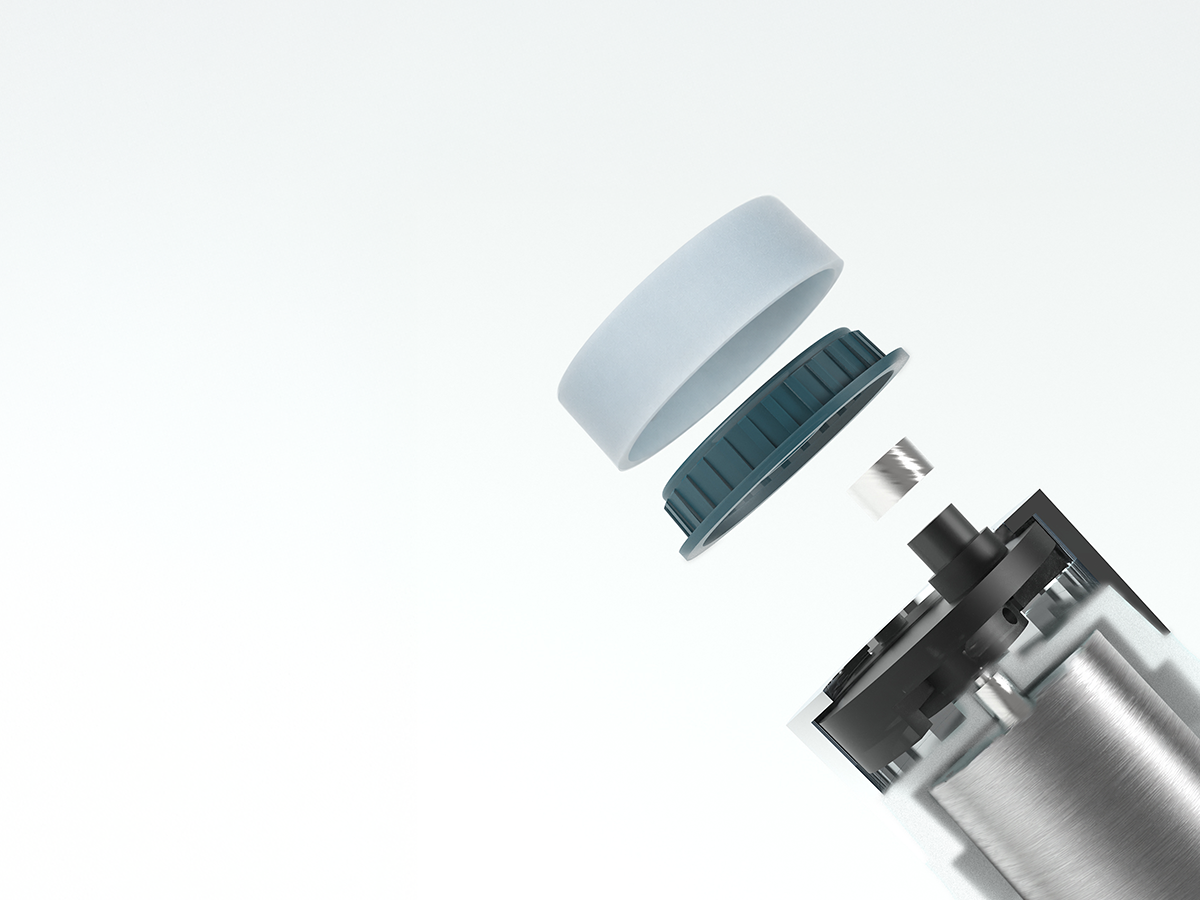
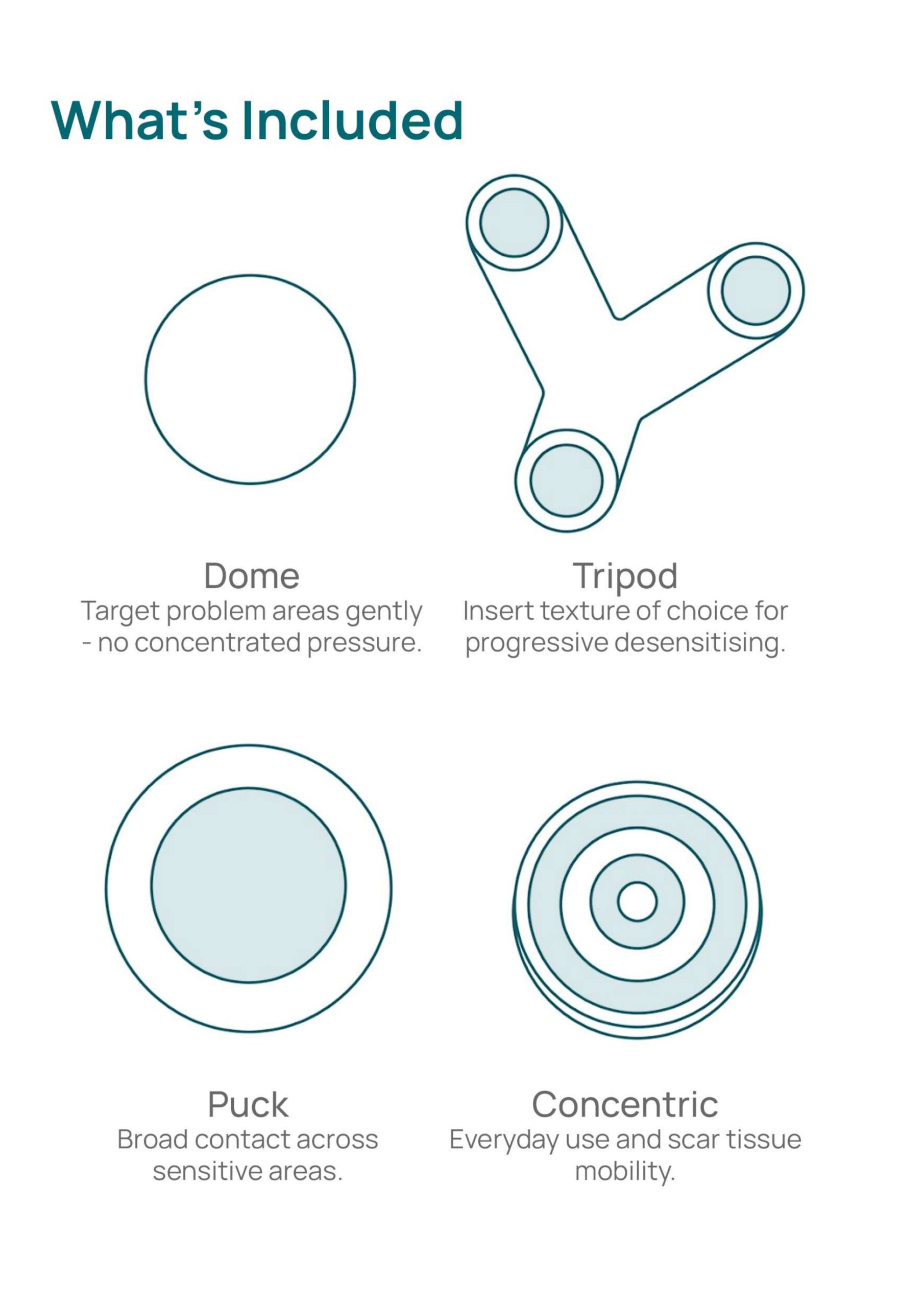
Interchangeable, residual limb-specific heads supporting circulation, comfort and tissue mobility
A low-power motor creates controlled surface movement instead of aggressive percussive impact
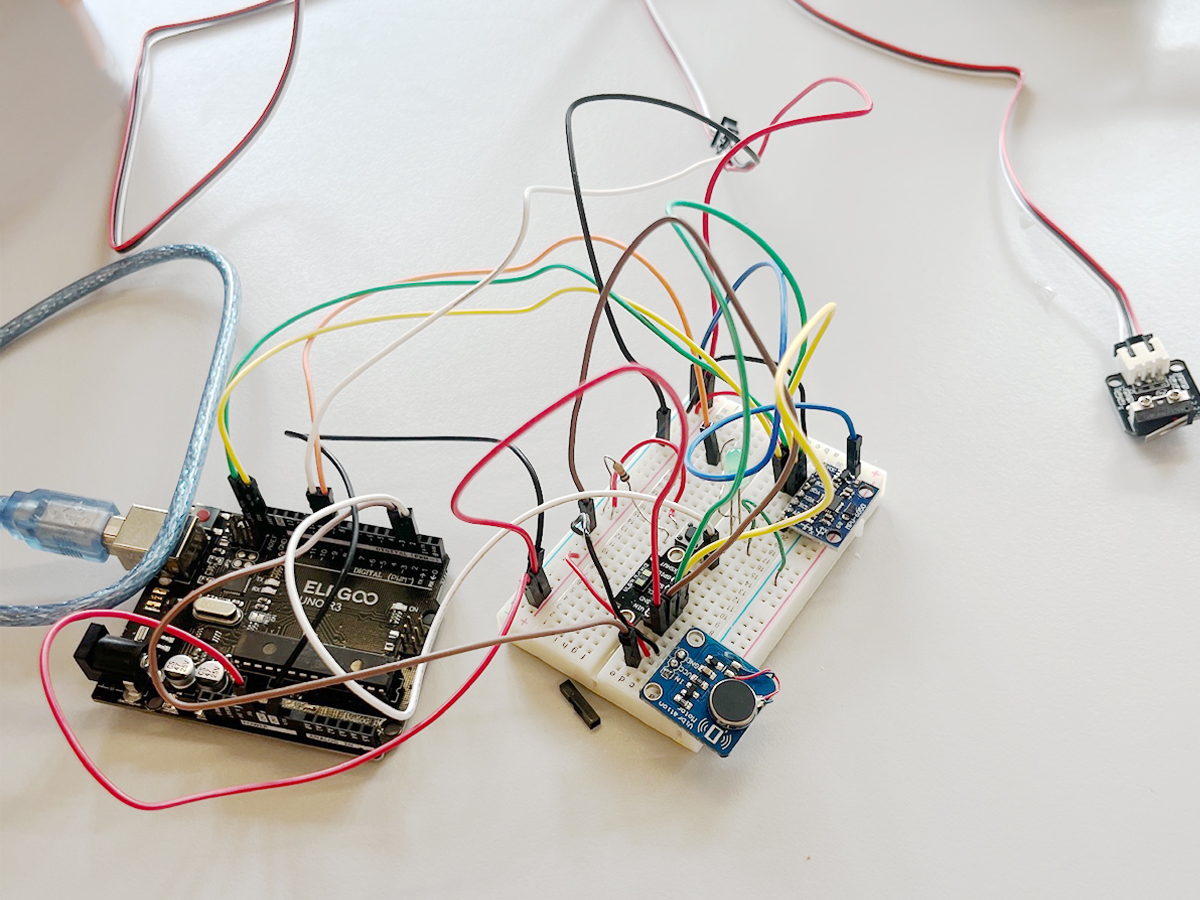
Integrated sensing detects contact and movement, reducing risk of overworking through haptic and visual cues.
Designed for Repair
Amputation is a lifelong condition, so Cadence is designed to last. JST wire connectors allow components to be replaced without specialist tools and a snap-fit back section allows access for motor and battery servicing.
Human Factors Focus: Developed & Tested in Collaboration with Amputees & NHS Clinicians
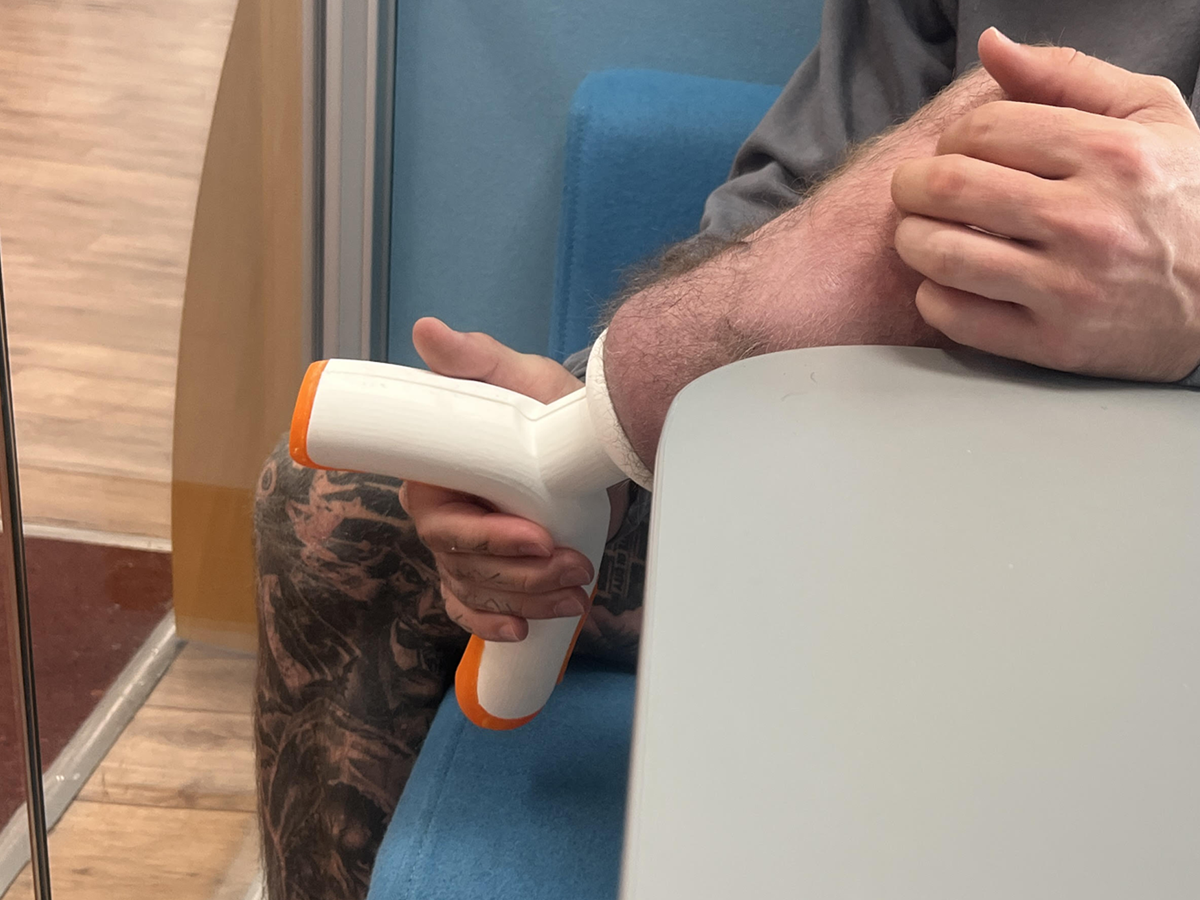
The project was reviewed at core stages directly with amputees, NHS clinicians and others who work with amputees to ensure design decisions around the form of the device were based in real physical capabilities and preferences as well as accounting for safe and consistent seated use.
Reach & Posture: Elongated form allows user to reach all of the limb without compromising posture.
Brand identity: designed to sit alongside aspirational/performance wellness products, not medical equipment. Promotes pride of ownership.
Modified ‘C’ logomark inspired by rhythm and movement.
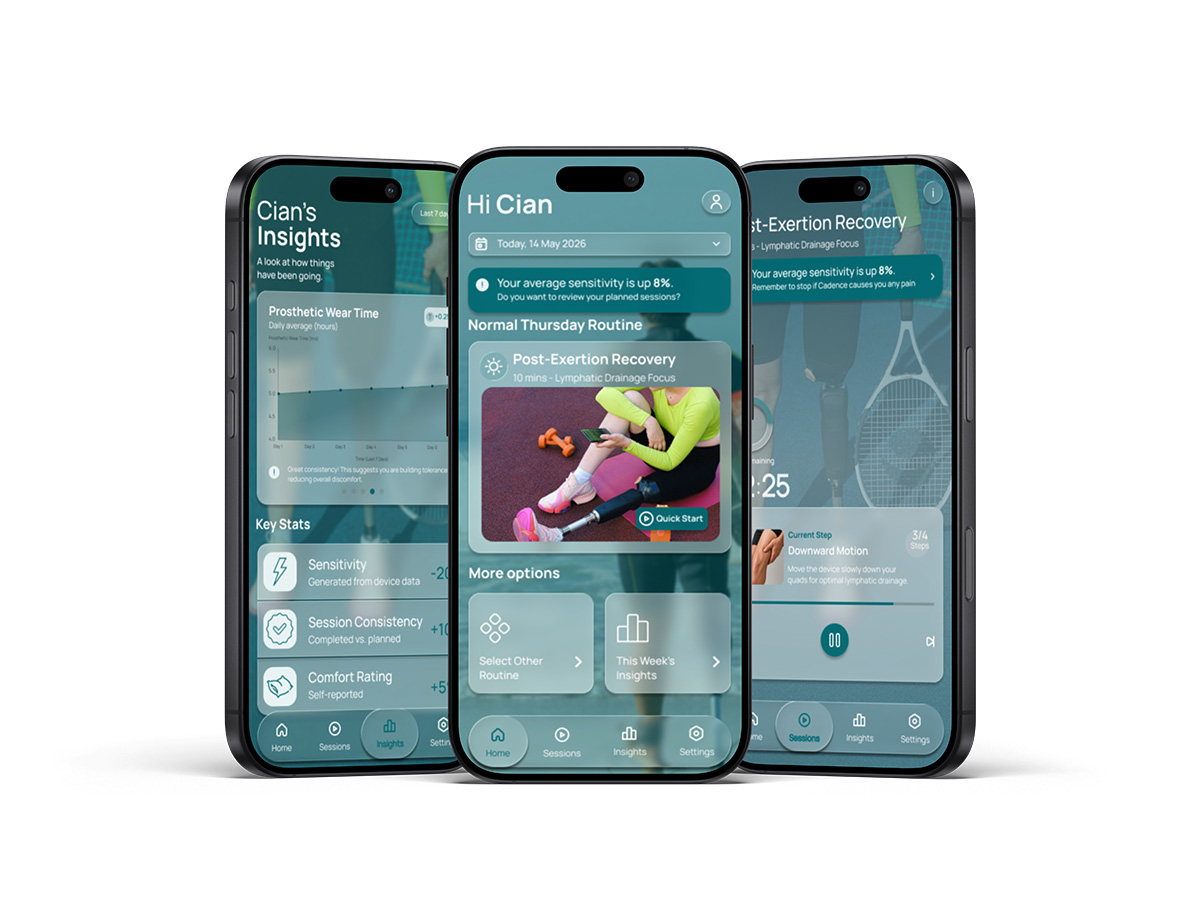
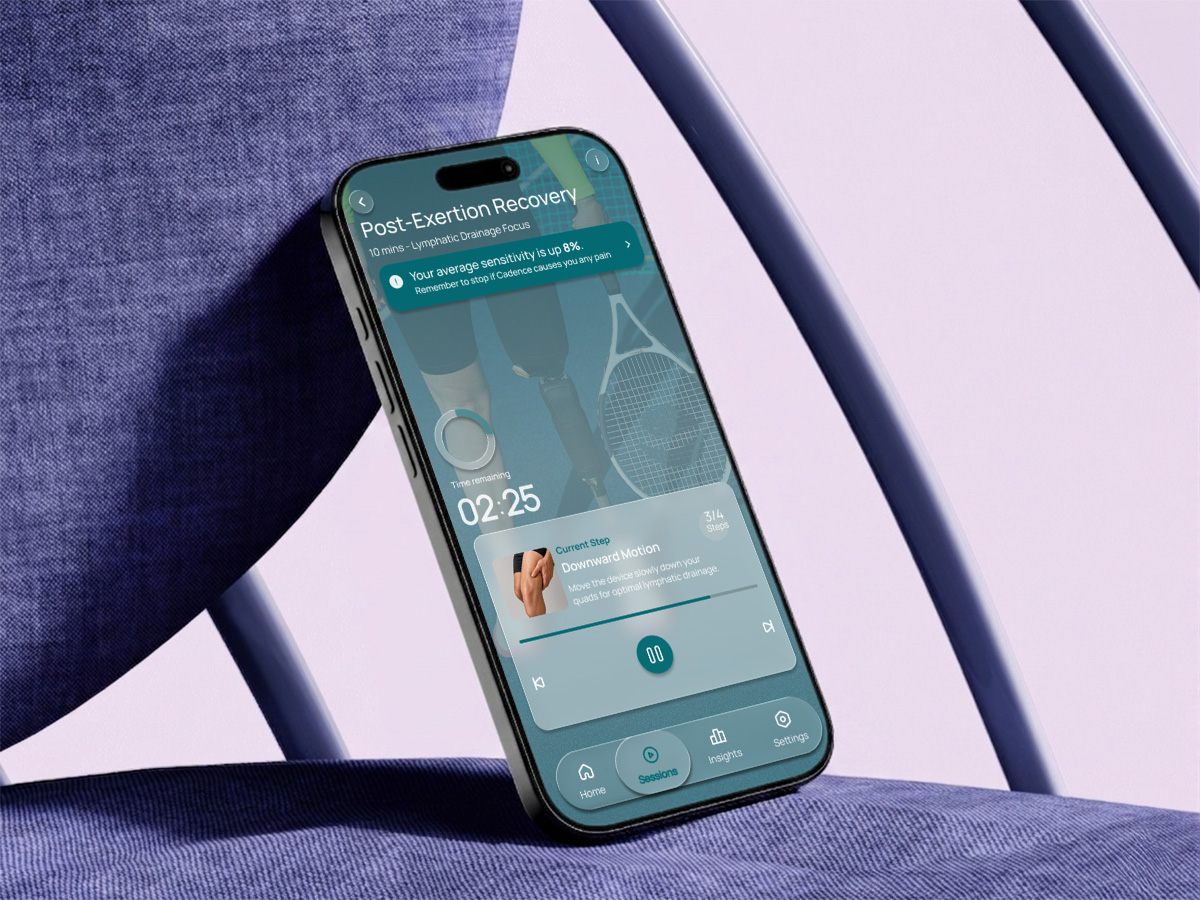
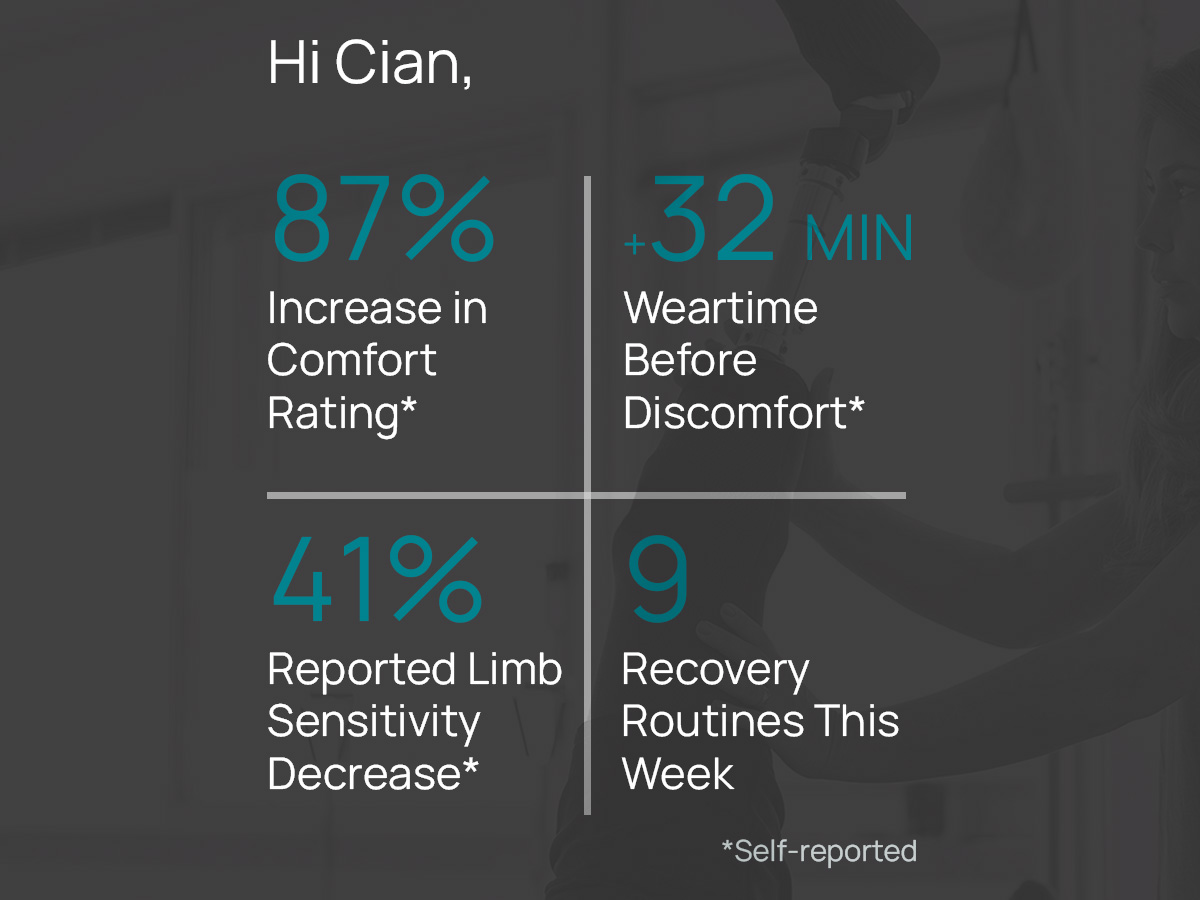
Motion driven imagery and progressive disclosure of insights reduce cognitive load and support routine.
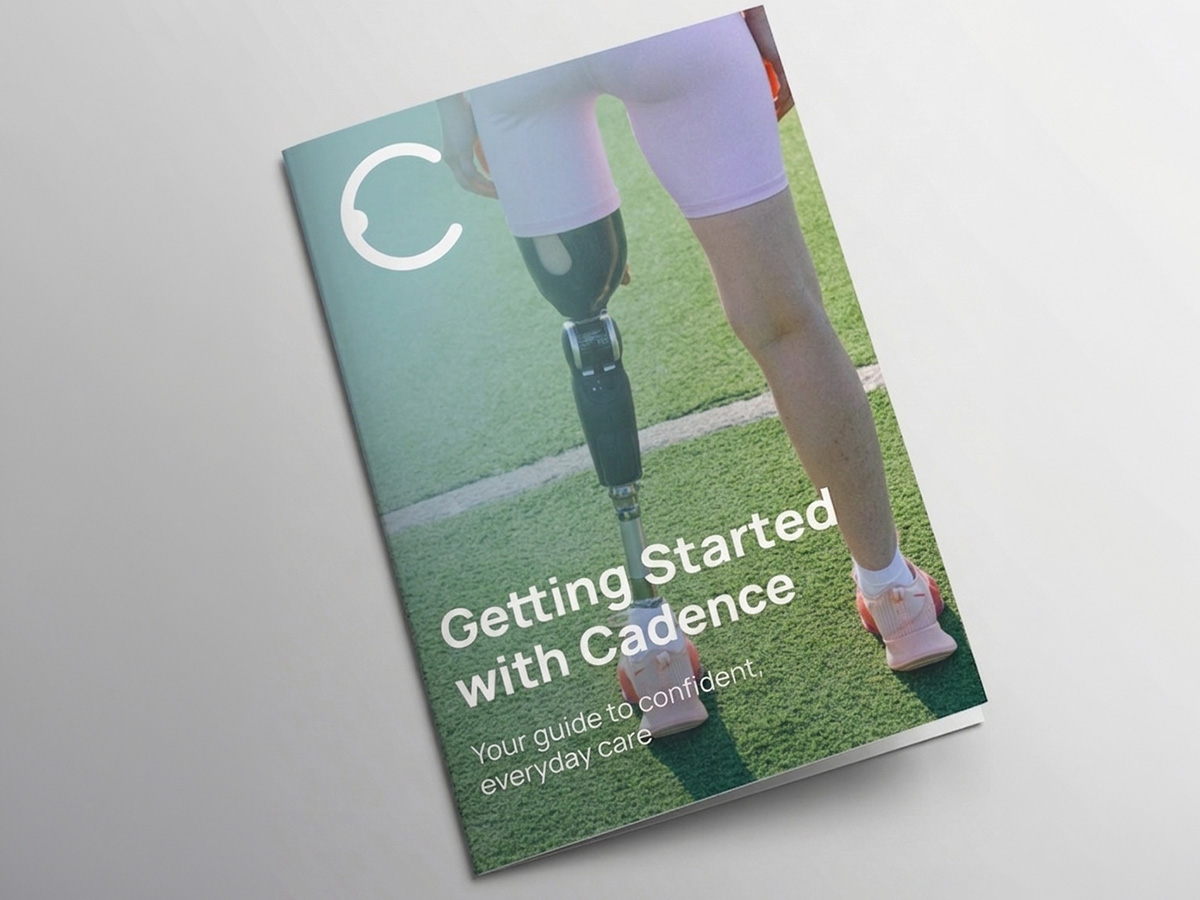
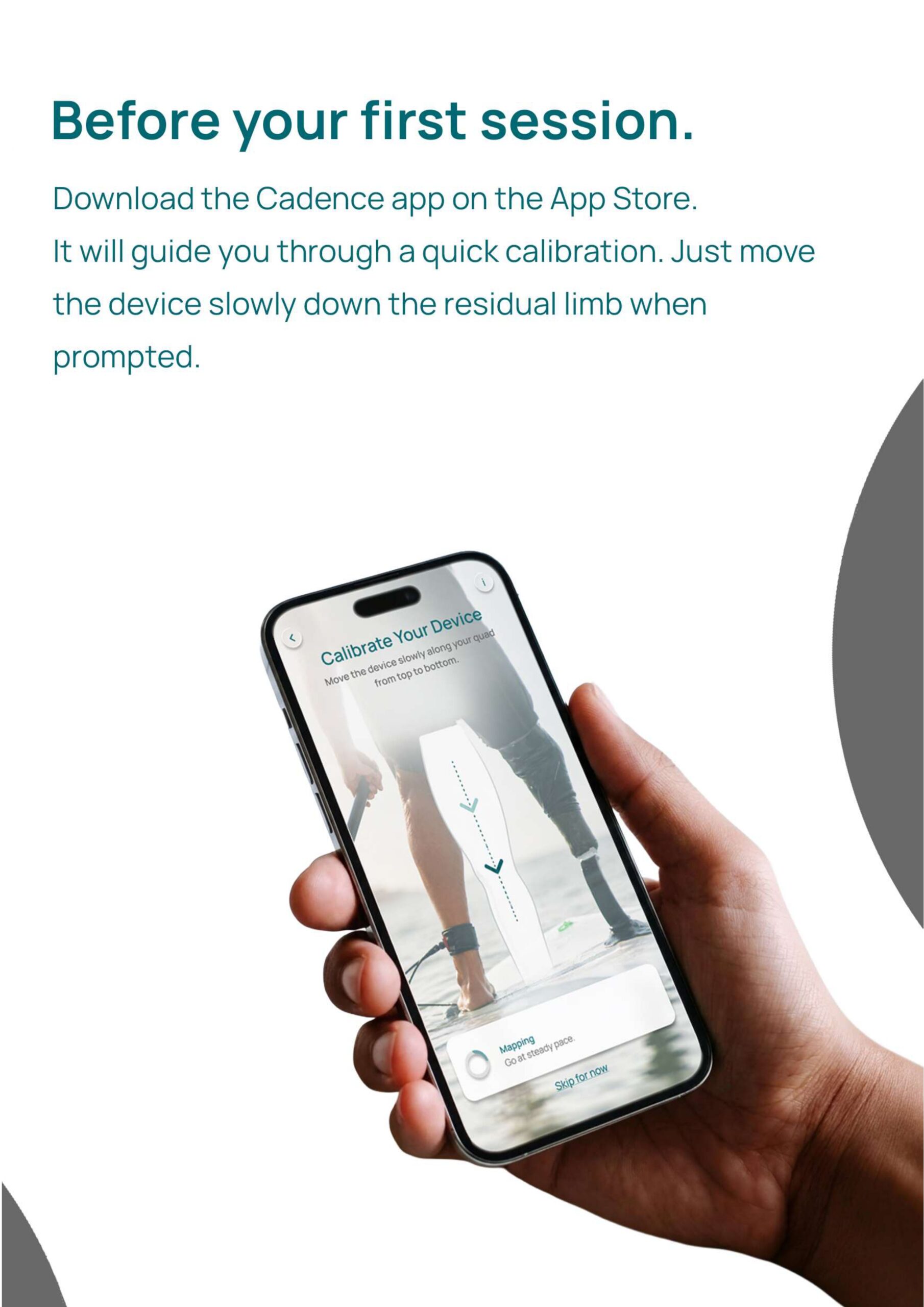
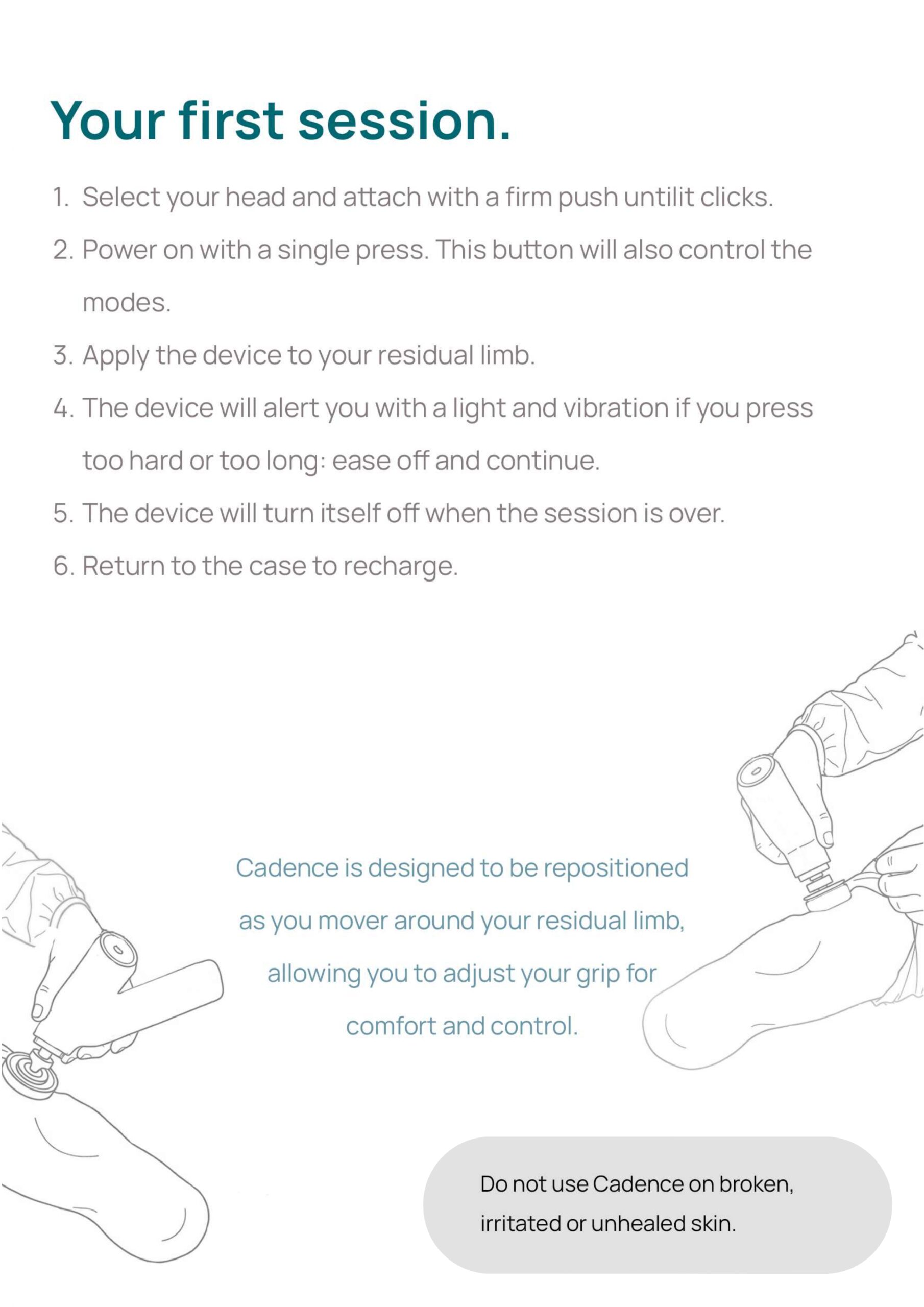
1. A simple quick start guide helps users calibrate the device and understand the product.
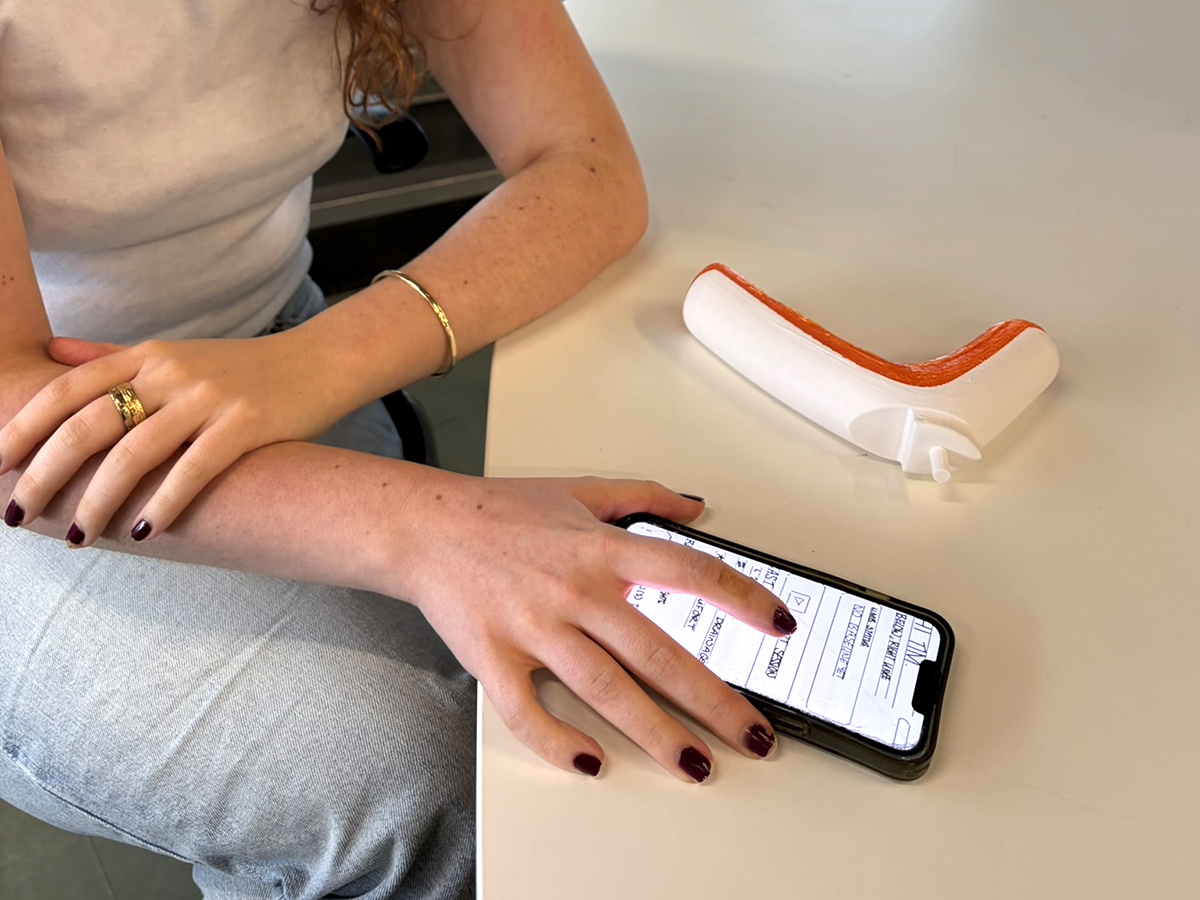
2. The companion app removes guesswork, helping users choose the right head; follow safe session timing and understand how to move the device across the limb.
3. Core insights help users recognise patterns over time. More active users can access deeper patterns around performance & prosthetic wear-time.
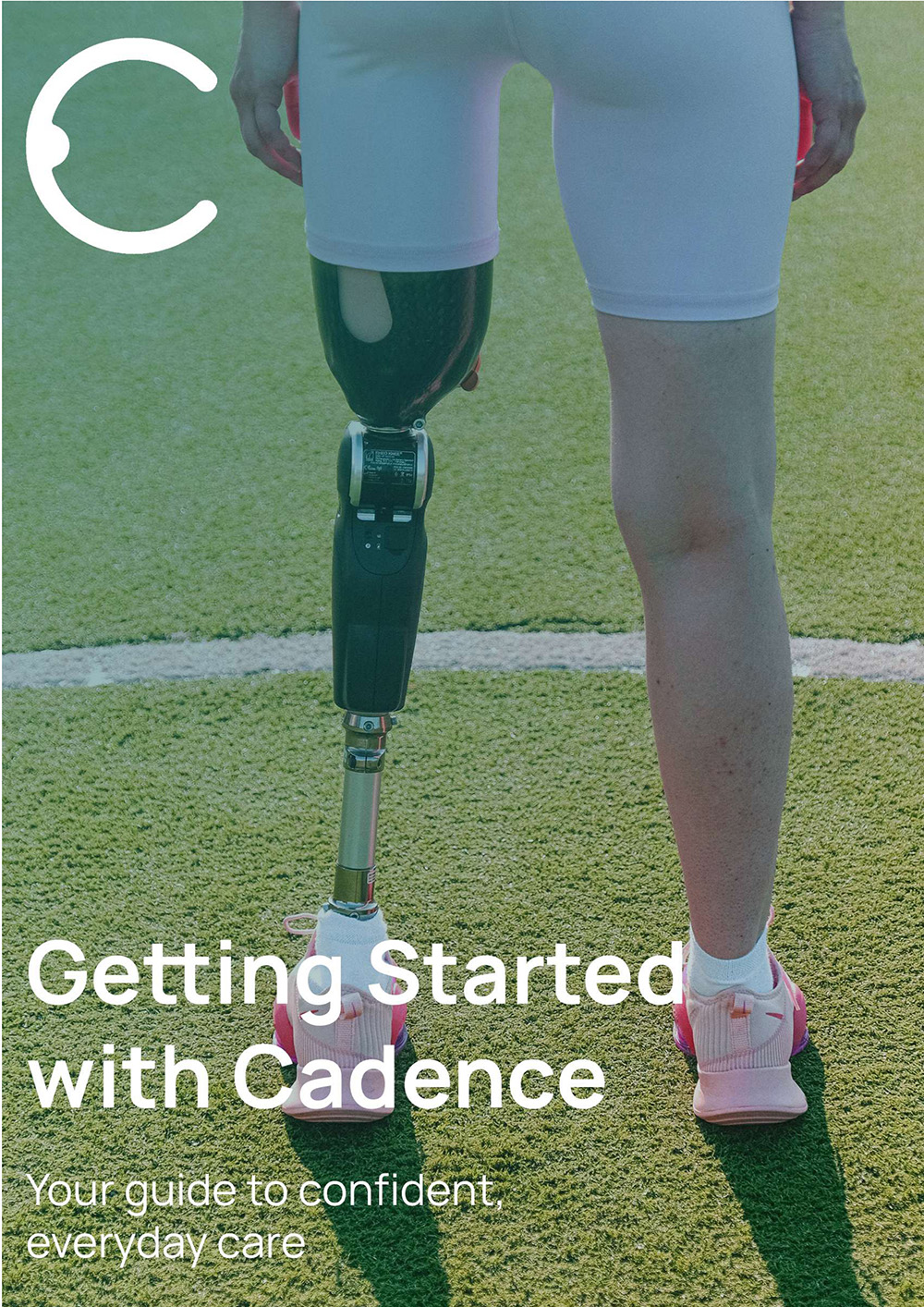
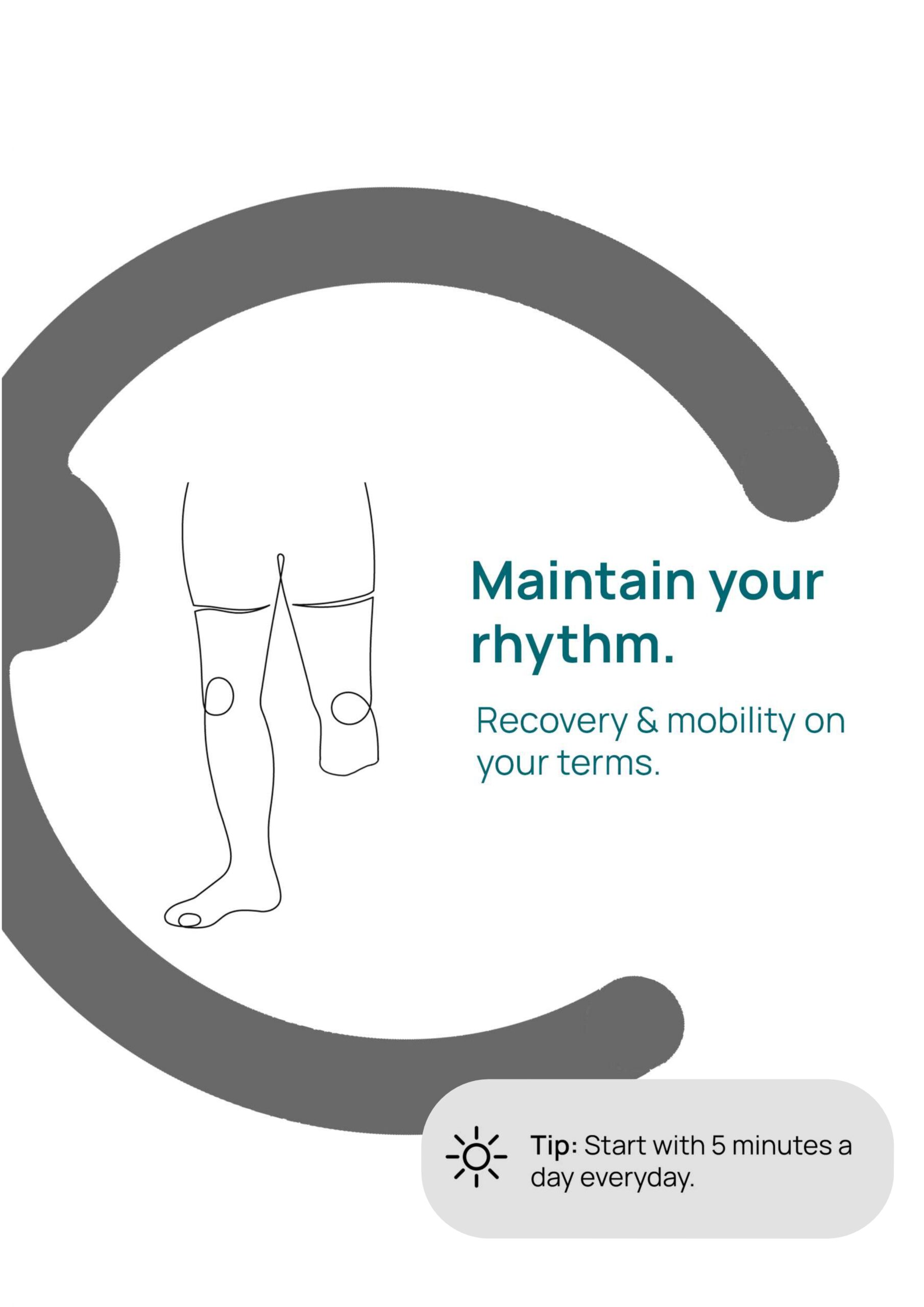
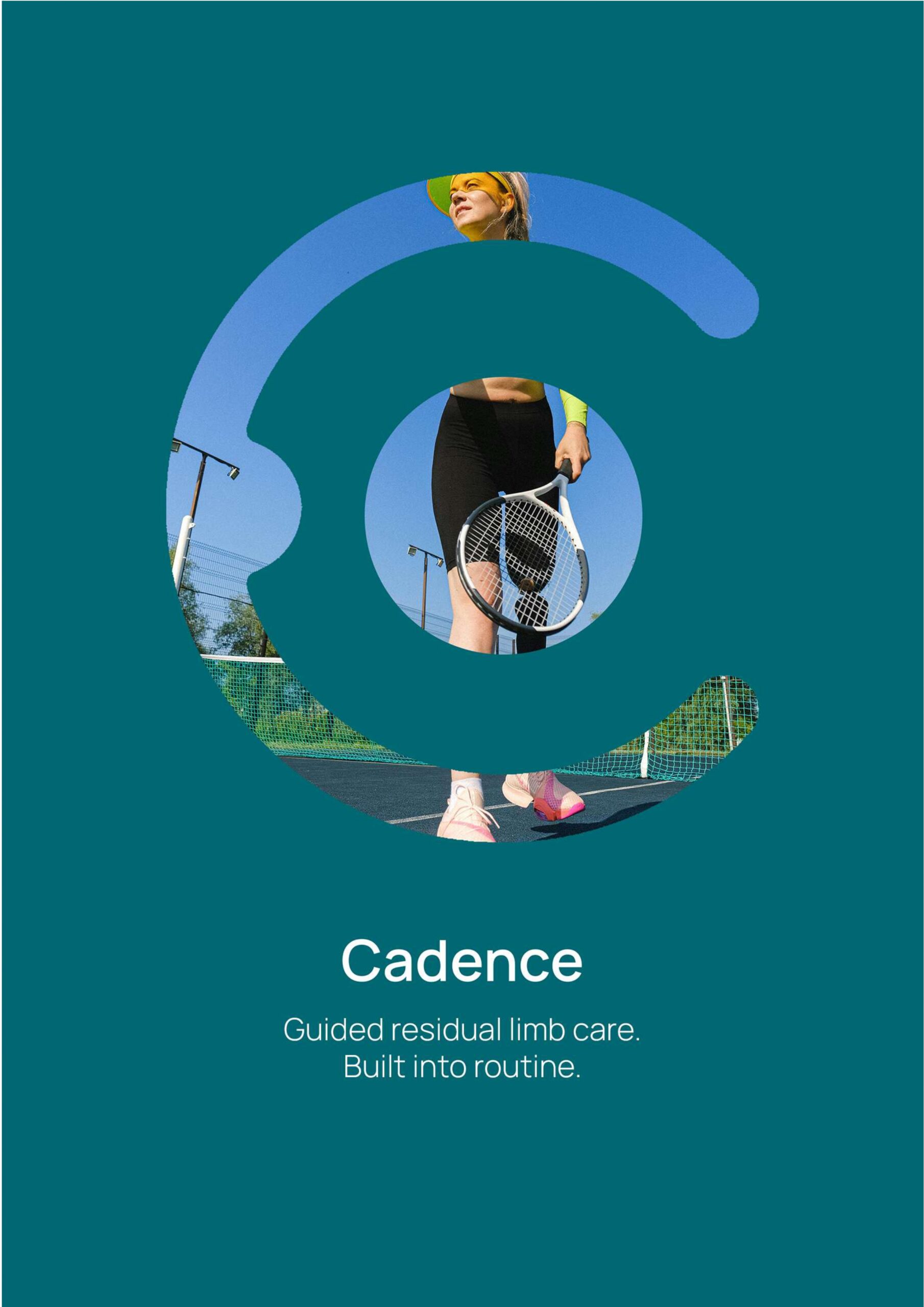
Overview of quick start guide that would accompany product, facilitating safe and confident user experience.
Concept Development
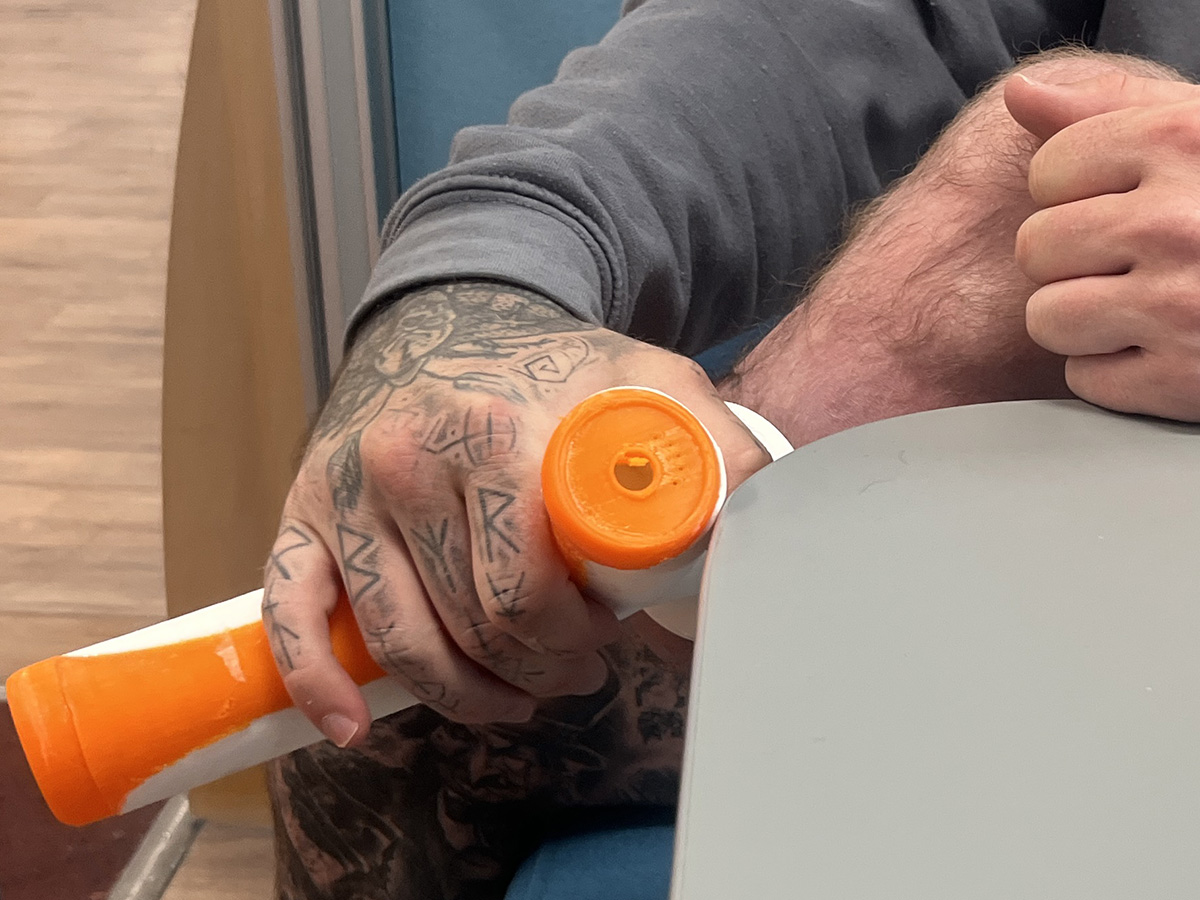
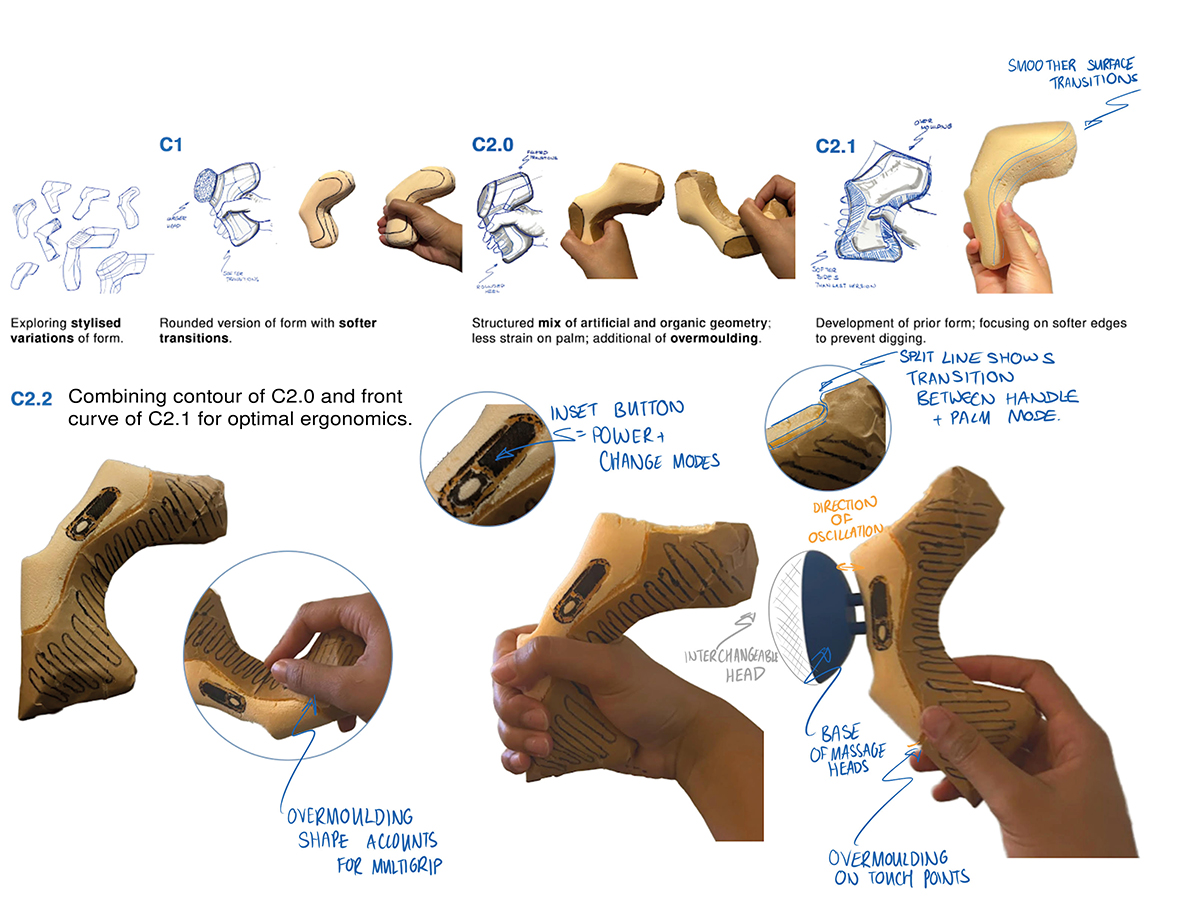
Iterative physical prototyping was used throughout the process. Initial foam models and low-fidelity UX prototypes tested device handling and user flows whilst massage head textures and overall interactions were refined directly with amputees, ensuring usability in the final design.
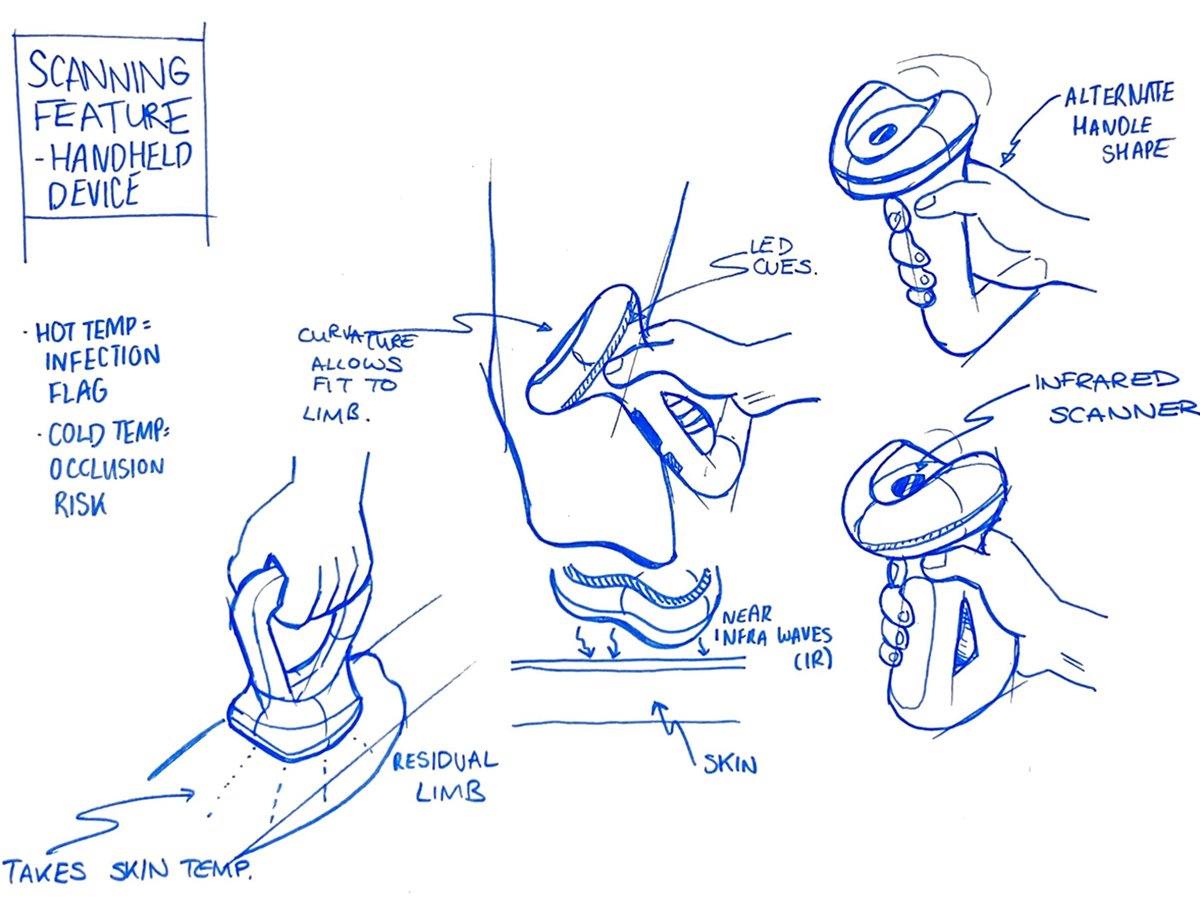
Early concepts explored a larger device with stronger diagnostic capabilities such as detecting skin temperature and infection. However, clinical and focus group feedback highlighted the risk of false positives and unnecessary anxiety. These iterations also explored tri-grip forms but testing found these felt cumbersome and created too much distance from the limb.
Other Projects & Work Experience
Design Week: Ward
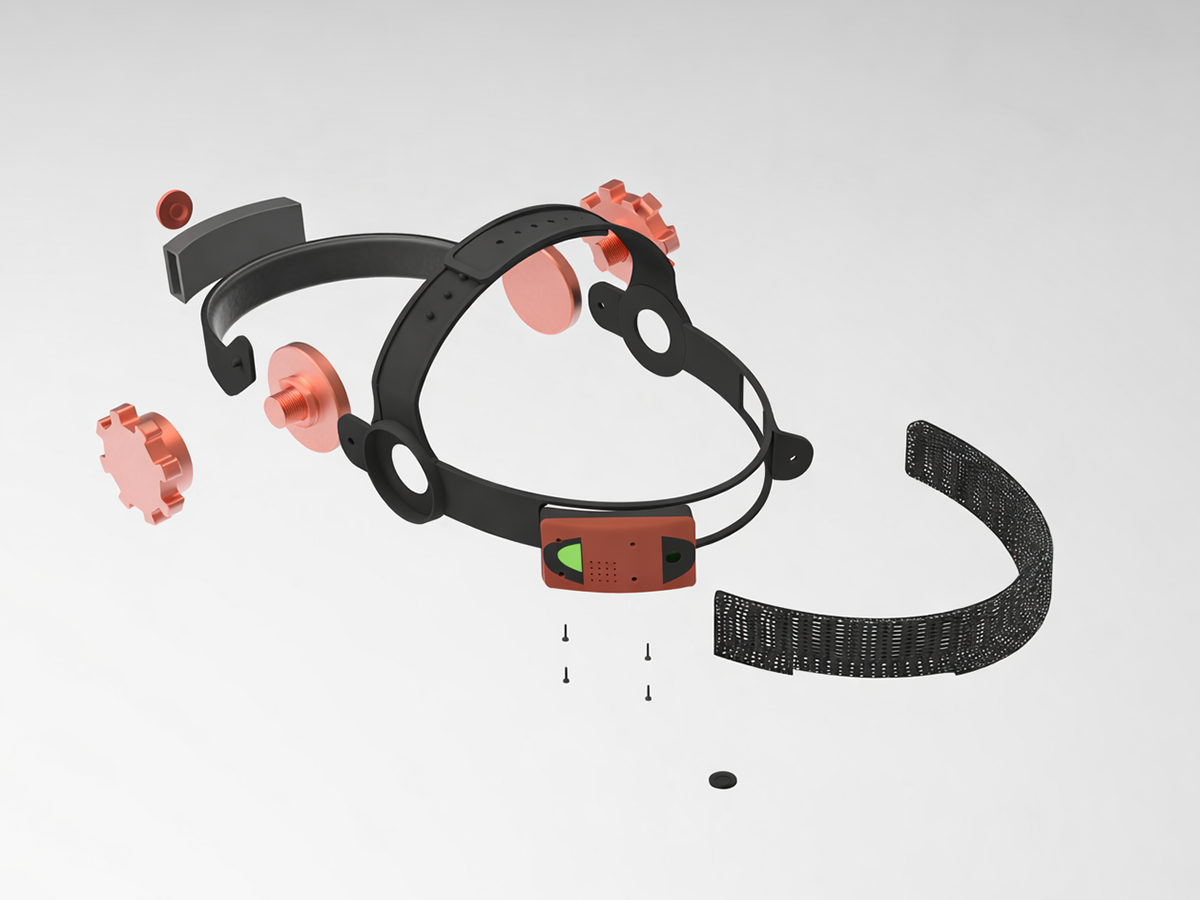
Ward is a retrofittable welding visor harness designed to protect commercial welders from the long-term health risks of toxic metal particulates. Unlike conventional PPE, Ward provides real-time personal monitoring by tracking airborne weld fume concentration; heavy metal intake via sweat analysis; exposure duration; and PPE engagement. By retrofitting to a welder’s existing helmet, compliance is built in rather than enforced. The system pairs with employer software, informing early discussion and intervention.
Automated Design & Manufacture: Forge
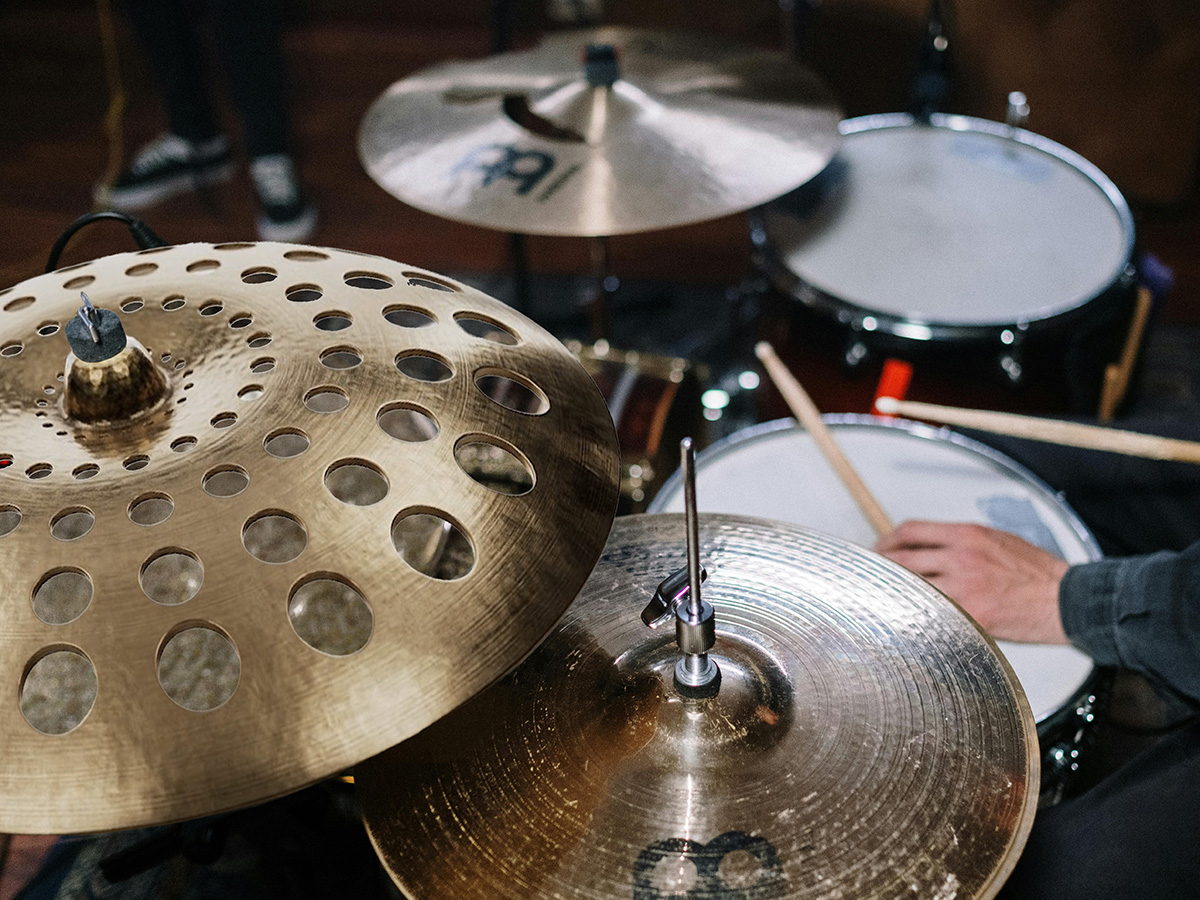
Developed with Grasshopper for Rhino 3D, Forge is a range of parametrically designed and manufactured cymbals. Through encoding variables that determine acoustic performance (e.g., diameter and radial hole patterns), preference and data-driven geometries can be generated. These are then validated before any material is committed to manufacture. This opens up options within genres where this is traditionally limited.
Year in Industry: Inn Gear Ltd.
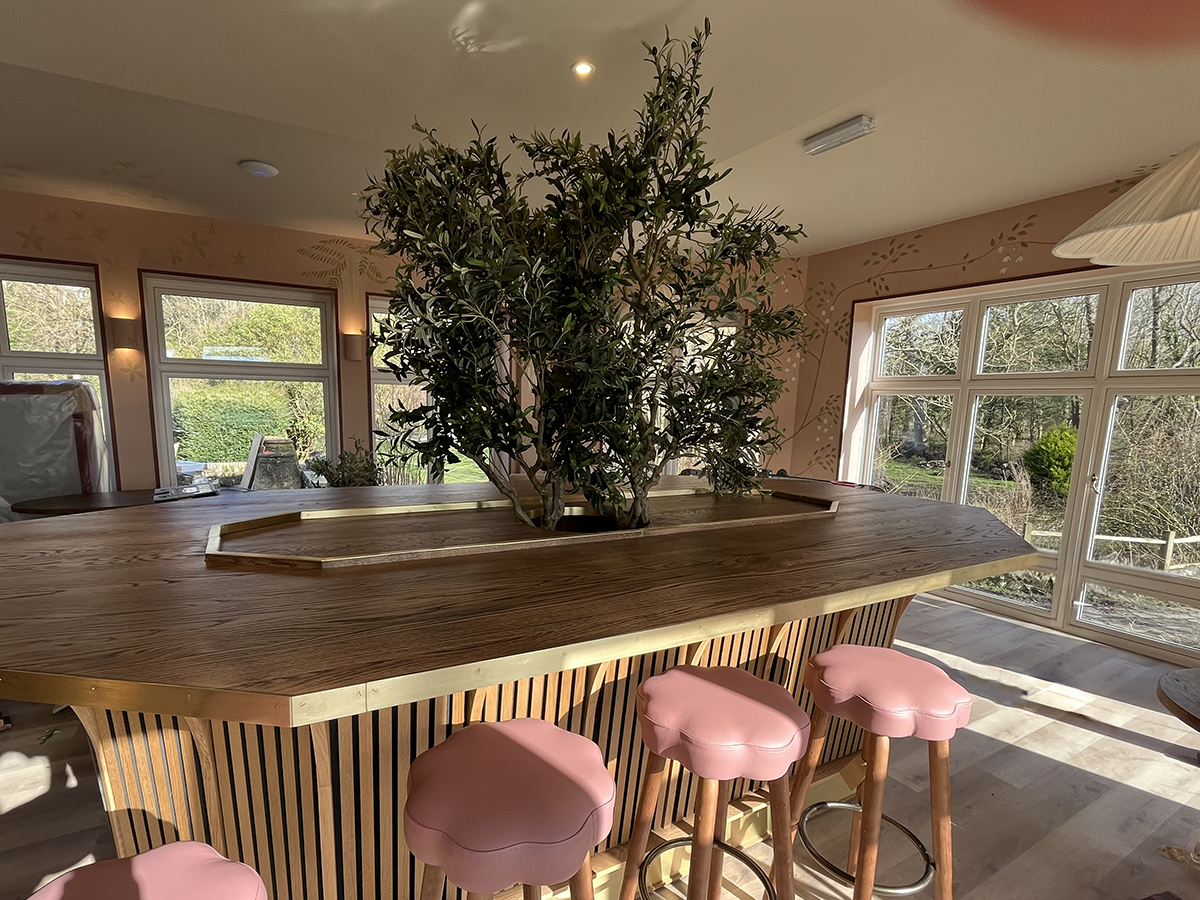
During my time at Inn Gear, I worked within a fast-paced design and project management team delivering bespoke, interior fit-outs for hospitality clients. I gained end-to-end experience from concept development through to in-house manufacture and on-site installation, including custom joinery and metalwork. Alongside supporting senior project managers across larger schemes, I took independent ownership of smaller projects. This role gave me a strong understanding of design for manufacture within commercial constraints.