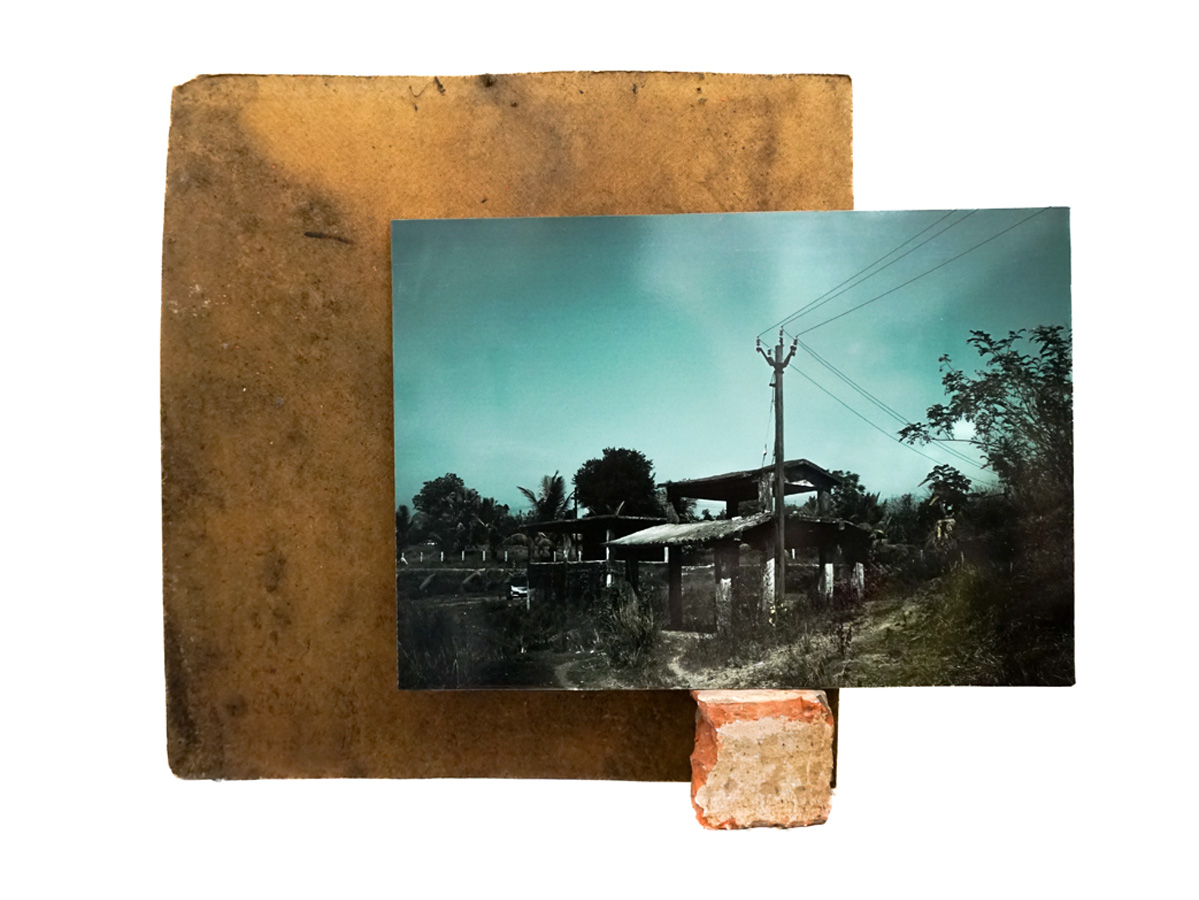
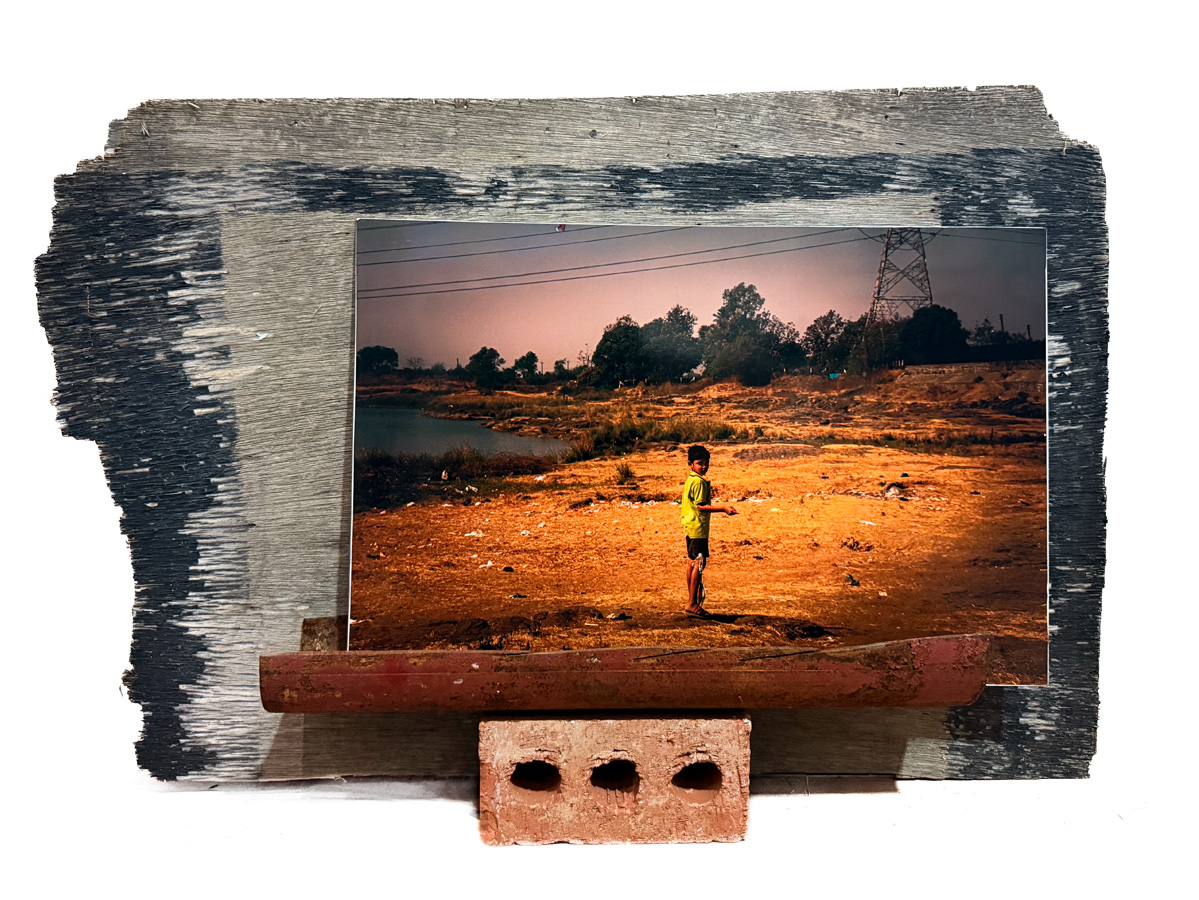
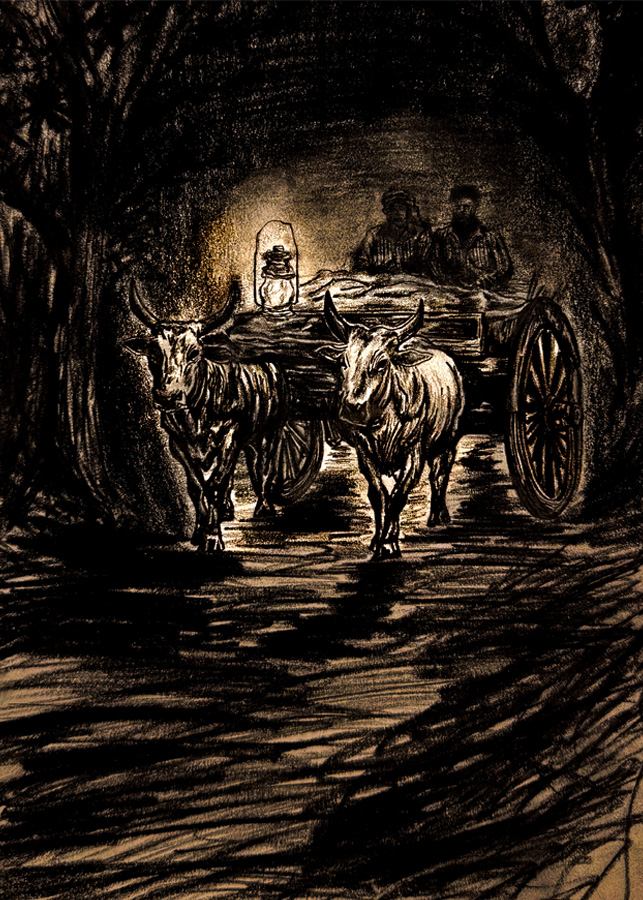
By combining images and objects charged with memory, place, and inheritance, my practice explores diasporic identity, belonging, and cultural displacement. Through photographic transfers and sculptural assemblages, I create works where fragmentation, texture, and material resistance become part of meaning.
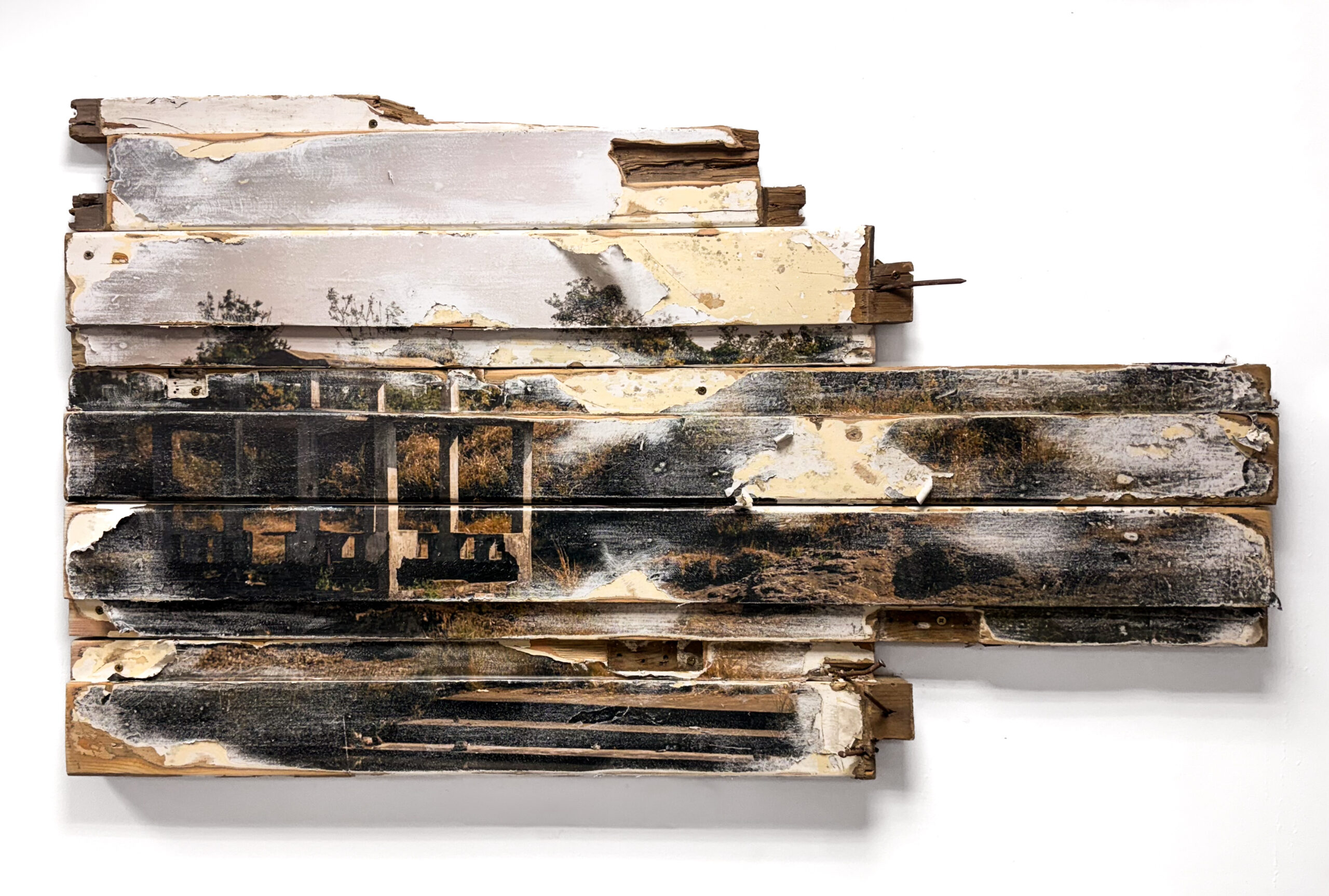
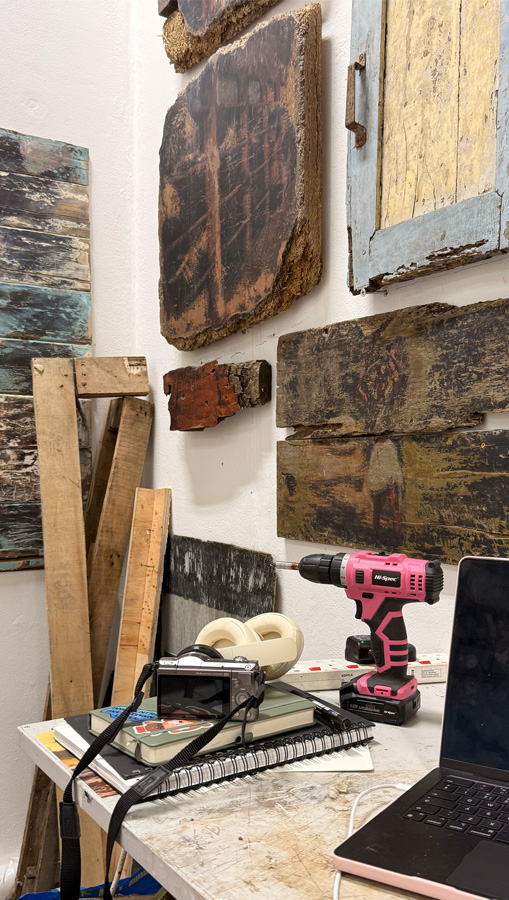
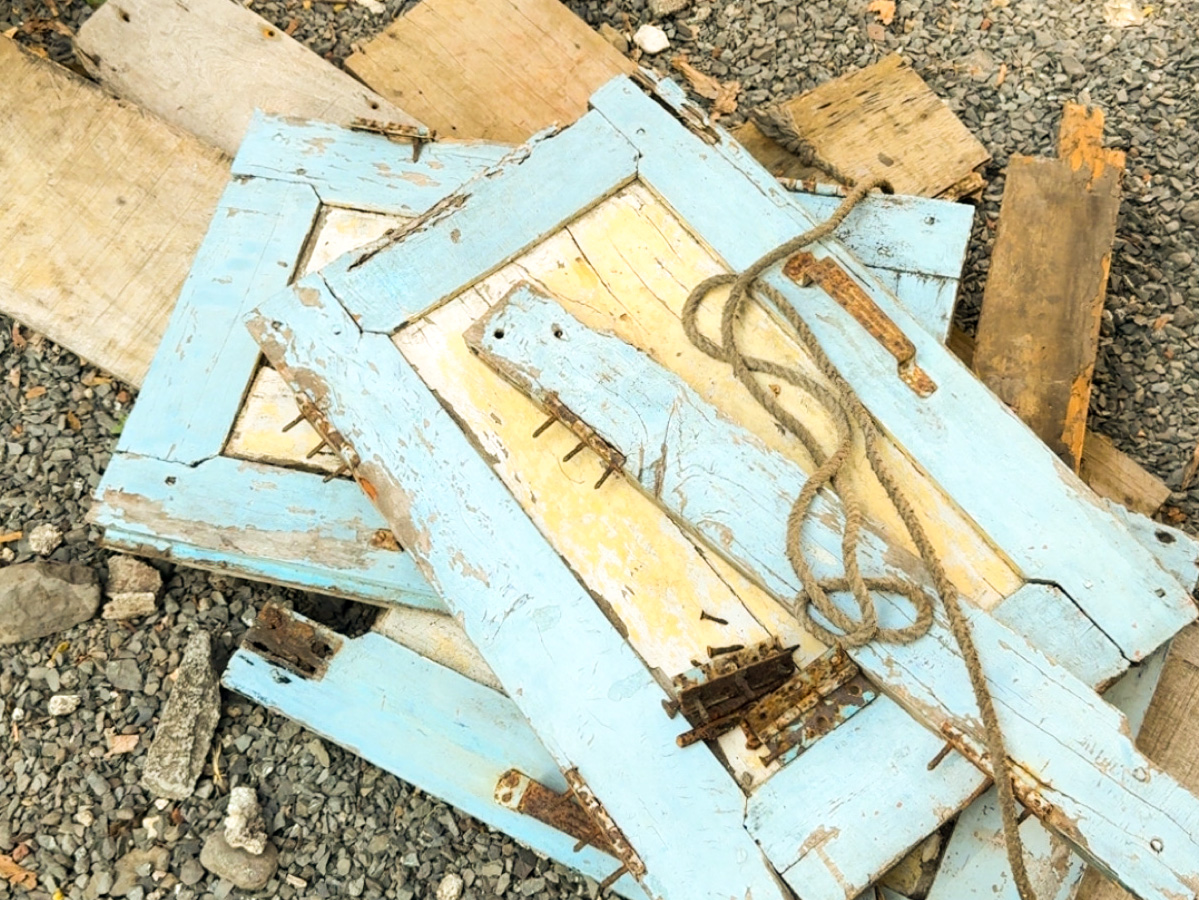
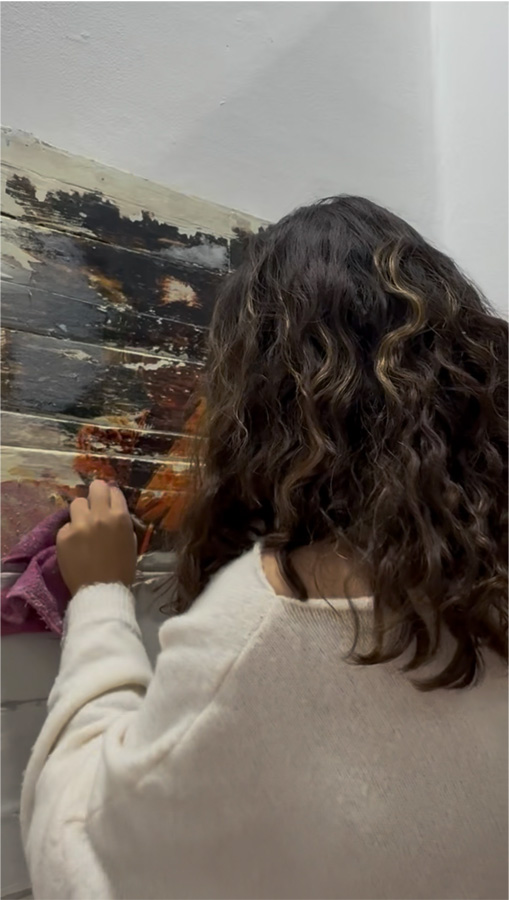
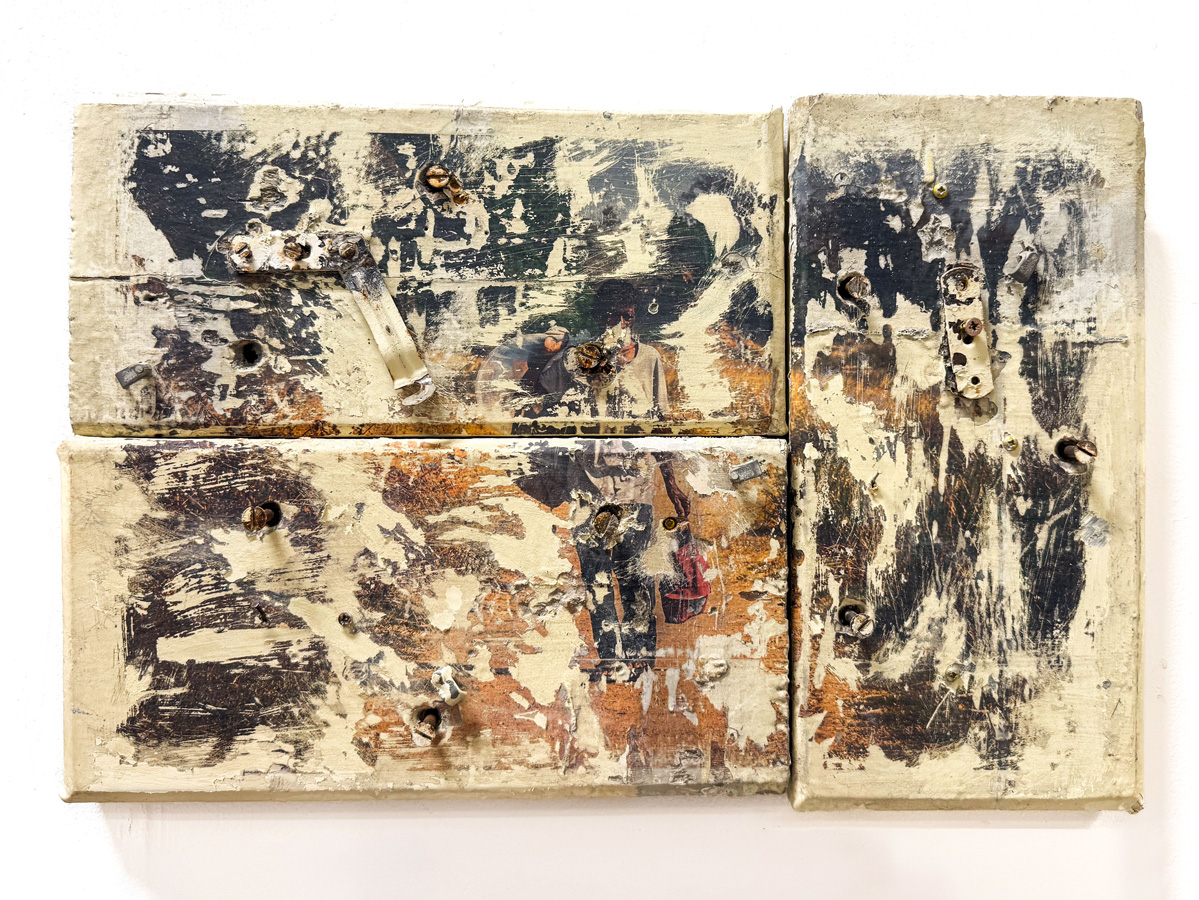
Detail of window shutters gathered from India and reclaimed materials
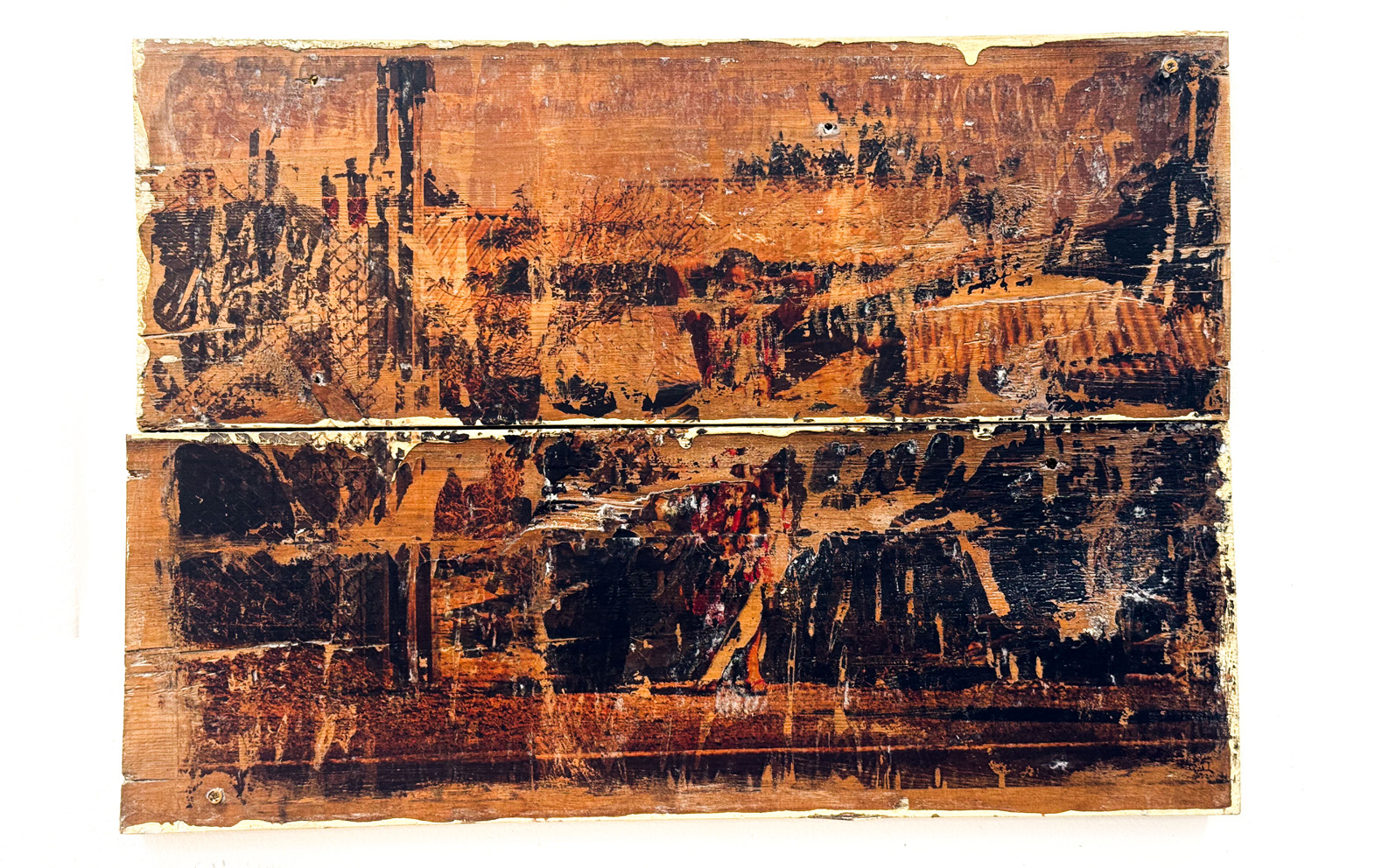
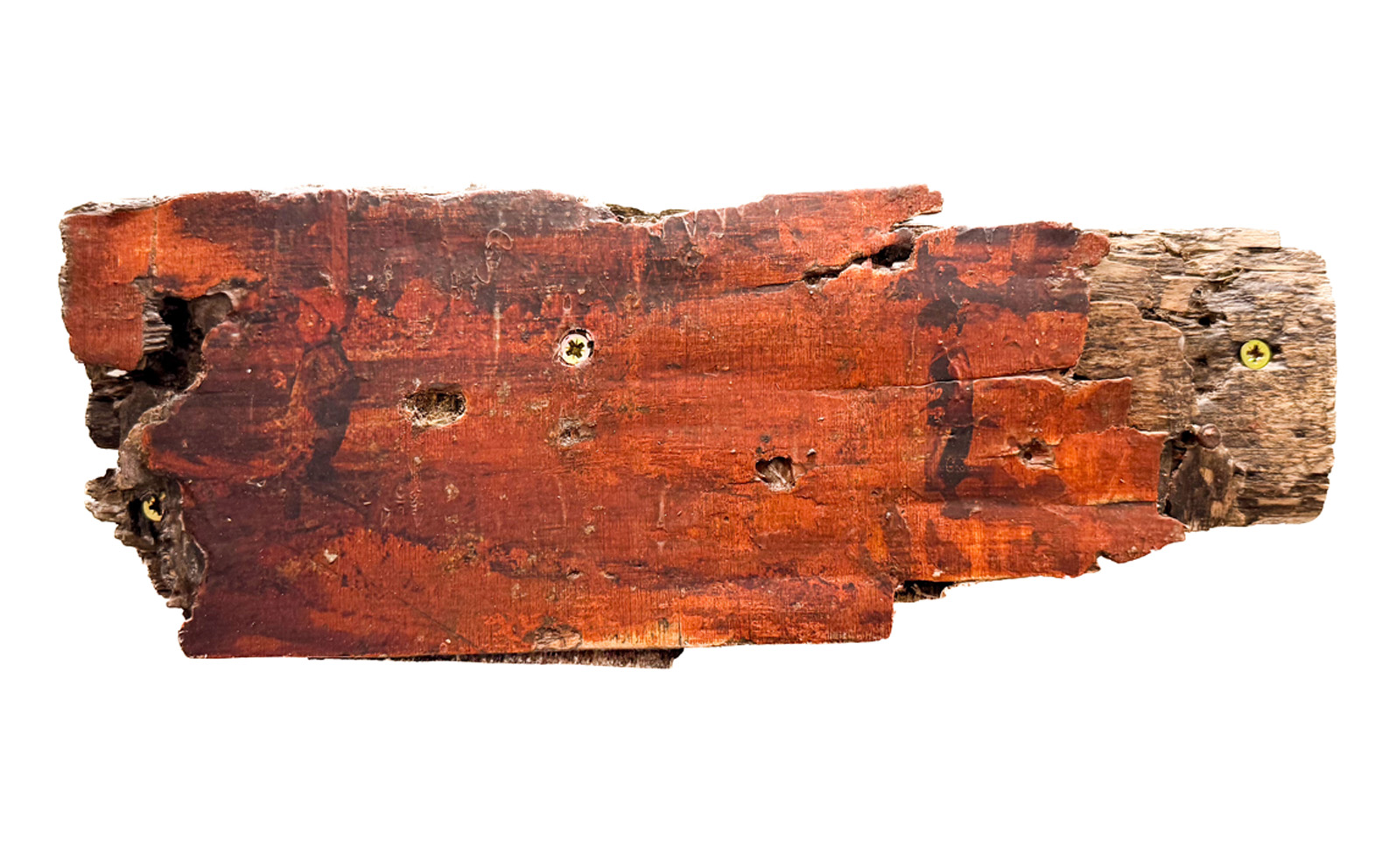
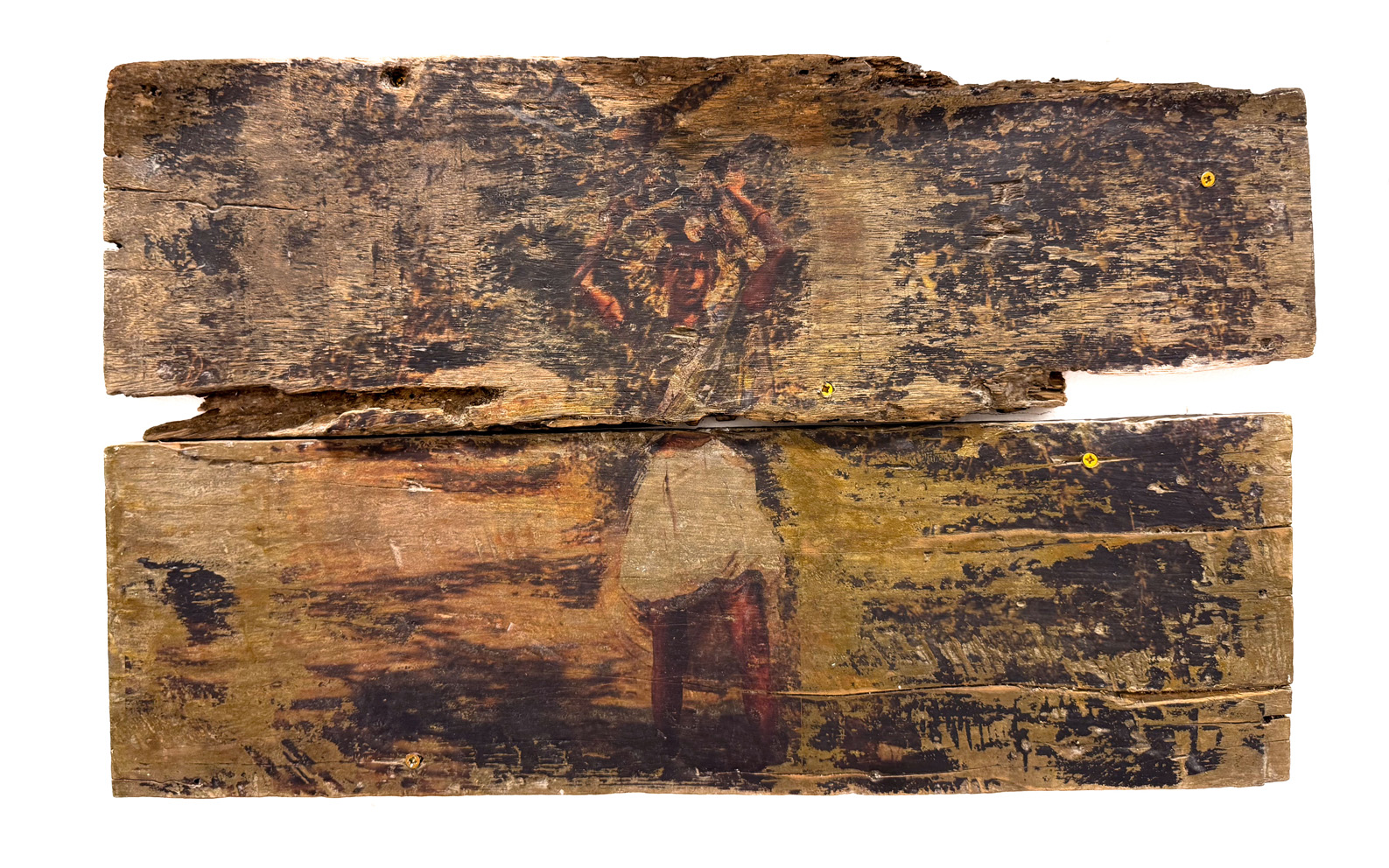
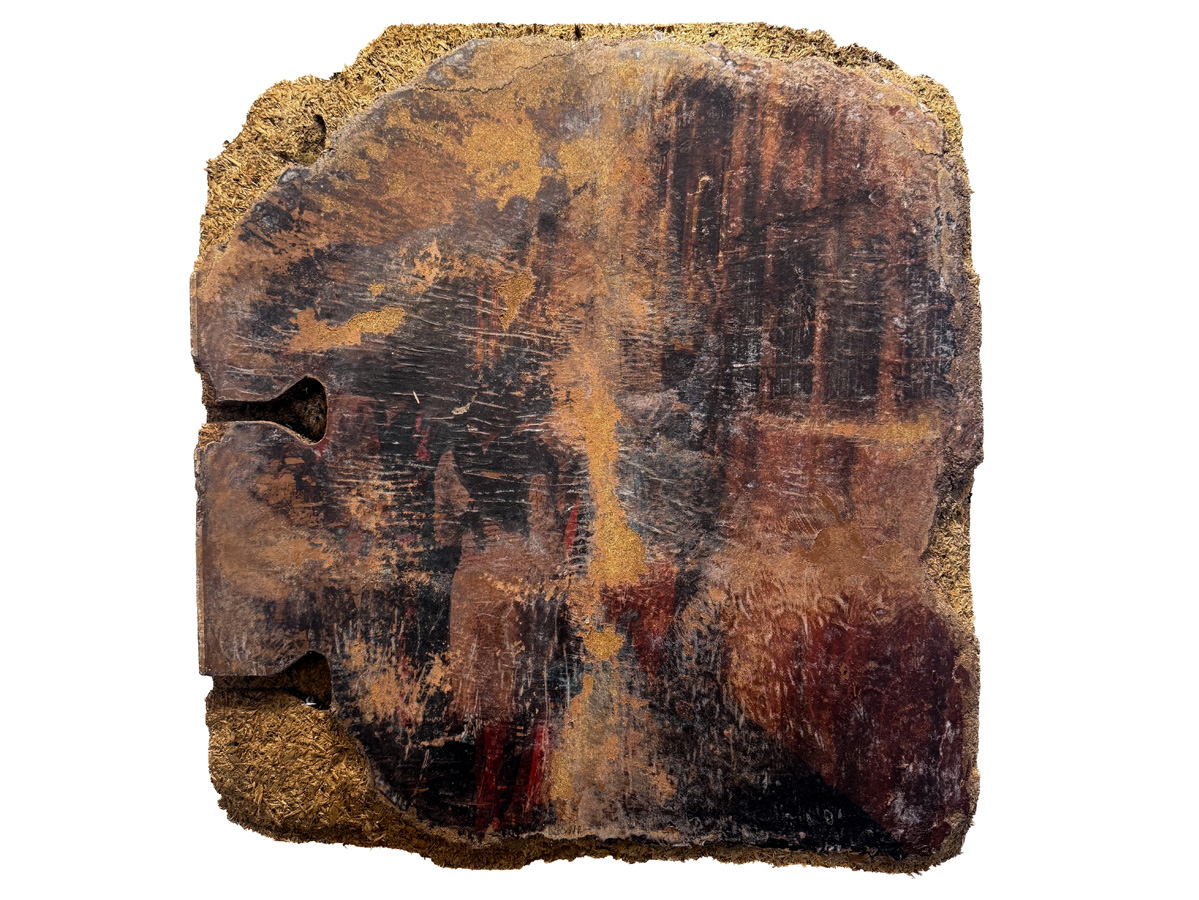
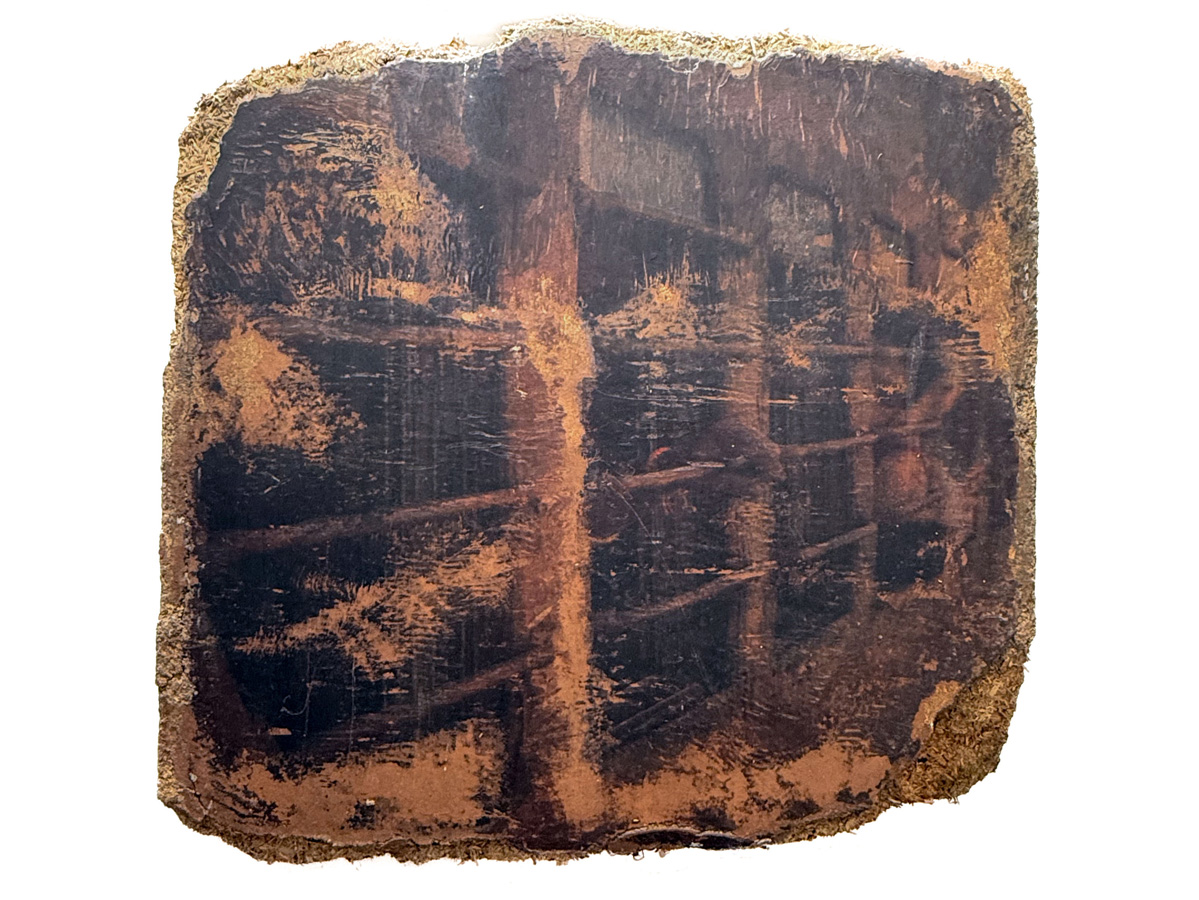
Photographic transfers exploring memory, displacement, and the instability of the image.
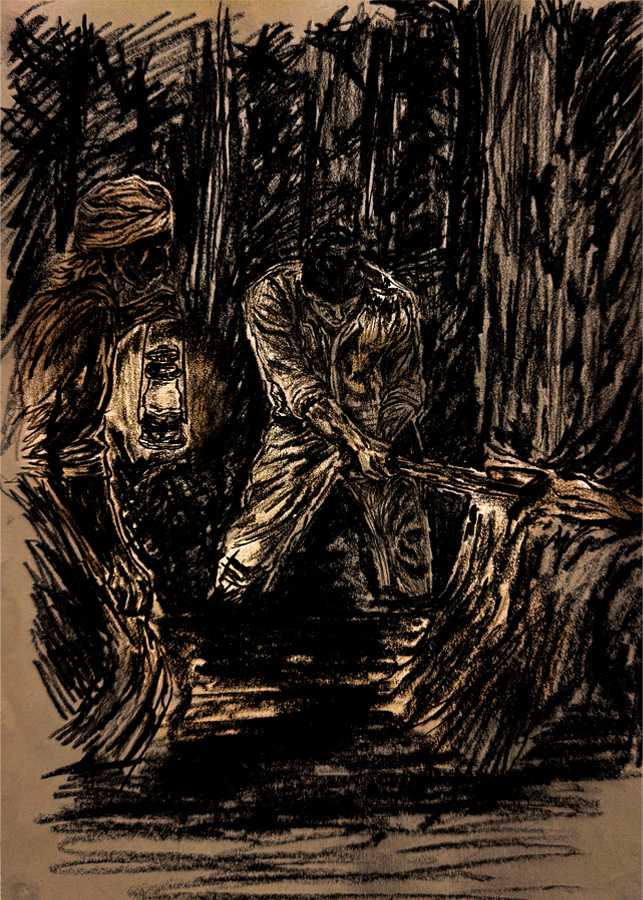
To Remember You By (2025)
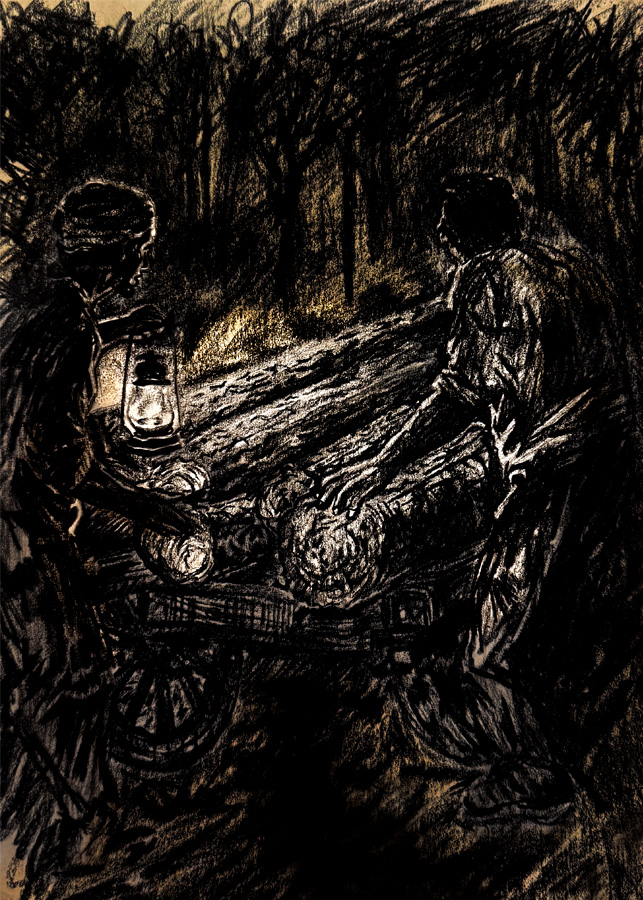
Open Ground (2026)
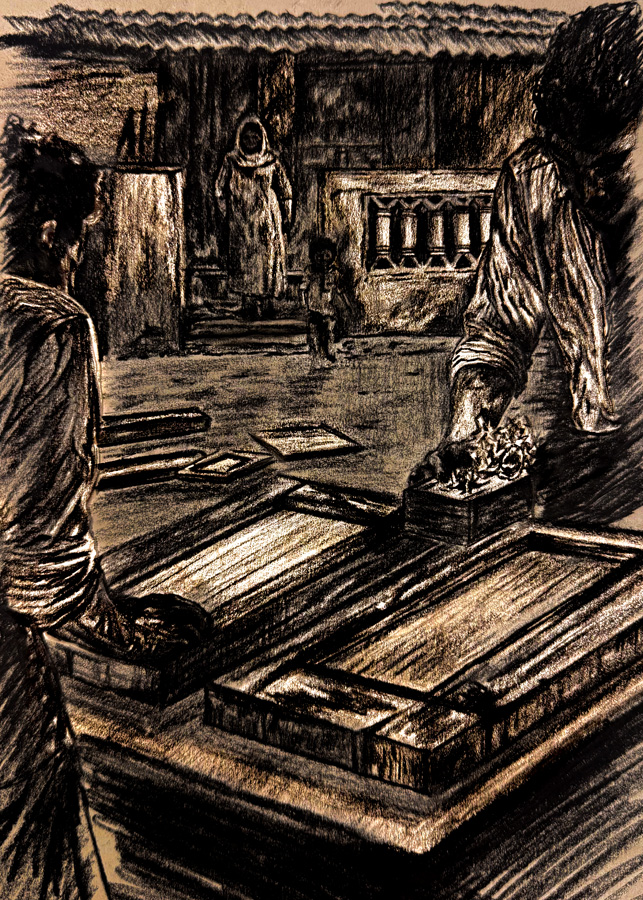
Carried (2026)
Practice Overview
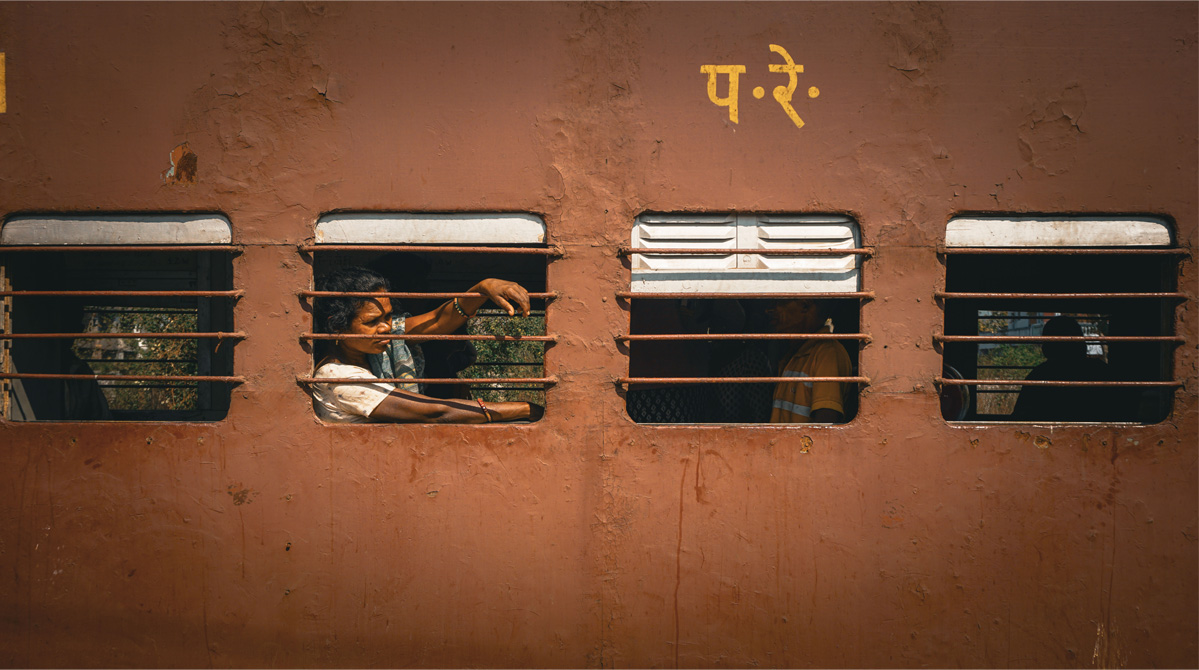
My practice comes from a desire to understand how memory, place, and belonging are carried through images, objects, and materials. After returning to India for the first time in many years, I became aware of how familiar places could also feel distant, fragmented, and difficult to fully hold onto. Photography became a way of recording these encounters, but the image alone often felt too fixed for something as unstable as memory.
Through material processes of construction, erosion, and assemblage, I allow photographs to become disrupted, broken, and re-formed. My work treats memory not as something complete or preserved, but as partial, shifting, and continually shaped by time, distance, and experience. Photography operates both as image and object, extending into sculptural installations and material arrangements that carry traces of absence, displacement, and continuity.
Positioned within the in-between – between past and present; here and elsewhere – my practice approaches art-making as a form of inquiry. Making becomes a way to negotiate my relationship to inherited histories, diasporic identity, and the places I feel connected to but cannot fully return to.
The work exists in this third space, where memory, material, and identity remain unresolved, allowing belonging to be encountered as something fluid, fragmented, and continually re-formed.
From India to the Studio
My practice often begins with photographs, materials, and objects gathered between India and the UK. Some are inherited, some are found, and some have travelled with me across places.
Doors, wood, brick, domestic surfaces, and fragments become more than supports for images; they become active participants within the work. Each surface holds its own history, damage, residue, and resistance, shaping how the image appears, breaks down, or disappears.
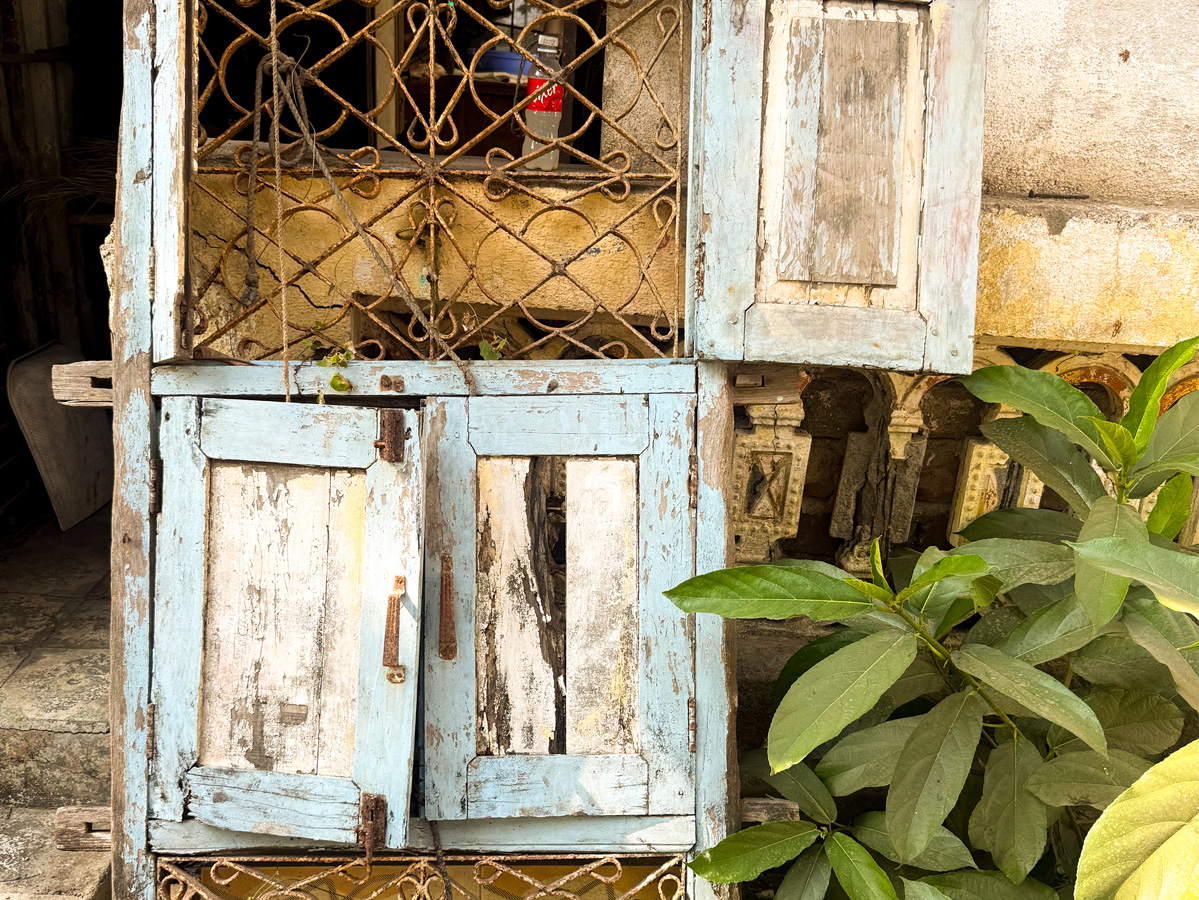
The window shutters outside the family home, India
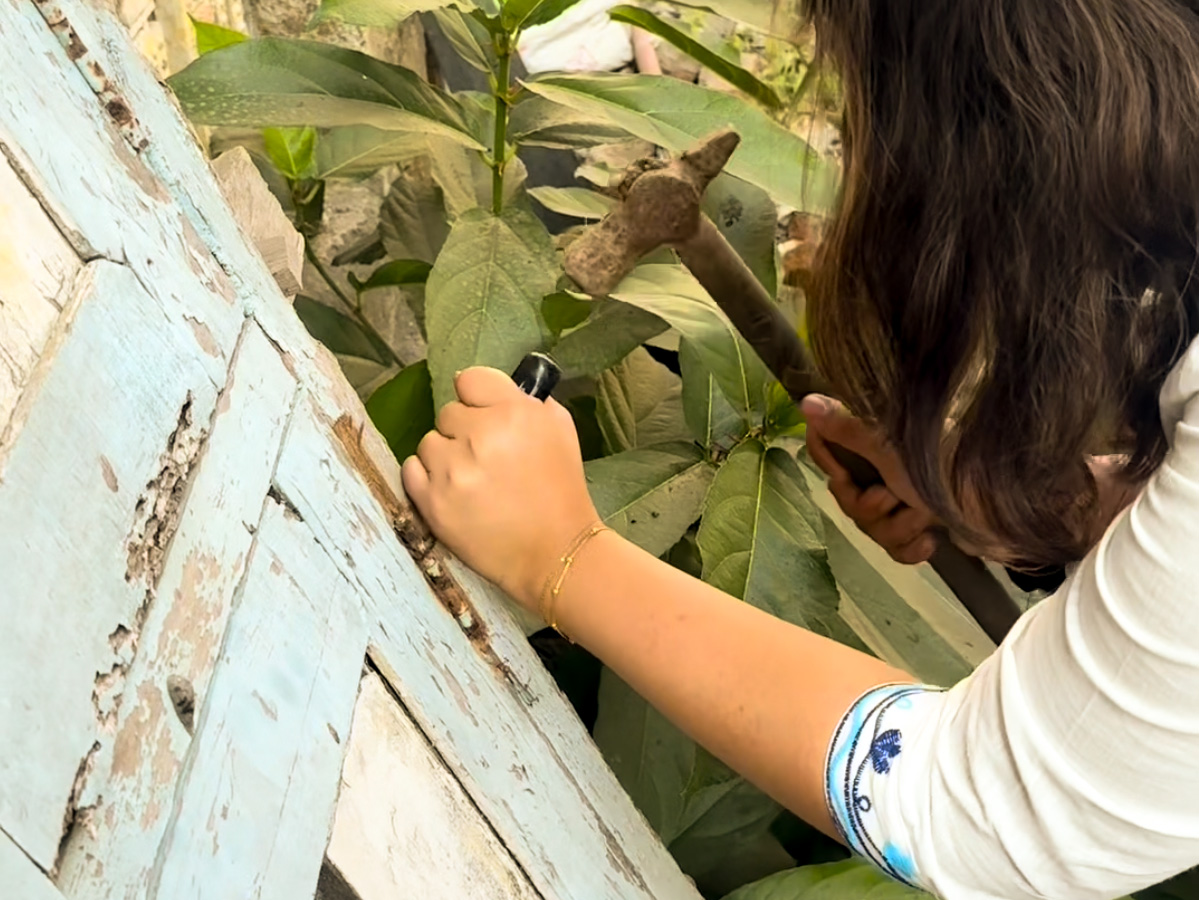
Removing the shutters before transport
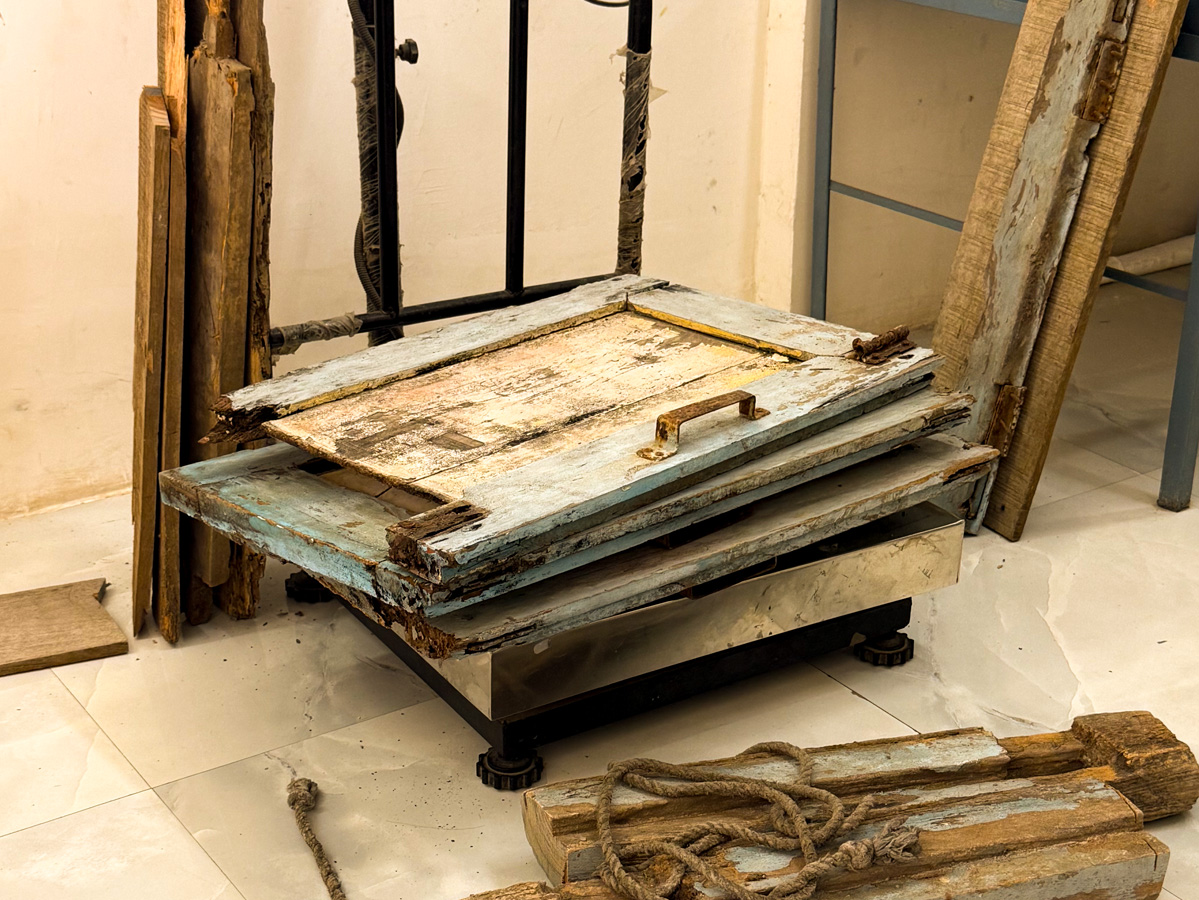
Fragments gathered after removal
The shutters being prepared for their journey to the UK
The Journey of the Blue Window Shutters The blue wooden window shutters were made by my great-grandfather and grandfather, and have been part of my family home in India for over seventy years. They once belonged to a lived domestic space, carrying the marks of family, labour, repair, and time. After renovations, the shutters were no longer being used, but when I returned to India and saw them again, I knew they needed to become part of my practice. The work does not come from altering the shutters, but from their movement, relocation, and display. Their journey from India to the UK becomes the central gesture of the work. In travelling across borders, they echo the movement of my family, particularly my parents, who also moved between India and the UK. The shutters become carriers of migration, inheritance, and belonging. Rather than altering the shutters physically, their movement and relocation become the work itself. Positioned between inside and outside, here and elsewhere, past and present, the shutters carry traces of home into a new context. Displayed in the studio or exhibition space, the shutters occupy an in-between position. They are no longer part of the home they came from, but they are not detached from it either. Their chipped paint, broken edges, rusted metal, and worn surfaces remain as evidence of their original place, allowing them to hold memory without needing to be restored or transformed.
Thinking Through Making
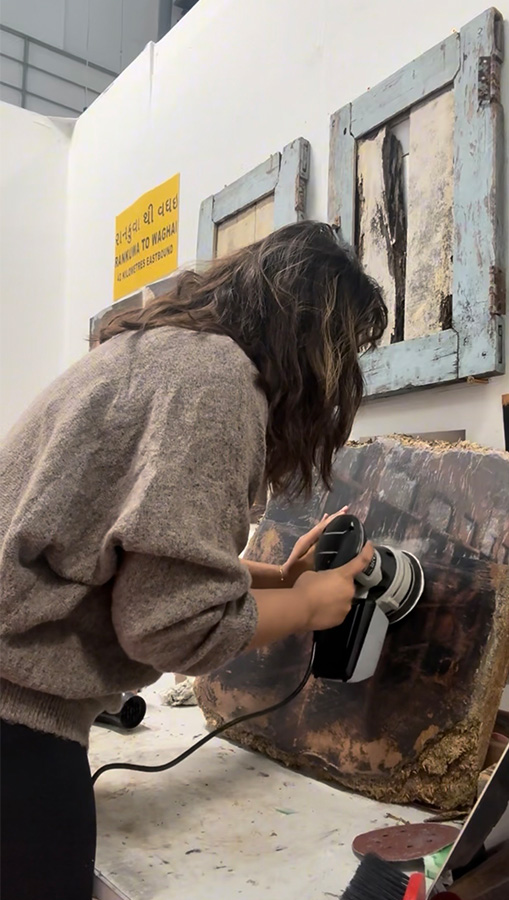
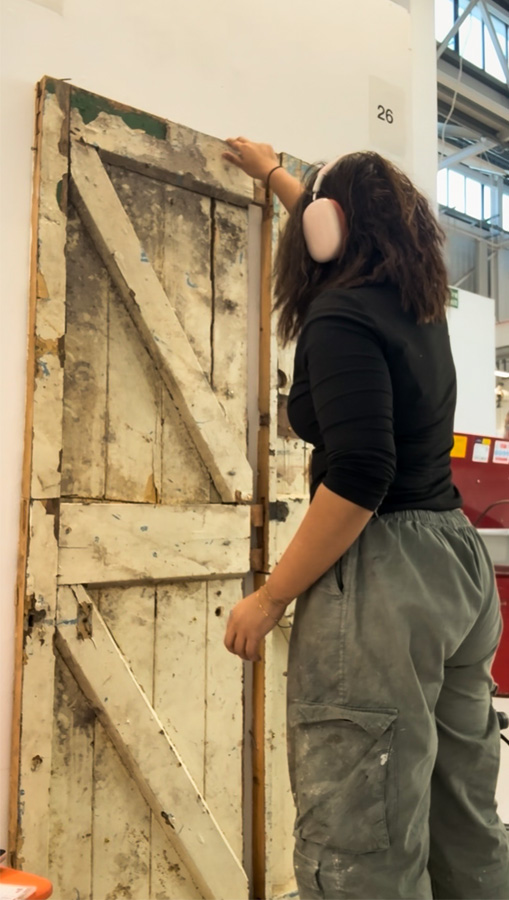
My studio process is led by the behaviour of the materials I work with. Through transfer, sanding, layering, drawing, and re-making, I allow images and objects to become unstable. The surfaces do not simply receive the photograph; they interrupt it, resist it, and change what remains visible.
This process allows failure, damage, and loss to become part of the work. Details break down, fragments remain, and the image begins to sit somewhere between photograph, object, trace, and memory.
The studio becomes a space of negotiation, where image, surface, and material respond to one another through touch, resistance, and repetition. Meaning is not fixed before the work is made, but develops through the act of making itself.
Where the Image Meets Material
My use of materials comes from what has always felt familiar. I grew up around making, repair, and construction, so working with reclaimed surfaces feels like an extension of that environment rather than a separate choice. These materials carry a sense of labour, home, and inherited ways of making.
I am drawn to surfaces that already hold evidence of use. Marks, weight, age, damage, and residue become part of the work before I place an image onto them. They bring their own histories with them, which means the photograph is never placed onto something neutral.
By working with these surfaces, the image is pushed beyond the flat photograph. It becomes physical, fragile, and lived with, shaped by the material that carries it. This allows memory to appear not as something clean or complete, but as something held through texture, damage, and trace.
In the Third Space
“It is the in-between space that carries the burden of the meaning of culture.”
— Homi K. Bhabha
Homi Bhabha’s concept of the Third Space helps me understand identity as something negotiated rather than fixed. This relates to the way my work sits between places, materials, and forms: between image and object, here and elsewhere, and what is remembered and what remains unresolved.
Rather than resolving these tensions, I allow them to remain visible. The work becomes a way of holding uncertainty, where memory, belonging, and cultural identity can exist as layered, unstable, and continually shifting.